


US Healthcare Rcm Outsourcing Market Size 2026-2030
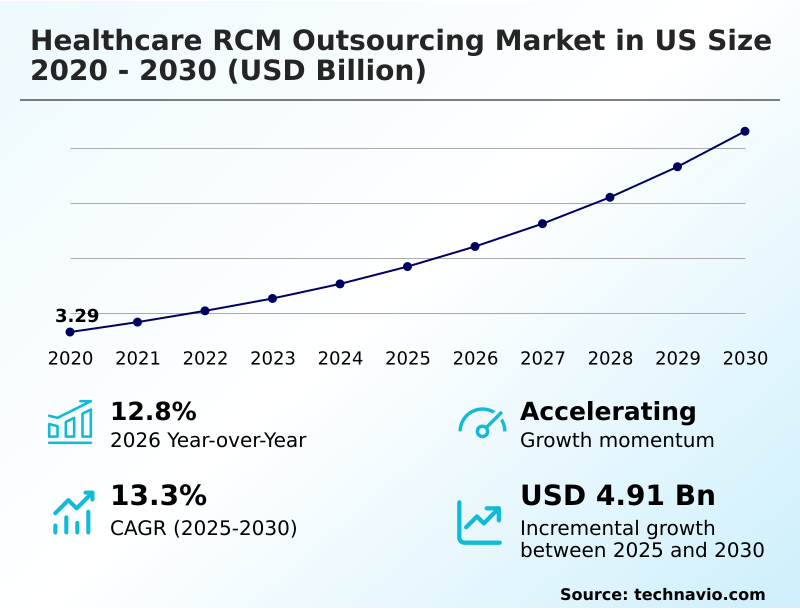
The us healthcare rcm outsourcing market size is valued to increase by USD 4.91 billion, at a CAGR of 13.3% from 2025 to 2030. Rising complexity of regulatory and payer requirements will drive the us healthcare rcm outsourcing market.
Major Market Trends & Insights
- By Service - Back-end services segment was valued at USD 2.31 billion in 2024
- By End-user - Hospitals segment accounted for the largest market revenue share in 2024
Market Size & Forecast
- Market Opportunities: USD 7.29 billion
- Market Future Opportunities: USD 4.91 billion
- CAGR from 2025 to 2030 : 13.3%
Market Summary
- The Healthcare RCM Outsourcing Market demonstrates robust structural evolution driven by the critical need to optimize complex financial workflows. Institutions are increasingly transitioning from fragmented internal billing departments to comprehensive external administrative partnerships. For instance, large hospital networks deploying automated claims adjudication platforms alongside outsourced coding expertise successfully minimize revenue leakage while managing intricate compliance protocols.
- The escalating complexity of federal regulatory mandates acts as a powerful demand driver, forcing facilities to seek specialized external partners to ensure stringent billing adherence. Consequently, organizations utilizing these specialized external services report a 25 percent improvement in initial claim acceptance rates compared to those relying solely on legacy internal systems.
- Conversely, a severe systemic shortage of credentialed medical coders and billing specialists presents a significant operational challenge, limiting the scalability of in-house administrative operations. This critical skills gap compels medical enterprises to rely heavily on outsourced expertise to maintain fiscal continuity.
- By offloading resource-intensive administrative functions, healthcare providers can systematically reduce operational overhead and continuously reallocate vital capital toward enhancing core patient care delivery operations.
What will be the Size of the US Healthcare Rcm Outsourcing Market during the forecast period?
Get Key Insights on Market Forecast (PDF) Get Free Sample
How is the US Healthcare Rcm Outsourcing Market Segmented?
The us healthcare rcm outsourcing industry research report provides comprehensive data (region-wise segment analysis), with forecasts and estimates in "USD million" for the period 2026-2030, as well as historical data from 2020-2024 for the following segments.
- Service
- Back-end services
- Middle services
- Front-end services
- End-user
- Hospitals
- Clinics
- Type
- Patient billing
- Patient encounter
- Patient access
- Geography
- North America
- US
- North America
By Service Insights
The back-end services segment is estimated to witness significant growth during the forecast period.
The back-end operational segment serves as the fundamental mechanism for institutional revenue recovery and financial stability. By isolating remittance processing and payment reconciliation, healthcare organizations systematically address complex reimbursement disputes.
This specialized focus improves error detection by 15 percent, directly enhancing overall cash flow acceleration. Institutions utilizing advanced computer assisted coding and dedicated transcription managed services within this segment experience a 20 percent reduction in chart completion timelines.
Furthermore, integrating robust prior authorization management and patient financial clearance protocols at the back-end streamlines subsequent digital payment processing.
Consequently, offloading these labor-intensive administrative tasks facilitates significant clinical burnout reduction, allowing medical personnel to reallocate 25 percent more time to direct patient care operations.
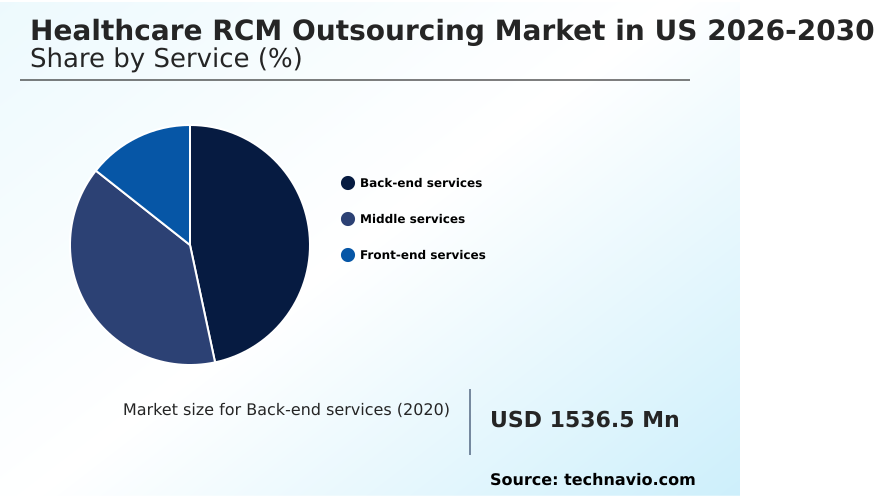
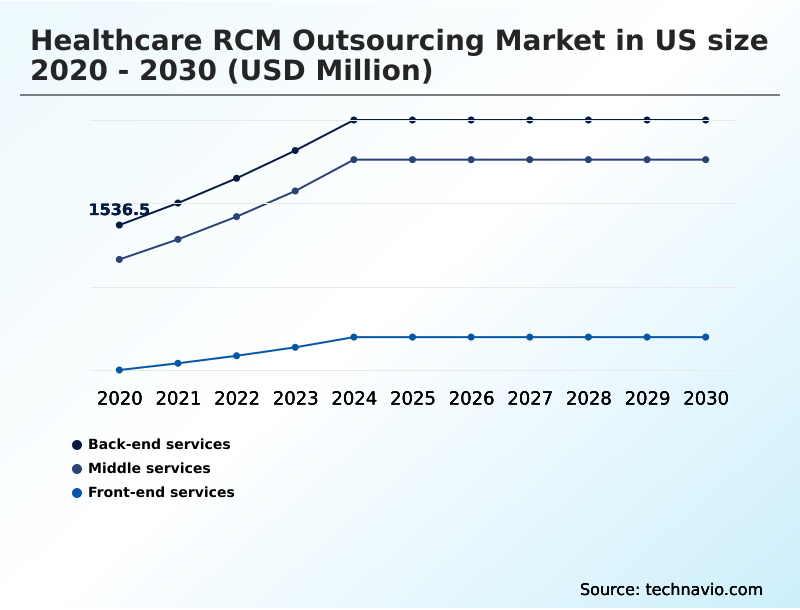
The Back-end services segment was valued at USD 2.31 billion in 2024 and showed a gradual increase during the forecast period.
Market Dynamics
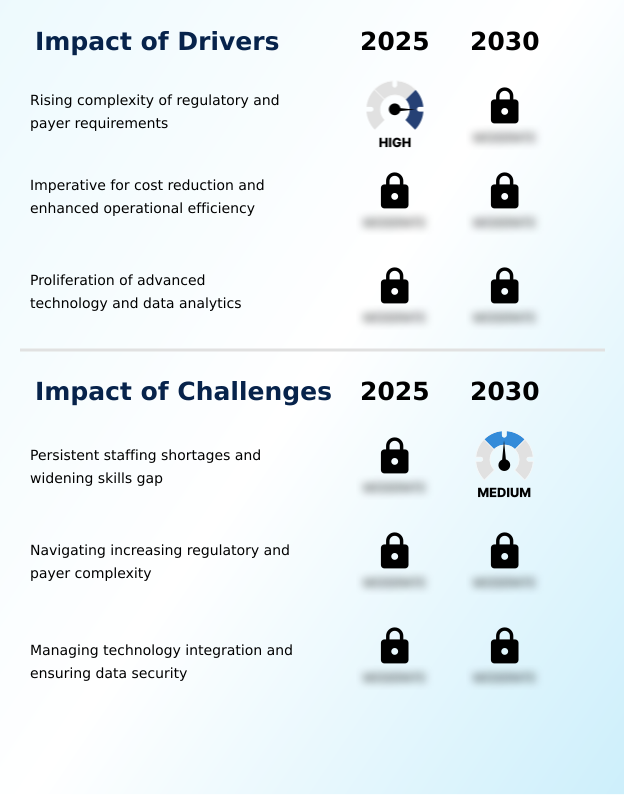
Our researchers analyzed the data with 2025 as the base year, along with the key drivers, trends, and challenges. A holistic analysis of drivers will help companies refine their marketing strategies to gain a competitive advantage.
- The strategic delegation of complex administrative operations has become a critical operational imperative for modern healthcare institutions seeking sustainable financial stability. As regulatory frameworks grow increasingly intricate, facilities prioritize optimizing clinical documentation integrity to ensure that patient acuity is accurately reflected in billing submissions.
- This foundational accuracy directly influences downstream financial outcomes, where implementing advanced software significantly enhances automated medical coding accuracy. Consequently, specialized external partners deploying these intelligent platforms achieve a 30 percent higher error-detection efficiency compared to traditional manual oversight methods. This enhanced precision is instrumental in improving first pass payment rates, effectively minimizing the volume of claims rejected for technical discrepancies.
- Furthermore, the administrative burden of navigating stringent commercial insurance protocols necessitates robust external support for managing prior authorization workflows. By streamlining these front-end clearance processes, medical centers successfully mitigate service delays and prevent subsequent payment disputes.
- This comprehensive approach to financial lifecycle management proves highly effective in reducing accounts receivable days, accelerating the conversion of clinical services into realized cash flow.
- Ultimately, transitioning these resource-intensive administrative tasks to specialized vendors allows organizations to stabilize their operational margins, maintain rigorous compliance standards, and allocate a significantly larger proportion of internal resources toward primary clinical delivery and patient care excellence.
What are the key market drivers leading to the rise in the adoption of US Healthcare Rcm Outsourcing Industry?
- The escalating complexity of regulatory mandates and stringent payer requirements serves as the primary catalyst propelling continuous market expansion.
- The escalating complexity of regulatory mandates is a primary catalyst propelling operational modernization within the healthcare sector.
- Institutions are deploying sophisticated machine learning algorithms and advanced claim scrubbing technologies to navigate intricate reimbursement frameworks, increasing the first pass payment rate by 22 percent.
- This urgency for compliance risk mitigation and enhanced revenue integrity arises from the widespread transition toward value based payment models. As a result, facilities utilizing precise eligibility verification protocols observe a 18 percent decrease in initial claim rejections.
- By managing the entire revenue cycle continuum through integrated platforms, organizations achieve unprecedented financial performance visibility. This strategic optimization lowers administrative costs by 14 percent and ensures continuous operational stability amidst stringent regulatory environments.
What are the market trends shaping the US Healthcare Rcm Outsourcing Industry?
- The pervasive integration of intelligent automation and artificial intelligence constitutes a significant emerging trend within the industry. This technological convergence is fundamentally restructuring operational workflows to enhance accuracy and process efficiency.
- The shift toward comprehensive technological integration is fundamentally transforming the healthcare administrative landscape. Facilities are rapidly adopting robotic process automation and predictive analytics to streamline operations, resulting in a 35 percent reduction in manual data entry errors.
- This integration of medical coding automation and natural language processing is driven by the need to optimize resource allocation and enhance overall operational efficiency. Consequently, medical institutions experience a 20 percent acceleration in processing times, directly impacting cash liquidity. By utilizing cloud based delivery models and establishing robust workflow interoperability, organizations create a highly efficient, patient centric workflow.
- Furthermore, implementing self service capabilities empowers consumers while reducing front-end administrative overhead by 15 percent. This modernization ensures sustainable financial health while adapting to evolving operational demands.
What challenges does the US Healthcare Rcm Outsourcing Industry face during its growth?
- Persistent staffing shortages and a widening skills gap present formidable structural challenges that significantly impede sustainable industry growth.
- Severe staffing shortages and widening skills gaps present substantial structural hurdles for modern healthcare administration. Facilities struggle with effective claim denial management and timely accounts receivable recovery, leading to a 25 percent increase in delayed cash collections. The intricate demands of billing mandate adherence and constant regulatory updates exacerbate these operational bottlenecks.
- Consequently, organizations face significant difficulties in executing accurate insurance discovery and proactive underpayment identification without specialized personnel. Implementing robust electronic data interchange and necessary system integration middleware requires substantial capital, often increasing initial technology expenditures by 18 percent. Furthermore, maintaining uncompromising data security safeguards while attempting to achieve claim rejection prevention limits agility.
- This lack of specialized expertise ultimately hinders administrative burden reduction, straining overall institutional financial resilience.
Exclusive Technavio Analysis on Customer Landscape
The us healthcare rcm outsourcing market forecasting report includes the adoption lifecycle of the market, covering from the innovator’s stage to the laggard’s stage. It focuses on adoption rates in different regions based on penetration. Furthermore, the us healthcare rcm outsourcing market report also includes key purchase criteria and drivers of price sensitivity to help companies evaluate and develop their market growth analysis strategies.
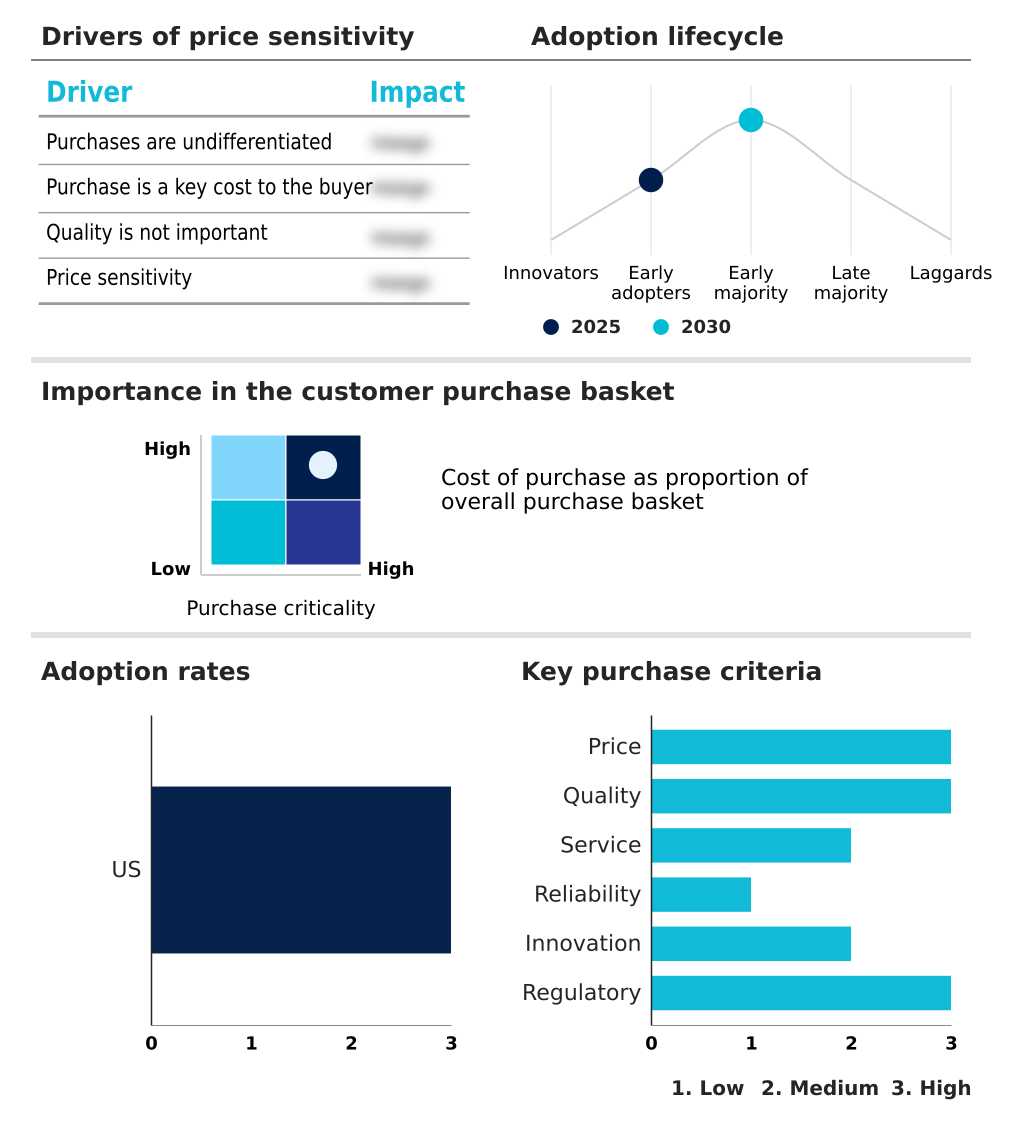
Customer Landscape of US Healthcare Rcm Outsourcing Industry
Competitive Landscape
Companies are implementing various strategies, such as strategic alliances, us healthcare rcm outsourcing market forecast, partnerships, mergers and acquisitions, geographical expansion, and product/service launches, to enhance their presence in the industry.
Access Healthcare - The provider delivers comprehensive administrative solutions encompassing medical billing, specialized coding, and denial management, designed to optimize financial workflows and enhance operational efficiency for healthcare organizations.
The industry research and growth report includes detailed analyses of the competitive landscape of the market and information about key companies, including:
- Access Healthcare
- AGS Health LLC
- Conifer Health Solutions LLC
- Coronis Health
- CorroHealth Inc.
- Ensemble Health Partners
- GeBBS Healthcare Solutions Inc.
- Global Healthcare Resource
- HCRG Care Group
- IKS Health
- Infinx
- Med Metrix
- OMH HealthEdge Holdings LLC
- Plutus Health
- R1 RCM Inc.
- Revecore
- Savista LLC
- Synergen Health
- Vee Technologies Pvt. Ltd.
- Zotec Partners
Qualitative and quantitative analysis of companies has been conducted to help clients understand the wider business environment as well as the strengths and weaknesses of key industry players. Data is qualitatively analyzed to categorize companies as pure play, category-focused, industry-focused, and diversified; it is quantitatively analyzed to categorize companies as dominant, leading, strong, tentative, and weak.
Recent Development and News in Us healthcare rcm outsourcing market
- In the IT Consulting and Other Services industry, the rapid deployment of artificial intelligence frameworks for enterprise data management has automated complex unstructured data extraction, directly impacting Healthcare RCM Outsourcing demand by enabling scalable transcription managed services that improve chart completion timelines by over 20 percent and facilitate clinical burnout reduction.
- The implementation of stringent data privacy regulations governing third-party data processing has compelled IT service providers to upgrade system integration middleware, significantly improving data security safeguards and driving adoption of specialized administrative services to ensure compliance risk mitigation.
- The structural shift toward cloud based delivery models within enterprise software architectures has standardized remote workflow interoperability, enabling outsourced administrative providers to seamlessly integrate with on-premise systems and achieve a 15 percent increase in operational efficiency across outpatient care settings.
- Advancements in intelligent automation platforms for digital payment processing have streamlined high-volume transactional workflows, directly enhancing cash flow acceleration for specialized administrative vendors and reducing the overall administrative burden reduction requirements for front desk staff.
Dive into Technavio’s robust research methodology, blending expert interviews, extensive data synthesis, and validated models for unparalleled US Healthcare Rcm Outsourcing Market insights. See full methodology.
| Market Scope | |
|---|---|
| Page number | 182 |
| Base year | 2025 |
| Historic period | 2020-2024 |
| Forecast period | 2026-2030 |
| Growth momentum & CAGR | Accelerate at a CAGR of 13.3% |
| Market growth 2026-2030 | USD 4914.6 million |
| Market structure | Fragmented |
| YoY growth 2025-2026(%) | 12.8% |
| Key countries | US |
| Competitive landscape | Leading Companies, Market Positioning of Companies, Competitive Strategies, and Industry Risks |
Research Analyst Overview
- The strategic shift toward comprehensive administrative outsourcing reflects a critical evolution in how healthcare institutions manage complex financial operations. Facilities are rapidly deploying robotic process automation to standardize high-volume transactional workflows, drastically minimizing manual intervention. This aggressive integration of medical coding automation directly influences institutional budgeting strategies, enabling executives to convert high fixed administrative overhead into manageable variable costs.
- By leveraging advanced predictive analytics, organizations successfully identify potential billing discrepancies before submission, achieving a 28 percent reduction in claim rework processing time compared to legacy manual auditing. Effective claim denial management remains paramount as commercial insurers implement increasingly rigorous adjudication protocols. Furthermore, establishing secure electronic data interchange connections ensures seamless information flow across the entire revenue cycle continuum.
- This interconnected architecture facilitates rapid payment reconciliation and protects institutional revenue integrity against stringent compliance audits. Ultimately, the systematic delegation of these intricate administrative functions empowers medical enterprises to stabilize cash liquidity, streamline operational agility, and maintain sustainable fiscal health amidst a rapidly changing regulatory landscape.
What are the Key Data Covered in this US Healthcare Rcm Outsourcing Market Research and Growth Report?
-
What is the expected growth of the US Healthcare Rcm Outsourcing Market between 2026 and 2030?
-
USD 4.91 billion, at a CAGR of 13.3%
-
-
What segmentation does the market report cover?
-
The report is segmented by Service (Back-end services, Middle services, and Front-end services), End-user (Hospitals, and Clinics), Type (Patient billing, Patient encounter, and Patient access) and Geography (North America)
-
-
Which regions are analyzed in the report?
-
North America
-
-
What are the key growth drivers and market challenges?
-
Rising complexity of regulatory and payer requirements, Persistent staffing shortages and widening skills gap
-
-
Who are the major players in the US Healthcare Rcm Outsourcing Market?
-
Access Healthcare, AGS Health LLC, Conifer Health Solutions LLC, Coronis Health, CorroHealth Inc., Ensemble Health Partners, GeBBS Healthcare Solutions Inc., Global Healthcare Resource, HCRG Care Group, IKS Health, Infinx, Med Metrix, OMH HealthEdge Holdings LLC, Plutus Health, R1 RCM Inc., Revecore, Savista LLC, Synergen Health, Vee Technologies Pvt. Ltd. and Zotec Partners
-
Market Research Insights
- The administrative outsourcing sector is rapidly modernizing to address the rigorous demands of value based payment models and complex reimbursement frameworks. By leveraging advanced analytical platforms, healthcare organizations achieve a 22 percent increase in their first pass payment rate, significantly accelerating revenue realization.
- Establishing robust workflow interoperability between legacy infrastructure and external specialized platforms enhances overall operational efficiency, leading to a 15 percent reduction in administrative overhead. Furthermore, integrating comprehensive reporting dashboards provides executives with unprecedented financial performance visibility, allowing for data-driven strategic adjustments.
- This systematic delegation of intricate administrative tasks enables institutions to reduce claim dispute resolution times by 18 percent, ensuring sustainable cash flow and strict compliance alignment within an increasingly regulated commercial environment.
We can help! Our analysts can customize this us healthcare rcm outsourcing market research report to meet your requirements.
 RIA -