


Licensed Sports Merchandise Market Size 2026-2030
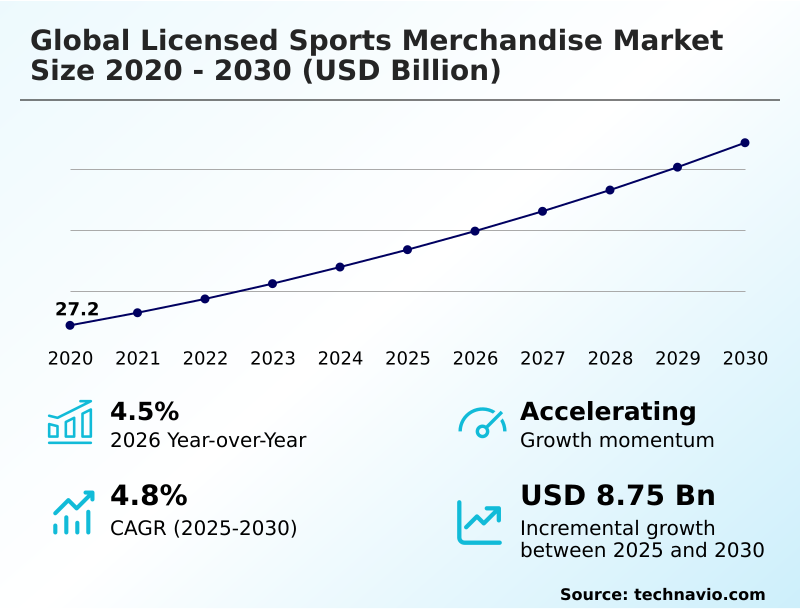
The licensed sports merchandise market size is valued to increase by USD 8.75 billion, at a CAGR of 4.8% from 2025 to 2030. Design and material innovations leading to product premiumization will drive the licensed sports merchandise market.
Major Market Trends & Insights
- North America dominated the market and accounted for a 40.8% growth during the forecast period.
- By Distribution Channel - Offline segment was valued at USD 22.59 billion in 2024
- By End-user - Men segment accounted for the largest market revenue share in 2024
Market Size & Forecast
- Market Opportunities: USD 14.94 billion
- Market Future Opportunities: USD 8.75 billion
- CAGR from 2025 to 2030 : 4.8%
Market Summary
- The licensed sports merchandise market is a dynamic segment within the broader apparel, accessories, and luxury goods industry, defined by deep consumer loyalty and increasing commercialization. Growth is fueled by design and material innovations leading to product premiumization, with a notable shift toward sustainable fabrics and performance wear that merges aesthetics with functionality.
- Key trends like the rise of athleisure and demand for fan apparel customization are reshaping product strategies, while celebrity athlete endorsements continue to be a powerful influence on purchasing decisions. However, the market faces challenges from the proliferation of counterfeit goods and the unorganized sector, which erodes brand equity and pressures profit margins.
- In a typical business scenario, a licensor must balance a complex supply chain to deliver high-quality, authentic official team apparel in time for major sporting events, while simultaneously investing in anti-counterfeit technologies like blockchain authenticity tracking to protect its intellectual property and maintain consumer trust in its e-commerce sports retail channels.
- This environment necessitates a robust omnichannel retail strategy to maximize reach and fan engagement.
What will be the Size of the Licensed Sports Merchandise Market during the forecast period?
Get Key Insights on Market Forecast (PDF) Get Free Sample
How is the Licensed Sports Merchandise Market Segmented?
The licensed sports merchandise industry research report provides comprehensive data (region-wise segment analysis), with forecasts and estimates in "USD million" for the period 2026-2030, as well as historical data from 2020-2024 for the following segments.
- Distribution channel
- Offline
- Online
- End-user
- Men
- Women
- Children
- Type
- Apparel
- Footwear
- Accessories
- Sports equipment
- Others
- Geography
- North America
- US
- Canada
- Mexico
- Europe
- Germany
- UK
- France
- APAC
- China
- India
- Japan
- South America
- Brazil
- Argentina
- Middle East and Africa
- Saudi Arabia
- UAE
- South Africa
- Rest of World (ROW)
- North America
By Distribution Channel Insights
The offline segment is estimated to witness significant growth during the forecast period.
The offline segment remains a foundational pillar, offering tactile consumer experiences that digital platforms cannot fully replicate.
This channel, which includes specialty stores and stadium retail solutions, provides immediate product gratification and allows fans to verify the quality of high-value fan wear and athletic footwear.
In-person retail, including pop-up retail events, fosters community and drives sales of game-day apparel and sports equipment branding, accounting for a significant 44.4% of consumer interactions.
Brands are enhancing this channel by integrating an omnichannel retail strategy, transforming physical locations into fulfillment hubs for collectible merchandise and even supporting on-demand manufacturing, bridging the gap between digital browsing and physical acquisition for pro sports merchandise.
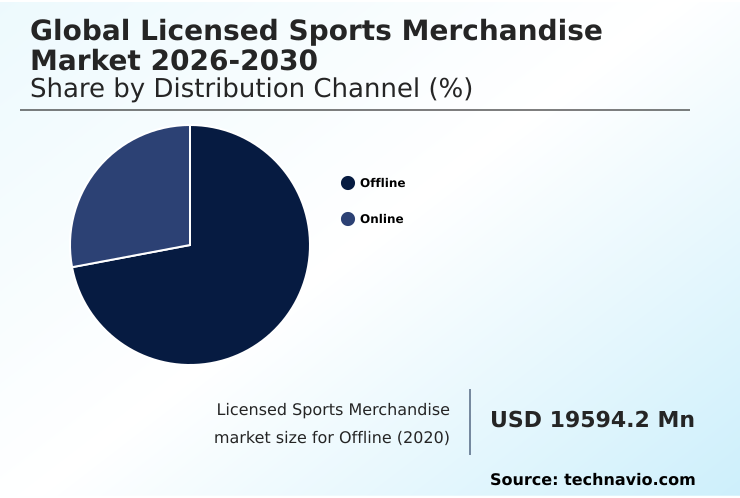
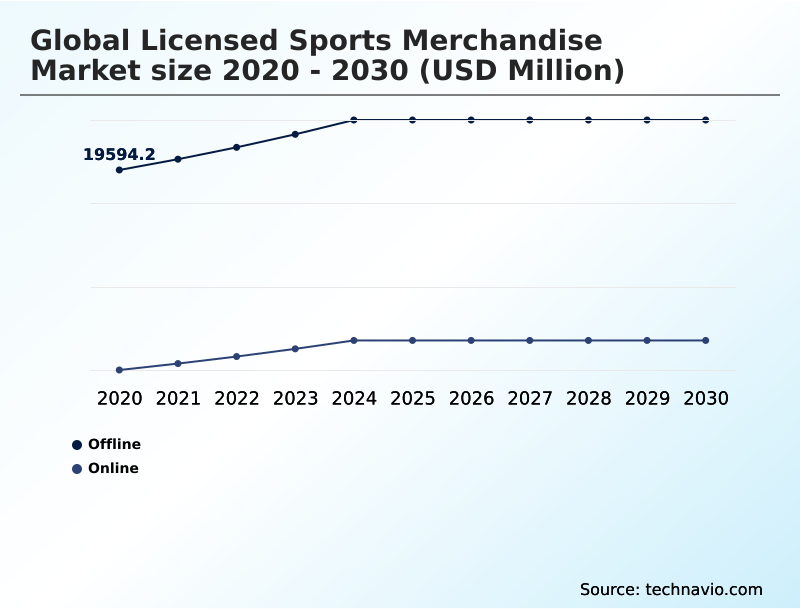
The Offline segment was valued at USD 22.59 billion in 2024 and showed a gradual increase during the forecast period.
Regional Analysis
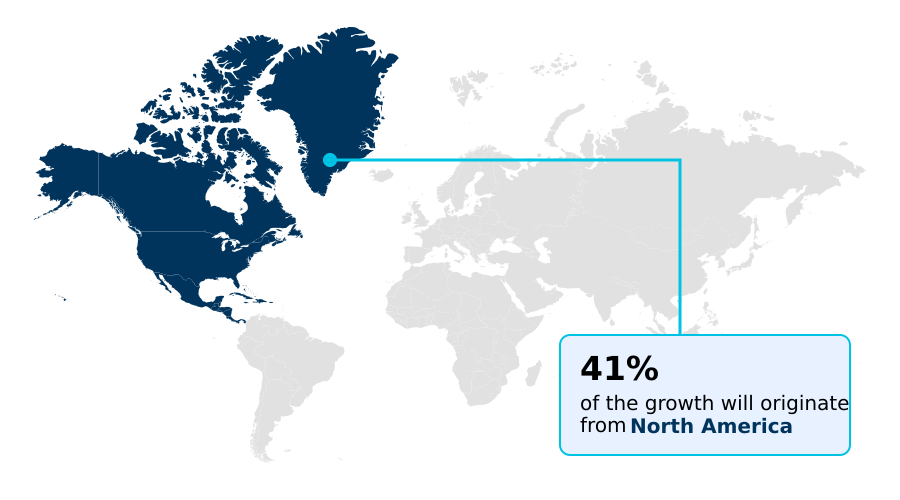
North America is estimated to contribute 40.8% to the growth of the global market during the forecast period.Technavio’s analysts have elaborately explained the regional trends and drivers that shape the market during the forecast period.
See How Licensed Sports Merchandise Market Demand is Rising in North America Get Free Sample
The geographic landscape is led by North America, which accounts for 40.8% of incremental growth, driven by a mature sports ecosystem and high consumer spending on licensed fan gear.
This region shows a faster growth rate compared to APAC, 5.3% versus 4.2%, respectively. The European market, securing 27.04% of new growth, is fueled by football's popularity and strong demand for official league jerseys.
In contrast, APAC represents the fastest-growing region, where rising disposable incomes and burgeoning e-commerce sports retail infrastructure are expanding access to international sports memorabilia market products like women's fan apparel and limited-edition product drops.
Celebrity athlete endorsements and the introduction of tech-integrated jerseys and digital collectibles using recycled polyester blends are key strategies for engaging a global audience.
Market Dynamics
Our researchers analyzed the data with 2025 as the base year, along with the key drivers, trends, and challenges. A holistic analysis of drivers will help companies refine their marketing strategies to gain a competitive advantage.
- The global licensed sports merchandise market is navigating a complex landscape shaped by evolving consumer behaviors and digital transformation. Understanding the impact of endorsements on merchandise sales remains crucial, as high-profile collaborations like the nike skims women activewear line demonstrate how partnerships can drive the growth of women's licensed sports apparel.
- Simultaneously, sustainability trends in sports merchandise production are pushing brands to adopt eco-friendly practices, a core consideration for marketing sports merchandise to gen z. The role of e-commerce in sports merchandise distribution cannot be overstated, yet it also amplifies the challenges of counterfeit sports merchandise, prompting investment in technologies like using blockchain for authenticating collectibles.
- The athleisure trend in licensed team apparel continues to gain momentum, driving the premiumization of official fan wear with items like official college team performance fan gear and nba-branded apparel and performance sportswear.
- Major leagues and events, from mlb-branded baseball gloves and equipment to wimbledon apparel and olympic team uniforms and official football club kits and sneakers, are leveraging this trend.
- Supply chains that successfully implement omnichannel strategies for stadium retail, which integrate physical stores with digital fan engagement platforms to drive sales, report inventory turnover rates up to 40% higher than those relying on traditional, siloed channels. This is where innovations in direct-to-garment printing and understanding how fan engagement platforms drive sales become competitive advantages.
- Exclusive releases like the fanatics nfl rivalries uniforms collection and unique ventures into luxury sailing and sports event collaborations further illustrate the market's diversification, all underpinned by complex technology licensing agreements in sports.
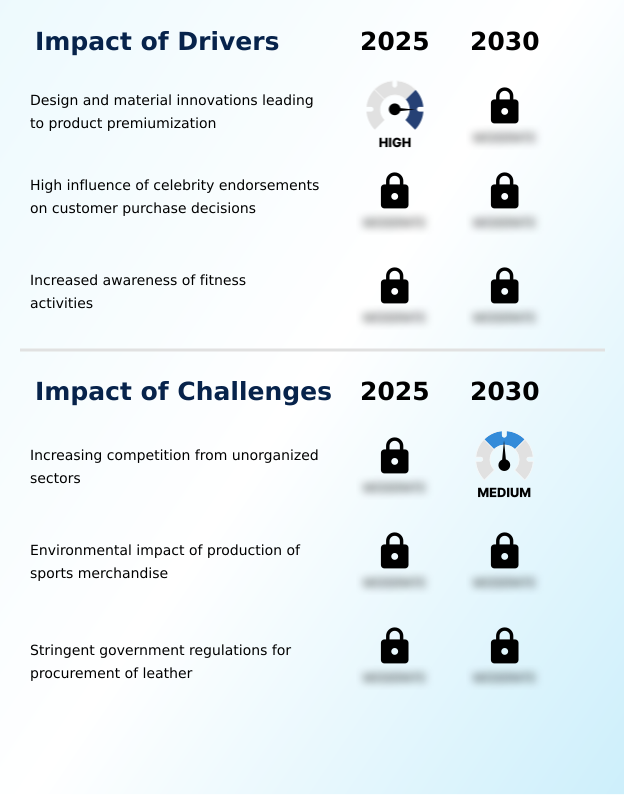
What are the key market drivers leading to the rise in the adoption of Licensed Sports Merchandise Industry?
- Design and material innovations that facilitate product premiumization are a key driver influencing market growth.
- Market growth is significantly propelled by design and material innovations.
- The push for product premiumization is evident in the adoption of sustainable fabrics and advanced smart textiles in performance wear, which resonates with eco-conscious consumers and can boost sports brand loyalty by over 10% among younger demographics.
- Athletic brand collaborations that result in signature edition products and player-endorsed footwear remain a powerful driver, often leading to a sales uplift of 30-40% during launch periods.
- This focus on fan-centric product design, which blends aesthetic appeal with high functionality, allows brands to command higher price points for sustainable sportswear and niche sports merchandise, reinforcing the value of authenticity and innovation.
What are the market trends shaping the Licensed Sports Merchandise Industry?
- The increasing popularity of athleisure represents a significant market trend. This movement reflects a growing consumer desire for versatile apparel that combines comfort with everyday style.
- Key trends are reshaping product strategies and consumer interactions. The rise of athleisure apparel continues to blend sports fashion trends with everyday wear, expanding the market for official team apparel beyond game days. Fan apparel customization is a major force, with platforms offering customized sports apparel reporting a 20% higher repeat purchase rate.
- Digital fan engagement is being enhanced through innovations like virtual try-on technology, which has proven to reduce online return rates by up to 35%. Furthermore, fan engagement platforms are integrating augmented reality collectibles, a strategy that increases user session times by an average of 40%.
- These trends signal a shift toward more personalized and interactive experiences for consumers of pro sports merchandise.
What challenges does the Licensed Sports Merchandise Industry face during its growth?
- Increasing competition from unorganized sectors and counterfeit products presents a key challenge that affects the industry's growth potential.
- The market faces significant challenges, primarily from the proliferation of counterfeit sports merchandise, which is estimated to erode revenues for authentic team-branded footwear and collectible sports jerseys by up to 25% in certain online marketplaces. This forces legitimate vendors to invest in countermeasures like blockchain authenticity tracking.
- Another challenge involves the environmental impact of production, as transitioning to eco-friendly merchandise requires significant capital investment, potentially increasing production costs by 15-20%. Furthermore, stringent sports licensing agreements can limit flexibility, while competition from unorganized sectors offering low-cost youth sports apparel and vintage team apparel via direct-to-garment printing continues to pressure pricing strategies for authentic goods like tech-integrated jerseys.
Exclusive Technavio Analysis on Customer Landscape
The licensed sports merchandise market forecasting report includes the adoption lifecycle of the market, covering from the innovator’s stage to the laggard’s stage. It focuses on adoption rates in different regions based on penetration. Furthermore, the licensed sports merchandise market report also includes key purchase criteria and drivers of price sensitivity to help companies evaluate and develop their market growth analysis strategies.
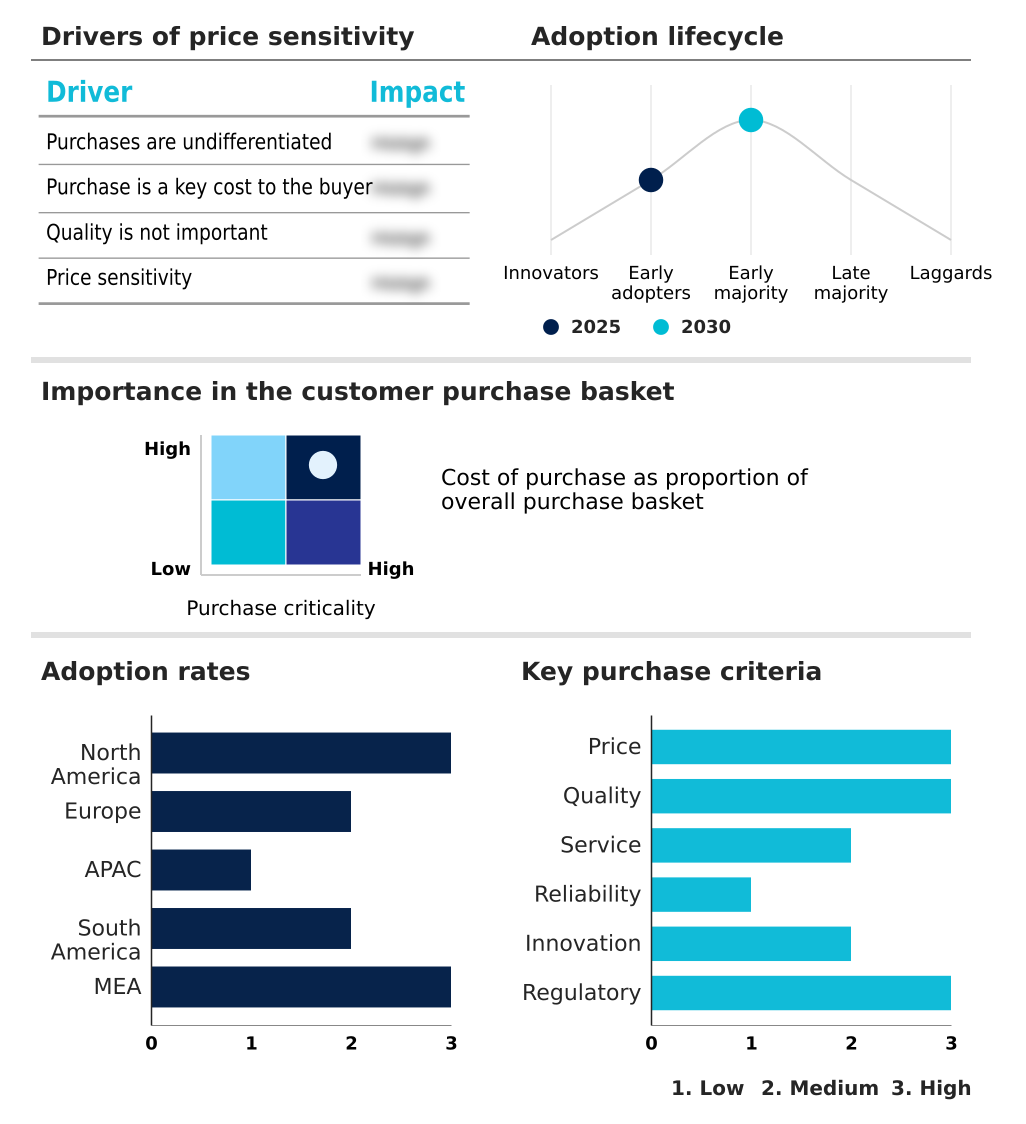
Customer Landscape of Licensed Sports Merchandise Industry
Competitive Landscape
Companies are implementing various strategies, such as strategic alliances, licensed sports merchandise market forecast, partnerships, mergers and acquisitions, geographical expansion, and product/service launches, to enhance their presence in the industry.
47 Brand LLC - Provides a comprehensive range of licensed sports merchandise, encompassing fan gear, jerseys, and collectibles for major professional sports leagues.
The industry research and growth report includes detailed analyses of the competitive landscape of the market and information about key companies, including:
- 47 Brand LLC
- Adidas AG
- ANTA Sports Products Ltd.
- Boardriders Inc.
- Columbia Sportswear Co.
- Fanatics Inc.
- Forever Collectibles
- G III Apparel Group Ltd.
- Hanesbrands Inc.
- Logo Brands Inc.
- New Era Cap LLC
- Nike Inc.
- Outerstuff LLC
- Prada SpA
- PUMA SE
- Ralph Lauren Corp.
- Rawlings Sporting Goods Co.
- Thornico AS
- Under Armour Inc.
- VF Corp.
Qualitative and quantitative analysis of companies has been conducted to help clients understand the wider business environment as well as the strengths and weaknesses of key industry players. Data is qualitatively analyzed to categorize companies as pure play, category-focused, industry-focused, and diversified; it is quantitatively analyzed to categorize companies as dominant, leading, strong, tentative, and weak.
Recent Development and News in Licensed sports merchandise market
- In August 2025, Adidas AG announced a ten-year partnership with the University of Tennessee to become the primary provider of footwear and apparel starting in July 2026.
- In September 2025, Fanatics launched the National Football League Rivalries Uniforms Collection, introducing alternate jerseys for various teams to meet consumer demand for licensed and collectible apparel.
- In September 2025, Nike Inc. introduced the NikeSKIMS Women Activewear Line in a high-profile collaboration, underscoring a strategic pivot toward inclusive and stylish fan apparel for female sports enthusiasts.
- In February 2025, Saudi Arabia's SURJ Sports Investment arm made a substantial investment in the DAZN media group, establishing a joint venture aimed at revolutionizing sports viewership and fan engagement in the MENA region.
Dive into Technavio’s robust research methodology, blending expert interviews, extensive data synthesis, and validated models for unparalleled Licensed Sports Merchandise Market insights. See full methodology.
| Market Scope | |
|---|---|
| Page number | 302 |
| Base year | 2025 |
| Historic period | 2020-2024 |
| Forecast period | 2026-2030 |
| Growth momentum & CAGR | Accelerate at a CAGR of 4.8% |
| Market growth 2026-2030 | USD 8752.1 million |
| Market structure | Fragmented |
| YoY growth 2025-2026(%) | 4.5% |
| Key countries | US, Canada, Mexico, Germany, UK, France, Italy, Spain, The Netherlands, China, India, Japan, South Korea, Australia, Indonesia, Brazil, Argentina, Chile, Saudi Arabia, UAE, South Africa, Turkey and Israel |
| Competitive landscape | Leading Companies, Market Positioning of Companies, Competitive Strategies, and Industry Risks |
Research Analyst Overview
- The licensed sports merchandise market is evolving beyond traditional fan wear, driven by technological integration and a focus on premium, functional products. The production of official league jerseys and team-branded footwear now incorporates smart textiles and sustainable fabrics, appealing to a more discerning consumer. This shift toward high-quality athletic footwear and performance wear is redefining market dynamics.
- Boardroom decisions are increasingly centered on adopting on-demand manufacturing and direct-to-garment printing, with some firms achieving a 30% reduction in inventory holding costs through these agile methods. The rise of athleisure apparel and sports lifestyle apparel continues to blur the lines between sportswear and fashion.
- Strategic initiatives include launching limited-edition product drops of signature edition products and player-endorsed footwear to create exclusivity. To combat counterfeits and enhance fan engagement, companies are investing in blockchain authenticity tracking for collectible merchandise and tech-integrated jerseys.
- Innovations like virtual try-on technology and augmented reality collectibles are becoming central to the omnichannel retail strategy, alongside the development of fan engagement platforms. This focus on customized sports apparel and eco-friendly merchandise made from recycled polyester blends underscores a move toward a more interactive and sustainable industry.
What are the Key Data Covered in this Licensed Sports Merchandise Market Research and Growth Report?
-
What is the expected growth of the Licensed Sports Merchandise Market between 2026 and 2030?
-
USD 8.75 billion, at a CAGR of 4.8%
-
-
What segmentation does the market report cover?
-
The report is segmented by Distribution Channel (Offline, and Online), End-user (Men, Women, and Children), Type (Apparel, Footwear, Accessories, Sports equipment, and Others) and Geography (North America, Europe, APAC, South America, Middle East and Africa)
-
-
Which regions are analyzed in the report?
-
North America, Europe, APAC, South America and Middle East and Africa
-
-
What are the key growth drivers and market challenges?
-
Design and material innovations leading to product premiumization, Increasing competition from unorganized sectors
-
-
Who are the major players in the Licensed Sports Merchandise Market?
-
47 Brand LLC, Adidas AG, ANTA Sports Products Ltd., Boardriders Inc., Columbia Sportswear Co., Fanatics Inc., Forever Collectibles, G III Apparel Group Ltd., Hanesbrands Inc., Logo Brands Inc., New Era Cap LLC, Nike Inc., Outerstuff LLC, Prada SpA, PUMA SE, Ralph Lauren Corp., Rawlings Sporting Goods Co., Thornico AS, Under Armour Inc. and VF Corp.
-
Market Research Insights
- The market is characterized by a strategic focus on enhancing sports brand loyalty and fan-centric product design. Companies are leveraging athletic brand collaborations to expand their reach, with such partnerships showing an ability to increase market penetration in new demographics by over 15%.
- The shift toward fan apparel customization is significant, as personalized items can elevate customer lifetime value by more than 25% compared to standard merchandise. E-commerce sports retail continues to dominate distribution, while physical pop-up retail events and sophisticated stadium retail solutions are used to create immersive game-day apparel experiences.
- As the sports memorabilia market grows, so does the emphasis on niche sports merchandise and curated vintage team apparel lines to capture diverse consumer interests.
We can help! Our analysts can customize this licensed sports merchandise market research report to meet your requirements.
 RIA -
RIA - 
