


North America Industrial Automation Market Size 2025-2029
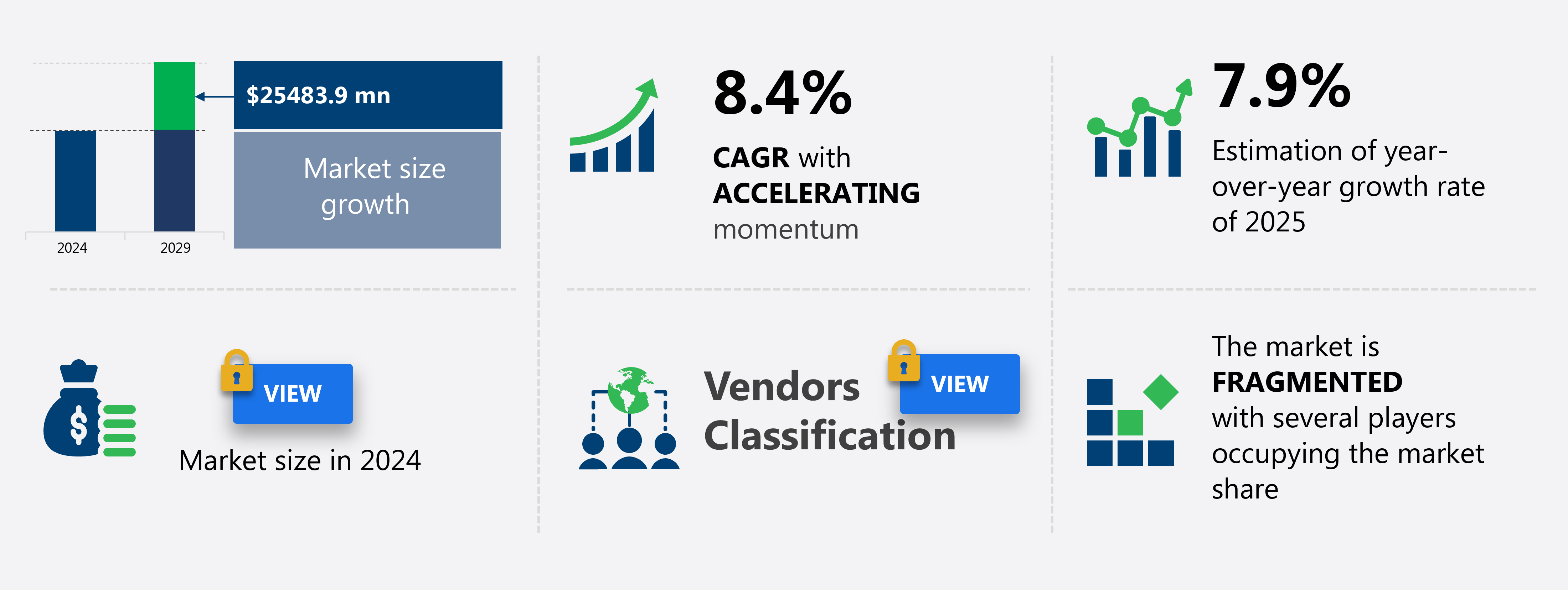
The North America industrial automation market size is forecast to increase by USD 25.48 billion at a CAGR of 8.4% between 2024 and 2029.
- The industrial automation market is experiencing significant growth, driven by the adoption of Industry 4.0 and smart manufacturing. This technological shift towards advanced automation and interconnected systems is transforming production processes, enabling real-time monitoring, predictive maintenance, and increased efficiency. Another growth factor is the increasing trend of mergers and acquisitions In the industry, as companies seek to expand their offerings and enhance their competitive position. However, the market also faces technical challenges, such as ensuring cybersecurity and data privacy, integrating disparate systems, and addressing the skills gap In the workforce. Addressing these challenges will be crucial for market participants to capitalize on the opportunities presented by Industry 4.0 and smart manufacturing. The market analysis report provides an in-depth examination of these trends and challenges, offering valuable insights for stakeholders In the industrial automation industry.
What will be the Size of the market During the Forecast Period?
- The industrial automation market is experiencing significant growth, driven by the increasing demand for asset productivity, return on investment, and operational performance in various industries. Advanced analytics, digitalization, and Industry 4.0 are key trends shaping the market, with the integration of smart sensors, machine data, and artificial intelligence enabling real-time monitoring and predictive maintenance. Wireless technology, including 5G and IoT, is revolutionizing industrial operations with instantaneous services and augmented reality.
- Disruptive technologies, such as digital twin and edge computing, are transforming industrial supply chains and digital operations. Collaborations between companies and government policies are further fueling the adoption of automation solutions, which offer software capabilities for customized manufacturing tools and improved customer experience. Capital costs are being offset by the benefits of cloud systems and digital transformation, making industrial automation an essential component of modern manufacturing.
How is this market segmented and which is the largest segment?
The market research report provides comprehensive data (region-wise segment analysis), with forecasts and estimates in "USD billion" for the period 2025-2029, as well as historical data from 2019-2023 for the following segments.
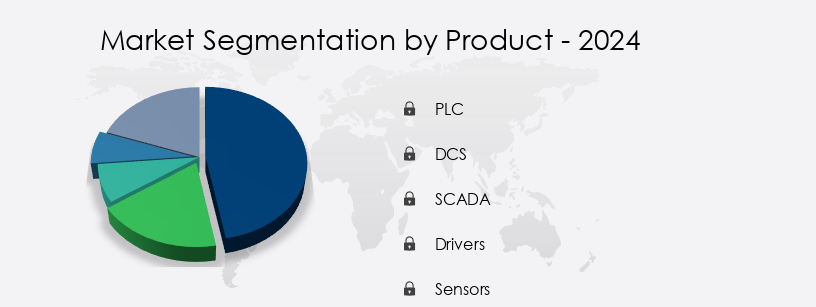
- Product
- PLC
- DCS
- SCADA
- Drivers
- Sensors
- End-user
- Process industry
- Discrete industry
- Geography
- North America
- Canada
- Mexico
- US
- North America
By Product Insights
- The PLC segment is estimated to witness significant growth during the forecast period.
Industrial automation is a critical sector driven by the adoption of Industry 4.0 and digital transformation strategies. The market is characterized by innovation in manufacturing, including cloud-based manufacturing, manufacturing analytics, and predictive maintenance. Industrial automation solutions encompass various technologies such as AI-powered automation, IoT, robotics, and machine learning. These technologies enable real-time insights, process optimization, and cost reduction through lean manufacturing and efficient workflows. Connected factories and supply chains are essential components of the industrial automation landscape. They offer benefits such as supply chain visibility, asset availability, and personalized services. Manufacturing innovation centers and digital manufacturing transformation initiatives are driving the adoption of advanced manufacturing technologies.
Get a glance at the market report of share of various segments Request Free Sample
Market Dynamics
Our North America Industrial Automation Market researchers analyzed the data with 2024 as the base year, along with the key drivers, trends, and challenges. A holistic analysis of drivers will help companies refine their marketing strategies to gain a competitive advantage.
What are the key market drivers leading to the rise in adoption of North America Industrial Automation Market?
Adoption of Industry 4.0 and smart manufacturing is the key driver of the market.
- The market is experiencing significant growth due to the adoption of Industry 4.0 and smart manufacturing. By integrating advanced technologies such as IoT, AI, machine learning, data analytics, and cloud computing, businesses are enhancing manufacturing processes, leading to increased efficiency, productivity, and real-time insights. This digital transformation strategy is making factories more intelligent, interconnected, and responsive, resulting in reduced downtime, improved operational excellence, and cost savings. A crucial component of smart manufacturing is the implementation of real-time monitoring and predictive maintenance. IoT sensors and AI-driven analytics enable continuous machine performance tracking, fault detection, and proactive scheduling of maintenance, minimizing unplanned downtime and operating costs while optimizing asset availability and extending equipment lifespan.
- Moreover, innovation in manufacturing is leading to the development of advanced manufacturing technologies, manufacturing technology centers, and digital manufacturing transformation. These initiatives are focused on process optimization, quality control, virtual commissioning, and supply chain optimization. The implementation of cloud-based manufacturing platforms, customized solutions, and simulation tools is also contributing to the future of manufacturing. To ensure the success of these initiatives, upskilling employees and implementing cybersecurity measures are essential. Employees must be trained to work with digital workforces and smart logistics systems, while cybersecurity protocols must be in place to protect against potential threats.
What are the market trends shaping the North America Industrial Automation Market?
Growing mergers and acquisitions is the upcoming trend In the market.
- The market is experiencing a notable trend of increased mergers and acquisitions, fueled by the imperative to enhance technological capabilities and broaden market reach. This dynamic is underscored by various significant acquisitions in recent years, which have redefined the competitive landscape and driven innovation within the industry. For instance, on October 2, 2023, Rockwell Automation, a prominent global player in industrial automation and digital transformation, finalized its acquisition of Clearpath Robotics' industrial division, OTTO Motors. This strategic deal has fortified Rockwell Automation's presence In the autonomous robotics sector by incorporating autonomous mobile robots (AMRs) into its offerings. The integration of advanced technologies, such as AI-powered automation, IoT, and machine learning, into industrial processes is driving business performance improvements, including cost reduction, process optimization, and operational excellence.
- Additionally, Industry 4.0 adoption is leading to the development of smart factories, digital manufacturing transformation, and connected supply chains, enabling real-time insights, predictive maintenance, and supply chain optimization. Upskilling employees through digital transformation strategies, such as operator training and efficient workflows, is essential to ensuring a digital workforce that can effectively leverage manufacturing analytics and personalized services. Sustainable manufacturing practices are also gaining traction, as businesses seek to minimize manual tasks and improve asset availability through simulation and virtual commissioning. Overall, the future of manufacturing lies in advanced manufacturing technologies and customized solutions that enable data-driven decision making, remote monitoring, and cybersecurity.
What challenges doesNorth America Industrial Automation Market face during the growth?
Technical challenges is a key challenge affecting the market growth.
- Industrial automation is undergoing a digital transformation with the adoption of Industry 4.0, characterized by the integration of the digital workforce, connected supply chains, and innovation in manufacturing. This shift brings benefits such as real-time insights, manufacturing analytics, and predictive maintenance through cloud-based manufacturing platforms and AI-powered automation. However, it also introduces complexities, particularly at the control level, where industrial efficiency is maximized through system integration, machine learning, and data analytics. The control level of industrial automation encompasses PLCs, SCADA, motor drivers, controllers, and DCS. Ensuring the seamless integration of these components is crucial for optimizing manufacturing processes and achieving operational excellence.
- Connected factories and smart manufacturing initiatives rely on IoT technology, virtual commissioning, and operator training for efficient workflows. Moreover, Industry 4.0 adoption necessitates a digital transformation strategy, focusing on supply chain optimization, process optimization, and advanced manufacturing technologies. Sustainable manufacturing practices, such as lean manufacturing and cost reduction, are also essential. Cybersecurity and predictive maintenance are critical considerations to ensure asset availability and maintain industrial efficiency.
Exclusive Customer Landscape
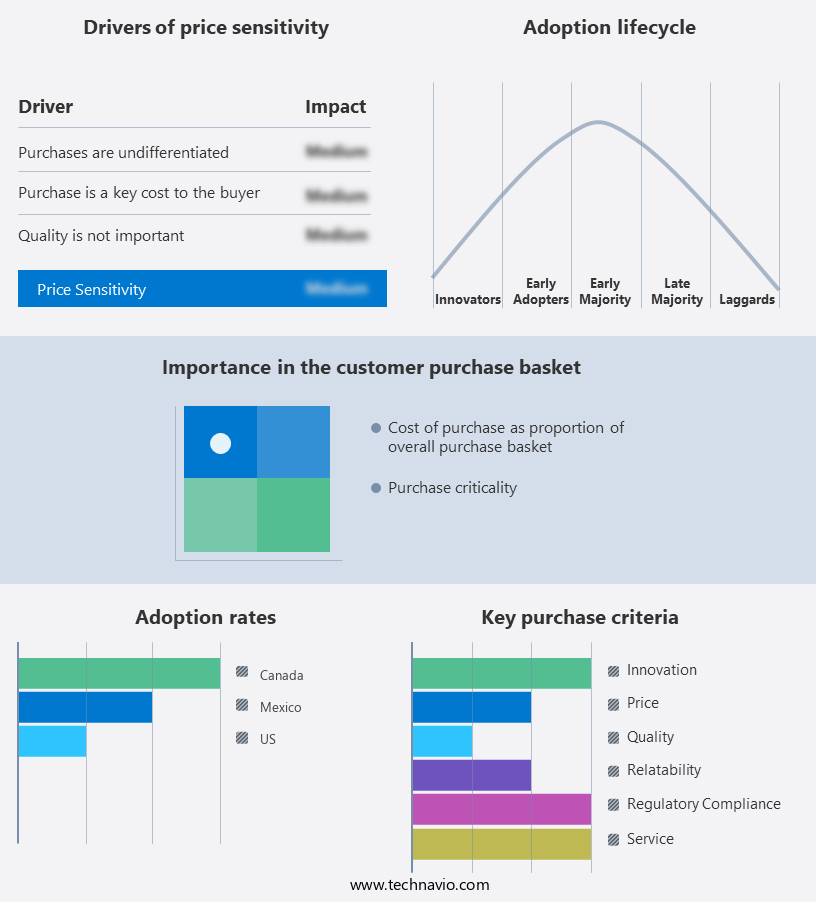
The market forecasting report includes the adoption lifecycle of the market, covering from the innovator's stage to the laggard's stage. It focuses on adoption rates in different regions based on penetration. Furthermore, the market report also includes key purchase criteria and drivers of price sensitivity to help companies evaluate and develop their market growth analysis strategies.
Customer Landscape
Key Companies & Market Insights
Companies are implementing various strategies, such as strategic alliances, market forecast , partnerships, mergers and acquisitions, geographical expansion, and product/service launches, to enhance their presence In the market.
ABB Ltd. - The company offers industrial automation solutions such as ABB Ability Genix Industrial Analytics and AI Suite, combining the power of industrial analytics and artificial intelligence into an enterprise-grade digital platform and suite.
The market research and growth report includes detailed analyses of the competitive landscape of the market and information about key companies, including:
- Azbil Corp.
- Danfoss AS
- Dassault Systemes SE
- Emerson Electric Co.
- Endress Hauser Group Services AG
- FANUC Corp.
- Fuji Electric Co. Ltd.
- GE Vernova Inc.
- Hitachi Ltd.
- Honeywell International Inc.
- KROHNE Messtechnik GmbH
- OmniVision Technologies Inc.
- OMRON Corp.
- Robert Bosch GmbH
- Rockwell Automation Inc.
- Schneider Electric SE
- Siemens AG
- Yokogawa Electric Corp.
Qualitative and quantitative analysis of companies has been conducted to help clients understand the wider business environment as well as the strengths and weaknesses of key market players. Data is qualitatively analyzed to categorize companies as pure play, category-focused, industry-focused, and diversified; it is quantitatively analyzed to categorize companies as dominant, leading, strong, tentative, and weak.
Research Analyst Overview
Industrial automation is a critical aspect of modern business performance, particularly In the context of Industry 4.0 adoption. This revolutionary approach to manufacturing integrates digital technologies into industrial processes, creating a digital workforce and connected supply chain. Innovation in manufacturing is at the forefront of this transformation, with cloud-based manufacturing and real-time insights playing essential roles. Manufacturing analytics provides valuable data for process optimization and digital transformation strategy. Smart factories, powered by IoT technology and AI-powered automation, enable predictive maintenance, remote monitoring, and cybersecurity. These advancements contribute to increased asset availability, industrial efficiency, and data-driven decision making. Connected factories and supply chain optimization are integral components of Industry 4.0.
In addition, manufacturing technology, including machine learning and data analytics, enables personalized services and customized solutions. Cloud computing and system integration facilitate efficient workflows and operational excellence. The future of manufacturing lies in Industry 4.0 initiatives, which include smart manufacturing, Industry 4.0 consulting, and software providers. These initiatives focus on upskilling employees, sustainability, and lean manufacturing. Simulation and virtual commissioning are essential tools for optimizing manufacturing processes. AI-powered automation and robotics are transforming manufacturing, enabling cost reduction and improving quality control. Smart logistics and digital manufacturing transformation are essential for maintaining a competitive edge in today's market.
Furthermore, cybersecurity is a critical concern In the context of Industry 4.0, with the need for secure data and communication channels. Predictive maintenance and remote monitoring help ensure operational excellence and minimize downtime. The integration of AI, robotics, and IoT technology is transforming the industry, creating a digital workforce and connected supply chain.
|
Market Scope |
|
|
Report Coverage |
Details |
|
Page number |
186 |
|
Base year |
2024 |
|
Historic period |
2019-2023 |
|
Forecast period |
2025-2029 |
|
Growth momentum & CAGR |
Accelerate at a CAGR of 8.4% |
|
Market growth 2025-2029 |
USD 25.48 billion |
|
Market structure |
Fragmented |
|
YoY growth 2024-2025(%) |
7.9 |
|
Competitive landscape |
Leading Companies, Market Positioning of Companies, Competitive Strategies, and Industry Risks |
What are the Key Data Covered in this Market Research and Growth Report?
- CAGR of the market during the forecast period
- Detailed information on factors that will drive the market growth and forecasting between 2025 and 2029
- Precise estimation of the size of the market and its contribution of the market in focus to the parent market
- Accurate predictions about upcoming market growth and trends and changes in consumer behaviour
- Growth of the market across North America
- Thorough analysis of the market's competitive landscape and detailed information about companies
- Comprehensive analysis of factors that will challenge the growth of market companies
We can help! Our analysts can customize this market research report to meet your requirements. Get in touch
 RIA -
RIA - 
