
Enjoy complimentary customisation on priority with our Enterprise License!
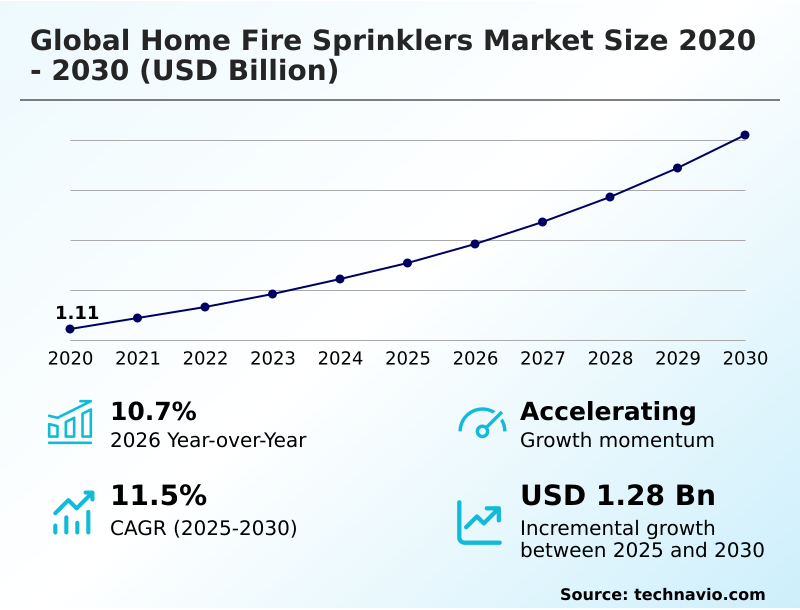
The home fire sprinklers market size is forecast to increase by USD 988.8 million at a CAGR of 10.9% between 2023 and 2028. The market is witnessing significant growth due to the increasing demand for enhanced fire safety systems in residential buildings. Factors such as urbanization and infrastructure development in developing countries, as well as mergers and acquisitions in the industry, are driving market expansion. However, the high initial costs of installing home fire sprinkler systems remain a challenge. To address this, innovative solutions like flexible fire sprinklers and the integration of technologies such as motion sensors and infrared surveillance are gaining popularity. These advancements offer improved automation and accuracy, making them suitable for high-risk industries like oil and gas, mining, and petrochemical. Indoor fire sprinklers are also becoming increasingly important as fire hazards are not limited to industrial settings. Overall, the market is poised for continued growth as safety concerns become a top priority.
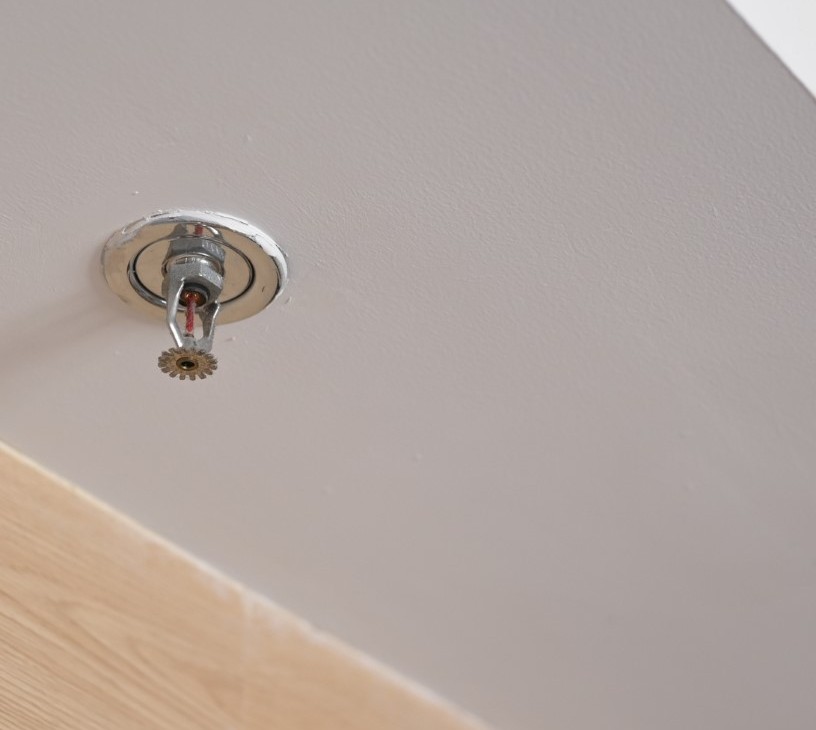
The market has gained significant traction in recent years due to the increasing focus on fire safety in both residential and commercial sectors. Fire sprinkler systems play a crucial role in mitigating the risk of fire-related incidents and ensuring public safety. Fire sprinklers are essential components of fire protection systems, designed to detect and suppress fires in their early stages. These systems are installed in various types of buildings, including commercial structures, residential dwellings, industrial facilities, infrastructure projects, and more. The importance of fire safety in residential buildings cannot be overstated.
Also, according to the National Fire Protection Association (NFPA), home fires cause an average of three deaths and 16 injuries per day in the United States. Fire sprinklers significantly reduce the risk of fatalities and injuries by providing a rapid and effective response to fires. The integration of advanced technologies, such as the Internet of Things (IoT) and artificial intelligence (AI), has led to the development of smart fire detection and suppression systems. These systems utilize smart sensors, motion detectors, infrared surveillance, and other advanced technologies to detect fires and initiate the sprinkler response. Government regulations and initiatives, such as the Green Deal Initiative and the push for energy-efficient buildings, have further fueled the demand for cost-effective and aesthetically pleasing fire suppression systems.
Moreover, these systems not only provide essential fire safety features but also contribute to the overall infrastructure and design of the building. Construction requirements for new residential buildings increasingly mandate the installation of fire sprinkler systems. Insurance benefits, such as lower premiums and coverage for fire damage, also incentivize homeowners to invest in these systems. The pipe infrastructure for fire sprinklers is a critical aspect of their installation and maintenance. Proper design, installation, and regular inspections ensure the effective functioning of the system and minimize the risk of false alarms or malfunctions. In conclusion, the market is experiencing steady growth due to the increasing focus on fire safety, the integration of advanced technologies, and regulatory requirements. These systems provide a cost-effective, reliable, and aesthetically pleasing solution for mitigating the risk of home fires and ensuring public safety.
The market research report provides comprehensive data (region-wise segment analysis), with forecasts and estimates in "USD million" for the period 2024-2028, as well as historical data from 2018-2022 for the following segments.
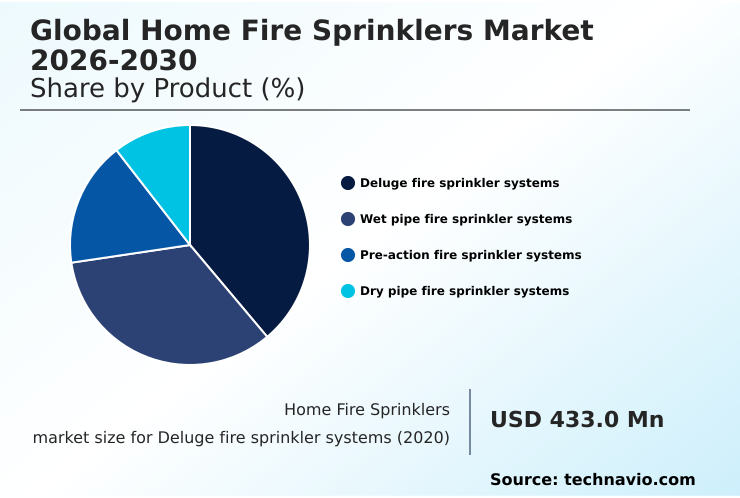
The deluge fire sprinkler systems segment is estimated to witness significant growth during the forecast period. Deluge fire sprinkler systems represent a specialized fire protection solution, particularly effective in high-risk environments where swift fire suppression is essential. Unlike traditional wet pipe systems, deluge systems utilize open sprinkler heads, which are linked to an unpressurized dry pipe. Upon activation, a deluge valve releases a substantial volume of water from all sprinkler heads concurrently, making it highly efficient in suppressing fast-spreading fires. These systems are commonly employed in industrial facilities, aircraft hangars, and areas housing flammable liquids or hazardous materials.
Moreover, building design codes and safety regulations mandate the implementation of preventative actions against home fires, making deluge sprinkler systems increasingly popular for residential premises. Deluge technology's ability to rapidly suppress fires makes it an invaluable investment for ensuring safety and minimizing potential damage. Distribution networks of fire protection equipment and services companies play a significant role in facilitating the adoption and installation of deluge systems. Safety improvements and the growing awareness of the importance of fire safety further fuel the demand for these systems.
Get a glance at the market share of various segments Request Free Sample
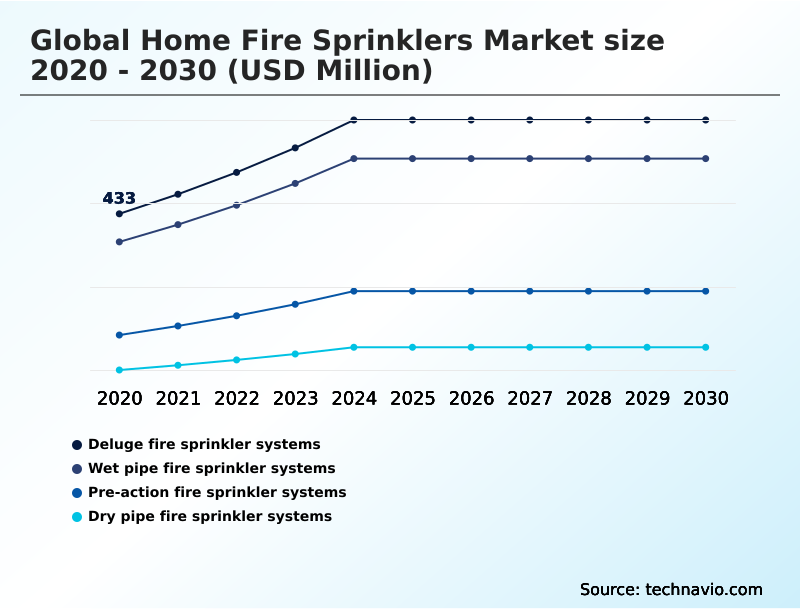
The deluge fire sprinkler systems segment was valued at USD 424.70 million in 2018 and showed a gradual increase during the forecast period.
APAC is estimated to contribute 46% to the growth of the global market during the forecast period. Technavio's analysts have elaborately explained the regional trends and drivers that shape the market during the forecast period.

For more insights on the market share of various regions Request Free Sample
The Asia-Pacific (APAC) region is experiencing significant growth in the market due to increasing construction activities, urbanization, and heightened fire safety regulations. Countries such as China, Japan, India, and Australia are leading this growth, with governments mandating fire protection systems in new residential projects, particularly in urban areas with high population density. The need for improved fire safety measures is highlighted by the increasing number of fire-related incidents and resulting property damage. For instance, the National Crimes Records Bureau (NCRB) report in India underscores the importance of fire safety, focusing on the need for comprehensive fire protection systems, including home fire sprinklers.
In line with this, the National Building Code (NBC) and guidelines from the National Disaster Management Authority (NDMA) in India also focus on the importance of fire protection systems. This trend is expected to continue, driving demand for home fire sprinklers in the APAC region. From a business perspective, the Green Deal initiative and focus on energy-efficient buildings in Europe and North America may also create opportunities for home fire sprinkler market growth, as these structures prioritize fire safety and energy efficiency.
Our researchers analyzed the data with 2023 as the base year, along with the key drivers, trends, and challenges. A holistic analysis of drivers will help companies refine their marketing strategies to gain a competitive advantage.
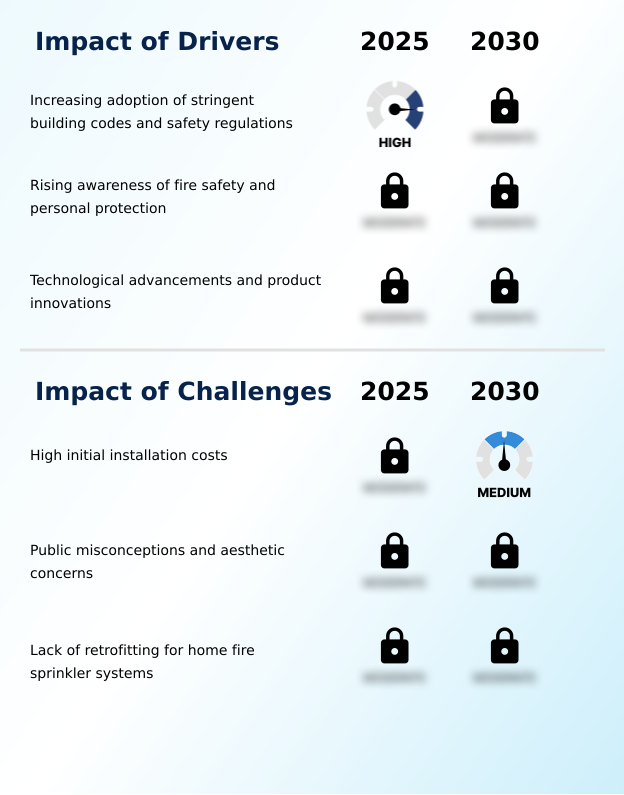
The rapid urbanization and infrastructure development in developing countries is the key driver of the market. In the United States, as urban populations continue to grow, particularly in high-density areas such as apartment complexes, multi-family homes, and high-rise buildings, ensuring fire safety becomes increasingly important. These structures accommodate a significant number of residents, making fire prevention a top priority. Advanced fire safety systems, including home fire sprinklers, are essential in minimizing potential damage and loss of life.
Moreover, both systems are crucial in safeguarding buildings against fire damage. smoke detection technologies play a vital role in fire safety, providing early warning systems that enable occupants to evacuate safely. Gas-based suppression systems, another essential fire safety measure, are designed to suppress fires by discharging a gas that smothers the flames. Building codes mandate the installation of fire safety systems in new construction projects. Smart buildings, which integrate advanced technologies to optimize energy usage and improve safety, are increasingly popular. High-rise buildings, in particular, benefit from these systems, as they house a large number of residents and have multiple floors, increasing the risk of a fire spreading. Installation and maintenance of these fire safety systems are crucial to ensure their effectiveness. Regular inspections and timely repairs are essential to maintain their optimal functioning. By investing in fire safety systems, building owners and managers can provide a safer environment for their residents while adhering to regulatory requirements.
The growing mergers and acquisitions in global home fire sprinklers market is the upcoming trend in the market. Major players in the fire sprinkler market are expanding their presence and enhancing their offerings through strategic acquisitions. By integrating Automatic Fire Sprinklers' expertise and resources, Pye-Barker can offer more comprehensive fire safety solutions and meet the growing demand for advanced fire protection systems in high-risk industries. Motion sensors and infrared surveillance are becoming increasingly important in indoor fire sprinkler systems to detect fires early and minimize damage. Flexible fire sprinklers are also gaining popularity due to their ability to adapt to various building designs and configurations. Automation and integration with other building systems are also key trends in the fire sprinkler market, enabling real-time monitoring and response to fire hazards.
The high initial costs of home fire sprinkler systems is a key challenge affecting the market growth. Fire sprinkler systems are essential components of risk mitigation strategies for both new and existing residential properties in the United States. These systems play a crucial role in fire suppression and adhering to insurance requirements. The average American home, which ranges from 1,900 to 2,164 square feet, may cost between USD 2,000 and USD 5,000 for a new installation. Retrofitting existing buildings can be more expensive, with costs ranging from USD 2 to USD 7 per square foot. The integration of technology, such as Internet of Things (IoT), Artificial Intelligence (AI), smart sensors, and panic buttons, has significantly enhanced the functionality and efficiency of fire protection systems.
Moreover, government regulations mandate the installation of these advanced systems in public safety structures, further focusing on their importance. Installing a fire sprinkler system is an investment in safety and peace of mind, ensuring the protection of life and property.
The market forecasting report includes the adoption lifecycle of the market, covering from the innovator's stage to the laggard's stage. It focuses on adoption rates in different regions based on penetration. Furthermore, the report also includes key purchase criteria and drivers of price sensitivity to help companies evaluate and develop their market growth analysis strategies.

Customer Landscape
Companies are implementing various strategies, such as strategic alliances, partnerships, mergers and acquisitions, geographical expansion, and product/service launches, to enhance their presence in the market.
Autoquench: The company offers home fire sprinklers such as low flow sprinkler heads, each operating independently, ensures that only a limited amount of water is used to control a fire.
The market research and growth report includes detailed analyses of the competitive landscape of the market and information about key companies, including:
Qualitative and quantitative analysis of companies has been conducted to help clients understand the wider business environment as well as the strengths and weaknesses of key market players. Data is qualitatively analyzed to categorize companies as pure play, category-focused, industry-focused, and diversified; it is quantitatively analyzed to categorize companies as dominant, leading, strong, tentative, and weak.
Fire sprinkler systems play a crucial role in ensuring fire safety in various types of structures, including commercial buildings, residential buildings, industrial facilities, infrastructure projects, and high-rise buildings. The increasing focus on fire prevention and safety measures in the construction industry has led to the adoption of advanced fire suppression technologies. These systems help mitigate the risk of property damage and human loss during fire-related incidents. The market for fire sprinkler systems is driven by several factors, including government regulations, insurance requirements, and safety improvements. The integration of smart technologies such as the Internet of Things (IoT), artificial intelligence (AI), and smart sensors in fire protection systems has led to cost-effective and energy-efficient solutions. Flexible fire sprinkler systems are gaining popularity in high-risk industries, such as oil and gas, mining, petrochemical, and smart manufacturing. Infrared surveillance, motion sensors, panic buttons, and smart sensors are essential components of modern fire sprinkler systems.
Also, the use of fire sprinkler systems is not limited to commercial and industrial applications but is also gaining popularity in residential premises. Wetpipe and drypipe sprinkler systems are commonly used in various applications, with the choice of system depending on the specific fire hazards and building design codes. Flexible fire sprinkler systems are increasingly being used in high-risk industries such as oil and gas, mining, petrochemical, and automation. These systems offer advantages such as automated fire response, real-time fire alarms, and remote monitoring, making them ideal for large-scale industrial applications. The market for fire sprinkler systems is expected to grow due to the increasing number of fire incidents and the need for cost-effective and aesthetically pleasing fire suppression systems. The integration of green initiatives such as water conservation and discreet design is also driving the market's growth. Public awareness and government programs aimed at promoting fire safety are also expected to boost the market's growth.
|
Market Scope |
|
|
Report Coverage |
Details |
|
Page number |
204 |
|
Base year |
2023 |
|
Historic period |
2018-2022 |
|
Forecast period |
2024-2028 |
|
Growth momentum & CAGR |
Accelerate at a CAGR of 10.9% |
|
Market growth 2024-2028 |
USD 988.8 million |
|
Market structure |
Fragmented |
|
YoY growth 2023-2024(%) |
10.05 |
|
Regional analysis |
APAC, North America, Europe, Middle East and Africa, and South America |
|
Performing market contribution |
APAC at 46% |
|
Key countries |
US, China, Canada, Japan, and Russia |
|
Competitive landscape |
Leading Companies, Market Positioning of Companies, Competitive Strategies, and Industry Risks |
|
Key companies profiled |
Autoquench, Fields Fire Protection, Fireline Corp., G.w. Sprinkler A S, General International Group, Georg Fischer Ltd., HD Fire Protect Pvt. Ltd., iCO Products, Johnson Controls International Plc., Minimax GmbH, NAFFCO FZCO, Northwest Fire Systems, Polyteck Building Services Ltd, PTSG, Pye-Barker Fire and Safety LLC, RAD Fire Sprinklers Ltd., REHAU Ltd., The Reliable Automatic Sprinkler Co. Inc., United Fire Protection Corp, Varistor Technologies Pvt. Ltd., and Victaulic Co. |
|
Market dynamics |
Parent market analysis, market growth inducers and obstacles, market forecast, fast-growing and slow-growing segment analysis, COVID-19 impact and recovery analysis and future consumer dynamics, market condition analysis for the forecast period |
|
Customization purview |
If our market report has not included the data that you are looking for, you can reach out to our analysts and get segments customized. |
We can help! Our analysts can customize this market research report to meet your requirements. Get in touch
1 Executive Summary
2 Technavio Analysis
3 Market Landscape
4 Market Sizing
5 Historic Market Size
6 Qualitative Analysis
7 Five Forces Analysis
8 Market Segmentation by Product
9 Market Segmentation by Type
10 Customer Landscape
11 Geographic Landscape
12 Drivers, Challenges, and Opportunity/Restraints
13 Competitive Landscape
14 Competitive Analysis
15 Appendix
Research Framework
Technavio presents a detailed picture of the market by way of study, synthesis, and summation of data from multiple sources. The analysts have presented the various facets of the market with a particular focus on identifying the key industry influencers. The data thus presented is comprehensive, reliable, and the result of extensive research, both primary and secondary.
INFORMATION SOURCES
Primary sources
Secondary sources
DATA ANALYSIS
Data Synthesis
Data Validation
REPORT WRITING
Qualitative
Quantitative
Get the report (PDF) sent to your email within minutes.
Complimentary full Excel data with your report purchase.
Get lifetime access to our
Technavio Insights
Quick Report Overview:
Cookie Policy
The Site uses cookies to record users' preferences in relation to the functionality of accessibility. We, our Affiliates, and our Vendors may store and access cookies on a device, and process personal data including unique identifiers sent by a device, to personalise content, tailor, and report on advertising and to analyse our traffic. By clicking “I’m fine with this”, you are allowing the use of these cookies. Please refer to the help guide of your browser for further information on cookies, including how to disable them. Review our Privacy & Cookie Notice.