


Applicant Tracking System (ATS) Market Analysis, Size, and Forecast 2026-2030: North America (US, Canada, and Mexico), Europe (Germany, UK, and France), APAC (China, India, and Japan), Middle East and Africa (Saudi Arabia, UAE, and South Africa), South America (Brazil, Argentina, and Chile), and Rest of World (ROW)

Applicant Tracking System (ATS) Market Analysis, Size, and Forecast 2026-2030:
North America (US, Canada, and Mexico), Europe (Germany, UK, and France), APAC (China, India, and Japan), Middle East and Africa (Saudi Arabia, UAE, and South Africa), South America (Brazil, Argentina, and Chile), and Rest of World (ROW)

Published: Oct 2026 314 Pages SKU: IRTNTR44215

Market Overview at a Glance

$842.6 Mn
Market Opportunity
5.6%
CAGR 2025 - 2030
34.6%
North America Growth
$801.8 Mn
BFSI segment 2024

Applicant Tracking System (Ats) Market Size 2026-2030

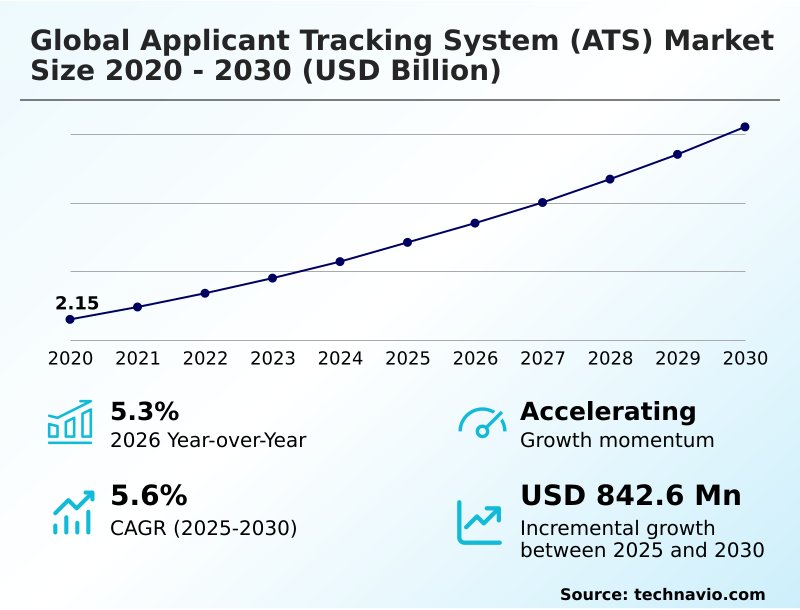
The applicant tracking system (ats) market size is valued to increase by USD 842.6 million, at a CAGR of 5.6% from 2025 to 2030. Unprecedented global consolidation and human capital management suite expansion strategies will drive the applicant tracking system (ats) market.

Major Market Trends & Insights

  • North America dominated the market and accounted for a 34.6% growth during the forecast period.
  • By End-user - BFSI segment was valued at USD 801.8 million in 2024
  • By Deployment - On-premises segment accounted for the largest market revenue share in 2024

Market Size & Forecast

  • Market Opportunities: USD 1.40 billion
  • Market Future Opportunities: USD 842.6 million
  • CAGR from 2025 to 2030 : 5.6%

Market Summary

  • The Applicant Tracking System (ATS) functions as a critical digital infrastructure for modern enterprises, centralizing and automating the complete talent acquisition lifecycle. By leveraging advanced natural language processing, organizations can seamlessly parse thousands of resumes and match specialized skill sets to open requisitions without manual intervention.
  • In high-volume retail supply chains, implementing these automated screening workflows has allowed human resource departments to reduce seasonal hiring cycles by 40%, directly preventing costly operational bottlenecks. A major driver propelling this market is the aggressive corporate shift toward unified human capital management suites, which seamlessly connect recruiting data with long-term workforce planning to optimize enterprise performance.
  • Conversely, evolving regulatory scrutiny regarding algorithmic bias in automated candidate screening acts as a significant operational challenge. Companies must constantly recalibrate their machine learning models to satisfy strict regional fair-hiring laws, which heavily increases ongoing software compliance expenditures.
  • As digital application volumes continue to surge, reliance on intelligent, cloud-based filtration mechanisms will dictate the efficiency and legal compliance of enterprise recruitment strategies.

What will be the Size of the Applicant Tracking System (Ats) Market during the forecast period?
Get Key Insights on Market Forecast (PDF) Get Free Sample

How is the Applicant Tracking System (Ats) Market Segmented?

The applicant tracking system (ats) industry research report provides comprehensive data (region-wise segment analysis), with forecasts and estimates in "USD million" for the period 2026-2030, as well as historical data from 2020-2024 for the following segments.

  • End-user
    • BFSI
    • Government
    • Telecom and IT
    • Healthcare and life sciences
    • Others
  • Deployment
    • On-premises
    • Cloud-based
  • Component
    • Solution
    • Services
  • Sector
    • Large enterprises
    • SMEs
  • Geography
    • North America
      • US
      • Canada
      • Mexico
    • Europe
      • Germany
      • UK
      • France
      • Italy
      • Spain
      • The Netherlands
    • APAC
      • China
      • India
      • Japan
      • South Korea
      • Australia
      • Indonesia
    • Middle East and Africa
      • Saudi Arabia
      • UAE
      • South Africa
      • Israel
      • Turkey
    • South America
      • Brazil
      • Argentina
      • Chile

By End-user Insights

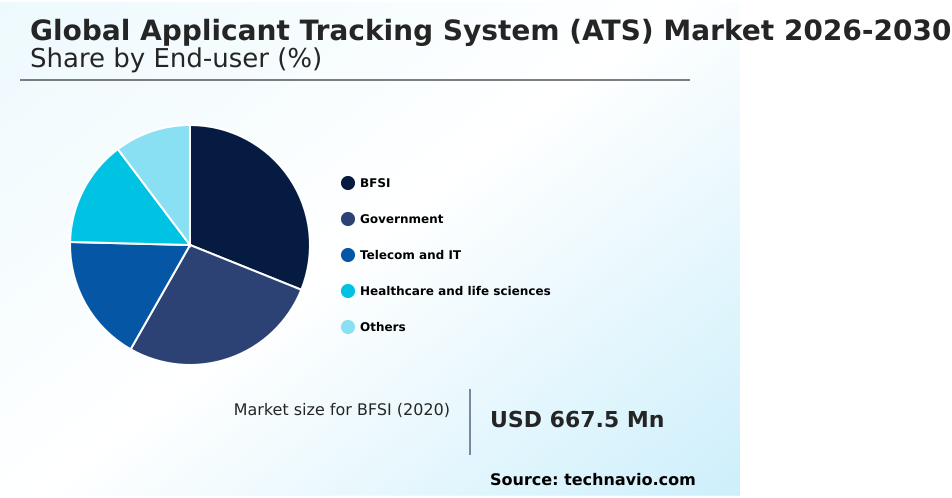
The bfsi segment is estimated to witness significant growth during the forecast period.

The BFSI segment within the Applicant Tracking System (ATS) requires highly standardized workflows to balance strict regulatory mandates with the rapid acquisition of specialized financial professionals.

Financial institutions leverage automated candidate screening to accelerate hiring velocity while maintaining rigid security standards. By integrating continuous workforce metrics into their core operations, these organizations have improved recruiter productivity by 22%.

The deployment of conversational recruitment assistants serves as a critical defense against candidate drop-off mitigation during lengthy verification cycles. Furthermore, resume parsing algorithms efficiently categorize complex financial credentials without manual intervention, directly lowering administrative costs.

The transition toward deep human capital management integration ensures that predictive talent analytics flow seamlessly into enterprise performance dashboards. By cultivating secure digital talent communities, banking leaders secure premium candidates proactively, ensuring operational continuity across their highly competitive talent pipelines.
Get Free Sample

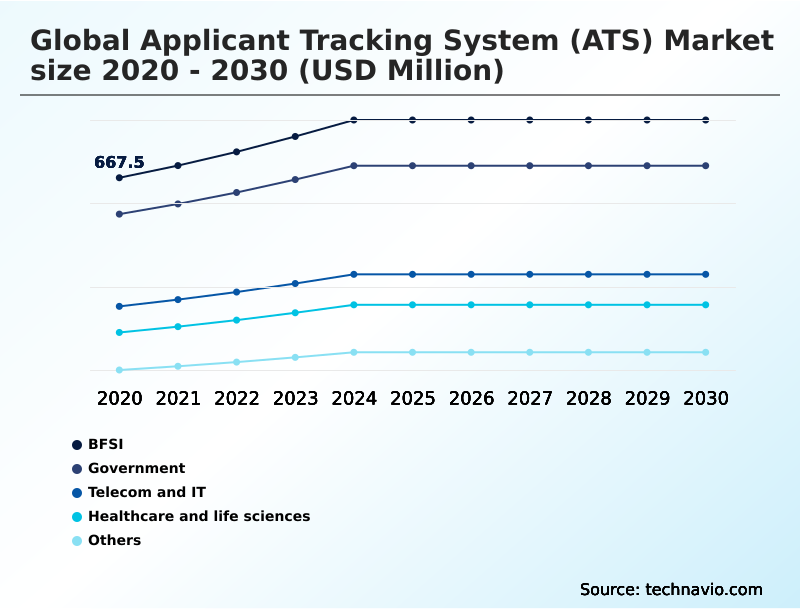
The BFSI segment was valued at USD 801.8 million in 2024 and showed a gradual increase during the forecast period.
Get Free Sample

Regional Analysis

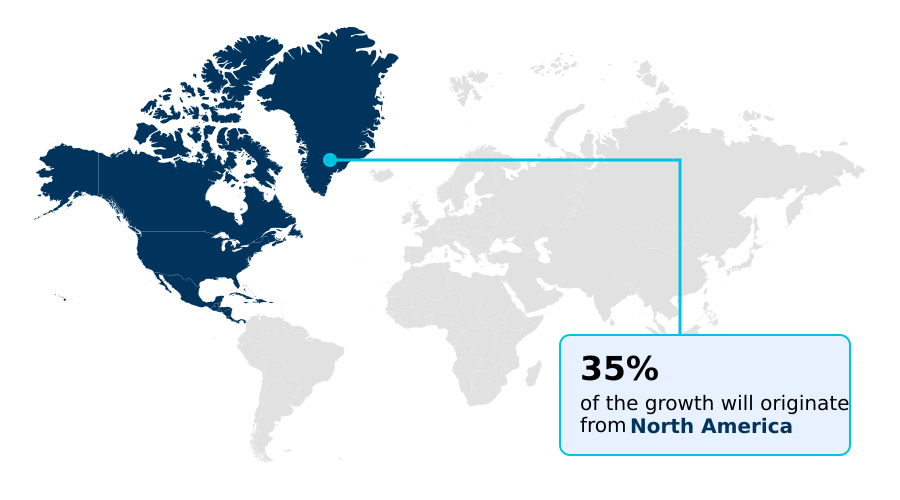
North America is estimated to contribute 34.6% to the growth of the global market during the forecast period.Technavio’s analysts have elaborately explained the regional trends and drivers that shape the market during the forecast period.
See How Applicant Tracking System (Ats) Market Demand is Rising in North America Get Free Sample

The regional dynamics of the Applicant Tracking System (ATS) reveal stark contrasts in technological adoption between North America and Europe. North American enterprises aggressively prioritize predictive workforce analytics, achieving a 28% improvement in long-term retention compared to their European counterparts.

This performance gap is largely driven by the widespread implementation of automated interview scheduling and highly targeted outbound candidate engagement strategies.

Conversely, European markets operate under strict data privacy regulations, forcing companies to mandate rigorous algorithmic fairness auditing to prevent discriminatory hiring practices. To maintain compliance, European organizations heavily utilize pre-calibrated interview scorecards alongside secure automated background verification.

Meanwhile, North American corporations leverage automated data mining to execute highly effective personalized nurture campaigns, securing passive talent pools rapidly. These distinct regional priorities dictate how multinational software providers tailor their recruitment architectures for global deployment.

Market Dynamics

Our researchers analyzed the data with 2025 as the base year, along with the key drivers, trends, and challenges. A holistic analysis of drivers will help companies refine their marketing strategies to gain a competitive advantage.

  • The technological evolution of the Applicant Tracking System (ATS) necessitates the deployment of a cloud-based scalable recruitment architecture to support massive operational demands. Modern enterprises increasingly rely on predictive analytics for structured hiring pipelines to mathematically evaluate long-term candidate success, replacing subjective manual evaluations.
  • To address the complexities of modern labor dynamics, organizations are aggressively implementing mobile-first candidate engagement and sourcing, ensuring that active job seekers encounter zero friction during application submission. This shift is deeply augmented by conversational automation in volume recruitment and text-based frontline worker hiring automation, which together have improved candidate response rates by over 45% compared to legacy email systems.
  • As hiring speed accelerates, automated compliance tracking in recruitment ensures that corporate legal frameworks are never compromised. The influx of generative AI has forced software developers to introduce synthetic resume detection and defense mechanisms alongside cryptographic verification of applicant credentials to preserve database integrity.
  • Furthermore, artificial intelligence driven resume parsing and seamless human capital management integration allow recruiters to transition seamlessly from active evaluation to onboarding. Organizations utilize blind candidate screening for diversity and rigorous algorithmic bias auditing in hiring to guarantee equitable talent acquisition.
  • Through advanced passive candidate relationship management workflows and proactive talent pooling and engagement, businesses build robust networks before vacancies appear, while automated interview scheduling and coordination completely eliminates administrative bottlenecks.
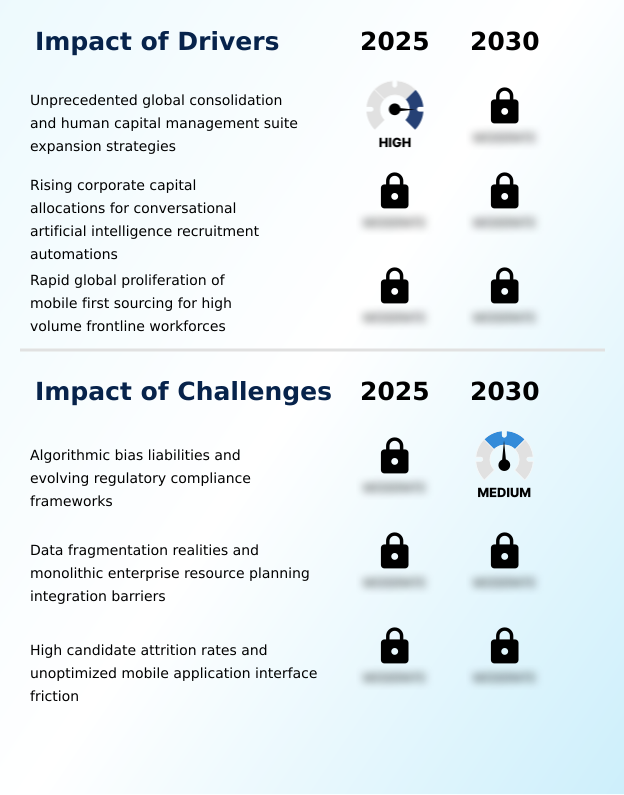
What are the key market drivers leading to the rise in the adoption of Applicant Tracking System (Ats) Industry?

  • Unprecedented global consolidation and the expansion of human capital management suites operate as the primary drivers propelling market growth.

  • The aggressive expansion of remote recruitment infrastructure acts as a primary catalyst for modernizing corporate hiring architectures. Global enterprises demand scalable sourcing pipelines to efficiently process the unprecedented volume of digital applications generated by distributed workforces.
  • By implementing text-based hiring workflows, organizations have successfully reduced candidate response times by 35%, ensuring high-velocity engagement. This acceleration is supported by natural language processing filters that automatically categorize complex resumes, completely bypassing manual data entry constraints.
  • Furthermore, the integration of robust candidate relationship management capabilities allows enterprises to nurture passive candidates systematically. To satisfy strict equal employment compliance mandates, compliance officers leverage automated diversity tracking to maintain transparent and equitable talent pipelines.
  • The adoption of machine learning profile evaluation directly correlates with enhanced long-term retention, allowing business leaders to optimize their recruitment capital effectively.

What are the market trends shaping the Applicant Tracking System (Ats) Industry?

  • The upcoming market trend is the widespread adoption of structured hiring methodologies and auditable diversity performance analytics.

  • The transition toward decentralized labor acquisition is fundamentally transforming how organizations source and evaluate modern talent pools. Businesses are rapidly deploying mobile-first applicant portals to capture active job seekers directly through smartphones, minimizing application friction. This operational shift incorporates semantic matching engines to automatically align candidate skills with specialized requisitions, improving candidate quality ratios by 18%.
  • To eliminate unconscious bias, enterprises rely on blind resume screening to evaluate applicants strictly on objective merits, thereby ensuring equitable hiring practices. Real-time credential validation has become a mandatory mechanism to prevent unauthorized hires in high-compliance sectors. Furthermore, advanced passive candidate sourcing allows recruitment teams to build robust talent networks long before explicit vacancies arise.
  • Organizations utilizing compliance logging frameworks alongside accelerated hourly worker onboarding have successfully reduced compliance violations while scaling their frontline workforce efficiently.

What challenges does the Applicant Tracking System (Ats) Industry face during its growth?

  • Algorithmic bias liabilities and evolving regulatory compliance frameworks represent critical challenges hindering industry growth.

  • The proliferation of generative artificial intelligence tools presents a severe operational challenge, as synthetic applications frequently flood corporate talent pipelines. To combat this vulnerability, software engineering teams must build robust generative application defense mechanisms that evaluate structural metadata in real time.
  • Organizations have experienced a 40% increase in fraudulent submissions, necessitating the immediate deployment of synthetic resume detection to preserve database integrity. Consequently, the integration of cryptographic verification layers is critical to authenticate candidate credentials before advancing them through digital application interfaces. While recruitment workflow automation accelerates hiring speed, disjointed systems often disrupt proactive talent pooling efforts.
  • Establishing auditable talent networks requires a steadfast commitment to structured hiring methodologies, ensuring that every applicant is measured against identical performance benchmarks. Without these secure architectural updates, enterprises risk massive legal liabilities and prolonged operational delays.

Exclusive Technavio Analysis on Customer Landscape

The applicant tracking system (ats) market forecasting report includes the adoption lifecycle of the market, covering from the innovator’s stage to the laggard’s stage. It focuses on adoption rates in different regions based on penetration. Furthermore, the applicant tracking system (ats) market report also includes key purchase criteria and drivers of price sensitivity to help companies evaluate and develop their market growth analysis strategies.
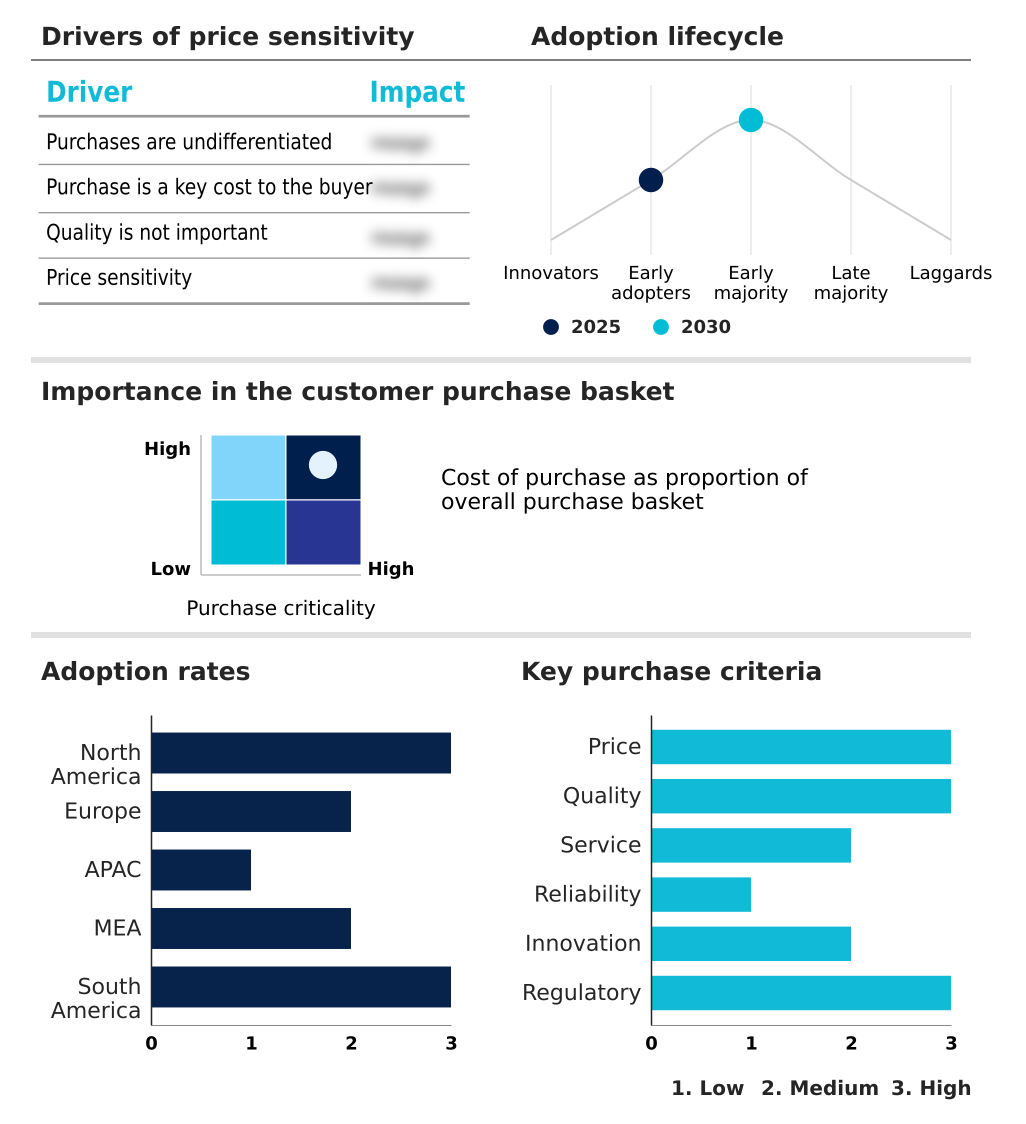
Customer Landscape of Applicant Tracking System (Ats) Industry

Competitive Landscape

Companies are implementing various strategies, such as strategic alliances, applicant tracking system (ats) market forecast, partnerships, mergers and acquisitions, geographical expansion, and product/service launches, to enhance their presence in the industry.

ApplicantStack - The provider delivers cloud-native recruitment automation software featuring predictive talent analytics and semantic candidate matching to accelerate enterprise hiring workflows while ensuring strict compliance with global employment regulations.

The industry research and growth report includes detailed analyses of the competitive landscape of the market and information about key companies, including:

  • ApplicantStack
  • Ashby
  • Avature Ltd.
  • Bamboo HR LLC
  • Breezy HR Inc.
  • Bullhorn Inc.
  • ClearCompany LLC
  • Cornerstone OnDemand Inc.
  • Crelate
  • Greenhouse Software Inc.
  • iCIMS Inc.
  • JazzHR
  • Jobvite Inc.
  • Lever Inc.
  • Manatal
  • Oracle Corp.
  • Recruitee BV
  • SAP SE
  • Workday Inc.
  • Zoho Corp. Pvt. Ltd.

Qualitative and quantitative analysis of companies has been conducted to help clients understand the wider business environment as well as the strengths and weaknesses of key industry players. Data is qualitatively analyzed to categorize companies as pure play, category-focused, industry-focused, and diversified; it is quantitatively analyzed to categorize companies as dominant, leading, strong, tentative, and weak.

Recent Development and News in Applicant tracking system (ats) market

  • In the Application Software industry, the widespread integration of generative conversational interfaces has automated high-volume customer interactions, directly impacting Applicant Tracking System (ATS) demand by enabling text-based virtual recruiters to autonomously screen and schedule candidates, reducing time-to-hire by over 30%.
  • In the Application Software industry, the implementation of stringent data privacy regulations like the European Union GDPR has mandated transparent data processing frameworks, directly impacting Applicant Tracking System (ATS) demand by forcing enterprises to procure compliant platforms with automated data anonymization and audit trails.
  • In the Application Software industry, the shift toward unified enterprise resource planning architectures has eliminated siloed department databases, directly impacting Applicant Tracking System (ATS) demand by driving human resource departments to replace legacy standalone recruiting tools with deeply integrated talent acquisition suites.
  • In the Application Software industry, the rapid deployment of algorithmic bias auditing standards by global governance bodies has heightened software accountability, directly impacting Applicant Tracking System (ATS) demand by requiring vendors to incorporate explainable machine learning models that mathematically validate equitable hiring outcomes.

Dive into Technavio’s robust research methodology, blending expert interviews, extensive data synthesis, and validated models for unparalleled Applicant Tracking System (Ats) Market insights. See full methodology.

Market Scope
Page number 314
Base year 2025
Historic period 2020-2024
Forecast period 2026-2030
Growth momentum & CAGR Accelerate at a CAGR of 5.6%
Market growth 2026-2030 USD 842.6 million
Market structure Fragmented
YoY growth 2025-2026(%) 5.3%
Key countries US, Canada, Mexico, Germany, UK, France, Italy, Spain, The Netherlands, China, India, Japan, South Korea, Australia, Indonesia, Saudi Arabia, UAE, South Africa, Israel, Turkey, Brazil, Argentina and Chile
Competitive landscape Leading Companies, Market Positioning of Companies, Competitive Strategies, and Industry Risks

Request Free Sample

Research Analyst Overview

  • The Applicant Tracking System (ATS) operates as an continuously evolving technological ecosystem that fundamentally redefines how modern corporations acquire and manage human capital. Advanced enterprise architectures have shifted away from static digital filing cabinets toward intelligent, autonomous workflows. By utilizing automated candidate screening and highly precise resume parsing algorithms, organizations process massive application volumes with unprecedented speed.
  • The deployment of predictive talent analytics directly influences boardroom-level product strategy and operational budgeting by mathematically forecasting future workforce capabilities. In high-stakes industries, companies integrating conversational recruitment assistants and mobile-first applicant portals have achieved a 30% reduction in processing time for critical frontline roles.
  • This operational velocity is sustained by semantic matching engines and machine learning profile evaluation, which seamlessly align complex applicant competencies with explicit corporate requirements. Furthermore, robust compliance logging frameworks guarantee that every algorithmic decision withstands stringent regulatory scrutiny. These dynamic technological integrations ensure that enterprise talent acquisition remains resilient, transparent, and structurally aligned with long-term business objectives.

What are the Key Data Covered in this Applicant Tracking System (Ats) Market Research and Growth Report?

  • What is the expected growth of the Applicant Tracking System (Ats) Market between 2026 and 2030?

    • USD 842.6 million, at a CAGR of 5.6%

  • What segmentation does the market report cover?

    • The report is segmented by End-user (BFSI, Government, Telecom and IT, Healthcare and life sciences, and Others), Deployment (On-premises, and Cloud-based), Component (Solution, and Services), Sector (Large enterprises, and SMEs) and Geography (North America, Europe, APAC, Middle East and Africa, South America)

  • Which regions are analyzed in the report?

    • North America, Europe, APAC, Middle East and Africa and South America

  • What are the key growth drivers and market challenges?

    • Unprecedented global consolidation and human capital management suite expansion strategies, Algorithmic bias liabilities and evolving regulatory compliance frameworks

  • Who are the major players in the Applicant Tracking System (Ats) Market?

    • ApplicantStack, Ashby, Avature Ltd., Bamboo HR LLC, Breezy HR Inc., Bullhorn Inc., ClearCompany LLC, Cornerstone OnDemand Inc., Crelate, Greenhouse Software Inc., iCIMS Inc., JazzHR, Jobvite Inc., Lever Inc., Manatal, Oracle Corp., Recruitee BV, SAP SE, Workday Inc. and Zoho Corp. Pvt. Ltd.

Market Research Insights

  • The Applicant Tracking System (ATS) Market represents a sophisticated technological framework designed to optimize enterprise recruitment operations. By leveraging deep human capital management integration, organizations successfully eliminate fragmented data silos, achieving a 35% improvement in cross-departmental reporting accuracy. The aggressive shift toward decentralized labor acquisition forces hiring managers to prioritize candidate drop-off mitigation through streamlined, mobile-responsive application portals.
  • Furthermore, proactive companies are actively cultivating digital talent communities, resulting in a 25% reduction in sourcing times for highly specialized roles. Access to continuous workforce metrics enables executives to dynamically align their talent pipelines with evolving business objectives. This infrastructure remains essential for maintaining competitive hiring agility in a complex, digital-first economy.

We can help! Our analysts can customize this applicant tracking system (ats) market research report to meet your requirements.

Get in touch

1. Executive Summary

1.1 Market overview

Executive Summary - Chart on Market Overview
Executive Summary - Data Table on Market Overview
Executive Summary - Chart on Global Market Characteristics
Executive Summary - Chart on Market by Geography
Executive Summary - Chart on Market Segmentation by End-user
Executive Summary - Chart on Market Segmentation by Deployment
Executive Summary - Chart on Market Segmentation by Component
Executive Summary - Chart on Market Segmentation by Sector
Executive Summary - Chart on Incremental Growth
Executive Summary - Data Table on Incremental Growth
Executive Summary - Chart on Company Market Positioning

2. Technavio Analysis

2.1 Analysis of price sensitivity, lifecycle, customer purchase basket, adoption rates, and purchase criteria

2.2 Criticality of inputs and Factors of differentiation

Chart on Overview on criticality of inputs and factors of differentiation

2.3 Factors of disruption

Chart on Overview on factors of disruption

2.4 Impact of drivers and challenges

Chart on Impact of drivers and challenges in 2025 and 2030

3. Market Landscape

3.1 Market ecosystem

Chart on Parent Market
Data Table on - Parent Market

3.2 Market characteristics

Chart on Market characteristics analysis

3.3 Value chain analysis

Chart on Value chain analysis

4. Market Sizing

4.1 Market definition

Data Table on Offerings of companies included in the market definition

4.2 Market segment analysis

Market segments

4.3 Market size 2025

4.4 Market outlook: Forecast for 2025-2030

Chart on Global - Market size and forecast 2025-2030 ($ million)
Data Table on Global - Market size and forecast 2025-2030 ($ million)
Chart on Global Market: Year-over-year growth 2025-2030 (%)
Data Table on Global Market: Year-over-year growth 2025-2030 (%)

5. Historic Market Size

5.1 Global Applicant Tracking System (ATS) Market 2020 - 2024

Historic Market Size - Data Table on Global Applicant Tracking System (ATS) Market 2020 - 2024 ($ million)

5.2 End-user segment analysis 2020 - 2024

Historic Market Size - End-user Segment 2020 - 2024 ($ million)

5.3 Deployment segment analysis 2020 - 2024

Historic Market Size - Deployment Segment 2020 - 2024 ($ million)

5.4 Component segment analysis 2020 - 2024

Historic Market Size - Component Segment 2020 - 2024 ($ million)

5.5 Sector segment analysis 2020 - 2024

Historic Market Size - Sector Segment 2020 - 2024 ($ million)

5.6 Geography segment analysis 2020 - 2024

Historic Market Size - Geography Segment 2020 - 2024 ($ million)

5.7 Country segment analysis 2020 - 2024

Historic Market Size - Country Segment 2020 - 2024 ($ million)

6. Qualitative Analysis

6.1 Impact of AI on global applicant tracking system (ATS) market

6.2 Impact of geopolitical conflicts on global applicant tracking system (ATS) market

7. Five Forces Analysis

7.1 Five forces summary

Five forces analysis - Comparison between 2025 and 2030

7.2 Bargaining power of buyers

Bargaining power of buyers - Impact of key factors 2025 and 2030

7.3 Bargaining power of suppliers

Bargaining power of suppliers - Impact of key factors in 2025 and 2030

7.4 Threat of new entrants

Threat of new entrants - Impact of key factors in 2025 and 2030

7.5 Threat of substitutes

Threat of substitutes - Impact of key factors in 2025 and 2030

7.6 Threat of rivalry

Threat of rivalry - Impact of key factors in 2025 and 2030

7.7 Market condition

Chart on Market condition - Five forces 2025 and 2030

8. Market Segmentation by End-user

8.1 Market segments

Chart on End-user - Market share 2025-2030 (%)
Data Table on End-user - Market share 2025-2030 (%)

8.2 Comparison by End-user

Chart on Comparison by End-user
Data Table on Comparison by End-user

8.3 BFSI - Market size and forecast 2025-2030

Chart on BFSI - Market size and forecast 2025-2030 ($ million)
Data Table on BFSI - Market size and forecast 2025-2030 ($ million)
Chart on BFSI - Year-over-year growth 2025-2030 (%)
Data Table on BFSI - Year-over-year growth 2025-2030 (%)

8.4 Government - Market size and forecast 2025-2030

Chart on Government - Market size and forecast 2025-2030 ($ million)
Data Table on Government - Market size and forecast 2025-2030 ($ million)
Chart on Government - Year-over-year growth 2025-2030 (%)
Data Table on Government - Year-over-year growth 2025-2030 (%)

8.5 Telecom and IT - Market size and forecast 2025-2030

Chart on Telecom and IT - Market size and forecast 2025-2030 ($ million)
Data Table on Telecom and IT - Market size and forecast 2025-2030 ($ million)
Chart on Telecom and IT - Year-over-year growth 2025-2030 (%)
Data Table on Telecom and IT - Year-over-year growth 2025-2030 (%)

8.6 Healthcare and life sciences - Market size and forecast 2025-2030

Chart on Healthcare and life sciences - Market size and forecast 2025-2030 ($ million)
Data Table on Healthcare and life sciences - Market size and forecast 2025-2030 ($ million)
Chart on Healthcare and life sciences - Year-over-year growth 2025-2030 (%)
Data Table on Healthcare and life sciences - Year-over-year growth 2025-2030 (%)

8.7 Others - Market size and forecast 2025-2030

Chart on Others - Market size and forecast 2025-2030 ($ million)
Data Table on Others - Market size and forecast 2025-2030 ($ million)
Chart on Others - Year-over-year growth 2025-2030 (%)
Data Table on Others - Year-over-year growth 2025-2030 (%)

8.8 Market opportunity by End-user

Market opportunity by End-user ($ million)
Data Table on Market opportunity by End-user ($ million)

9. Market Segmentation by Deployment

9.1 Market segments

Chart on Deployment - Market share 2025-2030 (%)
Data Table on Deployment - Market share 2025-2030 (%)

9.2 Comparison by Deployment

Chart on Comparison by Deployment
Data Table on Comparison by Deployment

9.3 On-premises - Market size and forecast 2025-2030

Chart on On-premises - Market size and forecast 2025-2030 ($ million)
Data Table on On-premises - Market size and forecast 2025-2030 ($ million)
Chart on On-premises - Year-over-year growth 2025-2030 (%)
Data Table on On-premises - Year-over-year growth 2025-2030 (%)

9.4 Cloud-based - Market size and forecast 2025-2030

Chart on Cloud-based - Market size and forecast 2025-2030 ($ million)
Data Table on Cloud-based - Market size and forecast 2025-2030 ($ million)
Chart on Cloud-based - Year-over-year growth 2025-2030 (%)
Data Table on Cloud-based - Year-over-year growth 2025-2030 (%)

9.5 Market opportunity by Deployment

Market opportunity by Deployment ($ million)
Data Table on Market opportunity by Deployment ($ million)

10. Market Segmentation by Component

10.1 Market segments

Chart on Component - Market share 2025-2030 (%)
Data Table on Component - Market share 2025-2030 (%)

10.2 Comparison by Component

Chart on Comparison by Component
Data Table on Comparison by Component

10.3 Solution - Market size and forecast 2025-2030

Chart on Solution - Market size and forecast 2025-2030 ($ million)
Data Table on Solution - Market size and forecast 2025-2030 ($ million)
Chart on Solution - Year-over-year growth 2025-2030 (%)
Data Table on Solution - Year-over-year growth 2025-2030 (%)

10.4 Services - Market size and forecast 2025-2030

Chart on Services - Market size and forecast 2025-2030 ($ million)
Data Table on Services - Market size and forecast 2025-2030 ($ million)
Chart on Services - Year-over-year growth 2025-2030 (%)
Data Table on Services - Year-over-year growth 2025-2030 (%)

10.5 Market opportunity by Component

Market opportunity by Component ($ million)
Data Table on Market opportunity by Component ($ million)

11. Market Segmentation by Sector

11.1 Market segments

Chart on Sector - Market share 2025-2030 (%)
Data Table on Sector - Market share 2025-2030 (%)

11.2 Comparison by Sector

Chart on Comparison by Sector
Data Table on Comparison by Sector

11.3 Large enterprises - Market size and forecast 2025-2030

Chart on Large enterprises - Market size and forecast 2025-2030 ($ million)
Data Table on Large enterprises - Market size and forecast 2025-2030 ($ million)
Chart on Large enterprises - Year-over-year growth 2025-2030 (%)
Data Table on Large enterprises - Year-over-year growth 2025-2030 (%)

11.4 SMEs - Market size and forecast 2025-2030

Chart on SMEs - Market size and forecast 2025-2030 ($ million)
Data Table on SMEs - Market size and forecast 2025-2030 ($ million)
Chart on SMEs - Year-over-year growth 2025-2030 (%)
Data Table on SMEs - Year-over-year growth 2025-2030 (%)

11.5 Market opportunity by Sector

Market opportunity by Sector ($ million)
Data Table on Market opportunity by Sector ($ million)

12. Customer Landscape

12.1 Customer landscape overview

Analysis of price sensitivity, lifecycle, customer purchase basket, adoption rates, and purchase criteria

13. Geographic Landscape

13.1 Geographic segmentation

Chart on Market share by geography 2025-2030 (%)
Data Table on Market share by geography 2025-2030 (%)

13.2 Geographic comparison

Chart on Geographic comparison
Data Table on Geographic comparison

13.3 North America - Market size and forecast 2025-2030

Chart on North America - Market size and forecast 2025-2030 ($ million)
Data Table on North America - Market size and forecast 2025-2030 ($ million)
Chart on North America - Year-over-year growth 2025-2030 (%)
Data Table on North America - Year-over-year growth 2025-2030 (%)
Chart on Regional Comparison - North America
Data Table on Regional Comparison - North America

13.3.1 US - Market size and forecast 2025-2030

Chart on US - Market size and forecast 2025-2030 ($ million)
Data Table on US - Market size and forecast 2025-2030 ($ million)
Chart on US - Year-over-year growth 2025-2030 (%)
Data Table on US - Year-over-year growth 2025-2030 (%)

13.3.2 Canada - Market size and forecast 2025-2030

Chart on Canada - Market size and forecast 2025-2030 ($ million)
Data Table on Canada - Market size and forecast 2025-2030 ($ million)
Chart on Canada - Year-over-year growth 2025-2030 (%)
Data Table on Canada - Year-over-year growth 2025-2030 (%)

13.3.3 Mexico - Market size and forecast 2025-2030

Chart on Mexico - Market size and forecast 2025-2030 ($ million)
Data Table on Mexico - Market size and forecast 2025-2030 ($ million)
Chart on Mexico - Year-over-year growth 2025-2030 (%)
Data Table on Mexico - Year-over-year growth 2025-2030 (%)

13.4 Europe - Market size and forecast 2025-2030

Chart on Europe - Market size and forecast 2025-2030 ($ million)
Data Table on Europe - Market size and forecast 2025-2030 ($ million)
Chart on Europe - Year-over-year growth 2025-2030 (%)
Data Table on Europe - Year-over-year growth 2025-2030 (%)
Chart on Regional Comparison - Europe
Data Table on Regional Comparison - Europe

13.4.1 Germany - Market size and forecast 2025-2030

Chart on Germany - Market size and forecast 2025-2030 ($ million)
Data Table on Germany - Market size and forecast 2025-2030 ($ million)
Chart on Germany - Year-over-year growth 2025-2030 (%)
Data Table on Germany - Year-over-year growth 2025-2030 (%)

13.4.2 UK - Market size and forecast 2025-2030

Chart on UK - Market size and forecast 2025-2030 ($ million)
Data Table on UK - Market size and forecast 2025-2030 ($ million)
Chart on UK - Year-over-year growth 2025-2030 (%)
Data Table on UK - Year-over-year growth 2025-2030 (%)

13.4.3 France - Market size and forecast 2025-2030

Chart on France - Market size and forecast 2025-2030 ($ million)
Data Table on France - Market size and forecast 2025-2030 ($ million)
Chart on France - Year-over-year growth 2025-2030 (%)
Data Table on France - Year-over-year growth 2025-2030 (%)

13.4.4 Italy - Market size and forecast 2025-2030

Chart on Italy - Market size and forecast 2025-2030 ($ million)
Data Table on Italy - Market size and forecast 2025-2030 ($ million)
Chart on Italy - Year-over-year growth 2025-2030 (%)
Data Table on Italy - Year-over-year growth 2025-2030 (%)

13.4.5 Spain - Market size and forecast 2025-2030

Chart on Spain - Market size and forecast 2025-2030 ($ million)
Data Table on Spain - Market size and forecast 2025-2030 ($ million)
Chart on Spain - Year-over-year growth 2025-2030 (%)
Data Table on Spain - Year-over-year growth 2025-2030 (%)

13.4.6 The Netherlands - Market size and forecast 2025-2030

Chart on The Netherlands - Market size and forecast 2025-2030 ($ million)
Data Table on The Netherlands - Market size and forecast 2025-2030 ($ million)
Chart on The Netherlands - Year-over-year growth 2025-2030 (%)
Data Table on The Netherlands - Year-over-year growth 2025-2030 (%)

13.5 APAC - Market size and forecast 2025-2030

Chart on APAC - Market size and forecast 2025-2030 ($ million)
Data Table on APAC - Market size and forecast 2025-2030 ($ million)
Chart on APAC - Year-over-year growth 2025-2030 (%)
Data Table on APAC - Year-over-year growth 2025-2030 (%)
Chart on Regional Comparison - APAC
Data Table on Regional Comparison - APAC

13.5.1 China - Market size and forecast 2025-2030

Chart on China - Market size and forecast 2025-2030 ($ million)
Data Table on China - Market size and forecast 2025-2030 ($ million)
Chart on China - Year-over-year growth 2025-2030 (%)
Data Table on China - Year-over-year growth 2025-2030 (%)

13.5.2 India - Market size and forecast 2025-2030

Chart on India - Market size and forecast 2025-2030 ($ million)
Data Table on India - Market size and forecast 2025-2030 ($ million)
Chart on India - Year-over-year growth 2025-2030 (%)
Data Table on India - Year-over-year growth 2025-2030 (%)

13.5.3 Japan - Market size and forecast 2025-2030

Chart on Japan - Market size and forecast 2025-2030 ($ million)
Data Table on Japan - Market size and forecast 2025-2030 ($ million)
Chart on Japan - Year-over-year growth 2025-2030 (%)
Data Table on Japan - Year-over-year growth 2025-2030 (%)

13.5.4 South Korea - Market size and forecast 2025-2030

Chart on South Korea - Market size and forecast 2025-2030 ($ million)
Data Table on South Korea - Market size and forecast 2025-2030 ($ million)
Chart on South Korea - Year-over-year growth 2025-2030 (%)
Data Table on South Korea - Year-over-year growth 2025-2030 (%)

13.5.5 Australia - Market size and forecast 2025-2030

Chart on Australia - Market size and forecast 2025-2030 ($ million)
Data Table on Australia - Market size and forecast 2025-2030 ($ million)
Chart on Australia - Year-over-year growth 2025-2030 (%)
Data Table on Australia - Year-over-year growth 2025-2030 (%)

13.5.6 Indonesia - Market size and forecast 2025-2030

Chart on Indonesia - Market size and forecast 2025-2030 ($ million)
Data Table on Indonesia - Market size and forecast 2025-2030 ($ million)
Chart on Indonesia - Year-over-year growth 2025-2030 (%)
Data Table on Indonesia - Year-over-year growth 2025-2030 (%)

13.6 Middle East and Africa - Market size and forecast 2025-2030

Chart on Middle East and Africa - Market size and forecast 2025-2030 ($ million)
Data Table on Middle East and Africa - Market size and forecast 2025-2030 ($ million)
Chart on Middle East and Africa - Year-over-year growth 2025-2030 (%)
Data Table on Middle East and Africa - Year-over-year growth 2025-2030 (%)
Chart on Regional Comparison - Middle East and Africa
Data Table on Regional Comparison - Middle East and Africa

13.6.1 Saudi Arabia - Market size and forecast 2025-2030

Chart on Saudi Arabia - Market size and forecast 2025-2030 ($ million)
Data Table on Saudi Arabia - Market size and forecast 2025-2030 ($ million)
Chart on Saudi Arabia - Year-over-year growth 2025-2030 (%)
Data Table on Saudi Arabia - Year-over-year growth 2025-2030 (%)

13.6.2 UAE - Market size and forecast 2025-2030

Chart on UAE - Market size and forecast 2025-2030 ($ million)
Data Table on UAE - Market size and forecast 2025-2030 ($ million)
Chart on UAE - Year-over-year growth 2025-2030 (%)
Data Table on UAE - Year-over-year growth 2025-2030 (%)

13.6.3 South Africa - Market size and forecast 2025-2030

Chart on South Africa - Market size and forecast 2025-2030 ($ million)
Data Table on South Africa - Market size and forecast 2025-2030 ($ million)
Chart on South Africa - Year-over-year growth 2025-2030 (%)
Data Table on South Africa - Year-over-year growth 2025-2030 (%)

13.6.4 Israel - Market size and forecast 2025-2030

Chart on Israel - Market size and forecast 2025-2030 ($ million)
Data Table on Israel - Market size and forecast 2025-2030 ($ million)
Chart on Israel - Year-over-year growth 2025-2030 (%)
Data Table on Israel - Year-over-year growth 2025-2030 (%)

13.6.5 Turkey - Market size and forecast 2025-2030

Chart on Turkey - Market size and forecast 2025-2030 ($ million)
Data Table on Turkey - Market size and forecast 2025-2030 ($ million)
Chart on Turkey - Year-over-year growth 2025-2030 (%)
Data Table on Turkey - Year-over-year growth 2025-2030 (%)

13.7 South America - Market size and forecast 2025-2030

Chart on South America - Market size and forecast 2025-2030 ($ million)
Data Table on South America - Market size and forecast 2025-2030 ($ million)
Chart on South America - Year-over-year growth 2025-2030 (%)
Data Table on South America - Year-over-year growth 2025-2030 (%)
Chart on Regional Comparison - South America
Data Table on Regional Comparison - South America

13.7.1 Brazil - Market size and forecast 2025-2030

Chart on Brazil - Market size and forecast 2025-2030 ($ million)
Data Table on Brazil - Market size and forecast 2025-2030 ($ million)
Chart on Brazil - Year-over-year growth 2025-2030 (%)
Data Table on Brazil - Year-over-year growth 2025-2030 (%)

13.7.2 Argentina - Market size and forecast 2025-2030

Chart on Argentina - Market size and forecast 2025-2030 ($ million)
Data Table on Argentina - Market size and forecast 2025-2030 ($ million)
Chart on Argentina - Year-over-year growth 2025-2030 (%)
Data Table on Argentina - Year-over-year growth 2025-2030 (%)

13.7.3 Chile - Market size and forecast 2025-2030

Chart on Chile - Market size and forecast 2025-2030 ($ million)
Data Table on Chile - Market size and forecast 2025-2030 ($ million)
Chart on Chile - Year-over-year growth 2025-2030 (%)
Data Table on Chile - Year-over-year growth 2025-2030 (%)

13.8 Market opportunity by geography

Market opportunity by geography ($ million)
Data Tables on Market opportunity by geography ($ million)

14. Drivers, Challenges, and Opportunity

14.1 Market drivers

Unprecedented global consolidation and human capital management suite expansion strategies
Rising corporate capital allocations for conversational artificial intelligence recruitment automations
Rapid global proliferation of mobile first sourcing for high volume frontline workforces

14.2 Market challenges

Algorithmic bias liabilities and evolving regulatory compliance frameworks
Data fragmentation realities and monolithic enterprise resource planning integration barriers
High candidate attrition rates and unoptimized mobile application interface friction

14.3 Impact of drivers and challenges

Impact of drivers and challenges in 2025 and 2030

14.4 Market opportunities

Widespread adoption of structured hiring methodologies and auditable diversity performance analytics
Technical transition toward automated candidate relationship management and passive talent pooling
Rapid rising of automated AI integrity verification and synthetic resume defense

15. Competitive Landscape

15.1 Overview

15.2

Overview on criticality of inputs and factors of differentiation

15.3 Landscape disruption

Overview on factors of disruption

15.4 Industry risks

Impact of key risks on business

16. Competitive Analysis

16.1 Companies profiled

Companies covered

16.2 Company ranking index

16.3 Market positioning of companies

Matrix on companies position and classification

16.4 ApplicantStack

ApplicantStack - Overview
ApplicantStack - Product / Service
ApplicantStack - Key offerings
SWOT

16.5 Avature Ltd.

Avature Ltd. - Overview
Avature Ltd. - Product / Service
Avature Ltd. - Key offerings
SWOT

16.6 Bamboo HR LLC

Bamboo HR LLC - Overview
Bamboo HR LLC - Product / Service
Bamboo HR LLC - Key offerings
SWOT

16.7 Bullhorn Inc.

Bullhorn Inc. - Overview
Bullhorn Inc. - Product / Service
Bullhorn Inc. - Key offerings
SWOT

16.8 ClearCompany LLC

ClearCompany LLC - Overview
ClearCompany LLC - Product / Service
ClearCompany LLC - Key offerings
SWOT

16.9 Cornerstone OnDemand Inc.

Cornerstone OnDemand Inc. - Overview
Cornerstone OnDemand Inc. - Product / Service
Cornerstone OnDemand Inc. - Key offerings
SWOT

16.10 Greenhouse Software Inc.

Greenhouse Software Inc. - Overview
Greenhouse Software Inc. - Product / Service
Greenhouse Software Inc. - Key offerings
SWOT

16.11 iCIMS Inc.

iCIMS Inc. - Overview
iCIMS Inc. - Product / Service
iCIMS Inc. - Key offerings
SWOT

16.12 Jobvite Inc.

Jobvite Inc. - Overview
Jobvite Inc. - Product / Service
Jobvite Inc. - Key offerings
SWOT

16.13 Lever Inc.

Lever Inc. - Overview
Lever Inc. - Product / Service
Lever Inc. - Key offerings
SWOT

16.14 Oracle Corp.

Oracle Corp. - Overview
Oracle Corp. - Business segments
Oracle Corp. - Key news
Oracle Corp. - Key offerings
Oracle Corp. - Segment focus
SWOT

16.15 Recruitee BV

Recruitee BV - Overview
Recruitee BV - Product / Service
Recruitee BV - Key offerings
SWOT

16.16 SAP SE

SAP SE - Overview
SAP SE - Business segments
SAP SE - Key news
SAP SE - Key offerings
SAP SE - Segment focus
SWOT

16.17 Workday Inc.

Workday Inc. - Overview
Workday Inc. - Product / Service
Workday Inc. - Key news
Workday Inc. - Key offerings
SWOT

16.18 Zoho Corp. Pvt. Ltd.

Zoho Corp. Pvt. Ltd. - Overview
Zoho Corp. Pvt. Ltd. - Product / Service
Zoho Corp. Pvt. Ltd. - Key offerings
SWOT

17. Appendix

17.1 Scope of the report

Market definition
Objectives
Notes and caveats

17.2 Inclusions and exclusions checklist

Inclusions checklist
Exclusions checklist

17.3 Currency conversion rates for US$

17.4 Research methodology

17.5 Data procurement

Information sources

17.6 Data validation

17.7 Validation techniques employed for market sizing

17.8 Data synthesis

17.9 360 degree market analysis

17.10 List of abbreviations

Research Methodology

Technavio presents a detailed picture of the market by way of study, synthesis, and summation of data from multiple sources. The analysts have presented the various facets of the market with a particular focus on identifying the key industry influencers. The data thus presented is comprehensive, reliable, and the result of extensive research, both primary and secondary.

INFORMATION SOURCES

Primary sources

  • Manufacturers and suppliers
  • Channel partners
  • Industry experts
  • Strategic decision makers

Secondary sources

  • Industry journals and periodicals
  • Government data
  • Financial reports of key industry players
  • Historical data
  • Press releases

DATA ANALYSIS

Data Synthesis

  • Collation of data
  • Estimation of key figures
  • Analysis of derived insights

Data Validation

  • Triangulation with data models
  • Reference against proprietary databases
  • Corroboration with industry experts

REPORT WRITING

Qualitative

  • Market drivers
  • Market challenges
  • Market trends
  • Five forces analysis

Quantitative

  • Market size and forecast
  • Market segmentation
  • Geographical insights
  • Competitive landscape

Interested in this report?

Get your sample now to see our research methodology and insights!

Download Now

Frequently Asked Questions

Applicant Tracking System (Ats) market growth will increase by USD 842.6 million during 2026-2030.

The Applicant Tracking System (Ats) market is expected to grow at a CAGR of 5.6% during 2026-2030.

Applicant Tracking System (Ats) market is segmented by End-user (BFSI, Government, Telecom and IT, Healthcare and life sciences, Others) Deployment (On-premises, Cloud-based) Component (Solution, Services) Sector (Large enterprises, SMEs)

ApplicantStack, Ashby, Avature Ltd., Bamboo HR LLC, Breezy HR Inc., Bullhorn Inc., ClearCompany LLC, Cornerstone OnDemand Inc., Crelate, Greenhouse Software Inc., iCIMS Inc., JazzHR, Jobvite Inc., Lever Inc., Manatal, Oracle Corp., Recruitee BV, SAP SE, Workday Inc., Zoho Corp. Pvt. Ltd. are a few of the key vendors in the Applicant Tracking System (Ats) market.

North America will register the highest growth rate of 34.6% among the other regions. Therefore, the Applicant Tracking System (Ats) market in North America is expected to garner significant business opportunities for the vendors during the forecast period.

US, Canada, Mexico, Germany, UK, France, Italy, Spain, The Netherlands, China, India, Japan, South Korea, Australia, Indonesia, Saudi Arabia, UAE, South Africa, Israel, Turkey, Brazil, Argentina, Chile

  • Unprecedented global consolidation and human capital management suite expansion strategies is the driving factor this market.

The Applicant Tracking System (Ats) market vendors should focus on grabbing business opportunities from the End-user segment as it accounted for the largest market share in the base year.
RIA - Research AI Assistant
Ask RIA