
Application Integrated Services Market Analysis, Size, and Forecast 2026-2030: North America (US, Canada, and Mexico), Europe (Germany, UK, and France), APAC (China, Japan, and India), Middle East and Africa (Saudi Arabia, UAE, and South Africa), South America (Brazil, Argentina, and Chile), and Rest of World (ROW)

Application Integrated Services Market Analysis, Size, and Forecast 2026-2030:
North America (US, Canada, and Mexico), Europe (Germany, UK, and France), APAC (China, Japan, and India), Middle East and Africa (Saudi Arabia, UAE, and South Africa), South America (Brazil, Argentina, and Chile), and Rest of World (ROW)

Published: Oct 2026 307 Pages SKU: IRTNTR80300

Market Overview at a Glance

$108.85 B
Market Opportunity
17.3%
CAGR 2025 - 2030
38%
North America Growth
$27.93 B
Application integration segment 2024

Application Integrated Services Market Size 2026-2030

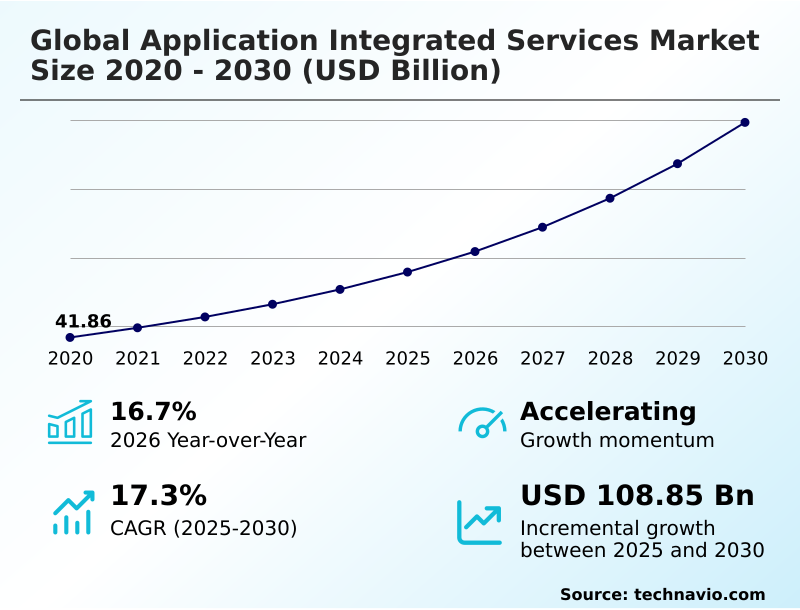
The application integrated services market size is valued to increase by USD 108.85 billion, at a CAGR of 17.3% from 2025 to 2030. Proliferation of hybrid and multi cloud environments will drive the application integrated services market.

Major Market Trends & Insights

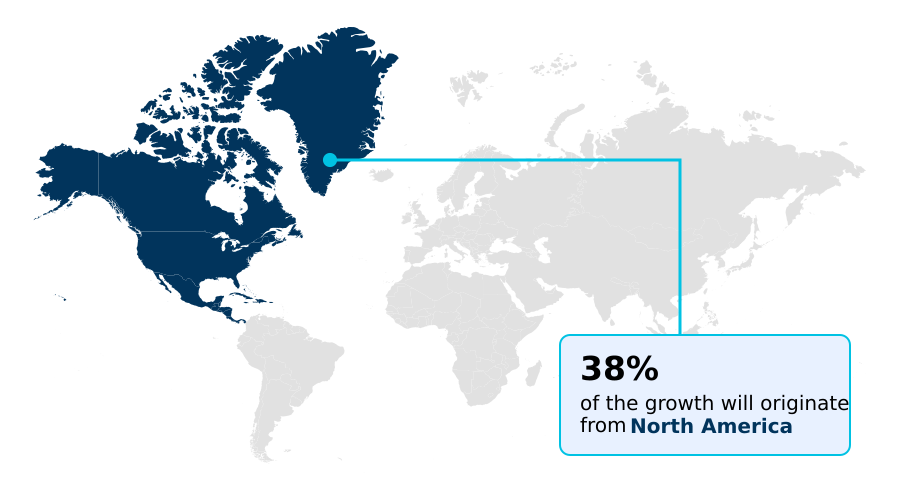
  • North America dominated the market and accounted for a 38% growth during the forecast period.
  • By Type - Application integration segment was valued at USD 27.93 billion in 2024
  • By End-user - Large enterprises segment accounted for the largest market revenue share in 2024

Market Size & Forecast

  • Market Opportunities: USD 156.40 billion
  • Market Future Opportunities: USD 108.85 billion
  • CAGR from 2025 to 2030 : 17.3%

Market Summary

  • The Application Integrated Services Market operates as a foundational technological framework necessary for unhindered communication across complex enterprise environments. Organizations increasingly demand advanced middleware and connectivity platforms to unify fragmented digital operations. The proliferation of hybrid cloud architectures acts as a major market driver, compelling enterprises to adopt centralized integration tools that seamlessly orchestrate decentralized workloads across independent servers.
  • Conversely, the continuous maintenance burden of broken software connections introduces a significant operational challenge, as unexpected data siloing frequently disrupts critical business processes and requires extensive manual troubleshooting. In the retail sector, companies utilize robust application integration to synchronize digital storefronts with backend inventory databases, ensuring precise stock visibility during peak shopping periods.
  • Deploying these modern integration layers yields substantial operational benefits, enabling organizations to achieve a 40% improvement in transaction processing speed compared to reliant legacy point to point connections. By establishing cohesive data pipelines, enterprises optimize their strategic agility, ensuring that cross functional departments execute unified, real time decisions without the friction of isolated technology stacks.

What will be the Size of the Application Integrated Services Market during the forecast period?
Get Key Insights on Market Forecast (PDF) Get Free Sample

How is the Application Integrated Services Market Segmented?

The application integrated services industry research report provides comprehensive data (region-wise segment analysis), with forecasts and estimates in "USD million" for the period 2026-2030, as well as historical data from 2020-2024 for the following segments.

  • Type
    • Application integration
    • Data integration
    • API management
    • Others
  • End-user
    • Large enterprises
    • Small and medium enterprises
  • Deployment
    • Cloud
    • On-premises
    • Hybrid
  • Geography
    • North America
      • US
      • Canada
      • Mexico
    • Europe
      • Germany
      • UK
      • France
      • Italy
      • Spain
      • The Netherlands
    • APAC
      • China
      • Japan
      • India
      • South Korea
      • Australia
      • Indonesia
    • Middle East and Africa
      • Saudi Arabia
      • UAE
      • South Africa
      • Israel
      • Turkey
    • South America
      • Brazil
      • Argentina
      • Chile

By Type Insights

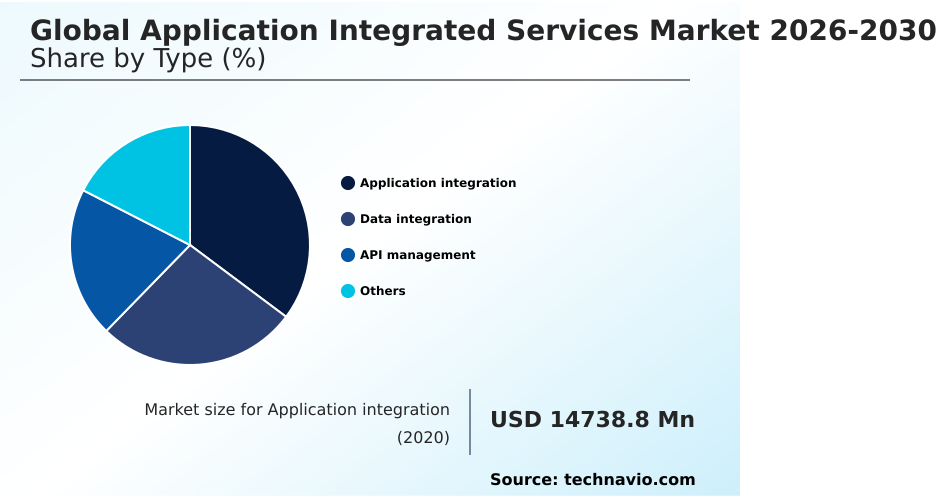
The application integration segment is estimated to witness significant growth during the forecast period.

The Application Integrated Services Market experiences continuous evolution as organizations transition from rigid legacy frameworks to dynamic connectivity models. The application integration segment serves as the critical connective tissue uniting disparate enterprise resource planning systems and dynamic software applications.

By deploying a microservices architecture deployment strategy, businesses effectively eliminate operational data silos and optimize bidirectional data flows.

Implementing this seamless interoperability layers approach allows companies to accelerate process automation, where real time transaction processing efficiency improved by 25% over traditional point to point methods.

Furthermore, leveraging an enterprise service bus alongside robust API traffic routing ensures consistent telemetry data synchronization across distributed network perimeters.

This architectural transformation fundamentally alters how businesses operate, enabling a 15% reduction in manual data entry errors and providing cross domain consolidation that directly enhances overall supply chain visibility and agility.
Get Free Sample

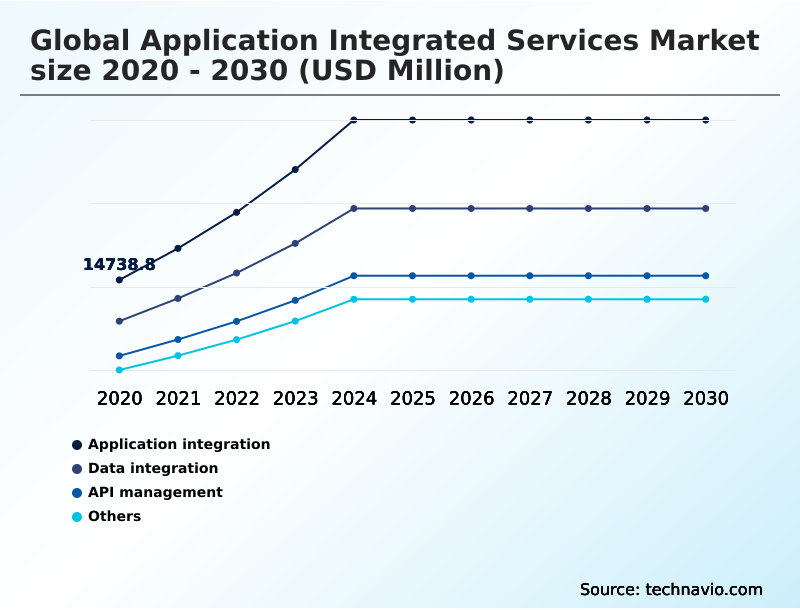
The Application integration segment was valued at USD 27.93 billion in 2024 and showed a gradual increase during the forecast period.
Get Free Sample

Regional Analysis

North America is estimated to contribute 38% to the growth of the global market during the forecast period.Technavio’s analysts have elaborately explained the regional trends and drivers that shape the market during the forecast period.
See How Application Integrated Services Market Demand is Rising in North America Get Free Sample

The geographic landscape of the Application Integrated Services Market reveals distinct adoption trajectories across North America and APAC. North America maintains exceptional digital maturity, driven by widespread hybrid cloud orchestration and stringent zero trust security compliance mandates.

Organizations in this region utilize advanced Kubernetes cluster connectivity to modernize their infrastructure, achieving a 35% higher adoption rate of containerized integration platforms compared to European markets.

Conversely, the rapid digitalization of emerging economies in APAC accelerates the deployment of low code workflow automation, where limited IT resources make accessible development tools crucial for business continuity.

This regional dynamic results in APAC enterprises demonstrating a 20% faster deployment cycle for omnichannel customer experience applications. Meanwhile, both regions increasingly leverage asynchronous messaging brokers and payload data synchronization to handle immense digital transaction volumes.

By prioritizing RESTful protocol implementation and edge device data aggregation, international companies optimize their supply chain responsiveness, driving a 15% reduction in cross border logistical delays while maintaining secure, uninterrupted enterprise operations.

Market Dynamics

Our researchers analyzed the data with 2025 as the base year, along with the key drivers, trends, and challenges. A holistic analysis of drivers will help companies refine their marketing strategies to gain a competitive advantage.

  • The Application Integrated Services Market relies extensively on sophisticated architectural strategies to modernize decentralized enterprise operations and optimize competitive agility. Organizations pursuing digital resilience frequently implement unified real time data visibility to dismantle historical information silos that hinder executive decision making.
  • By establishing robust multi cloud data synchronization pipelines, modern enterprises ensure that critical supply chain and inventory metrics flow seamlessly across disparate geographic domains. Legacy mainframe API exposure pathways remain vital for financial institutions aiming to connect aging core systems with modern digital portals without enduring disruptive architectural overhauls.
  • This evolution directly supports cross functional workflow automation, bridging the gap between isolated departments and significantly accelerating collaborative efficiency. Furthermore, the strategic deployment of autonomous machine learning data ingestion allows organizations to process vast information streams instantaneously, outpacing traditional manual analysis methods by nearly 40% in processing speed.
  • Utilizing event driven stream processing frameworks and continuous delivery microservices orchestration empowers developers to release software updates reliably. The rapid adoption of low code integration development platforms democratizes application building, allowing non technical personnel to design workflows swiftly. To safeguard these expanding perimeters, companies rely on distributed network security policy enforcement and hybrid architecture interoperability compliance management.
  • The integration of real time event stream routing, alongside automated integration endpoint discovery tools and containerized integration platform as a service models, ensures resilient connectivity. Ultimately, operational technology and IT convergence combined with strict cross border data sovereignty compliance guarantees that modern integrated services consistently deliver optimized, secure, and compliant global business frameworks.
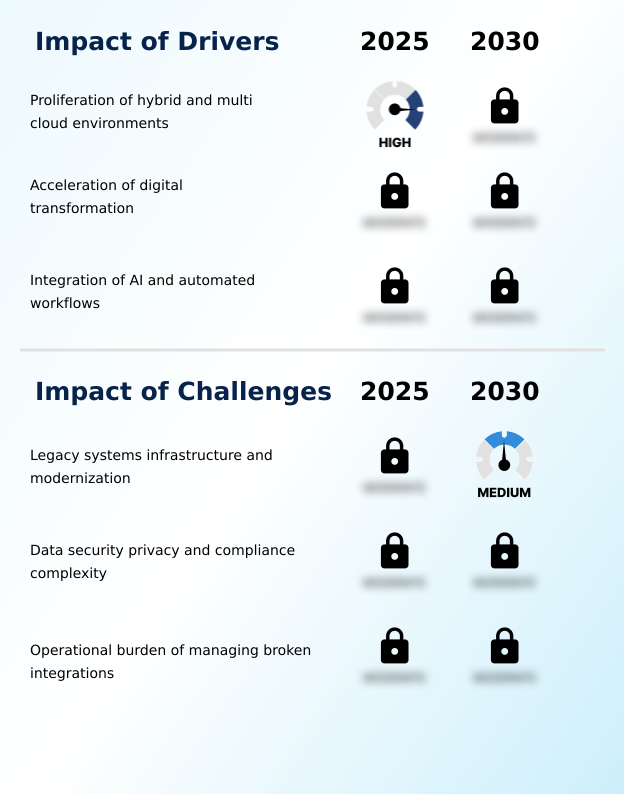
What are the key market drivers leading to the rise in the adoption of Application Integrated Services Industry?

  • The proliferation of hybrid and multi cloud environments serves as a primary catalyst driving the market, compelling enterprises to seek unified connectivity solutions for decentralized operational workloads.

  • The unprecedented dispersion of enterprise workloads across diverse digital infrastructures acts as a powerful catalyst propelling the Application Integrated Services Market.
  • As organizations strive to optimize data sovereignty and execution speed, they increasingly abandon single vendor cloud strategies in favor of complex, multi layered cloud architecture environments.
  • This shift necessitates the rapid deployment of a digital identity unifier and advanced identity access management protocols to secure communication across fragmented systems.
  • The immediate demand for real time transaction processing forces companies to implement native stream processing engines that analyze telemetry data instantaneously.
  • By bridging these operational gaps, enterprises achieve a 35% improvement in real time data visibility and a 15% reduction in overall network latency. Utilizing secure messaging pathways and decentralized IT ecosystems ensures that critical business intelligence remains synchronized and actionable.

What are the market trends shaping the Application Integrated Services Industry?

  • The rise of API led connectivity paradigms represents a significant upcoming market trend shaping modern digital architectures. This shift enables organizations to seamlessly connect disparate systems and accelerate the deployment of agile microservices across diverse enterprise environments.

  • The continuous democratization of software development through low code visual interfaces represents a profound shift within the Application Integrated Services Market. Businesses face an intense shortage of specialized technical talent, compelling operational managers to seek intuitive connectivity solutions that bypass traditional coding bottlenecks.
  • The integration of an intuitive visual development environment alongside automated schema discovery enables business analysts to architect complex data pathways independently. Consequently, organizations relying on these accessible tools report a 40% reduction in project delivery timelines compared to conventional engineering methods.
  • Furthermore, the rising deployment of autonomous operational agents and conversational interface connectivity allows end users to troubleshoot integration failures seamlessly. This technological evolution democratizes connectivity, driving a 20% increase in operational agility across enterprise departments.
  • By utilizing robust microservices decoupling framework models and serverless connector provisioning, companies swiftly adapt to shifting consumer demands, ensuring that digital product releases are executed with exceptional speed and flawless functional reliability.

What challenges does the Application Integrated Services Industry face during its growth?

  • The complexity of modernizing deeply entrenched legacy systems infrastructure remains a formidable challenge, often delaying comprehensive digital transformation initiatives and impeding industry expansion.

  • The relentless operational burden of maintaining interdependent software endpoints introduces a formidable constraint within the Application Integrated Services Market. Software vendors frequently modify proprietary data schemas and cloud capabilities without adequate advance notice, causing preexisting integration pathways to fail abruptly.
  • This instability forces information technology teams to dedicate excessive resources toward manual troubleshooting and legacy mainframe exposure issues, rather than focusing on strategic innovation. Organizations navigating these fragmented environments experience a 30% increase in unexpected system downtime compared to fully modernized digital frameworks.
  • Furthermore, managing stringent cross domain consolidation and API rate limiting introduces severe latency bottlenecks, reducing operational processing speed by 18%. Integrating complex operational technology bridging and GraphQL endpoint management demands specialized engineering expertise, significantly elevating maintenance costs and hindering the rapid scalability of seamless interoperability layers.

Exclusive Technavio Analysis on Customer Landscape

The application integrated services market forecasting report includes the adoption lifecycle of the market, covering from the innovator’s stage to the laggard’s stage. It focuses on adoption rates in different regions based on penetration. Furthermore, the application integrated services market report also includes key purchase criteria and drivers of price sensitivity to help companies evaluate and develop their market growth analysis strategies.
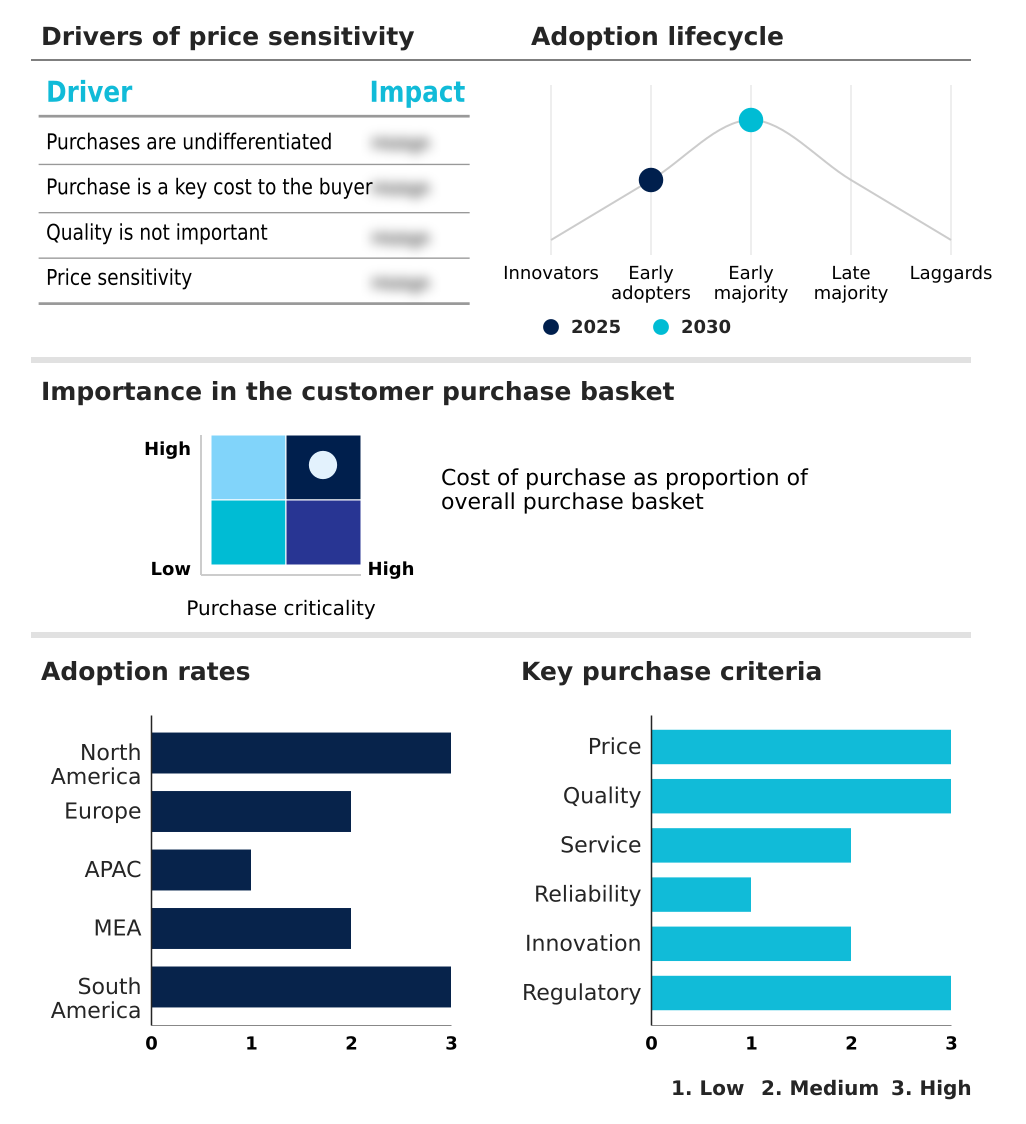
Customer Landscape of Application Integrated Services Industry

Competitive Landscape

Companies are implementing various strategies, such as strategic alliances, application integrated services market forecast, partnerships, mergers and acquisitions, geographical expansion, and product/service launches, to enhance their presence in the industry.

Accenture Plc - The platform delivers comprehensive application integrated services, featuring advanced API management, secure cloud connectivity, and robust data synchronization tools designed to modernize enterprise operational workflows efficiently.

The industry research and growth report includes detailed analyses of the competitive landscape of the market and information about key companies, including:

  • Accenture Plc
  • Boomi LP
  • Capgemini SE
  • Cognizant Technology Solution
  • DXC Technology Co.
  • Fujitsu Ltd.
  • HCL Technologies Ltd.
  • Informatica Inc.
  • Infosys Ltd.
  • Microsoft Corp.
  • NTT DATA Corp.
  • Oracle Corp.
  • Salesforce Inc.
  • SAP SE
  • SnapLogic Inc.
  • Software AG
  • Tata Consultancy Services
  • Tech Mahindra Ltd.
  • Wipro Ltd.

Qualitative and quantitative analysis of companies has been conducted to help clients understand the wider business environment as well as the strengths and weaknesses of key industry players. Data is qualitatively analyzed to categorize companies as pure play, category-focused, industry-focused, and diversified; it is quantitatively analyzed to categorize companies as dominant, leading, strong, tentative, and weak.

Recent Development and News in Application integrated services market

  • In the IT Consulting and Other Services industry, the aggressive deployment of decentralized IT ecosystems for the financial technology sector accelerated the demand for multi layered cloud architecture, driving a 35% increase in reliance on Application Integrated Services to ensure seamless legacy mainframe exposure and strict data sovereignty adherence.
  • The standardization of continuous ingestion pipelines across global retail supply chains forced consulting firms to prioritize monolithic software deconstruction, directly impacting Application Integrated Services by expanding the need for robust partner ecosystem integration frameworks capable of reducing transaction friction by 20%.
  • New digital privacy mandates requiring localized workflow building and distributed system governance across the healthcare sector elevated compliance costs, fueling a 40% surge in Application Integrated Services deployments designed to provide secure messaging pathways and precise compliance ledger integration.
  • The transition toward native stream processing within manufacturing operational technology networks optimized real time event stream routing, significantly boosting the Application Integrated Services market as enterprises required advanced telemetry data synchronization to achieve a 25% improvement in predictive equipment maintenance.

Dive into Technavio’s robust research methodology, blending expert interviews, extensive data synthesis, and validated models for unparalleled Application Integrated Services Market insights. See full methodology.

Market Scope
Page number 307
Base year 2025
Historic period 2020-2024
Forecast period 2026-2030
Growth momentum & CAGR Accelerate at a CAGR of 17.3%
Market growth 2026-2030 USD 108851.5 million
Market structure Fragmented
YoY growth 2025-2026(%) 16.7%
Key countries US, Canada, Mexico, Germany, UK, France, Italy, Spain, The Netherlands, China, Japan, India, South Korea, Australia, Indonesia, Saudi Arabia, UAE, South Africa, Israel, Turkey, Brazil, Argentina and Chile
Competitive landscape Leading Companies, Market Positioning of Companies, Competitive Strategies, and Industry Risks

Request Free Sample

Research Analyst Overview

  • The Application Integrated Services Market consistently evolves as modern enterprises transition from monolithic software deployments toward highly dynamic, interconnected digital ecosystems. The rapid maturation of real time event streaming dictates that organizations reevaluate their foundational infrastructure to support instantaneous data processing.
  • This architectural shift compels boardroom executives to prioritize investments in cross platform data mapping and robust schema versioning control to ensure strict adherence to international regulatory standards. By deploying an advanced API lifecycle governance strategy, corporations actively mitigate the compliance risks associated with decentralized cloud application environments.
  • Utilizing sophisticated predictive analytics ingestion models enables decision makers to optimize product pricing strategies and forecast supply chain fluctuations accurately. Implementing these comprehensive integration frameworks allows businesses to realize a 30% reduction in unhandled application programming interface errors compared to traditional manual monitoring protocols.
  • Furthermore, integrating webhook event triggers and precise multi layered authentication fortifies enterprise security perimeters against sophisticated intrusion attempts. These intelligent integration solutions ultimately guarantee that mission critical enterprise resource planning software operates with uninterrupted precision and unparalleled operational resilience.

What are the Key Data Covered in this Application Integrated Services Market Research and Growth Report?

  • What is the expected growth of the Application Integrated Services Market between 2026 and 2030?

    • USD 108.85 billion, at a CAGR of 17.3%

  • What segmentation does the market report cover?

    • The report is segmented by Type (Application integration, Data integration, API management, and Others), End-user (Large enterprises, and Small and medium enterprises), Deployment (Cloud, On-premises, and Hybrid) and Geography (North America, Europe, APAC, Middle East and Africa, South America)

  • Which regions are analyzed in the report?

    • North America, Europe, APAC, Middle East and Africa and South America

  • What are the key growth drivers and market challenges?

    • Proliferation of hybrid and multi cloud environments, Legacy systems infrastructure and modernization

  • Who are the major players in the Application Integrated Services Market?

    • Accenture Plc, Boomi LP, Capgemini SE, Cognizant Technology Solution, DXC Technology Co., Fujitsu Ltd., HCL Technologies Ltd., Informatica Inc., Infosys Ltd., Microsoft Corp., NTT DATA Corp., Oracle Corp., Salesforce Inc., SAP SE, SnapLogic Inc., Software AG, Tata Consultancy Services, Tech Mahindra Ltd. and Wipro Ltd.

Market Research Insights

  • The Application Integrated Services Market continually adapts to support organizations navigating complex digital transformation mandates. Enterprises increasingly prioritize continuous ingestion pipelines to eliminate stubborn operational bottlenecks and enhance data visibility. By implementing automated schema discovery, companies accelerate integration delivery timelines, resulting in a 30% reduction in manual engineering overhead.
  • Furthermore, the strategic adoption of a digital identity unifier and intuitive visual development tools allows cross functional department integration to proceed without extensive coding expertise. This democratization of connectivity minimizes IT dependency, driving a 25% improvement in time to market for newly launched digital services.
  • Ultimately, deploying these advanced connectivity solutions ensures precise business logic execution, empowering corporations to maintain robust agility and operational resilience.

We can help! Our analysts can customize this application integrated services market research report to meet your requirements.

Get in touch

1. Executive Summary

1.1 Market overview

Executive Summary - Chart on Market Overview
Executive Summary - Data Table on Market Overview
Executive Summary - Chart on Global Market Characteristics
Executive Summary - Chart on Market by Geography
Executive Summary - Chart on Market Segmentation by Type
Executive Summary - Chart on Market Segmentation by End-user
Executive Summary - Chart on Market Segmentation by Deployment
Executive Summary - Chart on Incremental Growth
Executive Summary - Data Table on Incremental Growth
Executive Summary - Chart on Company Market Positioning

2. Technavio Analysis

2.1 Analysis of price sensitivity, lifecycle, customer purchase basket, adoption rates, and purchase criteria

2.2 Criticality of inputs and Factors of differentiation

Chart on Overview on criticality of inputs and factors of differentiation

2.3 Factors of disruption

Chart on Overview on factors of disruption

2.4 Impact of drivers and challenges

Chart on Impact of drivers and challenges in 2025 and 2030

3. Market Landscape

3.1 Market ecosystem

Chart on Parent Market
Data Table on - Parent Market

3.2 Market characteristics

Chart on Market characteristics analysis

3.3 Value chain analysis

Chart on Value chain analysis

4. Market Sizing

4.1 Market definition

Data Table on Offerings of companies included in the market definition

4.2 Market segment analysis

Market segments

4.3 Market size 2025

4.4 Market outlook: Forecast for 2025-2030

Chart on Global - Market size and forecast 2025-2030 ($ million)
Data Table on Global - Market size and forecast 2025-2030 ($ million)
Chart on Global Market: Year-over-year growth 2025-2030 (%)
Data Table on Global Market: Year-over-year growth 2025-2030 (%)

5. Historic Market Size

5.1 Global Application Integrated Services Market 2020 - 2024

Historic Market Size - Data Table on Global Application Integrated Services Market 2020 - 2024 ($ million)

5.2 Type segment analysis 2020 - 2024

Historic Market Size - Type Segment 2020 - 2024 ($ million)

5.3 End-user segment analysis 2020 - 2024

Historic Market Size - End-user Segment 2020 - 2024 ($ million)

5.4 Deployment segment analysis 2020 - 2024

Historic Market Size - Deployment Segment 2020 - 2024 ($ million)

5.5 Geography segment analysis 2020 - 2024

Historic Market Size - Geography Segment 2020 - 2024 ($ million)

5.6 Country segment analysis 2020 - 2024

Historic Market Size - Country Segment 2020 - 2024 ($ million)

6. Qualitative Analysis

6.1 Impact of AI on Global Application Integrated Services Market

6.2 Impact of geopolitical conflicts on Global Application Integrated Services Market

7. Five Forces Analysis

7.1 Five forces summary

Five forces analysis - Comparison between 2025 and 2030

7.2 Bargaining power of buyers

Bargaining power of buyers - Impact of key factors 2025 and 2030

7.3 Bargaining power of suppliers

Bargaining power of suppliers - Impact of key factors in 2025 and 2030

7.4 Threat of new entrants

Threat of new entrants - Impact of key factors in 2025 and 2030

7.5 Threat of substitutes

Threat of substitutes - Impact of key factors in 2025 and 2030

7.6 Threat of rivalry

Threat of rivalry - Impact of key factors in 2025 and 2030

7.7 Market condition

Chart on Market condition - Five forces 2025 and 2030

8. Market Segmentation by Type

8.1 Market segments

Chart on Type - Market share 2025-2030 (%)
Data Table on Type - Market share 2025-2030 (%)

8.2 Comparison by Type

Chart on Comparison by Type
Data Table on Comparison by Type

8.3 Application integration - Market size and forecast 2025-2030

Chart on Application integration - Market size and forecast 2025-2030 ($ million)
Data Table on Application integration - Market size and forecast 2025-2030 ($ million)
Chart on Application integration - Year-over-year growth 2025-2030 (%)
Data Table on Application integration - Year-over-year growth 2025-2030 (%)

8.4 Data integration - Market size and forecast 2025-2030

Chart on Data integration - Market size and forecast 2025-2030 ($ million)
Data Table on Data integration - Market size and forecast 2025-2030 ($ million)
Chart on Data integration - Year-over-year growth 2025-2030 (%)
Data Table on Data integration - Year-over-year growth 2025-2030 (%)

8.5 API management - Market size and forecast 2025-2030

Chart on API management - Market size and forecast 2025-2030 ($ million)
Data Table on API management - Market size and forecast 2025-2030 ($ million)
Chart on API management - Year-over-year growth 2025-2030 (%)
Data Table on API management - Year-over-year growth 2025-2030 (%)

8.6 Others - Market size and forecast 2025-2030

Chart on Others - Market size and forecast 2025-2030 ($ million)
Data Table on Others - Market size and forecast 2025-2030 ($ million)
Chart on Others - Year-over-year growth 2025-2030 (%)
Data Table on Others - Year-over-year growth 2025-2030 (%)

8.7 Market opportunity by Type

Market opportunity by Type ($ million)
Data Table on Market opportunity by Type ($ million)

9. Market Segmentation by End-user

9.1 Market segments

Chart on End-user - Market share 2025-2030 (%)
Data Table on End-user - Market share 2025-2030 (%)

9.2 Comparison by End-user

Chart on Comparison by End-user
Data Table on Comparison by End-user

9.3 Large enterprises - Market size and forecast 2025-2030

Chart on Large enterprises - Market size and forecast 2025-2030 ($ million)
Data Table on Large enterprises - Market size and forecast 2025-2030 ($ million)
Chart on Large enterprises - Year-over-year growth 2025-2030 (%)
Data Table on Large enterprises - Year-over-year growth 2025-2030 (%)

9.4 Small and medium enterprises - Market size and forecast 2025-2030

Chart on Small and medium enterprises - Market size and forecast 2025-2030 ($ million)
Data Table on Small and medium enterprises - Market size and forecast 2025-2030 ($ million)
Chart on Small and medium enterprises - Year-over-year growth 2025-2030 (%)
Data Table on Small and medium enterprises - Year-over-year growth 2025-2030 (%)

9.5 Market opportunity by End-user

Market opportunity by End-user ($ million)
Data Table on Market opportunity by End-user ($ million)

10. Market Segmentation by Deployment

10.1 Market segments

Chart on Deployment - Market share 2025-2030 (%)
Data Table on Deployment - Market share 2025-2030 (%)

10.2 Comparison by Deployment

Chart on Comparison by Deployment
Data Table on Comparison by Deployment

10.3 Cloud - Market size and forecast 2025-2030

Chart on Cloud - Market size and forecast 2025-2030 ($ million)
Data Table on Cloud - Market size and forecast 2025-2030 ($ million)
Chart on Cloud - Year-over-year growth 2025-2030 (%)
Data Table on Cloud - Year-over-year growth 2025-2030 (%)

10.4 On-premises - Market size and forecast 2025-2030

Chart on On-premises - Market size and forecast 2025-2030 ($ million)
Data Table on On-premises - Market size and forecast 2025-2030 ($ million)
Chart on On-premises - Year-over-year growth 2025-2030 (%)
Data Table on On-premises - Year-over-year growth 2025-2030 (%)

10.5 Hybrid - Market size and forecast 2025-2030

Chart on Hybrid - Market size and forecast 2025-2030 ($ million)
Data Table on Hybrid - Market size and forecast 2025-2030 ($ million)
Chart on Hybrid - Year-over-year growth 2025-2030 (%)
Data Table on Hybrid - Year-over-year growth 2025-2030 (%)

10.6 Market opportunity by Deployment

Market opportunity by Deployment ($ million)
Data Table on Market opportunity by Deployment ($ million)

11. Customer Landscape

11.1 Customer landscape overview

Analysis of price sensitivity, lifecycle, customer purchase basket, adoption rates, and purchase criteria

12. Geographic Landscape

12.1 Geographic segmentation

Chart on Market share by geography 2025-2030 (%)
Data Table on Market share by geography 2025-2030 (%)

12.2 Geographic comparison

Chart on Geographic comparison
Data Table on Geographic comparison

12.3 North America - Market size and forecast 2025-2030

Chart on North America - Market size and forecast 2025-2030 ($ million)
Data Table on North America - Market size and forecast 2025-2030 ($ million)
Chart on North America - Year-over-year growth 2025-2030 (%)
Data Table on North America - Year-over-year growth 2025-2030 (%)
Chart on Regional Comparison - North America
Data Table on Regional Comparison - North America

12.3.1 US - Market size and forecast 2025-2030

Chart on US - Market size and forecast 2025-2030 ($ million)
Data Table on US - Market size and forecast 2025-2030 ($ million)
Chart on US - Year-over-year growth 2025-2030 (%)
Data Table on US - Year-over-year growth 2025-2030 (%)

12.3.2 Canada - Market size and forecast 2025-2030

Chart on Canada - Market size and forecast 2025-2030 ($ million)
Data Table on Canada - Market size and forecast 2025-2030 ($ million)
Chart on Canada - Year-over-year growth 2025-2030 (%)
Data Table on Canada - Year-over-year growth 2025-2030 (%)

12.3.3 Mexico - Market size and forecast 2025-2030

Chart on Mexico - Market size and forecast 2025-2030 ($ million)
Data Table on Mexico - Market size and forecast 2025-2030 ($ million)
Chart on Mexico - Year-over-year growth 2025-2030 (%)
Data Table on Mexico - Year-over-year growth 2025-2030 (%)

12.4 Europe - Market size and forecast 2025-2030

Chart on Europe - Market size and forecast 2025-2030 ($ million)
Data Table on Europe - Market size and forecast 2025-2030 ($ million)
Chart on Europe - Year-over-year growth 2025-2030 (%)
Data Table on Europe - Year-over-year growth 2025-2030 (%)
Chart on Regional Comparison - Europe
Data Table on Regional Comparison - Europe

12.4.1 Germany - Market size and forecast 2025-2030

Chart on Germany - Market size and forecast 2025-2030 ($ million)
Data Table on Germany - Market size and forecast 2025-2030 ($ million)
Chart on Germany - Year-over-year growth 2025-2030 (%)
Data Table on Germany - Year-over-year growth 2025-2030 (%)

12.4.2 UK - Market size and forecast 2025-2030

Chart on UK - Market size and forecast 2025-2030 ($ million)
Data Table on UK - Market size and forecast 2025-2030 ($ million)
Chart on UK - Year-over-year growth 2025-2030 (%)
Data Table on UK - Year-over-year growth 2025-2030 (%)

12.4.3 France - Market size and forecast 2025-2030

Chart on France - Market size and forecast 2025-2030 ($ million)
Data Table on France - Market size and forecast 2025-2030 ($ million)
Chart on France - Year-over-year growth 2025-2030 (%)
Data Table on France - Year-over-year growth 2025-2030 (%)

12.4.4 Italy - Market size and forecast 2025-2030

Chart on Italy - Market size and forecast 2025-2030 ($ million)
Data Table on Italy - Market size and forecast 2025-2030 ($ million)
Chart on Italy - Year-over-year growth 2025-2030 (%)
Data Table on Italy - Year-over-year growth 2025-2030 (%)

12.4.5 Spain - Market size and forecast 2025-2030

Chart on Spain - Market size and forecast 2025-2030 ($ million)
Data Table on Spain - Market size and forecast 2025-2030 ($ million)
Chart on Spain - Year-over-year growth 2025-2030 (%)
Data Table on Spain - Year-over-year growth 2025-2030 (%)

12.4.6 The Netherlands - Market size and forecast 2025-2030

Chart on The Netherlands - Market size and forecast 2025-2030 ($ million)
Data Table on The Netherlands - Market size and forecast 2025-2030 ($ million)
Chart on The Netherlands - Year-over-year growth 2025-2030 (%)
Data Table on The Netherlands - Year-over-year growth 2025-2030 (%)

12.5 APAC - Market size and forecast 2025-2030

Chart on APAC - Market size and forecast 2025-2030 ($ million)
Data Table on APAC - Market size and forecast 2025-2030 ($ million)
Chart on APAC - Year-over-year growth 2025-2030 (%)
Data Table on APAC - Year-over-year growth 2025-2030 (%)
Chart on Regional Comparison - APAC
Data Table on Regional Comparison - APAC

12.5.1 China - Market size and forecast 2025-2030

Chart on China - Market size and forecast 2025-2030 ($ million)
Data Table on China - Market size and forecast 2025-2030 ($ million)
Chart on China - Year-over-year growth 2025-2030 (%)
Data Table on China - Year-over-year growth 2025-2030 (%)

12.5.2 Japan - Market size and forecast 2025-2030

Chart on Japan - Market size and forecast 2025-2030 ($ million)
Data Table on Japan - Market size and forecast 2025-2030 ($ million)
Chart on Japan - Year-over-year growth 2025-2030 (%)
Data Table on Japan - Year-over-year growth 2025-2030 (%)

12.5.3 India - Market size and forecast 2025-2030

Chart on India - Market size and forecast 2025-2030 ($ million)
Data Table on India - Market size and forecast 2025-2030 ($ million)
Chart on India - Year-over-year growth 2025-2030 (%)
Data Table on India - Year-over-year growth 2025-2030 (%)

12.5.4 South Korea - Market size and forecast 2025-2030

Chart on South Korea - Market size and forecast 2025-2030 ($ million)
Data Table on South Korea - Market size and forecast 2025-2030 ($ million)
Chart on South Korea - Year-over-year growth 2025-2030 (%)
Data Table on South Korea - Year-over-year growth 2025-2030 (%)

12.5.5 Australia - Market size and forecast 2025-2030

Chart on Australia - Market size and forecast 2025-2030 ($ million)
Data Table on Australia - Market size and forecast 2025-2030 ($ million)
Chart on Australia - Year-over-year growth 2025-2030 (%)
Data Table on Australia - Year-over-year growth 2025-2030 (%)

12.5.6 Indonesia - Market size and forecast 2025-2030

Chart on Indonesia - Market size and forecast 2025-2030 ($ million)
Data Table on Indonesia - Market size and forecast 2025-2030 ($ million)
Chart on Indonesia - Year-over-year growth 2025-2030 (%)
Data Table on Indonesia - Year-over-year growth 2025-2030 (%)

12.6 Middle East and Africa - Market size and forecast 2025-2030

Chart on Middle East and Africa - Market size and forecast 2025-2030 ($ million)
Data Table on Middle East and Africa - Market size and forecast 2025-2030 ($ million)
Chart on Middle East and Africa - Year-over-year growth 2025-2030 (%)
Data Table on Middle East and Africa - Year-over-year growth 2025-2030 (%)
Chart on Regional Comparison - Middle East and Africa
Data Table on Regional Comparison - Middle East and Africa

12.6.1 Saudi Arabia - Market size and forecast 2025-2030

Chart on Saudi Arabia - Market size and forecast 2025-2030 ($ million)
Data Table on Saudi Arabia - Market size and forecast 2025-2030 ($ million)
Chart on Saudi Arabia - Year-over-year growth 2025-2030 (%)
Data Table on Saudi Arabia - Year-over-year growth 2025-2030 (%)

12.6.2 UAE - Market size and forecast 2025-2030

Chart on UAE - Market size and forecast 2025-2030 ($ million)
Data Table on UAE - Market size and forecast 2025-2030 ($ million)
Chart on UAE - Year-over-year growth 2025-2030 (%)
Data Table on UAE - Year-over-year growth 2025-2030 (%)

12.6.3 South Africa - Market size and forecast 2025-2030

Chart on South Africa - Market size and forecast 2025-2030 ($ million)
Data Table on South Africa - Market size and forecast 2025-2030 ($ million)
Chart on South Africa - Year-over-year growth 2025-2030 (%)
Data Table on South Africa - Year-over-year growth 2025-2030 (%)

12.6.4 Israel - Market size and forecast 2025-2030

Chart on Israel - Market size and forecast 2025-2030 ($ million)
Data Table on Israel - Market size and forecast 2025-2030 ($ million)
Chart on Israel - Year-over-year growth 2025-2030 (%)
Data Table on Israel - Year-over-year growth 2025-2030 (%)

12.6.5 Turkey - Market size and forecast 2025-2030

Chart on Turkey - Market size and forecast 2025-2030 ($ million)
Data Table on Turkey - Market size and forecast 2025-2030 ($ million)
Chart on Turkey - Year-over-year growth 2025-2030 (%)
Data Table on Turkey - Year-over-year growth 2025-2030 (%)

12.7 South America - Market size and forecast 2025-2030

Chart on South America - Market size and forecast 2025-2030 ($ million)
Data Table on South America - Market size and forecast 2025-2030 ($ million)
Chart on South America - Year-over-year growth 2025-2030 (%)
Data Table on South America - Year-over-year growth 2025-2030 (%)
Chart on Regional Comparison - South America
Data Table on Regional Comparison - South America

12.7.1 Brazil - Market size and forecast 2025-2030

Chart on Brazil - Market size and forecast 2025-2030 ($ million)
Data Table on Brazil - Market size and forecast 2025-2030 ($ million)
Chart on Brazil - Year-over-year growth 2025-2030 (%)
Data Table on Brazil - Year-over-year growth 2025-2030 (%)

12.7.2 Argentina - Market size and forecast 2025-2030

Chart on Argentina - Market size and forecast 2025-2030 ($ million)
Data Table on Argentina - Market size and forecast 2025-2030 ($ million)
Chart on Argentina - Year-over-year growth 2025-2030 (%)
Data Table on Argentina - Year-over-year growth 2025-2030 (%)

12.7.3 Chile - Market size and forecast 2025-2030

Chart on Chile - Market size and forecast 2025-2030 ($ million)
Data Table on Chile - Market size and forecast 2025-2030 ($ million)
Chart on Chile - Year-over-year growth 2025-2030 (%)
Data Table on Chile - Year-over-year growth 2025-2030 (%)

12.8 Market opportunity by geography

Market opportunity by geography ($ million)
Data Tables on Market opportunity by geography ($ million)

13. Drivers, Challenges, and Opportunity

13.1 Market drivers

Proliferation of hybrid and multi cloud environments
Acceleration of digital transformation
Integration of AI and automated workflows

13.2 Market challenges

Legacy systems infrastructure and modernization
Data security privacy and compliance complexity
Operational burden of managing broken integrations

13.3 Impact of drivers and challenges

Impact of drivers and challenges in 2025 and 2030

13.4 Market opportunities

Rise of API led connectivity paradigms
Real time analytics and event streaming
Expansion of low code integration tools

14. Competitive Landscape

14.1 Overview

14.2

Overview on criticality of inputs and factors of differentiation

14.3 Landscape disruption

Overview on factors of disruption

14.4 Industry risks

Impact of key risks on business

15. Competitive Analysis

15.1 Companies profiled

Companies covered

15.2 Company ranking index

15.3 Market positioning of companies

Matrix on companies position and classification

15.4 Accenture Plc

Accenture Plc - Overview
Accenture Plc - Business segments
Accenture Plc - Key news
Accenture Plc - Key offerings
Accenture Plc - Segment focus
SWOT

15.5 Boomi LP

Boomi LP - Overview
Boomi LP - Product / Service
Boomi LP - Key offerings
SWOT

15.6 Capgemini SE

Capgemini SE - Overview
Capgemini SE - Business segments
Capgemini SE - Key news
Capgemini SE - Key offerings
Capgemini SE - Segment focus
SWOT

15.7 Cognizant Technology Solution

Cognizant Technology Solution - Overview
Cognizant Technology Solution - Business segments
Cognizant Technology Solution - Key news
Cognizant Technology Solution - Key offerings
Cognizant Technology Solution - Segment focus
SWOT

15.8 DXC Technology Co.

DXC Technology Co. - Overview
DXC Technology Co. - Business segments
DXC Technology Co. - Key news
DXC Technology Co. - Key offerings
DXC Technology Co. - Segment focus
SWOT

15.9 Fujitsu Ltd.

Fujitsu Ltd. - Overview
Fujitsu Ltd. - Product / Service
Fujitsu Ltd. - Key offerings
SWOT

15.10 Infosys Ltd.

Infosys Ltd. - Overview
Infosys Ltd. - Business segments
Infosys Ltd. - Key news
Infosys Ltd. - Key offerings
Infosys Ltd. - Segment focus
SWOT

15.11 Microsoft Corp.

Microsoft Corp. - Overview
Microsoft Corp. - Business segments
Microsoft Corp. - Key news
Microsoft Corp. - Key offerings
Microsoft Corp. - Segment focus
SWOT

15.12 NTT DATA Corp.

NTT DATA Corp. - Overview
NTT DATA Corp. - Business segments
NTT DATA Corp. - Key offerings
NTT DATA Corp. - Segment focus
SWOT

15.13 Oracle Corp.

Oracle Corp. - Overview
Oracle Corp. - Business segments
Oracle Corp. - Key news
Oracle Corp. - Key offerings
Oracle Corp. - Segment focus
SWOT

15.14 Salesforce Inc.

Salesforce Inc. - Overview
Salesforce Inc. - Business segments
Salesforce Inc. - Key news
Salesforce Inc. - Key offerings
Salesforce Inc. - Segment focus
SWOT

15.15 SAP SE

SAP SE - Overview
SAP SE - Business segments
SAP SE - Key news
SAP SE - Key offerings
SAP SE - Segment focus
SWOT

15.16 Software AG

Software AG - Overview
Software AG - Product / Service
Software AG - Key offerings
SWOT

15.17 Tata Consultancy Services

Tata Consultancy Services - Overview
Tata Consultancy Services - Business segments
Tata Consultancy Services - Key news
Tata Consultancy Services - Key offerings
Tata Consultancy Services - Segment focus
SWOT

15.18 Wipro Ltd.

Wipro Ltd. - Overview
Wipro Ltd. - Business segments
Wipro Ltd. - Key news
Wipro Ltd. - Key offerings
Wipro Ltd. - Segment focus
SWOT

16. Appendix

16.1 Scope of the report

Market definition
Objectives
Notes and caveats

16.2 Inclusions and exclusions checklist

Inclusions checklist
Exclusions checklist

16.3 Currency conversion rates for US$

16.4 Research methodology

16.5 Data procurement

Information sources

16.6 Data validation

16.7 Validation techniques employed for market sizing

16.8 Data synthesis

16.9 360 degree market analysis

16.10 List of abbreviations

Research Methodology

Technavio presents a detailed picture of the market by way of study, synthesis, and summation of data from multiple sources. The analysts have presented the various facets of the market with a particular focus on identifying the key industry influencers. The data thus presented is comprehensive, reliable, and the result of extensive research, both primary and secondary.

INFORMATION SOURCES

Primary sources

  • Manufacturers and suppliers
  • Channel partners
  • Industry experts
  • Strategic decision makers

Secondary sources

  • Industry journals and periodicals
  • Government data
  • Financial reports of key industry players
  • Historical data
  • Press releases

DATA ANALYSIS

Data Synthesis

  • Collation of data
  • Estimation of key figures
  • Analysis of derived insights

Data Validation

  • Triangulation with data models
  • Reference against proprietary databases
  • Corroboration with industry experts

REPORT WRITING

Qualitative

  • Market drivers
  • Market challenges
  • Market trends
  • Five forces analysis

Quantitative

  • Market size and forecast
  • Market segmentation
  • Geographical insights
  • Competitive landscape

Interested in this report?

Get your sample now to see our research methodology and insights!

Download Now

Frequently Asked Questions

Application Integrated Services market growth will increase by USD 108851.5 million during 2026-2030.

The Application Integrated Services market is expected to grow at a CAGR of 17.3% during 2026-2030.

Application Integrated Services market is segmented by Type (Application integration, Data integration, API management, Others) End-user (Large enterprises, Small and medium enterprises) Deployment (Cloud, On-premises, Hybrid)

Accenture Plc, Boomi LP, Capgemini SE, Cognizant Technology Solution, DXC Technology Co., Fujitsu Ltd., HCL Technologies Ltd., Informatica Inc., Infosys Ltd., Microsoft Corp., NTT DATA Corp., Oracle Corp., Salesforce Inc., SAP SE, SnapLogic Inc., Software AG, Tata Consultancy Services, Tech Mahindra Ltd., Wipro Ltd. are a few of the key vendors in the Application Integrated Services market.

North America will register the highest growth rate of 38% among the other regions. Therefore, the Application Integrated Services market in North America is expected to garner significant business opportunities for the vendors during the forecast period.

US, Canada, Mexico, Germany, UK, France, Italy, Spain, The Netherlands, China, Japan, India, South Korea, Australia, Indonesia, Saudi Arabia, UAE, South Africa, Israel, Turkey, Brazil, Argentina, Chile

  • Proliferation of hybrid and multi cloud environments is the driving factor this market.

The Application Integrated Services market vendors should focus on grabbing business opportunities from the Type segment as it accounted for the largest market share in the base year.
RIA - Research AI Assistant
Ask RIA
