



Business Jet Market Size 2026-2030
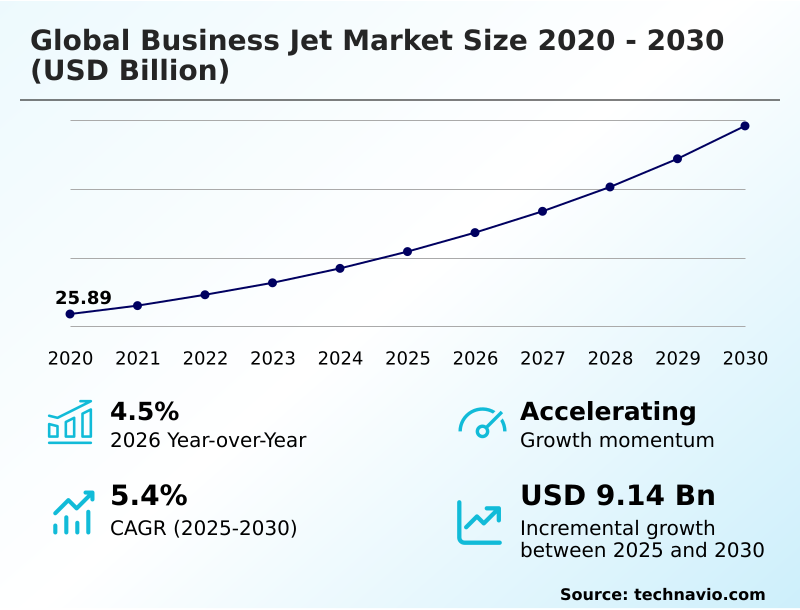
The business jet market size is valued to increase by USD 9.14 billion, at a CAGR of 5.4% from 2025 to 2030. Rising global connectivity of business jets will drive the business jet market.
Major Market Trends & Insights
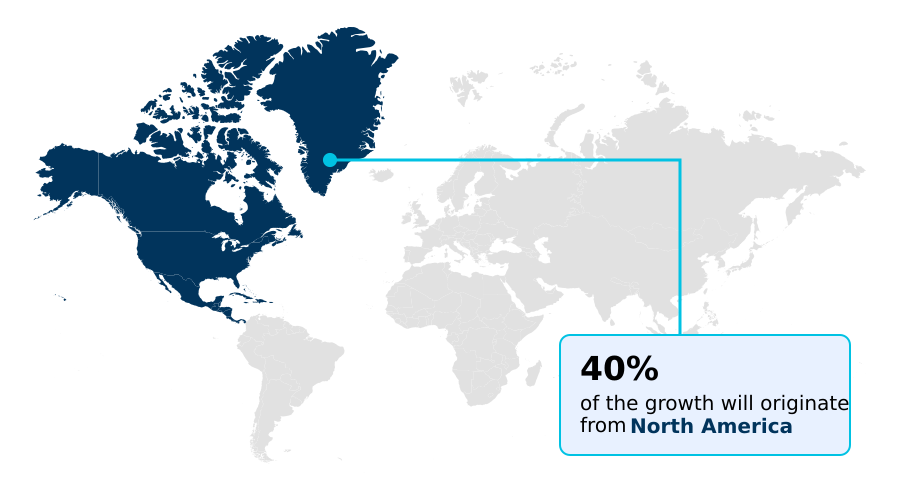
- North America dominated the market and accounted for a 40.4% growth during the forecast period.
- By End-user - Operator segment was valued at USD 24.94 billion in 2024
- By Type - Large segment accounted for the largest market revenue share in 2024
Market Size & Forecast
- Market Opportunities: USD 13.68 billion
- Market Future Opportunities: USD 9.14 billion
- CAGR from 2025 to 2030 : 5.4%
Market Summary
- The business jet market is defined by a continuous drive for performance, efficiency, and technological superiority. Key drivers include the expansion of global commerce and the need for time-sensitive travel solutions that commercial aviation cannot provide. A significant trend is the development of ultra-long-range jets capable of connecting distant economic hubs without refueling, a critical advantage for multinational corporations.
- For instance, a company may leverage an aircraft equipped with high-speed data connectivity and a secure cabin environment to conduct sensitive negotiations en route to a remote facility, a scenario where the privacy and scheduling flexibility of a business jet are indispensable.
- Concurrently, the industry is navigating the push toward sustainability through the adoption of sustainable aviation fuel (SAF) and more efficient engine designs. However, the market remains sensitive to geopolitical dynamics and economic volatility, which can influence acquisition strategies and operational planning.
- The integration of advanced avionics suites and lightweight materials continues to push the boundaries of what is possible in executive air travel, supporting both productivity and safety. This constant innovation ensures the business jet remains a vital tool for global enterprise.
What will be the Size of the Business Jet Market during the forecast period?
Get Key Insights on Market Forecast (PDF) Get Free Sample
How is the Business Jet Market Segmented?
The business jet industry research report provides comprehensive data (region-wise segment analysis), with forecasts and estimates in "USD million" for the period 2026-2030, as well as historical data from 2020-2024 for the following segments.
- End-user
- Operator
- Private
- Type
- Large
- Medium
- Light
- Distribution channel
- OEM
- Aftermarket
- Geography
- North America
- US
- Canada
- Mexico
- Europe
- Germany
- UK
- France
- APAC
- China
- Japan
- India
- Middle East and Africa
- Saudi Arabia
- UAE
- South Africa
- South America
- Brazil
- Argentina
- Colombia
- Rest of World (ROW)
- North America
By End-user Insights
The operator segment is estimated to witness significant growth during the forecast period.
The operator segment, a key part of the business jet market, is characterized by providers of fractional ownership and on-demand private jet charter services.
This area is driven by fleet modernization initiatives and strategic expansions to meet demand from corporate and high-net-worth clients.
Operators are focusing on enhancing the passenger experience through custom cabin interiors and advanced cabin management systems, which have shown to improve in-flight productivity by over 15%. Predictive maintenance protocols are being widely adopted, reducing unscheduled downtime.
Innovations such as fly-by-wire systems and enhanced vision systems (EVS) are becoming standard, improving safety and operational efficiency.
The market is also seeing interest in jet card programs, which offer flexible access to private aviation solutions without the commitment of full aircraft ownership.
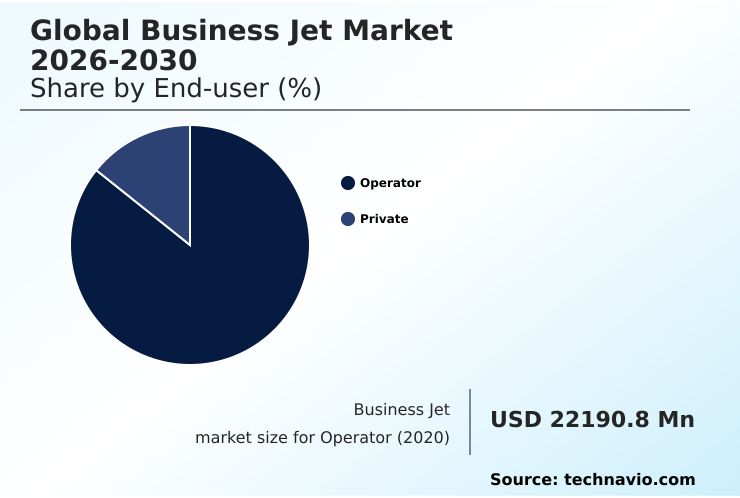
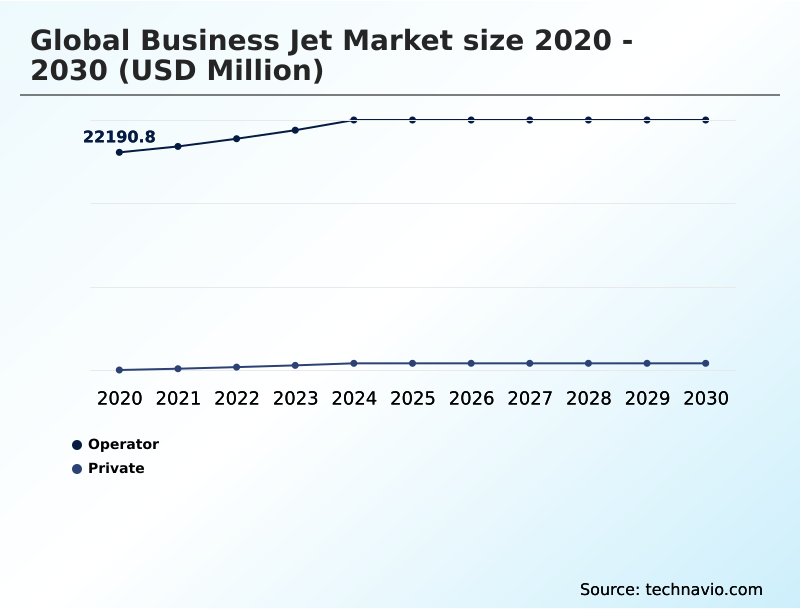
The Operator segment was valued at USD 24.94 billion in 2024 and showed a gradual increase during the forecast period.
Regional Analysis
North America is estimated to contribute 40.4% to the growth of the global market during the forecast period.Technavio’s analysts have elaborately explained the regional trends and drivers that shape the market during the forecast period.
See How Business Jet Market Demand is Rising in North America Get Free Sample
The global business jet market shows distinct regional dynamics, with North America remaining the largest and most mature market, accounting for approximately 40.4% of the market's incremental growth.
The region's robust corporate sector and high concentration of high-net-worth individuals drive consistent demand. Meanwhile, the APAC region is forecast to exhibit the most rapid growth, driven by expanding economies and the need to connect geographically dispersed business centers.
In this region, long-range aircraft are particularly crucial, reducing total travel time by up to 50% on certain intercontinental routes compared to commercial alternatives.
Europe's market is characterized by a strong focus on sustainability, with wider adoption of carbon offset programs.
Key infrastructure, including fixed-base operators (FBO) and maintenance repair overhaul (MRO) facilities, is expanding globally to support a growing and technologically advanced fleet, with a focus on advanced navigation systems and high-bypass turbofan engines.
Market Dynamics
Our researchers analyzed the data with 2025 as the base year, along with the key drivers, trends, and challenges. A holistic analysis of drivers will help companies refine their marketing strategies to gain a competitive advantage.
- Strategic decision-making in the global business jet market 2026-2030 requires a deep understanding of evolving operational and technological factors. An analysis of the impact of SAF on operational costs for Global Business Jet Market 2026-2030 is crucial for corporate sustainability reporting in private aviation for Global Business Jet Market 2026-2030.
- When comparing fractional ownership and jet cards for Global Business Jet Market 2026-2030, buyers must weigh fixed versus variable costs. The role of FBOs in passenger experience for Global Business Jet Market 2026-2030 is becoming a key differentiator.
- Technologically, the role of fly-by-wire in flight safety for Global Business Jet Market 2026-2030 is undisputed, while technology for enhanced vision systems in global business jet market 2026-2030 improves situational awareness. The benefits of predictive maintenance for fleets for Global Business Jet Market 2026-2030 are clear, as effective programs reduce unscheduled downtime by over 20% compared to reactive approaches.
- Further advancements include cabin management systems for productivity for Global Business Jet Market 2026-2030 and quiet cabin technology for passenger comfort for Global Business Jet Market 2026-2030. However, the challenges in certifying new aircraft designs for Global Business Jet Market 2026-2030 remain significant.
- Operators must also consider high-bypass turbofan engine efficiency for Global Business Jet Market 2026-2030 and the economic impact of pre-owned jet market for Global Business Jet Market 2026-2030.
- For fleet managers, optimizing charter fleet utilization rates for Global Business Jet Market 2026-2030 is a primary objective, while navigating international trip planning regulations for Global Business Jet Market 2026-2030 and managing the impact of geopolitical risks on flight routing for global business jet market 2026-2030 are constant operational hurdles.
- Future-facing considerations involve evaluating the cost-benefit of supersonic business travel for Global Business Jet Market 2026-2030, understanding challenges of hybrid-electric propulsion integration for Global Business Jet Market 2026-2030, and preparing for the future of autonomous flight in aviation for Global Business Jet Market 2026-2030.
- Additionally, the integration of VTOL in corporate travel for Global Business Jet Market 2026-2030 and implementing robust cybersecurity measures for business aircraft for Global Business Jet Market 2026-2030 are becoming critical strategic topics.
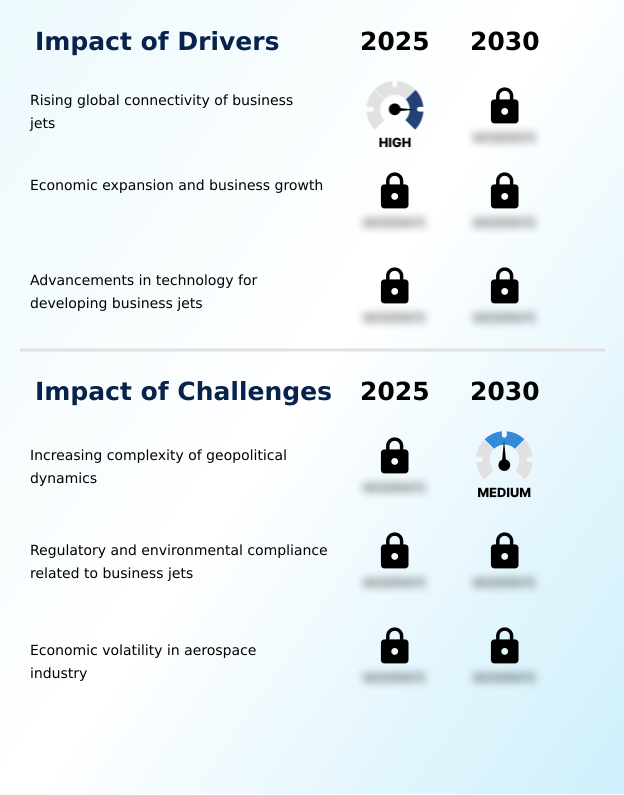
What are the key market drivers leading to the rise in the adoption of Business Jet Industry?
- The primary market driver is the rising demand for business jets to enhance global connectivity, which provides organizations with faster and more flexible access to international markets.
- The fundamental driver of the market is the need for enhanced global connectivity, enabling businesses to operate seamlessly across international borders.
- Private aviation solutions offer unparalleled efficiency for executive air travel, reducing total journey times by over 30% compared to commercial options.
- Corporate flight departments rely on these assets for time-sensitive missions, supported by sophisticated international trip planning and flight operations management. The proliferation of on-demand charter and private jet charter services broadens accessibility.
- Technological advancements in the digital flight deck and air traffic management systems further improve safety and on-time performance. High-speed data connectivity transforms the cabin into a functional workspace, while advancements in fuel efficiency make operations more cost-effective.
What are the market trends shaping the Business Jet Industry?
- A prominent trend shaping the market is the increasing demand for long-range aircraft. This shift is driven by the growing requirement for non-stop, intercontinental travel among corporate and private flyers.
- A primary trend is the demand for long-range aircraft and ultra-long-range jets, enabling non-stop transcontinental capabilities. This is driven by the needs of executive air travel, where efficiency is paramount. Innovations are focused on enhancing the passenger experience design, incorporating features like quiet cabin technology and personalized in-flight services.
- The development of advanced air mobility (AAM) concepts, including urban air mobility (UAM) and vertical takeoff and landing (VTOL) aircraft, is also gaining traction. The pursuit of supersonic business travel continues, with designs featuring advanced aerodynamics. Integrating sustainable aviation fuel (SAF) is a key focus, with some fleets achieving a 5% reduction in net emissions.
- Enhanced connectivity solutions are now standard, supporting productivity during flight.
What challenges does the Business Jet Industry face during its growth?
- A key challenge impacting industry growth is the increasing complexity of geopolitical dynamics, which introduces significant operational, regulatory, and supply chain uncertainties for the market.
- The market faces considerable challenges from geopolitical dynamics and economic volatility, which can disrupt supply chains and temper demand for new aircraft. Navigating complex aviation regulatory compliance is a constant operational burden, with the aircraft certification process for new models being both lengthy and costly. The pre-owned inventory market fluctuates, impacting residual values and influencing aircraft brokerage activities.
- Furthermore, operators face pressure to optimize charter fleet utilization, with issues like empty leg flights affecting profitability. The industry also grapples with rising cybersecurity for aviation threats, which has led to a 20% increase in pre-flight security protocols. The integration of next-generation technologies like hybrid-electric propulsion faces significant technical and regulatory hurdles.
Exclusive Technavio Analysis on Customer Landscape
The business jet market forecasting report includes the adoption lifecycle of the market, covering from the innovator’s stage to the laggard’s stage. It focuses on adoption rates in different regions based on penetration. Furthermore, the business jet market report also includes key purchase criteria and drivers of price sensitivity to help companies evaluate and develop their market growth analysis strategies.
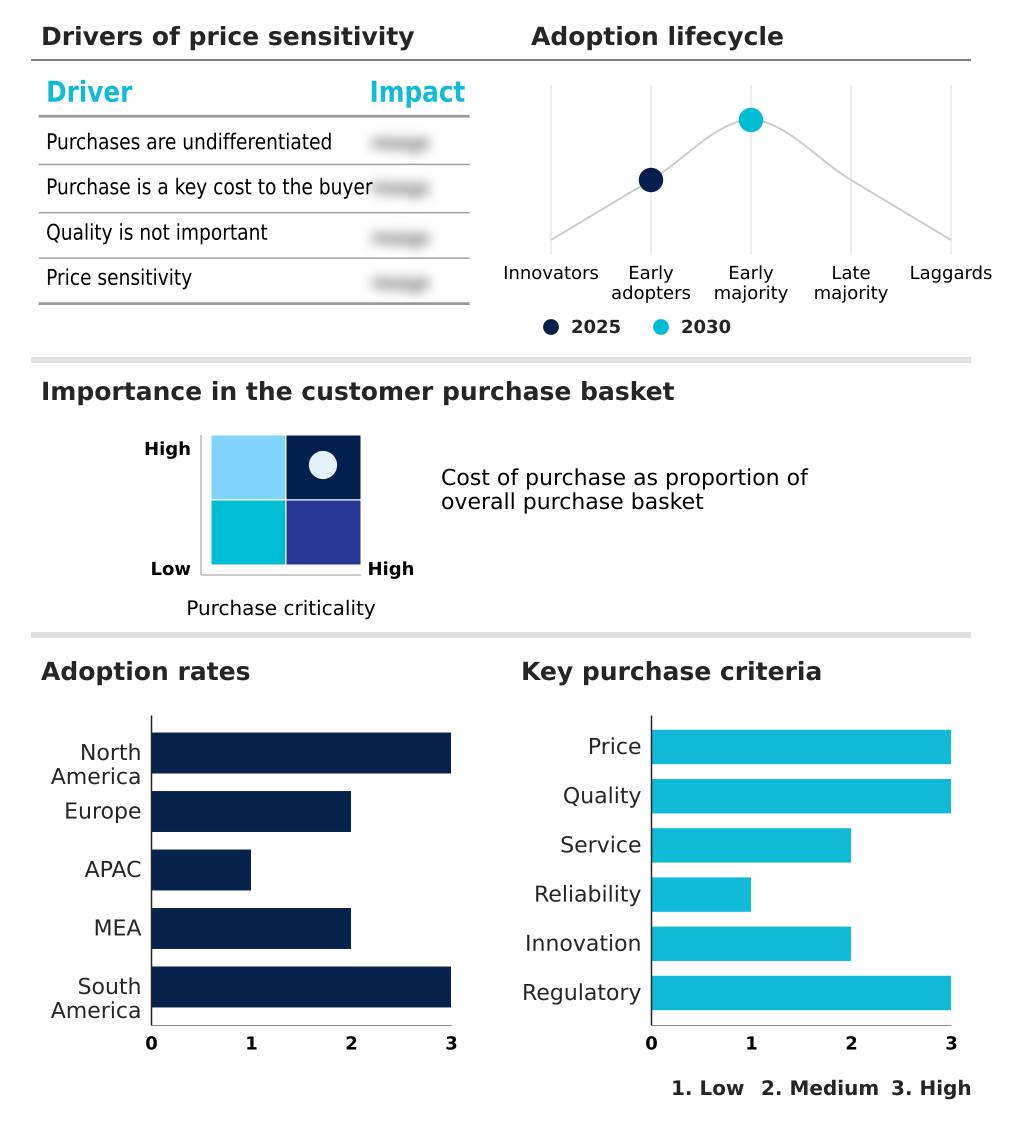
Customer Landscape of Business Jet Industry
Competitive Landscape
Companies are implementing various strategies, such as strategic alliances, business jet market forecast, partnerships, mergers and acquisitions, geographical expansion, and product/service launches, to enhance their presence in the industry.
Airbus SE - Analysis indicates a strategic focus on engineering and delivering high-performance, ultra-long-range aircraft that cater to the premium segment of corporate and private aviation.
The industry research and growth report includes detailed analyses of the competitive landscape of the market and information about key companies, including:
- Airbus SE
- Bombardier Inc.
- Cirrus Design Corp.
- Dassault Aviation SA
- Eclipse Aerospace Inc.
- Embraer SA
- Eviation
- General Dynamics Corp.
- Honda Motor Co. Ltd.
- MSC Aerospace
- PIAGGIO AERO S.p.A.
- Pilatus Aircraft Ltd.
- Piper Aircraft Inc.
- Stratos Aircraft
- Textron Inc.
- The Boeing Co.
- XTI Aircraft Co.
Qualitative and quantitative analysis of companies has been conducted to help clients understand the wider business environment as well as the strengths and weaknesses of key industry players. Data is qualitatively analyzed to categorize companies as pure play, category-focused, industry-focused, and diversified; it is quantitatively analyzed to categorize companies as dominant, leading, strong, tentative, and weak.
Recent Development and News in Business jet market
- In January 2025, NetJets expanded its jet card lineup to provide flyers with greater flexibility and capture sustained demand from a stable post-pandemic market.
- In April 2025, Gulfstream Aerospace, a subsidiary of General Dynamics Corp., received dual type certification from the Federal Aviation Administration (FAA) and the European Union Aviation Safety Agency (EASA) for its G800 ultra-long-range aircraft.
- In May 2025, Textron Inc. secured a significant fleet order from Aerolineas Ejecutivas for up to 12 Cessna Citation jets, reinforcing strong demand from charter and fractional operators in Latin America.
- In May 2025, Bombardier Inc. announced the successful completion of the maiden flight for the first production model of its Global 8000, keeping the program on track for its anticipated entry into service.
Dive into Technavio’s robust research methodology, blending expert interviews, extensive data synthesis, and validated models for unparalleled Business Jet Market insights. See full methodology.
| Market Scope | |
|---|---|
| Page number | 277 |
| Base year | 2025 |
| Historic period | 2020-2024 |
| Forecast period | 2026-2030 |
| Growth momentum & CAGR | Accelerate at a CAGR of 5.4% |
| Market growth 2026-2030 | USD 9138.8 million |
| Market structure | Fragmented |
| YoY growth 2025-2026(%) | 4.5% |
| Key countries | US, Canada, Mexico, Germany, UK, France, Italy, The Netherlands, Spain, China, Japan, India, South Korea, Australia, Indonesia, Saudi Arabia, UAE, South Africa, Israel, Turkey, Brazil, Argentina and Colombia |
| Competitive landscape | Leading Companies, Market Positioning of Companies, Competitive Strategies, and Industry Risks |
Research Analyst Overview
- The business jet market is driven by intense competition centered on performance and technological innovation. Manufacturers are pushing the boundaries of flight with ultra-long-range jets featuring advanced aerodynamics and powerful high-bypass turbofan engines.
- A key boardroom consideration is the growing importance of sustainability, where the adoption of sustainable aviation fuel (SAF) and investment in carbon offset programs are becoming critical for corporate image and regulatory compliance.
- Aircraft equipped with the latest digital flight deck technology and advanced navigation systems have shown to retain up to 10% more of their value over a five-year period. The demand for enhanced connectivity and sophisticated cabin management systems reflects the aircraft's role as a mobile office.
- From single-pilot certified light jets to large-cabin models with custom cabin interiors, the industry is leveraging innovations like fly-by-wire systems, predictive maintenance, and quiet cabin technology. Enhanced vision systems (EVS) and synthetic vision systems (SVS) are now standard for improving safety.
- The focus on fuel efficiency, lightweight materials, and composite airframes underscores a market-wide commitment to optimizing operational costs while advancing transcontinental capabilities.
What are the Key Data Covered in this Business Jet Market Research and Growth Report?
-
What is the expected growth of the Business Jet Market between 2026 and 2030?
-
USD 9.14 billion, at a CAGR of 5.4%
-
-
What segmentation does the market report cover?
-
The report is segmented by End-user (Operator, and Private), Type (Large, Medium, and Light), Distribution Channel (OEM, and Aftermarket) and Geography (North America, Europe, APAC, Middle East and Africa, South America)
-
-
Which regions are analyzed in the report?
-
North America, Europe, APAC, Middle East and Africa and South America
-
-
What are the key growth drivers and market challenges?
-
Rising global connectivity of business jets, Increasing complexity of geopolitical dynamics
-
-
Who are the major players in the Business Jet Market?
-
Airbus SE, Bombardier Inc., Cirrus Design Corp., Dassault Aviation SA, Eclipse Aerospace Inc., Embraer SA, Eviation, General Dynamics Corp., Honda Motor Co. Ltd., MSC Aerospace, PIAGGIO AERO S.p.A., Pilatus Aircraft Ltd., Piper Aircraft Inc., Stratos Aircraft, Textron Inc., The Boeing Co. and XTI Aircraft Co.
-
Market Research Insights
- The market's dynamics are increasingly shaped by a shift toward flexible private aviation solutions that balance access with efficiency. The growth of jet card programs and on-demand charter services provides alternatives to whole aircraft ownership, broadening the user base.
- Advanced aircraft management services have demonstrated the ability to increase charter fleet utilization by up to 15%, maximizing asset value for owners. Meanwhile, innovations in maintenance repair overhaul (MRO) practices, which leverage predictive analytics, are reducing unscheduled aircraft downtime by over 20%. These efficiencies are critical for corporate flight departments and charter operators focused on reliability and cost control.
- As executive air travel evolves, the emphasis on integrated flight operations management and streamlined international trip planning continues to grow, ensuring seamless and efficient global mobility for discerning clients.
We can help! Our analysts can customize this business jet market research report to meet your requirements.
 RIA -
RIA - 
