


Travel Market Analysis, Size, and Forecast 2026-2030: APAC (China, India, and Japan), Europe (Germany, Spain, and France), North America (US, Canada, and Mexico), South America (Brazil and Colombia), Middle East and Africa (UAE, Saudi Arabia, and South Africa), and Rest of World (ROW)

Travel Market Analysis, Size, and Forecast 2026-2030:
APAC (China, India, and Japan), Europe (Germany, Spain, and France), North America (US, Canada, and Mexico), South America (Brazil and Colombia), Middle East and Africa (UAE, Saudi Arabia, and South Africa), and Rest of World (ROW)

Published: May 2026 291 Pages SKU: IRTNTR71431

Market Overview at a Glance

$3504.2 B
Market Opportunity
11.2%
CAGR 2025 - 2030
41.8%
APAC Growth
$2328.2 B
Transportation segment 2024

Travel Market Size 2026-2030

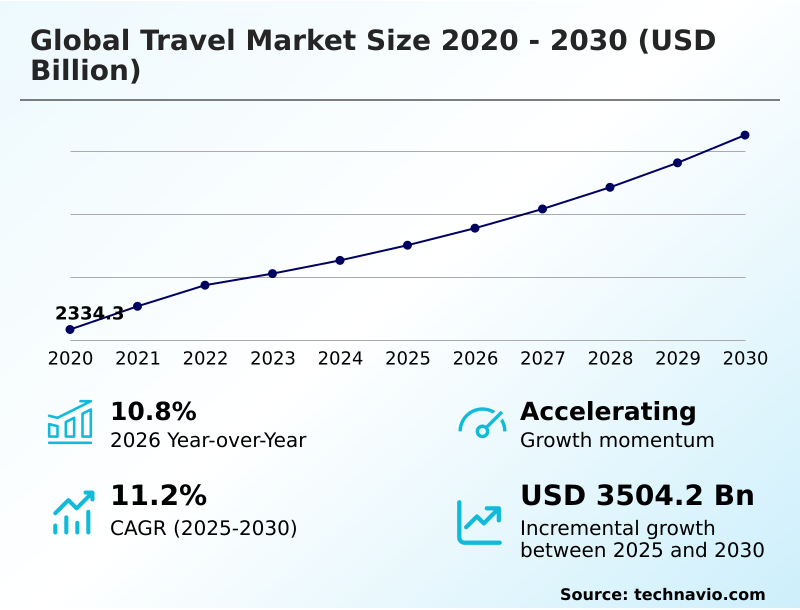
The travel market size is valued to increase by USD 3504.2 billion, at a CAGR of 11.2% from 2025 to 2030. Integration of generative AI and agentic personalization will drive the travel market.

Major Market Trends & Insights

  • APAC dominated the market and accounted for a 41.8% growth during the forecast period.
  • By Sector - Transportation segment was valued at USD 2328.2 billion in 2024
  • By Type - Leisure segment accounted for the largest market revenue share in 2024

Market Size & Forecast

  • Market Opportunities: USD 6185.8 billion
  • Market Future Opportunities: USD 3504.2 billion
  • CAGR from 2025 to 2030 : 11.2%

Market Summary

  • The travel market is undergoing a profound transformation, driven by technological integration and shifting consumer values. A key driver is the large-scale deployment of agentic AI systems that enable hyper-personalization at every stage of the traveler's journey, from initial planning with conversational interfaces to the creation of dynamic itineraries.
  • This is complemented by a significant trend toward intentional, experience-centric travel, where activities like sleep tourism and edutainment trips are gaining prominence over traditional sightseeing. For instance, an airline can now use AI not just for demand forecasting but also for real-time fleet renewal decisions to optimize routes around geopolitical friction zones, enhancing operational efficiency.
  • However, the industry faces challenges from persistent airfare inflation and complex regulatory frameworks, especially concerning data privacy with the use of biometric security and computer vision. Success in this evolving landscape requires a balance between technological innovation, offering curated high-value offerings that promise local authenticity, and building resilience against external shocks through robust crisis management.

What will be the Size of the Travel Market during the forecast period?
Get Key Insights on Market Forecast (PDF) Request Free Sample

How is the Travel Market Segmented?

The travel industry research report provides comprehensive data (region-wise segment analysis), with forecasts and estimates in "USD billion" for the period 2026-2030, as well as historical data from 2020-2024 for the following segments.

  • Sector
    • Transportation
    • Hotel
    • Travel activities
  • Type
    • Leisure
    • Business
  • End-user
    • Solo
    • Group
  • Geography
    • APAC
      • China
      • India
      • Japan
    • Europe
      • Germany
      • Spain
      • France
    • North America
      • US
      • Canada
      • Mexico
    • South America
      • Brazil
      • Colombia
    • Middle East and Africa
      • UAE
      • Saudi Arabia
      • South Africa
    • Rest of World (ROW)

By Sector Insights

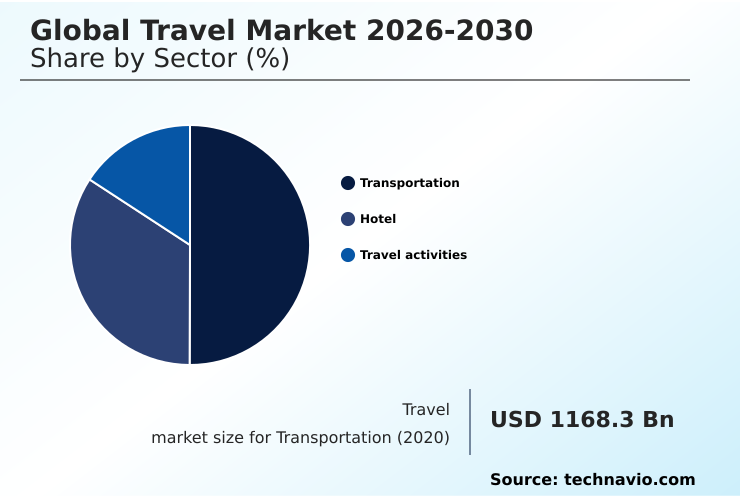
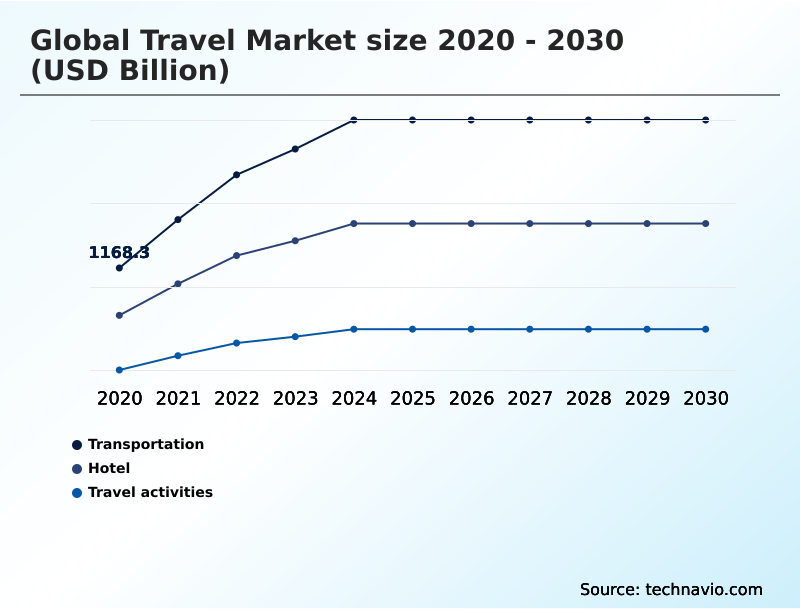
The transportation segment is estimated to witness significant growth during the forecast period.

The transportation segment is pivotal, driven by the modernization of aviation and rail. A focus on operational efficiency has led to record-high load factors of approximately 84% as carriers maximize asset utilization amidst supply constraints.

This period is marked by significant fleet renewal, with the introduction of long-range narrowbody aircraft enhancing next-generation aircraft deployment and enabling new routes.

The widespread implementation of biometric security and automated baggage handling systems at major hubs, part of a push for biometric passenger processing, shows a clear industry direction. Sustainable transport infrastructure is also gaining traction with luxury high-speed rail projects.

Concurrently, sustainable aviation fuel mandates and carbon-neutral logistics are reshaping long-term strategies, pushing the sector toward greater technical resilience and low-carbon travel alternatives, all while under corporate travel budget scrutiny.
Request Free Sample

The Transportation segment was valued at USD 2328.2 billion in 2024 and showed a gradual increase during the forecast period.
Request Free Sample

Regional Analysis

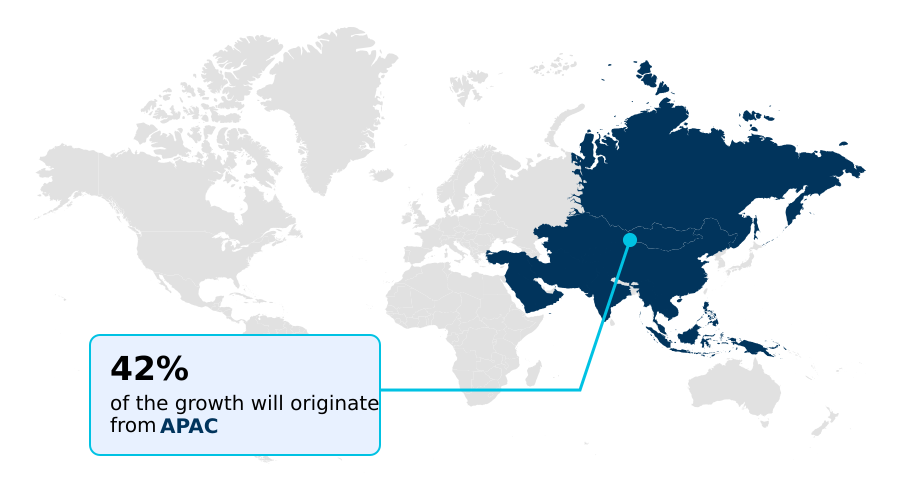
APAC is estimated to contribute 41.8% to the growth of the global market during the forecast period.Technavio’s analysts have elaborately explained the regional trends and drivers that shape the market during the forecast period.
See How Travel Market Demand is Rising in APAC Request Free Sample

The APAC region is the fastest-growing geography, driven by an expanding middle class. A key development is the integration of interoperable digital payments, with one platform connecting to 40 overseas e-wallets, reducing friction for travelers.

The travel retail sector is surging, and digital nomad travel trends are encouraged by extended visa-free policies. Japan saw a 6.4% year-on-year increase in visitors, supported by improved passenger throughput.

This growth is enabled by unconventional accommodations and multi-step reasoning in booking platforms to handle complex itineraries. The region's embrace of technology, including conversational interface tools and long-term memory systems for personalization, is driving demand.

Advanced demand forecasting, ongoing fleet renewal, the rise of online travel activity booking, and a focus on experiential autonomy are also key trends shaping the region's market.

Market Dynamics

Our researchers analyzed the data with 2025 as the base year, along with the key drivers, trends, and challenges. A holistic analysis of drivers will help companies refine their marketing strategies to gain a competitive advantage.

  • The strategic landscape is being reshaped by several interconnected factors. The impact of agentic AI on travel booking is profound, enabling a level of personalization that directly influences purchasing decisions. For boardroom consideration, the ROI of biometric security in airports is now a critical discussion, balancing security with the need for optimizing passenger throughput with technology.
  • Operationally, navigating sustainable aviation fuel mandate compliance has become a central part of long-term fleet renewal for operational efficiency. The benefits of automated baggage handling systems are clear, but integrating IoT for hotel energy management offers another layer of cost control.
  • Simultaneously, managing geopolitical risk in travel logistics has become a constant, while on the consumer front, companies are developing strategies for managing airfare inflation and addressing the challenges of dynamic pricing transparency.
  • The growth of sleep tourism and coolcationing is forcing operators to rethink their offerings, while the rise of the silver solo demographic and the digital nomad impact on local economies are changing accommodation needs. This is where unified data foundations for guest personalization become essential.
  • Marketing regenerative travel experiences and integrating bleisure travel integration in corporate policy are now key revenue strategies. All these shifts occur while addressing data privacy challenges with AI travel planners, navigating visa integrity fee changes, and improving demand forecasting using AI in hospitality.
  • The market bifurcation is clear, with data showing luxury hotels significantly outperforming midscale properties in a high-cost environment.
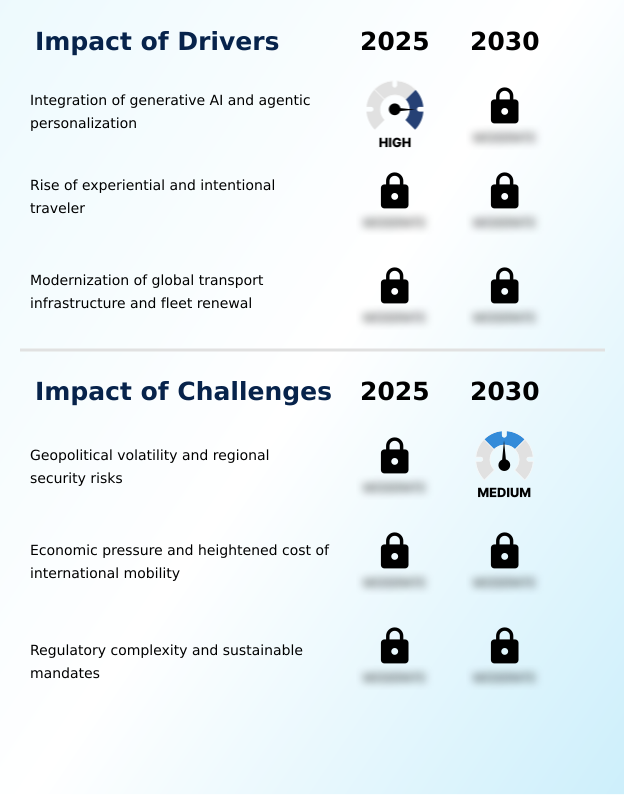
What are the key market drivers leading to the rise in the adoption of Travel Industry?

  • The integration of generative AI and agentic systems for deep personalization is the primary driver shaping the market's growth trajectory.

  • A fundamental driver is the shift in consumer values toward experience-centric travel, with 74% of younger travelers considering it a non-negotiable expense.
  • This intentional traveler behavior is fueling niche sub-segments like sleep tourism and edutainment trips, forcing a move away from standardized packages. Providers now offer curated high-value offerings and snackable experiences that provide local authenticity.
  • Another key driver is infrastructure modernization, with India reporting 12% year-on-year air traffic growth, supported by the evolution of AI travel planners into autonomous travel agents.
  • The widespread adoption of agentic systems personalization allows for hyper-personalization platforms that create dynamic itineraries in real-time, boosting conversion rates and basket sizes significantly across the industry.

What are the market trends shaping the Travel Industry?

  • The mainstreaming of sustainable operations is becoming a core operational driver. This shift is coupled with a rising consumer demand for regenerative travel.

  • A primary trend is the shift toward regenerative travel, where consumer and regulatory pressures demand measurable climate action. This is evidenced by new regulations mandating a 2% reduction in greenhouse gas intensity for fuel supplies, promoting low-impact travel. The rise of coolcationing is part of a larger trend in milestone-driven travel where experiences are prioritized over simple tourism.
  • This has accelerated adoption of tools like the flight emissions label, promoting environmental stewardship in travel. In response, providers are overhauling supply chains, integrating internet of things technology for real-time energy management and navigating new ancillary fees related to sustainability.
  • The market is seeing more regenerative tourism models and low-carbon travel alternatives that focus on restoring ecosystems and providing authentic experiences.

What challenges does the Travel Industry face during its growth?

  • Geopolitical volatility and escalating regional security risks present the most significant challenge to the industry's stability and growth.

  • The most profound challenge is escalating geopolitical friction, which has led to widespread airspace closures requiring advanced customer service triage and causing over 21,000 flight cancellations. This geopolitical volatility impact forces operators to invest in crisis management and resilience strategies. Concurrently, persistent airfare inflation has heightened travel cost inflation.
  • There is also increased regulatory complexity, particularly around dynamic pricing transparency and consumer data. The use of computer vision at airports introduces compliance burdens related to data privacy in hospitality and broader regulatory compliance in travel tech.
  • These pressures are compounded by regional security risks and increased corporate travel budget scrutiny, creating a challenging environment where hotel occupancy in some hubs has fallen to 22.8%.

Exclusive Technavio Analysis on Customer Landscape

The travel market forecasting report includes the adoption lifecycle of the market, covering from the innovator’s stage to the laggard’s stage. It focuses on adoption rates in different regions based on penetration. Furthermore, the travel market report also includes key purchase criteria and drivers of price sensitivity to help companies evaluate and develop their market growth analysis strategies.
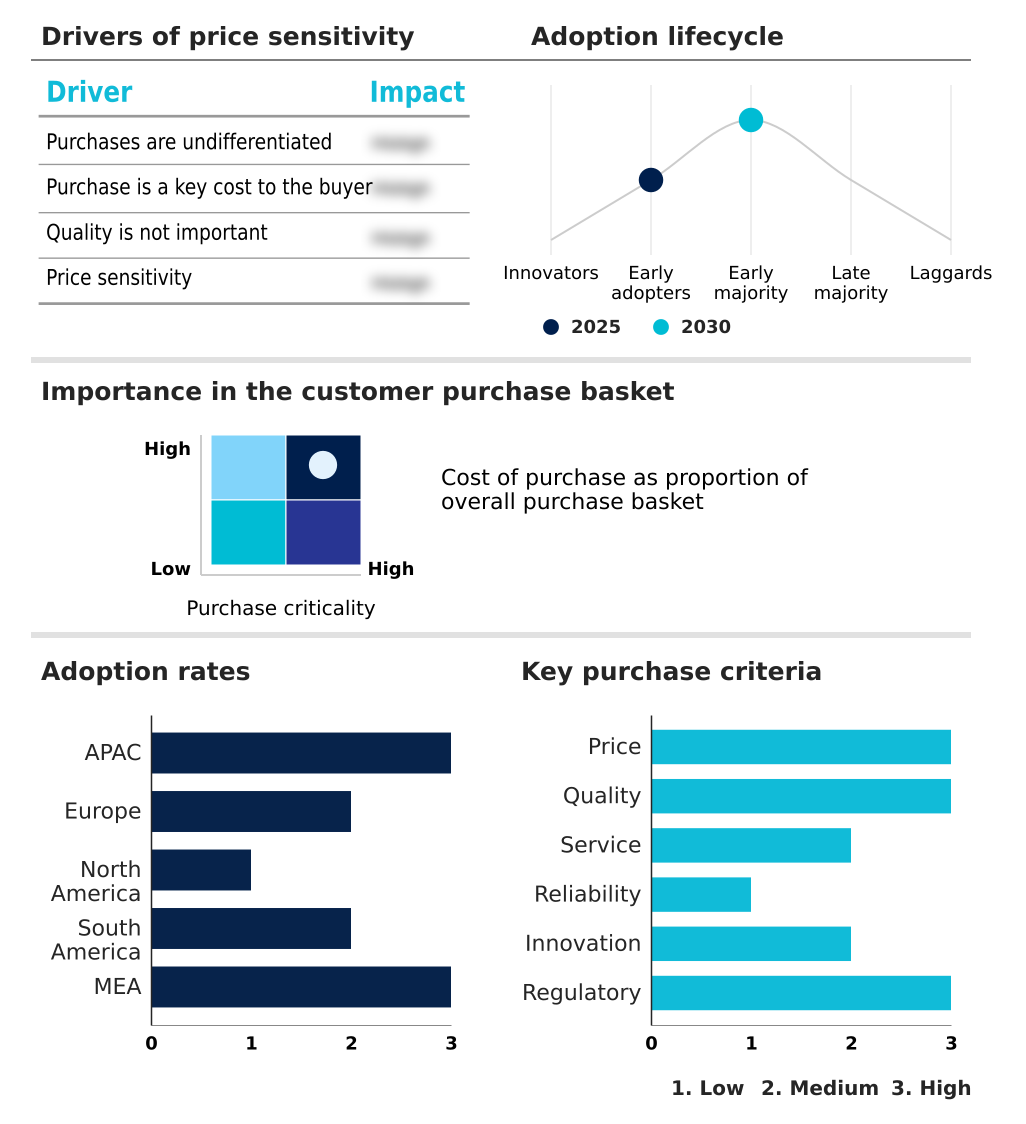
Customer Landscape of Travel Industry

Competitive Landscape

Companies are implementing various strategies, such as strategic alliances, travel market forecast, partnerships, mergers and acquisitions, geographical expansion, and product/service launches, to enhance their presence in the industry.

Accor S.A. - Offers integrated travel and hospitality solutions for leisure and corporate clients, encompassing booking, management, and technology-driven services.

The industry research and growth report includes detailed analyses of the competitive landscape of the market and information about key companies, including:

  • Accor S.A.
  • Adelman Travel System Inc.
  • Airbnb Inc.
  • American Express Co.
  • BCD Travel
  • Booking Holdings Inc.
  • Corporate Travel Management Ltd
  • CWT
  • Direct Travel Inc.
  • Expedia Group Inc.
  • Fareportal Inc.
  • Flight Centre Travel Group Ltd.
  • FROSCH International Travel LLC
  • Global Business Travel Group
  • Hilton Worldwide Holdings Inc.
  • Hyatt Hotels Corp.
  • InterContinental Hotels Group
  • Marriott International Inc.
  • Omega World Travel Inc.
  • World Travel Holdings

Qualitative and quantitative analysis of companies has been conducted to help clients understand the wider business environment as well as the strengths and weaknesses of key industry players. Data is qualitatively analyzed to categorize companies as pure play, category-focused, industry-focused, and diversified; it is quantitatively analyzed to categorize companies as dominant, leading, strong, tentative, and weak.

Recent Development and News in Travel market

  • In January 2025, the United States Embassy in India implemented revised visa appointment procedures, introducing a one-time postponement option at no cost to improve efficiency and reduce applicant wait times.
  • In March 2025, The European Commission initiated the first phase of its ReFuelEU Aviation mandate, requiring fuel suppliers at all major regional airports to incorporate a minimum 2% blend of sustainable aviation fuel.
  • In October 2025, major corporate travel management firms reported a significant strategic shift among clients, with budgets increasing for in-person meetings and a pivot away from virtual-only formats to a hybrid model.
  • In February 2025, The Emerging Markets Council was formed in a strategic collaboration to provide small and medium-sized travel businesses in Mexico and Latin America with digital marketing tools to reach global audiences.

Dive into Technavio’s robust research methodology, blending expert interviews, extensive data synthesis, and validated models for unparalleled Travel Market insights. See full methodology.

Market Scope
Page number 291
Base year 2025
Historic period 2020-2024
Forecast period 2026-2030
Growth momentum & CAGR Accelerate at a CAGR of 11.2%
Market growth 2026-2030 USD 3504.2 billion
Market structure Fragmented
YoY growth 2025-2026(%) 10.8%
Key countries China, India, Japan, South Korea, Thailand, Indonesia, Germany, Spain, France, Italy, UK, The Netherlands, US, Canada, Mexico, Brazil, Colombia, Chile, UAE, Saudi Arabia, Egypt, South Africa and Israel
Competitive landscape Leading Companies, Market Positioning of Companies, Competitive Strategies, and Industry Risks

Request Free Sample

Research Analyst Overview

  • The travel market's evolution is defined by a dual focus on hyper-personalization and operational efficiency. The core of this shift is the deployment of agentic AI, moving from simple conversational interface tools to systems capable of multi-step reasoning and leveraging long-term memory systems to create dynamic itineraries. This technology underpins critical functions like demand forecasting and customer service triage.
  • On the consumer side, a move towards milestone-driven travel and experience-centric travel is fueling niche segments like sleep tourism, coolcationing, and edutainment trips. This demands curated high-value offerings that provide local authenticity through unconventional accommodations and snackable experiences.
  • For boardroom-level strategy, the push for regenerative travel and low-impact travel, driven by sustainable aviation fuel mandates and tools like the flight emissions label, directly impacts capital expenditure on fleet renewal and carbon-neutral logistics.
  • These investments, alongside technologies like biometric security, automated baggage handling, computer vision, and internet of things technology, are essential for improving passenger throughput, which has been shown to increase by up to 40%.
  • However, this innovation occurs amidst challenges like geopolitical friction, which requires robust crisis management and resilience strategies, and economic pressures from airfare inflation, ancillary fees, and the need for dynamic pricing transparency.

What are the Key Data Covered in this Travel Market Research and Growth Report?

  • What is the expected growth of the Travel Market between 2026 and 2030?

    • USD 3504.2 billion, at a CAGR of 11.2%

  • What segmentation does the market report cover?

    • The report is segmented by Sector (Transportation, Hotel, and Travel activities), Type (Leisure, and Business), End-user (Solo, and Group) and Geography (APAC, Europe, North America, South America, Middle East and Africa)

  • Which regions are analyzed in the report?

    • APAC, Europe, North America, South America and Middle East and Africa

  • What are the key growth drivers and market challenges?

    • Integration of generative AI and agentic personalization, Geopolitical volatility and regional security risks

  • Who are the major players in the Travel Market?

    • Accor S.A., Adelman Travel System Inc., Airbnb Inc., American Express Co., BCD Travel, Booking Holdings Inc., Corporate Travel Management Ltd, CWT, Direct Travel Inc., Expedia Group Inc., Fareportal Inc., Flight Centre Travel Group Ltd., FROSCH International Travel LLC, Global Business Travel Group, Hilton Worldwide Holdings Inc., Hyatt Hotels Corp., InterContinental Hotels Group, Marriott International Inc., Omega World Travel Inc. and World Travel Holdings

Market Research Insights

  • Market dynamics are shaped by the convergence of technology and consumer behavior. The adoption of agentic systems personalization is enabling autonomous travel agents and hyper-personalization platforms, with AI travel planners becoming standard. This intentional traveler behavior is met with next-generation aircraft deployment and the expansion of luxury high-speed rail, improving sustainable transport infrastructure.
  • Biometric passenger processing is now common, though it raises data privacy in hospitality concerns. Environmental stewardship in travel is driving regenerative tourism models and low-carbon travel alternatives. However, regional security risks and geopolitical volatility impact operations, with one transit hub seeing occupancy drop to 22.8%. Travel cost inflation and corporate travel budget scrutiny are major economic pressures.
  • Regulatory compliance in travel tech is tightening around intelligent property management and conversational concierge platforms.
  • Success hinges on leveraging unified data foundations for system-driven personalization to cater to the digital nomad travel trends, the silver solo demographic, and the autonomy economy travel, which often involves online travel activity booking, digital detox retreats, and multigenerational group travel, all facilitated by interoperable digital payments within the travel retail sector.

We can help! Our analysts can customize this travel market research report to meet your requirements.

Get in touch

1. Executive Summary

1.1 Market overview

Executive Summary - Chart on Market Overview
Executive Summary - Data Table on Market Overview
Executive Summary - Chart on Global Market Characteristics
Executive Summary - Chart on Market by Geography
Executive Summary - Chart on Market Segmentation by Sector
Executive Summary - Chart on Market Segmentation by Type
Executive Summary - Chart on Market Segmentation by End-user
Executive Summary - Chart on Incremental Growth
Executive Summary - Data Table on Incremental Growth
Executive Summary - Chart on Company Market Positioning

2. Technavio Analysis

2.1 Analysis of price sensitivity, lifecycle, customer purchase basket, adoption rates, and purchase criteria

2.2 Criticality of inputs and Factors of differentiation

Chart on Overview on criticality of inputs and factors of differentiation

2.3 Factors of disruption

Chart on Overview on factors of disruption

2.4 Impact of drivers and challenges

Chart on Impact of drivers and challenges in 2025 and 2030

3. Market Landscape

3.1 Market ecosystem

Chart on Parent Market
Data Table on - Parent Market

3.2 Market characteristics

Chart on Market characteristics analysis

3.3 Value chain analysis

Chart on Value chain analysis

4. Market Sizing

4.1 Market definition

Data Table on Offerings of companies included in the market definition

4.2 Market segment analysis

Market segments

4.3 Market size 2025

4.4 Market outlook: Forecast for 2025-2030

Chart on Global - Market size and forecast 2025-2030 ($ billion)
Data Table on Global - Market size and forecast 2025-2030 ($ billion)
Chart on Global Market: Year-over-year growth 2025-2030 (%)
Data Table on Global Market: Year-over-year growth 2025-2030 (%)

5. Historic Market Size

5.1 Global Travel Market 2020 - 2024

Historic Market Size - Data Table on Global Travel Market 2020 - 2024 ($ billion)

5.2 Sector segment analysis 2020 - 2024

Historic Market Size - Sector Segment 2020 - 2024 ($ billion)

5.3 Type segment analysis 2020 - 2024

Historic Market Size - Type Segment 2020 - 2024 ($ billion)

5.4 End-user segment analysis 2020 - 2024

Historic Market Size - End-user Segment 2020 - 2024 ($ billion)

5.5 Geography segment analysis 2020 - 2024

Historic Market Size - Geography Segment 2020 - 2024 ($ billion)

5.6 Country segment analysis 2020 - 2024

Historic Market Size - Country Segment 2020 - 2024 ($ billion)

6. Qualitative Analysis

6.1 Impact of AI on global travel market

6.2 Impact of geopolitical conflicts on global travel market

7. Five Forces Analysis

7.1 Five forces summary

Five forces analysis - Comparison between 2025 and 2030

7.2 Bargaining power of buyers

Bargaining power of buyers - Impact of key factors 2025 and 2030

7.3 Bargaining power of suppliers

Bargaining power of suppliers - Impact of key factors in 2025 and 2030

7.4 Threat of new entrants

Threat of new entrants - Impact of key factors in 2025 and 2030

7.5 Threat of substitutes

Threat of substitutes - Impact of key factors in 2025 and 2030

7.6 Threat of rivalry

Threat of rivalry - Impact of key factors in 2025 and 2030

7.7 Market condition

Chart on Market condition - Five forces 2025 and 2030

8. Market Segmentation by Sector

8.1 Market segments

Chart on Sector - Market share 2025-2030 (%)
Data Table on Sector - Market share 2025-2030 (%)

8.2 Comparison by Sector

Chart on Comparison by Sector
Data Table on Comparison by Sector

8.3 Transportation - Market size and forecast 2025-2030

Chart on Transportation - Market size and forecast 2025-2030 ($ billion)
Data Table on Transportation - Market size and forecast 2025-2030 ($ billion)
Chart on Transportation - Year-over-year growth 2025-2030 (%)
Data Table on Transportation - Year-over-year growth 2025-2030 (%)

8.4 Hotel - Market size and forecast 2025-2030

Chart on Hotel - Market size and forecast 2025-2030 ($ billion)
Data Table on Hotel - Market size and forecast 2025-2030 ($ billion)
Chart on Hotel - Year-over-year growth 2025-2030 (%)
Data Table on Hotel - Year-over-year growth 2025-2030 (%)

8.5 Travel activities - Market size and forecast 2025-2030

Chart on Travel activities - Market size and forecast 2025-2030 ($ billion)
Data Table on Travel activities - Market size and forecast 2025-2030 ($ billion)
Chart on Travel activities - Year-over-year growth 2025-2030 (%)
Data Table on Travel activities - Year-over-year growth 2025-2030 (%)

8.6 Market opportunity by Sector

Market opportunity by Sector ($ billion)
Data Table on Market opportunity by Sector ($ billion)

9. Market Segmentation by Type

9.1 Market segments

Chart on Type - Market share 2025-2030 (%)
Data Table on Type - Market share 2025-2030 (%)

9.2 Comparison by Type

Chart on Comparison by Type
Data Table on Comparison by Type

9.3 Leisure - Market size and forecast 2025-2030

Chart on Leisure - Market size and forecast 2025-2030 ($ billion)
Data Table on Leisure - Market size and forecast 2025-2030 ($ billion)
Chart on Leisure - Year-over-year growth 2025-2030 (%)
Data Table on Leisure - Year-over-year growth 2025-2030 (%)

9.4 Business - Market size and forecast 2025-2030

Chart on Business - Market size and forecast 2025-2030 ($ billion)
Data Table on Business - Market size and forecast 2025-2030 ($ billion)
Chart on Business - Year-over-year growth 2025-2030 (%)
Data Table on Business - Year-over-year growth 2025-2030 (%)

9.5 Market opportunity by Type

Market opportunity by Type ($ billion)
Data Table on Market opportunity by Type ($ billion)

10. Market Segmentation by End-user

10.1 Market segments

Chart on End-user - Market share 2025-2030 (%)
Data Table on End-user - Market share 2025-2030 (%)

10.2 Comparison by End-user

Chart on Comparison by End-user
Data Table on Comparison by End-user

10.3 Solo - Market size and forecast 2025-2030

Chart on Solo - Market size and forecast 2025-2030 ($ billion)
Data Table on Solo - Market size and forecast 2025-2030 ($ billion)
Chart on Solo - Year-over-year growth 2025-2030 (%)
Data Table on Solo - Year-over-year growth 2025-2030 (%)

10.4 Group - Market size and forecast 2025-2030

Chart on Group - Market size and forecast 2025-2030 ($ billion)
Data Table on Group - Market size and forecast 2025-2030 ($ billion)
Chart on Group - Year-over-year growth 2025-2030 (%)
Data Table on Group - Year-over-year growth 2025-2030 (%)

10.5 Market opportunity by End-user

Market opportunity by End-user ($ billion)
Data Table on Market opportunity by End-user ($ billion)

11. Customer Landscape

11.1 Customer landscape overview

Analysis of price sensitivity, lifecycle, customer purchase basket, adoption rates, and purchase criteria

12. Geographic Landscape

12.1 Geographic segmentation

Chart on Market share by geography 2025-2030 (%)
Data Table on Market share by geography 2025-2030 (%)

12.2 Geographic comparison

Chart on Geographic comparison
Data Table on Geographic comparison

12.3 APAC - Market size and forecast 2025-2030

Chart on APAC - Market size and forecast 2025-2030 ($ billion)
Data Table on APAC - Market size and forecast 2025-2030 ($ billion)
Chart on APAC - Year-over-year growth 2025-2030 (%)
Data Table on APAC - Year-over-year growth 2025-2030 (%)
Chart on Regional Comparison - APAC
Data Table on Regional Comparison - APAC

12.3.1 China - Market size and forecast 2025-2030

Chart on China - Market size and forecast 2025-2030 ($ billion)
Data Table on China - Market size and forecast 2025-2030 ($ billion)
Chart on China - Year-over-year growth 2025-2030 (%)
Data Table on China - Year-over-year growth 2025-2030 (%)

12.3.2 India - Market size and forecast 2025-2030

Chart on India - Market size and forecast 2025-2030 ($ billion)
Data Table on India - Market size and forecast 2025-2030 ($ billion)
Chart on India - Year-over-year growth 2025-2030 (%)
Data Table on India - Year-over-year growth 2025-2030 (%)

12.3.3 Japan - Market size and forecast 2025-2030

Chart on Japan - Market size and forecast 2025-2030 ($ billion)
Data Table on Japan - Market size and forecast 2025-2030 ($ billion)
Chart on Japan - Year-over-year growth 2025-2030 (%)
Data Table on Japan - Year-over-year growth 2025-2030 (%)

12.3.4 South Korea - Market size and forecast 2025-2030

Chart on South Korea - Market size and forecast 2025-2030 ($ billion)
Data Table on South Korea - Market size and forecast 2025-2030 ($ billion)
Chart on South Korea - Year-over-year growth 2025-2030 (%)
Data Table on South Korea - Year-over-year growth 2025-2030 (%)

12.3.5 Thailand - Market size and forecast 2025-2030

Chart on Thailand - Market size and forecast 2025-2030 ($ billion)
Data Table on Thailand - Market size and forecast 2025-2030 ($ billion)
Chart on Thailand - Year-over-year growth 2025-2030 (%)
Data Table on Thailand - Year-over-year growth 2025-2030 (%)

12.3.6 Indonesia - Market size and forecast 2025-2030

Chart on Indonesia - Market size and forecast 2025-2030 ($ billion)
Data Table on Indonesia - Market size and forecast 2025-2030 ($ billion)
Chart on Indonesia - Year-over-year growth 2025-2030 (%)
Data Table on Indonesia - Year-over-year growth 2025-2030 (%)

12.4 Europe - Market size and forecast 2025-2030

Chart on Europe - Market size and forecast 2025-2030 ($ billion)
Data Table on Europe - Market size and forecast 2025-2030 ($ billion)
Chart on Europe - Year-over-year growth 2025-2030 (%)
Data Table on Europe - Year-over-year growth 2025-2030 (%)
Chart on Regional Comparison - Europe
Data Table on Regional Comparison - Europe

12.4.1 Germany - Market size and forecast 2025-2030

Chart on Germany - Market size and forecast 2025-2030 ($ billion)
Data Table on Germany - Market size and forecast 2025-2030 ($ billion)
Chart on Germany - Year-over-year growth 2025-2030 (%)
Data Table on Germany - Year-over-year growth 2025-2030 (%)

12.4.2 Spain - Market size and forecast 2025-2030

Chart on Spain - Market size and forecast 2025-2030 ($ billion)
Data Table on Spain - Market size and forecast 2025-2030 ($ billion)
Chart on Spain - Year-over-year growth 2025-2030 (%)
Data Table on Spain - Year-over-year growth 2025-2030 (%)

12.4.3 France - Market size and forecast 2025-2030

Chart on France - Market size and forecast 2025-2030 ($ billion)
Data Table on France - Market size and forecast 2025-2030 ($ billion)
Chart on France - Year-over-year growth 2025-2030 (%)
Data Table on France - Year-over-year growth 2025-2030 (%)

12.4.4 Italy - Market size and forecast 2025-2030

Chart on Italy - Market size and forecast 2025-2030 ($ billion)
Data Table on Italy - Market size and forecast 2025-2030 ($ billion)
Chart on Italy - Year-over-year growth 2025-2030 (%)
Data Table on Italy - Year-over-year growth 2025-2030 (%)

12.4.5 UK - Market size and forecast 2025-2030

Chart on UK - Market size and forecast 2025-2030 ($ billion)
Data Table on UK - Market size and forecast 2025-2030 ($ billion)
Chart on UK - Year-over-year growth 2025-2030 (%)
Data Table on UK - Year-over-year growth 2025-2030 (%)

12.4.6 The Netherlands - Market size and forecast 2025-2030

Chart on The Netherlands - Market size and forecast 2025-2030 ($ billion)
Data Table on The Netherlands - Market size and forecast 2025-2030 ($ billion)
Chart on The Netherlands - Year-over-year growth 2025-2030 (%)
Data Table on The Netherlands - Year-over-year growth 2025-2030 (%)

12.5 North America - Market size and forecast 2025-2030

Chart on North America - Market size and forecast 2025-2030 ($ billion)
Data Table on North America - Market size and forecast 2025-2030 ($ billion)
Chart on North America - Year-over-year growth 2025-2030 (%)
Data Table on North America - Year-over-year growth 2025-2030 (%)
Chart on Regional Comparison - North America
Data Table on Regional Comparison - North America

12.5.1 US - Market size and forecast 2025-2030

Chart on US - Market size and forecast 2025-2030 ($ billion)
Data Table on US - Market size and forecast 2025-2030 ($ billion)
Chart on US - Year-over-year growth 2025-2030 (%)
Data Table on US - Year-over-year growth 2025-2030 (%)

12.5.2 Canada - Market size and forecast 2025-2030

Chart on Canada - Market size and forecast 2025-2030 ($ billion)
Data Table on Canada - Market size and forecast 2025-2030 ($ billion)
Chart on Canada - Year-over-year growth 2025-2030 (%)
Data Table on Canada - Year-over-year growth 2025-2030 (%)

12.5.3 Mexico - Market size and forecast 2025-2030

Chart on Mexico - Market size and forecast 2025-2030 ($ billion)
Data Table on Mexico - Market size and forecast 2025-2030 ($ billion)
Chart on Mexico - Year-over-year growth 2025-2030 (%)
Data Table on Mexico - Year-over-year growth 2025-2030 (%)

12.6 South America - Market size and forecast 2025-2030

Chart on South America - Market size and forecast 2025-2030 ($ billion)
Data Table on South America - Market size and forecast 2025-2030 ($ billion)
Chart on South America - Year-over-year growth 2025-2030 (%)
Data Table on South America - Year-over-year growth 2025-2030 (%)
Chart on Regional Comparison - South America
Data Table on Regional Comparison - South America

12.6.1 Brazil - Market size and forecast 2025-2030

Chart on Brazil - Market size and forecast 2025-2030 ($ billion)
Data Table on Brazil - Market size and forecast 2025-2030 ($ billion)
Chart on Brazil - Year-over-year growth 2025-2030 (%)
Data Table on Brazil - Year-over-year growth 2025-2030 (%)

12.6.2 Colombia - Market size and forecast 2025-2030

Chart on Colombia - Market size and forecast 2025-2030 ($ billion)
Data Table on Colombia - Market size and forecast 2025-2030 ($ billion)
Chart on Colombia - Year-over-year growth 2025-2030 (%)
Data Table on Colombia - Year-over-year growth 2025-2030 (%)

12.6.3 Chile - Market size and forecast 2025-2030

Chart on Chile - Market size and forecast 2025-2030 ($ billion)
Data Table on Chile - Market size and forecast 2025-2030 ($ billion)
Chart on Chile - Year-over-year growth 2025-2030 (%)
Data Table on Chile - Year-over-year growth 2025-2030 (%)

12.7 Middle East and Africa - Market size and forecast 2025-2030

Chart on Middle East and Africa - Market size and forecast 2025-2030 ($ billion)
Data Table on Middle East and Africa - Market size and forecast 2025-2030 ($ billion)
Chart on Middle East and Africa - Year-over-year growth 2025-2030 (%)
Data Table on Middle East and Africa - Year-over-year growth 2025-2030 (%)
Chart on Regional Comparison - Middle East and Africa
Data Table on Regional Comparison - Middle East and Africa

12.7.1 UAE - Market size and forecast 2025-2030

Chart on UAE - Market size and forecast 2025-2030 ($ billion)
Data Table on UAE - Market size and forecast 2025-2030 ($ billion)
Chart on UAE - Year-over-year growth 2025-2030 (%)
Data Table on UAE - Year-over-year growth 2025-2030 (%)

12.7.2 Saudi Arabia - Market size and forecast 2025-2030

Chart on Saudi Arabia - Market size and forecast 2025-2030 ($ billion)
Data Table on Saudi Arabia - Market size and forecast 2025-2030 ($ billion)
Chart on Saudi Arabia - Year-over-year growth 2025-2030 (%)
Data Table on Saudi Arabia - Year-over-year growth 2025-2030 (%)

12.7.3 Egypt - Market size and forecast 2025-2030

Chart on Egypt - Market size and forecast 2025-2030 ($ billion)
Data Table on Egypt - Market size and forecast 2025-2030 ($ billion)
Chart on Egypt - Year-over-year growth 2025-2030 (%)
Data Table on Egypt - Year-over-year growth 2025-2030 (%)

12.7.4 South Africa - Market size and forecast 2025-2030

Chart on South Africa - Market size and forecast 2025-2030 ($ billion)
Data Table on South Africa - Market size and forecast 2025-2030 ($ billion)
Chart on South Africa - Year-over-year growth 2025-2030 (%)
Data Table on South Africa - Year-over-year growth 2025-2030 (%)

12.7.5 Israel - Market size and forecast 2025-2030

Chart on Israel - Market size and forecast 2025-2030 ($ billion)
Data Table on Israel - Market size and forecast 2025-2030 ($ billion)
Chart on Israel - Year-over-year growth 2025-2030 (%)
Data Table on Israel - Year-over-year growth 2025-2030 (%)

12.8 Market opportunity by geography

Market opportunity by geography ($ billion)
Data Tables on Market opportunity by geography ($ billion)

13. Drivers, Challenges, and Opportunity

13.1 Market drivers

Integration of generative AI and agentic personalization
Rise of experiential and intentional traveler
Modernization of global transport infrastructure and fleet renewal

13.2 Market challenges

Geopolitical volatility and regional security risks
Economic pressure and heightened cost of international mobility
Regulatory complexity and sustainable mandates

13.3 Impact of drivers and challenges

Impact of drivers and challenges in 2025 and 2030

13.4 Market opportunities

Mainstreaming of sustainable operations and regenerative travel
Rise of experiential and intentional traveler
Modernization of global transport infrastructure and fleet renewal

14. Competitive Landscape

14.1 Overview

14.2

Overview on criticality of inputs and factors of differentiation

14.3 Landscape disruption

Overview on factors of disruption

14.4 Industry risks

Impact of key risks on business

15. Competitive Analysis

15.1 Companies profiled

Companies covered

15.2 Company ranking index

15.3 Market positioning of companies

Matrix on companies position and classification

15.4 Accor S.A.

Accor S.A. - Overview
Accor S.A. - Business segments
Accor S.A. - Key offerings
Accor S.A. - Segment focus
SWOT

15.5 Airbnb Inc.

Airbnb Inc. - Overview
Airbnb Inc. - Product / Service
Airbnb Inc. - Key offerings
SWOT

15.6 American Express Co.

American Express Co. - Overview
American Express Co. - Business segments
American Express Co. - Key offerings
American Express Co. - Segment focus
SWOT

15.7 BCD Travel

BCD Travel - Overview
BCD Travel - Product / Service
BCD Travel - Key offerings
SWOT

15.8 Booking Holdings Inc.

Booking Holdings Inc. - Overview
Booking Holdings Inc. - Product / Service
Booking Holdings Inc. - Key offerings
SWOT

15.9 Corporate Travel Management Ltd

Corporate Travel Management Ltd - Overview
Corporate Travel Management Ltd - Product / Service
Corporate Travel Management Ltd - Key offerings
SWOT

15.10 CWT

CWT - Overview
CWT - Product / Service
CWT - Key offerings
SWOT

15.11 Direct Travel Inc.

Direct Travel Inc. - Overview
Direct Travel Inc. - Product / Service
Direct Travel Inc. - Key offerings
SWOT

15.12 Expedia Group Inc.

Expedia Group Inc. - Overview
Expedia Group Inc. - Business segments
Expedia Group Inc. - Key offerings
Expedia Group Inc. - Segment focus
SWOT

15.13 Flight Centre Travel Group Ltd.

Flight Centre Travel Group Ltd. - Overview
Flight Centre Travel Group Ltd. - Business segments
Flight Centre Travel Group Ltd. - Key offerings
Flight Centre Travel Group Ltd. - Segment focus
SWOT

15.14 Global Business Travel Group

Global Business Travel Group - Overview
Global Business Travel Group - Business segments
Global Business Travel Group - Key offerings
Global Business Travel Group - Segment focus
SWOT

15.15 Hilton Worldwide Holdings Inc.

Hilton Worldwide Holdings Inc. - Overview
Hilton Worldwide Holdings Inc. - Business segments
Hilton Worldwide Holdings Inc. - Key offerings
Hilton Worldwide Holdings Inc. - Segment focus
SWOT

15.16 Hyatt Hotels Corp.

Hyatt Hotels Corp. - Overview
Hyatt Hotels Corp. - Business segments
Hyatt Hotels Corp. - Key offerings
Hyatt Hotels Corp. - Segment focus
SWOT

15.17 InterContinental Hotels Group

InterContinental Hotels Group - Overview
InterContinental Hotels Group - Product / Service
InterContinental Hotels Group - Key offerings
SWOT

15.18 Marriott International Inc.

Marriott International Inc. - Overview
Marriott International Inc. - Business segments
Marriott International Inc. - Key offerings
Marriott International Inc. - Segment focus
SWOT

16. Appendix

16.1 Scope of the report

Market definition
Objectives
Notes and caveats

16.2 Inclusions and exclusions checklist

Inclusions checklist
Exclusions checklist

16.3 Currency conversion rates for US$

16.4 Research methodology

16.5 Data procurement

Information sources

16.6 Data validation

16.7 Validation techniques employed for market sizing

16.8 Data synthesis

16.9 360 degree market analysis

16.10 List of abbreviations

Research Methodology

Technavio presents a detailed picture of the market by way of study, synthesis, and summation of data from multiple sources. The analysts have presented the various facets of the market with a particular focus on identifying the key industry influencers. The data thus presented is comprehensive, reliable, and the result of extensive research, both primary and secondary.

INFORMATION SOURCES

Primary sources

  • Manufacturers and suppliers
  • Channel partners
  • Industry experts
  • Strategic decision makers

Secondary sources

  • Industry journals and periodicals
  • Government data
  • Financial reports of key industry players
  • Historical data
  • Press releases

DATA ANALYSIS

Data Synthesis

  • Collation of data
  • Estimation of key figures
  • Analysis of derived insights

Data Validation

  • Triangulation with data models
  • Reference against proprietary databases
  • Corroboration with industry experts

REPORT WRITING

Qualitative

  • Market drivers
  • Market challenges
  • Market trends
  • Five forces analysis

Quantitative

  • Market size and forecast
  • Market segmentation
  • Geographical insights
  • Competitive landscape

Interested in this report?

Get your sample now to see our research methodology and insights!

Download Now

Frequently Asked Questions

Travel market growth will increase by USD 3504.2 billion during 2026-2030.

The Travel market is expected to grow at a CAGR of 11.2% during 2026-2030.

Travel market is segmented by Sector (Transportation, Hotel, Travel activities) Type (Leisure, Business) End-user (Solo, Group)

Accor S.A., Adelman Travel System Inc., Airbnb Inc., American Express Co., BCD Travel, Booking Holdings Inc., Corporate Travel Management Ltd, CWT, Direct Travel Inc., Expedia Group Inc., Fareportal Inc., Flight Centre Travel Group Ltd., FROSCH International Travel LLC, Global Business Travel Group, Hilton Worldwide Holdings Inc., Hyatt Hotels Corp., InterContinental Hotels Group, Marriott International Inc., Omega World Travel Inc., World Travel Holdings are a few of the key vendors in the Travel market.

APAC will register the highest growth rate of 41.8% among the other regions. Therefore, the Travel market in APAC is expected to garner significant business opportunities for the vendors during the forecast period.

China, India, Japan, South Korea, Thailand, Indonesia, Germany, Spain, France, Italy, UK, The Netherlands, US, Canada, Mexico, Brazil, Colombia, Chile, UAE, Saudi Arabia, Egypt, South Africa, Israel

  • Integration of generative AI and agentic personalization is the driving factor this market.

The Travel market vendors should focus on grabbing business opportunities from the Sector segment as it accounted for the largest market share in the base year.
RIA - Research AI Assistant
Ask RIA
