


Heating, Ventilation And Air Conditioning (HVAC) Aftermarket Market Size 2026-2030
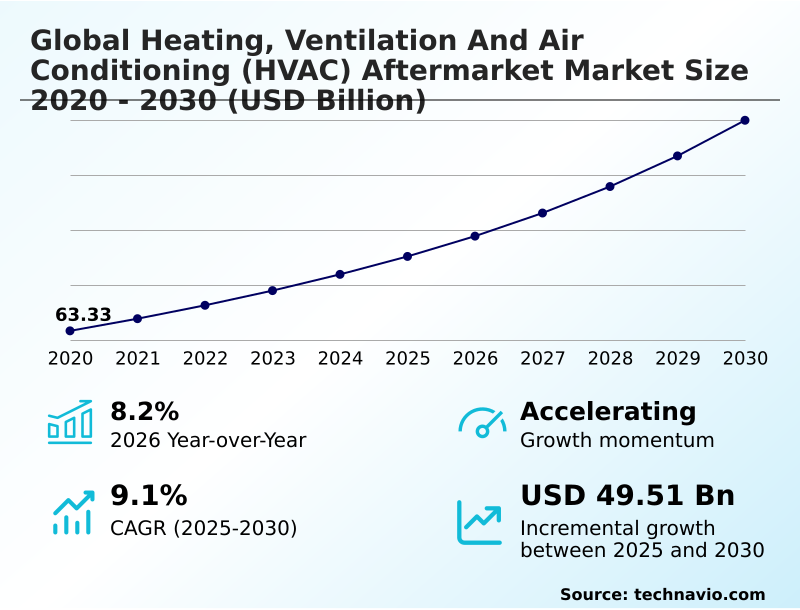
The heating, ventilation and air conditioning (hvac) aftermarket market size is valued to increase by USD 49.51 billion, at a CAGR of 9.1% from 2025 to 2030. Rising environmental regulations and decarbonization mandates will drive the heating, ventilation and air conditioning (hvac) aftermarket market.
Major Market Trends & Insights
- APAC dominated the market and accounted for a 40.9% growth during the forecast period.
- By Product - Air conditioning equipment segment was valued at USD 35.35 billion in 2024
- By End-user - Non-residential segment accounted for the largest market revenue share in 2024
Market Size & Forecast
- Market Opportunities: USD 76.57 billion
- Market Future Opportunities: USD 49.51 billion
- CAGR from 2025 to 2030 : 9.1%
Market Summary
- The heating, ventilation, and air conditioning (HVAC) aftermarket market is undergoing a profound shift, driven by the convergence of stringent environmental regulations, technological innovation, and an escalating focus on occupant wellness. The mandatory phase-out of high-GWP substances fuels a non-discretionary need for refrigerant retrofit kits and refrigerant reclamation services.
- Simultaneously, the integration of digital technologies such as predictive maintenance enables a proactive service model, extending asset lifespan and optimizing energy use. A key trend is the adoption of circular economy principles, where component remanufacturing offers a sustainable alternative to new parts for high-value items like compressors.
- As an example of operational impact, facilities that upgrade to high-efficiency particulate air filters and ultraviolet germicidal irradiation systems not only improve health outcomes but also meet new building wellness standards. However, the industry grapples with a persistent skilled technician shortage and supply chain disruption, which challenge service delivery and elevate the risk of counterfeit hvac components.
- This dynamic environment demands a strategic focus on digitalization, sustainability, and workforce development for all participants.
What will be the Size of the Heating, Ventilation And Air Conditioning (HVAC) Aftermarket Market during the forecast period?
Get Key Insights on Market Forecast (PDF) Request Free Sample
How is the Heating, Ventilation And Air Conditioning (HVAC) Aftermarket Market Segmented?
The heating, ventilation and air conditioning (hvac) aftermarket industry research report provides comprehensive data (region-wise segment analysis), with forecasts and estimates in "USD million" for the period 2026-2030, as well as historical data from 2020-2024 for the following segments.
- Product
- Air conditioning equipment
- Heating equipment
- Ventilation equipment
- End-user
- Non-residential
- Residential
- Service
- Maintenance services
- Repair services
- Installation services
- Retrofit and upgrade services
- Inspection and testing
- Geography
- APAC
- China
- Japan
- India
- North America
- US
- Canada
- Mexico
- Europe
- Germany
- UK
- France
- South America
- Brazil
- Argentina
- Middle East and Africa
- Saudi Arabia
- UAE
- South Africa
- Rest of World (ROW)
- APAC
By Product Insights
The air conditioning equipment segment is estimated to witness significant growth during the forecast period.
The air conditioning equipment segment is shaped by the need to maintain a vast installed base. Essential for extending operational lifespan, this market includes components like variable-speed compressors and electronically commutated motors.
With improper installation causing efficiency losses of up to 40%, the focus is on retrofitting with solutions such as a universal adaptive compressor to enhance performance without full system replacement.
This trend promotes innovation in parts compatible with modern, eco-friendly alternatives.
The demand for air-source heat pump systems and district cooling infrastructure also influences aftermarket needs, requiring specialized services and components to ensure operational continuity and improved energy performance in both residential and commercial applications.
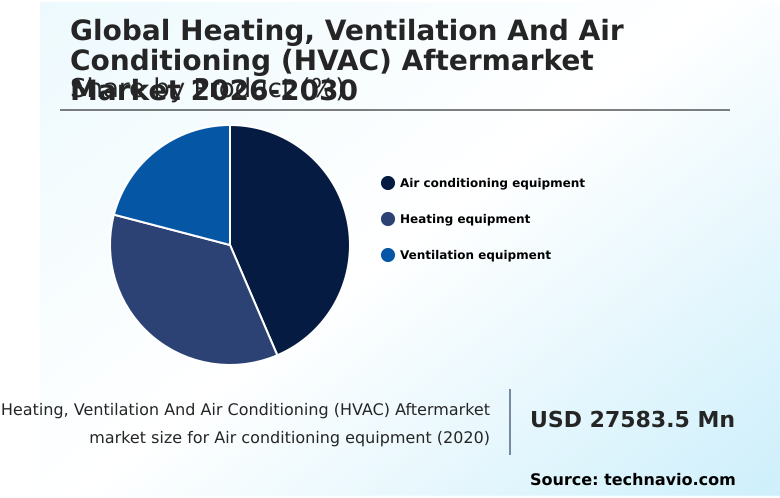
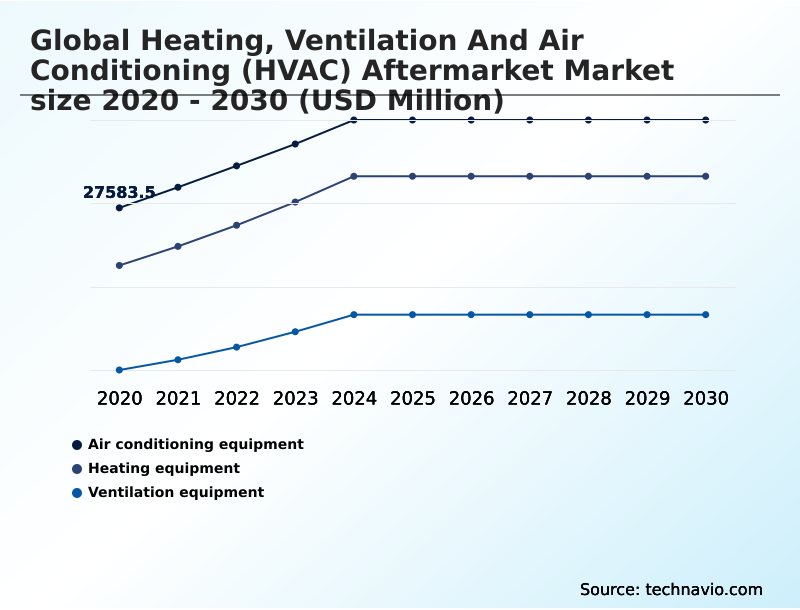
The Air conditioning equipment segment was valued at USD 35.35 billion in 2024 and showed a gradual increase during the forecast period.
Regional Analysis
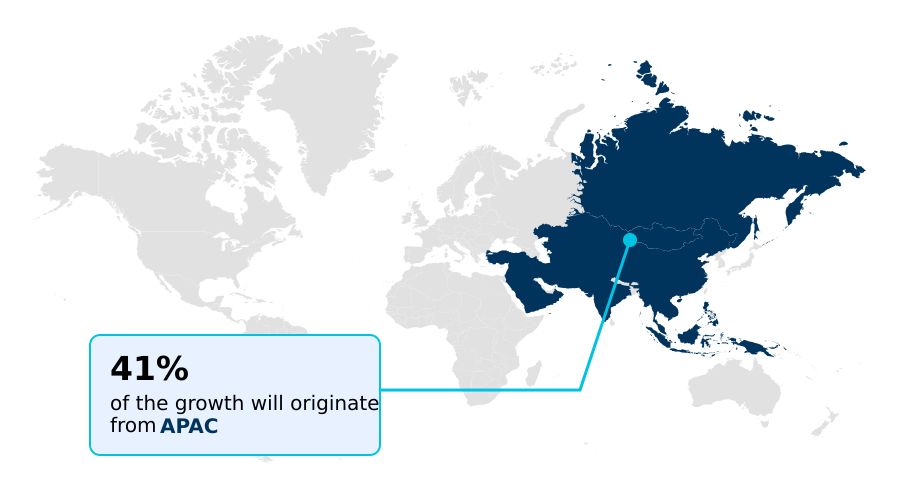
APAC is estimated to contribute 40.9% to the growth of the global market during the forecast period.Technavio’s analysts have elaborately explained the regional trends and drivers that shape the market during the forecast period.
See How Heating, Ventilation And Air Conditioning (HVAC) Aftermarket Market Demand is Rising in APAC Request Free Sample
The market's geographic landscape is led by APAC, which accounts for nearly 41% of the growth opportunity, driven by rapid urbanization and new construction.
Europe and North America follow, representing approximately 23% and 22.8% of the market potential, respectively, where the focus is on retrofitting existing buildings to meet stringent environmental targets.
In these mature markets, legacy system integration with modern building automation systems is crucial. The adoption of geothermal heat pumps and district thermal energy networks is also accelerating.
In emerging regions, the expansion of commercial infrastructure is creating foundational demand for maintenance services and aftermarket parts like high-efficiency particulate air filters.
Market Dynamics
Our researchers analyzed the data with 2025 as the base year, along with the key drivers, trends, and challenges. A holistic analysis of drivers will help companies refine their marketing strategies to gain a competitive advantage.
- The strategic focus within the heating, ventilation and air conditioning (HVAC) aftermarket is increasingly granular, targeting specialized applications and complex integrations. The demand for expertise in remanufacturing commercial chiller compressors, for example, is growing as data centers prioritize sustainability and cost control. Similarly, integrating heat pumps with legacy furnaces has become a critical service, offering a phased approach to decarbonization.
- The rise of hvac predictive maintenance for industrial chillers signals a shift toward data-driven asset management where uptime is paramount; this approach has been shown to reduce unplanned downtime at more than double the rate of traditional preventative schedules.
- Furthermore, occupant health concerns have created a significant sub-market for aftermarket solutions for indoor air quality, which often involves the retrofitting commercial air handling units with advanced technologies. A core operational challenge is optimizing the supply chain logistics for hvac parts, where smart controls for hvac retrofitting and advanced inventory systems are deployed to ensure component authenticity and mitigate delays.
What are the key market drivers leading to the rise in the adoption of Heating, Ventilation And Air Conditioning (HVAC) Aftermarket Industry?
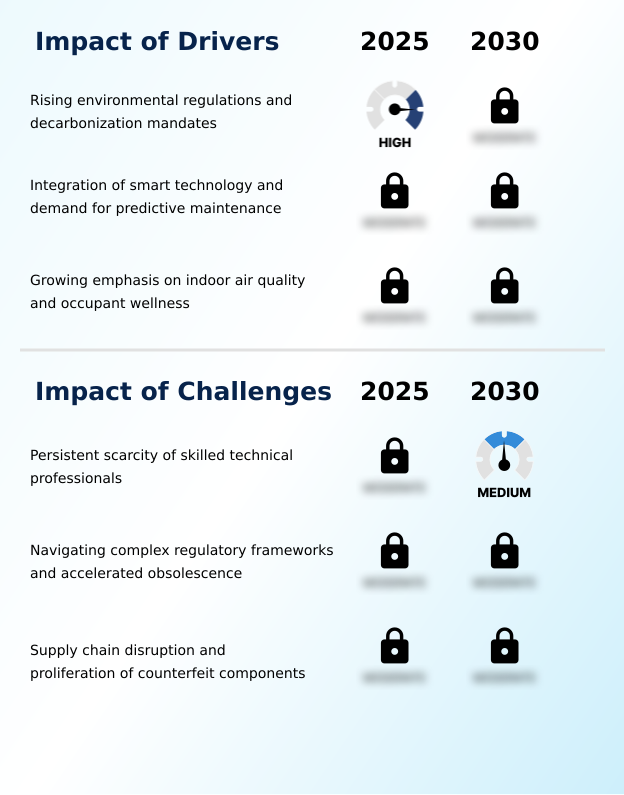
- Rising environmental regulations and decarbonization mandates are key drivers for the global heating, ventilation and air conditioning (HVAC) aftermarket market.
- Stringent energy efficiency standards and decarbonization mandates are primary market drivers. The required hydrofluorocarbon phasedown necessitates using low-global-warming-potential refrigerants, creating demand for refrigerant conversion kits and refrigerant reclamation services.
- Systems retrofitted with these new refrigerants can see an efficiency gain of up to 15%. Simultaneously, digitalization through predictive maintenance platforms and advanced diagnostic technologies is shifting the industry to a proactive maintenance model.
- This data-driven approach has been shown to reduce unplanned equipment downtime by as much as 30%, optimizing building performance optimization and extending the life of assets through targeted interventions.
What are the market trends shaping the Heating, Ventilation And Air Conditioning (HVAC) Aftermarket Industry?
- A significant trend reshaping the market is the adoption of circular economy principles, with a pronounced focus on the industrial remanufacturing of key components.
- The market is shifting toward circularity and service-based revenue. Component remanufacturing is gaining traction, reducing waste and material costs, while subscription-based service models like HVAC-as-a-Service improve customer retention by over 25% compared to transactional repairs. This evolution, enabled by smart building controls and indoor air quality monitoring, aligns provider and customer interests.
- Furthermore, the push for building electrification is driving demand for dual-fuel systems and cold-climate heat pumps. Integrating these technologies into existing infrastructure is a key focus, showcasing a move towards sustainable, long-term performance management over simple break-fix solutions.
What challenges does the Heating, Ventilation And Air Conditioning (HVAC) Aftermarket Industry face during its growth?
- A persistent scarcity of skilled technical professionals presents a key challenge to industry growth.
- The industry faces a significant skilled technician shortage, which increases service labor costs by over 15% in high-demand areas. This scarcity is intensified by the need for expertise in both legacy systems and modern advanced diagnostic technologies. Compounding this issue are supply chain disruption and geopolitical instability, which create unpredictability in component availability.
- An insidious result is the rise of counterfeit hvac components, which are estimated to be a factor in up to 10% of critical system failures. To combat this, track-and-trace serialization and stricter quality controls are becoming essential for safeguarding equipment integrity and service provider reputation.
Exclusive Technavio Analysis on Customer Landscape
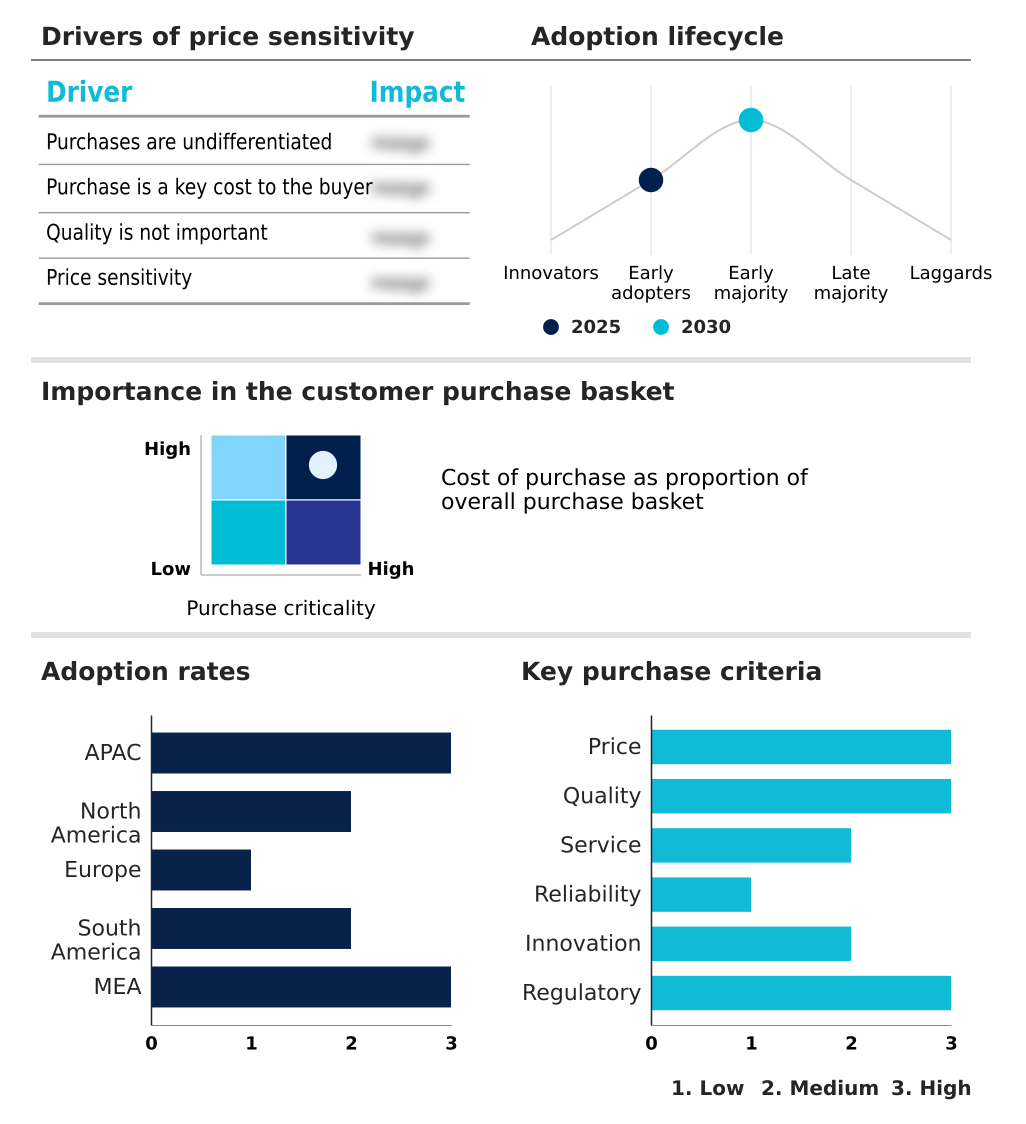
The heating, ventilation and air conditioning (hvac) aftermarket market forecasting report includes the adoption lifecycle of the market, covering from the innovator’s stage to the laggard’s stage. It focuses on adoption rates in different regions based on penetration. Furthermore, the heating, ventilation and air conditioning (hvac) aftermarket market report also includes key purchase criteria and drivers of price sensitivity to help companies evaluate and develop their market growth analysis strategies.
Customer Landscape of Heating, Ventilation And Air Conditioning (HVAC) Aftermarket Industry
Competitive Landscape
Companies are implementing various strategies, such as strategic alliances, heating, ventilation and air conditioning (hvac) aftermarket market forecast, partnerships, mergers and acquisitions, geographical expansion, and product/service launches, to enhance their presence in the industry.
Carrier Global Corp. - Provides comprehensive aftermarket solutions, including replacement parts, maintenance services, and system upgrades to optimize HVAC equipment lifecycle and performance.
The industry research and growth report includes detailed analyses of the competitive landscape of the market and information about key companies, including:
- Carrier Global Corp.
- Daikin Industries Ltd.
- Danfoss AS
- Electrolux Professional AB
- Emerson Electric Co.
- Fujitsu Ltd.
- Gree Electric Appliances Inc.
- Haier Smart Home Co. Ltd.
- Hitachi Ltd.
- Johnson Controls International
- Lennox International Inc.
- LG Electronics Inc.
- Midea Group Co. Ltd.
- Nortek Air Solutions LLC
- Parker Hannifin Corp.
- Samsung Electronics Co. Ltd.
- Siemens AG
- Swegon Group AB
- Trane Technologies plc
- Vaillant Group
Qualitative and quantitative analysis of companies has been conducted to help clients understand the wider business environment as well as the strengths and weaknesses of key industry players. Data is qualitatively analyzed to categorize companies as pure play, category-focused, industry-focused, and diversified; it is quantitatively analyzed to categorize companies as dominant, leading, strong, tentative, and weak.
Recent Development and News in Heating, ventilation and air conditioning (hvac) aftermarket market
- In February 2025, Daikin Industries introduced a comprehensive suite of low-global-warming-potential refrigerant conversion kits designed specifically for legacy rooftop units.
- In January 2025, Trane Technologies announced the opening of its dedicated Circular Components facility in North America, focused on the remanufacturing of commercial chiller compressors and control modules.
- In April 2025, Carrier Global Corporation launched its Abound Comfort subscription service, an HVAC-as-a-Service model for commercial buildings that bundles equipment retrofitting and remote monitoring.
- In April 2025, Parker-Hannifin Corp. launched a new line of high-capture-efficiency carbon-media filters engineered for retrofitting commercial air handling units in response to updated building wellness standards.
Dive into Technavio’s robust research methodology, blending expert interviews, extensive data synthesis, and validated models for unparalleled Heating, Ventilation And Air Conditioning (HVAC) Aftermarket Market insights. See full methodology.
| Market Scope | |
|---|---|
| Page number | 309 |
| Base year | 2025 |
| Historic period | 2020-2024 |
| Forecast period | 2026-2030 |
| Growth momentum & CAGR | Accelerate at a CAGR of 9.1% |
| Market growth 2026-2030 | USD 49509.7 million |
| Market structure | Fragmented |
| YoY growth 2025-2026(%) | 8.2% |
| Key countries | China, Japan, India, South Korea, Indonesia, Australia, US, Canada, Mexico, Germany, UK, France, Italy, Spain, The Netherlands, Brazil, Argentina, Chile, Saudi Arabia, UAE, South Africa, Egypt and Nigeria |
| Competitive landscape | Leading Companies, Market Positioning of Companies, Competitive Strategies, and Industry Risks |
Research Analyst Overview
- The market's evolution is defined by a strategic pivot toward lifecycle value and sustainability, moving far beyond simple break-fix services. At the boardroom level, investment decisions are now dictated by decarbonization mandates and the need for building performance optimization.
- The adoption of circular economy principles and component remanufacturing for parts like variable-speed compressors and furnace heat exchangers offers a dual benefit of cost reduction and environmental compliance. A key operational metric shows that facilities implementing predictive maintenance with advanced diagnostic technologies reduce critical equipment failures by more than 30% compared to those relying on scheduled maintenance alone.
- The integration of building automation systems, variable refrigerant flow systems, and air-source heat pump technologies, alongside demand-controlled ventilation and energy recovery ventilators, is no longer optional. This push is intensified by the industry-wide hydrofluorocarbon phasedown, making the management of low-global-warming-potential refrigerants a core competency.
What are the Key Data Covered in this Heating, Ventilation And Air Conditioning (HVAC) Aftermarket Market Research and Growth Report?
-
What is the expected growth of the Heating, Ventilation And Air Conditioning (HVAC) Aftermarket Market between 2026 and 2030?
-
USD 49.51 billion, at a CAGR of 9.1%
-
-
What segmentation does the market report cover?
-
The report is segmented by Product (Air conditioning equipment, Heating equipment, and Ventilation equipment), End-user (Non-residential, and Residential), Service (Maintenance services, Repair services, Installation services, Retrofit and upgrade services, and Inspection and testing) and Geography (APAC, North America, Europe, South America, Middle East and Africa)
-
-
Which regions are analyzed in the report?
-
APAC, North America, Europe, South America and Middle East and Africa
-
-
What are the key growth drivers and market challenges?
-
Rising environmental regulations and decarbonization mandates, Persistent scarcity of skilled technical professionals
-
-
Who are the major players in the Heating, Ventilation And Air Conditioning (HVAC) Aftermarket Market?
-
Carrier Global Corp., Daikin Industries Ltd., Danfoss AS, Electrolux Professional AB, Emerson Electric Co., Fujitsu Ltd., Gree Electric Appliances Inc., Haier Smart Home Co. Ltd., Hitachi Ltd., Johnson Controls International, Lennox International Inc., LG Electronics Inc., Midea Group Co. Ltd., Nortek Air Solutions LLC, Parker Hannifin Corp., Samsung Electronics Co. Ltd., Siemens AG, Swegon Group AB, Trane Technologies plc and Vaillant Group
-
Market Research Insights
- Market dynamics are shaped by a pivot from reactive repairs to proactive performance management, heavily influenced by HVAC-as-a-Service and comfort-as-a-service models. These subscription-based service models increase long-term customer value compared to traditional transactional services.
- The integration of smart building controls and indoor air quality monitoring is central to this shift, with facilities using such systems reporting a 20% improvement in energy efficiency. Concurrently, addressing the skilled technician shortage remains a critical focus.
- The industry is also contending with challenges like supply chain disruption and technological obsolescence, which are mitigated through strategic legacy system integration and a focus on building performance optimization.
We can help! Our analysts can customize this heating, ventilation and air conditioning (hvac) aftermarket market research report to meet your requirements.
 RIA -
RIA - 
