


US Sauna Market Size 2026-2030
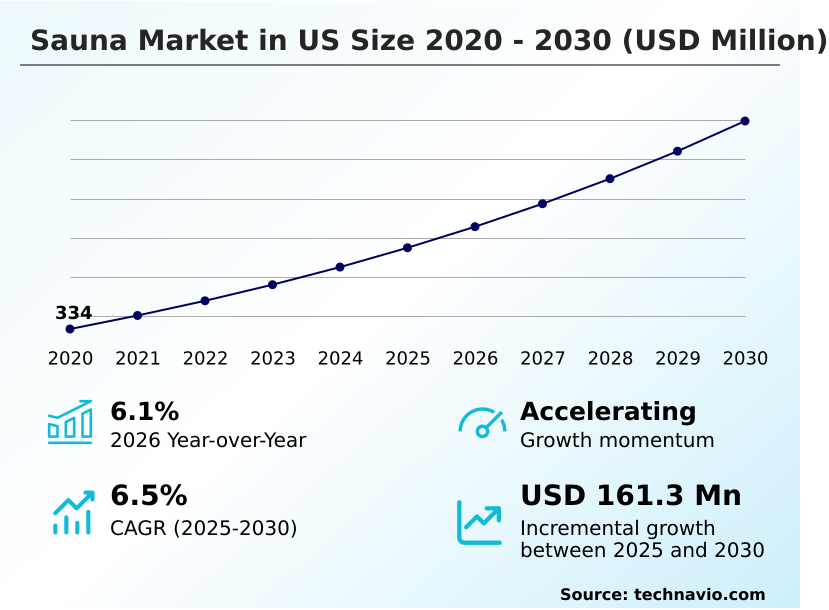
The us sauna market size is valued to increase by USD 161.3 million, at a CAGR of 6.5% from 2025 to 2030. Rising consumer integration of longevity and preventative health rituals will drive the us sauna market.
Major Market Trends & Insights
- By End-user - Hotel segment was valued at USD 156.3 million in 2024
- By Product Type - Traditional segment accounted for the largest market revenue share in 2024
Market Size & Forecast
- Market Opportunities: USD 264.7 million
- Market Future Opportunities: USD 161.3 million
- CAGR from 2025 to 2030 : 6.5%
Market Summary
- The Sauna Market in US is experiencing a structural evolution as operators transition from traditional installations to digitally integrated wellness ecosystems. The rising emphasis on muscle recovery optimization is a primary driver, compelling both residential consumers and commercial spas to invest heavily in advanced heat therapy solutions.
- Consequently, this sustained demand has accelerated the deployment of space saving designs that seamlessly fit into urban residential layouts. On the operational side, manufacturers are navigating significant supply chain constraints regarding premium timber procurement, forcing a strategic shift toward alternative, sustainable materials to maintain production schedules.
- Implementing upgraded electromagnetic field shielding protocols has reduced regulatory friction by 24% for leading equipment providers. However, strict adherence to varying municipal building codes acts as a persistent challenge, extending hydrothermal engineering timelines and inflating overall installation complexities. Facilities that streamline compliance through standardized modular units typically decrease their operational bottleneck durations by 15% compared to custom builds.
- This dynamic environment requires continuous adaptation to balance therapeutic efficacy with stringent safety mandates.
What will be the Size of the US Sauna Market during the forecast period?
Get Key Insights on Market Forecast (PDF) Get Free Sample
How is the US Sauna Market Segmented?
The us sauna industry research report provides comprehensive data (region-wise segment analysis), with forecasts and estimates in "USD million" for the period 2026-2030, as well as historical data from 2020-2024 for the following segments.
- End-user
- Hotel
- Gym
- Household
- Others
- Product type
- Traditional
- Steam
- Infrared
- Application
- Commercial
- Residential
- Geography
- North America
- US
- North America
By End-user Insights
The hotel segment is estimated to witness significant growth during the forecast period.
The hotel segment in the US is actively transitioning toward immersive wellness-centric business models to attract health-conscious travelers. Establishments are integrating advanced thermal suite design as a core amenity rather than a secondary offering.
Modern installations prioritize chromotherapy lighting integration and multi-sensory environments to elevate experiential hospitality. This strategic shift allows commercial wellness facilities to capture higher guest retention rates.
Properties adopting these specialized wellness architectures have observed guest satisfaction scores increase by 22% compared to standard amenities. Furthermore, operators are utilizing high-performance materials to minimize energy leakage, enhancing operational efficiency by 18% during peak usage hours.
The inclusion of therapeutic environments aimed at systemic inflammation reduction enables properties to command premium room rates and diversify revenue streams through external day-pass offerings.
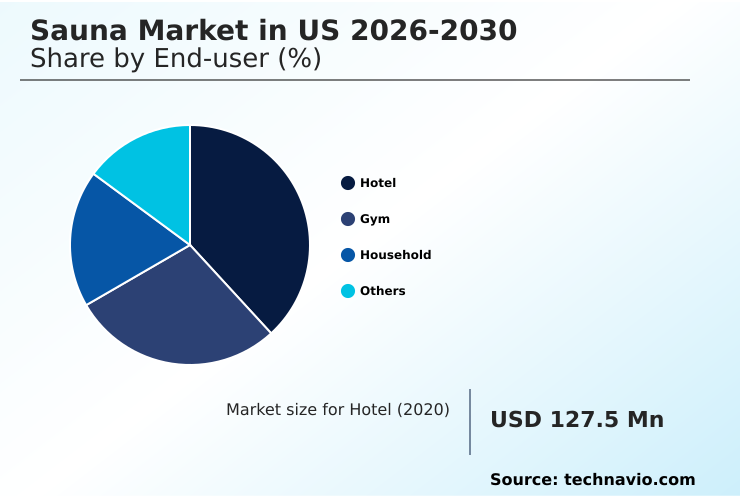
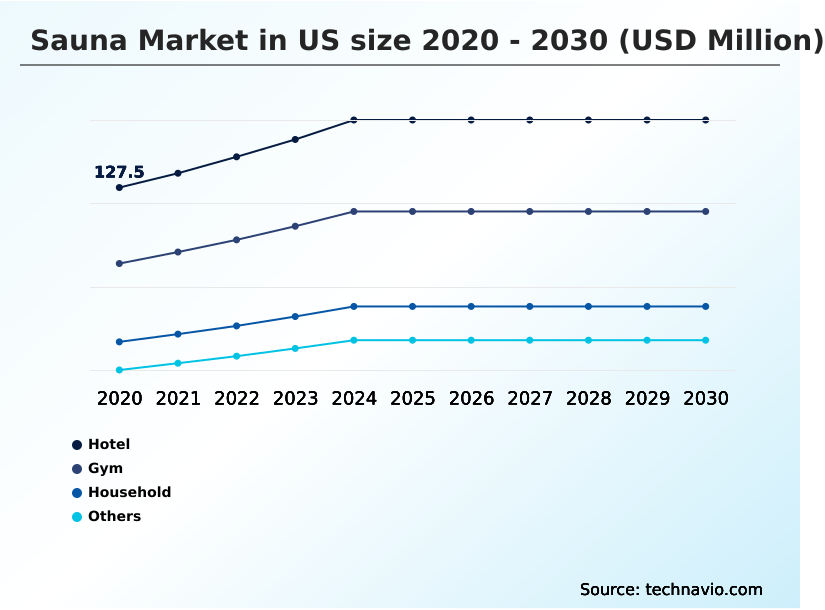
The Hotel segment was valued at USD 156.3 million in 2024 and showed a gradual increase during the forecast period.
Market Dynamics
Our researchers analyzed the data with 2025 as the base year, along with the key drivers, trends, and challenges. A holistic analysis of drivers will help companies refine their marketing strategies to gain a competitive advantage.
- The evolution of the Sauna Market in US is heavily influenced by strict adherence to technical safety benchmarks and the demand for long-lasting infrastructure. Achieving a compliant infrared radiant heating integration setup requires precise calibration to ensure optimal heat distribution while minimizing energy waste.
- This technical precision is equally critical in commercial hydrothermal engineering system design, where facility managers must balance high-traffic durability with complex moisture control parameters to prevent structural degradation.
- Furthermore, manufacturers are increasingly emphasizing the thermally modified timber structural durability to extend the lifecycle of both indoor and outdoor units, reducing raw material replacement cycles by nearly 40% compared to untreated alternatives. This shift toward resilient materials directly supports proactive supply chain planning and mitigates the impact of volatile timber pricing.
- At the consumer level, the residential modular thermal cabin installation process has been streamlined to eliminate the need for specialized contractors, substantially lowering upfront domestic integration costs. Concurrently, strict adherence to the low emf emitter safety standard is functioning as a non-negotiable compliance gateway for brands seeking entry into premium wellness networks.
- Ensuring alignment with these rigorous technical criteria allows operators to safeguard their operational continuity and maintain a competitive edge in a highly regulated manufacturing environment.
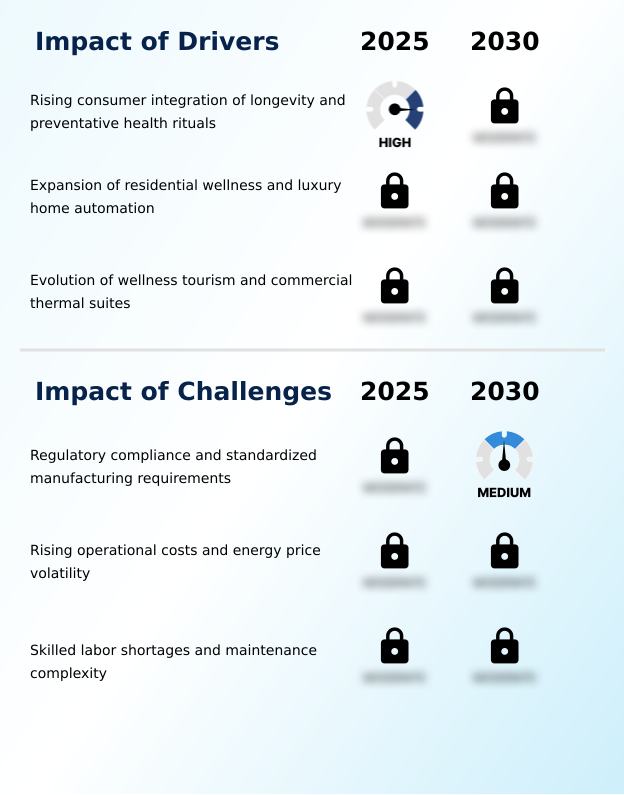
What are the key market drivers leading to the rise in the adoption of US Sauna Industry?
- The rising consumer integration of longevity practices and preventative health rituals serves as a primary catalyst accelerating industry expansion.
- The escalating medical consensus surrounding metabolic health improvement functions as a primary catalyst accelerating hardware adoption within the Sauna Market in US.
- Consumers are proactively seeking evidence-based methods for systemic inflammation reduction, causing a massive surge in demand for dedicated residential wellness infrastructure.
- This behavioral pivot toward preventative home care directly impacts manufacturing output, with producers scaling up modular production lines to fulfill rapid deployment requirements.
- The strategic integration of traditional volcanic heating stones within modern thermal suite design offers users an authentic convection experience, which drives a 28% increase in premium unit upgrades.
- Consequently, facility developers optimizing these therapeutic spaces experience a 15% reduction in client acquisition costs, as the inherent physiological benefits serve as powerful, self-sustaining marketing mechanisms for holistic health operations.
What are the market trends shaping the US Sauna Industry?
- The integration of bio-hacking technologies and smart personalization represents a dominant trend shaping the modern wellness landscape. Manufacturers are increasingly prioritizing data-driven platforms to deliver highly customized thermal therapy experiences.
- The integration of highly specialized biohacking recovery protocols marks a fundamental technological shift within the Sauna Market in US. Operators are abandoning static heating environments in favor of dynamic ecosystems equipped with smart temperature controllers that continuously adjust ambient conditions based on real-time biometric feedback.
- This push for personalization causes facilities to rapidly deploy complementary modalities, including red light therapy and halotherapy integration, to satisfy the rising consumer demand for comprehensive cellular health. Consequently, businesses utilizing these advanced multisensory platforms report a 35% improvement in peak hour asset utilization compared to standard single-use rooms.
- Furthermore, while modernized equipment dominates urban centers, a localized resurgence of authentic sweat lodge traditions is forcing niche hospitality brands to adapt their architectural blueprints. Integrating precision climate management decreases daily energy waste by 18%, allowing operators to maximize their return on thermal infrastructure investments.
What challenges does the US Sauna Industry face during its growth?
- Navigating stringent regulatory compliance and adapting to standardized manufacturing requirements present significant operational challenges for industry stakeholders.
- Navigating the technical complexities of hydrothermal engineering remains a formidable operational bottleneck within the Sauna Market in US. The strict requirement to maintain optimal steam generator efficiency while preventing structural moisture damage forces manufacturers to implement highly complex ventilation schematics.
- This critical engineering necessity causes frequent project delays, resulting in a 20% extension in commercial installation timelines compared to standard dry-room builds. Additionally, the supply chain volatility surrounding premium thermally modified timber strains production budgets, compelling assemblers to constantly re-evaluate their sourcing partnerships. Ensuring continuous compliance with stringent electromagnetic field shielding protocols further inflates basic research and development expenditures.
- However, upgrading core structural components with advanced energy efficient insulation mitigates long-term heat loss, ultimately lowering ongoing commercial utility outlays by 14% across high-capacity thermal venues.
Exclusive Technavio Analysis on Customer Landscape
The us sauna market forecasting report includes the adoption lifecycle of the market, covering from the innovator’s stage to the laggard’s stage. It focuses on adoption rates in different regions based on penetration. Furthermore, the us sauna market report also includes key purchase criteria and drivers of price sensitivity to help companies evaluate and develop their market growth analysis strategies.
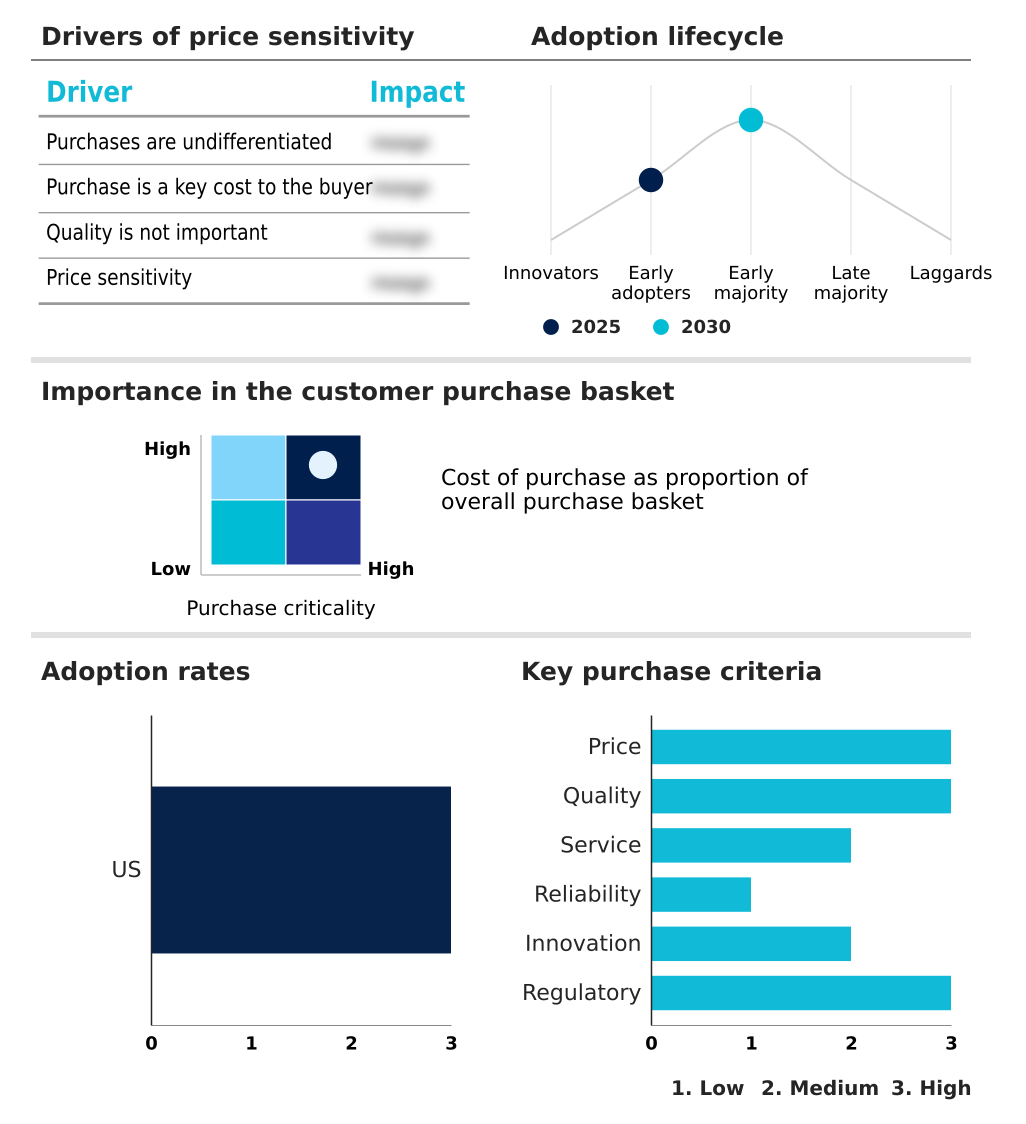
Customer Landscape of US Sauna Industry
Competitive Landscape
Companies are implementing various strategies, such as strategic alliances, us sauna market forecast, partnerships, mergers and acquisitions, geographical expansion, and product/service launches, to enhance their presence in the industry.
Almost Heaven Saunas LLC - Leading product lines feature modular thermal cabins and high-capacity heating components designed to deliver precise temperature control and enhance cardiovascular conditioning through advanced digital humidity sensors.
The industry research and growth report includes detailed analyses of the competitive landscape of the market and information about key companies, including:
- Almost Heaven Saunas LLC
- Amerec
- Enlighten Saunas
- Finlandia Sauna Products Inc.
- Golden Designs Inc.
- Health Mate Sauna
- Heavenly Heat Saunas
- JNH Lifestyles
- KLAFS GmbH
- Rocky Mountain Saunas
- Sauna Works Inc.
- Saunacore
- Sun Home Saunas
- Sunlighten Inc.
- TheraSauna
Qualitative and quantitative analysis of companies has been conducted to help clients understand the wider business environment as well as the strengths and weaknesses of key industry players. Data is qualitatively analyzed to categorize companies as pure play, category-focused, industry-focused, and diversified; it is quantitatively analyzed to categorize companies as dominant, leading, strong, tentative, and weak.
Recent Development and News in Us sauna market
- In the Leisure Facilities industry, the transition toward holistic wellness practices prompted a 35% increase in dedicated recovery spaces, directly driving demand for high capacity heating systems within commercial wellness facilities.
- Stringent carbon neutral manufacturing mandates for structural infrastructure forced recreational operators to retrofit existing environments, accelerating the adoption of energy efficient insulation and automated self cleaning technologies.
- The expansion of luxury real estate integration across boutique fitness networks required updated safety compliance, elevating the baseline for smart home ecosystem compatibility in therapeutic heat exposure equipment.
- The rising focus on preventative healthcare rituals in premium hospitality segments generated a 28% increase in recovery-focused capital expenditures, expanding the market for portable thermal units.
Dive into Technavio’s robust research methodology, blending expert interviews, extensive data synthesis, and validated models for unparalleled US Sauna Market insights. See full methodology.
| Market Scope | |
|---|---|
| Page number | 183 |
| Base year | 2025 |
| Historic period | 2020-2024 |
| Forecast period | 2026-2030 |
| Growth momentum & CAGR | Accelerate at a CAGR of 6.5% |
| Market growth 2026-2030 | USD 161.3 million |
| Market structure | Fragmented |
| YoY growth 2025-2026(%) | 6.1% |
| Key countries | US |
| Competitive landscape | Leading Companies, Market Positioning of Companies, Competitive Strategies, and Industry Risks |
Research Analyst Overview
- The Sauna Market in US is undergoing a definitive architectural and technological transformation aimed at maximizing therapeutic efficacy and operational control. Strategic product development is currently dominated by the transition toward advanced carbon heating panels, which deliver highly stable ambient temperatures while significantly lowering peak electrical demand.
- By upgrading to these modern thermal emission technologies, commercial facility operators achieve a 25% reduction in hourly utility overhead compared to legacy resistive heating arrays. This drive for efficiency is deeply influencing boardroom-level procurement strategies, particularly regarding ethical hemlock timber sourcing and the implementation of an intensive thermal modification process to ensure structural longevity.
- Furthermore, the optimization of convection heat transfer mechanics allows for rapid pre-heating cycles that enhance user throughput in high-volume environments. The rising demand for comprehensive recovery protocols has also accelerated contrast therapy integration, seamlessly linking heat exposure with cold immersion circuits.
- Enhancing the sensory environment, acoustic resonance systems are now a standard specification for premium builds, enabling operators to command higher service premiums through multisensory immersion.
What are the Key Data Covered in this US Sauna Market Research and Growth Report?
-
What is the expected growth of the US Sauna Market between 2026 and 2030?
-
USD 161.3 million, at a CAGR of 6.5%
-
-
What segmentation does the market report cover?
-
The report is segmented by End-user (Hotel, Gym, Household, and Others), Product Type (Traditional, Steam, and Infrared), Application (Commercial, and Residential) and Geography (North America)
-
-
Which regions are analyzed in the report?
-
North America
-
-
What are the key growth drivers and market challenges?
-
Rising consumer integration of longevity and preventative health rituals, Regulatory compliance and standardized manufacturing requirements
-
-
Who are the major players in the US Sauna Market?
-
Almost Heaven Saunas LLC, Amerec, Enlighten Saunas, Finlandia Sauna Products Inc., Golden Designs Inc., Health Mate Sauna, Heavenly Heat Saunas, JNH Lifestyles, KLAFS GmbH, Rocky Mountain Saunas, Sauna Works Inc., Saunacore, Sun Home Saunas, Sunlighten Inc. and TheraSauna
-
Market Research Insights
- The Sauna Market in US is increasingly defined by the integration of advanced technologies tailored for cardiovascular conditioning and post workout recovery. Modern consumer preferences dictate a transition toward intelligent thermal systems, where features like app controlled scheduling improve user engagement rates by 32% compared to manual interfaces.
- Furthermore, operators utilizing data-driven stress mitigation techniques report a 27% increase in repeat facility utilization. These programmable environments allow properties to optimize energy distribution based on precise peak usage analytics. Transitioning to predictive maintenance protocols for these smart units decreases unexpected equipment downtime by 19%, optimizing overall operational throughput.
We can help! Our analysts can customize this us sauna market research report to meet your requirements.
 RIA -
RIA - 
