


US Confectionery Market Size 2026-2030
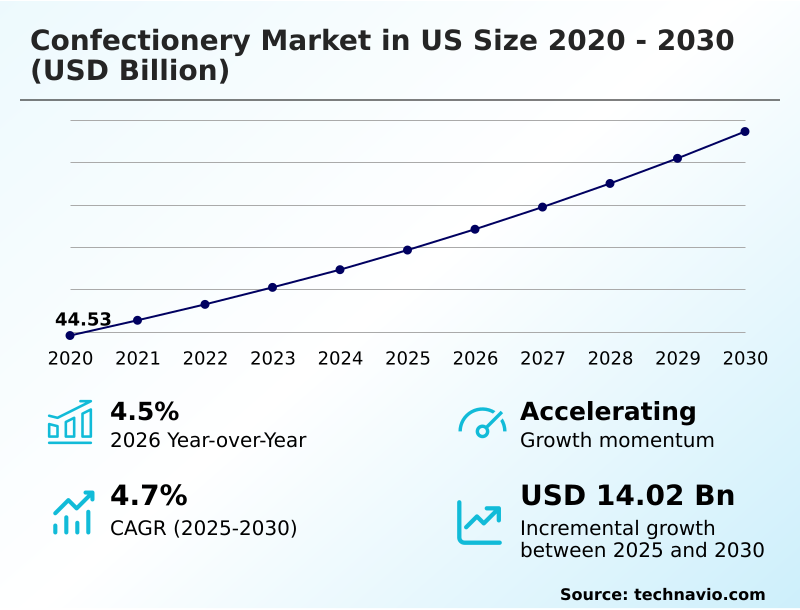
The us confectionery market size is valued to increase by USD 14.02 billion, at a CAGR of 4.7% from 2025 to 2030. Evolution of flavor innovation and premiumization of consumer experience will drive the us confectionery market.
Major Market Trends & Insights
- By Distribution Channel - Offline segment was valued at USD 38.29 billion in 2024
- By Product - Chocolate segment accounted for the largest market revenue share in 2024
Market Size & Forecast
- Market Opportunities: USD 24.12 billion
- Market Future Opportunities: USD 14.02 billion
- CAGR from 2025 to 2030 : 4.7%
Market Summary
- The Confectionery Market in US operates within a highly dynamic consumer landscape characterized by rapid shifts toward premiumization and functional ingredient integration. As consumer preferences pivot toward clean-label alternatives, manufacturers are completely overhauling traditional product portfolios to include sophisticated flavor profiles and health-oriented options.
- A primary driver of this evolution is the rising demand for health-conscious formulations, which compels businesses to replace artificial additives with natural botanical dyes and alternative sweeteners, thereby enhancing product appeal among wellness-focused demographics. Conversely, the market faces significant challenges stemming from the extreme volatility of raw material costs, particularly concerning cocoa and sugar procurement.
- This supply chain fragility strains profit margins and forces companies to adopt complex financial hedging strategies to maintain operational stability. In response to these pressures, leading processors have optimized their inbound logistics and implemented precision roasting protocols, effectively reducing raw material wastage by 12% across domestic manufacturing facilities.
- Through strategic tracking systems and responsive product development, the Confectionery Market in US continues to adapt to evolving regulatory standards and complex consumer dietary priorities.
What will be the Size of the US Confectionery Market during the forecast period?
Get Key Insights on Market Forecast (PDF) Get Free Sample
How is the US Confectionery Market Segmented?
The us confectionery industry research report provides comprehensive data (region-wise segment analysis), with forecasts and estimates in "USD million" for the period 2026-2030, as well as historical data from 2020-2024 for the following segments.
- Distribution channel
- Offline
- Online
- Product
- Chocolate
- Sugar confectionery
- Gums
- Type
- Conventional
- Organic
- Geography
- North America
- US
- North America
By Distribution Channel Insights
The offline segment is estimated to witness significant growth during the forecast period.
The offline distribution channel in the Confectionery Market in US anchors physical retail environments where sensory gratification drives immediate consumer purchasing decisions.
Physical retail formats provide critical point of sale merchandising that capitalizes on unplanned basket additions while aligning with strict clean-label credential expectations.
By maintaining rigorous temperature stability across regional distribution centers, traditional retailers ensure temperature-sensitive product preservation during complex seasonal transitions. This logistical control enhances product quality and extends shelf longevity, reducing spoilage-related inventory losses by 14% across regional hubs.
Furthermore, physical establishments dedicate substantial floor space to themed seasonal assortments promoting glycemic impact reduction, fostering direct visual engagement that digital platforms struggle to replicate.
The tactile nature of impulse buying at checkout counters continues to sustain substantial transaction volumes, ensuring that brick-and-mortar venues remain fundamental to the operational success of sweet goods distribution networks.
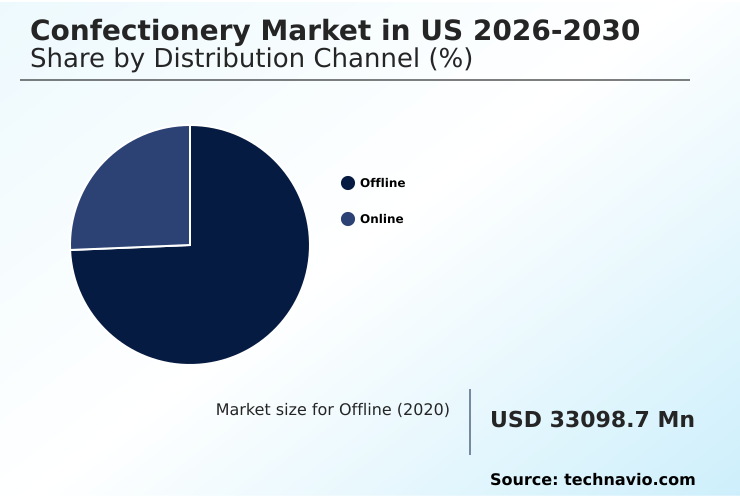
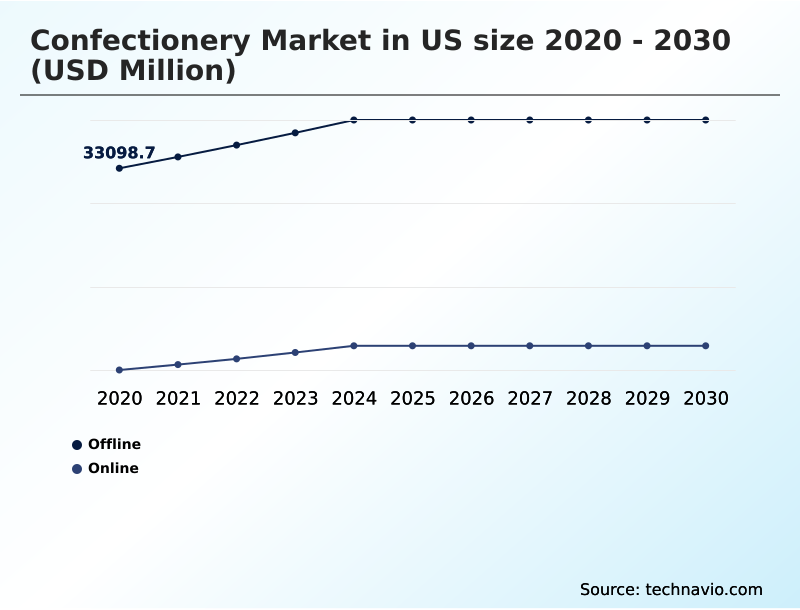
The Offline segment was valued at USD 38.29 billion in 2024 and showed a gradual increase during the forecast period.
Market Dynamics
Our researchers analyzed the data with 2025 as the base year, along with the key drivers, trends, and challenges. A holistic analysis of drivers will help companies refine their marketing strategies to gain a competitive advantage.
- The structural evolution of the Confectionery Market in US necessitates comprehensive adaptations across raw material procurement, manufacturing protocols, and compliance management. As regulatory frameworks tighten around synthetic additives, manufacturers are accelerating the transition toward plant-based coloring agent formulation, ensuring strict alignment with modern clean-label mandates.
- This shift requires extensive supply chain recalibration, as sourcing natural dyes introduces greater logistical complexity compared to utilizing traditional synthetic alternatives. Simultaneously, processing capabilities are advancing rapidly to meet the demand for novel textures. Investments in freeze-dried sweet moisture extraction have enabled brands to diversify their portfolios with lightweight, shelf-stable products that offer distinct sensory experiences while improving transport efficiency.
- In the functional segment, the development of the sugar-free chewing gum variant continues to dominate checkout counter merchandising, driven by advanced sweetening technologies that bypass the glycemic impact of traditional sucrose. Furthermore, premiumization strategies heavily rely on verifiable ethical procurement. The production of the certified organic chocolate bar demands rigorous auditing and traceability, fundamentally altering supplier relationships.
- By implementing transparent single-origin cocoa bean sourcing protocols, processors can mitigate geopolitical risks inherent in global agricultural networks. Operations prioritizing these localized, ethically certified supply chains demonstrate a 20% improvement in supply chain resilience during harvest disruptions compared to entities reliant on opaque commodity markets.
- These strategic shifts ensure that domestic manufacturers remain competitive while navigating complex consumer demands and stringent operational compliance standards.
What are the key market drivers leading to the rise in the adoption of US Confectionery Industry?
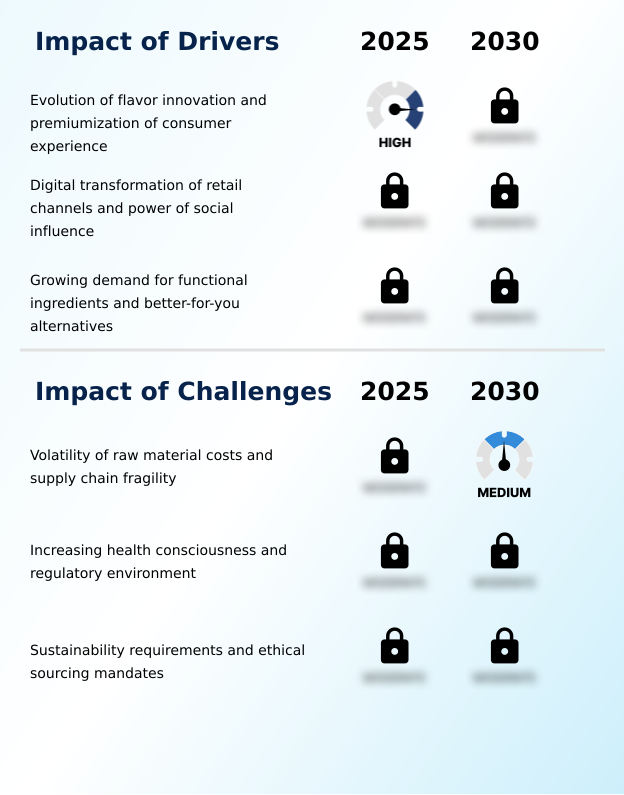
- The evolution of flavor innovation and the continuous premiumization of the consumer experience serve as the primary drivers propelling market expansion.
- The rapid digitization of retail networks and the surging consumer appetite for extreme flavor fusion act as primary catalysts accelerating expansion within the Confectionery Market in US.
- As younger demographics increasingly discover novel snacks through social media algorithms, domestic manufacturers are bypassing traditional grocery barriers by deploying direct-to-consumer digital storefronts tailored for a unique multisensory experience.
- To support this e-commerce pivot, companies have heavily invested in advanced insulated packaging and dedicated refrigerated transit corridor infrastructure, which has successfully decreased warm-weather transit spoilage by 27%.
- The establishment of automated localized delivery hub networks ensures rapid fulfillment of temperature-sensitive goods associated with small-batch production, directly improving order accuracy by 15%.
- Furthermore, investments in striking artisanal packaging design enhance unboxing experiences, driving immediate digital engagement and cementing long-term brand loyalty among digitally native consumer segments.
What are the market trends shaping the US Confectionery Industry?
- The proliferation of health-conscious formulations and the strategic integration of functional sweeteners represent a prominent market trend. This shift fundamentally alters product development as manufacturers prioritize clean-label ingredients to meet evolving dietary preferences.
- The Confectionery Market in US is undergoing a massive formulation shift as manufacturers rapidly integrate functional snack ingredients into traditional formats. Driven by escalating consumer scrutiny regarding metabolic health, brands are aggressively adopting alternative sweetener solutions to engineer sugar-reduced alternative products that maintain structural integrity.
- This strategic pivot toward permissible indulgence incorporates botanical extract infusion to deliver complex flavor profiles and portion-controlled confection options while eliminating synthetic additives. Consequently, production facilities implementing artificial dye replacement have reduced artificial ingredient dependency by 24%, significantly lowering regulatory compliance costs.
- The surging popularity of the vegan plant-based confectionery sector has forced processors to reconfigure extrusion lines to handle novel plant derivatives, leading to the creation of the highly popular multi-textured bite.
- By standardizing these advanced manufacturing protocols, operational downtime during complex product changeovers has been reduced by 18%, allowing brands to swiftly capitalize on emerging dietary trends and maintain continuous retail availability.
What challenges does the US Confectionery Industry face during its growth?
- The volatility of raw material costs and ongoing supply chain fragility pose significant challenges that constrain overall industry growth and operational stability.
- Endemic price volatility and severe ecological disruptions within the cacao agricultural supply chain represent structural bottlenecks constraining profitability in the Confectionery Market in US. Manufacturers face unprecedented procurement costs as climate anomalies continuously degrade yields across the raw cacao supply chain, forcing domestic processors to absorb significant margin compression while struggling to maintain ethical transparency.
- To mitigate these risks, organizations are compelled to deploy sophisticated supply chain tracking system architectures, which have successfully improved raw material traceability and sustainable cocoa procurement by 20% but require massive upfront capital expenditure. Additionally, escalating environmental mandates pressure brands to transition toward a circular economy model.
- Developing reliable biodegradable compostable packaging that preserves shelf life remains a formidable technical hurdle, temporarily increasing packaging overhead costs by 18% as companies struggle to scale sustainable materials without sacrificing product integrity.
Exclusive Technavio Analysis on Customer Landscape
The us confectionery market forecasting report includes the adoption lifecycle of the market, covering from the innovator’s stage to the laggard’s stage. It focuses on adoption rates in different regions based on penetration. Furthermore, the us confectionery market report also includes key purchase criteria and drivers of price sensitivity to help companies evaluate and develop their market growth analysis strategies.
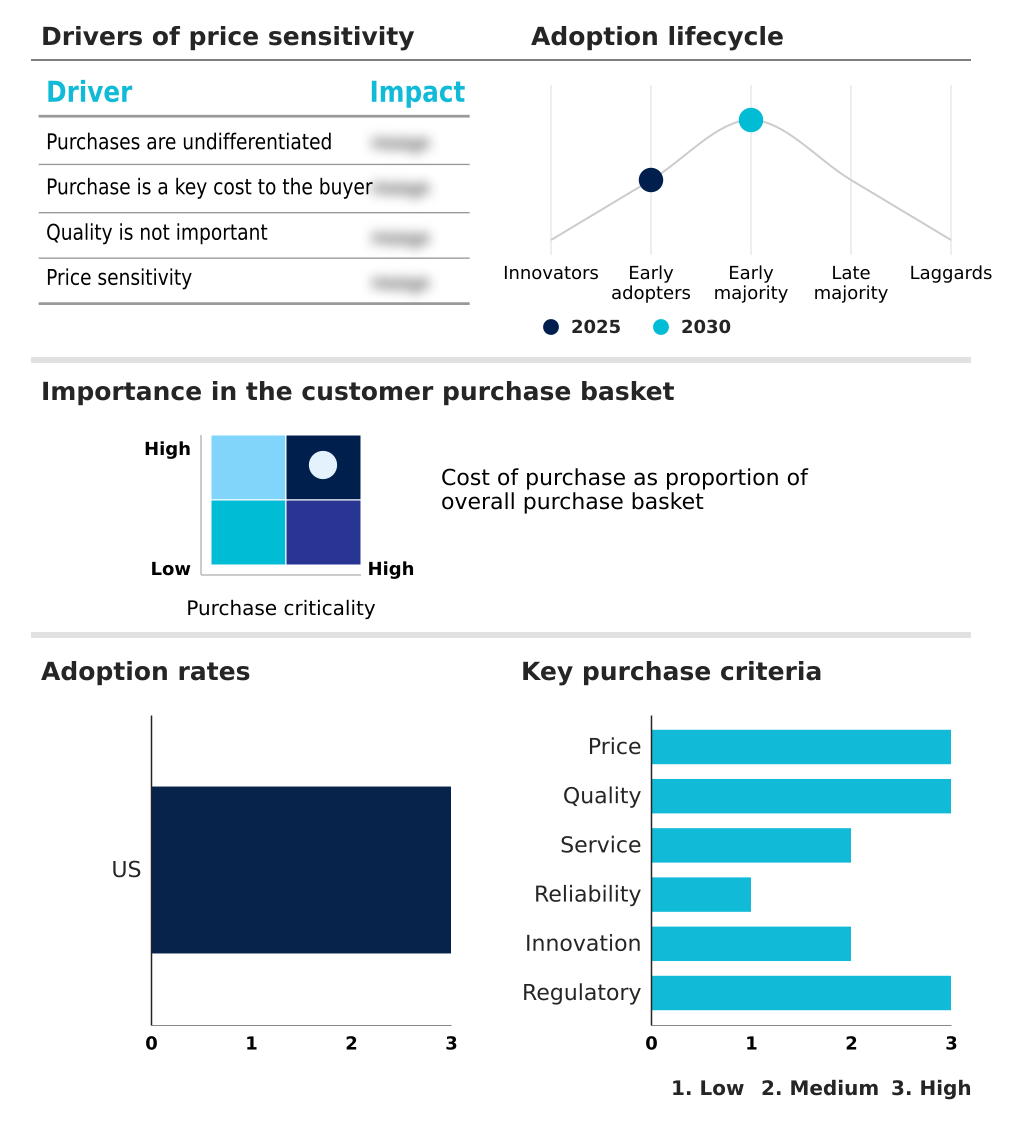
Customer Landscape of US Confectionery Industry
Competitive Landscape
Companies are implementing various strategies, such as strategic alliances, us confectionery market forecast, partnerships, mergers and acquisitions, geographical expansion, and product/service launches, to enhance their presence in the industry.
Adams and Brooks - The entity manufactures a comprehensive portfolio of hard candy, lollipops, and diverse chocolate products, focusing on traditional sweet goods tailored for broad retail distribution and consumer snacking applications.
The industry research and growth report includes detailed analyses of the competitive landscape of the market and information about key companies, including:
- Adams and Brooks
- Albanese Confectionery Group
- Ferrero International S.A.
- Frankford Candy
- Goetzes Candy Co.
- Hammonds Candies
- HARIBO GmbH and Co. KG
- Impact Confections
- Jelly Belly Candy Co.
- Just Born Quality Confections
- Lindt and Sprungli AG
- Mars Inc.
- Mondelez International Inc.
- Morinaga America
- Perfetti Van Melle Group BV
- PIM Brands Inc.
- R.M. Palmer Co.
- Spangler Candy Co.
- The Hershey Co.
- Tootsie Roll Industries Inc.
Qualitative and quantitative analysis of companies has been conducted to help clients understand the wider business environment as well as the strengths and weaknesses of key industry players. Data is qualitatively analyzed to categorize companies as pure play, category-focused, industry-focused, and diversified; it is quantitatively analyzed to categorize companies as dominant, leading, strong, tentative, and weak.
Recent Development and News in Us confectionery market
- In the Packaged Foods and Meats industry, the implementation of stringent food safety regulations under the Food Safety Modernization Act compelled manufacturers across North America to adopt advanced supply chain tracking system architectures, directly impacting Confectionery compliance by reducing contamination-related product recalls by 18%.
- The rapid integration of automated extrusion technology and non-thermal processing techniques improved production line throughput for snack manufacturers, enabling a 22% increase in manufacturing capacity that directly lowered processing costs for high-volume Confectionery production.
- Escalating consumer demand for minimally processed ingredients prompted widespread artificial dye replacement with plant-based coloring agent formulation across the snack sector, driving a 15% formulation shift within Confectionery manufacturing to align with clean-label transparency requirements.
- The systemic transition toward circular economy models led packaging suppliers to develop biodegradable compostable packaging solutions for fast-moving consumer goods, directly enabling Confectionery brands to reduce single-use plastic dependency by 25% across regional distribution networks.
Dive into Technavio’s robust research methodology, blending expert interviews, extensive data synthesis, and validated models for unparalleled US Confectionery Market insights. See full methodology.
| Market Scope | |
|---|---|
| Page number | 179 |
| Base year | 2025 |
| Historic period | 2020-2024 |
| Forecast period | 2026-2030 |
| Growth momentum & CAGR | Accelerate at a CAGR of 4.7% |
| Market growth 2026-2030 | USD 14015.9 million |
| Market structure | Fragmented |
| YoY growth 2025-2026(%) | 4.5% |
| Key countries | US |
| Competitive landscape | Leading Companies, Market Positioning of Companies, Competitive Strategies, and Industry Risks |
Research Analyst Overview
- Boardroom executives operating within the Confectionery Market in US are increasingly directing capital toward advanced manufacturing infrastructure to align with stringent clean-label requirements and dynamic consumption habits. The integration of high-speed starch molding and automated extrusion processing has become a strategic imperative for organizations seeking to scale the production of novel gummy formats without inflating operational expenditures.
- To capture the rapidly expanding premium segment, strategic product development now heavily incorporates the freeze-drying technique and specialized moisture-extraction technology, creating highly differentiated textures that command premium retail positioning. This technological pivot has directly enabled manufacturers to achieve a 30% reduction in processing time for complex, multi-textured snacks. Furthermore, the transition toward ethical and health-conscious formulations influences critical procurement strategies.
- The systematic adoption of plant-based gelatin alternative ingredients, natural botanical dye components, and real fruit puree inclusion ensures compliance with escalating retail transparency standards. Concurrently, executives are restructuring supply networks to secure reliable single-origin cacao, shielding operations from extreme commodity volatility and safeguarding long-term profit margins amidst challenging agricultural climates.
What are the Key Data Covered in this US Confectionery Market Research and Growth Report?
-
What is the expected growth of the US Confectionery Market between 2026 and 2030?
-
USD 14.02 billion, at a CAGR of 4.7%
-
-
What segmentation does the market report cover?
-
The report is segmented by Distribution Channel (Offline, and Online), Product (Chocolate, Sugar confectionery, and Gums), Type (Conventional, and Organic) and Geography (North America)
-
-
Which regions are analyzed in the report?
-
North America
-
-
What are the key growth drivers and market challenges?
-
Evolution of flavor innovation and premiumization of consumer experience, Volatility of raw material costs and supply chain fragility
-
-
Who are the major players in the US Confectionery Market?
-
Adams and Brooks, Albanese Confectionery Group, Ferrero International S.A., Frankford Candy, Goetzes Candy Co., Hammonds Candies, HARIBO GmbH and Co. KG, Impact Confections, Jelly Belly Candy Co., Just Born Quality Confections, Lindt and Sprungli AG, Mars Inc., Mondelez International Inc., Morinaga America, Perfetti Van Melle Group BV, PIM Brands Inc., R.M. Palmer Co., Spangler Candy Co., The Hershey Co. and Tootsie Roll Industries Inc.
-
Market Research Insights
- The Confectionery Market in US is experiencing a structural transformation as manufacturers prioritize sophisticated taste profile development and sustainable cocoa procurement. This strategic realignment addresses evolving consumer expectations for a premium multisensory experience that balances indulgence with ethical sourcing. Operational adjustments have enabled companies to improve supply chain transparency by 25%, significantly reducing compliance risks associated with international ingredient procurement.
- Concurrently, investments in artisanal packaging design have elevated product positioning, driving a 15% increase in checkout lane conversion rates for premium segments. By optimizing inventory distribution and adopting targeted point of sale merchandising, domestic producers have enhanced retail shelf longevity and improved overall inventory turnover by 18%, ensuring robust commercial viability across diverse distribution networks.
We can help! Our analysts can customize this us confectionery market research report to meet your requirements.
 RIA -