



Culinary Tourism Market Size 2026-2030
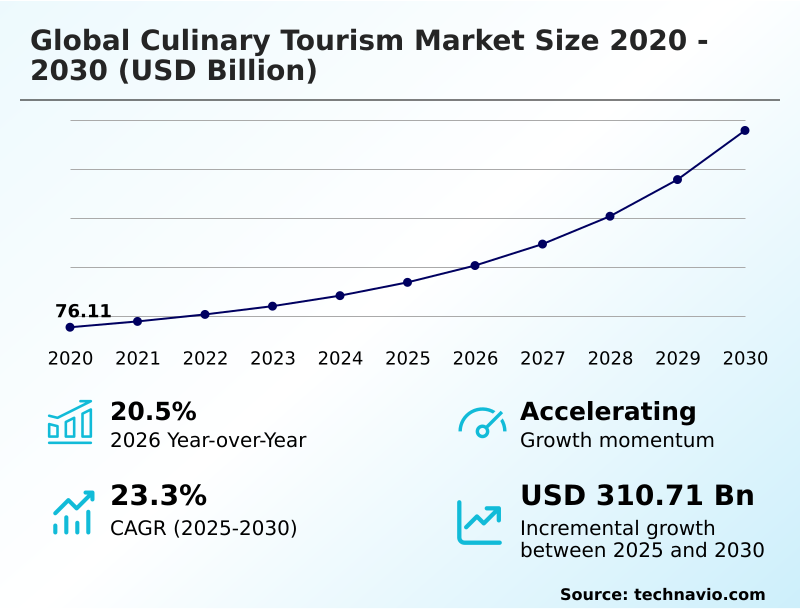
The culinary tourism market size is valued to increase by USD 310.71 billion, at a CAGR of 23.3% from 2025 to 2030. Growing consumer interest in authentic local food experiences will drive the culinary tourism market.
Major Market Trends & Insights
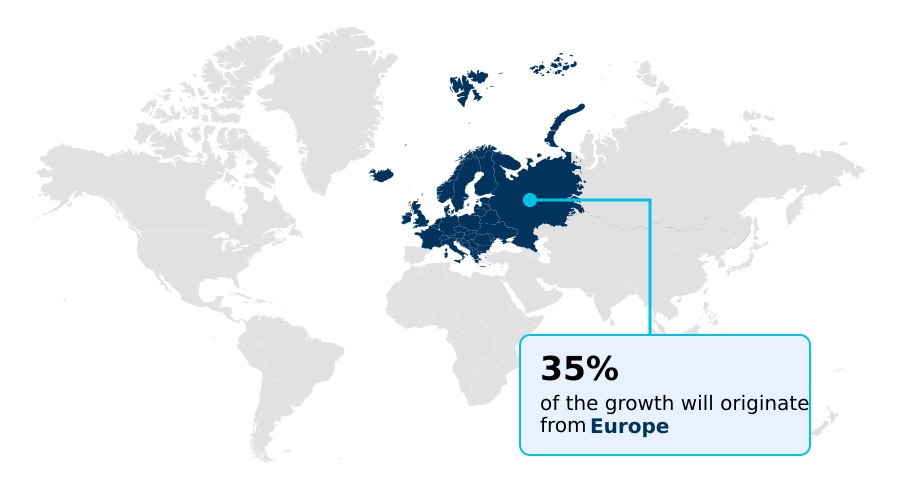
- Europe dominated the market and accounted for a 35.1% growth during the forecast period.
- By Application - Food festival segment was valued at USD 49.37 billion in 2024
- By Product - Domestic segment accounted for the largest market revenue share in 2024
Market Size & Forecast
- Market Opportunities: USD 402.52 billion
- Market Future Opportunities: USD 310.71 billion
- CAGR from 2025 to 2030 : 23.3%
Market Summary
- The culinary tourism market is defined by a shift toward authentic cultural engagement, where food serves as the primary medium for exploration. This evolution is driven by a growing demand for immersive dining and experiential travel, prompting food tour operators to design sophisticated culinary itineraries that go beyond simple tastings.
- These packages often include culinary workshops, street food tours, and agritourism activities that provide insight into traditional cooking techniques and indigenous ingredients. A key business application involves tour operators leveraging data from online travel agencies and social media to optimize culinary vacation packages.
- By analyzing foodie travel planning trends, operators can dynamically adjust offerings, such as chef-guided tours and local market tours, to match consumer interest, which has been shown to improve booking conversion rates. However, the industry faces challenges related to food tourism infrastructure in emerging gastronomy destinations and the need for greater food heritage preservation.
- The continued focus on sustainable food tourism and eco-gastronomy presents significant opportunities for differentiation and growth.
What will be the Size of the Culinary Tourism Market during the forecast period?
Get Key Insights on Market Forecast (PDF) Request Free Sample
How is the Culinary Tourism Market Segmented?
The culinary tourism industry research report provides comprehensive data (region-wise segment analysis), with forecasts and estimates in "USD million" for the period 2026-2030, as well as historical data from 2020-2024 for the following segments.
- Application
- Food festival
- Culinary trails
- Cooking classes
- Others
- Product
- Domestic
- International
- Type
- Recreational
- Diversionary
- Existential
- Experimental
- Geography
- Europe
- Italy
- France
- Spain
- North America
- US
- Canada
- Mexico
- APAC
- China
- Japan
- India
- South America
- Brazil
- Argentina
- Middle East and Africa
- Turkey
- UAE
- South Africa
- Rest of World (ROW)
- Europe
By Application Insights
The food festival segment is estimated to witness significant growth during the forecast period.
The food festival segment represents a highly engaging facet of the market, serving as a primary draw for food-motivated travelers.
These organized gastronomic events are pivotal for gastronomy marketing, allowing destinations to showcase a concentrated variety of regional specialties and authentic cuisine.
Such gatherings, a key part of food festival travel, foster community engagement and provide a platform for travelers to immerse themselves in local culture through diverse food and beverage experiences.
Effective culinary event planning turns these festivals into recurring highlights, with local food guides steering visitors toward unique offerings.
This segment, accounting for over a third of application-based revenue, complements other travel forms like culinary trails and solidifies a region's reputation as one of the top foodie travel destinations for regional cuisine exploration.
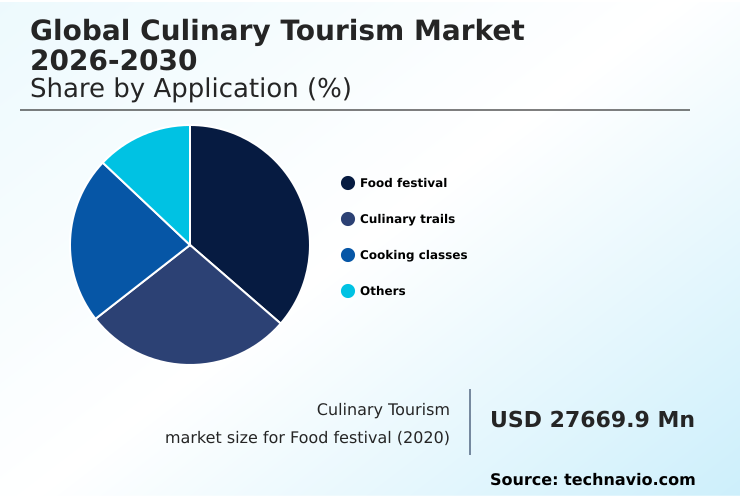
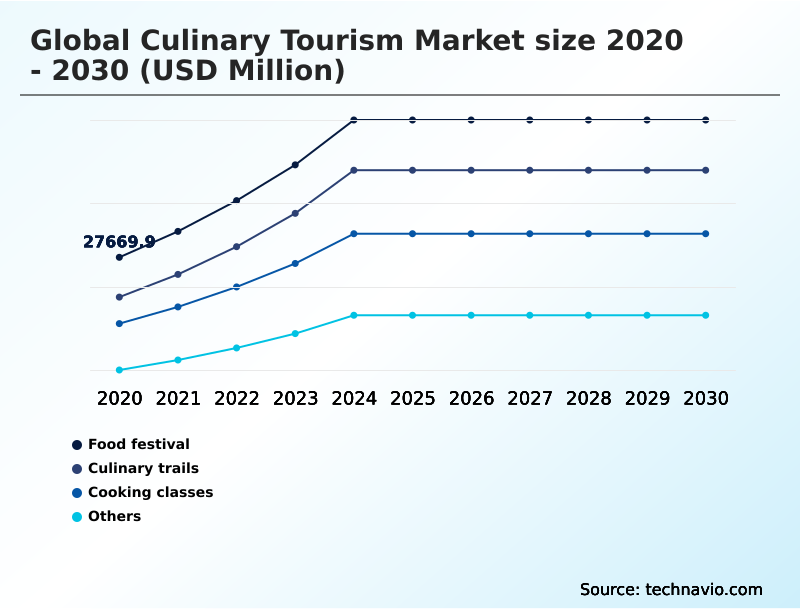
The Food festival segment was valued at USD 49.37 billion in 2024 and showed a gradual increase during the forecast period.
Regional Analysis
Europe is estimated to contribute 35.1% to the growth of the global market during the forecast period.Technavio’s analysts have elaborately explained the regional trends and drivers that shape the market during the forecast period.
See How Culinary Tourism Market Demand is Rising in Europe Request Free Sample
Europe is poised to contribute over 35% of the market's incremental growth, with its established food and wine tours and wine tasting tours in countries like Italy and France.
However, the APAC region is forecast to expand at a faster rate, with a projected CAGR of 24.7%, driven by vibrant street food tours and a focus on local culinary traditions.
Culinary tourism development initiatives in both regions are pivotal, with an emphasis on food heritage preservation and agritourism. Destinations are leveraging cultural gastronomy to position themselves as premier gastronomy destination choices.
These efforts, which include gourmet travel tours and food history tours, create diverse culinary experiences centered on unique regional dishes, attracting a global audience of travelers.
Market Dynamics
Our researchers analyzed the data with 2025 as the base year, along with the key drivers, trends, and challenges. A holistic analysis of drivers will help companies refine their marketing strategies to gain a competitive advantage.
- Strategizing for the culinary tourism market requires a deep understanding of key growth drivers and consumer preferences. The selection of the best destinations for culinary tourism is increasingly influenced by the impact of social media on food travel, which shapes authentic local food experience trends.
- Boardroom decisions now frequently address how to implement sustainable practices in food tourism and promote heritage cuisine preservation through tourism, as these factors directly affect brand perception. For operators, organizing a successful food festival involves more than logistics; it requires robust marketing strategies for food tourism to maximize the economic impact of food festivals.
- Similarly, developing culinary trails in rural areas is a key tactic to disperse tourism and support local economies, though it brings culinary tourism infrastructure development challenges. The offerings are becoming more specialized, with a rise of vegan culinary tourism and curated experiences for culinary tourism for luxury travelers.
- The role of chefs in gastronomic tourism is becoming more prominent, creating both opportunities and challenges in culinary tour guiding. For instance, demand for specialized itineraries like wine tasting tours in Europe and street food tours in Southeast Asia is growing.
- Businesses are also focusing on demonstrating the farm-to-table dining experience benefits and leveraging technology in culinary tourism bookings to facilitate cultural immersion through cooking classes. Addressing these culinary tourism market growth drivers is essential for sustainable success.
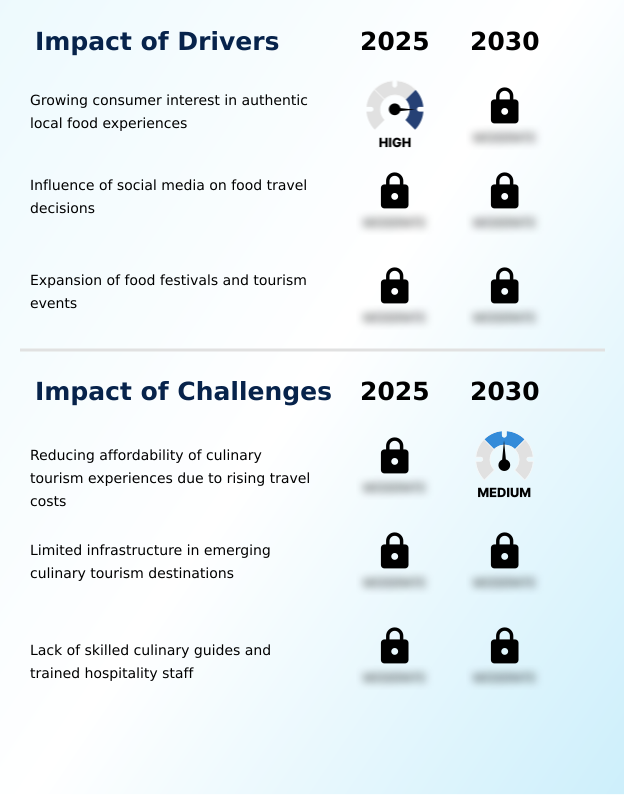
What are the key market drivers leading to the rise in the adoption of Culinary Tourism Industry?
- The growing consumer interest in authentic local food experiences serves as a key driver for the market's expansion.
- The demand for authentic local food experiences is a primary market driver, fueling the growth of gastronomic tourism as a form of experiential travel.
- Social media platforms and food and travel blogs are central to this, with content from influencers leading to visitor inquiry spikes of up to 50% for promoted destinations.
- This digital exposure shapes food tourism trends and inspires travel for food lovers to embark on gastronomic journeys.
- Food tour operators are capitalizing on this by creating narratives around culinary storytelling and offering guided food tours that highlight traditional cooking techniques.
- This approach transforms a simple vacation into culinary adventure travel, satisfying the modern traveler's quest for authenticity and unique cultural engagement.
What are the market trends shaping the Culinary Tourism Industry?
- The increasing demand for chef-led culinary tourism experiences is a prominent upcoming market trend. This reflects a growing consumer preference for direct interaction with culinary experts and personalized, skill-based travel.
- A significant trend is the rise of sustainable food tourism, with travelers prioritizing eco-gastronomy and sustainable culinary travel. This shift has amplified demand for farm-to-table dining experiences at dedicated farm-to-table restaurants. Concurrently, the popularity of chef-led experiences and chef-guided tours is surging, as they offer unique, immersive dining opportunities and foster an immersive food culture.
- These educational formats, which include specialized culinary workshops and heritage cooking classes, command a price premium of up to 25% over standard tours. The focus on heritage cuisine provides travelers with authentic dining experiences that connect them to the history and traditions of a destination, enhancing overall trip satisfaction and engagement.
What challenges does the Culinary Tourism Industry face during its growth?
- The declining affordability of culinary tourism experiences, driven by rising travel costs, presents a significant challenge to industry growth.
- A key challenge is the underdeveloped food tourism infrastructure in many emerging destinations, which complicates foodie travel planning and limits the scalability of specialty food travel. This deficit affects culinary tour operators trying to design comprehensive culinary itineraries for culinary vacation packages.
- While online travel agencies facilitate bookings, rising operational costs have driven a 10-15% price increase for experiences like luxury gastronomy and cultural food tours, making them less accessible.
- Furthermore, a shortage of skilled guides capable of explaining the significance of indigenous ingredients or leading high-quality cooking classes and local market tours can diminish the value of a cooking vacation, impacting overall market growth and customer satisfaction.
Exclusive Technavio Analysis on Customer Landscape
The culinary tourism market forecasting report includes the adoption lifecycle of the market, covering from the innovator’s stage to the laggard’s stage. It focuses on adoption rates in different regions based on penetration. Furthermore, the culinary tourism market report also includes key purchase criteria and drivers of price sensitivity to help companies evaluate and develop their market growth analysis strategies.
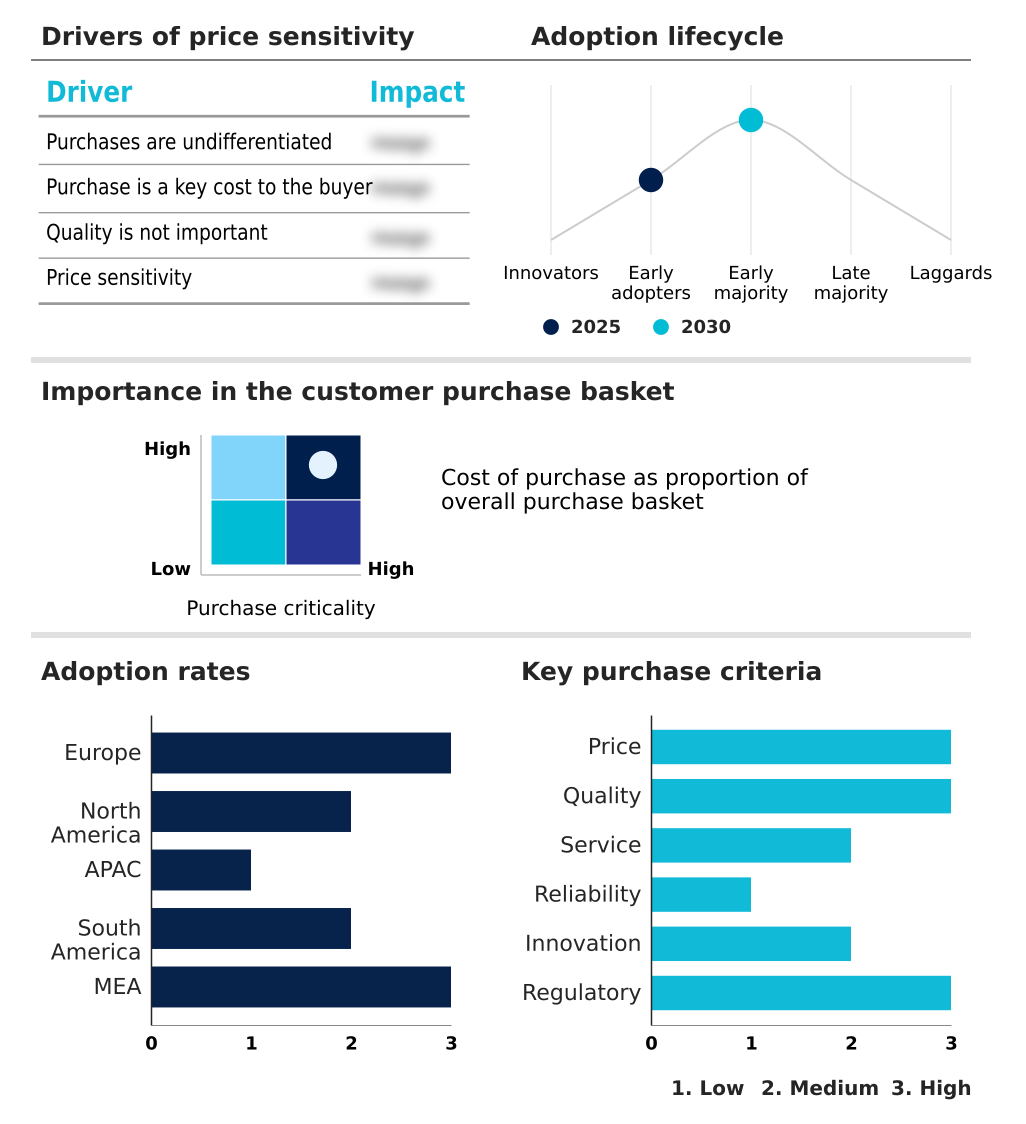
Customer Landscape of Culinary Tourism Industry
Competitive Landscape
Companies are implementing various strategies, such as strategic alliances, culinary tourism market forecast, partnerships, mergers and acquisitions, geographical expansion, and product/service launches, to enhance their presence in the industry.
A and K Travel Group Ltd. - Specializes in luxury travel itineraries featuring curated food experiences, regional cuisine tastings, and immersive dining, showcasing global culture and traditions through gastronomy.
The industry research and growth report includes detailed analyses of the competitive landscape of the market and information about key companies, including:
- A and K Travel Group Ltd.
- Airbnb Inc.
- Butterfield and Robinson Inc.
- Context Travel LLC
- Cookly Pte. Ltd.
- Culinary Backstreets LLC
- Devour Tours
- Eating Europe Tours
- Epicurean Ways LLC
- Essor Ltd
- Fork and Walk Tours Berlin
- G Adventures Inc.
- Gourmet On Tour Ltd.
- Intrepid Group Pty Ltd.
- Intrepid Urban Adventures
- Taste Buds Travel
- Trafalgar
- TripAdvisor Inc.
- Zicasso Inc.
Qualitative and quantitative analysis of companies has been conducted to help clients understand the wider business environment as well as the strengths and weaknesses of key industry players. Data is qualitatively analyzed to categorize companies as pure play, category-focused, industry-focused, and diversified; it is quantitatively analyzed to categorize companies as dominant, leading, strong, tentative, and weak.
Recent Development and News in Culinary tourism market
- In August, 2025, Traverse City Tourism launched the annual Food and Wine Festival, featuring over seventy culinary activities, including farm dinners and wine tastings, to position the region as a national culinary destination.
- In July, 2025, the Madurai City Tourism Board organized a three-day food festival to promote the city's gastronomic heritage, featuring over twenty local food outlets and cultural performances to attract food enthusiasts.
- In June, 2025, the Government of Meghalaya initiated the Culinary Cascade 2025 festival in Shillong to celebrate regional cuisine and create entrepreneurial opportunities by showcasing the state's unique food traditions.
- In April, 2025, organizers of the Charleston Food and Wine Classic featured cooking demonstrations and exclusive tasting seminars with renowned chefs, enhancing the event's appeal to food-motivated travelers seeking expert interactions.
Dive into Technavio’s robust research methodology, blending expert interviews, extensive data synthesis, and validated models for unparalleled Culinary Tourism Market insights. See full methodology.
| Market Scope | |
|---|---|
| Page number | 300 |
| Base year | 2025 |
| Historic period | 2020-2024 |
| Forecast period | 2026-2030 |
| Growth momentum & CAGR | Accelerate at a CAGR of 23.3% |
| Market growth 2026-2030 | USD 310705.1 million |
| Market structure | Fragmented |
| YoY growth 2025-2026(%) | 20.5% |
| Key countries | Italy, France, Spain, Germany, UK, The Netherlands, US, Canada, Mexico, China, Japan, India, Thailand, South Korea, Australia, Brazil, Argentina, Peru, Turkey, UAE, Morocco, South Africa and Saudi Arabia |
| Competitive landscape | Leading Companies, Market Positioning of Companies, Competitive Strategies, and Industry Risks |
Research Analyst Overview
- The market is undergoing a significant transformation, moving beyond simple food travel to become a core component of experiential travel. This shift is driving demand for a variety of culinary experiences, from luxury gastronomy and immersive dining to authentic cuisine found on street food tours.
- Successful food tour operators now offer curated culinary itineraries that emphasize culinary storytelling, traditional cooking techniques, and regional specialties. A key boardroom consideration is the investment in sustainable food tourism and food heritage preservation, as these initiatives directly build brand equity and have been shown to increase customer retention by up to 15%.
- This involves promoting agritourism, eco-gastronomy, and farm-to-table dining. The industry relies on a complex ecosystem including online travel agencies, gastronomic events like food festivals, and educational offerings such as culinary workshops and cooking classes.
- Growth is contingent on developing adequate food tourism infrastructure and promoting gastronomy destinations that feature unique indigenous ingredients, regional dishes, and compelling food and beverage experiences to attract food-motivated travelers.
What are the Key Data Covered in this Culinary Tourism Market Research and Growth Report?
-
What is the expected growth of the Culinary Tourism Market between 2026 and 2030?
-
USD 310.71 billion, at a CAGR of 23.3%
-
-
What segmentation does the market report cover?
-
The report is segmented by Application (Food festival, Culinary trails, Cooking classes, and Others), Product (Domestic, and International), Type (Recreational, Diversionary, Existential, and Experimental) and Geography (Europe, North America, APAC, South America, Middle East and Africa)
-
-
Which regions are analyzed in the report?
-
Europe, North America, APAC, South America and Middle East and Africa
-
-
What are the key growth drivers and market challenges?
-
Growing consumer interest in authentic local food experiences, Reducing affordability of culinary tourism experiences due to rising travel costs
-
-
Who are the major players in the Culinary Tourism Market?
-
A and K Travel Group Ltd., Airbnb Inc., Butterfield and Robinson Inc., Context Travel LLC, Cookly Pte. Ltd., Culinary Backstreets LLC, Devour Tours, Eating Europe Tours, Epicurean Ways LLC, Essor Ltd, Fork and Walk Tours Berlin, G Adventures Inc., Gourmet On Tour Ltd., Intrepid Group Pty Ltd., Intrepid Urban Adventures, Taste Buds Travel, Trafalgar, TripAdvisor Inc. and Zicasso Inc.
-
Market Research Insights
- The market is characterized by robust and dynamic growth, with an overall year-over-year expansion exceeding 20%. Regionally, Europe is set to contribute over 35% of the market's incremental growth, underscoring its role as a hub for gastronomic journeys and cultural gastronomy.
- This expansion is fueled by an increasing consumer appetite for culinary adventure travel and authentic dining experiences, often discovered through food and travel blogs. Operators are responding by creating specialized gourmet travel tours and curated culinary vacation packages.
- These offerings are designed to provide deep regional cuisine exploration and immersive food culture experiences, meeting the sophisticated demands of modern travelers and reflecting positive food tourism trends across both domestic and international segments.
We can help! Our analysts can customize this culinary tourism market research report to meet your requirements.
 RIA -
RIA - 
