



ETF Market Size 2026-2030
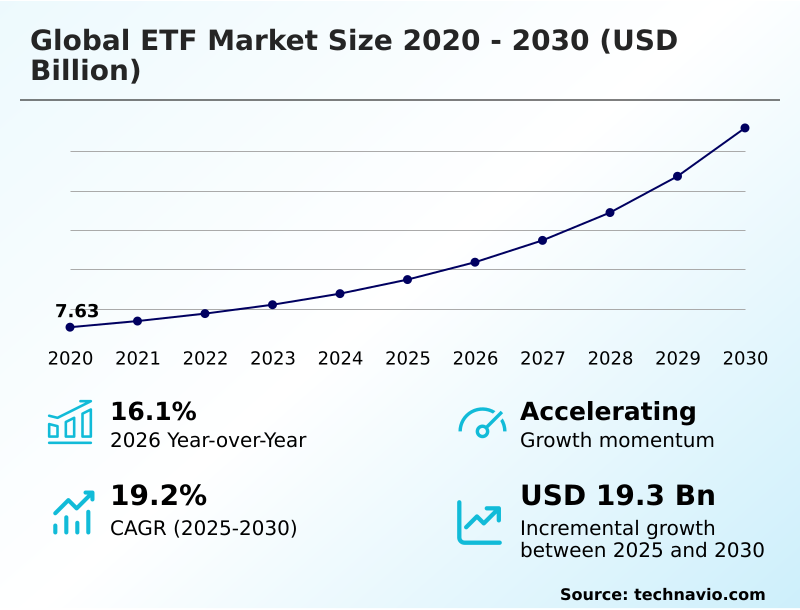
The etf market size is valued to increase by USD 19.30 billion, at a CAGR of 19.2% from 2025 to 2030. High market liquidity is augmenting market growth will drive the etf market.
Major Market Trends & Insights
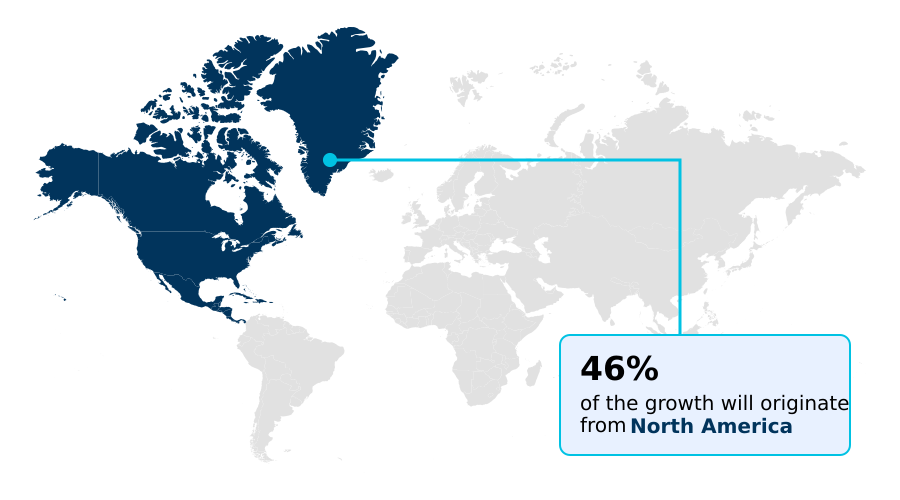
- North America dominated the market and accounted for a 45.9% growth during the forecast period.
- By Type - Equity ETF segment was valued at USD 3.03 billion in 2024
- By Product Type - Large cap ETFs segment accounted for the largest market revenue share in 2024
Market Size & Forecast
- Market Opportunities: USD 25.36 billion
- Market Future Opportunities: USD 19.30 billion
- CAGR from 2025 to 2030 : 19.2%
Market Summary
- The ETF Market is undergoing significant expansion, driven by investor demand for transparent, liquid, and cost-effective investment vehicles. These funds provide diversified exposure across various asset classes, from broad equity indices to niche thematic investing areas like technology and sustainability.
- A key driver is the ongoing shift from traditional, high-fee mutual funds to passive investment strategies, where the lower expense ratio and tax efficiency of ETFs are highly valued.
- For instance, wealth management firms are increasingly building client portfolios around a core of broad market ETFs, supplemented by satellite holdings in actively managed ETFs or smart-beta strategies to target specific return profiles or risk factors. This approach allows for efficient asset allocation and rebalancing. However, the market is not without challenges.
- The proliferation of complex products requires greater investor due diligence, and the industry faces continuous pressure to innovate while navigating stringent regulatory compliance frameworks. The integration of ESG investing criteria is also a dominant trend, compelling asset managers to develop new products that align with evolving ethical and financial objectives.
What will be the Size of the ETF Market during the forecast period?
Get Key Insights on Market Forecast (PDF) Request Free Sample
How is the ETF Market Segmented?
The etf industry research report provides comprehensive data (region-wise segment analysis), with forecasts and estimates in "USD million" for the period 2026-2030, as well as historical data from 2020-2024 for the following segments.
- Type
- Equity ETF
- Fixed income ETF
- Commodity ETF
- Real estate ETF
- Others
- Product type
- Large cap ETFs
- Mega cap ETFs
- Mid cap ETFs
- Small cap ETFs
- Distribution channel
- Institutional investors
- Retail investors
- Adviser or wealth manager platforms
- Geography
- North America
- US
- Canada
- Mexico
- Europe
- Germany
- UK
- France
- APAC
- China
- Japan
- India
- South America
- Brazil
- Argentina
- Middle East and Africa
- Saudi Arabia
- UAE
- South Africa
- Rest of World (ROW)
- North America
By Type Insights
The equity etf segment is estimated to witness significant growth during the forecast period.
The equity ETF segment remains a cornerstone of the investment landscape, driven by a structural shift toward passive investing. These instruments offer investors efficient exposure to broad market indices and sector-specific portfolios, prized for their intraday tradability and tax efficiency.
The operational dynamics are defined by the creation and redemption mechanism, which ensures the fund's market price aligns with its net asset value (NAV), minimizing tracking error.
The segment's expansion is fueled by both institutional investors and retail investors leveraging these financial instruments for core equity holdings and strategic asset allocation.
Product innovation continues with a focus on factor-based investing and ESG investing, with some platforms seeing a 25% increase in ESG-related inquiries, reflecting evolving investor priorities and the search for differentiated market beta.
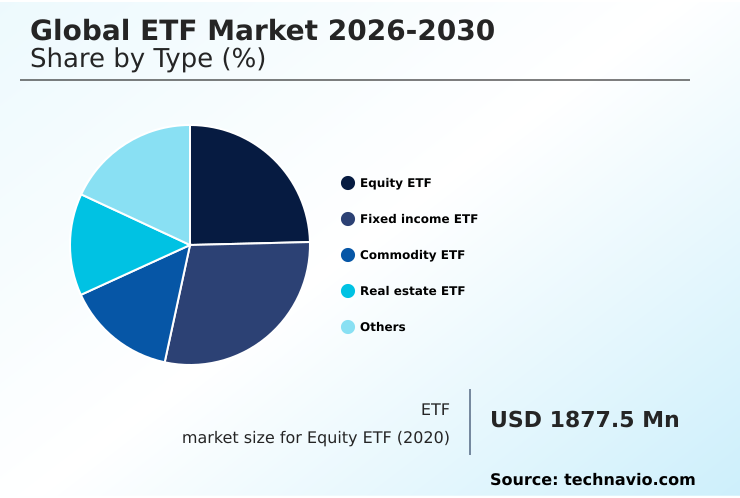
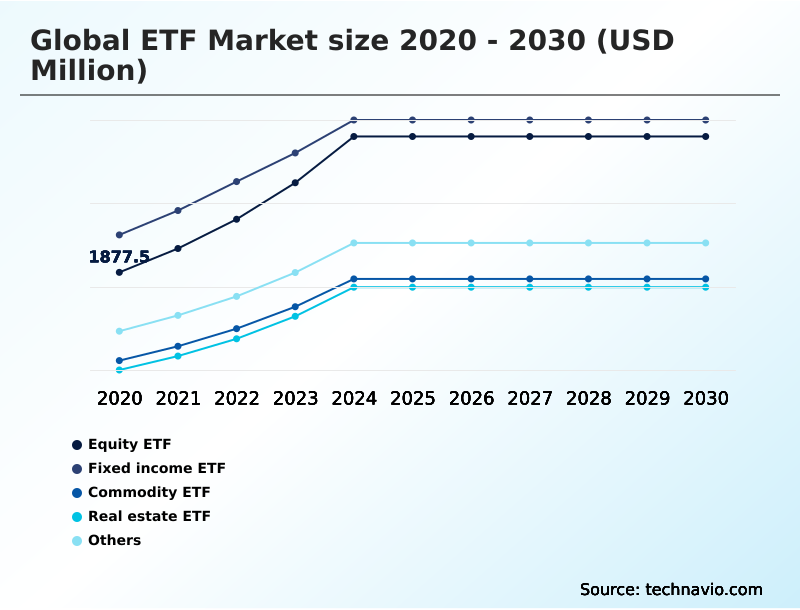
The Equity ETF segment was valued at USD 3.03 billion in 2024 and showed a gradual increase during the forecast period.
Regional Analysis
North America is estimated to contribute 45.9% to the growth of the global market during the forecast period.Technavio’s analysts have elaborately explained the regional trends and drivers that shape the market during the forecast period.
See How ETF Market Demand is Rising in North America Request Free Sample
North America continues to be the most developed regional segment, commanding over 45% of the market’s incremental growth, driven by mature capital markets infrastructure and high adoption among institutional investors and pension funds.
The region benefits from a highly liquid system that supports efficient intraday tradability.
Europe is also a significant market, with a projected growth trajectory of 19.4%, fueled by supportive regulations and increasing use of ETFs for strategic asset allocation and hedging strategies.
The APAC region is experiencing rapid expansion as financial advisory services promote portfolio diversification and passive investing.
Key trends include the growth of equity ETF and fixed income ETF products designed to meet local investor demand for accessible and transparent financial instruments.
Market Dynamics
Our researchers analyzed the data with 2025 as the base year, along with the key drivers, trends, and challenges. A holistic analysis of drivers will help companies refine their marketing strategies to gain a competitive advantage.
- The discourse around the Global ETF Market 2026-2030 often centers on the evolving preferences of its diverse investor base. The role of institutional investors in etf market stability and liquidity cannot be overstated, as they leverage these instruments for large-scale asset allocation and risk management.
- Simultaneously, an increasing number of individuals are comparing etfs and mutual funds for retail investors, frequently favoring the former due to superior trading convenience and transparency. A critical factor in this decision is the impact of expense ratios on etf performance, as even minor differences in fees can compound significantly over a long-term investment horizon.
- For those seeking stable returns, using bond etfs for fixed income exposure has become a mainstream strategy, offering a practical alternative to holding individual bonds. Furthermore, the benefits of thematic etfs in portfolio construction are increasingly recognized, allowing investors to align their capital with disruptive trends like clean energy or artificial intelligence.
- Portfolios that strategically combine low-cost index trackers with targeted thematic funds have demonstrated a more favorable risk-adjusted return profile compared to traditional, less-flexible investment approaches.
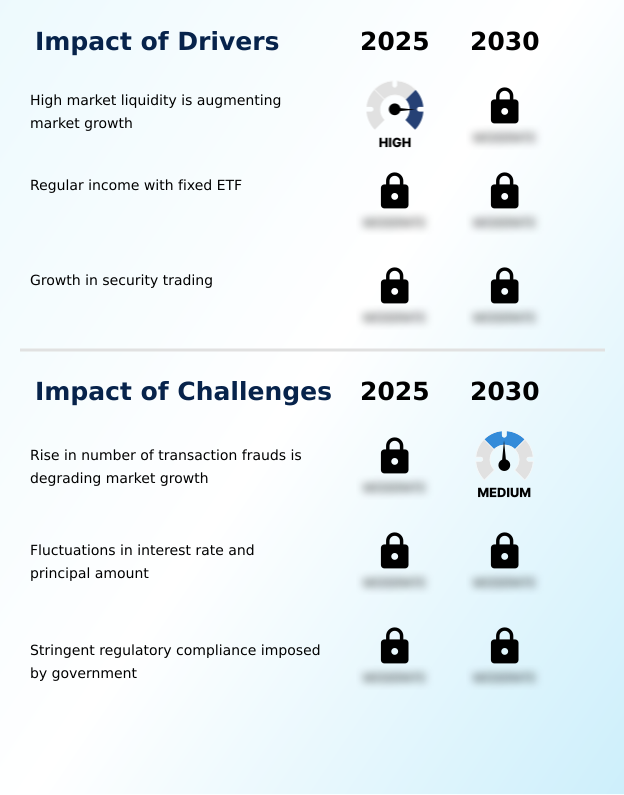
What are the key market drivers leading to the rise in the adoption of ETF Industry?
- High market liquidity, which enables efficient trading and supports price stability, serves as a primary driver augmenting the market’s expansion.
- High market liquidity remains a primary driver, enabling efficient trade execution and bolstering investor confidence.
- Digital platforms supporting high-volume security trading have reported a 30% increase in daily transactions, directly benefiting from the narrow bid-ask spread and low tracking error common in major ETFs.
- This deep liquidity, sustained by market makers and the creation and redemption mechanism, has reduced execution costs by an average of 15% for large institutional trades.
- The growth in trading is also fueled by the accessibility of diversified financial instruments for retail investors, who now leverage large cap ETFs and small cap ETFs for both long-term investment and tactical asset allocation, further deepening the market's liquidity pool.
What are the market trends shaping the ETF Industry?
- A significant trend shaping the market is the expanding growth of bond ETFs. These instruments are increasingly adopted by investors seeking diversified, liquid, and cost-efficient fixed-income exposure.
- Key trends are reshaping investment strategies, with the growth of bond ETFs leading the charge. Adoption of these instruments has surged by 25% among institutional investors seeking liquid and diversified fixed-income exposure without the complexities of direct bond ownership. This trend facilitates more effective management of interest rate and credit risk.
- Concurrently, there is a notable rise in the use of inflation-indexed securities, with new investment inflows into these products increasing by 15% compared to conventional debt instruments. This shift reflects a strategic move to protect portfolio value against rising inflation.
- The development of high-yield bond ETFs and emerging market debt funds further expands the toolkit for investors, supporting advanced passive investing and hedging strategies.
What challenges does the ETF Industry face during its growth?
- A key challenge degrading market growth is the rising incidence of transaction-related fraud, which erodes investor confidence in digital trading platforms.
- The rise in transaction-related fraud presents a significant challenge, compelling firms to enhance their cybersecurity in trading. Implementing advanced transaction fraud detection systems has increased operational costs by up to 20% for some wealth management firms, impacting their expense ratio.
- Despite these costs, firms with robust regulatory compliance frameworks report 50% fewer fraudulent attempts, safeguarding both institutional investors and retail investors. This challenge is compounded by the need to protect sensitive data across a complex ecosystem of financial advisory services and digital platforms.
- The threat undermines trust in the market, making investment in security not just a compliance issue but a critical component for sustaining investment inflows.
Exclusive Technavio Analysis on Customer Landscape
The etf market forecasting report includes the adoption lifecycle of the market, covering from the innovator’s stage to the laggard’s stage. It focuses on adoption rates in different regions based on penetration. Furthermore, the etf market report also includes key purchase criteria and drivers of price sensitivity to help companies evaluate and develop their market growth analysis strategies.
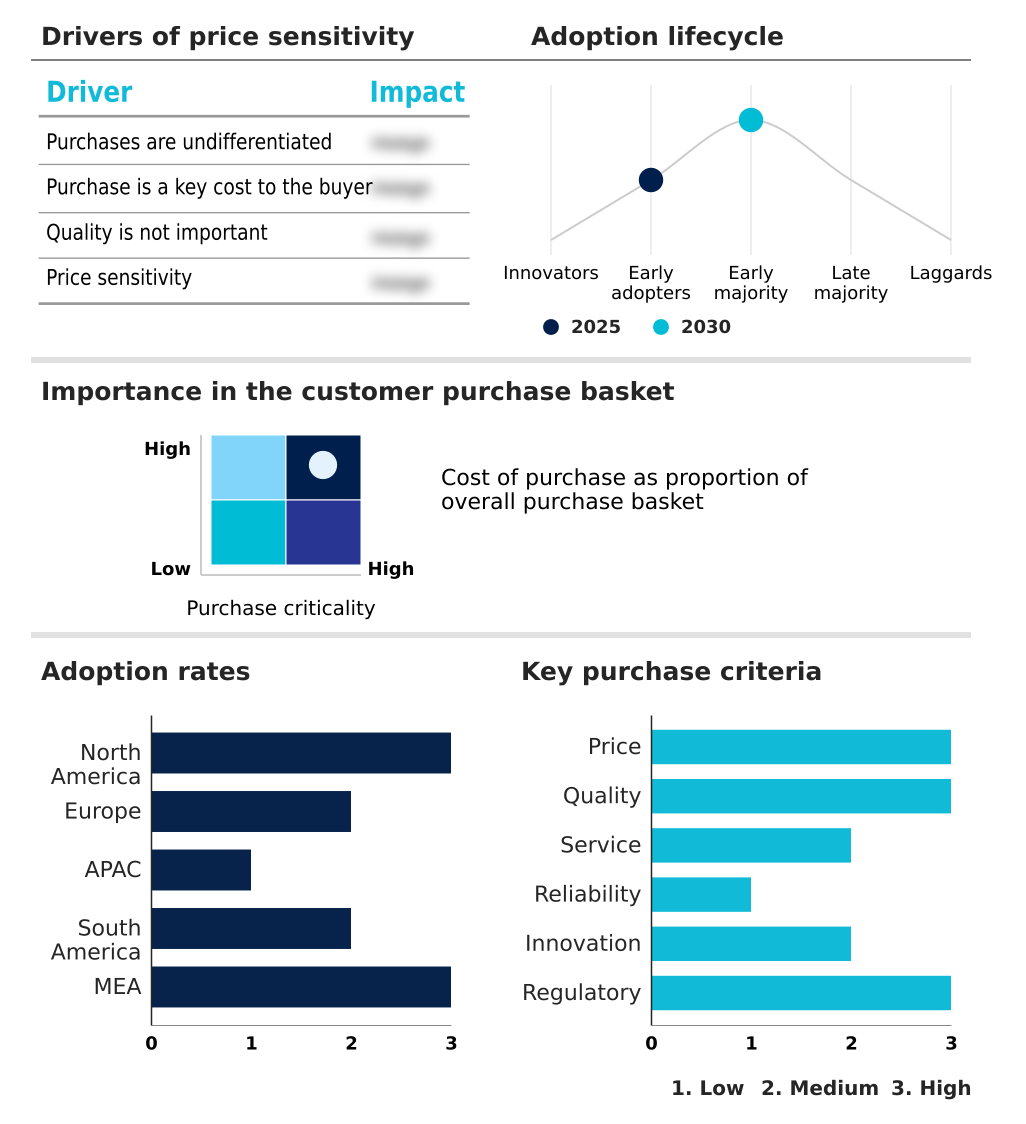
Customer Landscape of ETF Industry
Competitive Landscape
Companies are implementing various strategies, such as strategic alliances, etf market forecast, partnerships, mergers and acquisitions, geographical expansion, and product/service launches, to enhance their presence in the industry.
ARK Investment Management LLC - Provides diversified market exposure through a comprehensive suite of exchange-traded funds, including index-tracking and thematic strategies, designed for liquidity and cost-efficiency.
The industry research and growth report includes detailed analyses of the competitive landscape of the market and information about key companies, including:
- ARK Investment Management LLC
- Betashares Capital Ltd
- First Trust Portfolios L.P.
- FMR LLC
- Franklin Templeton
- Global X Management Co LLC
- HSBC Holdings Plc
- Invesco Ltd.
- Mirae Asset Investment Managers
- Nuveen LLC
- ProShare Advisors LLC
- Rafferty Asset Management LLC
- Samsung Asset Management
- Societe Generale SA
- State Street Corp.
- The Charles Schwab Corp.
- The Vanguard Group Inc.
- Van Eck Associates Corp
- WisdomTree Inc.
Qualitative and quantitative analysis of companies has been conducted to help clients understand the wider business environment as well as the strengths and weaknesses of key industry players. Data is qualitatively analyzed to categorize companies as pure play, category-focused, industry-focused, and diversified; it is quantitatively analyzed to categorize companies as dominant, leading, strong, tentative, and weak.
Recent Development and News in Etf market
- In September 2024, ARK Investment Management LLC launched a new thematic ETF focused on genomics and biotechnology, targeting long-term capital appreciation from disruptive innovation.
- In November 2024, The Vanguard Group Inc. announced a strategic partnership with a major European digital brokerage service to expand the distribution of its low-cost ETF lineup to retail investors.
- In February 2025, State Street Corp. reported that its SPDR ETF platform surpassed a significant asset milestone, driven by strong investment inflows into its S&P 500 and sector-specific funds.
- In April 2025, Franklin Templeton received regulatory approval in a key APAC market for a new series of fixed-income ETFs, expanding its product suite for investors seeking stable income.
Dive into Technavio’s robust research methodology, blending expert interviews, extensive data synthesis, and validated models for unparalleled ETF Market insights. See full methodology.
| Market Scope | |
|---|---|
| Page number | 297 |
| Base year | 2025 |
| Historic period | 2020-2024 |
| Forecast period | 2026-2030 |
| Growth momentum & CAGR | Accelerate at a CAGR of 19.2% |
| Market growth 2026-2030 | USD 19301.7 million |
| Market structure | Fragmented |
| YoY growth 2025-2026(%) | 16.1% |
| Key countries | US, Canada, Mexico, Germany, UK, France, The Netherlands, Italy, Spain, China, Japan, India, South Korea, Australia, Indonesia, Brazil, Argentina, Chile, Saudi Arabia, UAE, South Africa, Israel and Turkey |
| Competitive landscape | Leading Companies, Market Positioning of Companies, Competitive Strategies, and Industry Risks |
Research Analyst Overview
- The market's evolution is defined by a consistent drive toward greater portfolio diversification and cost reduction. Core instruments like the equity ETF and fixed income ETF are now foundational for modern asset allocation, while the rise of thematic investing and ESG investing reflects a demand for more targeted exposures.
- From a boardroom perspective, this shift necessitates a strategic pivot in product development, moving beyond simple index tracking to offer sophisticated smart-beta strategies and actively managed ETFs. The creation and redemption mechanism remains a critical pillar of market liquidity, ensuring a tight bid-ask spread and minimal tracking error.
- For institutional clients, the adoption of factor-based investing has resulted in a demonstrable 15% improvement in portfolio resilience during volatile periods. This is achieved by managing market beta while pursuing alpha through systematic exposure to factors like value and momentum.
- Consequently, metrics such as total cost of ownership and tax efficiency are paramount, as is the ability to use these vehicles for complex hedging strategies involving both blue-chip corporations and emerging market debt.
What are the Key Data Covered in this ETF Market Research and Growth Report?
-
What is the expected growth of the ETF Market between 2026 and 2030?
-
USD 19.30 billion, at a CAGR of 19.2%
-
-
What segmentation does the market report cover?
-
The report is segmented by Type (Equity ETF, Fixed income ETF, Commodity ETF, Real estate ETF, and Others), Product Type (Large cap ETFs, Mega cap ETFs, Mid cap ETFs, and Small cap ETFs), Distribution Channel (Institutional investors, Retail investors, and Adviser or wealth manager platforms) and Geography (North America, Europe, APAC, South America, Middle East and Africa)
-
-
Which regions are analyzed in the report?
-
North America, Europe, APAC, South America and Middle East and Africa
-
-
What are the key growth drivers and market challenges?
-
High market liquidity is augmenting market growth, Rise in number of transaction frauds is degrading market growth
-
-
Who are the major players in the ETF Market?
-
ARK Investment Management LLC, Betashares Capital Ltd, First Trust Portfolios L.P., FMR LLC, Franklin Templeton, Global X Management Co LLC, HSBC Holdings Plc, Invesco Ltd., Mirae Asset Investment Managers, Nuveen LLC, ProShare Advisors LLC, Rafferty Asset Management LLC, Samsung Asset Management, Societe Generale SA, State Street Corp., The Charles Schwab Corp., The Vanguard Group Inc., Van Eck Associates Corp and WisdomTree Inc.
-
Market Research Insights
- The dynamics of the market are increasingly shaped by the sophisticated needs of institutional investors and the expanding access for retail investors through digital brokerage services. This has led to a surge in diversified investment solutions. For example, wealth management firms utilizing automated portfolio management with ETFs have reported a 20% reduction in operational overhead.
- Concurrently, the adoption of thematic investment fund products among retail investors on these platforms has grown by over 35%, indicating a clear shift toward targeted market exposure. The competitive landscape compels asset management firms to innovate, with some achieving a 15% faster product-to-market timeline for new ETPs.
- This environment, supported by a robust capital markets infrastructure, fosters both capital appreciation and long-term portfolio strategies.
We can help! Our analysts can customize this etf market research report to meet your requirements.
 RIA -
RIA - 
