
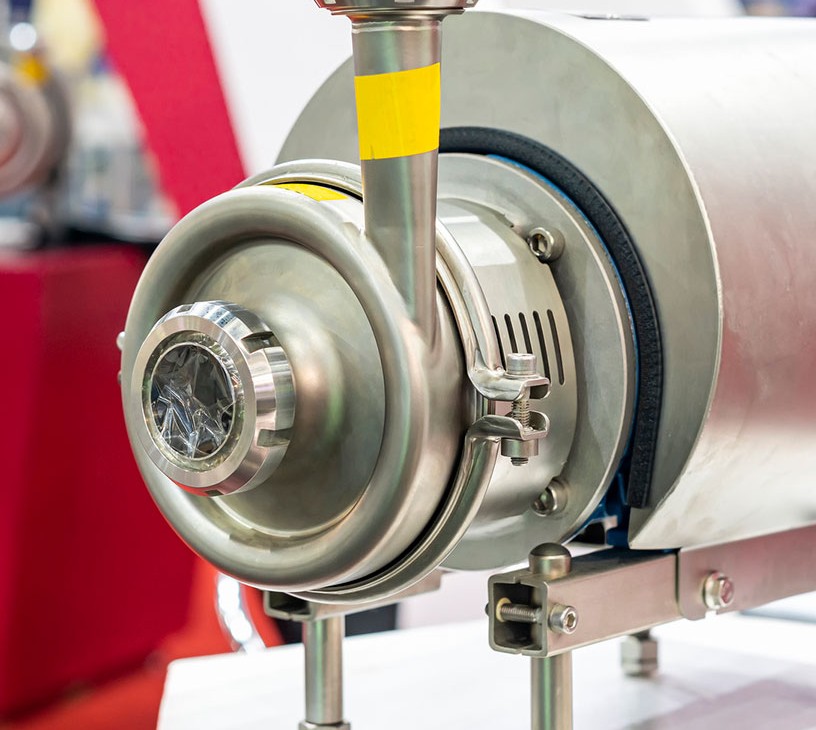


Sanitary Pumps Market Size 2026-2030
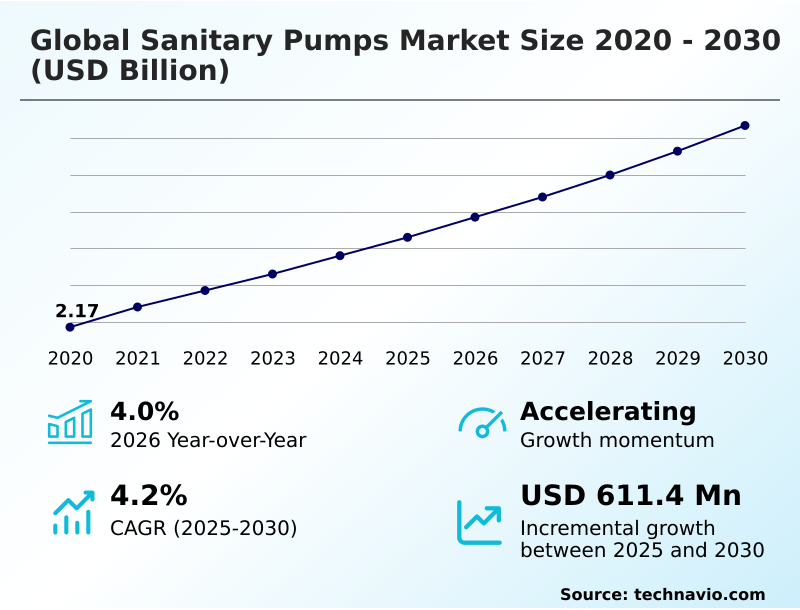
The sanitary pumps market size is valued to increase by USD 611.4 million, at a CAGR of 4.2% from 2025 to 2030. Escalating stringency of regulatory frameworks and hygiene standards will drive the sanitary pumps market.
Major Market Trends & Insights
- APAC dominated the market and accounted for a 57.1% growth during the forecast period.
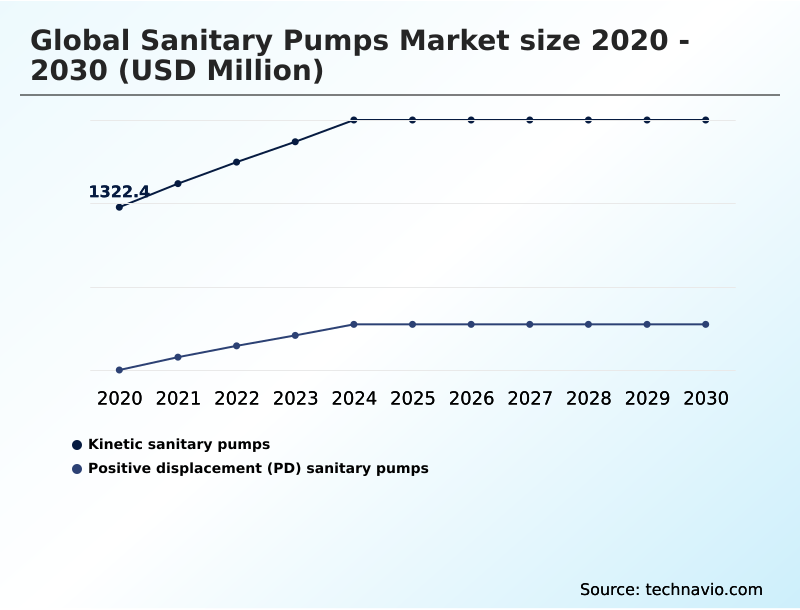
- By Type - Kinetic sanitary pumps segment was valued at USD 1.57 billion in 2024
- By End-user - Food and beverage segment accounted for the largest market revenue share in 2024
Market Size & Forecast
- Market Opportunities: USD 1.10 billion
- Market Future Opportunities: USD 611.4 million
- CAGR from 2025 to 2030 : 4.2%
Market Summary
- The sanitary pumps market is fundamentally shaped by non-negotiable requirements for hygiene and product integrity in contamination-sensitive industries. Growth is propelled by the sustained expansion of the food and beverage, pharmaceutical, and biotechnology sectors, where increasingly stringent regulatory standards from bodies like the FDA and EHEDG mandate the use of certified equipment.
- This drive for compliance, coupled with a focus on operational efficiency, pushes for technological innovation in aseptic fluid handling and sanitary fluid management. A key trend transforming the landscape is the integration of smart technologies and IoT, shifting pumps from mechanical components to intelligent, data-generating assets.
- For instance, a biopharmaceutical firm can leverage a system with predictive maintenance sensors to pre-empt equipment failure in a continuous manufacturing line, preventing the loss of a high-value biologics batch and ensuring uninterrupted production.
- While demand is robust, the market faces challenges from the high initial capital expenditure and the total cost of ownership, alongside intense price pressures from a fragmented competitive landscape. The rise of single-use technologies in bioprocessing further diversifies equipment demands, compelling manufacturers to innovate continuously to maintain their market position.
What will be the Size of the Sanitary Pumps Market during the forecast period?
Get Key Insights on Market Forecast (PDF) Request Free Sample
How is the Sanitary Pumps Market Segmented?
The sanitary pumps industry research report provides comprehensive data (region-wise segment analysis), with forecasts and estimates in "USD million" for the period 2026-2030, as well as historical data from 2020-2024 for the following segments.
- Type
- Kinetic sanitary pumps
- Positive displacement (PD) sanitary pumps
- End-user
- Food and beverage
- Pharmaceutical and biotechnology applications
- Others
- Material
- Stainless steel
- Plastic
- Hastelloy
- Others
- Geography
- APAC
- China
- Japan
- India
- Europe
- Germany
- France
- UK
- North America
- US
- Canada
- Mexico
- South America
- Brazil
- Argentina
- Middle East and Africa
- Saudi Arabia
- South Africa
- UAE
- Rest of World (ROW)
- APAC
By Type Insights
The kinetic sanitary pumps segment is estimated to witness significant growth during the forecast period.
The market is segmented by core operational principles, with kinetic sanitary pumps—predominantly the centrifugal sanitary pump—holding a major share.
These pumps excel at high-volume, hygienic fluid transfer of low-viscosity liquids, making them a staple in beverage production and for clean-in-place (CIP) systems. Their design simplicity ensures cost-effectiveness and reliability, with modern iterations being highly CIP-able centrifugal pump models.
However, they are less suitable for applications requiring aseptic processing with delicate materials, unlike a low-shear pump for biologics or a sanitary pump for high viscosity liquids.
Their high-shear nature can compromise shear-sensitive products, a limitation that has been shown to impact product integrity by up to 15% in certain applications, reinforcing the need for alternative technologies in specific contexts.
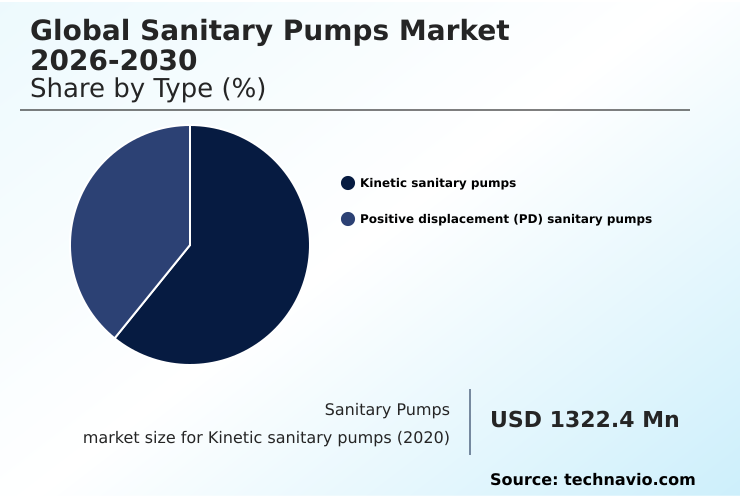
The Kinetic sanitary pumps segment was valued at USD 1.57 billion in 2024 and showed a gradual increase during the forecast period.
Regional Analysis
APAC is estimated to contribute 57.1% to the growth of the global market during the forecast period.Technavio’s analysts have elaborately explained the regional trends and drivers that shape the market during the forecast period.
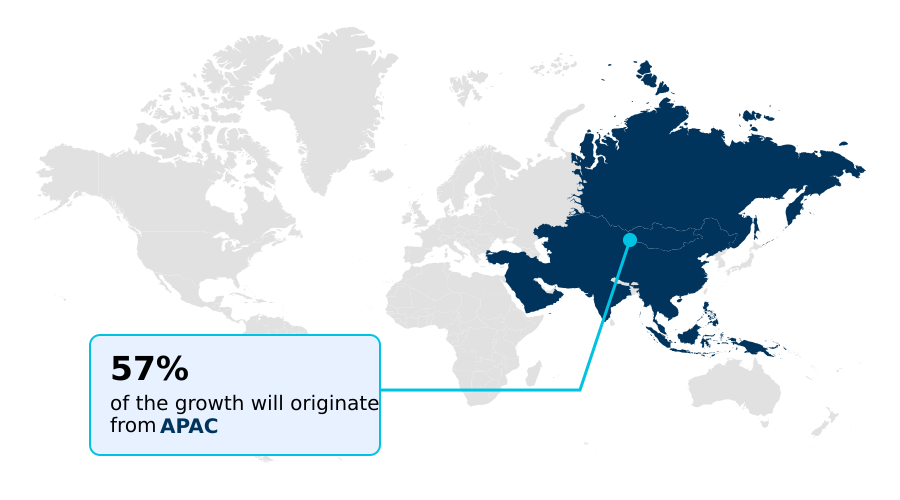
See How Sanitary Pumps Market Demand is Rising in APAC Request Free Sample
The global landscape is led by the APAC region, which accounts for over 57% of the market's incremental growth, driven by rapid industrialization and escalating food safety standards.
This region sees significant investment in food processing pumps and beverage transfer pumps.
North America and Europe are mature markets characterized by a strong focus on technological advancement and adherence to stringent regulations, creating consistent demand for biopharmaceutical processing pumps and advanced aseptic pump technology.
Innovations in sanitary process engineering and hygienic component design are key competitive differentiators. For example, using fluid dynamic simulation to optimize impeller design in sanitary centrifugal pumps has resulted in efficiency gains of over 10%.
These mature regions prioritize total cost of ownership and advanced features, fueling demand for high-performance high-purity fluid systems.
Market Dynamics
Our researchers analyzed the data with 2025 as the base year, along with the key drivers, trends, and challenges. A holistic analysis of drivers will help companies refine their marketing strategies to gain a competitive advantage.
- Strategic decision-making in the market hinges on understanding the nuances between different technologies and their impact on operational outcomes. A frequent evaluation is the choice between kinetic vs positive displacement sanitary pumps, where the former is ideal for bulk transfer of low-viscosity fluids, while the latter excels in precise dosing and handling challenging materials.
- For instance, a centrifugal pump for low viscosity fluids is standard in beverage lines, whereas a twin-screw pump for solids handling is essential for products with particulates. The impact of surface finish on cleanability is a critical factor influencing both compliance and operational uptime, directly affecting the effectiveness and cost of validating CIP cycles for pumps.
- In biopharma, the rise of single-use technology in biopharma pumps is driven by risk mitigation, with a low-shear pump for cell culture transfer being crucial for maintaining cell viability. This contrasts with traditional stainless-steel systems, where preventing issues like pump cavitation prevention in sanitary systems and addressing sanitary pump seal failure analysis are key maintenance priorities.
- Evaluating the energy consumption of sanitary pumps is central to reducing the total cost of ownership. Implementing a variable frequency drive pump benefits operations by matching energy use to process demand, a key factor when optimizing pump selection for TCO.
- The growth of smart technology enables predictive maintenance in smart pumps, which can reduce downtime more effectively than reactive approaches by a factor of two. Understanding material selection for corrosive food products and the challenges in pumping high viscosity pastes informs the design of robust systems for applications like sanitary pump for dairy processing applications.
- Key considerations like ehedg vs 3-a certification differences and the use of peristaltic pumps in pharmaceutical dosing for the sanitary pump for beverage carbonation process further define procurement strategies.
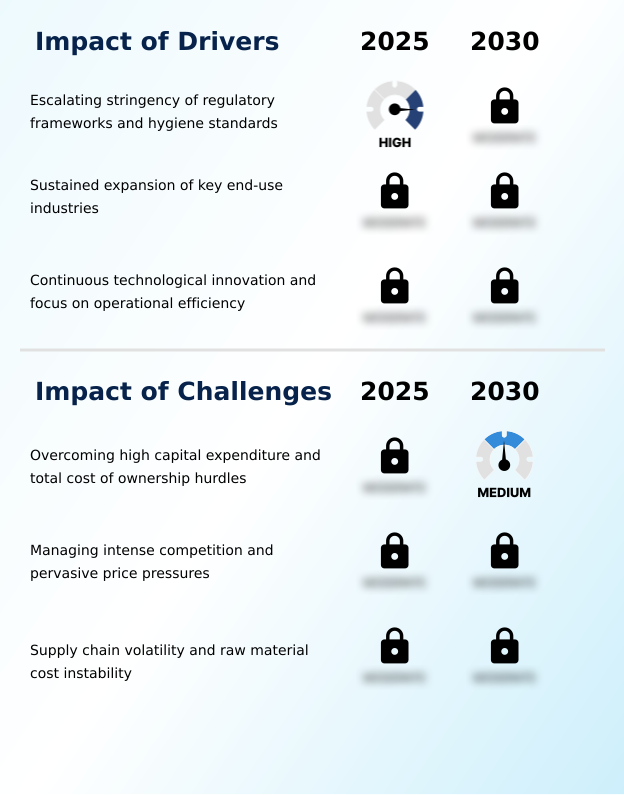
What are the key market drivers leading to the rise in the adoption of Sanitary Pumps Industry?
- The escalating stringency of regulatory frameworks and hygiene standards across key end-use industries is a primary driver for market growth.
- Sustained expansion of end-use industries, including food, biopharma, and cosmetics, is a fundamental market driver. The growing demand for processed foods and complex biopharmaceuticals necessitates advanced solutions for viscous product transfer and low-shear fluid handling.
- This directly fuels investment in equipment like the 3-A compliant lobe pump and specialized pumps for biologics. A crucial driver is the relentless pace of technological innovation, focusing on hydraulic efficiency optimization and lower lifecycle costs.
- The integration of a variable frequency drive (VFD) can reduce energy consumption by up to 30% in variable flow applications.
- Furthermore, the push for ASME-BPE compliance in pharmaceutical manufacturing drives demand for high-purity equipment, including the sealless sanitary pump design and systems with integrated predictive maintenance sensors to ensure process integrity, especially for single-use pump systems.
- A self-priming sanitary pump, high-pressure sanitary pump, and EHEDG certified centrifugal pump are essential for applications like sanitary pump for cosmetic creams.
What are the market trends shaping the Sanitary Pumps Industry?
- The proliferation of intelligent pumping solutions and digitalization is a defining market trend. It marks a shift toward data-driven operational excellence and predictive maintenance capabilities.
- The adoption of a single-use pump for bioprocessing is a transformative trend, driven by the need to eliminate cross-contamination risks. This is spurring innovation in technologies like the peristaltic pump head and quaternary diaphragm pump, designed for disposable fluid paths.
- Concurrently, digitalization is leading to the proliferation of the smart pump with IoT monitoring, which enhances process control and enables predictive maintenance, with some systems demonstrating a 20% reduction in unplanned downtime. Another key trend is the intensified focus on sustainability, pushing demand for the energy-efficient sanitary pump.
- This is complemented by advancements in materials and design, such as twin-screw pump technology for handling delicate solids and the use of 316L stainless steel with a superior sanitary pump with electropolished finish to improve cleanability and adhere to strict EHEDG guidelines and 3-A sanitary standards for a pump for shear-sensitive fluids in aseptic pump for dairy processing.
What challenges does the Sanitary Pumps Industry face during its growth?
- A key challenge affecting industry growth is overcoming the significant capital expenditure and total cost of ownership associated with advanced sanitary equipment.
- A primary market challenge is the high capital expenditure and the broader sanitary pump total cost of ownership (TCO). While premium hygienic process pumps offer long-term benefits like a crevice-free internal design and superior self-draining capability, their initial cost can be a barrier.
- This issue is compounded by intense price competition from low-cost manufacturers, which can erode margins and limit R&D investment. Supply chain volatility presents another hurdle, with fluctuating raw material costs impacting production expenses by as much as 15% in certain quarters.
- Managing these instabilities while ensuring consistent quality for applications like sterile fluid transfer requires sophisticated sanitary fluid management, especially for components like the positive displacement pump for paste, sanitary transfer pumps, pump for abrasive sanitary fluids, and the variable speed sanitary pump.
- A hygienic pump for beverage production requires a non-pulsating flow and a reliable pump for clean-in-place systems for effective aseptic fluid handling.
Exclusive Technavio Analysis on Customer Landscape
The sanitary pumps market forecasting report includes the adoption lifecycle of the market, covering from the innovator’s stage to the laggard’s stage. It focuses on adoption rates in different regions based on penetration. Furthermore, the sanitary pumps market report also includes key purchase criteria and drivers of price sensitivity to help companies evaluate and develop their market growth analysis strategies.
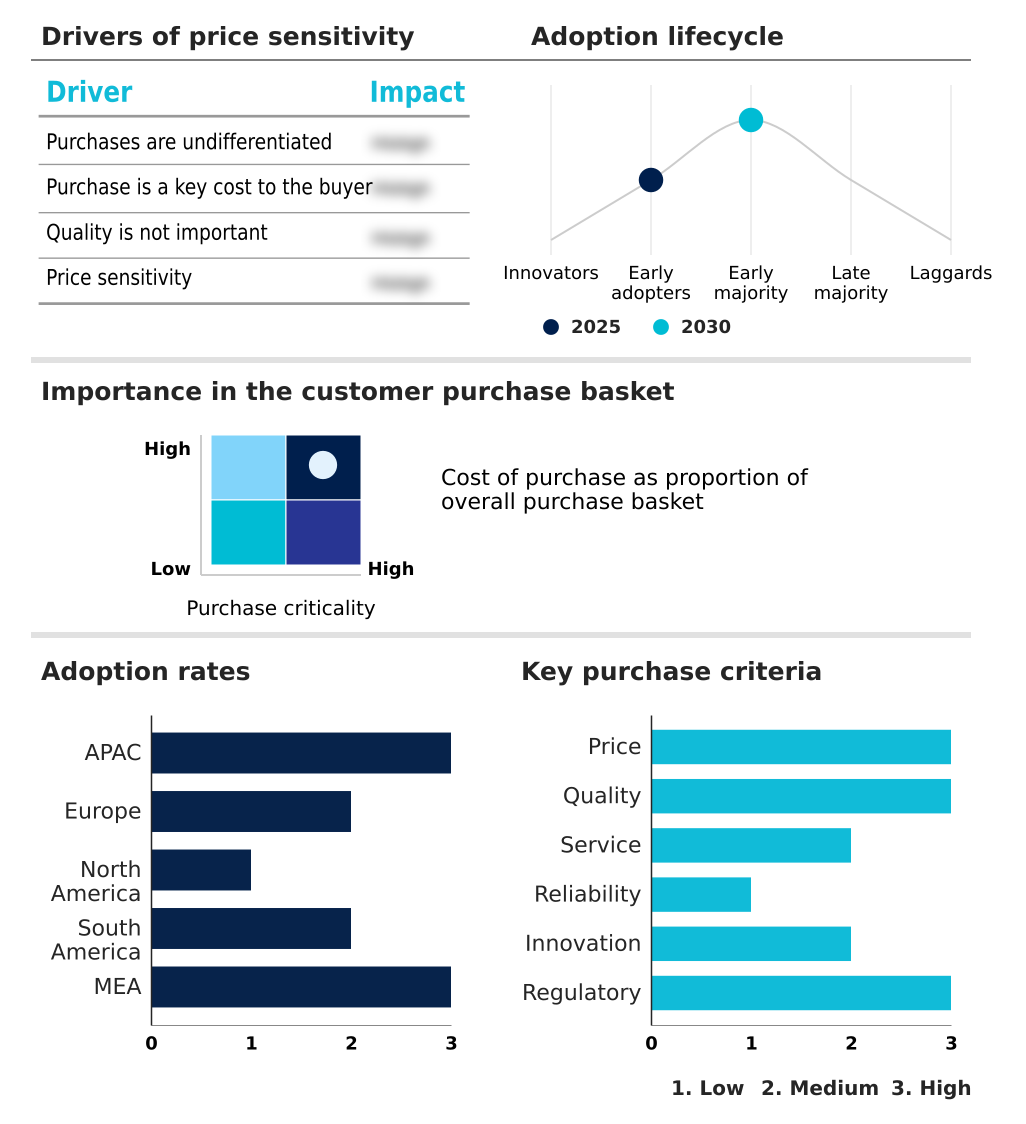
Customer Landscape of Sanitary Pumps Industry
Competitive Landscape
Companies are implementing various strategies, such as strategic alliances, sanitary pumps market forecast, partnerships, mergers and acquisitions, geographical expansion, and product/service launches, to enhance their presence in the industry.
Alfa Laval AB - Offerings feature advanced centrifugal and twin screw pump technologies engineered for high-purity fluid handling and demanding process applications.
The industry research and growth report includes detailed analyses of the competitive landscape of the market and information about key companies, including:
- Alfa Laval AB
- Ampco Pumps Co.
- Axiflow Technologies Inc.
- Erich NETZSCH BV and Co.
- Fristam
- GEA Group AG
- Goulds Pumps
- IDEX Corp.
- INOXPA USA Inc.
- KSB SE and Co. KGaA
- LEWA GmbH
- NOV Inc.
- Pentair Plc
- PSG Dover
- Q Pumps
- Spirax Group
- SPX FLOW Inc.
- Sulzer Ltd.
- Verder Liquids
- Xylem Inc.
Qualitative and quantitative analysis of companies has been conducted to help clients understand the wider business environment as well as the strengths and weaknesses of key industry players. Data is qualitatively analyzed to categorize companies as pure play, category-focused, industry-focused, and diversified; it is quantitatively analyzed to categorize companies as dominant, leading, strong, tentative, and weak.
Recent Development and News in Sanitary pumps market
- In September 2024, Mars announced a USD 1.19 billion investment to modernize and upgrade its manufacturing operations across the European Union.
- In November 2024, SPX FLOW launched its CU4plus ASi-5 control unit, integrating IoT for real-time diagnostics and enhanced valve management in food and beverage processing.
- In January 2025, Agristo announced a USD 450 million investment for the construction of a new food processing facility in North Dakota, slated to begin construction in the same year.
- In May 2025, Asahi Beverages officially unveiled a new USD 60 million canning line at its Queensland brewery to address shifting consumer preferences toward canned beverages.
Dive into Technavio’s robust research methodology, blending expert interviews, extensive data synthesis, and validated models for unparalleled Sanitary Pumps Market insights. See full methodology.
| Market Scope | |
|---|---|
| Page number | 314 |
| Base year | 2025 |
| Historic period | 2020-2024 |
| Forecast period | 2026-2030 |
| Growth momentum & CAGR | Accelerate at a CAGR of 4.2% |
| Market growth 2026-2030 | USD 611.4 million |
| Market structure | Fragmented |
| YoY growth 2025-2026(%) | 4.0% |
| Key countries | China, Japan, India, South Korea, Australia, Indonesia, Germany, France, UK, Italy, Spain, The Netherlands, US, Canada, Mexico, Brazil, Argentina, Chile, Saudi Arabia, South Africa, UAE, Turkey and Egypt |
| Competitive landscape | Leading Companies, Market Positioning of Companies, Competitive Strategies, and Industry Risks |
Research Analyst Overview
- The sanitary pumps market is advancing through continuous innovation in hygienic fluid transfer and aseptic processing. Compliance with EHEDG guidelines and 3-A Sanitary Standards is a baseline requirement, pushing manufacturers toward superior hygienic component design and materials like 316L stainless steel with an electropolished surface finish.
- The choice between a centrifugal sanitary pump and a positive displacement sanitary pump is application-driven, with technologies like lobe pump design and twin-screw pump technology addressing needs for both low-shear fluid handling and viscous product transfer.
- A key boardroom consideration is the adoption of single-use pump systems, particularly in bioprocessing, which leverages specialized peristaltic pump head and quaternary diaphragm pump designs. The integration of predictive maintenance sensors and variable frequency drives (VFD) is critical for optimizing the total cost of ownership (TCO).
- Advanced fluid dynamic simulation is being used for hydraulic efficiency optimization, achieving a non-pulsating flow and ensuring self-draining capability in a crevice-free internal design, which improves cleaning efficiency by over 25%.
- This focus on sanitary process engineering and ASME-BPE compliance in aseptic fluid handling and sanitary fluid management underscores the market's trajectory toward smarter, more efficient high-purity fluid systems and hygienic process pumps for sterile fluid transfer using food-grade pump materials for biopharmaceutical processing pumps and aseptic pump technology.
What are the Key Data Covered in this Sanitary Pumps Market Research and Growth Report?
-
What is the expected growth of the Sanitary Pumps Market between 2026 and 2030?
-
USD 611.4 million, at a CAGR of 4.2%
-
-
What segmentation does the market report cover?
-
The report is segmented by Type (Kinetic sanitary pumps, and Positive displacement (PD) sanitary pumps), End-user (Food and beverage, Pharmaceutical and biotechnology applications, and Others), Material (Stainless steel, Plastic, Hastelloy, and Others) and Geography (APAC, Europe, North America, South America, Middle East and Africa)
-
-
Which regions are analyzed in the report?
-
APAC, Europe, North America, South America and Middle East and Africa
-
-
What are the key growth drivers and market challenges?
-
Escalating stringency of regulatory frameworks and hygiene standards, Overcoming high capital expenditure and total cost of ownership hurdles
-
-
Who are the major players in the Sanitary Pumps Market?
-
Alfa Laval AB, Ampco Pumps Co., Axiflow Technologies Inc., Erich NETZSCH BV and Co., Fristam, GEA Group AG, Goulds Pumps, IDEX Corp., INOXPA USA Inc., KSB SE and Co. KGaA, LEWA GmbH, NOV Inc., Pentair Plc, PSG Dover, Q Pumps, Spirax Group, SPX FLOW Inc., Sulzer Ltd., Verder Liquids and Xylem Inc.
-
Market Research Insights
- The market is characterized by a dynamic interplay between regulatory compliance and operational efficiency. The adoption of the smart pump with IoT monitoring is a key trend, with implementations showing a reduction in unplanned downtime by over 20% compared to traditional maintenance schedules.
- Demand for specialized equipment, such as a low-shear pump for biologics and the sanitary pump for high viscosity liquids, is growing as end-user products become more complex. In parallel, a focus on sustainability is driving investment in the energy-efficient sanitary pump, which can lower operational costs by 15% or more.
- In sectors like dairy, the need for an aseptic pump for dairy processing is non-negotiable, aligning capital investment directly with product safety and quality assurance mandates.
We can help! Our analysts can customize this sanitary pumps market research report to meet your requirements.
 RIA -
RIA - 
