


Pumps Market Size 2024-2028
The pumps market size is forecast to increase by USD 19.6 billion at a CAGR of 5.1% between 2023 and 2028.
- The market encompasses various types of pumps, including centrifugal and positive displacement pumps, which cater to diverse industries such as water treatment, desalination plants, sewage treatment, oil and gas, and high-performance pumping solutions. Market trends include the increasing emphasis on energy efficiency, leading to the adoption of smart pumps and solar-powered pumps. However, the high initial cost and limitations of pumps remain challenges for market growth. Water scarcity and water usage efficiency are pressing concerns, driving demand for energy-efficient products, solar water pumps, and irrigation facilities. Municipal sectors and industrial construction also rely on pumps for water and wastewater management, sanitation systems, and power generation. Raw material prices, particularly for steel and iron, impact the pump market. However, the demand for corrosion-resistant pumps and modular design solutions offsets these costs. In the US, water management and wastewater management are significant applications driving the demand for advanced pumping technologies. The focus on sustainability and reducing carbon footprint is also propelling the market forward. Overall, the pump market is poised for growth, driven by technological advancements and the need for reliable and efficient pumping solutions.
What will be the Size of the Market During the Forecast Period?
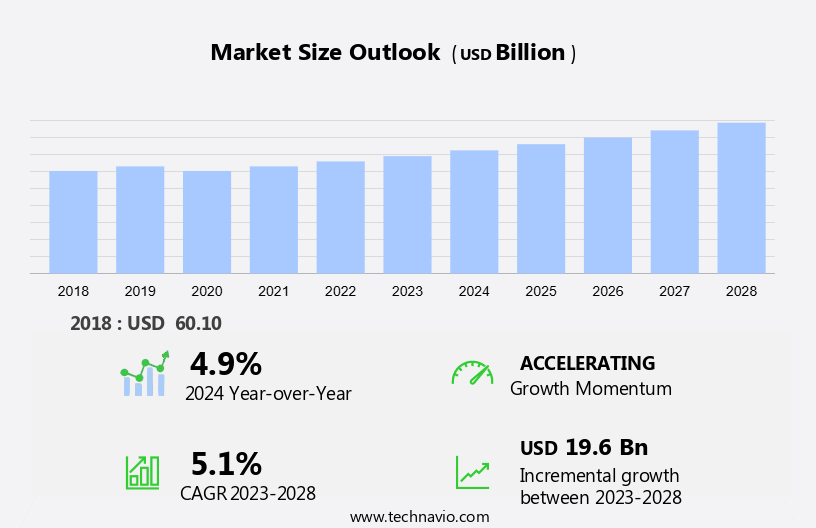
- The market is witnessing significant growth due to the increasing demand for efficient fluid management solutions in various sectors. This market caters to diverse applications, including infrastructure, HDD (Horizontal Directional Drilling), agricultural investments, urban development, and wastewater treatment. Fluid pressure plays a crucial role in the proper functioning of pumps. The demand for pumps is driven by the need for effective water management and wastewater management in various industries. Infrastructure development projects, such as transportation and oil and gas, require pumps for hydrocarbon extraction, well-stimulation, and refining processes.
- Moreover, the shale gas revolution has led to a surge in demand for pumps in the oil and gas sector. The water-intensive nature of shale gas extraction necessitates the use of large volumes of water, which in turn increases the demand for pumps. Moreover, the water deficit in several regions is driving the need for water usage efficiency, further boosting the market growth. Variable frequency drivers (VFDs) and VFDS are increasingly being used in pumps to improve efficiency and reduce energy consumption. These technologies enable pumps to operate at optimal speeds, thereby reducing energy wastage and enhancing overall system performance.
How is this market segmented and which is the largest segment?
The market research report provides comprehensive data (region-wise segment analysis), with forecasts and estimates in "USD billion" for the period 2024-2028, as well as historical data from 2018-2022 for the following segments.
- End-user
- Oil and gas
- Water and wastewater
- Chemical
- Building
- Others
- Geography
- APAC
- China
- India
- Japan
- South Korea
- Europe
- Germany
- UK
- France
- North America
- Canada
- US
- South America
- Middle East and Africa
- APAC
By End-user Insights
- The oil and gas segment is estimated to witness significant growth during the forecast period.
The market encompasses various types of pumps, including centrifugal and positive displacement pumps, which cater to diverse industries such as water treatment, desalination plants, sewage treatment, oil and gas, and high-performance pumping solutions. Centrifugal pumps, known for their ability to move large volumes of fluid at a consistent flow rate, are widely used in the oil and gas sector, particularly in upstream and downstream operations. These pumps can be engineered with corrosion-resistant coatings to withstand extreme temperatures and conditions. On the other hand, positive displacement pumps are ideal for high-pressure applications, such as drilling fluid circulation, hydraulic fracturing, deep-sea pumping, and cementing operations within the oil and gas industry.
Furthermore, they are employed in midstream transportation and downstream refineries. The oil and gas sector has experienced a downturn due to fluctuating oil and gas prices. However, the demand for pumps remains strong due to the ongoing need for water management and wastewater management in various industries. Smart pumps, a recent innovation, are gaining popularity due to their energy efficiency and advanced monitoring capabilities. These intelligent devices enable predictive maintenance and remote monitoring, enhancing overall operational efficiency and reducing downtime. The pump market is expected to grow as industries continue to seek innovative and efficient pumping solutions to address their unique challenges.
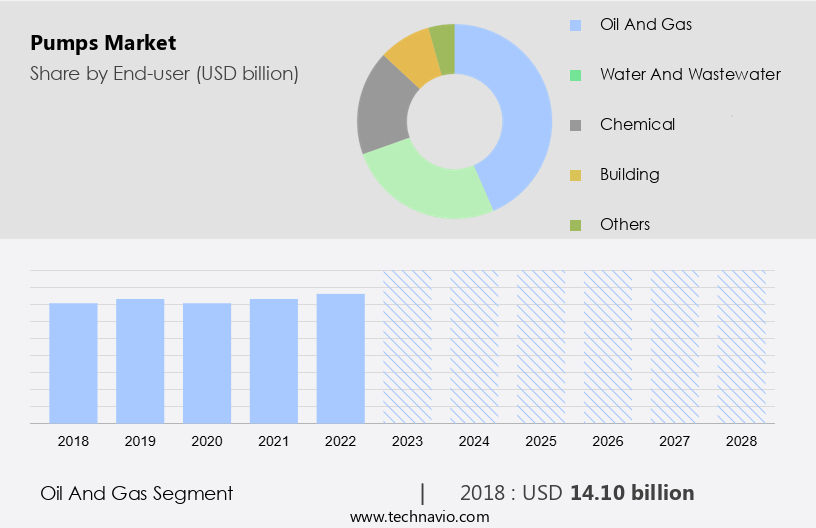
Get a glance at the market report of share of various segments Request Free Sample
The oil and gas segment was valued at USD 14.10 billion in 2018 and showed a gradual increase during the forecast period.
Regional Analysis
- APAC is estimated to contribute 55% to the growth of the global market during the forecast period.
Technavio's analysts have elaborately explained the regional trends and drivers that shape the market during the forecast period.
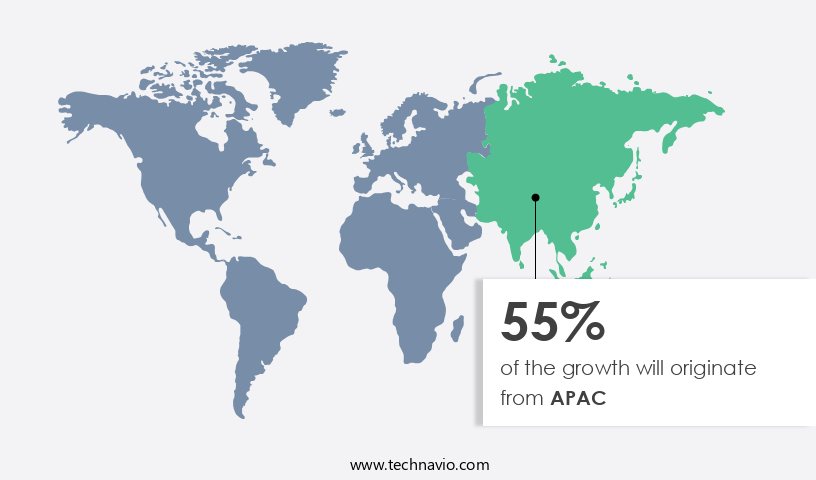
For more insights on the market share of various regions Request Free Sample
The market in the Asia Pacific region is experiencing significant growth and is expected to expand at a substantial rate during the forecast period. The primary drivers of this growth are the increasing demands from various industries such as exploration drilling, power generation, oil production, mining, and fluid handling. In the energy sector, seawater intake and water injection pumps are in high demand for cooling systems and oil production. In the mining industry, pumps are essential for pipeline transport and chemical processing. The chemical industry itself is expanding in APAC due to the rising needs of sectors like pharmaceuticals, food and beverage, construction, and water and wastewater treatment. Countries like China, India, Bangladesh, the Philippines, Vietnam, and Indonesia are experiencing strong economic growth, contributing to the increased demand for pumps in the region.
Market Dynamics
Our researchers analyzed the data with 2023 as the base year, along with the key drivers, trends, and challenges. A holistic analysis of drivers will help companies refine their marketing strategies to gain a competitive advantage.
What are the key market drivers leading to the rise in adoption of Pumps Market?
Rising focus on improving energy efficiency in industries is the key driver of the market.
- The demand for pumps is escalating due to their essential role in various industries and sectors, including sanitation systems, gas production, and municipal services. With increasing water shortages and scarcity, water usage efficiency has become a critical concern for wastewater treatment facilities and municipal sectors. Pumps are indispensable in these applications, as they facilitate the efficient transfer and treatment of water. In the industrial sector, energy-intensive industries such as pulp and paper and chemical production are significant consumers of pumps. These industries rely heavily on energy-consuming equipment like pumps, blowers, and motors. In response to rising energy costs and environmental concerns, regulatory bodies are implementing new norms to reduce energy consumption and carbon emissions in industrial applications.
- For instance, the US Department of Energy's Better Buildings, Better Plants Program aims to enhance energy efficiency in the industrial sector. Modular designs have gained popularity in the market due to their flexibility, ease of installation, and cost-effectiveness. These designs enable the customization of pumps to meet specific application requirements, making them a preferred choice for various industries. Overall, the market is expected to grow significantly due to the increasing demand for water and energy efficiency, as well as the regulatory push towards reducing carbon emissions.
What are the market trends shaping the Pumps Market?
Increased adoption of solar-powered pumps is the upcoming trend in the market.
- The market is witnessing significant growth due to the increasing demand for fluid pressure solutions in various industries. Solar power integration is a key trend in the market, particularly in infrastructure applications such as Horizontal Directional Drilling (HDD) and fluid management. Solar-powered pumps are gaining traction as they offer cost-effective solutions for urban development projects and agricultural investments. Wastewater treatment is another sector that is expected to drive the demand for solar-powered pumps, as there is a growing emphasis on sustainability and reducing energy consumption. However, there are limitations to the use of solar power in heavy-dome industrial applications.
- Variable Frequency Drivers (VFDs) and Internet of Things (IoT) technologies are also being integrated into pumps to improve efficiency and performance. As the world grapples with electricity shortages, solar-powered pumps are becoming an attractive alternative for sustainability-conscious industries. While solar-powered pumps are gaining popularity in residential and commercial sectors, their adoption in industrial applications is still in its infancy. It is essential for companies to conduct thorough research and development to address the operational challenges of solar-powered pumps and expand their application scope.
What challenges does Pumps Market face during the growth?
High initial cost and limitations of pumps is a key challenge affecting the market growth.
- Pumps play a crucial role in various industries, including water and wastewater, chemicals, food and beverage, industrial construction, offshore exploration, and water treatment. Corrosion-resistant pumps are increasingly popular due to their ability to withstand harsh environments and prolong the lifespan of the equipment. Energy-efficient products, such as solar water pumps, are gaining traction in irrigation facilities as they reduce operational costs and promote sustainability. However, the initial investment for installing pumps can be substantial, particularly for small and medium-sized businesses. The rising cost of refrigerants further increases the overall operating expenses, making companies hesitant to invest. One significant challenge for heat pumps is their limited operating range.
- Moreover, these pumps operate most efficiently at low temperatures, which may not be suitable for all applications. In the US market, there is a growing demand for energy-efficient and eco-friendly pumping solutions. Dynamic pumps, which adjust their speed to match the flow requirements, are becoming increasingly popular due to their energy savings potential. As the focus on sustainability and cost savings continues to grow, the demand for advanced pumping technologies is expected to increase. In conclusion, pumps are essential for various industries, but their high initial investment and limited operating range can be barriers to adoption. Energy-efficient and corrosion-resistant pumps, such as solar water pumps and dynamic pumps, are gaining popularity as they offer cost savings and sustainability benefits. The market is expected to see continued growth in the demand for advanced pumping solutions as businesses seek to reduce operational costs and promote sustainability.
Exclusive Customer Landscape
The market forecasting report includes the adoption lifecycle of the market, covering from the innovator's stage to the laggard's stage. It focuses on adoption rates in different regions based on penetration. Furthermore, the market report also includes key purchase criteria and drivers of price sensitivity to help companies evaluate and develop their market growth analysis strategies.
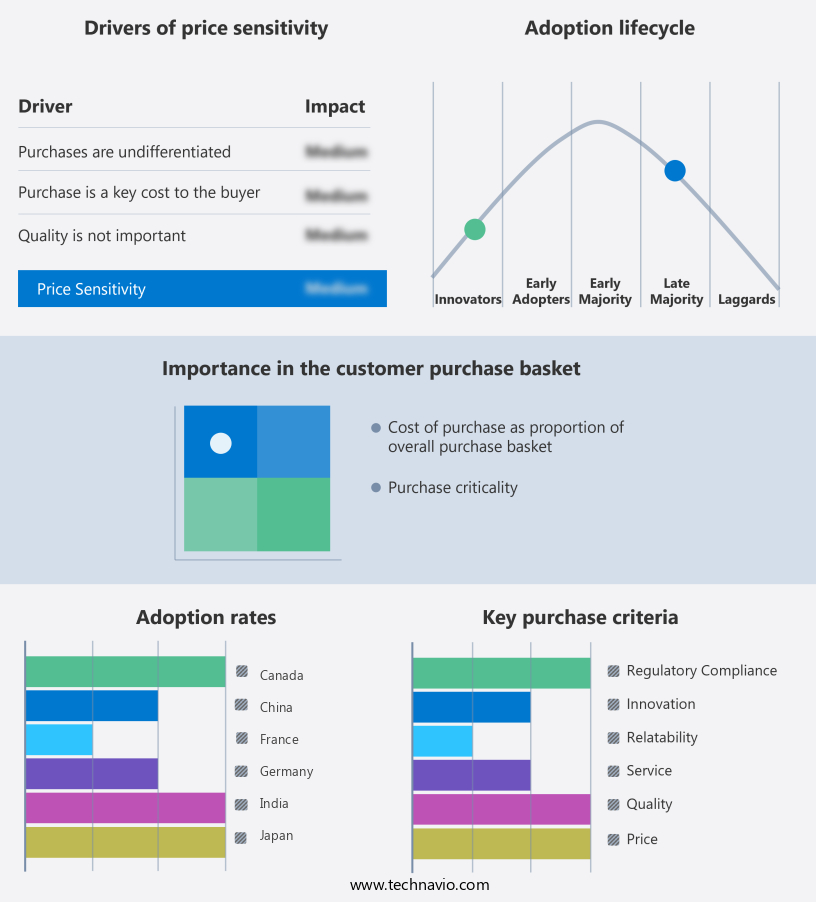
Customer Landscape
Key Companies & Market Insights
Companies are implementing various strategies, such as strategic alliances, market forecast , partnerships, mergers and acquisitions, geographical expansion, and product/service launches, to enhance their presence in the market.
The market research and growth report includes detailed analyses of the competitive landscape of the market and information about key companies, including:
- Alfa Laval AB
- Atlas Copco AB
- Danfoss AS
- Dover Corp.
- Ebara Corp.
- Flowserve Corp.
- General Electric Co.
- Grundfos Holding AS
- Ingersoll Rand Inc.
- ITT Inc.
- KSB SE and Co. KGaA
- Robert Bosch GmbH
- Ruhrpumpen Group
- Sintech Precision Products Ltd.
- SPP Pumps Ltd.
- Sulzer Ltd.
- TechnipFMC plc
- The Weir Group Plc
- Wilo SE
- Xylem Inc.
Qualitative and quantitative analysis of companies has been conducted to help clients understand the wider business environment as well as the strengths and weaknesses of key market players. Data is qualitatively analyzed to categorize companies as pure play, category-focused, industry-focused, and diversified; it is quantitatively analyzed to categorize companies as dominant, leading, strong, tentative, and weak.
Research Analyst Overview
The market encompasses various types of pumps used for managing fluids in diverse applications. Infrastructure development, urbanization, and agricultural investments are significant drivers for the pump market. High-density development (HDD) projects require advanced fluid management systems, leading to increased demand for centrifugal and positive displacement pumps. The IoT revolution is transforming the pump industry with the integration of Variable Frequency Drivers (VFDs) and Smart Pumps. These technologies improve efficiency, reduce energy consumption, and enhance overall performance. Water management and wastewater management are critical sectors driving the pump market. Desalination plants, sewage treatment, and water treatment facilities are major consumers of high-performance pumping solutions.
Furthermore, the oil and gas industry is another significant market for pumps, with a focus on high-pressure pumping equipment for crude oil extraction, well-stimulation, refining, transportation, and shale gas revolution processes. The chemical industries, food and beverage, and offshore exploration sectors also contribute to the pump market, with a focus on energy-efficient products and chemical processing applications.
|
Market Scope |
|
|
Report Coverage |
Details |
|
Page number |
184 |
|
Base year |
2023 |
|
Historic period |
2018-2022 |
|
Forecast period |
2024-2028 |
|
Growth momentum & CAGR |
Accelerate at a CAGR of 5.1% |
|
Market growth 2024-2028 |
USD 19.6 billion |
|
Market structure |
Fragmented |
|
YoY growth 2023-2024(%) |
4.9 |
|
Key countries |
China, US, Russia, Japan, Canada, Germany, India, South Korea, UK, and France |
|
Competitive landscape |
Leading Companies, Market Positioning of Companies, Competitive Strategies, and Industry Risks |
What are the Key Data Covered in this Market Research and Growth Report?
- CAGR of the market during the forecast period
- Detailed information on factors that will drive the market growth and forecasting between 2024 and 2028
- Precise estimation of the size of the market and its contribution of the market in focus to the parent market
- Accurate predictions about upcoming market growth and trends and changes in consumer behaviour
- Growth of the market across APAC, Europe, North America, South America, and Middle East and Africa
- Thorough analysis of the market's competitive landscape and detailed information about companies
- Comprehensive analysis of factors that will challenge the growth of market companies
We can help! Our analysts can customize this market research report to meet your requirements. Get in touch
 RIA -
RIA - 
