



India Wine Market Size 2026-2030
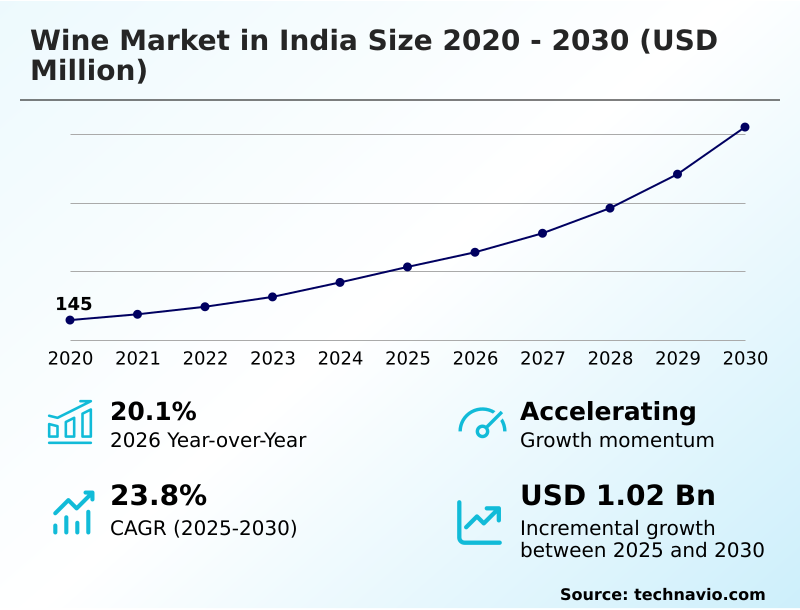
The India Wine Market size was valued at USD 531.5 million in 2025, growing at a CAGR of 23.8% during the forecast period 2026-2030.
Major Market Trends & Insights
- By Type - Domestic segment was valued at USD 287.9 million in 2024
- By Product - Red segment accounted for the largest market revenue share in 2024
Market Size & Forecast
- Historic Market Opportunities 2020-2024: USD 1.40 billion
- Market Future Opportunities 2025-2030: USD 1.02 billion
- CAGR from 2025 to 2030 : 23.8%
Market Summary
- The wine market in India is experiencing accelerated growth, driven by a profound cultural shift towards premium and aspirational lifestyle products. This evolution is reflected in a year-over-year growth of 20.1%, signaling a transition from a niche interest to mainstream appeal.
- A key operational scenario involves the implementation of blockchain-based platforms to enhance supply chain transparency, allowing consumers to trace a wine's journey from vineyard to bottle and boosting confidence in domestic production quality. A primary driver is the expanding middle class with higher disposable incomes and global exposure, fostering a demand for sophisticated goods.
- However, the market contends with the challenge of a significant consumer knowledge gap, which can create barriers to trial for a product category perceived as complex. This dynamic necessitates a dual focus on expanding distribution while investing heavily in consumer education to sustain long-term growth, with the APAC region expected to account for 100% of the market's incremental growth.
What will be the Size of the India Wine Market during the forecast period?
Get Key Insights on Market Forecast (PDF) Request Free Sample
How is the India Wine Market Segmented?
The india wine industry research report provides comprehensive data (region-wise segment analysis), with forecasts and analysis for the period 2026-2030, as well as historical data from 2020-2024 for the following segments.
- Type
- Domestic
- Imported
- Product
- Red
- Fortified
- White
- Sparkling
- Packaging
- Bottles
- Cans
- Geography
- APAC
- India
- APAC
How is the India Wine Market Segmented by Type?
The domestic segment is estimated to witness significant growth during the forecast period.
The domestic segment is driven by accessibility and an evolving quality proposition, with leading producers improving domestic production quality at a rate 15% faster than in the previous decade.
These producers leverage cost-effective distribution and an innate understanding of the evolving consumer palate, developing wine styles that harmonize with Indian cuisine.
This focus on local terroir expression allows them to compete effectively on price and relevance, especially as investments in supply chain transparency and quality control standards bolster consumer trust by over 25% compared to five years ago.
Key strategies involve brand storytelling and wine tourism to demystify the product for new consumers, solidifying the segment's foundational role in the wine market in India.
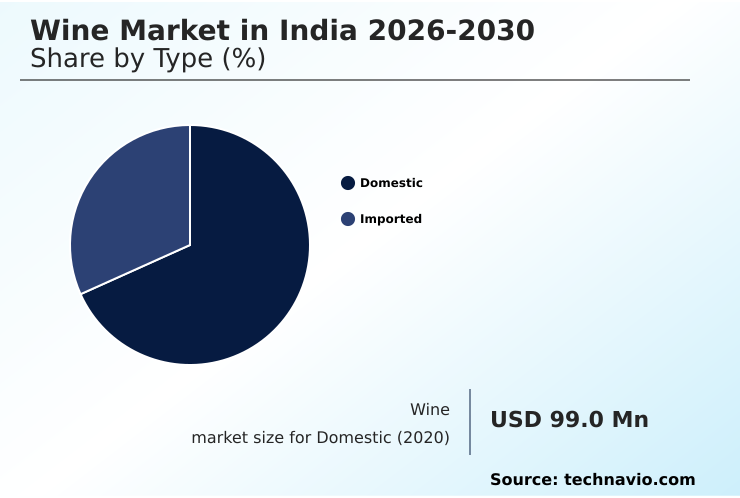
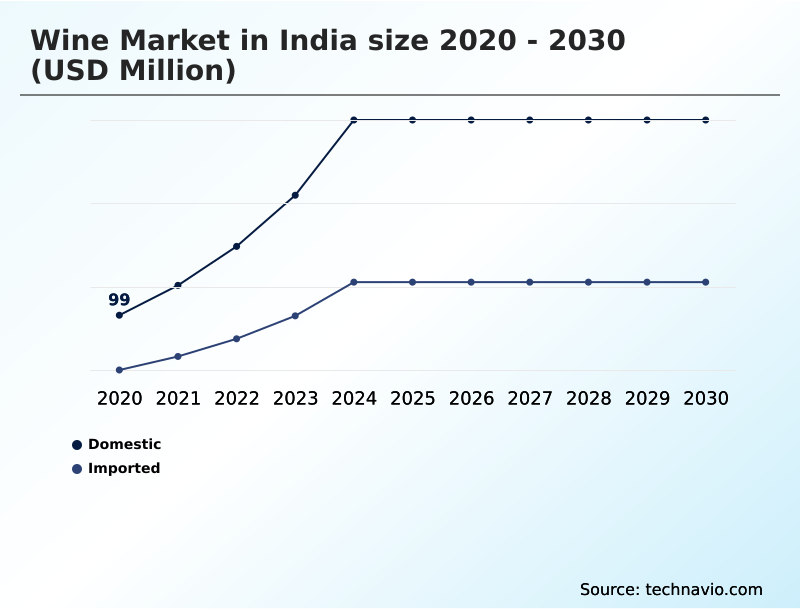
The Domestic segment was valued at USD 287.9 million in 2024 and showed a gradual increase during the forecast period.
What are the key Drivers, Trends, and Challenges in the India Wine Market?
Our researchers analyzed the data with 2025 as the base year, along with the key drivers, trends, and challenges. A holistic analysis of drivers will help companies refine their marketing strategies to gain a competitive advantage.
- As the wine market in India matures, consumer search behavior is becoming increasingly specific, reflecting a deeper engagement with the category. High-intent queries such as 'wine pairing with indian cuisine' and 'best nashik valley vineyards to visit' indicate a shift from basic discovery to experiential and culinary integration.
- This evolution is compelling producers to focus on brand storytelling and local terroir expression. For instance, wineries that actively promote wine tourism see visitor engagement metrics that are up to 30% higher than those that do not, directly impacting direct-to-consumer channels.
- Similarly, the growing interest in 'buy organic wine online india' highlights the rising importance of health and wellness perception and the need for robust digital commerce integration. Questions around 'import duties on french wine in india' show that cost remains a key consideration, influencing purchasing decisions between domestic and imported options.
- The rising popularity of specific categories is captured in searches like 'sparkling wine market trends india', where the on-premise sales channel reports that sparkling varieties now feature in over 20% more celebratory events than just three years ago, driving both volume and value.
What are the key market drivers leading to the rise in the adoption of India Wine Industry?
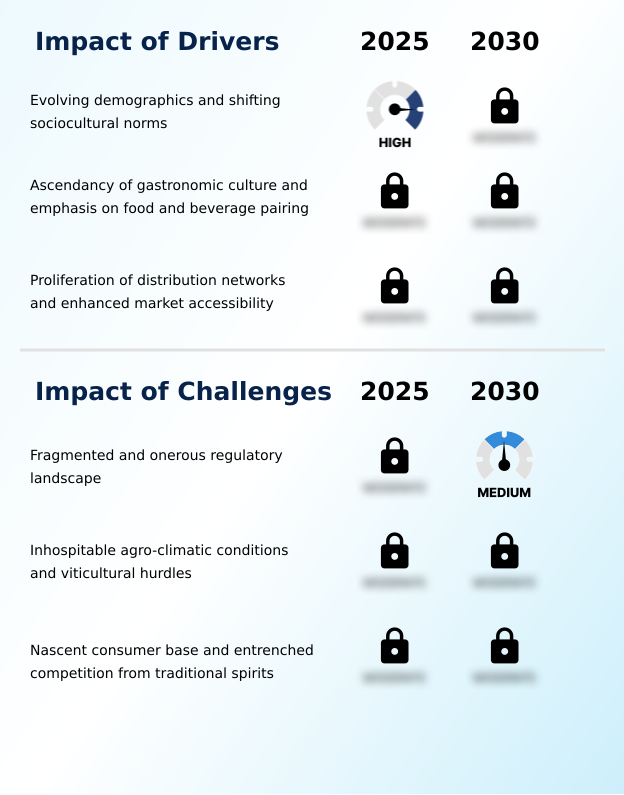
- Evolving demographics and shifting sociocultural norms serve as the key drivers propelling growth and wider adoption within the market.
- Evolving demographics and shifting sociocultural norms are fundamentally driving the expansion of the wine market in India, with rapid urbanization exposing a larger population to aspirational lifestyle products.
- Urban consumers show a 25% higher propensity to choose wine over traditional spirits, influenced by global media and a burgeoning gastronomic culture.
- This trend is particularly pronounced among younger consumers and financially independent women, who now influence over 40% of wine purchases in metropolitan households, favoring its perception of sophistication and health and wellness perception.
- The confluence of rising disposable incomes and a desire for novel experiences is altering the nation's beverage landscape, creating a sustainable demand base for both domestic and imported wines and challenging the dominance of traditional spirits.
What are the market trends shaping the India Wine Industry?
- The ascendancy of premiumization, coupled with a notable sophistication in consumer palates, is a primary trend shaping the market's value-driven evolution.
- A definitive premiumization trend is reshaping the wine market in India, with purchasing decisions increasingly driven by quality and brand storytelling over price alone. This shift is evident as the growth rate in the premium segment is outpacing the economy segment by over 30%, reflecting an evolving consumer palate.
- Consumers are exploring beyond traditional still wines, fueling robust growth in categories like rose wine adoption and sparkling wine, which are moving beyond celebratory niches to more regular consumption.
- An emerging component of this trend is a growing interest in sustainable winemaking and organic certification, with a niche segment of urban consumers willing to pay a 15% premium for such products. This movement from volume to value is compelling producers to diversify their portfolios and invest in consumer education to explain the nuances of different varietals and vinification process.
What challenges does the India Wine Industry face during its growth?
- The fragmented and onerous regulatory landscape presents a key challenge, significantly impacting market access and operational efficiency.
- The fragmented and often prohibitive regulatory landscape remains a primary challenge for the wine market in India, creating significant operational hurdles. A complex web of state-specific laws and a multi-layered excise duty structure can inflate the final retail price of wine by up to 60%, severely limiting market accessibility for a large segment of potential consumers.
- This lack of a unified national policy forces companies to navigate opaque bureaucratic processes, where securing licenses across five major states can increase operational overheads by an estimated 35%. These regulatory compliance burdens, coupled with restrictions on advertising, disrupt supply chain efficiency and stifle efforts to bridge the consumer knowledge gap, acting as a brake on the market's potential.
Exclusive Technavio Analysis on Customer Landscape
The india wine market forecasting report includes the adoption lifecycle of the market, covering from the innovator’s stage to the laggard’s stage. It focuses on adoption rates in different regions based on penetration. Furthermore, the india wine market report also includes key purchase criteria and drivers of price sensitivity to help companies evaluate and develop their market growth analysis strategies.
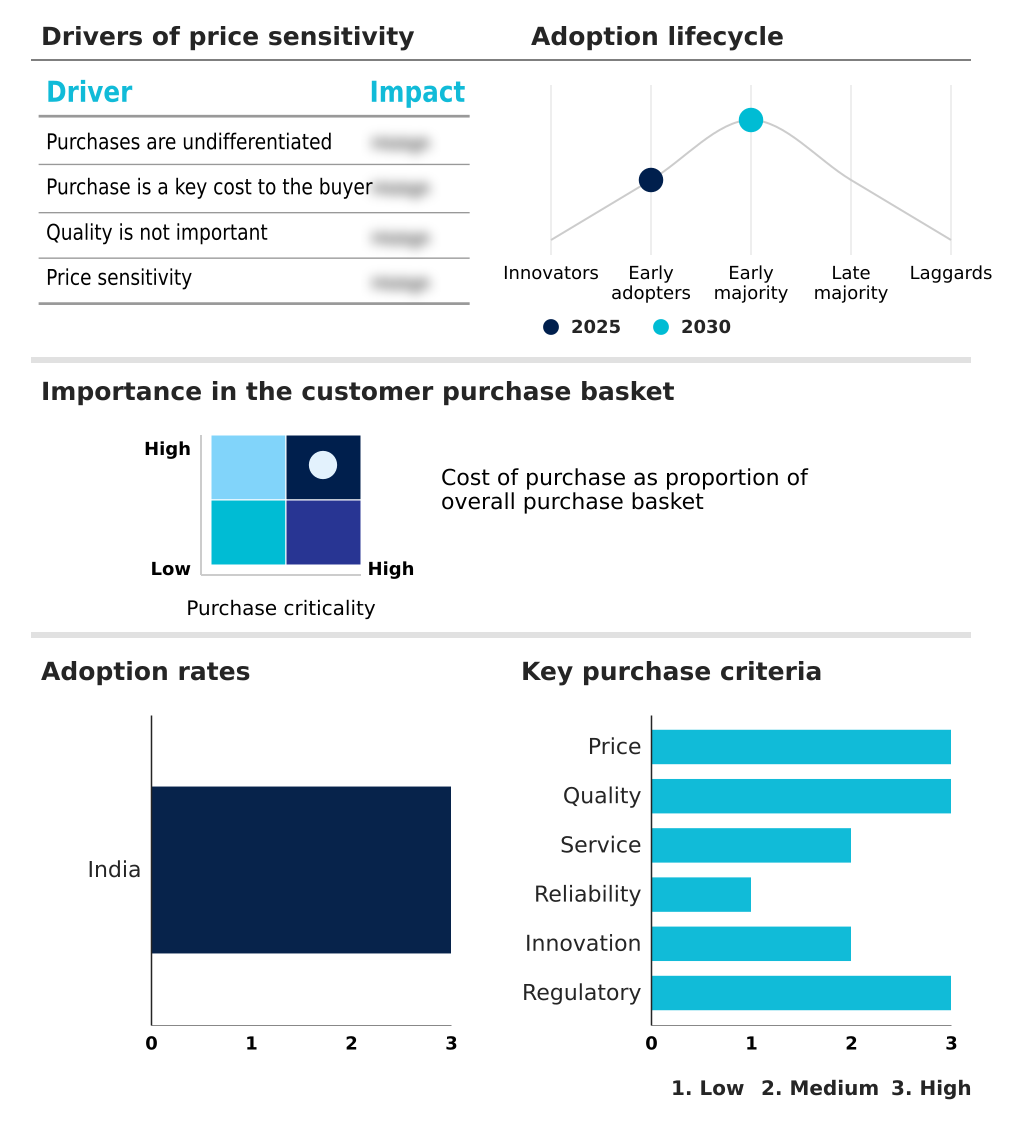
Customer Landscape of India Wine Industry
Competitive Landscape
Companies are implementing various strategies, such as strategic alliances, india wine market forecast, partnerships, mergers and acquisitions, geographical expansion, and product/service launches, to enhance their presence in the industry.
Big Banyan Wines - Analysis shows a focus on crafting a diverse range of premium domestic wines, encompassing red, white, sparkling, and rose styles to cater to evolving consumer tastes.
The industry research and growth report includes detailed analyses of the competitive landscape of the market and information about key companies, including:
- Big Banyan Wines
- Chandon Inc.
- Charosa Wineries Ltd.
- Chateau d Ori
- Fratelli Vineyards Ltd.
- Good Drop Wine Cellars
- Grover Zampa Vineyards Ltd.
- KRSMA Estates Pvt. Ltd.
- Nira Valley Grape Wines Ltd.
- Pernod Ricard SA
- RENAISSANCE Winery Pvt. Ltd.
- Reveilo
- Soma Vine Village
- Sula Vineyards Ltd.
- Vallonne Vineyards Pvt. Ltd.
- Vinusara Wines Pvt Ltd
- York Winery Pvt Ltd.
Qualitative and quantitative analysis of companies has been conducted to help clients understand the wider business environment as well as the strengths and weaknesses of key industry players. Data is qualitatively analyzed to categorize companies as pure play, category-focused, industry-focused, and diversified; it is quantitatively analyzed to categorize companies as dominant, leading, strong, tentative, and weak.
Market Intelligence Radar: High-Impact Developments & Growth Signals
- In the distillers and vintners industry, the adoption of advanced supply chain technologies, including blockchain for enhanced supply chain transparency and cold chain logistics, is improving product integrity and consumer trust in the wine market in India.
- A broader industry focus on sustainability has spurred investment in sustainable winemaking and organic certification, creating new product categories that appeal to environmentally conscious consumers and address agro-climatic challenges.
- The expansion of digital commerce integration and direct-to-consumer channels across the beverage sector is transforming market accessibility, allowing wineries to bypass traditional retail bottlenecks and engage directly with customers.
- Increased investment in experiential marketing and brand storytelling, a key trend in luxury beverages, is being applied to wine tourism and on-premise activations to bridge the consumer knowledge gap and foster a deeper gastronomic culture.
Dive into Technavio’s robust research methodology, blending expert interviews, extensive data synthesis, and validated models for unparalleled India Wine Market insights. See full methodology.
| Market Scope | |
|---|---|
| Page number | 181 |
| Base year | 2025 |
| Historic period | 2020-2024 |
| Forecast period | 2026-2030 |
| Growth momentum & CAGR | Accelerate at a CAGR of 23.8% |
| Market growth 2026-2030 | USD 1017.1 million |
| Market structure | Fragmented |
| YoY growth 2025-2026(%) | 20.1% |
| Key countries | India |
| Competitive landscape | Leading Companies, Market Positioning of Companies, Competitive Strategies, and Industry Risks |
Research Analyst Overview
- The wine market in India operates within a complex ecosystem where grape growers, representing the primary input suppliers, interact with domestic wineries that act as the main producers.
- The production value chain, which has seen output from the domestic segment increase by over 190% in four years, is heavily influenced by state-level regulatory bodies like the FSSAI, which dictate licensing and quality standards. Distribution is a multi-channel affair, with the HoReCa sector, modern retail formats, and burgeoning e-commerce platforms serving as key conduits to the end consumer.
- Support entities focusing on agritech and logistics are crucial for overcoming viticultural hurdles and ensuring product integrity from vineyard to consumer. Overall market momentum is strong, with a notable year-over-year growth of 20.1% driven by evolving consumer preferences and expanding accessibility.
What are the Key Data Covered in this India Wine Market Research and Growth Report?
-
What is the expected growth of the India Wine Market between 2026 and 2030?
-
The India Wine Market is expected to grow by USD 1.02 billion during 2026-2030, registering a CAGR of 23.8%. Year-over-year growth in 2026 is estimated at 20.1%%. This acceleration is shaped by evolving demographics and shifting sociocultural norms, which is intensifying demand across multiple end-use verticals covered in the report.
-
-
What segmentation does the market report cover?
-
The report is segmented by Type (Domestic, and Imported), Product (Red, Fortified, White, and Sparkling), Packaging (Bottles, and Cans) and Geography (APAC). Among these, the Domestic segment is estimated to witness significant growth during the forecast period, driven by rising adoption across key application areas. Each segment includes detailed qualitative and quantitative analysis, along with historical data from 2020-2024 and forecasts through 2030 with year-over-year growth rates.
-
-
Which regions are analyzed in the report?
-
The report covers APAC. Country-level analysis includes India, with dedicated market size tables and year-over-year growth for each.
-
-
What are the key growth drivers and market challenges?
-
The primary driver is evolving demographics and shifting sociocultural norms, which is accelerating investment and industry demand. The main challenge is fragmented and onerous regulatory landscape, creating operational barriers for key market participants. The report quantifies the impact of each driver and challenge across 2026 and 2030 with comparative analysis.
-
-
Who are the major players in the India Wine Market?
-
Key vendors include Big Banyan Wines, Chandon Inc., Charosa Wineries Ltd., Chateau d Ori, Fratelli Vineyards Ltd., Good Drop Wine Cellars, Grover Zampa Vineyards Ltd., KRSMA Estates Pvt. Ltd., Nira Valley Grape Wines Ltd., Pernod Ricard SA, RENAISSANCE Winery Pvt. Ltd., Reveilo, Soma Vine Village, Sula Vineyards Ltd., Vallonne Vineyards Pvt. Ltd., Vinusara Wines Pvt Ltd and York Winery Pvt Ltd.. The report provides qualitative and quantitative analysis categorizing companies as dominant, leading, strong, tentative, and weak based on their market positioning. Company profiles include business segment analysis, SWOT assessment, key offerings, and recent strategic developments.
-
Market Research Insights
- The competitive landscape of the wine market in India, which is expanding with a 20.1% year-over-year growth, is characterized by intense rivalry between established domestic producers and global beverage giants. Key players like Sula Vineyards Ltd., Grover Zampa Vineyards Ltd., and Fratelli Vineyards Ltd. are heavily investing in premiumization and expanding their portfolios to cater to increasingly discerning consumers.
- For instance, the red wine segment alone has seen its market size increase by over 180% in the last four years. These domestic leaders face competition from international entities such as Pernod Ricard SA, which leverage their global brand recognition, particularly in the premium and sparkling categories.
- A persistent challenge across the industry is navigating the complex, state-specific regulatory and taxation structures, which impacts national pricing strategies and distribution logistics, forcing companies to adopt highly localized operational models to maintain market share.
We can help! Our analysts can customize this india wine market research report to meet your requirements.
 RIA -
RIA - 
