



Horeca Market Size 2026-2030
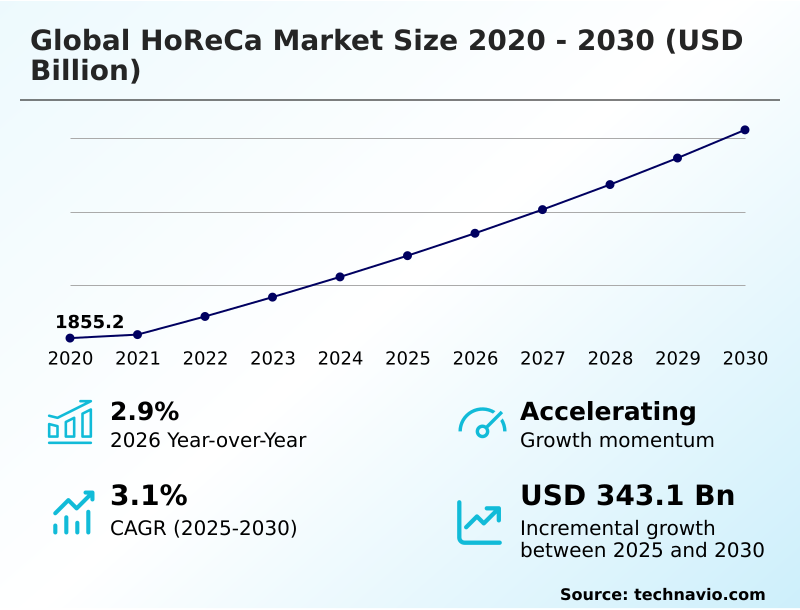
The horeca market size is valued to increase by USD 343.1 billion, at a CAGR of 3.1% from 2025 to 2030. Expansion of experiential dining and premiumization trends will drive the horeca market.
Major Market Trends & Insights
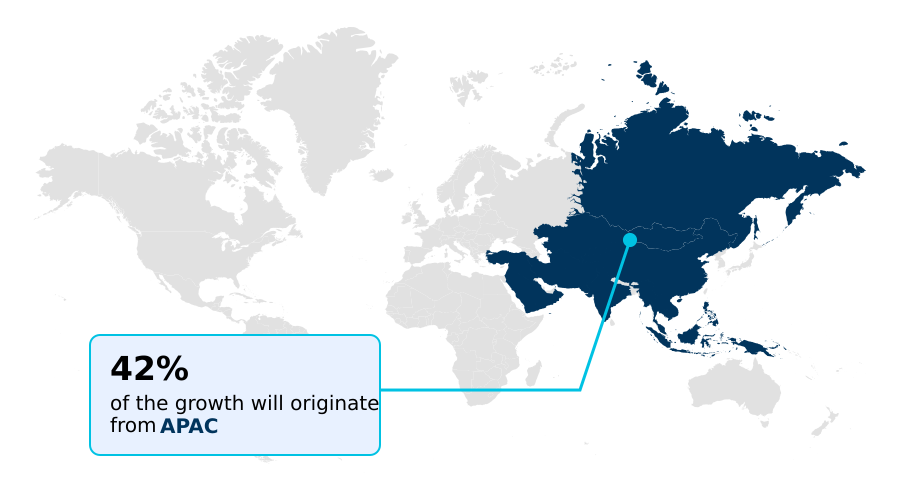
- APAC dominated the market and accounted for a 41.5% growth during the forecast period.
- By Type - Single outlet segment was valued at USD 1375.5 billion in 2024
- By Service Type - Eateries and restaurants segment accounted for the largest market revenue share in 2024
Market Size & Forecast
- Market Opportunities: USD 567.9 billion
- Market Future Opportunities: USD 343.1 billion
- CAGR from 2025 to 2030 : 3.1%
Market Summary
- The HoReCa market is undergoing a profound structural transformation, driven by digital industrialization and a strategic focus on wellness hospitality and lifestyle ecosystems. This evolution moves beyond traditional service models to create integrated guest journeys. Key drivers include the demand for experiential dining and premiumization trends, compelling operators to innovate.
- A significant trend is the move toward hyper-personalized guest experiences, enabled by data analytics and predictive modeling. For instance, a hotel chain can optimize its supply chain for ethical sourcing and sustainability mandates by using AI-driven kitchen optimization to analyze consumption patterns across properties, reducing food waste by over 20% while ensuring the availability of fresh, artisanal ingredients.
- However, the industry grapples with persistent challenges like severe labor shortages and rising personnel costs, which are accelerating the adoption of autonomous service solutions and mobile-first digital concierges. Successfully navigating these dynamics requires balancing high-tech efficiency with high-touch human service to maintain a competitive edge and ensure long-term commercial resilience in a rapidly changing landscape.
What will be the Size of the Horeca Market during the forecast period?
Get Key Insights on Market Forecast (PDF) Get Free Sample
How is the Horeca Market Segmented?
The horeca industry research report provides comprehensive data (region-wise segment analysis), with forecasts and estimates in "USD billion" for the period 2026-2030, as well as historical data from 2020-2024 for the following segments.
- Type
- Single outlet
- HoReCa chain
- Service type
- Eateries and restaurants
- Hotels
- Cafes and pubs
- Price range
- Midscale
- Luxury
- Economy
- Geography
- APAC
- China
- India
- Japan
- North America
- US
- Canada
- Mexico
- Europe
- Germany
- France
- UK
- South America
- Brazil
- Argentina
- Middle East and Africa
- Saudi Arabia
- UAE
- South Africa
- Rest of World (ROW)
- APAC
By Type Insights
The single outlet segment is estimated to witness significant growth during the forecast period.
The single outlet segment thrives by delivering unique brand identities deeply integrated within local communities. Success hinges on creating immersive atmospheres and providing authentic experiential dining, which cultivates high levels of customer loyalty and brand trust establishment.
Operators leverage sustainable sourcing and artisanal ingredients to meet premiumization trends. To compete with larger chains, independents are adopting advanced property management systems and optimizing their digital footprint within the omni-search ecosystem.
The rise of ghost kitchens has also provided a low-capital entry point for culinary innovation.
Capturing first-party data has become critical, with successful outlets showing a 15% increase in repeat business through targeted engagement, bridging the marketing gap without large corporate budgets and enhancing their premium positioning.
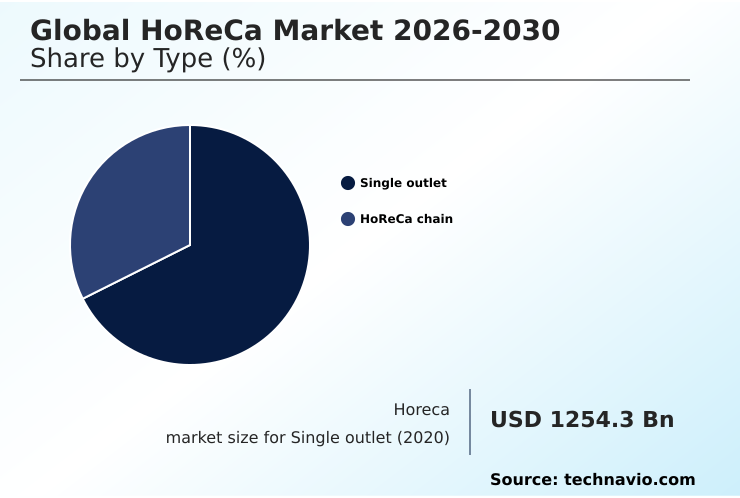
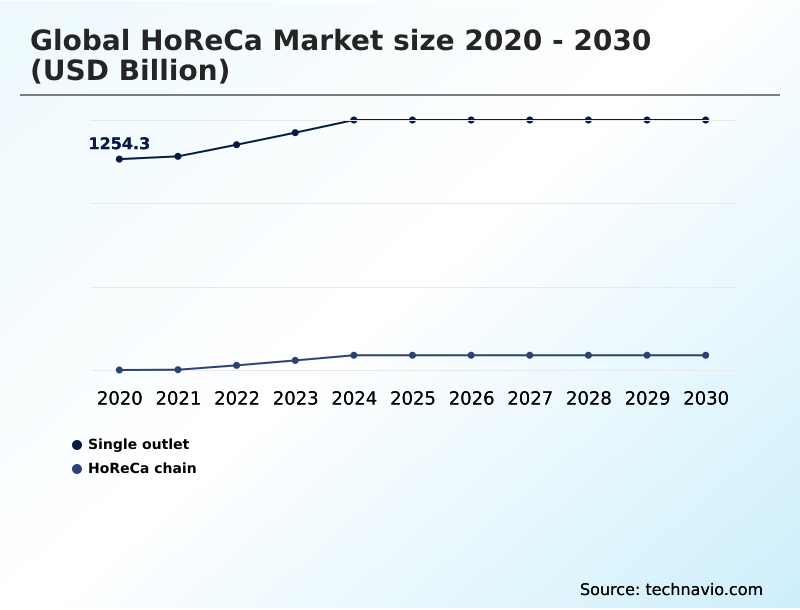
The Single outlet segment was valued at USD 1375.5 billion in 2024 and showed a gradual increase during the forecast period.
Regional Analysis
APAC is estimated to contribute 41.5% to the growth of the global market during the forecast period.Technavio’s analysts have elaborately explained the regional trends and drivers that shape the market during the forecast period.
See How Horeca Market Demand is Rising in APAC Get Free Sample
The geographic landscape of the market reveals distinct regional dynamics and opportunities. APAC is the fastest-growing region, contributing 41.5% of the market's incremental growth, driven by rapid urbanization and an expanding middle class.
In contrast, North America accounts for 23.08% of the growth, characterized by mature markets focused on technological adoption. Operators are deploying hybrid service models that blend digital efficiency with high-touch human service.
This includes the use of modular service design to offer customized guest experiences. As digital industrialization accelerates, companies are building integrated lifestyle ecosystems and wellness hospitality offerings.
Navigating this landscape requires careful attention to regional-specific factors, including regulatory compliance, liquor licensing requirements, and zoning laws, particularly for businesses involved in institutional catering.
Market Dynamics
Our researchers analyzed the data with 2025 as the base year, along with the key drivers, trends, and challenges. A holistic analysis of drivers will help companies refine their marketing strategies to gain a competitive advantage.
- The global HoReCa market is navigating a complex environment defined by several interconnected factors. The impact of experiential dining on revenue is significant, pushing establishments to innovate beyond traditional service. This is closely linked to premiumization trends in food and beverage, where quality and uniqueness command higher price points.
- To deliver on these promises, managing supply chain volatility in restaurants has become a critical competency. Simultaneously, sustainability mandates in the HoReCa supply chain and a focus on ethical sourcing in the hospitality industry are no longer optional but core to brand identity.
- For instance, organizations that effectively manage their supply chains to ensure ethical sourcing report customer loyalty rates that are, on average, 10% higher than competitors who do not prioritize transparency. This highlights a strategic pivot where operational decisions directly influence market perception and consumer choice, shaping the competitive landscape.
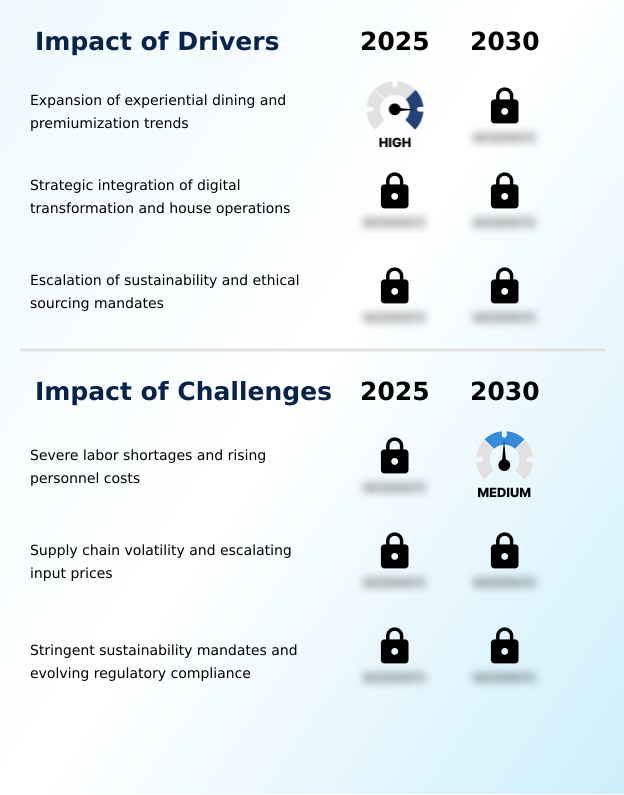
What are the key market drivers leading to the rise in the adoption of Horeca Industry?
- The expansion of experiential dining and ongoing premiumization trends are key drivers fueling innovation and growth within the market.
- Market growth is significantly driven by a broad digital transformation that enhances both guest-facing services and backend house operations. Innovations such as biometric check-in and advanced digital engagement platforms are becoming key differentiators.
- The use of generative artificial intelligence to create unique culinary concepts is fostering a new wave of gastronomic tourism.
- Behind the scenes, operators are implementing circular operations to meet sustainability goals and improve efficiency, with some achieving a 12% reduction in resource consumption.
- Compliance with food safety regulations is being streamlined through voice-driven artificial intelligence systems that monitor and log kitchen activities, improving accuracy and reducing manual data entry. These drivers collectively push the industry toward more resilient and technologically advanced operating models.
What are the market trends shaping the Horeca Industry?
- The proliferation of hyper-personalized guest experiences is a defining market trend. This shift is reshaping service delivery and brand loyalty across the hospitality sector.
- Key market trends are centered on leveraging technology to create seamless and individualized guest journeys. The push for hyper-personalized guest experiences is driving the adoption of advanced data analytics and predictive modeling, enabling an anticipatory service model. Implementations of these technologies have improved customer retention by up to 18%.
- The use of smart-room technologies is becoming standard in new hotel builds, offering enhanced control and convenience. To address operational pressures, businesses are turning to autonomous service solutions and digital service kiosks, which can reduce guest wait times by 30%.
- These trends create new revenue opportunities through enhanced experiential offerings but also demand strict adherence to data privacy compliance, especially as alternatives like short-term residential rentals continue to compete for market share.
What challenges does the Horeca Industry face during its growth?
- Severe labor shortages and rising personnel costs present a key challenge, impacting operational stability and profitability across the industry.
- The industry faces significant structural challenges that constrain growth and compress margins. Persistent labor shortages and rising personnel costs are primary concerns, with high staff turnover rates exacerbating the issue. In response, operators are adopting AI-driven kitchen optimization and mobile-first digital concierges to automate tasks, with some reducing labor requirements for specific functions by up to 20%.
- Concurrently, supply chain volatility and escalating input prices create budget uncertainty, forcing a greater emphasis on efficient procurement and ethical sourcing. Fulfilling stringent sustainability mandates adds another layer of complexity. These challenges are driving investment in AI-powered guest customization to maintain service quality with fewer resources, though such investments can pose a financial barrier for smaller operators.
Exclusive Technavio Analysis on Customer Landscape
The horeca market forecasting report includes the adoption lifecycle of the market, covering from the innovator’s stage to the laggard’s stage. It focuses on adoption rates in different regions based on penetration. Furthermore, the horeca market report also includes key purchase criteria and drivers of price sensitivity to help companies evaluate and develop their market growth analysis strategies.
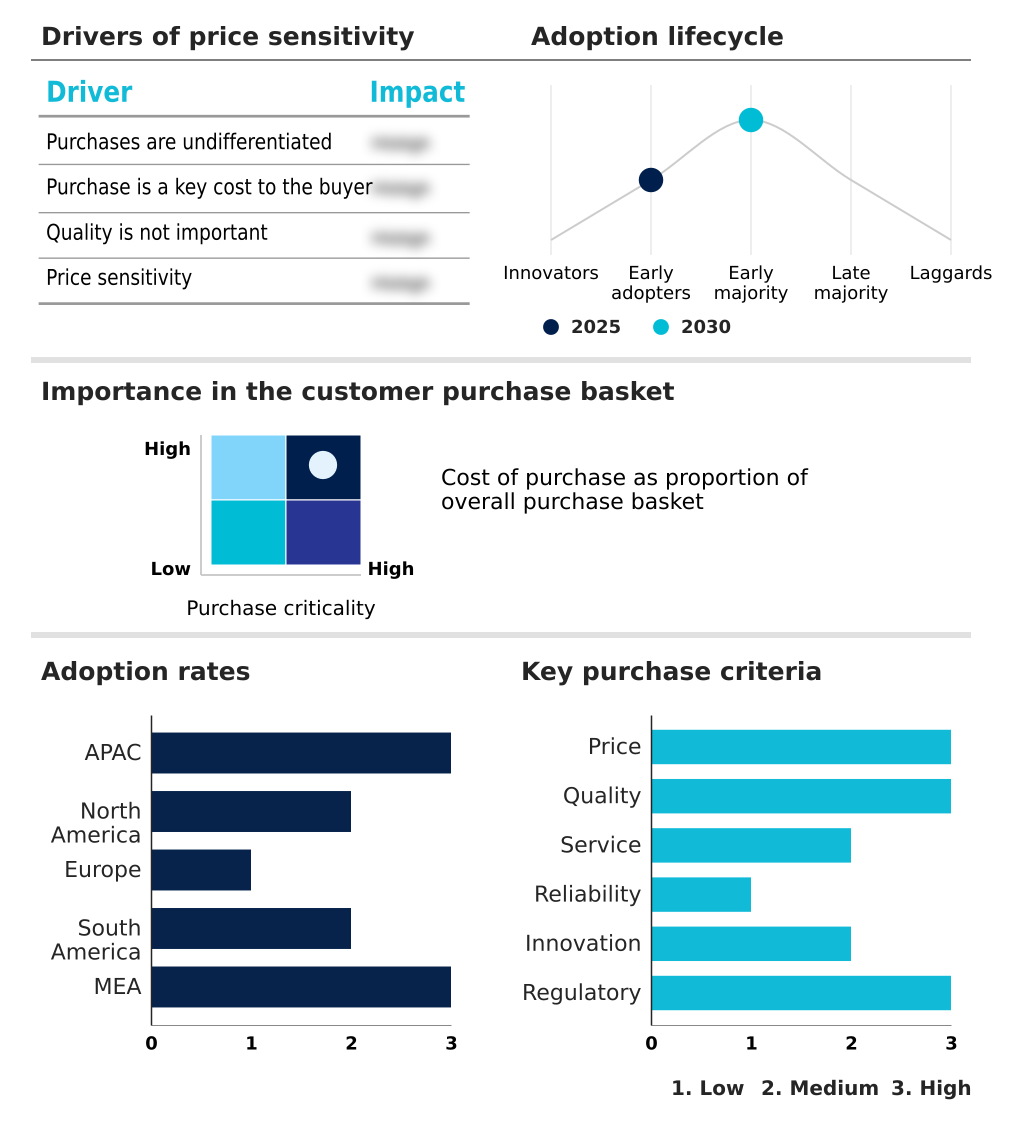
Customer Landscape of Horeca Industry
Competitive Landscape
Companies are implementing various strategies, such as strategic alliances, horeca market forecast, partnerships, mergers and acquisitions, geographical expansion, and product/service launches, to enhance their presence in the industry.
Aramark - Delivers integrated hospitality solutions, encompassing comprehensive foodservices, contract catering, facilities management, and accommodation services for diverse industries.
The industry research and growth report includes detailed analyses of the competitive landscape of the market and information about key companies, including:
- Aramark
- Choice Hotels International
- Compass Group Plc
- Darden Restaurants Inc
- Delaware North Companies Inc.
- Dominos Pizza Inc.
- Elior Group SA
- Hilton Worldwide Holdings Inc.
- Hyatt Hotels Corp.
- InterContinental Hotels Group
- Jin Jiang International Hotels
- Marriott International Inc.
- McDonald Corp.
- Radisson Hotel Group
- Restaurant Brands Inc.
- Sodexo SA
- Starbucks Corp.
- Whitbread PLC
- Wyndham Hotels and Resorts
- YUM Brands Inc.
Qualitative and quantitative analysis of companies has been conducted to help clients understand the wider business environment as well as the strengths and weaknesses of key industry players. Data is qualitatively analyzed to categorize companies as pure play, category-focused, industry-focused, and diversified; it is quantitatively analyzed to categorize companies as dominant, leading, strong, tentative, and weak.
Recent Development and News in Horeca market
- In March, 2025, Marriott International announced a strategic expansion of its luxury collection in Europe, focusing on integrating Michelin-starred culinary concepts into its boutique properties.
- In January, 2025, Starbucks Corp. introduced its Green Dot Assist, an AI companion designed to provide real-time conversational support to partners on recipes and service standards.
- In February, 2025, McDonald Corp. initiated a global technology overhaul, deploying internet-connected kitchen equipment and voice-driven AI to enhance drive-thru efficiency and accuracy.
- In April, 2025, Sodexo SA completed its acquisition of Grupo Mediterranea, significantly strengthening its market presence in Spain’s healthcare and education catering sectors.
Dive into Technavio’s robust research methodology, blending expert interviews, extensive data synthesis, and validated models for unparalleled Horeca Market insights. See full methodology.
| Market Scope | |
|---|---|
| Page number | 288 |
| Base year | 2025 |
| Historic period | 2020-2024 |
| Forecast period | 2026-2030 |
| Growth momentum & CAGR | Accelerate at a CAGR of 3.1% |
| Market growth 2026-2030 | USD 343.1 billion |
| Market structure | Fragmented |
| YoY growth 2025-2026(%) | 2.9% |
| Key countries | China, India, Japan, South Korea, Indonesia, Australia, US, Canada, Mexico, Germany, France, UK, Italy, Spain, The Netherlands, Brazil, Argentina, Chile, Saudi Arabia, UAE, South Africa, Turkey and Israel |
| Competitive landscape | Leading Companies, Market Positioning of Companies, Competitive Strategies, and Industry Risks |
Research Analyst Overview
- The HoReCa market's evolution is centered on technological integration and operational intelligence. The shift toward experiential dining and pronounced premiumization trends necessitates a complete digital transformation of house operations. This is most evident in the push for hyper-personalized guest experiences, where data analytics and predictive modeling are foundational.
- Leading operators utilize property management systems that integrate with a broader digital engagement platform, enabling capabilities like biometric check-in and AI-powered guest customization. These systems capture valuable first-party data through an omni-search ecosystem.
- To combat labor challenges, the industry is accelerating the adoption of autonomous service solutions, from mobile-first digital concierges to AI-driven kitchen optimization, which has been shown to reduce order errors by over 25%.
- This digital industrialization is creating new lifestyle ecosystems, including a focus on wellness hospitality, and forcing a move toward hybrid service models and modular service design to meet diverse consumer demands.
What are the Key Data Covered in this Horeca Market Research and Growth Report?
-
What is the expected growth of the Horeca Market between 2026 and 2030?
-
USD 343.1 billion, at a CAGR of 3.1%
-
-
What segmentation does the market report cover?
-
The report is segmented by Type (Single outlet, and HoReCa chain), Service Type (Eateries and restaurants, Hotels, and Cafes and pubs), Price Range (Midscale, Luxury, and Economy) and Geography (APAC, North America, Europe, South America, Middle East and Africa)
-
-
Which regions are analyzed in the report?
-
APAC, North America, Europe, South America and Middle East and Africa
-
-
What are the key growth drivers and market challenges?
-
Expansion of experiential dining and premiumization trends, Severe labor shortages and rising personnel costs
-
-
Who are the major players in the Horeca Market?
-
Aramark, Choice Hotels International, Compass Group Plc, Darden Restaurants Inc, Delaware North Companies Inc., Dominos Pizza Inc., Elior Group SA, Hilton Worldwide Holdings Inc., Hyatt Hotels Corp., InterContinental Hotels Group, Jin Jiang International Hotels, Marriott International Inc., McDonald Corp., Radisson Hotel Group, Restaurant Brands Inc., Sodexo SA, Starbucks Corp., Whitbread PLC, Wyndham Hotels and Resorts and YUM Brands Inc.
-
Market Research Insights
- The market's momentum is increasingly tied to the adoption of sophisticated operational strategies. For example, implementing an anticipatory service model has been shown to improve guest satisfaction scores by up to 25%. Adherence to stringent data privacy compliance is non-negotiable, as brand trust establishment is paramount.
- The strategic use of digital service kiosks helps mitigate the impact of chronic labor shortages, with some operators reporting a 15% reduction in front-of-house personnel costs. Furthermore, the diversification into experiential offerings beyond core services is crucial for differentiation. Businesses that successfully integrate these elements can achieve superior performance, turning operational challenges into competitive advantages.
We can help! Our analysts can customize this horeca market research report to meet your requirements.
 RIA -
RIA - 
