



Higher Education Testing And Assessment Market Size 2026-2030
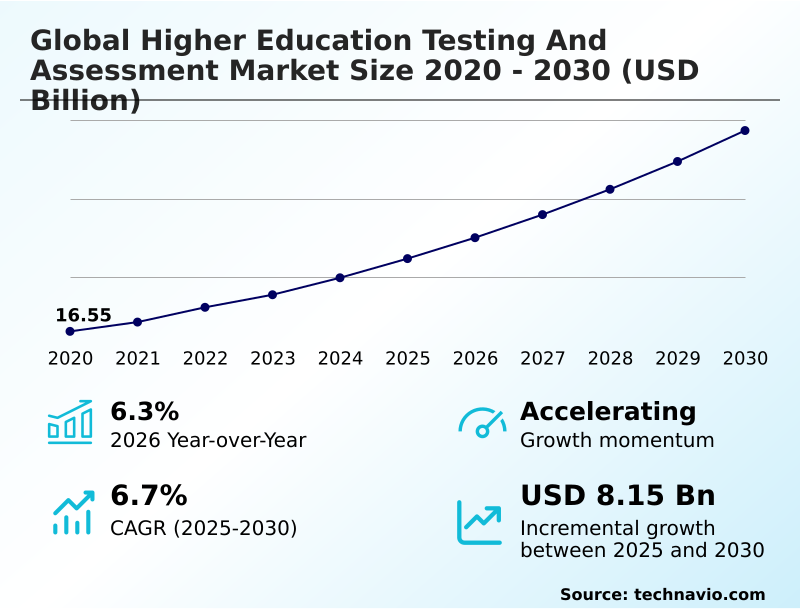
The higher education testing and assessment market size is valued to increase by USD 8.15 billion, at a CAGR of 6.7% from 2025 to 2030. Integration of AI agent and ML in assessment frameworks will drive the higher education testing and assessment market.
Major Market Trends & Insights
- Europe dominated the market and accounted for a 28.7% growth during the forecast period.
- By Product - Academic segment was valued at USD 10.41 billion in 2024
- By End-user - Educational institutions segment accounted for the largest market revenue share in 2024
Market Size & Forecast
- Market Opportunities: USD 12.78 billion
- Market Future Opportunities: USD 8.15 billion
- CAGR from 2025 to 2030 : 6.7%
Market Summary
- The higher education testing and assessment market is undergoing a profound transformation, moving beyond traditional evaluation methods to embrace a sophisticated digital ecosystem. This evolution is driven by the proliferation of remote learning and a growing demand for verifiable skills-based certification.
- Institutions are increasingly adopting online assessment platforms that leverage adaptive testing algorithms and AI in educational assessment to deliver personalized and efficient evaluations. A key trend involves the use of gamified assessment environments and virtual lab simulations to measure practical skills in a more engaging manner.
- For instance, a university system might deploy a unified digital examination platform to standardize course-level evaluation and ensure remote assessment validity across all its campuses. This requires robust assessment software integration and secure browser lockdown technology.
- However, this transition is not without its challenges, including the need to ensure academic integrity through AI text detection tools and address the digital divide with low-bandwidth assessment tools. The focus remains on creating a secure testing environment that is both effective and equitable, using learning analytics dashboards to drive continuous improvement in educational outcomes and maintain institutional credibility.
What will be the Size of the Higher Education Testing And Assessment Market during the forecast period?
Get Key Insights on Market Forecast (PDF) Request Free Sample
How is the Higher Education Testing And Assessment Market Segmented?
The higher education testing and assessment industry research report provides comprehensive data (region-wise segment analysis), with forecasts and estimates in "USD million" for the period 2026-2030, as well as historical data from 2020-2024 for the following segments.
- Product
- Academic
- Non-academic
- End-user
- Educational institutions
- Universities
- Training organizations
- Others
- Delivery mode
- Online
- Offline
- Geography
- North America
- US
- Canada
- Mexico
- Europe
- Germany
- UK
- France
- APAC
- China
- Japan
- India
- Middle East and Africa
- Saudi Arabia
- UAE
- South Africa
- South America
- Brazil
- Argentina
- Rest of World (ROW)
- North America
By Product Insights
The academic segment is estimated to witness significant growth during the forecast period.
The academic segment is driven by the adoption of sophisticated online assessment platforms that use adaptive testing algorithms and psychometric modeling for personalized evaluation. To ensure integrity, institutions are deploying remote proctoring solutions with biometric verification systems.
This technology enables computer-adaptive testing at scale, with automated scoring engines improving efficiency. This shift supports the creation of tamper-proof academic records using distributed ledger technology in education, enhancing the credibility of vocational skills testing and language proficiency assessment.
The move toward digital badge frameworks and a comprehensive learner record is redefining how achievements are documented, with some platforms reporting a 90% reduction in credential verification times.
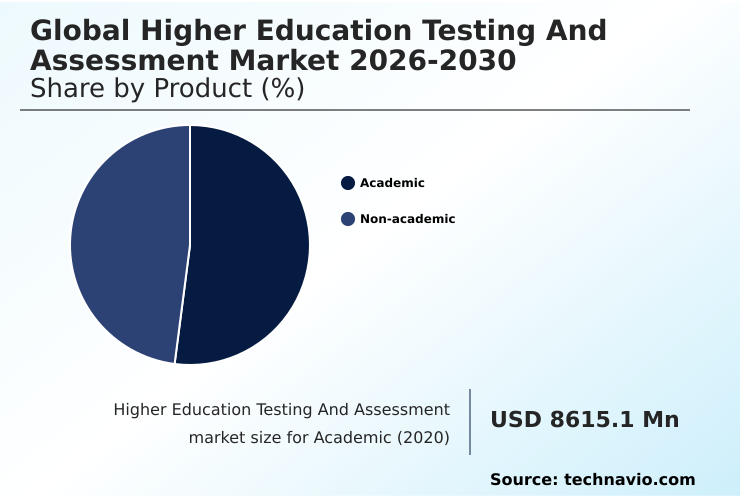
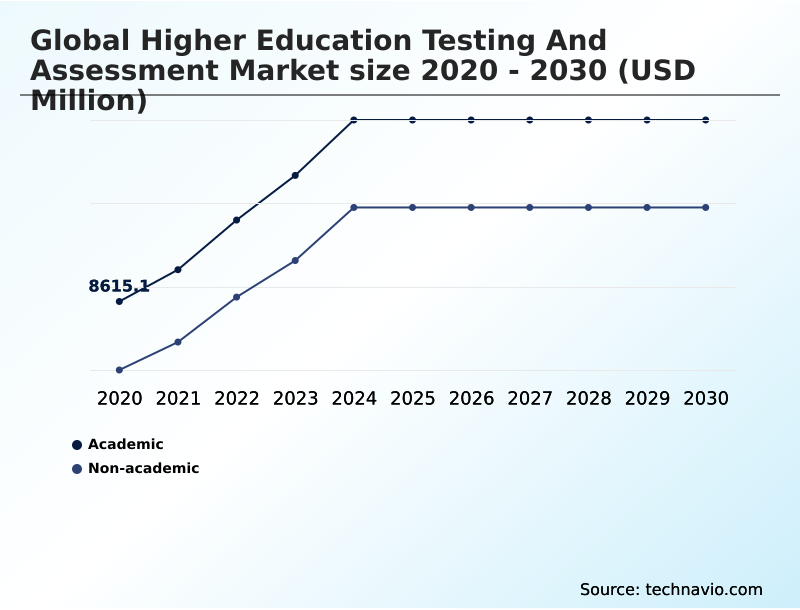
The Academic segment was valued at USD 10.41 billion in 2024 and showed a gradual increase during the forecast period.
Regional Analysis
Europe is estimated to contribute 28.7% to the growth of the global market during the forecast period.Technavio’s analysts have elaborately explained the regional trends and drivers that shape the market during the forecast period.
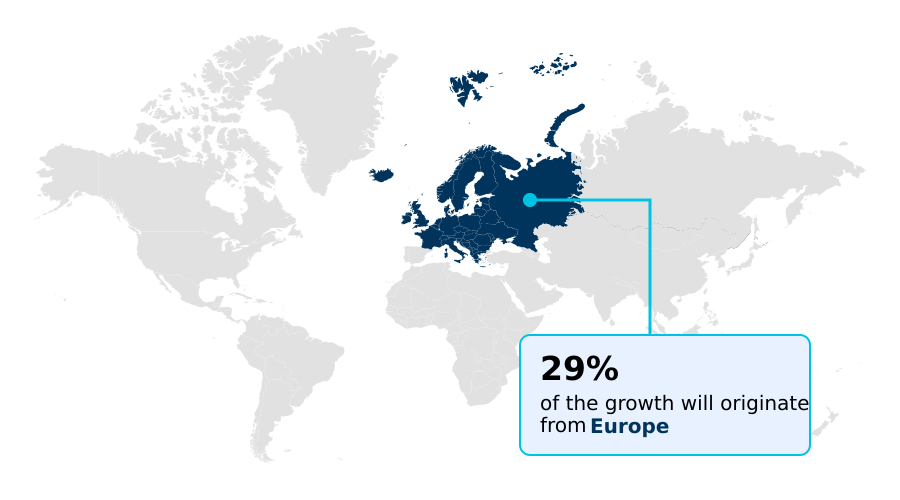
See How Higher Education Testing And Assessment Market Demand is Rising in Europe Request Free Sample
The geographic landscape is defined by varying priorities in digital transformation. Mature markets focus on high-stakes examination security, utilizing advanced assessment data analytics and learning analytics dashboards for deep course-level evaluation.
In contrast, developing regions prioritize digital assessment accessibility through scalable cloud-based evaluation tools and low-bandwidth solutions. The use of formative assessment tools for continuous feedback is growing globally, improving learning outcomes alignment by over 20%.
The adoption of secure browser lockdown technology has become a standard for standardized test development, reducing cheating incidents by more than 70%. These regional strategies influence summative assessment design and the framework for micro-credential verification and pre-employment aptitude testing.
Market Dynamics
Our researchers analyzed the data with 2025 as the base year, along with the key drivers, trends, and challenges. A holistic analysis of drivers will help companies refine their marketing strategies to gain a competitive advantage.
- The global higher education testing and assessment market 2026-2030 navigates complex challenges, centering on the impact of AI on assessment integrity and the critical role of biometrics in remote proctoring. As institutions grapple with securing high-stakes exams in online environments, the focus shifts to AI-powered grading versus traditional methods, prompting the need for clear best practices for AI plagiarism detection.
- This dynamic is complicated by data privacy concerns in online testing, which demands robust multimodal analytics for remote test security. Pedagogically, there is a move toward adaptive testing for personalized learning paths and exploring the benefits of gamification in student testing to foster engagement.
- A primary goal is achieving competency-based assessment for workforce readiness by measuring soft skills through simulation assessments. However, realizing this vision faces challenges in digital assessment equity, requiring the implementation of low-bandwidth assessment solutions and reliable offline testing solutions for remote regions.
- Institutions that are integrating assessments with learning management systems report a workflow efficiency improvement nearly double that of those using siloed solutions, demonstrating a clear cost-benefit analysis of digital proctoring. Successfully validating skills with digital micro-credentials and using predictive analytics to improve student retention will depend on resolving these interconnected issues.
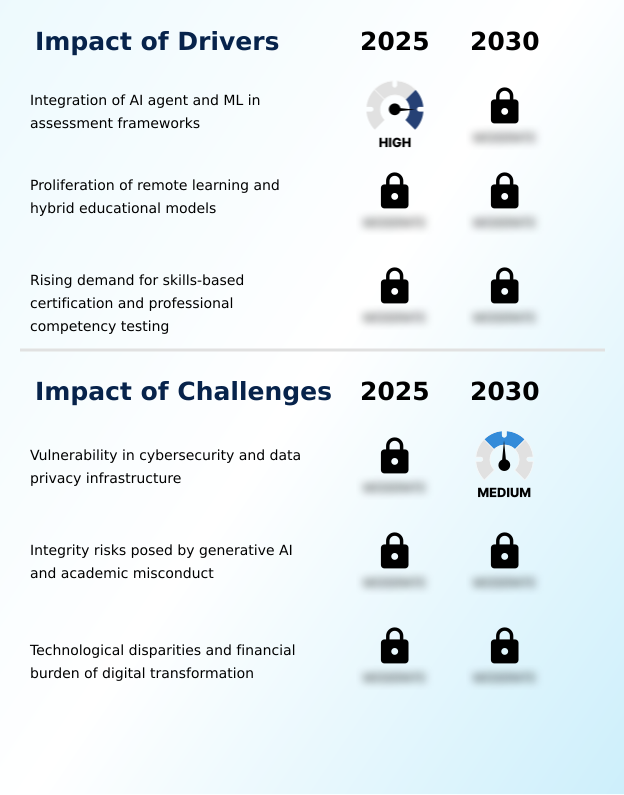
What are the key market drivers leading to the rise in the adoption of Higher Education Testing And Assessment Industry?
- The integration of artificial intelligence and machine learning within assessment frameworks is a primary driver for the market, enabling more adaptive and personalized testing experiences.
- Key market drivers include the push for efficiency and the growing demand for workforce-aligned skills. The integration of an AI-powered grading assistant and machine learning driven proctoring is critical, with some institutions reducing evaluation workloads by up to 50%.
- This allows educators to focus on pedagogy rather than administrative tasks. There is also a strong drive toward competency-based evaluation, supported by digital credentialing platforms that enhance higher education credentialing.
- The use of predictive analytics for student performance helps institutions improve retention by identifying at-risk students with over 20% greater accuracy.
- To support these innovations, a secure digital assessment infrastructure is paramount, incorporating AI text detection tools and advanced e-learning assessment tools to ensure remote assessment validity and build a secure testing environment through seamless assessment software integration and the broader use of AI in educational assessment.
What are the market trends shaping the Higher Education Testing And Assessment Industry?
- A key market trend is the shift toward gamified and immersive assessment environments. These interactive formats are designed to increase student engagement and provide more accurate measurements of practical skills.
- Market trends are pushing toward more dynamic and secure evaluation methods. The adoption of gamified assessment environments and simulation based testing is on the rise, with some studies showing these methods can boost student engagement by over 35%. To address integrity concerns in remote settings, companies are implementing multimodal biometrics, behavioral analytics, and keystroke dynamics within digital proctoring services.
- The use of blockchain for academic verification is another significant trend, offering a way to create tamper-proof records for skills-based certification and reducing credential fraud by over 90%. These innovations in online exam administration and educational testing security are creating sophisticated academic integrity solutions, such as virtual lab simulations, while also providing richer data on student performance metrics.
What challenges does the Higher Education Testing And Assessment Industry face during its growth?
- Significant vulnerabilities in cybersecurity and data privacy infrastructure present a key challenge, posing risks to student data and institutional trust.
- The primary market challenges revolve around equity, cost, and technological complexity. While advanced tools like eye tracking technology are used in automated proctoring systems, their high bandwidth requirements create a digital divide.
- Institutions in underserved areas report that over 50% of students struggle with connectivity, hindering access to digital examination platforms and necessitating low-bandwidth assessment tools and robust offline testing capabilities. The high cost of developing assessments based on item response theory can be prohibitive. Furthermore, reliance on these advanced tools for performance-based assessment raises questions about fairness.
- Effective deployment of personalized learning assessment through various test delivery platforms and talent assessment platforms, along with robust plagiarism detection software, student authentication methods, and accreditation management software, requires significant investment and training, posing a logistical hurdle.
Exclusive Technavio Analysis on Customer Landscape
The higher education testing and assessment market forecasting report includes the adoption lifecycle of the market, covering from the innovator’s stage to the laggard’s stage. It focuses on adoption rates in different regions based on penetration. Furthermore, the higher education testing and assessment market report also includes key purchase criteria and drivers of price sensitivity to help companies evaluate and develop their market growth analysis strategies.
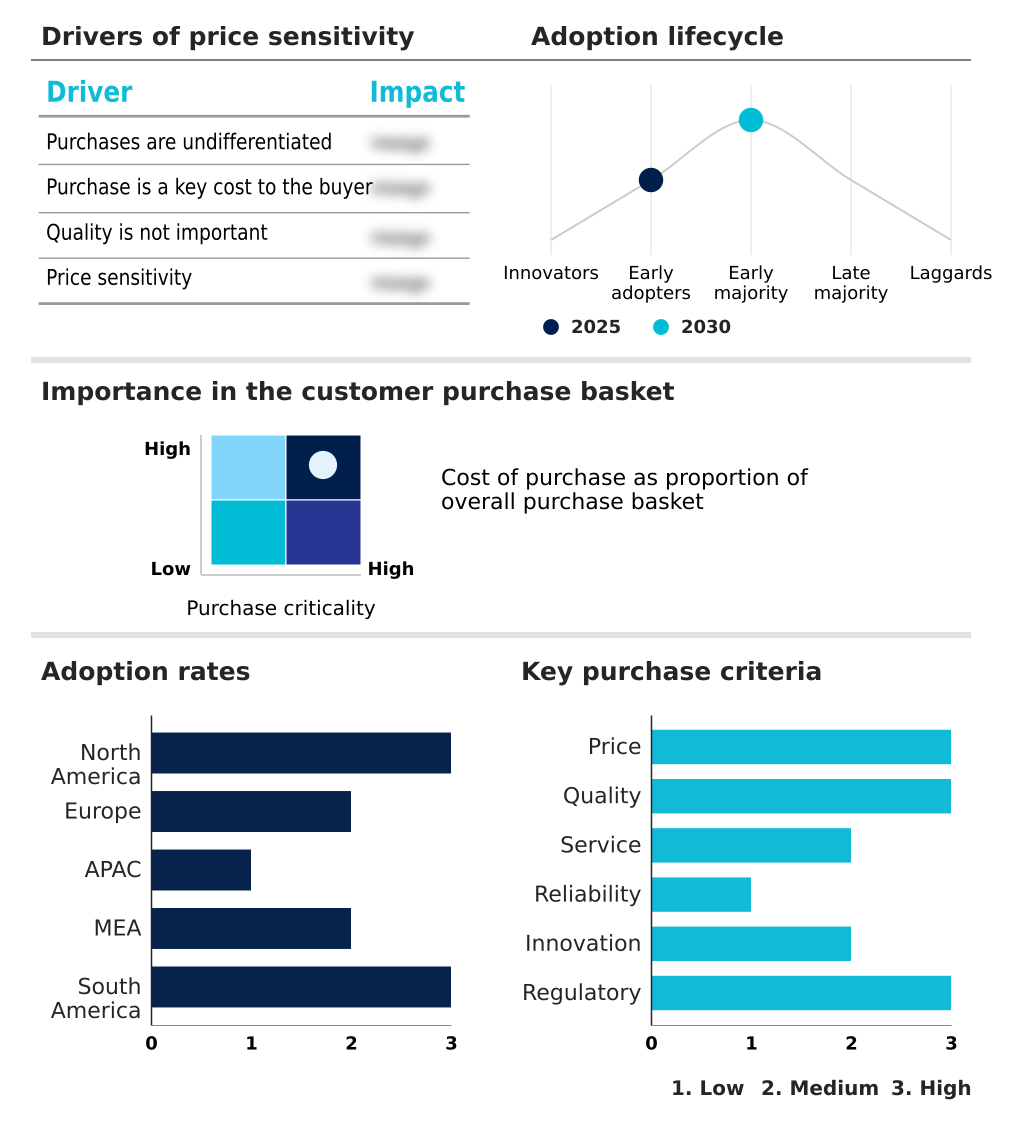
Customer Landscape of Higher Education Testing And Assessment Industry
Competitive Landscape
Companies are implementing various strategies, such as strategic alliances, higher education testing and assessment market forecast, partnerships, mergers and acquisitions, geographical expansion, and product/service launches, to enhance their presence in the industry.
Acadecraft Inc. - Specializes in interactive and performance-based assessment development, offering summative testing programs to evaluate academic and professional competency within higher education.
The industry research and growth report includes detailed analyses of the competitive landscape of the market and information about key companies, including:
- Acadecraft Inc.
- Apperson Inc.
- Aptech Ltd.
- Assessment Systems
- Coursera Inc.
- Ellucian Co.
- ETS Global
- Harver B.V.
- Janison Education Group Ltd
- Kaplan Inc.
- L and T EduTech.
- McGraw Hill LLC
- Mercer LLC
- Mindlogicx
- Oxford Learning Centers Inc.
- Pearson Plc
- ProctorU
- Prometric Inc.
- QA Higher Education
- Scantron Inc.
Qualitative and quantitative analysis of companies has been conducted to help clients understand the wider business environment as well as the strengths and weaknesses of key industry players. Data is qualitatively analyzed to categorize companies as pure play, category-focused, industry-focused, and diversified; it is quantitatively analyzed to categorize companies as dominant, leading, strong, tentative, and weak.
Recent Development and News in Higher education testing and assessment market
- In August, 2024, LinkedIn Learning collaborated with academic testing companies to create assessments that directly link test results to job opportunities on its platform.
- In November, 2024, Duolingo expanded its English Test portfolio to include industry-specific language proficiency assessments for higher education graduates entering the global workforce.
- In January, 2025, ExamSoft updated its assessment software to include predictive analytics that help academic institutions forecast student performance based on historical data.
- In March, 2025, Pearson acquired a specialized game design studio to integrate more sophisticated gamified mechanics into its global testing portfolio for modern learners.
Dive into Technavio’s robust research methodology, blending expert interviews, extensive data synthesis, and validated models for unparalleled Higher Education Testing And Assessment Market insights. See full methodology.
| Market Scope | |
|---|---|
| Page number | 293 |
| Base year | 2025 |
| Historic period | 2020-2024 |
| Forecast period | 2026-2030 |
| Growth momentum & CAGR | Accelerate at a CAGR of 6.7% |
| Market growth 2026-2030 | USD 8147.5 million |
| Market structure | Fragmented |
| YoY growth 2025-2026(%) | 6.3% |
| Key countries | US, Canada, Mexico, Germany, UK, France, Italy, Spain, The Netherlands, China, Japan, India, South Korea, Australia, Indonesia, Saudi Arabia, UAE, South Africa, Israel, Turkey, Brazil, Argentina and Chile |
| Competitive landscape | Leading Companies, Market Positioning of Companies, Competitive Strategies, and Industry Risks |
Research Analyst Overview
- The higher education testing and assessment market is defined by a rapid technological shift, where biometric verification systems and remote proctoring solutions are becoming standard for ensuring high-stakes examination security. A key boardroom decision involves budgeting for the migration to a unified digital ecosystem featuring secure digital assessment infrastructure and robust plagiarism detection software.
- This transition incorporates advanced psychometric modeling and student authentication methods to validate results. Platforms integrating predictive analytics for student performance have demonstrated an ability to identify at-risk students with 40% greater accuracy than traditional methods. The evolution toward gamified assessment environments and simulation based testing reflects a move to competency-based evaluation, supported by AI-powered grading assistants and computer-adaptive testing.
- This requires effective assessment data analytics, learning outcomes alignment, and the use of formative assessment tools, machine learning driven proctoring, digital credentialing platforms, and AI text detection tools. Ultimately, the goal is to create a holistic system using online assessment platforms and accreditation management software for both summative assessment design and standardized test development.
What are the Key Data Covered in this Higher Education Testing And Assessment Market Research and Growth Report?
-
What is the expected growth of the Higher Education Testing And Assessment Market between 2026 and 2030?
-
USD 8.15 billion, at a CAGR of 6.7%
-
-
What segmentation does the market report cover?
-
The report is segmented by Product (Academic, and Non-academic), End-user (Educational institutions, Universities, Training organizations, and Others), Delivery Mode (Online, and Offline) and Geography (North America, Europe, APAC, Middle East and Africa, South America)
-
-
Which regions are analyzed in the report?
-
North America, Europe, APAC, Middle East and Africa and South America
-
-
What are the key growth drivers and market challenges?
-
Integration of AI agent and ML in assessment frameworks, Vulnerability in cybersecurity and data privacy infrastructure
-
-
Who are the major players in the Higher Education Testing And Assessment Market?
-
Acadecraft Inc., Apperson Inc., Aptech Ltd., Assessment Systems, Coursera Inc., Ellucian Co., ETS Global, Harver B.V., Janison Education Group Ltd, Kaplan Inc., L and T EduTech., McGraw Hill LLC, Mercer LLC, Mindlogicx, Oxford Learning Centers Inc., Pearson Plc, ProctorU, Prometric Inc., QA Higher Education and Scantron Inc.
-
Market Research Insights
- The market is driven by a focus on enhancing academic integrity solutions and providing verifiable skills-based certification. The adoption of digital proctoring services has proven effective, with some institutions reporting a reduction in academic misconduct incidents by over 60% compared to unproctored exams.
- AI in educational assessment is another key dynamic, reducing grading time for educators by up to 30% and enabling a shift toward performance-based assessment. Furthermore, the integration of personalized learning assessment pathways correlates with a nearly 15% improvement in student retention rates.
- As institutions demand more robust e-learning assessment tools and online exam administration capabilities, the emphasis is on creating a balanced ecosystem that ensures remote assessment validity without compromising the student experience.
We can help! Our analysts can customize this higher education testing and assessment market research report to meet your requirements.
 RIA -
RIA - 
