



E-learning Market Size 2026-2030
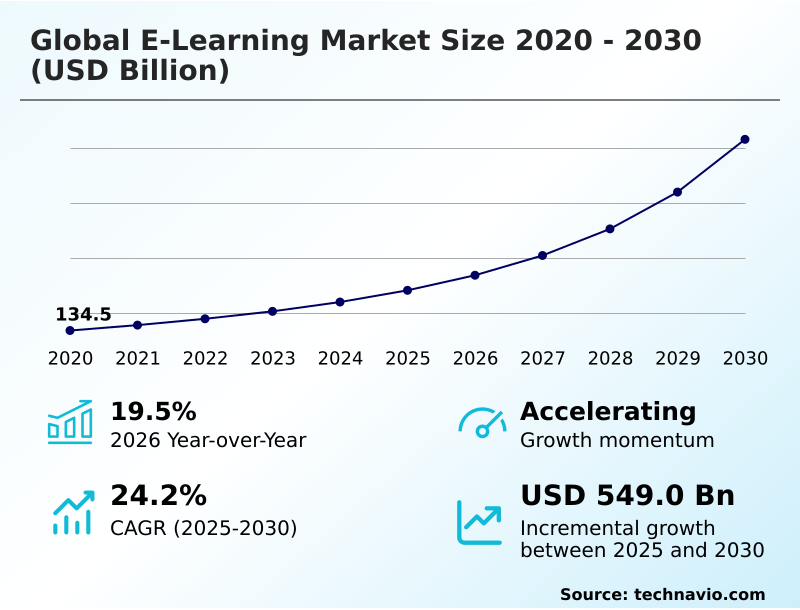
The e-learning market size is valued to increase by USD 549.00 billion, at a CAGR of 24.2% from 2025 to 2030. Enhanced learning outcomes through academic digital transformation will drive the e-learning market.
Major Market Trends & Insights
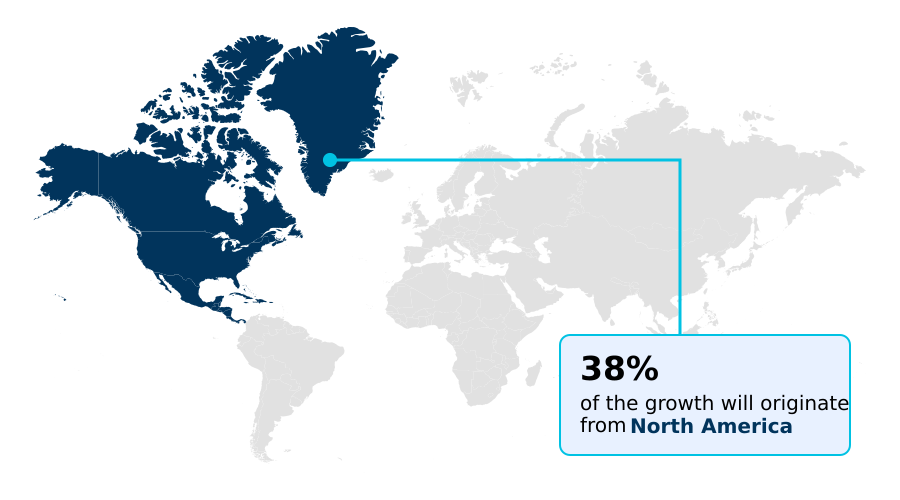
- North America dominated the market and accounted for a 37.8% growth during the forecast period.
- By End-user - Higher education segment was valued at USD 135.51 billion in 2024
- By Deployment - On-premises segment accounted for the largest market revenue share in 2024
Market Size & Forecast
- Market Opportunities: USD 695.16 billion
- Market Future Opportunities: USD 549.00 billion
- CAGR from 2025 to 2030 : 24.2%
Market Summary
- The e-learning market is undergoing significant evolution, driven by technological advancements and shifting educational paradigms. Key drivers include the demand for cost-effective, scalable training and the continuous enhancement of learning outcomes through digital transformation. The integration of AI-powered personalization and adaptive learning technology in cloud-based e-learning platforms allows for customized educational experiences that cater to individual learner needs.
- A prominent trend is the rise of microlearning modules, which provide short, focused content aligning with modern attention spans and the need for just-in-time knowledge. However, the market faces challenges from the growing adoption of open-source platforms and the expansion of in-house content development by institutions, which limits opportunities for commercial providers.
- For instance, a global manufacturing firm can leverage a learning management system (LMS) with simulation-based training modules for corporate compliance training, ensuring consistent skill development across its geographically dispersed workforce while tracking completion rates to meet regulatory requirements.
- The move toward digital credentialing and gamified learning further enhances engagement, making online course platforms essential tools for both higher education online programs and corporate workforce reskilling.
What will be the Size of the E-learning Market during the forecast period?
Get Key Insights on Market Forecast (PDF) Get Free Sample
How is the E-learning Market Segmented?
The e-learning industry research report provides comprehensive data (region-wise segment analysis), with forecasts and estimates in "USD million" for the period 2026-2030, as well as historical data from 2020-2024 for the following segments.
- End-user
- Higher education
- Corporate
- K-12
- Deployment
- On-premises
- Cloud
- Technology
- Online e-learning
- LMS
- Others
- Geography
- North America
- US
- Canada
- Mexico
- Europe
- Germany
- UK
- France
- APAC
- China
- Japan
- India
- South America
- Brazil
- Argentina
- Colombia
- Middle East and Africa
- Saudi Arabia
- UAE
- South Africa
- Rest of World (ROW)
- North America
By End-user Insights
The higher education segment is estimated to witness significant growth during the forecast period.
The higher education segment is at the forefront of digital transformation, rapidly adopting higher education technology to deliver higher education online programs. Institutions are implementing blended learning models and creating personalized learning paths by leveraging effective instructional design.
The market is shifting towards microlearning modules and verifiable digital credentialing to meet student and employer demands. This involves integrating online learning tools and digital assessment tools with core student information systems (sis).
The use of ai-powered personalization to curate content from the e-learning content library is now critical, with some universities reporting a 15% improvement in student engagement metrics after implementation, extending these principles to enhance k-12 digital curriculum.
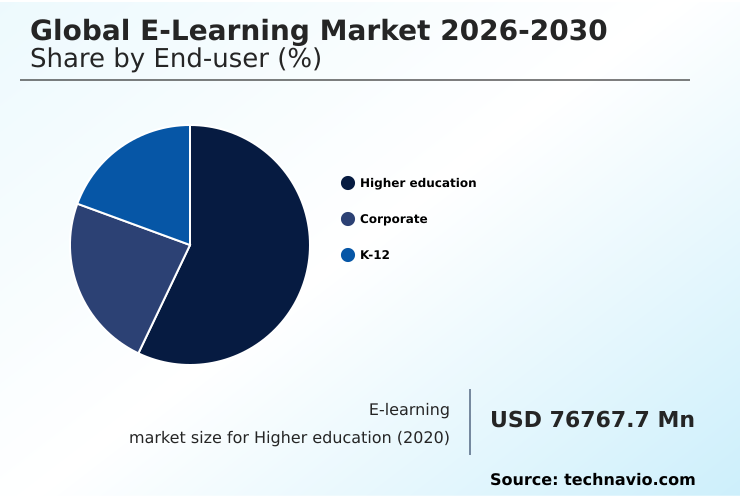
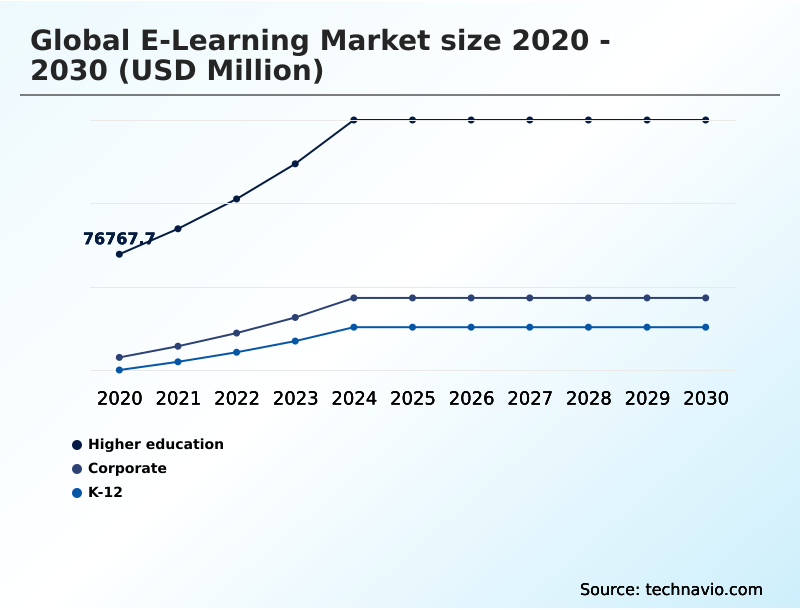
The Higher education segment was valued at USD 135.51 billion in 2024 and showed a gradual increase during the forecast period.
Regional Analysis
North America is estimated to contribute 37.8% to the growth of the global market during the forecast period.Technavio’s analysts have elaborately explained the regional trends and drivers that shape the market during the forecast period.
See How E-learning Market Demand is Rising in North America Get Free Sample
The geographic landscape is led by North America, which accounts for 37.8% of the market's incremental growth due to its mature infrastructure for cloud-based e-learning platforms and digital education solutions.
APAC is the fastest-growing region, driven by widespread adoption of mobile learning (m-learning) and remote learning platforms. In Europe, the focus is on quality and compliance, with strict e-learning accessibility standards.
Globally, online course platforms like Massive Open Online Courses (MOOCs) are democratizing education. The use of virtual classrooms and virtual training software is universal for both corporate and academic sectors.
The adoption of a Learning Experience Platform (LXP) is enhancing continuing professional development (cpd), while emerging technologies like augmented reality (ar) in education are creating new learning paradigms, especially within k-12 e-learning resources.
Market Dynamics
Our researchers analyzed the data with 2025 as the base year, along with the key drivers, trends, and challenges. A holistic analysis of drivers will help companies refine their marketing strategies to gain a competitive advantage.
- Strategic decisions in the e-learning market are increasingly influenced by granular needs, moving beyond broad platform adoption. Organizations are now asking how to create engaging e-learning content to maximize learner retention.
- The evaluation of the best e-learning platforms for small business focuses on scalability and affordability, while larger enterprises analyze the cost of implementing a learning management system and seek to integrating lms with human resources information system for streamlined operations. The benefits of gamification in corporate training are well-documented, with interactive approaches often yielding higher completion rates than traditional formats.
- For specific use cases, e-learning solutions for employee onboarding and microlearning for just-in-time employee training are becoming standard. The push for practical skills is evident in the adoption of virtual reality for hands-on skills training, particularly in technical fields. In academia, blended learning models in university settings are becoming the norm.
- The market is also addressing how to measuring roi of corporate e-learning programs and the challenges of implementing e-learning in k-12, such as digital equity. Security is a paramount concern, driving interest in how to securing e-learning platforms and learner data.
- The rise of adaptive learning platforms for personalized education and using ai for personalized feedback in e-learning marks a shift towards smarter, more effective educational ecosystems.
- Both commercial and open source learning management system comparison are common as institutions seek the best fit, alongside the need for robust solutions for e-learning for professional certification and compliance and tools for developing scorm compliant e-learning courses.
- Finally, platform accessibility is key, leading to searches for e-learning content authoring tools for mac to support diverse creator environments and developing effective mobile learning strategies for a remote workforce.
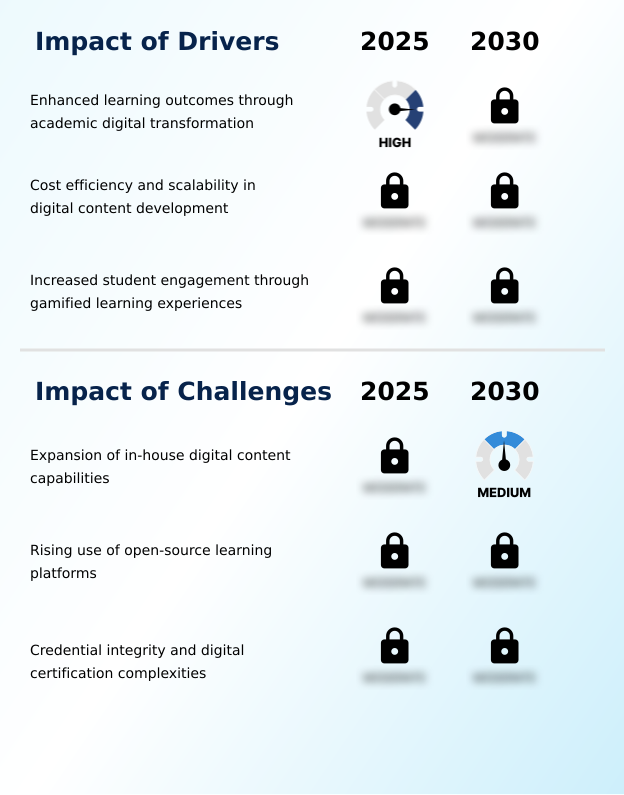
What are the key market drivers leading to the rise in the adoption of E-learning Industry?
- Enhanced learning outcomes achieved through academic digital transformation are a key driver propelling market growth.
- The primary driver is the urgent need for efficient workforce reskilling, addressed through e-learning for corporate training. Organizations using employee training software for corporate compliance training report a 50% reduction in associated administrative costs.
- The demand for flexible asynchronous learning options supports continuous upskilling through online certification programs and professional development courses. Effective digital content development and custom e-learning development allow companies to conduct detailed skills gap analysis and deploy targeted competency-based education.
- Furthermore, streamlined employee onboarding platforms are crucial for talent retention. These initiatives are managed through integrated enterprise learning management systems, which provide the backbone for scalable corporate education strategies and talent development, ensuring workforce readiness.
What are the market trends shaping the E-learning Industry?
- The expansion of microlearning as a preferred digital education format is emerging as a significant market trend. This approach delivers concise, targeted content modules to align with modern learner preferences for flexible, self-paced instruction.
- A key trend is the fusion of gamified learning with corporate education, where gamification in corporate training has been shown to boost completion rates by over 30%. The use of virtual reality (vr) training and simulation-based training for complex skills development is increasing, reducing on-the-job errors by up to 40%.
- Adaptive learning technology is being used to create highly personalized interactive learning content. Platforms are focusing on learner engagement metrics, tracked via learning analytics dashboards, and are integrating social learning features to foster collaborative social learning networks.
- The creation of this content is streamlined through advanced content authoring tools and a focus on blended instructional design, often incorporating popular video-based learning formats for maximum impact.
What challenges does the E-learning Industry face during its growth?
- The expansion of in-house digital content development capabilities by educational institutions presents a key challenge to market growth.
- A significant market challenge is the rise of Open Educational Resources (OER) and freely available Corporate MOOCs, which intensify price competition for commercial vendors. Ensuring content adheres to interoperability standards like SCORM and xAPI across different Learning Management Systems (LMS) adds complexity, while failing to meet e-learning accessibility standards can result in penalties.
- While synchronous learning platforms and online tutoring services offer real-time interaction, they present scalability challenges. The effectiveness of informal peer-to-peer learning is difficult to quantify with traditional assessment and analytics.
- Furthermore, specialized content, such as virtual science labs and language learning apps, requires significant investment, and optimizing for mobile-first learning adds another layer of development cost, with some providers seeing a 20% increase in production expenses.
Exclusive Technavio Analysis on Customer Landscape
The e-learning market forecasting report includes the adoption lifecycle of the market, covering from the innovator’s stage to the laggard’s stage. It focuses on adoption rates in different regions based on penetration. Furthermore, the e-learning market report also includes key purchase criteria and drivers of price sensitivity to help companies evaluate and develop their market growth analysis strategies.
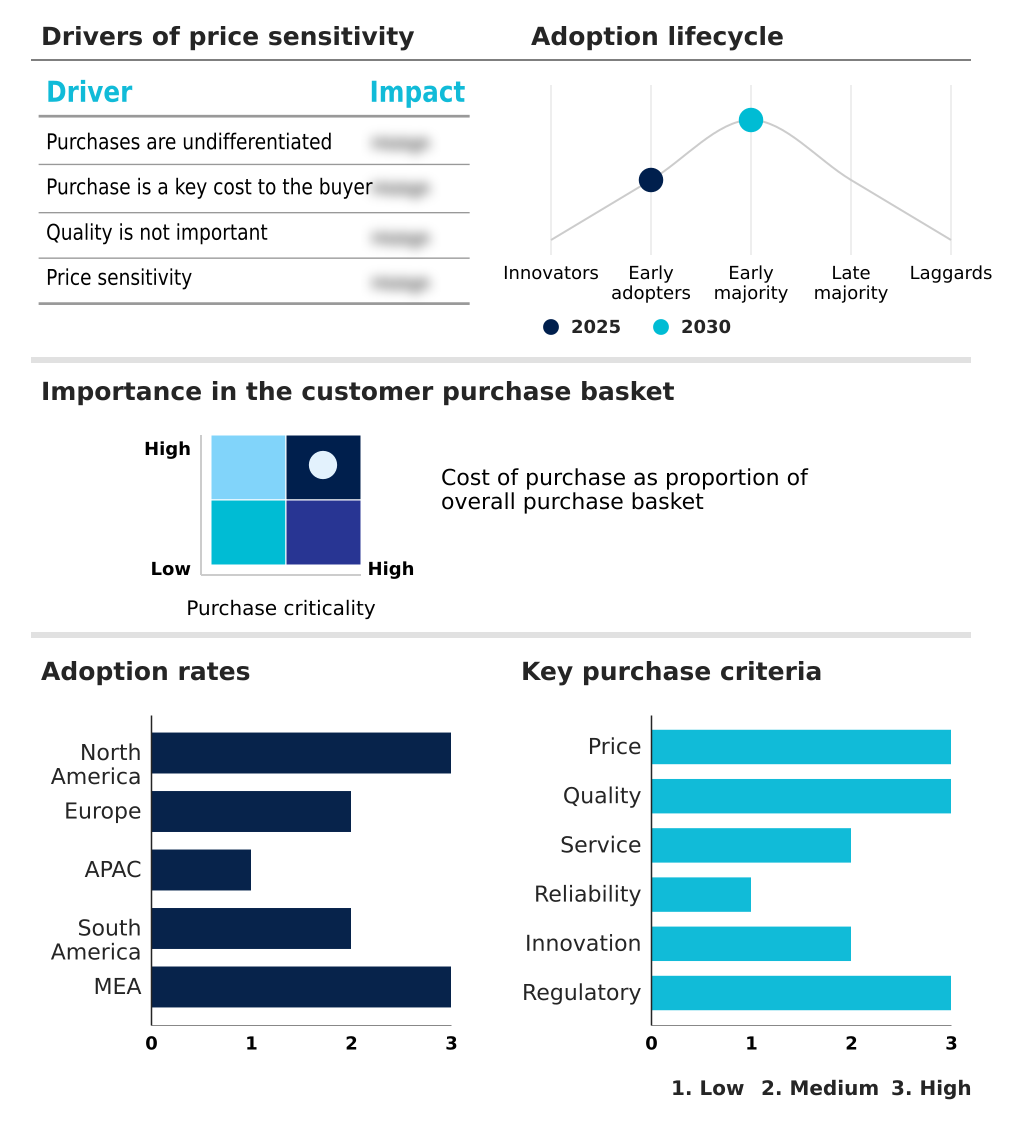
Customer Landscape of E-learning Industry
Competitive Landscape
Companies are implementing various strategies, such as strategic alliances, e-learning market forecast, partnerships, mergers and acquisitions, geographical expansion, and product/service launches, to enhance their presence in the industry.
2U Inc. - Key offerings facilitate the online delivery of degree and alternative credential programs by providing technology and services to non-profit colleges and universities.
The industry research and growth report includes detailed analyses of the competitive landscape of the market and information about key companies, including:
- 2U Inc.
- Aptara Inc.
- Berlitz Corp.
- Chegg Inc.
- Cornerstone OnDemand Inc.
- Coursera Inc.
- D2L Corp.
- Docebo Inc.
- Google LLC
- Instructure Holdings Inc.
- Microsoft Corp.
- Pearson Plc
- Pluralsight LLC
- Sanako
- SAP SE
- Skillsoft Corp.
- Udacity Inc.
- Udemy Inc.
Qualitative and quantitative analysis of companies has been conducted to help clients understand the wider business environment as well as the strengths and weaknesses of key industry players. Data is qualitatively analyzed to categorize companies as pure play, category-focused, industry-focused, and diversified; it is quantitatively analyzed to categorize companies as dominant, leading, strong, tentative, and weak.
Recent Development and News in E-learning market
- In August 2024, Accenture and Google Cloud expanded their strategic alliance to accelerate enterprise AI adoption, helping clients scale generative AI projects and strengthen cybersecurity protections.
- In December 2024, Coursera announced a significant expansion of its generative AI catalog, adding over 450 new courses during the year to meet strong global learner demand for AI-related skills.
- In March 2025, the European Union-funded Future4Alliances project was launched to support the development and structuring of European Universities alliances, aiming to create favorable legislative and technical environments for joint educational programs.
- In May 2025, the World Economic Forum emphasized that AI literacy is crucial for strategic transformation, highlighting the need for individuals and organizations to acquire skills for responsible and transparent AI use.
Dive into Technavio’s robust research methodology, blending expert interviews, extensive data synthesis, and validated models for unparalleled E-learning Market insights. See full methodology.
| Market Scope | |
|---|---|
| Page number | 290 |
| Base year | 2025 |
| Historic period | 2020-2024 |
| Forecast period | 2026-2030 |
| Growth momentum & CAGR | Accelerate at a CAGR of 24.2% |
| Market growth 2026-2030 | USD 549004.4 million |
| Market structure | Fragmented |
| YoY growth 2025-2026(%) | 19.5% |
| Key countries | US, Canada, Mexico, Germany, UK, France, Italy, Spain, The Netherlands, China, Japan, India, South Korea, Australia, Indonesia, Brazil, Argentina, Colombia, Saudi Arabia, UAE, South Africa, Israel and Turkey |
| Competitive landscape | Leading Companies, Market Positioning of Companies, Competitive Strategies, and Industry Risks |
Research Analyst Overview
- The e-learning market is defined by its continuous evolution, moving beyond simple content delivery to integrated ecosystems. The adoption of Learning Management Systems (LMS) and Learning Experience Platform (LXP) is now standard for both corporate compliance training and higher education online programs.
- A key trend influencing boardroom decisions is the strategic use of assessment and analytics to measure the impact of training on business goals, with some firms reporting a 15% increase in team performance after implementing targeted workforce reskilling programs. This data-driven approach is enabled by AI-powered personalization and adaptive learning technology.
- The content landscape is shifting towards microlearning modules and gamified learning to improve engagement. Technologies like Virtual Reality (VR) training and Augmented Reality (AR) in education are creating immersive experiences. The market relies on standards like SCORM and xAPI for interoperability.
- The development of K-12 digital curriculum and Massive Open Online Courses (MOOCs) is expanding access, while cloud-based e-learning platforms provide scalability. From instructional design using content authoring tools to ensuring digital credentialing integrity, the focus is on creating effective, measurable learning outcomes through both synchronous learning in virtual classrooms and flexible asynchronous learning.
- This ecosystem also leverages Open Educational Resources (OER) and social learning features to build comprehensive learning communities and address skills gap analysis.
What are the Key Data Covered in this E-learning Market Research and Growth Report?
-
What is the expected growth of the E-learning Market between 2026 and 2030?
-
USD 549.00 billion, at a CAGR of 24.2%
-
-
What segmentation does the market report cover?
-
The report is segmented by End-user (Higher education, Corporate, and K-12), Deployment (On-premises, and Cloud), Technology (Online e-learning, LMS, and Others) and Geography (North America, Europe, APAC, South America, Middle East and Africa)
-
-
Which regions are analyzed in the report?
-
North America, Europe, APAC, South America and Middle East and Africa
-
-
What are the key growth drivers and market challenges?
-
Enhanced learning outcomes through academic digital transformation, Expansion of in-house digital content capabilities
-
-
Who are the major players in the E-learning Market?
-
2U Inc., Aptara Inc., Berlitz Corp., Chegg Inc., Cornerstone OnDemand Inc., Coursera Inc., D2L Corp., Docebo Inc., Google LLC, Instructure Holdings Inc., Microsoft Corp., Pearson Plc, Pluralsight LLC, Sanako, SAP SE, Skillsoft Corp., Udacity Inc. and Udemy Inc.
-
Market Research Insights
- The market's dynamics are shaped by a rising demand for flexible and efficient training, with organizations increasingly adopting digital education solutions. The use of e-learning for corporate training has been shown to improve employee engagement by up to 18% compared to traditional methods.
- Enterprise learning management systems now offer personalized learning paths, leading to a 25% faster completion rate for mandatory compliance courses. The shift toward remote learning platforms is supported by a growing preference for video-based learning and mobile-first learning formats.
- Furthermore, the integration of digital assessment tools and learning analytics dashboards enables institutions to track performance effectively, with some reporting a 15% improvement in identifying at-risk students. This data-driven approach allows for continuous refinement of interactive learning content, ensuring higher returns on educational investments across both academic and corporate sectors.
We can help! Our analysts can customize this e-learning market research report to meet your requirements.
 RIA -
RIA - 
