


APAC Logistics Market Size 2026-2030
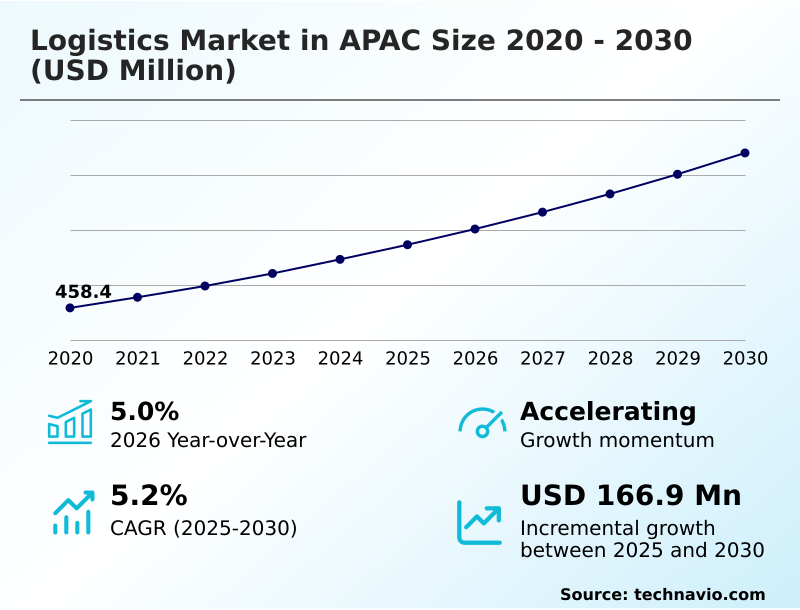
The apac logistics market size is valued to increase by USD 166.9 million, at a CAGR of 5.2% from 2025 to 2030. Rapid growth in e-commerce industry will drive the apac logistics market.
Major Market Trends & Insights
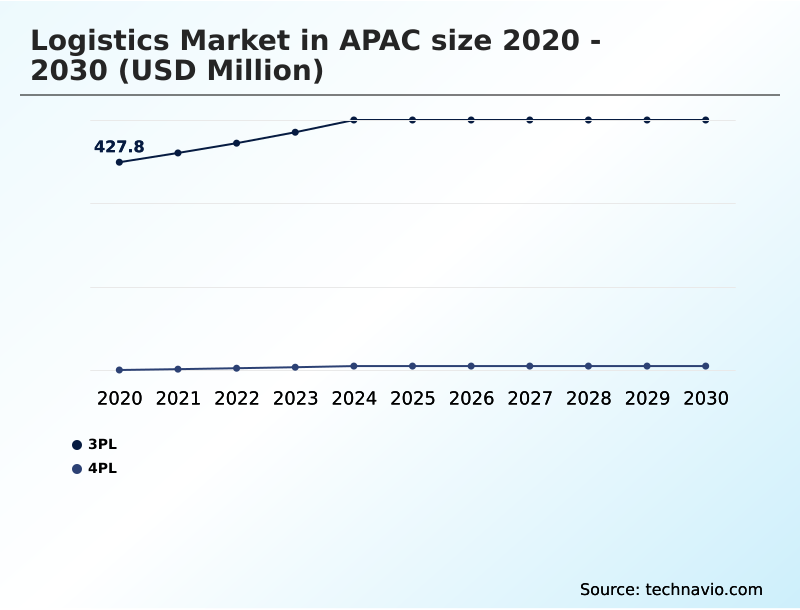
- By Type - 3PL segment was valued at USD 508.5 million in 2024
- By End-user - Manufacturing segment accounted for the largest market revenue share in 2024
Market Size & Forecast
- Market Opportunities: USD 281.7 million
- Market Future Opportunities: USD 166.9 million
- CAGR from 2025 to 2030 : 5.2%
Market Summary
- The logistics market in APAC is undergoing a significant transformation, driven by the convergence of rapid e-commerce growth and the imperative for supply chain resilience. The expansion of digital retail channels necessitates advanced omnichannel fulfillment capabilities and highly efficient last-mile delivery networks. In response, firms are increasingly adopting third-party logistics (3pl) and fourth-party logistics (4pl) models to manage complexity.
- A key business scenario involves a manufacturer leveraging a lead logistics provider (llp) to orchestrate its end-to-end supply chain, from inventory management at smart warehousing facilities to coordinating multimodal transport for international distribution. This approach relies on supply chain digitization for real-time cargo tracking and predictive analytics in logistics. However, operational efficiency is often constrained by inconsistent logistics infrastructure.
- The push toward green logistics and a sustainable supply chain adds another layer of complexity, requiring investments in cleaner technologies and optimized operations to remain competitive in this dynamic environment.
What will be the Size of the APAC Logistics Market during the forecast period?
Get Key Insights on Market Forecast (PDF) Request Free Sample
How is the APAC Logistics Market Segmented?
The apac logistics industry research report provides comprehensive data (region-wise segment analysis), with forecasts and estimates in "USD million" for the period 2026-2030, as well as historical data from 2020-2024 for the following segments.
- Type
- 3PL
- 4PL
- End-user
- Manufacturing
- Automotive
- Food and beverage
- Others
- Mode of transportation
- Airways
- Waterways
- Railways
- Roadways
- Geography
- APAC
- China
- India
- Japan
- APAC
By Type Insights
The 3pl segment is estimated to witness significant growth during the forecast period.
The third-party logistics (3PL) segment is pivotal, driven by demand for outsourced supply chain functions. A modern logistics service provider now acts as a technology partner, moving beyond basic contract logistics to deliver a cohesive end-to-end supply chain solution.
This evolution is crucial for omnichannel fulfillment and managing complex e-commerce fulfillment services. Providers are investing heavily in automated sorting systems and advanced software for comprehensive supply chain orchestration, enabling effective logistics cost optimization.
Handling reverse logistics efficiently has also become a key differentiator. The integration of data analytics allows for real-time visibility, with some firms achieving a 15% reduction in delivery times through better operational control.
This shift positions third-party logistics (3pl) as essential for navigating market complexities.
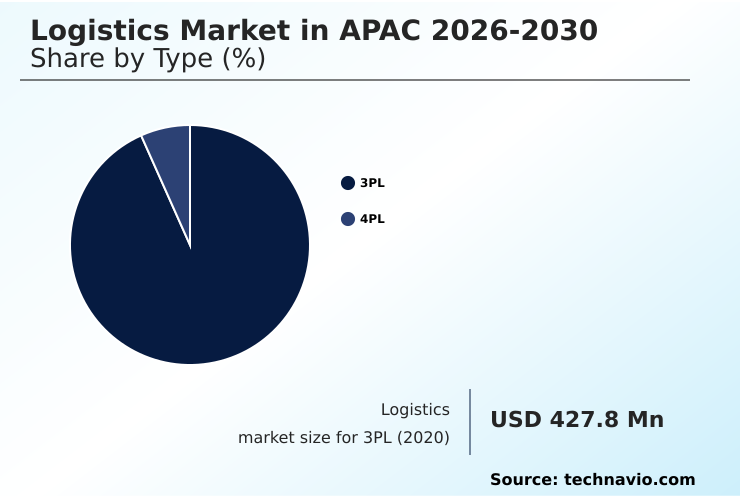
The 3PL segment was valued at USD 508.5 million in 2024 and showed a gradual increase during the forecast period.
Market Dynamics
Our researchers analyzed the data with 2025 as the base year, along with the key drivers, trends, and challenges. A holistic analysis of drivers will help companies refine their marketing strategies to gain a competitive advantage.
- Achieving a competitive edge in the current market requires a deep understanding of strategic models and operational technologies. The debate over 3pl vs 4pl logistics models for scalability is central to this, as businesses evaluate whether to outsource execution or strategic oversight.
- For high-value sectors, optimizing cold chain logistics for pharmaceuticals is a critical concern, where maintaining temperature integrity across the supply chain is non-negotiable. Concurrently, the impact of poor road infrastructure on logistics costs remains a persistent challenge, often negating the efficiency gains from internal optimizations and increasing transit times by up to 30% in certain corridors.
- To counteract such external pressures, companies are analyzing the warehouse automation ROI in e-commerce fulfillment. Investments in robotics and automated systems are proving essential for managing high-volume, small-parcel environments. Furthermore, streamlining cross-border customs brokerage process automation is becoming a key focus area. Digitizing documentation and compliance checks significantly reduces delays, creating a more fluid and predictable global supply chain.
- These distinct but interconnected factors shape the modern logistics landscape.
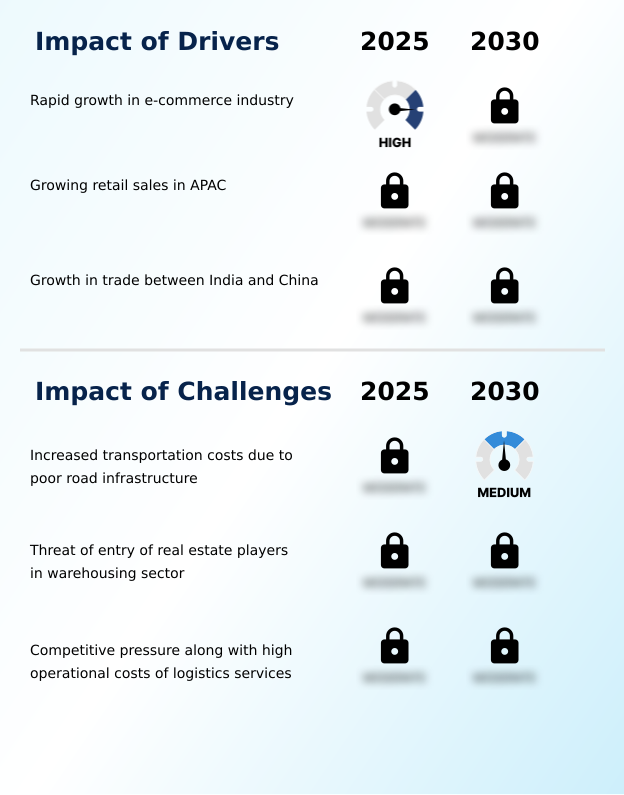
What are the key market drivers leading to the rise in the adoption of APAC Logistics Industry?
- The rapid expansion of the e-commerce industry is a fundamental driver for the market, fueling demand for scalable, technology-enabled, and efficient logistics services.
- Market momentum is significantly influenced by expanding trade, which boosts demand for integrated freight forwarding and container shipping services. Efficient multimodal transport options, combining air cargo services and ocean freight solutions, are critical for managing a sustainable supply chain.
- The adoption of green logistics practices is also becoming a key driver, with some operators reducing fleet emissions by up to 10%.
- Effective inventory management is powered by transportation management system (tms) platforms that provide real-time cargo tracking across all transit stages.
- This growing reliance on integrated and eco-conscious solutions is essential for firms looking to support expanding retail and manufacturing sectors while meeting higher consumer expectations for speed and reliability.
What are the market trends shaping the APAC Logistics Industry?
- The exponential growth of e-commerce is a primary market trend, leading to a substantial increase in parcel volumes across logistics networks. This surge drives demand for greater capacity and efficiency in fulfillment and last-mile delivery.
- The acceleration of supply chain digitization is reshaping the market, with a focus on achieving complete supply chain visibility. The rise of cross-border e-commerce amplifies the need for efficient parcel delivery services and sophisticated last-mile delivery networks, especially in dense urban logistics environments.
- Companies are implementing smart warehousing concepts and a digital control tower to manage operations, with some achieving an 18% improvement in forecast accuracy by leveraging predictive analytics in logistics. The adoption of autonomous delivery vehicles is also being explored to enhance efficiency.
- These trends underscore a shift toward data-driven, transparent, and highly responsive logistics models, where real-time tracking improves on-time delivery rates by over 25%.
What challenges does the APAC Logistics Industry face during its growth?
- Increased transportation costs stemming from inadequate road infrastructure present a significant challenge to the operational efficiency and profitability of regional logistics providers.
- Navigating market challenges requires a focus on supply chain resilience and advanced supply chain risk management. Deficiencies in logistics infrastructure, particularly the road freight network, can increase operational costs by over 20% in some areas, complicating route optimization. To counter this, firms are turning to fourth-party logistics (4pl) models, where a lead logistics provider (llp) manages the entire ecosystem.
- Investment in warehouse automation and modern warehouse management system (wms) platforms is essential for efficiency. However, the high capital outlay and the need to connect disparate intermodal terminals create significant barriers. These structural issues, combined with intense competition, force providers to innovate continuously to maintain profitability.
Exclusive Technavio Analysis on Customer Landscape
The apac logistics market forecasting report includes the adoption lifecycle of the market, covering from the innovator’s stage to the laggard’s stage. It focuses on adoption rates in different regions based on penetration. Furthermore, the apac logistics market report also includes key purchase criteria and drivers of price sensitivity to help companies evaluate and develop their market growth analysis strategies.
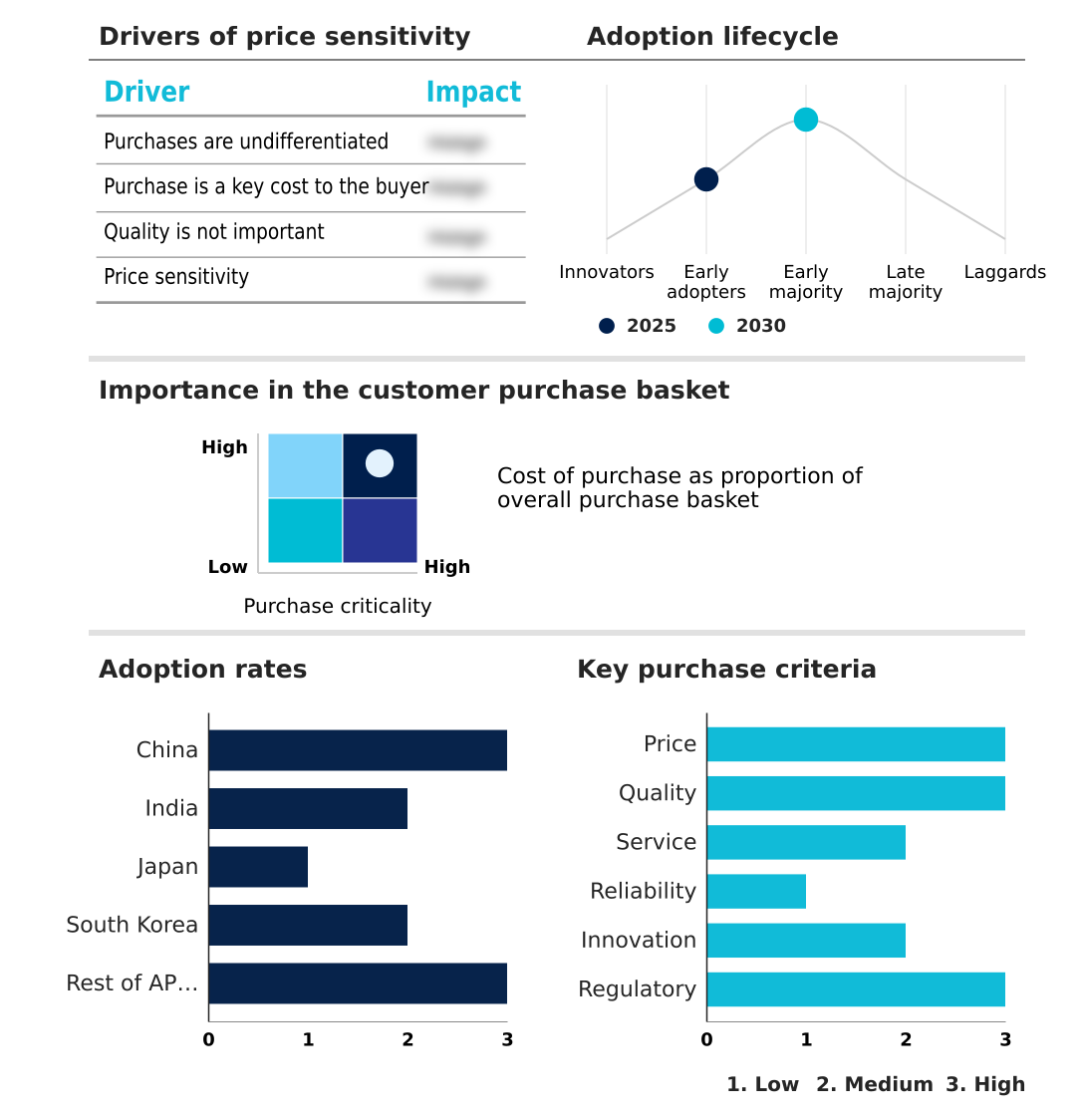
Customer Landscape of APAC Logistics Industry
Competitive Landscape
Companies are implementing various strategies, such as strategic alliances, apac logistics market forecast, partnerships, mergers and acquisitions, geographical expansion, and product/service launches, to enhance their presence in the industry.
APL Logistics Ltd. - Offers integrated logistics solutions, including end-to-end supply chain management, transportation, warehousing, distribution, and fulfillment services across diverse industrial sectors.
The industry research and growth report includes detailed analyses of the competitive landscape of the market and information about key companies, including:
- APL Logistics Ltd.
- C H Robinson Worldwide Inc.
- CJ Logistics Corp.
- CMA CGM Group
- Delhivery Ltd.
- Deutsche Post AG
- DSV AS
- FedEx Corp.
- GEODIS
- Hellmann Worldwide Logistics
- Japan Post Holdings Co. Ltd.
- Kuehne Nagel Management AG
- Nippon Express Holdings Inc.
- Nippon Yusen Kabushiki Kaisha
- Schenker AG
- SF Express Co. Ltd.
- Sinotrans Ltd.
- United Parcel Service Inc.
- XPO Inc.
- Yusen Logistics Co. Ltd.
Qualitative and quantitative analysis of companies has been conducted to help clients understand the wider business environment as well as the strengths and weaknesses of key industry players. Data is qualitatively analyzed to categorize companies as pure play, category-focused, industry-focused, and diversified; it is quantitatively analyzed to categorize companies as dominant, leading, strong, tentative, and weak.
Recent Development and News in Apac logistics market
- In May 2025, DP World initiated a substantial $2.5 billion investment program aimed at modernizing port infrastructure, including a new $510 million mega-terminal at Tuna Tekra in India, designed to enhance connectivity.
- In March 2025, Jayud Global Logistics launched an exclusive chartered air cargo service between Fuzhou and Jakarta to facilitate the transport of lithium batteries for the electric vehicle industry in Southeast Asia.
- In February 2025, Yusen Logistics became the first logistics firm in Asia to sign a major agreement with Ocean Network Express to utilize biofuel-powered ocean freight, aiming to reduce Scope 3 greenhouse gas emissions.
- In January 2025, Delhivery Ltd. expanded its technological portfolio by launching a specialized sub-two-hour delivery service aimed at direct-to-consumer brands in major Indian metropolitan areas.
Dive into Technavio’s robust research methodology, blending expert interviews, extensive data synthesis, and validated models for unparalleled APAC Logistics Market insights. See full methodology.
| Market Scope | |
|---|---|
| Page number | 214 |
| Base year | 2025 |
| Historic period | 2020-2024 |
| Forecast period | 2026-2030 |
| Growth momentum & CAGR | Accelerate at a CAGR of 5.2% |
| Market growth 2026-2030 | USD 166.9 million |
| Market structure | Fragmented |
| YoY growth 2025-2026(%) | 5.0% |
| Key countries | China, India, Japan, South Korea and Rest of APAC |
| Competitive landscape | Leading Companies, Market Positioning of Companies, Competitive Strategies, and Industry Risks |
Research Analyst Overview
- The logistics market in APAC is characterized by a strategic shift toward technology-driven supply chain orchestration. The integration of warehouse automation and automated sorting systems is no longer a niche advantage but a fundamental requirement for handling the sheer volume of cross-border e-commerce.
- A critical trend influencing boardroom strategy is the adoption of green logistics, which directly impacts ESG commitments and investment attractiveness. Companies are moving beyond basic freight forwarding to implement sophisticated route optimization algorithms, with some achieving a 15% reduction in delivery times. This focus on efficiency is vital for maintaining supply chain resilience.
- The market's evolution is defined by the interplay between multimodal transport networks and digital platforms that enable complete supply chain visibility. Firms that successfully leverage third-party logistics (3pl) and smart warehousing while managing reverse logistics effectively are best positioned for sustained performance. Advanced inventory management and customs brokerage are also critical components of this integrated ecosystem.
What are the Key Data Covered in this APAC Logistics Market Research and Growth Report?
-
What is the expected growth of the APAC Logistics Market between 2026 and 2030?
-
USD 166.9 million, at a CAGR of 5.2%
-
-
What segmentation does the market report cover?
-
The report is segmented by Type (3PL, and 4PL), End-user (Manufacturing, Automotive, Food and beverage, and Others), Mode of Transportation (Airways, Waterways, Railways, and Roadways) and Geography (APAC)
-
-
Which regions are analyzed in the report?
-
APAC
-
-
What are the key growth drivers and market challenges?
-
Rapid growth in e-commerce industry, Increased transportation costs due to poor road infrastructure
-
-
Who are the major players in the APAC Logistics Market?
-
APL Logistics Ltd., C H Robinson Worldwide Inc., CJ Logistics Corp., CMA CGM Group, Delhivery Ltd., Deutsche Post AG, DSV AS, FedEx Corp., GEODIS, Hellmann Worldwide Logistics, Japan Post Holdings Co. Ltd., Kuehne Nagel Management AG, Nippon Express Holdings Inc., Nippon Yusen Kabushiki Kaisha, Schenker AG, SF Express Co. Ltd., Sinotrans Ltd., United Parcel Service Inc., XPO Inc. and Yusen Logistics Co. Ltd.
-
Market Research Insights
- The market is defined by a push for greater efficiency through supply chain digitization and integrated service offerings. Providers are delivering end-to-end supply chain solutions to optimize logistics cost optimization, with some firms reducing operational expenses by 12% through better supply chain risk management.
- The demand for specialized e-commerce fulfillment services is driving investment in automation, leading to a 25% increase in sorting accuracy. As part of a sustainable supply chain strategy, companies are also adopting cleaner transport methods.
- This shift towards technology-driven, comprehensive contract logistics and a focus on urban logistics highlights a move from traditional transportation to highly orchestrated, data-centric operations designed to meet complex modern demands.
We can help! Our analysts can customize this apac logistics market research report to meet your requirements.
 RIA -
RIA - 
