


Polyisocyanates Market Analysis APAC, North America, Europe, Middle East and Africa, South America - China, US, Germany, India, UK - Size and Forecast 2024-2028

Polyisocyanates Market Analysis APAC, North America, Europe, Middle East and Africa, South America - China, US, Germany, India, UK - Size and Forecast 2024-2028

Published: Aug 2024 205 Pages SKU: IRTNTR80059

Market Overview at a Glance

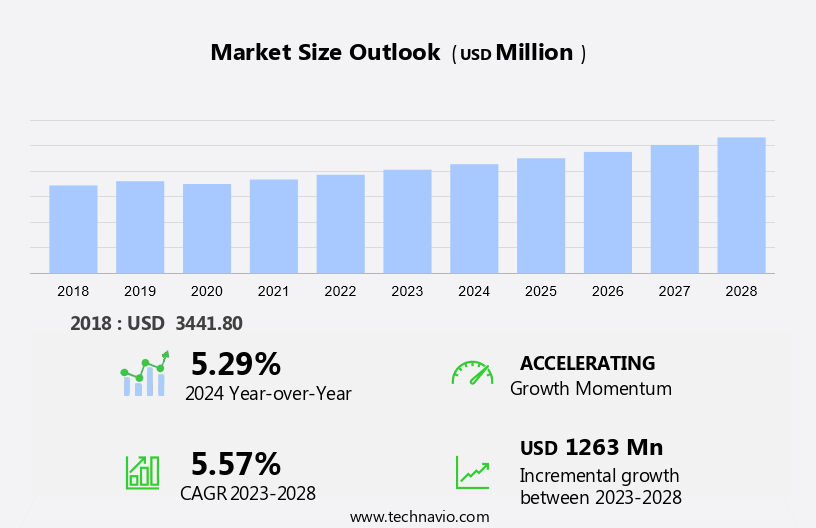
$1.26 B
Market Opportunity
5.57%
CAGR
5.29
YoY growth 2023-2024(%)

Polyisocyanates Market Size 2024-2028 

The polyisocyanates market size is forecast to increase by USD 1.26 billion at a CAGR of 5.57% between 2023 and 2028. The market is experiencing significant growth due to the expanding construction industry and the increasing demand for sustainable solutions. One trend driving market growth is the adoption of bio-based polyisocyanates, which offer improved sustainability and reduced environmental impact. However, fluctuations in the prices of raw materials, particularly aromatic diisocyanates, pose a challenge to market growth. Rigid and flexible foams remain the primary applications for polyisocyanates, with pipeline construction also presenting opportunities for market expansion. Strategic activities, such as mergers and acquisitions, and regulatory actions are shaping the competitive landscape. Understanding these trends and challenges is crucial for businesses looking to capitalize on the growth potential of the market. However, the market faces challenges due to the fluctuations in raw material prices, particularly those of toluene diisocyanate (TDI) and methylene diphenyl diisocyanate (MDI), which are key raw materials for polyisocyanates production.

What will be the Size of the Market During the Forecast Period?
Polyisocyanates Market Size

 Request Free Sample

The market encompasses the production and distribution of isocyanates, a crucial chemical intermediate used in the manufacturing of various polyurethane products. This market holds significant importance in industries such as adhesives, coatings, automotive, construction, and insulation materials. Isocyanates, specifically toluene diisocyanate (TDI) and polymeric MDI, serve as the foundation for producing polyurethane products. These include adhesives, coatings, automotive interiors and seats, insulation materials, sealants, and various types of foams, such as rigid and flexible. In the automotive sector, polyisocyanates contribute to the production of lightweight and durable components, including cushions and seats, which are essential for weight reduction and improved fuel efficiency.

Furthermore, in the construction industry, polyisocyanates are used in the manufacturing of insulation materials, contributing to energy efficiency and thermal insulation. The market faces various challenges, including health and safety concerns related to the production and handling of phosgene, a byproduct of isocyanate manufacturing. OSHA (Occupational Safety and Health Administration) has set strict regulations to minimize exposure to phosgene and ensure a safe working environment. Crude oil prices and capacity reductions can significantly impact the market. High crude oil prices increase the cost of raw materials, leading to increased production costs. Additionally, capacity reductions due to plant shutdowns or maintenance can lead to supply shortages and price fluctuations.

Market Segmentation

The market research report provides comprehensive data (region-wise segment analysis), with forecasts and estimates in "USD billion" for the period 2024-2028, as well as historical data from 2018-2022 for the following segments.

  • Type
    • Aliphatic
    • Aromatic
  • Application
    • Coating
    • Foam
    • Adhesive
  • Geography
    • APAC
      • China
      • India
    • North America
      • US
    • Europe
      • Germany
      • UK
    • Middle East and Africa
    • South America

By Type Insights

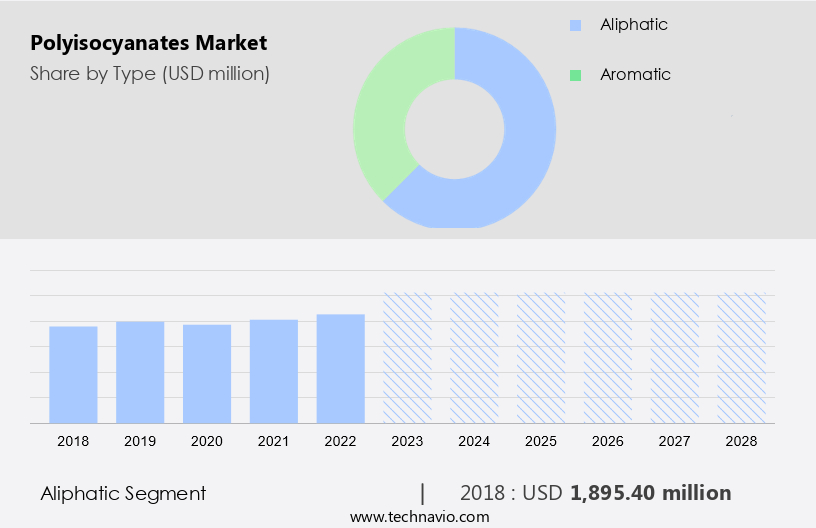
The aliphatic segment is estimated to witness significant growth during the forecast period. Polyisocyanates are essential compounds utilized in the manufacturing process of various products, including paints, rigid foam, and flexible foam. In the realm of polyurethane (PU) production, polyisocyanates serve as crucial building blocks. These compounds are employed in creating PU coatings, sealants, adhesives, and elastomers. Furthermore, they find applications in textile treatment and finishing formulations. The expansion of the aliphatic segment within the market can be linked to the escalating demand for coatings across numerous industries, such as automotive, construction, and manufacturing. Aliphatic polyisocyanates offer remarkable durability, chemical resistance, and resistance to weather conditions, making them highly sought-after for safeguarding surfaces in challenging environments.

Furthermore, in coatings applications, aliphatic polyisocyanates outperform their aromatic counterparts due to their superior performance in varying weather conditions. As a result, their utilization is increasingly popular in industries where durability and resistance to harsh conditions are vital.
Polyisocyanates Market Size

Get a glance at the market share of various segments Request Free Sample

The aliphatic segment accounted for USD 1.89 billion in 2018 and showed a gradual increase during the forecast period.

Regional Insights

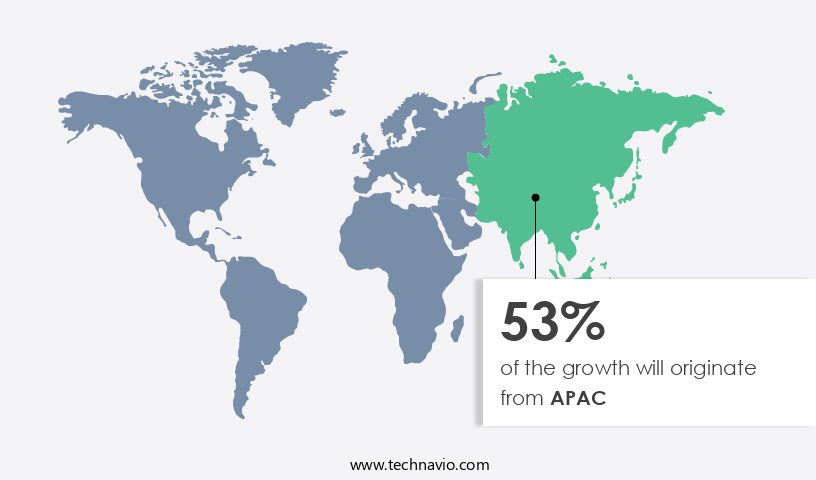
APAC is estimated to contribute 53% to the growth of the global market during the forecast period. Technavio's analysts have elaborately explained the regional trends and drivers that shape the market during the forecast period.
Polyisocyanates Market Share by Geography

For more insights on the market share of various regions Request Free Sample

The market is experiencing substantial growth in the North American region due to expanding industries, particularly in China, Malaysia, Indonesia, Vietnam, Japan, South Korea, and India. This growth can be attributed to the rapid industrialization and construction sector development in these countries. The demand for polyisocyanates is primarily driven by the increasing usage of foam as an insulation material, which is backed by government initiatives. Additionally, many companies have relocated their production facilities to this region to take advantage of reduced production costs. As a result, the demand for polyisocyanates is expected to continue growing in the region, particularly in the coatings market and for the production of Polyurethane foam in various applications such as insulation for residential and commercial buildings, and Rigid PU foam for insulation in Zero-energy buildings. This trend is expected to continue as the market for insulation and energy-efficient construction gains momentum.

Our researchers analyzed the data with 2023 as the base year, along with the key drivers, trends, and challenges. A holistic analysis of drivers will help companies refine their marketing strategies to gain a competitive advantage.

Market Driver

Growth in the construction industry is the key driver of the market. Polyisocyanates serve a significant function in the manufacture of polyurethane foam, a multifunctional material extensively utilized in the building sector. This foam offers exceptional thermal insulation capabilities, making it a preferred choice for various construction applications, such as insulation panels, roofing systems, and spray foam insulation. With the growing trend of energy efficiency and increasing urbanization in emerging economies, the need for insulation materials, including polyurethane foam, is experiencing a rise. Authorities worldwide are investing in energy-efficient structures, with the US Department of Energy (DOE) recently announcing program guidelines and inviting states and territories to apply for USD400 million in funding to implement energy codes.

Moreover, the demand for polyisocyanates extends beyond construction, with applications in various industries, including furniture, Footwear, electronics, and shared mobility. For instance, in the furniture industry, these materials are used to produce foam cushions and upholstery. In the footwear industry, they are applied as adhesives and coatings. In the electronics sector, they are used in the production of high-performance materials. Lastly, in the shared mobility and Electric vehicles sectors, polyisocyanates are utilized to manufacture lightweight and insulating components. As the market for greenhouse gas-neutral isocyanates continues to expand, companies are focusing on developing sustainable production methods. This trend is expected to drive the growth of the market in the coming years.

Market Trends

Increasing demand for bio-based polyisocyanates is the upcoming trend in the market. The market is witnessing an upward trend due to the rising demand for corrosion protection solutions derived from this chemical compound. Bio-based polyisocyanates, a segment of this market, are gaining popularity due to their eco-friendly attributes. These polyisocyanates are produced using renewable feedstocks, such as vegetable oils, soybeans, corn, and biomass sources, including algae and lignocellulosic materials. The shift towards bio-based polyisocyanates is influenced by increasing environmental concerns, sustainability initiatives, and regulatory pressures to decrease carbon emissions and reliance on non-renewable resources. Bio-based polyisocyanates provide several benefits over their petrochemical counterparts. They have a reduced environmental impact, as they contribute less to greenhouse gas emissions and decrease the dependence on finite fossil resources.

Moreover, bio-based polyisocyanates offer comparable or even superior performance characteristics, including enhanced thermal stability, flame retardancy, and biodegradability. As a professional assistant, it is essential to maintain a formal and knowledgeable tone when discussing market trends. The market is an emerging area of interest due to its potential to address environmental concerns and offer competitive performance characteristics. This trend is expected to continue as more companies adopt sustainable business practices and regulatory bodies encourage the use of renewable resources.

Market Challenge

Fluctuations in raw material prices of polyisocyanates is a key challenge affecting the market growth. The market is impacted by the volatility in the pricing of crude oil and natural gas, which serve as the primary feedstocks for producing essential raw materials such as propylene and benzene. The production of polyisocyanates relies heavily on these petroleum-based materials.

Furthermore, fluctuations in their prices directly influence the cost structure and profitability of manufacturers. The price instability of these raw materials poses a significant challenge for the industry, as it can impact production costs and profit margins. Specialty chemicals, including polyisocyanates, are manufactured using polymers, resins, and additives as primary ingredients. The cost of these raw materials is contingent upon the price of crude oil.

Exclusive Customer Landscape

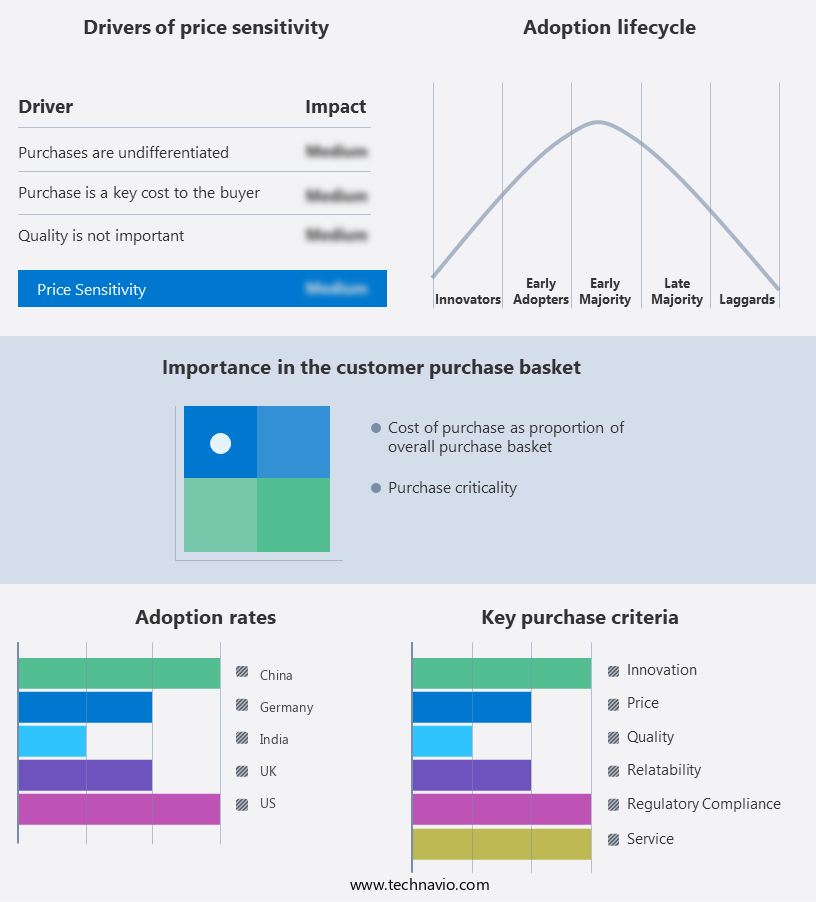
The market forecasting report includes the adoption lifecycle of the market, covering from the innovator's stage to the laggard's stage. It focuses on adoption rates in different regions based on penetration. Furthermore, the report also includes key purchase criteria and drivers of price sensitivity to help companies evaluate and develop their market growth analysis strategies.
Polyisocyanates Market Share by Geography

 Customer Landscape

Key Companies & Market Insights

Companies are implementing various strategies, such as strategic alliances, partnerships, mergers and acquisitions, geographical expansion, and product/service launches, to enhance their presence in the market.

BASF SE - The company offers Polylisocyanates such as Isocyanates and Polyols, which can be used as tough automotive coatings, dampening pads, elastomers, shoe soles, sealants, binders or cables.

The market research and growth report includes detailed analyses of the competitive landscape of the market and information about key companies, including:

  • Anhui Sinograce Chemical Co. Ltd.
  • Asahi Kasei Corp.
  • BASF SE
  • Bogao Synthetic Material Co. Ltd.
  • BorsodChem
  • China National Bluestar (Group) Co.Ltd.
  • Covestro AG
  • DIC Corp.
  • Dow Inc.
  • Doxu Group
  • Evonik Industries AG
  • Huntsman Corp.
  • JIAHUA CHEMICALS INC.
  • Merck KGaA
  • Mitsui Chemicals Inc.
  • N Shashikant and Co.
  • Shandong INOV Polyurethane Co. Ltd.
  • Super Urecoat Industries
  • Tosoh Corp.
  • Vencorex

Qualitative and quantitative analysis of companies has been conducted to help clients understand the wider business environment as well as the strengths and weaknesses of key market players. Data is qualitatively analyzed to categorize companies as pure play, category-focused, industry-focused, and diversified; it is quantitatively analyzed to categorize companies as dominant, leading, strong, tentative, and weak.

Research Analyst Overview

The global isocyanates market is witnessing significant growth due to the rising demand for polyurethane products in various industries. Isocyanates, specifically diisocyanates such as toluene diisocyanate and polymeric MDI, play a crucial role in the production of polyurethane products, including adhesives, coatings, automotive seats, interiors, and insulation materials. The market, particularly for PU coatings, is a major consumer of isocyanates. The automotive industry, construction sector, and furniture industry are key contributors to the demand for isocyanates.

Furthermore, the demand for isocyanates in insulation materials, sealants, and zero-energy buildings is increasing due to the focus on energy efficiency and sustainability. The use of isocyanates in rigid and flexible foam for insulation, cushions, bedding, and furniture is also growing. The market is also witnessing the emergence of bio-based isocyanates and greenhouse gas-neutral isocyanate for household applications. Regulatory actions and concerns over the toxic properties of isocyanates are posing challenges to the market. However, strategic activities such as pipeline construction for corrosion protection and the development of high-performance materials are expected to offer growth opportunities. The market is also witnessing trends in the electronics industry, shared mobility, and electric vehicles.

Market Scope

Report Coverage

Details

Page number

205

Base year

2023

Historic period

2018-2022

Forecast period

2024-2028

Growth momentum & CAGR

Accelerate at a CAGR of 5.57%

Market Growth 2024-2028

USD 1.26 billion

Market structure

Fragmented

YoY growth 2023-2024(%)

5.29

Regional analysis

APAC, North America, Europe, Middle East and Africa, and South America

Performing market contribution

APAC at 53%

Key countries

China, US, Germany, India, and UK

Competitive landscape

Leading Companies, Market Positioning of Companies, Competitive Strategies, and Industry Risks

Key companies profiled

Anhui Sinograce Chemical Co. Ltd., Asahi Kasei Corp., BASF SE, Bogao Synthetic Material Co. Ltd., BorsodChem, China National Bluestar (Group) Co.Ltd., Covestro AG, DIC Corp., Dow Inc., Doxu Group, Evonik Industries AG, Huntsman Corp., JIAHUA CHEMICALS INC., Merck KGaA, Mitsui Chemicals Inc., N Shashikant and Co., Shandong INOV Polyurethane Co. Ltd., Super Urecoat Industries, Tosoh Corp., and Vencorex

Market dynamics

Parent market analysis, market growth inducers and obstacles, market forecast, fast-growing and slow-growing segment analysis, COVID-19 impact and recovery analysis and future consumer dynamics, market condition analysis for the forecast period

Customization purview

If our market report has not included the data that you are looking for, you can reach out to our analysts and get segments customized.

Request Free Sample

What are the Key Data Covered in this Market Research and Growth Report?

  • CAGR of the market during the forecast period
  • Detailed information on factors that will drive the market growth and forecasting between 2024 and 2028
  • Precise estimation of the size of the market  and its contribution of the market in focus to the parent market
  • Accurate predictions about upcoming market growth and trends and changes in consumer behaviour
  • Growth of the market across APAC, North America, Europe, Middle East and Africa, and South America
  • Thorough analysis of the market's competitive landscape and detailed information about companies
  • Comprehensive analysis of factors that will challenge the growth of market companies

We can help! Our analysts can customize this market research report to meet your requirements. Get in touch

1 Executive Summary

  • 1.1 Market overview
    • Executive Summary - Chart on Market Overview
    • Executive Summary - Data Table on Market Overview
    • Executive Summary - Chart on Global Market Characteristics
    • Executive Summary - Chart on Market by Geography
    • Executive Summary - Chart on Market Segmentation by Type
    • Executive Summary - Chart on Market Segmentation by Application
    • Executive Summary - Chart on Incremental Growth
    • Executive Summary - Data Table on Incremental Growth
    • Executive Summary - Chart on Company Market Positioning

2 Technavio Analysis

  • 2.1 Analysis of price sensitivity, lifecycle, customer purchase basket, adoption rates, and purchase criteria
    • Analysis of price sensitivity, lifecycle, customer purchase basket, adoption rates, and purchase criteria
  • 2.2 Criticality of inputs and Factors of differentiation
    • Overview on criticality of inputs and factors of differentiation
  • 2.3 Factors of disruption
    • Overview on factors of disruption
  • 2.4 Impact of drivers and challenges
    • Impact of drivers and challenges in 2023 and 2028

3 Market Landscape

  • 3.1 Market ecosystem
    • Parent Market
    • Data Table on - Parent Market
  • 3.2 Market characteristics
    • Market characteristics analysis
  • 3.3 Value chain analysis
    • Value Chain Analysis

4 Market Sizing

  • 4.1 Market definition
    • Offerings of companies included in the market definition
  • 4.2 Market segment analysis
    • Market segments
  • 4.3 Market size 2023
    • 4.4 Market outlook: Forecast for 2023-2028
      • Chart on Global - Market size and forecast 2023-2028 ($ million)
      • Data Table on Global - Market size and forecast 2023-2028 ($ million)
      • Chart on Global Market: Year-over-year growth 2023-2028 (%)
      • Data Table on Global Market: Year-over-year growth 2023-2028 (%)

    5 Historic Market Size

    • 5.1 Global Polyisocyanates Market 2018 - 2022
      • Historic Market Size - Data Table on Global Polyisocyanates Market 2018 - 2022 ($ million)
    • 5.2 Type segment analysis 2018 - 2022
      • Historic Market Size - Type Segment 2018 - 2022 ($ million)
    • 5.3 Application segment analysis 2018 - 2022
      • Historic Market Size - Application Segment 2018 - 2022 ($ million)
    • 5.4 Geography segment analysis 2018 - 2022
      • Historic Market Size - Geography Segment 2018 - 2022 ($ million)
    • 5.5 Country segment analysis 2018 - 2022
      • Historic Market Size - Country Segment 2018 - 2022 ($ million)

    6 Five Forces Analysis

    • 6.1 Five forces summary
      • Five forces analysis - Comparison between 2023 and 2028
    • 6.2 Bargaining power of buyers
      • Bargaining power of buyers - Impact of key factors 2023 and 2028
    • 6.3 Bargaining power of suppliers
      • Bargaining power of suppliers - Impact of key factors in 2023 and 2028
    • 6.4 Threat of new entrants
      • Threat of new entrants - Impact of key factors in 2023 and 2028
    • 6.5 Threat of substitutes
      • Threat of substitutes - Impact of key factors in 2023 and 2028
    • 6.6 Threat of rivalry
      • Threat of rivalry - Impact of key factors in 2023 and 2028
    • 6.7 Market condition
      • Chart on Market condition - Five forces 2023 and 2028

    7 Market Segmentation by Type

    • 7.1 Market segments
      • Chart on Type - Market share 2023-2028 (%)
      • Data Table on Type - Market share 2023-2028 (%)
    • 7.2 Comparison by Type
      • Chart on Comparison by Type
      • Data Table on Comparison by Type
    • 7.3 Aliphatic - Market size and forecast 2023-2028
      • Chart on Aliphatic - Market size and forecast 2023-2028 ($ million)
      • Data Table on Aliphatic - Market size and forecast 2023-2028 ($ million)
      • Chart on Aliphatic - Year-over-year growth 2023-2028 (%)
      • Data Table on Aliphatic - Year-over-year growth 2023-2028 (%)
    • 7.4 Aromatic - Market size and forecast 2023-2028
      • Chart on Aromatic - Market size and forecast 2023-2028 ($ million)
      • Data Table on Aromatic - Market size and forecast 2023-2028 ($ million)
      • Chart on Aromatic - Year-over-year growth 2023-2028 (%)
      • Data Table on Aromatic - Year-over-year growth 2023-2028 (%)
    • 7.5 Market opportunity by Type
      • Market opportunity by Type ($ million)
      • Data Table on Market opportunity by Type ($ million)

    8 Market Segmentation by Application

    • 8.1 Market segments
      • Chart on Application - Market share 2023-2028 (%)
      • Data Table on Application - Market share 2023-2028 (%)
    • 8.2 Comparison by Application
      • Chart on Comparison by Application
      • Data Table on Comparison by Application
    • 8.3 Coating - Market size and forecast 2023-2028
      • Chart on Coating - Market size and forecast 2023-2028 ($ million)
      • Data Table on Coating - Market size and forecast 2023-2028 ($ million)
      • Chart on Coating - Year-over-year growth 2023-2028 (%)
      • Data Table on Coating - Year-over-year growth 2023-2028 (%)
    • 8.4 Foam - Market size and forecast 2023-2028
      • Chart on Foam - Market size and forecast 2023-2028 ($ million)
      • Data Table on Foam - Market size and forecast 2023-2028 ($ million)
      • Chart on Foam - Year-over-year growth 2023-2028 (%)
      • Data Table on Foam - Year-over-year growth 2023-2028 (%)
    • 8.5 Adhesive - Market size and forecast 2023-2028
      • Chart on Adhesive - Market size and forecast 2023-2028 ($ million)
      • Data Table on Adhesive - Market size and forecast 2023-2028 ($ million)
      • Chart on Adhesive - Year-over-year growth 2023-2028 (%)
      • Data Table on Adhesive - Year-over-year growth 2023-2028 (%)
    • 8.6 Market opportunity by Application
      • Market opportunity by Application ($ million)
      • Data Table on Market opportunity by Application ($ million)

    9 Customer Landscape

    • 9.1 Customer landscape overview
      • Analysis of price sensitivity, lifecycle, customer purchase basket, adoption rates, and purchase criteria

    10 Geographic Landscape

    • 10.1 Geographic segmentation
      • Chart on Market share by geography 2023-2028 (%)
      • Data Table on Market share by geography 2023-2028 (%)
    • 10.2 Geographic comparison
      • Chart on Geographic comparison
      • Data Table on Geographic comparison
    • 10.3 APAC - Market size and forecast 2023-2028
      • Chart on APAC - Market size and forecast 2023-2028 ($ million)
      • Data Table on APAC - Market size and forecast 2023-2028 ($ million)
      • Chart on APAC - Year-over-year growth 2023-2028 (%)
      • Data Table on APAC - Year-over-year growth 2023-2028 (%)
    • 10.4 North America - Market size and forecast 2023-2028
      • Chart on North America - Market size and forecast 2023-2028 ($ million)
      • Data Table on North America - Market size and forecast 2023-2028 ($ million)
      • Chart on North America - Year-over-year growth 2023-2028 (%)
      • Data Table on North America - Year-over-year growth 2023-2028 (%)
    • 10.5 Europe - Market size and forecast 2023-2028
      • Chart on Europe - Market size and forecast 2023-2028 ($ million)
      • Data Table on Europe - Market size and forecast 2023-2028 ($ million)
      • Chart on Europe - Year-over-year growth 2023-2028 (%)
      • Data Table on Europe - Year-over-year growth 2023-2028 (%)
    • 10.6 Middle East and Africa - Market size and forecast 2023-2028
      • Chart on Middle East and Africa - Market size and forecast 2023-2028 ($ million)
      • Data Table on Middle East and Africa - Market size and forecast 2023-2028 ($ million)
      • Chart on Middle East and Africa - Year-over-year growth 2023-2028 (%)
      • Data Table on Middle East and Africa - Year-over-year growth 2023-2028 (%)
    • 10.7 South America - Market size and forecast 2023-2028
      • Chart on South America - Market size and forecast 2023-2028 ($ million)
      • Data Table on South America - Market size and forecast 2023-2028 ($ million)
      • Chart on South America - Year-over-year growth 2023-2028 (%)
      • Data Table on South America - Year-over-year growth 2023-2028 (%)
    • 10.8 China - Market size and forecast 2023-2028
      • Chart on China - Market size and forecast 2023-2028 ($ million)
      • Data Table on China - Market size and forecast 2023-2028 ($ million)
      • Chart on China - Year-over-year growth 2023-2028 (%)
      • Data Table on China - Year-over-year growth 2023-2028 (%)
    • 10.9 US - Market size and forecast 2023-2028
      • Chart on US - Market size and forecast 2023-2028 ($ million)
      • Data Table on US - Market size and forecast 2023-2028 ($ million)
      • Chart on US - Year-over-year growth 2023-2028 (%)
      • Data Table on US - Year-over-year growth 2023-2028 (%)
    • 10.10 Germany - Market size and forecast 2023-2028
      • Chart on Germany - Market size and forecast 2023-2028 ($ million)
      • Data Table on Germany - Market size and forecast 2023-2028 ($ million)
      • Chart on Germany - Year-over-year growth 2023-2028 (%)
      • Data Table on Germany - Year-over-year growth 2023-2028 (%)
    • 10.11 India - Market size and forecast 2023-2028
      • Chart on India - Market size and forecast 2023-2028 ($ million)
      • Data Table on India - Market size and forecast 2023-2028 ($ million)
      • Chart on India - Year-over-year growth 2023-2028 (%)
      • Data Table on India - Year-over-year growth 2023-2028 (%)
    • 10.12 UK - Market size and forecast 2023-2028
      • Chart on UK - Market size and forecast 2023-2028 ($ million)
      • Data Table on UK - Market size and forecast 2023-2028 ($ million)
      • Chart on UK - Year-over-year growth 2023-2028 (%)
      • Data Table on UK - Year-over-year growth 2023-2028 (%)
    • 10.13 South Korea - Market size and forecast 2023-2028
      • Chart on South Korea - Market size and forecast 2023-2028 ($ million)
      • Data Table on South Korea - Market size and forecast 2023-2028 ($ million)
      • Chart on South Korea - Year-over-year growth 2023-2028 (%)
      • Data Table on South Korea - Year-over-year growth 2023-2028 (%)
    • 10.14 France - Market size and forecast 2023-2028
      • Chart on France - Market size and forecast 2023-2028 ($ million)
      • Data Table on France - Market size and forecast 2023-2028 ($ million)
      • Chart on France - Year-over-year growth 2023-2028 (%)
      • Data Table on France - Year-over-year growth 2023-2028 (%)
    • 10.15 Turkey - Market size and forecast 2023-2028
      • Chart on Turkey - Market size and forecast 2023-2028 ($ million)
      • Data Table on Turkey - Market size and forecast 2023-2028 ($ million)
      • Chart on Turkey - Year-over-year growth 2023-2028 (%)
      • Data Table on Turkey - Year-over-year growth 2023-2028 (%)
    • 10.16 Japan - Market size and forecast 2023-2028
      • Chart on Japan - Market size and forecast 2023-2028 ($ million)
      • Data Table on Japan - Market size and forecast 2023-2028 ($ million)
      • Chart on Japan - Year-over-year growth 2023-2028 (%)
      • Data Table on Japan - Year-over-year growth 2023-2028 (%)
    • 10.17 Spain - Market size and forecast 2023-2028
      • Chart on Spain - Market size and forecast 2023-2028 ($ million)
      • Data Table on Spain - Market size and forecast 2023-2028 ($ million)
      • Chart on Spain - Year-over-year growth 2023-2028 (%)
      • Data Table on Spain - Year-over-year growth 2023-2028 (%)
    • 10.18 Market opportunity by geography
      • Market opportunity by geography ($ million)
      • Data Tables on Market opportunity by geography ($ million)

    11 Drivers, Challenges, and Opportunity/Restraints

    • 11.1 Market drivers
      • 11.2 Market challenges
        • 11.3 Impact of drivers and challenges
          • Impact of drivers and challenges in 2023 and 2028
        • 11.4 Market opportunities/restraints

          12 Competitive Landscape

          • 12.1 Overview
            • 12.2 Competitive Landscape
              • Overview on criticality of inputs and factors of differentiation
            • 12.3 Landscape disruption
              • Overview on factors of disruption
            • 12.4 Industry risks
              • Impact of key risks on business

            13 Competitive Analysis

            • 13.1 Companies profiled
              • Companies covered
            • 13.2 Company ranking index
              • Company ranking index
            • 13.3 Market positioning of companies
              • Matrix on companies position and classification
            • 13.4 Anhui Sinograce Chemical Co. Ltd.
              • Anhui Sinograce Chemical Co. Ltd. - Overview
              • Anhui Sinograce Chemical Co. Ltd. - Product / Service
              • Anhui Sinograce Chemical Co. Ltd. - Key offerings
              • SWOT
            • 13.5 Asahi Kasei Corp.
              • Asahi Kasei Corp. - Overview
              • Asahi Kasei Corp. - Business segments
              • Asahi Kasei Corp. - Key news
              • Asahi Kasei Corp. - Key offerings
              • Asahi Kasei Corp. - Segment focus
              • SWOT
            • 13.6 BASF SE
              • BASF SE - Overview
              • BASF SE - Business segments
              • BASF SE - Key news
              • BASF SE - Key offerings
              • BASF SE - Segment focus
              • SWOT
            • 13.7 China National Bluestar (Group) Co.Ltd.
              • China National Bluestar (Group) Co.Ltd. - Overview
              • China National Bluestar (Group) Co.Ltd. - Product / Service
              • China National Bluestar (Group) Co.Ltd. - Key offerings
              • SWOT
            • 13.8 Covestro AG
              • Covestro AG - Overview
              • Covestro AG - Business segments
              • Covestro AG - Key news
              • Covestro AG - Key offerings
              • Covestro AG - Segment focus
              • SWOT
            • 13.9 DIC Corp.
              • DIC Corp. - Overview
              • DIC Corp. - Business segments
              • DIC Corp. - Key news
              • DIC Corp. - Key offerings
              • DIC Corp. - Segment focus
              • SWOT
            • 13.10 Dow Inc.
              • Dow Inc. - Overview
              • Dow Inc. - Business segments
              • Dow Inc. - Key news
              • Dow Inc. - Key offerings
              • Dow Inc. - Segment focus
              • SWOT
            • 13.11 Doxu Group
              • Doxu Group - Overview
              • Doxu Group - Product / Service
              • Doxu Group - Key offerings
              • SWOT
            • 13.12 Evonik Industries AG
              • Evonik Industries AG - Overview
              • Evonik Industries AG - Business segments
              • Evonik Industries AG - Key news
              • Evonik Industries AG - Key offerings
              • Evonik Industries AG - Segment focus
              • SWOT
            • 13.13 Huntsman Corp.
              • Huntsman Corp. - Overview
              • Huntsman Corp. - Business segments
              • Huntsman Corp. - Key news
              • Huntsman Corp. - Key offerings
              • Huntsman Corp. - Segment focus
              • SWOT
            • 13.14 JIAHUA CHEMICALS INC.
              • JIAHUA CHEMICALS INC. - Overview
              • JIAHUA CHEMICALS INC. - Product / Service
              • JIAHUA CHEMICALS INC. - Key offerings
              • SWOT
            • 13.15 Merck KGaA
              • Merck KGaA - Overview
              • Merck KGaA - Business segments
              • Merck KGaA - Key news
              • Merck KGaA - Key offerings
              • Merck KGaA - Segment focus
              • SWOT
            • 13.16 Mitsui Chemicals Inc.
              • Mitsui Chemicals Inc. - Overview
              • Mitsui Chemicals Inc. - Business segments
              • Mitsui Chemicals Inc. - Key offerings
              • Mitsui Chemicals Inc. - Segment focus
              • SWOT
            • 13.17 Shandong INOV Polyurethane Co. Ltd.
              • Shandong INOV Polyurethane Co. Ltd. - Overview
              • Shandong INOV Polyurethane Co. Ltd. - Product / Service
              • Shandong INOV Polyurethane Co. Ltd. - Key offerings
              • SWOT
            • 13.18 Tosoh Corp.
              • Tosoh Corp. - Overview
              • Tosoh Corp. - Product / Service
              • Tosoh Corp. - Key offerings
              • SWOT

            14 Appendix

            • 14.1 Scope of the report
              • 14.2 Inclusions and exclusions checklist
                • Inclusions checklist
                • Exclusions checklist
              • 14.3 Currency conversion rates for US$
                • Currency conversion rates for US$
              • 14.4 Research methodology
                • Research methodology
              • 14.5 Data procurement
                • Information sources
              • 14.6 Data validation
                • Data validation
              • 14.7 Validation techniques employed for market sizing
                • Validation techniques employed for market sizing
              • 14.8 Data synthesis
                • Data synthesis
              • 13.9 360 degree market analysis
                • 360 degree market analysis
              • 14.10 List of abbreviations
                • List of abbreviations

              Research Methodology

              Technavio presents a detailed picture of the market by way of study, synthesis, and summation of data from multiple sources. The analysts have presented the various facets of the market with a particular focus on identifying the key industry influencers. The data thus presented is comprehensive, reliable, and the result of extensive research, both primary and secondary.

              INFORMATION SOURCES

              Primary sources

              • Manufacturers and suppliers
              • Channel partners
              • Industry experts
              • Strategic decision makers

              Secondary sources

              • Industry journals and periodicals
              • Government data
              • Financial reports of key industry players
              • Historical data
              • Press releases

              DATA ANALYSIS

              Data Synthesis

              • Collation of data
              • Estimation of key figures
              • Analysis of derived insights

              Data Validation

              • Triangulation with data models
              • Reference against proprietary databases
              • Corroboration with industry experts

              REPORT WRITING

              Qualitative

              • Market drivers
              • Market challenges
              • Market trends
              • Five forces analysis

              Quantitative

              • Market size and forecast
              • Market segmentation
              • Geographical insights
              • Competitive landscape

              Interested in this report?

              Get your sample now to see our research methodology and insights!

              Download Now

              Frequently Asked Questions

              Polyisocyanates market growth will increase by $ 1263 mn during 2024-2028.

              The Polyisocyanates market is expected to grow at a CAGR of 5.57% during 2024-2028.

              Polyisocyanates market is segmented by Type( Aliphatic, Aromatic) Application( Coating, Foam, Adhesive)

              Anhui Sinograce Chemical Co. Ltd., Asahi Kasei Corp., BASF SE, Bogao Synthetic Material Co. Ltd., BorsodChem, China National Bluestar (Group) Co.Ltd., Covestro AG, DIC Corp., Dow Inc., Doxu Group, Evonik Industries AG, Huntsman Corp., JIAHUA CHEMICALS INC., Merck KGaA, Mitsui Chemicals Inc., N Shashikant and Co., Shandong INOV Polyurethane Co. Ltd., Super Urecoat Industries, Tosoh Corp., Vencorex are a few of the key vendors in the Polyisocyanates market.

              APAC will register the highest growth rate of 53% among the other regions. Therefore, the Polyisocyanates market in APAC is expected to garner significant business opportunities for the vendors during the forecast period.

              China, US, Germany, India, UK

              • Growth in construction industryPolyisocyanates play a crucial role in the production of polyurethane foam is the driving factor this market.
              • a versatile material widely used in construction applications. PU foam provides excellent thermal insulation properties is the driving factor this market.
              • making it an ideal material for construction applications such as insulation panels is the driving factor this market.
              • roofing systems is the driving factor this market.
              • and spray foam insulation. As emerging economies witness rapid urbanization and increased construction activities is the driving factor this market.
              • the demand for energy-efficient construction materials is the driving factor this market.
              • including PU insulation is the driving factor this market.
              • is on the rise. Governments across the world are increasingly investing in energy-efficient buildings. For instance is the driving factor this market.
              • in September 2023 is the driving factor this market.
              • the US Department of Energy (DOE) released program guidelines and invited states and territories to apply for $400 million in formula funding for the adoption and implementation of building energy codes. Such a program helps to reduce greenhouse gas emissions contributing to the climate crisis is the driving factor this market.
              • boost efficiency is the driving factor this market.
              • save utility costs is the driving factor this market.
              • and strengthen buildings resilience to natural disasters. Moreover is the driving factor this market.
              • polyisocyanates are used in the production of rigid and flexible foams is the driving factor this market.
              • adhesives is the driving factor this market.
              • sealants is the driving factor this market.
              • and coatings is the driving factor this market.
              • all of which have extensive applications in the construction industry. The versatility of PU materials makes them valuable in diverse construction applications is the driving factor this market.
              • ranging from insulation to adhesives used in bonding building components. The construction industry expansion is driven by factors such as population growth is the driving factor this market.
              • urbanization is the driving factor this market.
              • and infrastructure development in developing countries such as India. In conclusion is the driving factor this market.
              • the growth in the global construction industry is the driving factor this market.
              • coupled with the versatile applications of polyisocyanates in construction materials is the driving factor this market.
              • is anticipated to drive the growth of the global polyisocyanates market during the forecast period. is the driving factor this market.

              The Polyisocyanates market vendors should focus on grabbing business opportunities from the Aliphatic segment as it accounted for the largest market share in the base year.
              RIA - Research AI Assistant
              Ask RIA
