
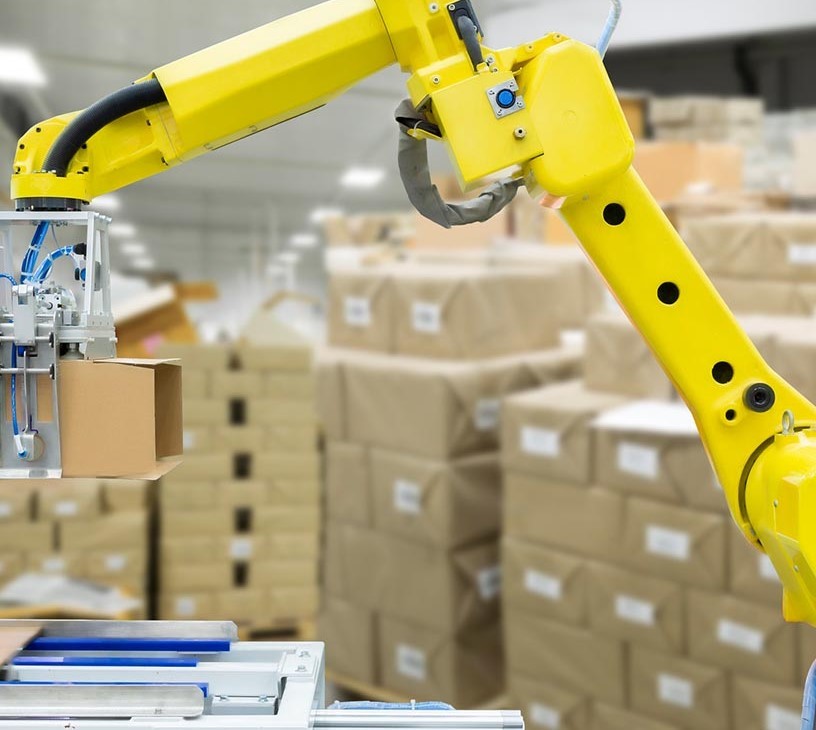

APAC Automated Material Handling Equipment (AMHE) Market Analysis, Size, and Forecast 2026-2030: APAC (China, Japan, and India)

APAC Automated Material Handling Equipment (AMHE) Market Analysis, Size, and Forecast 2026-2030:
APAC (China, Japan, and India)

Published: May 2026 215 Pages SKU: IRTNTR72178

Market Overview at a Glance

$3.54 B
Market Opportunity
6.1%
CAGR 2025 - 2030
5.8%
YoY growth 2025-2026(%)
$2.85 B
E-commerce segment 2024

APAC Automated Material Handling Equipment (Amhe) Market Size and Growth Forecast 2026-2030

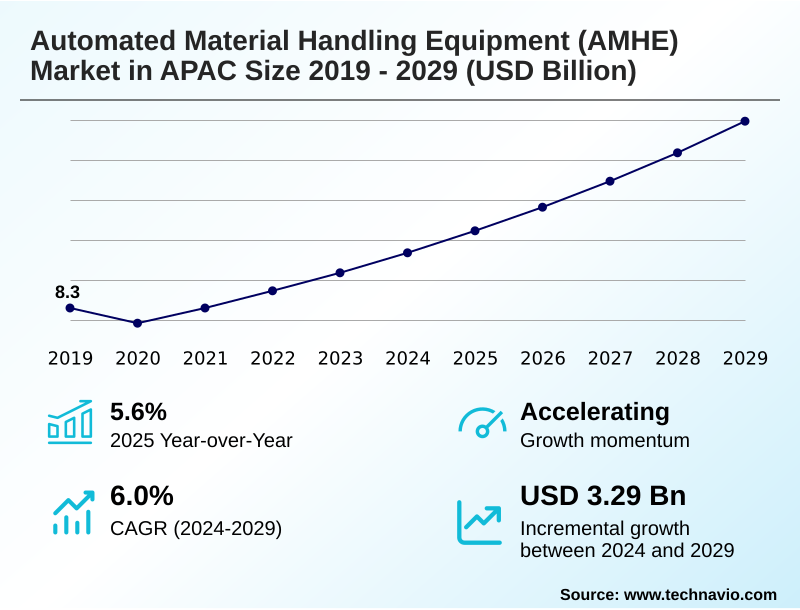
The APAC Automated Material Handling Equipment (Amhe) Market size was valued at USD 10.23 billion in 2025 growing at a CAGR of 6.1% during the forecast period 2026-2030.

The E-commerce segment by End-user was valued at USD 2.85 billion in 2024, while the Conveyor systems segment holds the largest revenue share by Product.

The market is projected to grow by USD 5.84 billion from 2020 to 2030, with USD 3.54 billion of the growth expected during the forecast period of 2025 to 2030.
Get Key Insights on Market Forecast (PDF) Request Free Sample

APAC Automated Material Handling Equipment (Amhe) Market Overview

The automated material handling equipment (AMHE) market in APAC is expanding, driven by the need for intralogistics workflow automation and labor cost reduction. Industrial modernization and the rise of e-commerce are compelling facilities to adopt automated storage and retrieval systems and integrated sortation technologies to improve operational efficiency. Challenges such as systems integration complexity and high initial capital outlay persist, but the long-term benefits of improved order fulfillment accuracy and enhanced supply chain resilience justify the investment. In a typical third-party logistics facility, the implementation of goods-to-person picking technology combined with high-speed sorters can increase processing capacity by over 30%, a critical factor for handling seasonal demand peaks. This move toward intelligent automation is reflected in the market's year-over-year growth of 5.8%, signaling a persistent shift away from manual processes toward more sophisticated, data-driven material flow control.

Drivers, Trends, and Challenges in the APAC Automated Material Handling Equipment (Amhe) Market

Strategic decisions in the automated material handling equipment (AMHE) market in APAC are increasingly nuanced, moving beyond simple cost-per-unit calculations. For example, a food and beverage distributor planning a new facility must weigh the benefits of different systems.

A high-density automated pallet shuttle offers superior space utilization, potentially increasing storage capacity over 70% compared to conventional racking, a key consideration for automated storage for cold chain environments where energy costs are high.

This decision must also consider compliance with frameworks like the Global Food Safety Initiative (GFSI), which influences the design of conveyor systems for parcel handling and other equipment. Furthermore, the challenge of integrating AMRs with existing WMS requires careful evaluation of AI-optimized inventory management software.

For a separate use case, such as an automotive plant, the focus might be on deploying specialized AGV systems for automotive assembly line-side delivery. The ultimate choice often involves balancing upfront capital with long-term operational flexibility, including the ease of modular automated storage expansions and the capability for robotic goods-to-person picking systems to adapt to changing order profiles.

This complexity underscores the market's shift toward customized, vertically-integrated solutions.
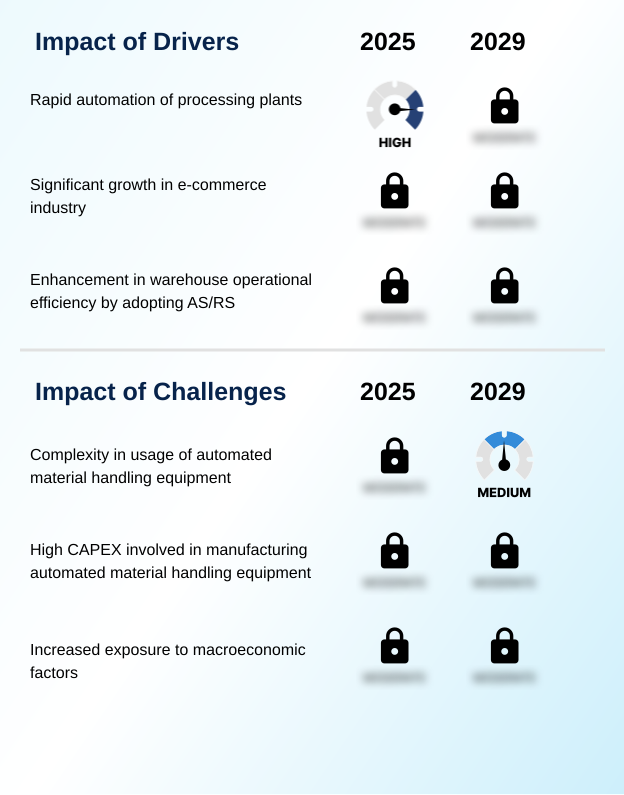
Primary Growth Driver: The proliferation of e-commerce fulfillment centers is a primary market driver, creating significant demand for efficient, scalable, and rapid order processing automation.

The market's momentum is strongly linked to the expansion of e-commerce fulfillment scalability and investments in Industry 4.0.

In China, which commands over 40% of the regional market, the government's push for smart logistics infrastructure has catalyzed large-scale deployments of automated storage and retrieval systems and sophisticated conveyor and sortation systems.

This drive is a direct response to the need for high-velocity order fulfillment, where speed and accuracy are critical competitive differentiators.

The resulting demand for integrated solutions that ensure precise material flow control is compelling operators to invest in technologies that support both greenfield project deployment and the modernization of existing facilities, ultimately enhancing overall supply chain resilience.

Emerging Market Trend: The accelerated adoption of autonomous mobile robots represents a prominent market trend, driven by the need for flexible and scalable solutions in dynamic warehouse environments.

A significant trend is the accelerated adoption of autonomous mobile robots, which offer flexibility for brownfield site integration without the need for major structural changes. This shift is driven by the demand for scalable goods-to-person picking technology that can adapt to fluctuating order volumes, particularly in e-commerce.

Advanced fleet management software enables the coordination of hundreds of robots, optimizing routes and improving warehouse throughput optimization. As adoption grows, system interoperability standards become crucial for ensuring seamless communication between AMRs and existing warehouse management systems.

This trend facilitates workforce augmentation with robotics, where collaborative robots work alongside human employees to increase picking speed and accuracy, addressing both labor shortages and the need for higher productivity.

Key Industry Challenge: High initial capital investment requirements for advanced systems pose a significant challenge, often deterring automation initiatives among small and medium-sized enterprises.

The high upfront capital required for advanced automation presents a primary market challenge, particularly for small and medium-sized enterprises. A comprehensive return on investment analysis is essential but can be complicated by the long-term nature of the benefits, such as labor cost reduction and operational efficiency gains.

The vendor landscape is characterized by high fixed costs, where the criticality of inputs like R&D and capex is high. This financial barrier is compounded by systems integration complexity, which demands specialized expertise and can lead to unforeseen expenses.

Consequently, many potential adopters are exploring phased implementation strategy options and modular designs to mitigate financial risk and manage the total cost of ownership, including lifecycle support services, more effectively.

Explore Full Market Dynamics Analysis Request Free Sample

APAC Automated Material Handling Equipment (Amhe) Market Segmentation

The apac automated material handling equipment (amhe) industry research report provides comprehensive data including region-wise segment analysis, with forecasts and analysis for the period 2026-2030, as well as historical data from 2020-2024 for the following segments.

Market Segment by End-user
  • E-commerce
  • Automotive
  • Food and beverages
  • Healthcare
  • Others
Market Segment by Product
  • Conveyor systems
  • Automated storage and retrieval systems
  • Robotics systems
  • Automated guided vehicles
Market Segment by Type
  • Unit load material handling
  • Bulk load material handling
Market Segment by Geography
APAC
China, Japan, India, South Korea

End-user Segment Analysis

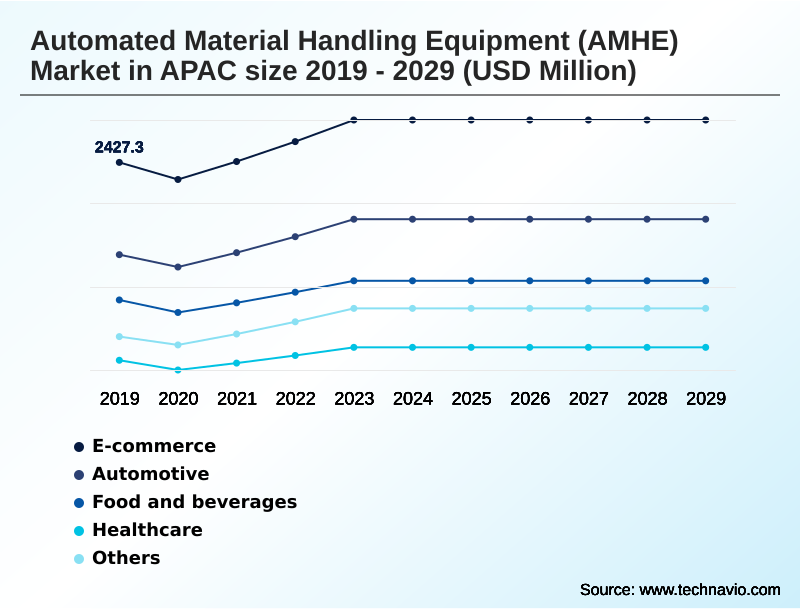
The e-commerce segment is estimated to witness significant growth during the forecast period.

The e-commerce segment is a critical end-user category, shaped by imperatives for high-velocity order fulfillment and e-commerce fulfillment scalability. Operators are deploying integrated solutions, including conveyor and sortation systems and advanced robotic picking solutions, to manage surging online retail volumes.

The objective is to achieve reduced order cycle times to meet consumer expectations for same-day delivery. In practice, this involves a strategic blend of automated storage and retrieval systems and autonomous mobile robots to enhance warehouse throughput optimization.

This segment accounts for nearly 30% of the market, reflecting massive capital investment in smart logistics infrastructure to handle peak order seasons and maintain competitive service levels.
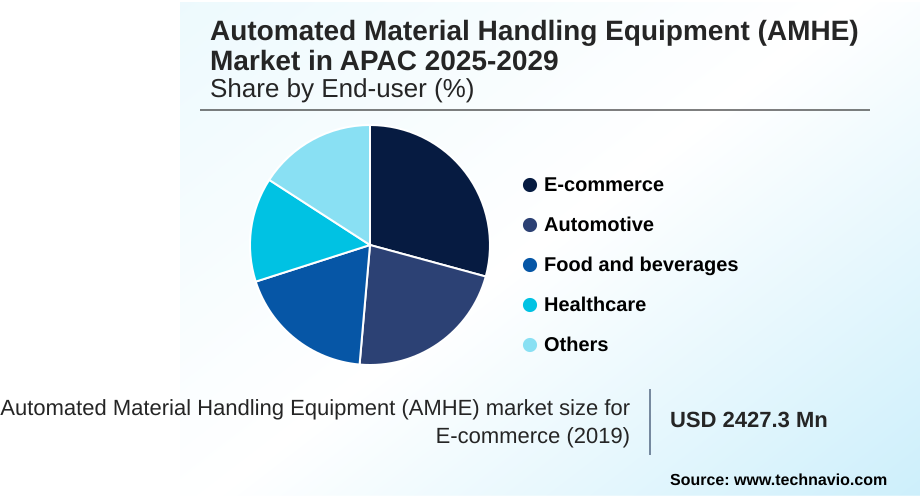
The E-commerce segment was valued at USD 2.85 billion in 2024 and showed a gradual increase during the forecast period.
Customer Landscape Analysis for the APAC Automated Material Handling Equipment (Amhe) Market

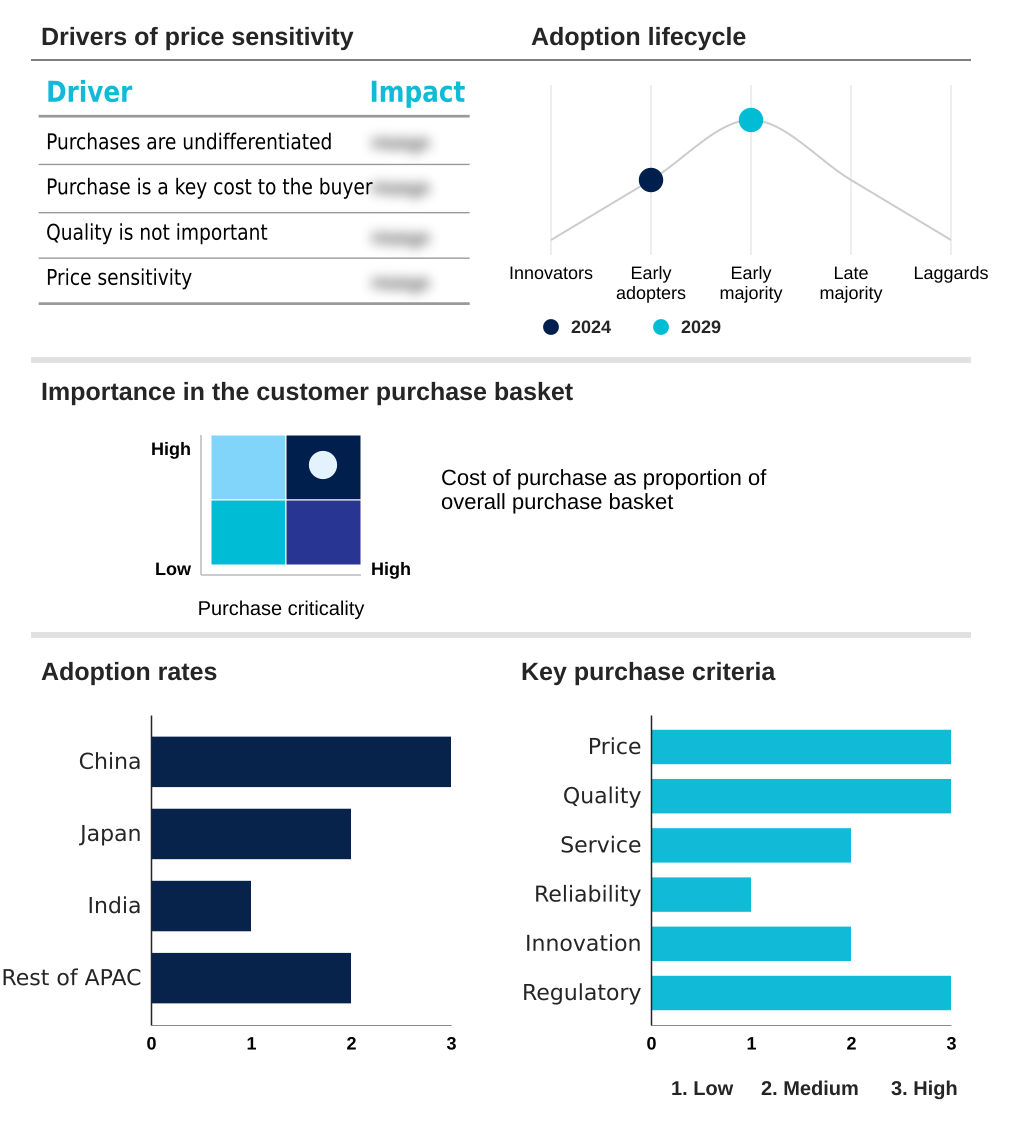
The apac automated material handling equipment (amhe) market forecasting report includes the adoption lifecycle of the market, covering from the innovator’s stage to the laggard’s stage. It focuses on adoption rates in different regions based on penetration. Furthermore, the apac automated material handling equipment (amhe) market report also includes key purchase criteria and drivers of price sensitivity to help companies evaluate and develop their market growth analysis strategies.
Competitive Landscape of the APAC Automated Material Handling Equipment (Amhe) Market

Companies are implementing various strategies, such as strategic alliances, partnerships, mergers and acquisitions, geographical expansion, and product/service launches, to enhance their presence in the apac automated material handling equipment (amhe) market industry.

Addverb Technologies Pvt. Ltd. - Offerings include integrated systems for conveying, sorting, and storage, leveraging digital controls to enhance lifecycle performance and throughput efficiency in complex logistical operations.

The industry research and growth report includes detailed analyses of the competitive landscape of the market and information about key companies, including:

  • Addverb Technologies Pvt. Ltd.
  • Beumer Group GmbH and Co. KG
  • Daifuku Co. Ltd.
  • FIVES SAS
  • FlexLink Holding AB
  • Hanwha Group
  • Honeywell International Inc.
  • John Bean Technologies Corp.
  • Jungheinrich Group
  • Kardex Holding AG
  • KION GROUP AG
  • KNAPP AG
  • Mecalux Group
  • Murata Machinery Ltd.
  • SSI Schafer IT Solutions GmbH
  • Swisslog Holding AG
  • TGW LOGISTICS GROUP GmbH
  • Toyota Industries Corp.
  • Wipro PARI Pvt Ltd.

Qualitative and quantitative analysis of companies has been conducted to help clients understand the wider business environment as well as the strengths and weaknesses of key industry players. Data is qualitatively analyzed to categorize companies as pure play, category-focused, industry-focused, and diversified; it is quantitatively analyzed to categorize companies as dominant, leading, strong, tentative, and weak.

Recent Developments in the APAC Automated Material Handling Equipment (Amhe) Market

  • In November 2024, DAIFUKU secured a contract valued at USD 300 million to automate an Alibaba fulfillment hub in Hangzhou, deploying 2000 autonomous mobile robots and high-speed sorters.
  • In January 2025, KION Group announced a substantial expansion of its automated material handling plant in Jinan, China, adding advanced unit load handling capabilities and an AI research center.
  • In February 2025, Geek+ expanded its autonomous mobile robot fleet deployment in JD.com warehouses across China, integrating over 1500 units to improve sorting and transport efficiency.
  • In April 2025, Daifuku launched a new manufacturing plant in Hyderabad, India, to quadruple production capacity for automated warehouses, transport vehicles, and conveyors for South and Southeast Asia.

Research Analyst Overview: APAC Automated Material Handling Equipment (Amhe) Market

Procurement decisions are shifting from hardware-centric purchases to holistic investments in integrated intralogistics software platforms and end-to-end logistics automation. Boardroom discussions increasingly focus on total cost of ownership, where predictive maintenance analytics and real-time inventory management capabilities offered by modern warehouse execution software are weighed against upfront capital.

The deployment of autonomous mobile robots and automated guided vehicles necessitates a risk management strategy that addresses compliance with technical standards like ISO 3691-4 for driverless industrial trucks. This standard directly impacts operational protocols and insurance liabilities. A facility deploying robotic picking solutions must also evaluate the robustness of its warehouse control software to prevent bottlenecks.

The robotics systems segment's rapid expansion, contributing significantly to the market's overall 5.8% year-over-year growth, highlights that future competitiveness hinges not just on mechanical capabilities like those of gantry loader systems, but on the intelligence and security of the software that orchestrates them.

Dive into Technavio’s robust research methodology, blending expert interviews, extensive data synthesis, and validated models for unparalleled APAC Automated Material Handling Equipment (Amhe) Market insights. See full methodology.

Request Free Sample

Market Scope
Page number 215
Base year 2025
Historic period 2020-2024
Forecast period 2026-2030
Growth momentum & CAGR Accelerate at a CAGR of 6.1%
Market growth 2026-2030 USD 3538.7 million
Market structure Fragmented
YoY growth 2025-2026(%) 5.8%
Key countries China, Japan, India, South Korea and Rest of APAC
Competitive landscape Leading Companies, Market Positioning of Companies, Competitive Strategies, and Industry Risks

APAC Automated Material Handling Equipment (Amhe) Market: Key Questions Answered in This Report

  • What is the expected growth of the APAC Automated Material Handling Equipment (Amhe) Market between 2026 and 2030?

    • The APAC Automated Material Handling Equipment (Amhe) Market is expected to grow by USD 3.54 billion during 2026-2030, registering a CAGR of 6.1%. Year-over-year growth in 2026 is estimated at 5.8%%. This acceleration is shaped by proliferation of e-commerce fulfillment centers, which is intensifying demand across multiple end-use verticals covered in the report.

  • What segmentation does the market report cover?

    • The report is segmented by End-user (E-commerce, Automotive, Food and beverages, Healthcare, and Others), Product (Conveyor systems, Automated storage and retrieval systems, Robotics systems, and Automated guided vehicles), Type (Unit load material handling, and Bulk load material handling) and Geography (APAC). Among these, the E-commerce segment is estimated to witness significant growth during the forecast period, driven by rising adoption across key application areas. Each segment includes detailed qualitative and quantitative analysis, along with historical data from 2020-2024 and forecasts through 2030 with year-over-year growth rates.

  • Which regions are analyzed in the report?

    • The report covers APAC. Country-level analysis includes China, Japan, India, South Korea and Rest of APAC, with dedicated market size tables and year-over-year growth for each.

  • What are the key growth drivers and market challenges?

    • The primary driver is proliferation of e-commerce fulfillment centers, which is accelerating investment and industry demand. The main challenge is high initial capital investment requirements, creating operational barriers for key market participants. The report quantifies the impact of each driver and challenge across 2026 and 2030 with comparative analysis.

  • Who are the major players in the APAC Automated Material Handling Equipment (Amhe) Market?

    • Key vendors include Addverb Technologies Pvt. Ltd., Beumer Group GmbH and Co. KG, Daifuku Co. Ltd., FIVES SAS, FlexLink Holding AB, Hanwha Group, Honeywell International Inc., John Bean Technologies Corp., Jungheinrich Group, Kardex Holding AG, KION GROUP AG, KNAPP AG, Mecalux Group, Murata Machinery Ltd., SSI Schafer IT Solutions GmbH, Swisslog Holding AG, TGW LOGISTICS GROUP GmbH, Toyota Industries Corp. and Wipro PARI Pvt Ltd.. The report provides qualitative and quantitative analysis categorizing companies as dominant, leading, strong, tentative, and weak based on their market positioning. Company profiles include business segment analysis, SWOT assessment, key offerings, and recent strategic developments.

APAC Automated Material Handling Equipment (Amhe) Market Research Insights

Market dynamics are increasingly shaped by the pursuit of operational efficiency gains and greater supply chain resilience. Decision-makers are focused on warehouse throughput optimization, compelling investment in solutions that promise reduced order cycle times. However, systems integration complexity remains a significant factor influencing procurement, as facilities must ensure new technologies align with existing infrastructure.

Adherence to system interoperability standards, such as those governing communication between robotic fleets and warehouse software, is critical for successful brownfield site integration. As companies seek to balance innovation with financial prudence, a thorough return on investment analysis becomes central to justifying expenditures on smart logistics infrastructure and advanced automation.

We can help! Our analysts can customize this apac automated material handling equipment (amhe) market research report to meet your requirements.

Get in touch

1. Executive Summary

1.1 Market overview

Executive Summary - Chart on Market Overview
Executive Summary - Data Table on Market Overview
Executive Summary - Chart on Country Market Characteristics
Executive Summary - Chart on Market by Geography
Executive Summary - Chart on Market Segmentation by End-user
Executive Summary - Chart on Market Segmentation by Product
Executive Summary - Chart on Market Segmentation by Type
Executive Summary - Chart on Incremental Growth
Executive Summary - Data Table on Incremental Growth
Executive Summary - Chart on Company Market Positioning

2. Technavio Analysis

2.1 Analysis of price sensitivity, lifecycle, customer purchase basket, adoption rates, and purchase criteria

2.2 Criticality of inputs and Factors of differentiation

Overview on criticality of inputs and factors of differentiation

2.3 Factors of disruption

Overview on factors of disruption

2.4 Impact of drivers and challenges

Impact of drivers and challenges in 2025 and 2030

3. Market Landscape

3.1 Market ecosystem

Chart on Parent Market
Data Table on - Parent Market

3.2 Market characteristics

Chart on Market characteristics analysis

3.3 Value chain analysis

Chart on Value chain analysis

4. Market Sizing

4.1 Market definition

Data Table on Offerings of companies included in the market definition

4.2 Market segment analysis

Market segments

4.3 Market size 2025

4.4 Market outlook: Forecast for 2025-2030

Chart on APAC - Market size and forecast 2025-2030 ($ million)
Data Table on Regional - Market size and forecast 2025-2030 ($ million)
Chart on APAC: Year-over-year growth 2025-2030 (%)
Data Table on Regional - Market size and forecast 2025-2030 ($ million)

5. Historic Market Size

5.1 Automated Material Handling Equipment (AMHE) Market in APAC 2020 - 2024

Historic Market Size - Data Table on Automated Material Handling Equipment (AMHE) Market in APAC 2020 - 2024 ($ million)

5.2 End-user segment analysis 2020 - 2024

Historic Market Size - End-user Segment 2020 - 2024 ($ million)

5.3 Product segment analysis 2020 - 2024

Historic Market Size - Product Segment 2020 - 2024 ($ million)

5.4 Type segment analysis 2020 - 2024

Historic Market Size - Type Segment 2020 - 2024 ($ million)

5.5 Geography segment analysis 2020 - 2024

Historic Market Size - Geography Segment 2020 - 2024 ($ million)

6. Qualitative Analysis

6.1 Impact of AI on Automated material handling equipment (AMHE) market in APAC

7. Five Forces Analysis

7.1 Five forces summary

Five forces analysis - Comparison between 2025 and 2030

7.2 Bargaining power of buyers

Bargaining power of buyers - Impact of key factors 2025 and 2030

7.3 Bargaining power of suppliers

Bargaining power of suppliers - Impact of key factors in 2025 and 2030

7.4 Threat of new entrants

Threat of new entrants - Impact of key factors in 2025 and 2030

7.5 Threat of substitutes

Threat of substitutes - Impact of key factors in 2025 and 2030

7.6 Threat of rivalry

Threat of rivalry - Impact of key factors in 2025 and 2030

7.7 Market condition

Chart on Market condition - Five forces 2025 and 2030

8. Market Segmentation by End-user

8.1 Market segments

Chart on End-user - Market share 2025-2030 (%)
Data Table on End-user - Market share 2025-2030 (%)

8.2 Comparison by End-user

Chart on Comparison by End-user
Data Table on Comparison by End-user

8.3 E-commerce - Market size and forecast 2025-2030

Chart on E-commerce - Market size and forecast 2025-2030 ($ million)
Data Table on E-commerce - Market size and forecast 2025-2030 ($ million)
Chart on E-commerce - Year-over-year growth 2025-2030 (%)
Data Table on E-commerce - Year-over-year growth 2025-2030 (%)

8.4 Automotive - Market size and forecast 2025-2030

Chart on Automotive - Market size and forecast 2025-2030 ($ million)
Data Table on Automotive - Market size and forecast 2025-2030 ($ million)
Chart on Automotive - Year-over-year growth 2025-2030 (%)
Data Table on Automotive - Year-over-year growth 2025-2030 (%)

8.5 Food and beverages - Market size and forecast 2025-2030

Chart on Food and beverages - Market size and forecast 2025-2030 ($ million)
Data Table on Food and beverages - Market size and forecast 2025-2030 ($ million)
Chart on Food and beverages - Year-over-year growth 2025-2030 (%)
Data Table on Food and beverages - Year-over-year growth 2025-2030 (%)

8.6 Healthcare - Market size and forecast 2025-2030

Chart on Healthcare - Market size and forecast 2025-2030 ($ million)
Data Table on Healthcare - Market size and forecast 2025-2030 ($ million)
Chart on Healthcare - Year-over-year growth 2025-2030 (%)
Data Table on Healthcare - Year-over-year growth 2025-2030 (%)

8.7 Others - Market size and forecast 2025-2030

Chart on Others - Market size and forecast 2025-2030 ($ million)
Data Table on Others - Market size and forecast 2025-2030 ($ million)
Chart on Others - Year-over-year growth 2025-2030 (%)
Data Table on Others - Year-over-year growth 2025-2030 (%)

8.8 Market opportunity by End-user

Market opportunity by End-user ($ million)
Data Table on Market opportunity by End-user ($ million)

9. Market Segmentation by Product

9.1 Market segments

Chart on Product - Market share 2025-2030 (%)
Data Table on Product - Market share 2025-2030 (%)

9.2 Comparison by Product

Chart on Comparison by Product
Data Table on Comparison by Product

9.3 Conveyor systems - Market size and forecast 2025-2030

Chart on Conveyor systems - Market size and forecast 2025-2030 ($ million)
Data Table on Conveyor systems - Market size and forecast 2025-2030 ($ million)
Chart on Conveyor systems - Year-over-year growth 2025-2030 (%)
Data Table on Conveyor systems - Year-over-year growth 2025-2030 (%)

9.4 Automated storage and retrieval systems - Market size and forecast 2025-2030

Chart on Automated storage and retrieval systems - Market size and forecast 2025-2030 ($ million)
Data Table on Automated storage and retrieval systems - Market size and forecast 2025-2030 ($ million)
Chart on Automated storage and retrieval systems - Year-over-year growth 2025-2030 (%)
Data Table on Automated storage and retrieval systems - Year-over-year growth 2025-2030 (%)

9.5 Robotics systems - Market size and forecast 2025-2030

Chart on Robotics systems - Market size and forecast 2025-2030 ($ million)
Data Table on Robotics systems - Market size and forecast 2025-2030 ($ million)
Chart on Robotics systems - Year-over-year growth 2025-2030 (%)
Data Table on Robotics systems - Year-over-year growth 2025-2030 (%)

9.6 Automated guided vehicles - Market size and forecast 2025-2030

Chart on Automated guided vehicles - Market size and forecast 2025-2030 ($ million)
Data Table on Automated guided vehicles - Market size and forecast 2025-2030 ($ million)
Chart on Automated guided vehicles - Year-over-year growth 2025-2030 (%)
Data Table on Automated guided vehicles - Year-over-year growth 2025-2030 (%)

9.7 Market opportunity by Product

Market opportunity by Product ($ million)
Data Table on Market opportunity by Product ($ million)

10. Market Segmentation by Type

10.1 Market segments

Chart on Type - Market share 2025-2030 (%)
Data Table on Type - Market share 2025-2030 (%)

10.2 Comparison by Type

Chart on Comparison by Type
Data Table on Comparison by Type

10.3 Unit load material handling - Market size and forecast 2025-2030

Chart on Unit load material handling - Market size and forecast 2025-2030 ($ million)
Data Table on Unit load material handling - Market size and forecast 2025-2030 ($ million)
Chart on Unit load material handling - Year-over-year growth 2025-2030 (%)
Data Table on Unit load material handling - Year-over-year growth 2025-2030 (%)

10.4 Bulk load material handling - Market size and forecast 2025-2030

Chart on Bulk load material handling - Market size and forecast 2025-2030 ($ million)
Data Table on Bulk load material handling - Market size and forecast 2025-2030 ($ million)
Chart on Bulk load material handling - Year-over-year growth 2025-2030 (%)
Data Table on Bulk load material handling - Year-over-year growth 2025-2030 (%)

10.5 Market opportunity by Type

Market opportunity by Type ($ million)
Data Table on Market opportunity by Type ($ million)

11. Customer Landscape

11.1 Customer landscape overview

Analysis of price sensitivity, lifecycle, customer purchase basket, adoption rates, and purchase criteria

12. Geographic Landscape

12.1 Geographic segmentation

Chart on Market share by geography - 2025-2030 (%)
Data Table on Market share by geography - 2025-2030 (%)

12.2 Geographic comparison

Chart on Geographic comparison
Data Table on Geographic comparison

12.3 China - Market size and forecast 2025-2030

Chart on China - Market size and forecast 2025-2030 ($ million)
Data Table on China - Market size and forecast 2025-2030 ($ million)
Chart on China - Year-over-year growth 2025-2030 (%)
Data Table on China - Year-over-year growth 2025-2030 (%)

12.4 Japan - Market size and forecast 2025-2030

Chart on Japan - Market size and forecast 2025-2030 ($ million)
Data Table on Japan - Market size and forecast 2025-2030 ($ million)
Chart on Japan - Year-over-year growth 2025-2030 (%)
Data Table on Japan - Year-over-year growth 2025-2030 (%)

12.5 India - Market size and forecast 2025-2030

Chart on India - Market size and forecast 2025-2030 ($ million)
Data Table on India - Market size and forecast 2025-2030 ($ million)
Chart on India - Year-over-year growth 2025-2030 (%)
Data Table on India - Year-over-year growth 2025-2030 (%)

12.6 South Korea - Market size and forecast 2025-2030

Chart on South Korea - Market size and forecast 2025-2030 ($ million)
Data Table on South Korea - Market size and forecast 2025-2030 ($ million)
Chart on South Korea - Year-over-year growth 2025-2030 (%)
Data Table on South Korea - Year-over-year growth 2025-2030 (%)

12.7 Rest of APAC - Market size and forecast 2025-2030

Chart on Rest of APAC - Market size and forecast 2025-2030 ($ million)
Data Table on Rest of APAC - Market size and forecast 2025-2030 ($ million)
Chart on Rest of APAC - Year-over-year growth 2025-2030 (%)
Data Table on Rest of APAC - Year-over-year growth 2025-2030 (%)

12.8 Market opportunity by geography

Market opportunity by geography ($ million)
Data Table on Market opportunity by geography ($ million)

13. Drivers, Challenges, and Opportunity

13.1 Market drivers

Proliferation of e-commerce fulfillment centers
Increasing investments in industry 4.0 for logistics facilities
Rising labor costs and shortages coupled with government initiatives

13.2 Market challenges

High initial capital investment requirements
Cybersecurity risks in connected systems
System integration and interoperability complexities

13.3 Impact of drivers and challenges

Impact of drivers and challenges in 2025 and 2030

13.4 Market opportunities

Accelerated adoption of autonomous mobile robots
Expansion of automated storage and retrieval systems
Adoption of artificial intelligence in material handling processes

14. Competitive Landscape

14.1 Overview

14.2

Overview on criticality of inputs and factors of differentiation

14.3 Landscape disruption

Overview on factors of disruption

14.4 Industry risks

Impact of key risks on business

15. Competitive Analysis

15.1 Companies profiled

Companies covered

15.2 Company ranking index

15.3 Market positioning of companies

Matrix on companies position and classification

15.4 Beumer Group GmbH and Co. KG

Beumer Group GmbH and Co. KG - Overview
Beumer Group GmbH and Co. KG - Product / Service
Beumer Group GmbH and Co. KG - Key offerings
SWOT

15.5 Daifuku Co. Ltd.

Daifuku Co. Ltd. - Overview
Daifuku Co. Ltd. - Product / Service
Daifuku Co. Ltd. - Key offerings
SWOT

15.6 FIVES SAS

FIVES SAS - Overview
FIVES SAS - Business segments
FIVES SAS - Key offerings
FIVES SAS - Segment focus
SWOT

15.7 Hanwha Group

Hanwha Group - Overview
Hanwha Group - Product / Service
Hanwha Group - Key news
Hanwha Group - Key offerings
SWOT

15.8 Honeywell International Inc.

Honeywell International Inc. - Overview
Honeywell International Inc. - Business segments
Honeywell International Inc. - Key news
Honeywell International Inc. - Key offerings
Honeywell International Inc. - Segment focus
SWOT

15.9 Jungheinrich Group

Jungheinrich Group - Overview
Jungheinrich Group - Business segments
Jungheinrich Group - Key news
Jungheinrich Group - Key offerings
Jungheinrich Group - Segment focus
SWOT

15.10 Kardex Holding AG

Kardex Holding AG - Overview
Kardex Holding AG - Business segments
Kardex Holding AG - Key news
Kardex Holding AG - Key offerings
Kardex Holding AG - Segment focus
SWOT

15.11 KION GROUP AG

KION GROUP AG - Overview
KION GROUP AG - Business segments
KION GROUP AG - Key offerings
KION GROUP AG - Segment focus
SWOT

15.12 KNAPP AG

KNAPP AG - Overview
KNAPP AG - Product / Service
KNAPP AG - Key offerings
SWOT

15.13 Mecalux Group

Mecalux Group - Overview
Mecalux Group - Product / Service
Mecalux Group - Key offerings
SWOT

15.14 Murata Machinery Ltd.

Murata Machinery Ltd. - Overview
Murata Machinery Ltd. - Business segments
Murata Machinery Ltd. - Key news
Murata Machinery Ltd. - Key offerings
Murata Machinery Ltd. - Segment focus
SWOT

15.15 SSI Schafer IT Solutions GmbH

SSI Schafer IT Solutions GmbH - Overview
SSI Schafer IT Solutions GmbH - Product / Service
SSI Schafer IT Solutions GmbH - Key offerings
SWOT

15.16 Swisslog Holding AG

Swisslog Holding AG - Overview
Swisslog Holding AG - Product / Service
Swisslog Holding AG - Key offerings
SWOT

15.17 TGW LOGISTICS GROUP GmbH

TGW LOGISTICS GROUP GmbH - Overview
TGW LOGISTICS GROUP GmbH - Product / Service
TGW LOGISTICS GROUP GmbH - Key offerings
SWOT

15.18 Toyota Industries Corp.

Toyota Industries Corp. - Overview
Toyota Industries Corp. - Business segments
Toyota Industries Corp. - Key news
Toyota Industries Corp. - Key offerings
Toyota Industries Corp. - Segment focus
SWOT

16. Appendix

16.1 Scope of the report

Market definition
Objectives
Notes and caveats

16.2 Inclusions and exclusions checklist

Inclusions checklist
Exclusions checklist

16.3 Currency conversion rates for US$

16.4 Research methodology

16.5 Data procurement

Information sources

16.6 Data validation

16.7 Validation techniques employed for market sizing

16.8 Data synthesis

16.9 360 degree market analysis

16.10 List of abbreviations

Research Methodology

Technavio presents a detailed picture of the market by way of study, synthesis, and summation of data from multiple sources. The analysts have presented the various facets of the market with a particular focus on identifying the key industry influencers. The data thus presented is comprehensive, reliable, and the result of extensive research, both primary and secondary.

INFORMATION SOURCES

Primary sources

  • Manufacturers and suppliers
  • Channel partners
  • Industry experts
  • Strategic decision makers

Secondary sources

  • Industry journals and periodicals
  • Government data
  • Financial reports of key industry players
  • Historical data
  • Press releases

DATA ANALYSIS

Data Synthesis

  • Collation of data
  • Estimation of key figures
  • Analysis of derived insights

Data Validation

  • Triangulation with data models
  • Reference against proprietary databases
  • Corroboration with industry experts

REPORT WRITING

Qualitative

  • Market drivers
  • Market challenges
  • Market trends
  • Five forces analysis

Quantitative

  • Market size and forecast
  • Market segmentation
  • Geographical insights
  • Competitive landscape

Interested in this report?

Get your sample now to see our research methodology and insights!

Download Now

Frequently Asked Questions

APAC Automated Material Handling Equipment (Amhe) market growth will increase by USD 3538.7 million during 2026-2030.

The APAC Automated Material Handling Equipment (Amhe) market is expected to grow at a CAGR of 6.1% during 2026-2030.

APAC Automated Material Handling Equipment (Amhe) market is segmented by End-user (E-commerce, Automotive, Food and beverages, Healthcare, Others) Product (Conveyor systems, Automated storage and retrieval systems, Robotics systems, Automated guided vehicles) Type (Unit load material handling, Bulk load material handling)

Addverb Technologies Pvt. Ltd., Beumer Group GmbH and Co. KG, Daifuku Co. Ltd., FIVES SAS, FlexLink Holding AB, Hanwha Group, Honeywell International Inc., John Bean Technologies Corp., Jungheinrich Group, Kardex Holding AG, KION GROUP AG, KNAPP AG, Mecalux Group, Murata Machinery Ltd., SSI Schafer IT Solutions GmbH, Swisslog Holding AG, TGW LOGISTICS GROUP GmbH, Toyota Industries Corp., Wipro PARI Pvt Ltd. are a few of the key vendors in the APAC Automated Material Handling Equipment (Amhe) market.

APAC will register the highest growth rate of 100% among the other regions. Therefore, the APAC Automated Material Handling Equipment (Amhe) market in APAC is expected to garner significant business opportunities for the vendors during the forecast period.

China, Japan, India, South Korea, Rest of APAC

  • Proliferation of e-commerce fulfillment centers is the driving factor this market.

The APAC Automated Material Handling Equipment (Amhe) market vendors should focus on grabbing business opportunities from the End-user segment as it accounted for the largest market share in the base year.
RIA - Research AI Assistant
Ask RIA
