

Photodynamic Therapy (PDT) Market Analysis North America, Europe, Asia, Rest of World (ROW) - US, UK, Germany, China, France - Size and Forecast 2024-2028

Photodynamic Therapy (PDT) Market Analysis North America, Europe, Asia, Rest of World (ROW) - US, UK, Germany, China, France - Size and Forecast 2024-2028

Published: Jul 2024 157 Pages SKU: IRTNTR75776

Market Overview at a Glance

$2.35 B
Market Opportunity
8.69%
CAGR
7.81
YoY growth 2023-2024(%)

Photodynamic Therapy Market Size 2024-2028

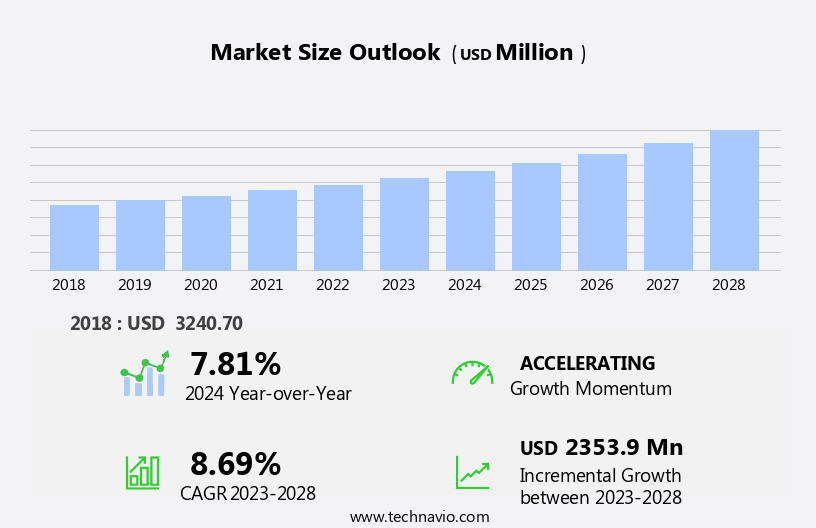
The photodynamic therapy (PDT) market size is forecast to increase by USD 2.35 billion at a CAGR of 8.69% between 2023 and 2028.

  • Photodynamic Therapy (PDT) is a minimally invasive treatment modality that utilizes a photosensitizing agent and light energy to destroy cancer cells. The global PDT market is experiencing significant growth due to several key factors. The high prevalence of cancer worldwide is driving market demand, as PDT offers an effective alternative to traditional surgical procedures for treating various types of cancer. The advancement in technology has led to the emergence of mass spectrometry and light therapy, which enhance the therapeutic efficacy of PDT. Additionally, the increase in research and development (R and D) activities and advances in technology are contributing to the market's growth. However, the high cost of PDT treatment remains a significant challenge, limiting its widespread adoption, particularly in developing countries. Despite this, the market's potential for innovation and the growing awareness of the benefits of PDT make it an attractive investment opportunity for market participants. Overall, the PDT market is expected to witness steady growth In the coming years, driven by these market dynamics.

What will be the Size of the Photodynamic Therapy (PDT) Market During the Forecast Period?
Photodynamic Therapy (PDT) Market Size

 Request Free Sample

  • The market encompasses the provision of light-activated anti-cancer therapies for various clinical conditions, primarily focusing on skin cancers and tumors. In the US, this market experiences significant growth due to the increasing prevalence of skin diseases and the rising demand for less-invasive cancer treatment alternatives. PDT utilizes a photosensitizing drug that, when activated by light energy, reacts with oxygen molecules to produce toxic substances, selectively damaging cancer cells while leaving healthy tissues unharmed.
  • Moreover, this targeted approach offers advantages over traditional therapies like chemotherapy and radiotherapy. The PDT pipeline is rich with candidates, including various photosensitizer drugs under development, expanding the market's potential. This less-invasive cancer treatment modality continues to gain traction, offering a promising alternative for Americans seeking effective anti-cancer therapies.

How is this Photodynamic Therapy (PDT) Industry segmented and which is the largest segment?

The photodynamic therapy (PDT) industry research report provides comprehensive data (region-wise segment analysis), with forecasts and estimates in "USD billion" for the period 2024-2028, as well as historical data from 2018-2022 for the following segments.

  • Application
    • Cancer
    • Actinic keratosis
    • Psoriasis
    • Acne
    • Others
  • Product
    • Photosensitizer drugs
    • Photodynamic therapy devices
  • Geography
    • North America
      • US
    • Europe
      • Germany
      • UK
      • France
    • Asia
      • China
    • Rest of World (ROW)

By Application Insights

  • The cancer segment is estimated to witness significant growth during the forecast period.

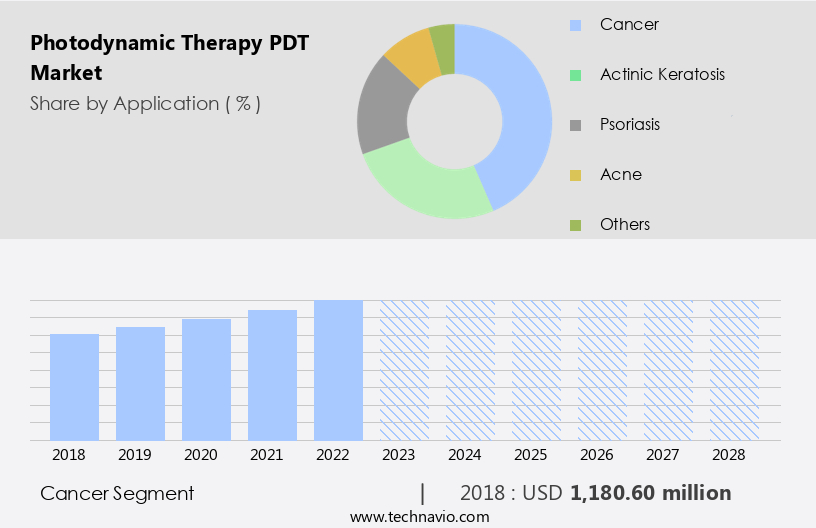
Photodynamic therapy (PDT) is a clinically proven anti-cancer treatment that utilizes light energy in conjunction with photosensitizing drugs to selectively destroy cancerous and precancerous cells. This less-invasive therapy works by administering a photosensitizer drug, which is absorbed by cancer cells and healthy tissues. Subsequently, light energy is applied to activate the drug, causing a reaction that generates reactive oxygen species, damaging the cancer cells while leaving healthy tissues relatively unaffected. PDT has shown promise in treating various clinical conditions, including skin cancers, tumors, and ovarian cancer. Key companies are developing novel photosensitizer drugs, such as Aminolevulinic Acid and Porphyrin Derivatives, and devices, including diode lasers, to enhance the efficacy and accessibility of PDT.
Photodynamic Therapy (PDT) Market Size

Get a glance at the  Photodynamic Therapy (PDT) Industry report of share of various segments Request Free Sample

The cancer segment was valued at USD 1.18 billion in 2018 and showed a gradual increase during the forecast period.

Regional Analysis

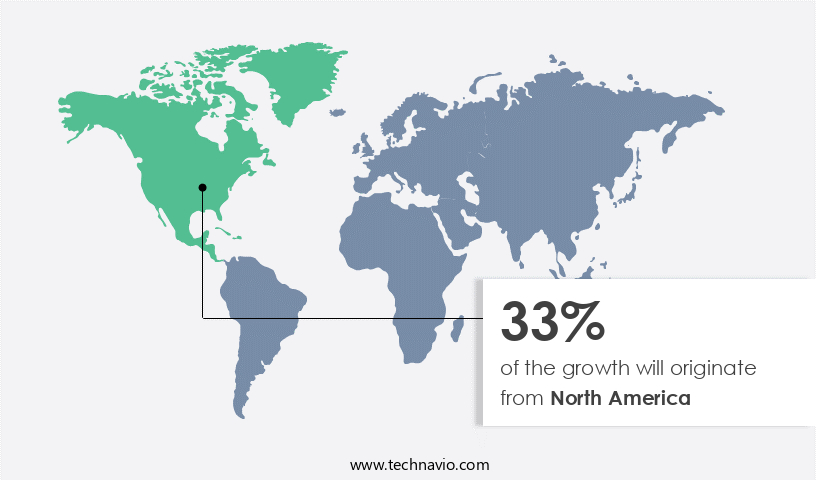
  • North America is estimated to contribute 33% to the growth of the global market during the forecast period.

Technavio's analysts have elaborately explained the regional trends and drivers that shape the market during the forecast period.
Photodynamic Therapy (PDT) Market Share by Geography

For more insights on the market share of various regions, Request Free Sample

The market in North America is experiencing significant growth due to the increasing incidence of skin cancers and tumors among Americans. This clinical condition calls for advanced anti-cancer therapies, including PDT, which utilizes a photosensitizing drug and light energy to destroy cancer cells in healthy tissues. The therapy's benefits, such as its less-invasive nature and potential for treating various skin diseases like actinic keratosis, acne, and psoriasis, have led to its increasing adoption. Moreover, the availability of favorable reimbursement schemes, government initiatives, and approvals of new drugs and therapies, such as Aminolevulinic Acid, Porphyrin Derivatives, and Chlorines, contribute to the market growth in North America.

Market Dynamics

Our researchers analyzed the data with 2023 as the base year, along with the key drivers, trends, and challenges. A holistic analysis of drivers will help companies refine their marketing strategies to gain a competitive advantage.

What are the key market drivers leading to the rise In the adoption of Photodynamic Therapy (PDT) Industry?

High prevalence of cancer is the key driver of the market.

  • The market holds significant potential in addressing the growing need for less-invasive cancer treatments. PDT is a light-activated therapy that utilizes a photosensitizing drug and light energy to destroy cancer cells and tumors, while leaving healthy tissues unharmed. This targeted approach sets it apart from traditional therapies such as chemotherapy and radiotherapy. Skin cancers, including basal cell carcinoma and squamous cell carcinoma, are the most common types of cancer in Americans. PDT is an effective treatment option for various clinical conditions, including actinic keratosis, acne, and psoriasis. In the realm of anti-cancer therapies, PDT candidates include Aminolevulinic Acid, Porphyrin Derivatives, and Chlorines.
  • In addition, key companies are investing In the development of devices such as diode lasers and portable PDT devices to expand the application analysis of this therapy. Photosensitizer drugs like Alluminox treatment and ASP-1929 are undergoing clinical trials for the treatment of ovarian cancer and other locoregional cancers. The pipeline for PDT is rich with promising candidates, with patents being filed to secure intellectual property rights. The increasing burden of cancer and the rising demand for effective and less-invasive treatments are driving the growth of the PDT market.

What are the market trends shaping the Photodynamic Therapy (PDT) Industry?

Increase in R and D and advances in technology is the upcoming market trend.

  • Photodynamic Therapy (PDT) is a less-invasive treatment modality used for various clinical conditions, including skin cancers and tumors. In the US, an estimated 3.5 million Americans are diagnosed with skin cancer each year, making it the most common form of cancer. PDT involves the application of a photosensitizing drug, followed by exposure to light energy, which activates the drug and damages cancer cells. The oxygen molecule In the blood cells plays a crucial role in enhancing the therapeutic effect of PDT. The PDT market is witnessing significant advancements with the development of new photosensitizer drugs and technologies.
  • For instance, Aminolevulinic Acid (ALA) and Porphyrin Derivatives are widely used photosensitizing agents. Moreover, Chlorines and other candidates are undergoing clinical trials to expand the pipeline of PDT treatments. The technology behind PDT is continually evolving, with innovations such as Photoimmunotherapy, Photothermal therapy, and Alluminox treatment. Photoimmunotherapy utilizes the immune system to target cancer cells, while Photothermal therapy employs light energy to heat and destroy cancer cells. Alluminox treatment combines PDT with other therapies, such as chemotherapy and radiotherapy, to enhance treatment efficacy. PDT has shown promising results in treating skin diseases, including actinic keratosis (AK), acne, and psoriasis.

What challenges does the Photodynamic Therapy (PDT) Industry face during its growth?

High cost of treatment is a key challenge affecting the industry growth.

  • Photodynamic Therapy (PDT) is a promising anti-cancer therapy that utilizes light-activated drugs, also known as photosensitizing agents, to destroy skin cancers and tumors in Americans. These therapies work by administering a photosensitizer drug to the patient, followed by exposure to specific wavelengths of light. The photosensitizer drug, such as Aminolevulinic Acid, Porphyrin Derivatives, or Chlorines, interacts with the oxygen molecule In the presence of light, producing reactive oxygen species that damage cancer cells while leaving healthy tissues unharmed. PDT is a less-invasive treatment option for various clinical conditions, including skin cancer, ovarian cancer, and certain skin diseases like actinic keratosis, acne, and psoriasis.
  • Moreover, key companies In the PDT market are developing innovative technologies, such as photoimmunotherapy, photothermal therapy, and Alluminox treatment, to enhance the efficacy and safety of PDT. Clinical trials are ongoing for several PDT candidates, including ASP-1929, to expand the pipeline and address a broader range of cancer indications. The market for PDT is expected to grow as more patients seek less-invasive treatments for their cancer and as advancements in technology lead to the development of portable PDT devices and portable irradiation devices. The cost of PDT treatments is high due to the advanced procedures involved in developing photosensitizer drugs and the need for specialized devices like diode lasers.

Exclusive Customer Landscape

The photodynamic therapy (PDT) market forecasting report includes the adoption lifecycle of the market, covering from the innovator's stage to the laggard's stage. It focuses on adoption rates in different regions based on penetration. Furthermore, the photodynamic therapy (PDT) market report also includes key purchase criteria, and drivers of price sensitivity to help companies evaluate and develop their market growth analysis strategies.
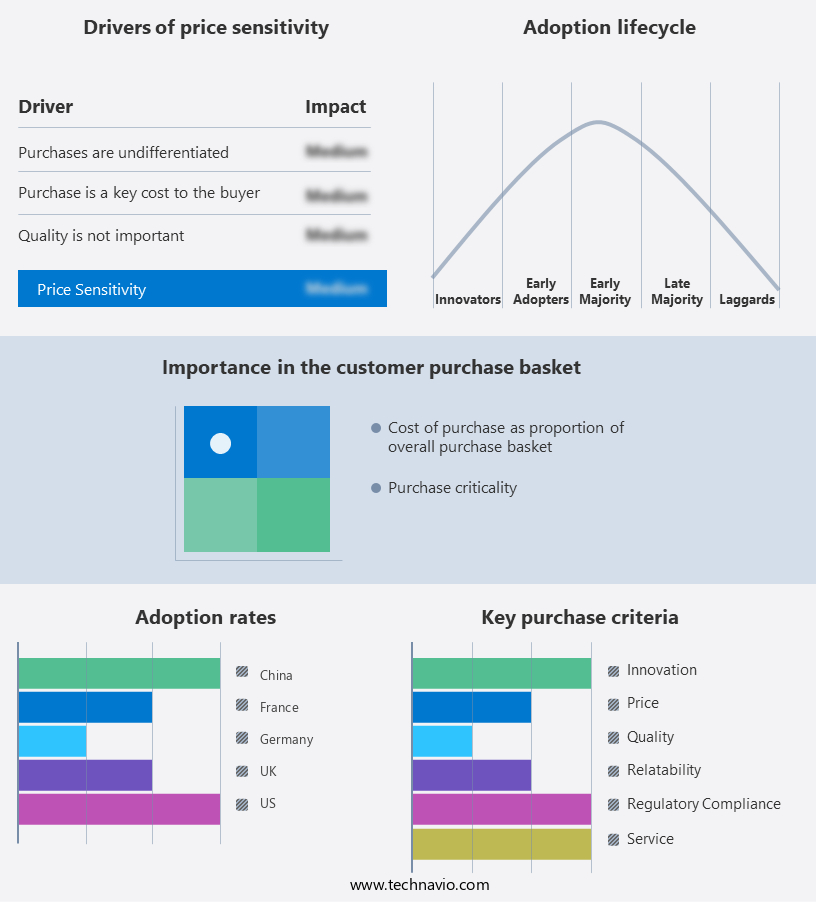
Photodynamic Therapy (PDT) Market Share by Geography

 Customer Landscape

Key Companies & Market Insights

Companies are implementing various strategies, such as strategic alliances, photodynamic therapy (pdt) market forecast, partnerships, mergers and acquisitions, geographical expansion, and product/service launches, to enhance their presence In the industry.

The industry research and growth report includes detailed analyses of the competitive landscape of the market and information about key companies, including:

  • Bausch Health Companies Inc.
  • Biofrontera AG
  • BIOLASE Inc.
  • biolitec AG
  • Eufoton srl
  • Galderma SA
  • II VI Inc.
  • IRIDEX Corp.
  • Lotus Global Group Inc.
  • LUMIBIRD SA
  • Lutronic Inc.
  • Modulight Inc.
  • Photocure ASA
  • Pinnacle Biologics Inc.
  • Quanta System S.p.A.
  • Soligenix Inc.
  • SpectraCure AB
  • Sun Pharmaceutical Industries Ltd.
  • SUS Advancing Technology Co. Ltd.
  • Theralase Technologies Inc.

Qualitative and quantitative analysis of companies has been conducted to help clients understand the wider business environment as well as the strengths and weaknesses of key industry players. Data is qualitatively analyzed to categorize companies as pure play, category-focused, industry-focused, and diversified; it is quantitatively analyzed to categorize companies as dominant, leading, strong, tentative, and weak.

Research Analyst Overview

Photodynamic Therapy (PDT) is an innovative approach to treating various clinical conditions, particularly those related to cancer and skin diseases. This non-invasive therapy employs a photosensitizing drug and light energy to activate an oxygen molecule within the body, effectively damaging cancer cells and healthy tissues that absorb the light. The Photodynamic Therapy market exhibits significant growth potential due to its ability to offer less-invasive treatments for a range of conditions. It is also used in DNA sequencing. The therapeutic mechanism of PDT allows for targeted destruction of malignant cells, minimizing damage to surrounding healthy tissues. PDT's versatility extends to various applications, including the treatment of tumors and skin diseases such as actinic keratosis, acne, and psoriasis.

Furthermore, in the realm of cancer treatment, PDT has shown promise In the treatment of ovarian cancer, among others. The pipeline for PDT candidates is strong, with numerous photosensitizer drugs and devices under development. Aminolevulinic acid and porphyrin derivatives are among the most commonly used photosensitizing agents. Chlorines and diode lasers are popular choices for delivering light energy. The advancement in technology has led to the emergence of portable PDT devices and irradiation devices, making this therapy more accessible to a wider patient population. These devices offer the convenience of in-office treatments, reducing the need for hospitalization. PDT's mechanism of action involves the use of a photosensitizing drug, which is administered to the patient before the application of light energy.

Moreover, the photosensitizer drug selectively accumulates in cancer cells and other targeted tissues, making them more susceptible to the damaging effects of light. The immune system plays a crucial role In the efficacy of PDT. The destruction of cancer cells through PDT triggers an immune response, which can help eliminate any remaining cancer cells and prevent the recurrence of the disease. Therefore, the Photodynamic Therapy market presents an exciting opportunity for growth due to its ability to offer less-invasive treatments for various clinical conditions. The versatility of this therapy, coupled with the ongoing advancements in technology, positions it as a promising alternative to traditional treatments such as chemotherapy and radiotherapy.

Market Scope

Report Coverage

Details

Page number

157

Base year

2023

Historic period

2018-2022

Forecast period

2024-2028

Growth momentum & CAGR

Accelerate at a CAGR of 8.69%

Market growth 2024-2028

USD 2.35 billion

Market structure

Fragmented

YoY growth 2023-2024(%)

7.81

Key countries

US, UK, Germany, China, and France

Competitive landscape

Leading Companies, market growth and forecasting , Market Positioning of Companies, Competitive Strategies, and Industry Risks

Request Free Sample

What are the Key Data Covered in this Photodynamic Therapy (PDT) Market Research and Growth Report?

  • CAGR of the Photodynamic Therapy (PDT) industry during the forecast period
  • Detailed information on factors that will drive the growth and forecasting between 2024 and 2028
  • Precise estimation of the size of the market and its contribution of the industry in focus to the parent market
  • Accurate predictions about upcoming growth and trends and changes in consumer behaviour
  • Growth of the market across North America, Europe, Asia, and Rest of World (ROW)
  • Thorough analysis of the market's competitive landscape and detailed information about companies
  • Comprehensive analysis of factors that will challenge the photodynamic therapy (pdt) market growth of industry companies

We can help! Our analysts can customize this photodynamic therapy (pdt) market research report to meet your requirements.

Get in touch

1 Executive Summary

  • 1.1 Market overview
    • Executive Summary - Chart on Market Overview
    • Executive Summary - Data Table on Market Overview
    • Executive Summary - Chart on Global Market Characteristics
    • Executive Summary - Chart on Market by Geography
    • Executive Summary - Chart on Market Segmentation by Application
    • Executive Summary - Chart on Market Segmentation by Product
    • Executive Summary - Chart on Incremental Growth
    • Executive Summary - Data Table on Incremental Growth
    • Executive Summary - Chart on Company Market Positioning

2 Market Landscape

  • 2.1 Market ecosystem
    • Parent Market
    • Data Table on - Parent Market
  • 2.2 Market characteristics
    • Market characteristics analysis
  • 2.3 Value chain analysis
    • Value Chain Analysis

3 Market Sizing

  • 3.1 Market definition
    • Offerings of companies included in the market definition
  • 3.2 Market segment analysis
    • Market segments
  • 3.3 Market size 2023
    • 3.4 Market outlook: Forecast for 2023-2028
      • Chart on Global - Market size and forecast 2023-2028 ($ million)
      • Data Table on Global - Market size and forecast 2023-2028 ($ million)
      • Chart on Global Market: Year-over-year growth 2023-2028 (%)
      • Data Table on Global Market: Year-over-year growth 2023-2028 (%)

    4 Historic Market Size

    • 4.1 Global Photodynamic Therapy (PDT) Market 2018 - 2022
      • Historic Market Size - Data Table on Global Photodynamic Therapy (PDT) Market 2018 - 2022 ($ million)
    • 4.2 Application segment analysis 2018 - 2022
      • Historic Market Size - Application Segment 2018 - 2022 ($ million)
    • 4.3 Product segment analysis 2018 - 2022
      • Historic Market Size - Product Segment 2018 - 2022 ($ million)
    • 4.4 Geography segment analysis 2018 - 2022
      • Historic Market Size - Geography Segment 2018 - 2022 ($ million)
    • 4.5 Country segment analysis 2018 - 2022
      • Historic Market Size - Country Segment 2018 - 2022 ($ million)

    5 Five Forces Analysis

    • 5.1 Five forces summary
      • Five forces analysis - Comparison between 2023 and 2028
    • 5.2 Bargaining power of buyers
      • Bargaining power of buyers - Impact of key factors 2023 and 2028
    • 5.3 Bargaining power of suppliers
      • Bargaining power of suppliers - Impact of key factors in 2023 and 2028
    • 5.4 Threat of new entrants
      • Threat of new entrants - Impact of key factors in 2023 and 2028
    • 5.5 Threat of substitutes
      • Threat of substitutes - Impact of key factors in 2023 and 2028
    • 5.6 Threat of rivalry
      • Threat of rivalry - Impact of key factors in 2023 and 2028
    • 5.7 Market condition
      • Chart on Market condition - Five forces 2023 and 2028

    6 Market Segmentation by Application

    • 6.1 Market segments
      • Chart on Application - Market share 2023-2028 (%)
      • Data Table on Application - Market share 2023-2028 (%)
    • 6.2 Comparison by Application
      • Chart on Comparison by Application
      • Data Table on Comparison by Application
    • 6.3 Cancer - Market size and forecast 2023-2028
      • Chart on Cancer - Market size and forecast 2023-2028 ($ million)
      • Data Table on Cancer - Market size and forecast 2023-2028 ($ million)
      • Chart on Cancer - Year-over-year growth 2023-2028 (%)
      • Data Table on Cancer - Year-over-year growth 2023-2028 (%)
    • 6.4 Actinic keratosis - Market size and forecast 2023-2028
      • Chart on Actinic keratosis - Market size and forecast 2023-2028 ($ million)
      • Data Table on Actinic keratosis - Market size and forecast 2023-2028 ($ million)
      • Chart on Actinic keratosis - Year-over-year growth 2023-2028 (%)
      • Data Table on Actinic keratosis - Year-over-year growth 2023-2028 (%)
    • 6.5 Psoriasis - Market size and forecast 2023-2028
      • Chart on Psoriasis - Market size and forecast 2023-2028 ($ million)
      • Data Table on Psoriasis - Market size and forecast 2023-2028 ($ million)
      • Chart on Psoriasis - Year-over-year growth 2023-2028 (%)
      • Data Table on Psoriasis - Year-over-year growth 2023-2028 (%)
    • 6.6 Acne - Market size and forecast 2023-2028
      • Chart on Acne - Market size and forecast 2023-2028 ($ million)
      • Data Table on Acne - Market size and forecast 2023-2028 ($ million)
      • Chart on Acne - Year-over-year growth 2023-2028 (%)
      • Data Table on Acne - Year-over-year growth 2023-2028 (%)
    • 6.7 Others - Market size and forecast 2023-2028
      • Chart on Others - Market size and forecast 2023-2028 ($ million)
      • Data Table on Others - Market size and forecast 2023-2028 ($ million)
      • Chart on Others - Year-over-year growth 2023-2028 (%)
      • Data Table on Others - Year-over-year growth 2023-2028 (%)
    • 6.8 Market opportunity by Application
      • Market opportunity by Application ($ million)
      • Data Table on Market opportunity by Application ($ million)

    7 Market Segmentation by Product

    • 7.1 Market segments
      • Chart on Product - Market share 2023-2028 (%)
      • Data Table on Product - Market share 2023-2028 (%)
    • 7.2 Comparison by Product
      • Chart on Comparison by Product
      • Data Table on Comparison by Product
    • 7.3 Photosensitizer drugs - Market size and forecast 2023-2028
      • Chart on Photosensitizer drugs - Market size and forecast 2023-2028 ($ million)
      • Data Table on Photosensitizer drugs - Market size and forecast 2023-2028 ($ million)
      • Chart on Photosensitizer drugs - Year-over-year growth 2023-2028 (%)
      • Data Table on Photosensitizer drugs - Year-over-year growth 2023-2028 (%)
    • 7.4 Photodynamic therapy devices - Market size and forecast 2023-2028
      • Chart on Photodynamic therapy devices - Market size and forecast 2023-2028 ($ million)
      • Data Table on Photodynamic therapy devices - Market size and forecast 2023-2028 ($ million)
      • Chart on Photodynamic therapy devices - Year-over-year growth 2023-2028 (%)
      • Data Table on Photodynamic therapy devices - Year-over-year growth 2023-2028 (%)
    • 7.5 Market opportunity by Product
      • Market opportunity by Product ($ million)
      • Data Table on Market opportunity by Product ($ million)

    8 Customer Landscape

    • 8.1 Customer landscape overview
      • Analysis of price sensitivity, lifecycle, customer purchase basket, adoption rates, and purchase criteria

    9 Geographic Landscape

    • 9.1 Geographic segmentation
      • Chart on Market share by geography 2023-2028 (%)
      • Data Table on Market share by geography 2023-2028 (%)
    • 9.2 Geographic comparison
      • Chart on Geographic comparison
      • Data Table on Geographic comparison
    • 9.3 North America - Market size and forecast 2023-2028
      • Chart on North America - Market size and forecast 2023-2028 ($ million)
      • Data Table on North America - Market size and forecast 2023-2028 ($ million)
      • Chart on North America - Year-over-year growth 2023-2028 (%)
      • Data Table on North America - Year-over-year growth 2023-2028 (%)
    • 9.4 Europe - Market size and forecast 2023-2028
      • Chart on Europe - Market size and forecast 2023-2028 ($ million)
      • Data Table on Europe - Market size and forecast 2023-2028 ($ million)
      • Chart on Europe - Year-over-year growth 2023-2028 (%)
      • Data Table on Europe - Year-over-year growth 2023-2028 (%)
    • 9.5 Asia - Market size and forecast 2023-2028
      • Chart on Asia - Market size and forecast 2023-2028 ($ million)
      • Data Table on Asia - Market size and forecast 2023-2028 ($ million)
      • Chart on Asia - Year-over-year growth 2023-2028 (%)
      • Data Table on Asia - Year-over-year growth 2023-2028 (%)
    • 9.6 Rest of World (ROW) - Market size and forecast 2023-2028
      • Chart on Rest of World (ROW) - Market size and forecast 2023-2028 ($ million)
      • Data Table on Rest of World (ROW) - Market size and forecast 2023-2028 ($ million)
      • Chart on Rest of World (ROW) - Year-over-year growth 2023-2028 (%)
      • Data Table on Rest of World (ROW) - Year-over-year growth 2023-2028 (%)
    • 9.7 US - Market size and forecast 2023-2028
      • Chart on US - Market size and forecast 2023-2028 ($ million)
      • Data Table on US - Market size and forecast 2023-2028 ($ million)
      • Chart on US - Year-over-year growth 2023-2028 (%)
      • Data Table on US - Year-over-year growth 2023-2028 (%)
    • 9.8 UK - Market size and forecast 2023-2028
      • Chart on UK - Market size and forecast 2023-2028 ($ million)
      • Data Table on UK - Market size and forecast 2023-2028 ($ million)
      • Chart on UK - Year-over-year growth 2023-2028 (%)
      • Data Table on UK - Year-over-year growth 2023-2028 (%)
    • 9.9 Germany - Market size and forecast 2023-2028
      • Chart on Germany - Market size and forecast 2023-2028 ($ million)
      • Data Table on Germany - Market size and forecast 2023-2028 ($ million)
      • Chart on Germany - Year-over-year growth 2023-2028 (%)
      • Data Table on Germany - Year-over-year growth 2023-2028 (%)
    • 9.10 China - Market size and forecast 2023-2028
      • Chart on China - Market size and forecast 2023-2028 ($ million)
      • Data Table on China - Market size and forecast 2023-2028 ($ million)
      • Chart on China - Year-over-year growth 2023-2028 (%)
      • Data Table on China - Year-over-year growth 2023-2028 (%)
    • 9.11 France - Market size and forecast 2023-2028
      • Chart on France - Market size and forecast 2023-2028 ($ million)
      • Data Table on France - Market size and forecast 2023-2028 ($ million)
      • Chart on France - Year-over-year growth 2023-2028 (%)
      • Data Table on France - Year-over-year growth 2023-2028 (%)
    • 9.12 Market opportunity by geography
      • Market opportunity by geography ($ million)
      • Data Tables on Market opportunity by geography ($ million)

    10 Drivers, Challenges, and Opportunity/Restraints

    • 10.1 Market drivers
      • 10.2 Market challenges
        • 10.3 Impact of drivers and challenges
          • Impact of drivers and challenges in 2023 and 2028
        • 10.4 Market opportunities/restraints

          11 Competitive Landscape

          • 11.1 Overview
            • 11.2 Competitive Landscape
              • Overview on criticality of inputs and factors of differentiation
            • 11.3 Landscape disruption
              • Overview on factors of disruption
            • 11.4 Industry risks
              • Impact of key risks on business

            12 Competitive Analysis

            • 12.1 Companies profiled
              • Companies covered
            • 12.2 Market positioning of companies
              • Matrix on companies position and classification
            • 12.3 Bausch Health Co. Inc.
              • Bausch Health Co. Inc. - Overview
              • Bausch Health Co. Inc. - Business segments
              • Bausch Health Co. Inc. - Key news
              • Bausch Health Co. Inc. - Key offerings
              • Bausch Health Co. Inc. - Segment focus
            • 12.4 Biofrontera AG
              • Biofrontera AG - Overview
              • Biofrontera AG - Product / Service
              • Biofrontera AG - Key offerings
            • 12.5 BIOLASE Inc.
              • BIOLASE Inc. - Overview
              • BIOLASE Inc. - Product / Service
              • BIOLASE Inc. - Key offerings
            • 12.6 biolitec AG
              • biolitec AG - Overview
              • biolitec AG - Product / Service
              • biolitec AG - Key offerings
            • 12.7 Galderma SA
              • Galderma SA - Overview
              • Galderma SA - Product / Service
              • Galderma SA - Key offerings
            • 12.8 II VI Inc.
              • II VI Inc. - Overview
              • II VI Inc. - Business segments
              • II VI Inc. - Key news
              • II VI Inc. - Key offerings
              • II VI Inc. - Segment focus
            • 12.9 IRIDEX Corp.
              • IRIDEX Corp. - Overview
              • IRIDEX Corp. - Product / Service
              • IRIDEX Corp. - Key offerings
            • 12.10 Lotus Global Group Inc.
              • Lotus Global Group Inc. - Overview
              • Lotus Global Group Inc. - Product / Service
              • Lotus Global Group Inc. - Key offerings
            • 12.11 LUMIBIRD SA
              • LUMIBIRD SA - Overview
              • LUMIBIRD SA - Product / Service
              • LUMIBIRD SA - Key offerings
            • 12.12 Lutronic Inc
              • Lutronic Inc - Overview
              • Lutronic Inc - Product / Service
              • Lutronic Inc - Key offerings
            • 12.13 Modulight Inc.
              • Modulight Inc. - Overview
              • Modulight Inc. - Product / Service
              • Modulight Inc. - Key offerings
            • 12.14 Soligenix Inc.
              • Soligenix Inc. - Overview
              • Soligenix Inc. - Business segments
              • Soligenix Inc. - Key offerings
              • Soligenix Inc. - Segment focus
            • 12.15 Sun Pharmaceutical Industries Ltd.
              • Sun Pharmaceutical Industries Ltd. - Overview
              • Sun Pharmaceutical Industries Ltd. - Product / Service
              • Sun Pharmaceutical Industries Ltd. - Key news
              • Sun Pharmaceutical Industries Ltd. - Key offerings
            • 12.16 SUS Advancing Technology Co. Ltd.
              • SUS Advancing Technology Co. Ltd. - Overview
              • SUS Advancing Technology Co. Ltd. - Product / Service
              • SUS Advancing Technology Co. Ltd. - Key offerings
            • 12.17 Theralase Technologies Inc.
              • Theralase Technologies Inc. - Overview
              • Theralase Technologies Inc. - Key offerings

            13 Appendix

            • 13.1 Scope of the report
              • 13.2 Inclusions and exclusions checklist
                • Inclusions checklist
                • Exclusions checklist
              • 13.3 Currency conversion rates for US$
                • Currency conversion rates for US$
              • 13.4 Research methodology
                • Research methodology
              • 13.5 Data procurement
                • Information sources
              • 13.6 Data validation
                • Data validation
              • 13.7 Validation techniques employed for market sizing
                • Validation techniques employed for market sizing
              • 13.8 Data synthesis
                • Data synthesis
              • 13.9 360 degree market analysis
                • 360 degree market analysis
              • 13.10 List of abbreviations
                • List of abbreviations

              Research Methodology

              Technavio presents a detailed picture of the market by way of study, synthesis, and summation of data from multiple sources. The analysts have presented the various facets of the market with a particular focus on identifying the key industry influencers. The data thus presented is comprehensive, reliable, and the result of extensive research, both primary and secondary.

              INFORMATION SOURCES

              Primary sources

              • Manufacturers and suppliers
              • Channel partners
              • Industry experts
              • Strategic decision makers

              Secondary sources

              • Industry journals and periodicals
              • Government data
              • Financial reports of key industry players
              • Historical data
              • Press releases

              DATA ANALYSIS

              Data Synthesis

              • Collation of data
              • Estimation of key figures
              • Analysis of derived insights

              Data Validation

              • Triangulation with data models
              • Reference against proprietary databases
              • Corroboration with industry experts

              REPORT WRITING

              Qualitative

              • Market drivers
              • Market challenges
              • Market trends
              • Five forces analysis

              Quantitative

              • Market size and forecast
              • Market segmentation
              • Geographical insights
              • Competitive landscape

              Interested in this report?

              Get your sample now to see our research methodology and insights!

              Download Now

              Frequently Asked Questions

              Photodynamic Therapy (Pdt) market growth will increase by $ 2353.9 mn during 2024-2028.

              The Photodynamic Therapy (Pdt) market is expected to grow at a CAGR of 8.69% during 2024-2028.

              Photodynamic Therapy (Pdt) market is segmented by Application( Cancer, Actinic keratosis, Psoriasis, Acne, Others) Product( Photosensitizer drugs, Photodynamic therapy devices)

              Bausch Health Companies Inc., Biofrontera AG, BIOLASE Inc., biolitec AG, Eufoton srl, Galderma SA, II VI Inc., IRIDEX Corp., Lotus Global Group Inc., LUMIBIRD SA, Lutronic Inc., Modulight Inc., Photocure ASA, Pinnacle Biologics Inc., Quanta System S.p.A., Soligenix Inc., SpectraCure AB, Sun Pharmaceutical Industries Ltd., SUS Advancing Technology Co. Ltd., Theralase Technologies Inc. are a few of the key vendors in the Photodynamic Therapy (Pdt) market.

              North America will register the highest growth rate of 33% among the other regions. Therefore, the Photodynamic Therapy (Pdt) market in North America is expected to garner significant business opportunities for the vendors during the forecast period.

              US, UK, Germany, China, France

              • High prevalence of cancerLifestyle changes and Unhealthy food habits is the driving factor this market.
              • physical inactivity is the driving factor this market.
              • and excessive tobacco and alcohol consumption can cause lung is the driving factor this market.
              • stomach is the driving factor this market.
              • kidney is the driving factor this market.
              • head is the driving factor this market.
              • neck is the driving factor this market.
              • and larynx cancer. Exposure to ionizing radiation is the driving factor this market.
              • chemical mutagens is the driving factor this market.
              • infectious micro-organisms is the driving factor this market.
              • and environmental pollutants can also lead to cancers. The incidence of cancer is on the rise worldwide. In the future is the driving factor this market.
              • diagnosis and treatment costs are likely to increase as cancer becomes more prevalent. Cancer treatment costs are also expected to increase as new and expensive treatments such as chimeric antigen receptor (CAR) T-cell therapy are adopted as standards of care. To offer improved treatment options is the driving factor this market.
              • medical facilities need sensitive and reliable therapeutics for accurate and early cancer treatment. Photodynamic therapy is a popular and reliable method to treat cancer. The rise in cancer cases is expected to lead to increased demand and dependence on photodynamic therapy is the driving factor this market.
              • prompting vendors to further develop associated advanced and upgraded versions of products during the forecast period. Therefore is the driving factor this market.
              • the contribution of all these factors is expected to propel the growth of the global photodynamic therapy market during the forecast period. Therefore is the driving factor this market.
              • the prevalence of cancer can drive the demand the novel treatments such as photodynamic therapy is the driving factor this market.
              • which in turn will propel the growth of the global photodynamic market during the forecast period. is the driving factor this market.

              The Photodynamic Therapy (Pdt) market vendors should focus on grabbing business opportunities from the Cancer segment as it accounted for the largest market share in the base year.
              RIA - Research AI Assistant
              Ask RIA
