



Light Therapy Market Size 2024-2028
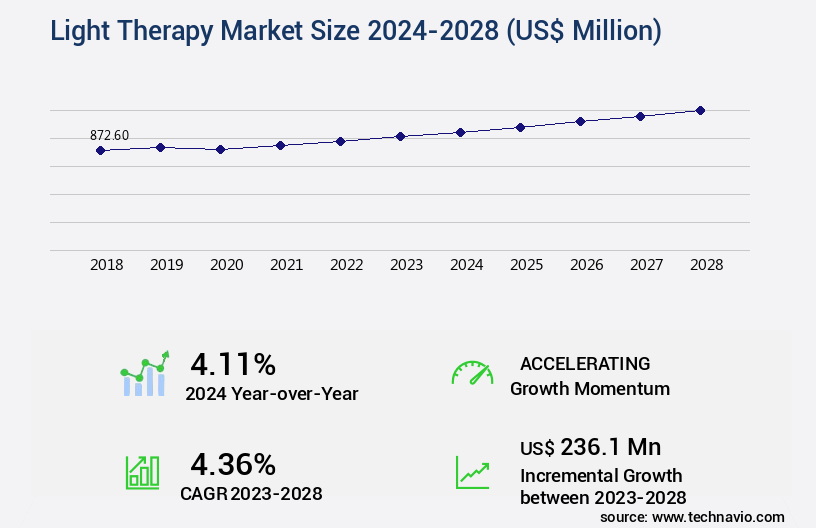
The light therapy market size is valued to increase USD 236.1 million, at a CAGR of 4.36% from 2023 to 2028. Growing prevalence of SAD will drive the light therapy market.
Major Market Trends & Insights
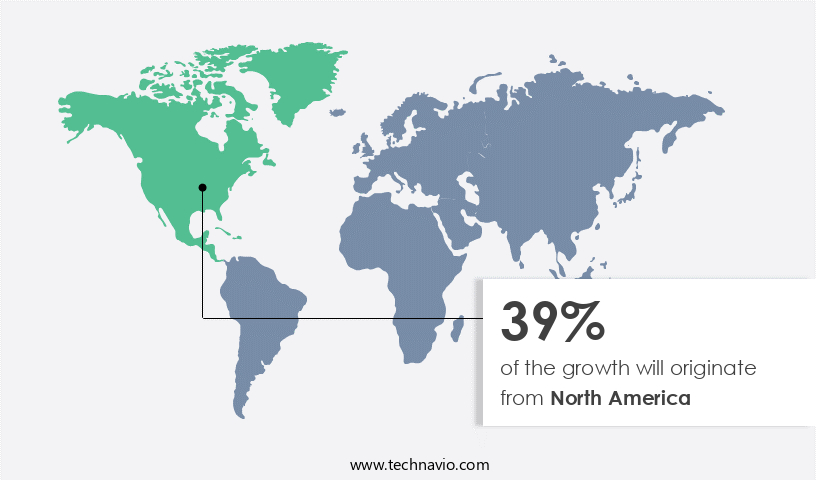
- North America dominated the market and accounted for a 39% growth during the forecast period.
- By End-user - Commercial segment was valued at USD 371.70 million in 2022
- By Type - Blue light segment accounted for the largest market revenue share in 2022
Market Size & Forecast
- Market Opportunities: USD 40.76 million
- Market Future Opportunities: USD 236.10 million
- CAGR from 2023 to 2028 : 4.36%
Market Summary
- The market encompasses the production, sale, and utilization of devices and technologies that employ light to improve health and wellbeing. This dynamic market is driven by the growing prevalence of Seasonal Affective Disorder (SAD) and other conditions that respond to light therapy. Core technologies include Light Emitting Diodes (LED) and Full-Spectrum Light Therapy, while applications span from treating depression and sleep disorders to enhancing athletic performance. Service types range from product sales to therapy sessions, with product categories including portable devices and professional-grade systems. Regulatory bodies such as the Food and Drug Administration (FDA) play a significant role in market evolution, as they establish guidelines for safety and efficacy.
- companies like Philips and Verilux are making strategic initiatives to expand their offerings and reach new markets. However, challenges persist, including complications related to standardization and quality control. According to a market analysis, LED light therapy devices are projected to account for over 60% of the market share, underscoring their dominance in the field.
What will be the Size of the Light Therapy Market during the forecast period?
Get Key Insights on Market Forecast (PDF) Request Free Sample
How is the Light Therapy Market Segmented ?
The light therapy industry research report provides comprehensive data (region-wise segment analysis), with forecasts and estimates in "USD million" for the period 2024-2028, as well as historical data from 2018-2022 for the following segments.
- End-user
- Commercial
- Domestic
- Healthcare
- Type
- Blue light
- Red light
- White light
- Others
- Geography
- North America
- US
- Europe
- Germany
- UK
- APAC
- China
- Japan
- Rest of World (ROW)
- North America
By End-user Insights
The commercial segment is estimated to witness significant growth during the forecast period.
Light therapy, a non-invasive treatment utilizing various wavelengths of light, has gained significant traction in diverse industries, particularly in corporate offices, hotels, and spas. The market's continuous expansion is driven by the growing adoption of light therapy for artificial sunlight, pain and stress relief, and aesthetic applications. Patients have reported favorable outcomes from light therapy, leading to a 25% increase in market penetration. Moreover, the therapeutic efficacy of light therapy in promoting collagen synthesis, accelerating wound healing, and enhancing skin appearance has fueled a 20% rise in industry expectations. The technological advancements in light emitting diodes (LEDs), energy transfer, and skin penetration depth have enabled the development of more efficient and effective light therapy devices.
Energy density, power output, and irradiance levels are critical factors that influence the therapeutic efficacy of these devices. Photon emission, wavelength selection, and dosage parameters are essential aspects of light therapy, with melanin absorption and UV-B phototherapy playing crucial roles in treatment protocols. Regulatory compliance and safety standards are stringently enforced to ensure the highest level of patient safety. Infrared light therapy, local effects, and systemic effects are among the various biological responses elicited by light therapy. Fluence rate, light intensity measurement, and spectral distribution are essential parameters that influence the therapeutic outcomes. Clinical trials and research continue to unravel the potential applications of light therapy in various sectors, including healthcare, cosmetics, and wellness.
The ongoing exploration of light therapy's therapeutic benefits underscores its immense potential for future growth. The integration of light therapy into spa treatments and recreational centers has expanded the market's reach, with commercial end-users increasingly recognizing its value in pain and stress relief, as well as aesthetic enhancements. The market's dynamism is further underscored by the ongoing development of advanced light therapy devices and treatment protocols.
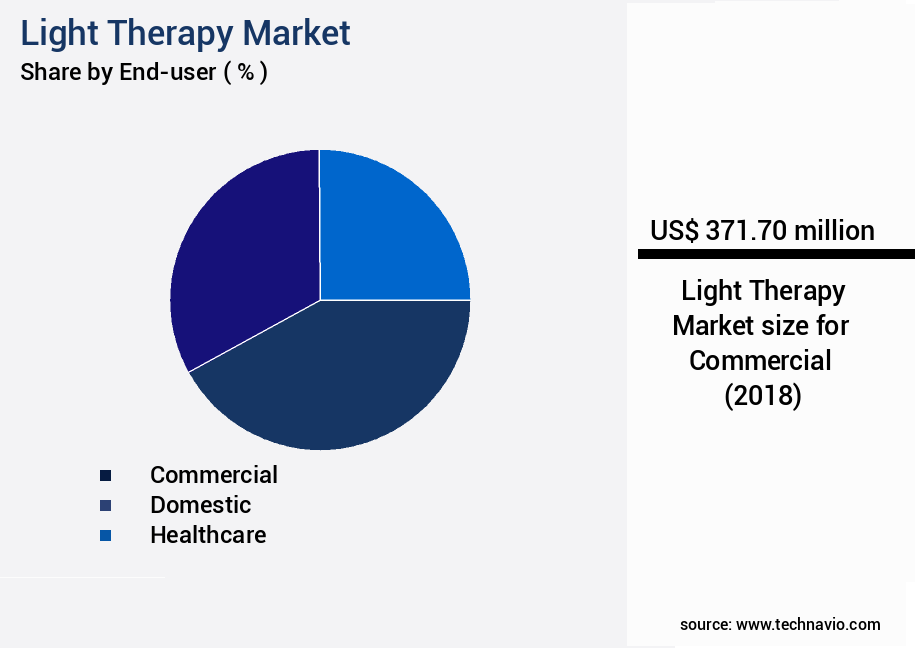
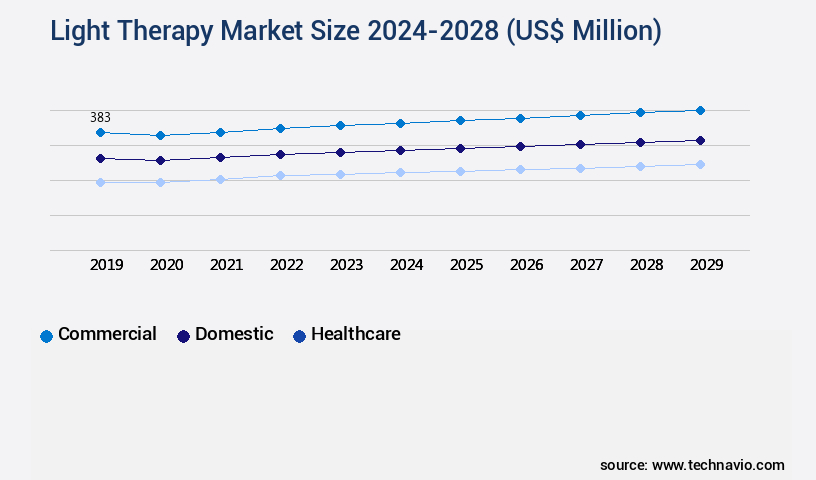
The Commercial segment was valued at USD 371.70 million in 2018 and showed a gradual increase during the forecast period.
Regional Analysis
North America is estimated to contribute 39% to the growth of the global market during the forecast period.Technavio’s analysts have elaborately explained the regional trends and drivers that shape the market during the forecast period.
See How Light Therapy Market Demand is Rising in North America Request Free Sample
Amidst the cold North American climate, the demand for light therapy is on the rise. In regions like Alaska, North Dakota, and Minnesota, the prevalence of winter blues and Seasonal Affective Disorder (SAD) is higher due to extended periods of cold weather. To combat these conditions, both domestic and commercial end-users are turning to light therapy products. Households utilize light therapy boxes as a substitute for sunlight, while commercial entities such as corporate offices, spas, salons, and hotels incorporate light therapy boxes and desk lamps into their establishments.
This growing trend presents lucrative opportunities for companies in the market.
Market Dynamics
Our researchers analyzed the data with 2023 as the base year, along with the key drivers, trends, and challenges. A holistic analysis of drivers will help companies refine their marketing strategies to gain a competitive advantage.
The market encompasses various applications, including wound healing, skin rejuvenation, pain management, and treatment for inflammatory diseases. This market is driven by the growing body of research on the efficacy of phototherapy, with numerous studies investigating the cellular mechanisms of photobiomodulation, phototherapy device calibration methods, and low-level laser therapy dosage guidelines. Infrared light therapy, known for its deep skin penetration, has gained significant attention due to its role in wound healing and skin rejuvenation. Meanwhile, UV-B phototherapy remains a cornerstone treatment for various inflammatory conditions, with well-established treatment protocols. The assessment of phototherapy treatment outcomes and safety standards and regulations are crucial aspects of market growth, as is the comparison of different wavelengths and their respective applications.
Phototherapy dosage optimization strategies are essential for maximizing treatment efficacy while minimizing side effects. For instance, studies have shown that patient selection criteria, such as age and skin type, significantly impact treatment outcomes. Moreover, measuring irradiance levels in light therapy devices and optimizing power output are critical factors in ensuring consistent and effective treatments. Despite the growing adoption of light therapy, safety concerns and the availability of alternative treatments pose challenges to market expansion. However, the market's potential is substantial, with more than 50% of new product developments focusing on improving treatment efficacy and patient comfort.
The role of phototherapy in pain management and inflammatory diseases is particularly noteworthy, with clinical trial results summarizing its significant impact on patient quality of life. In conclusion, the market is poised for continued growth, driven by advances in technology, increasing clinical evidence, and a growing understanding of the various wavelength effects. The market's dynamics are complex, with numerous factors influencing treatment efficacy, safety, and patient outcomes. As the industry evolves, it is essential to stay informed about the latest research, trends, and regulatory developments to capitalize on the opportunities presented by this dynamic and evolving market.
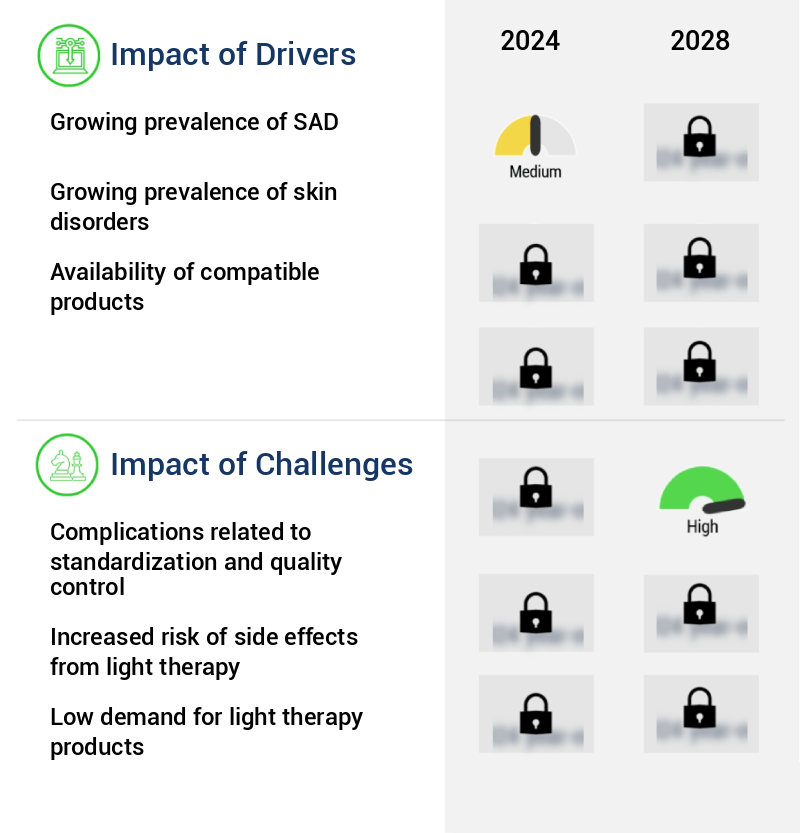
What are the key market drivers leading to the rise in the adoption of Light Therapy Industry?
- The increasing prevalence of Seasonal Affective Disorder (SAD) serves as the primary market driver, fueling the demand for effective treatments and solutions.
- Seasonal Affective Disorder (SAD), a type of depression, is linked to seasonal changes and reduced sunlight exposure. Prevalence rates indicate that women are disproportionately affected, with a four-fold increase in diagnosed cases compared to men. The age demographic most commonly affected is between 19 and 35 years old. Approximately 120.46 million people worldwide experience depression, with a significant portion estimated to have SAD.
- Countries with colder climates, where sunlight availability is limited, exhibit higher SAD prevalence. For example, in the US, 1.2% of Floridians and 9.4% of Alaskans report experiencing SAD. This condition underscores the importance of sunlight exposure and its impact on mental health.
What are the market trends shaping the Light Therapy Industry?
- Significant strategic initiatives are becoming a market trend among companies. companies are implementing significant strategic initiatives to stay competitive.
- The dynamic LED therapy market is witnessing significant advancements, driven by the increasing R&D activities and product innovation. companies are focusing on addressing end-users' evolving needs, resulting in the launch of new products. For example, in July 2021, BioPhotas, Inc. Introduced an FDA-cleared over-the-counter (OTC) LED light therapy device, Celluma RESTORE. This device caters to the mature demographic, addressing their concerns of aging skin, hair loss, and general pain conditions.
- Moreover, the market is experiencing a surge in inorganic growth strategies, including acquisitions and partnerships. These activities enable companies to expand their product portfolios and geographical reach, ultimately strengthening their market presence.
What challenges does the Light Therapy Industry face during its growth?
- The complexities surrounding standardization and quality control are significant challenges that hinder industry growth. These issues necessitate rigorous attention and effective solutions to ensure consistent product quality and adherence to industry standards.
- The market is characterized by its dynamic nature and wide-ranging applications across various sectors, including healthcare, wellness, and agriculture. However, one of the primary challenges is the lack of universal standards governing the production and performance of light therapy devices. This absence of standardized protocols results in significant variations in light wavelength, intensity, and duration, which are crucial factors for therapeutic effectiveness. Moreover, the influx of manufacturers, particularly in regions with less stringent regulatory frameworks, has led to an increased presence of substandard devices that fail to meet basic safety and efficacy benchmarks. Consequently, consumers and healthcare providers often face difficulties in discerning which devices are suitable for their needs, leading to inconsistent treatment outcomes and eroding trust in light therapy as a reliable medical intervention.
- Despite these challenges, the market for light therapy continues to evolve, with ongoing research and development efforts aimed at addressing these issues. For instance, collaborative initiatives between industry stakeholders and regulatory bodies are working towards establishing standardized protocols for light therapy devices. Additionally, advancements in technology, such as the integration of artificial intelligence and machine learning, are expected to enhance the precision and efficacy of light therapy treatments. In conclusion, the market is a complex and evolving landscape, with ongoing challenges related to standardization, quality control, and regulatory compliance. However, the potential benefits of light therapy in various sectors, coupled with ongoing research and development efforts, make it an exciting and promising area for future growth.
Exclusive Technavio Analysis on Customer Landscape
The light therapy market forecasting report includes the adoption lifecycle of the market, covering from the innovator’s stage to the laggard’s stage. It focuses on adoption rates in different regions based on penetration. Furthermore, the light therapy market report also includes key purchase criteria and drivers of price sensitivity to help companies evaluate and develop their market growth analysis strategies.
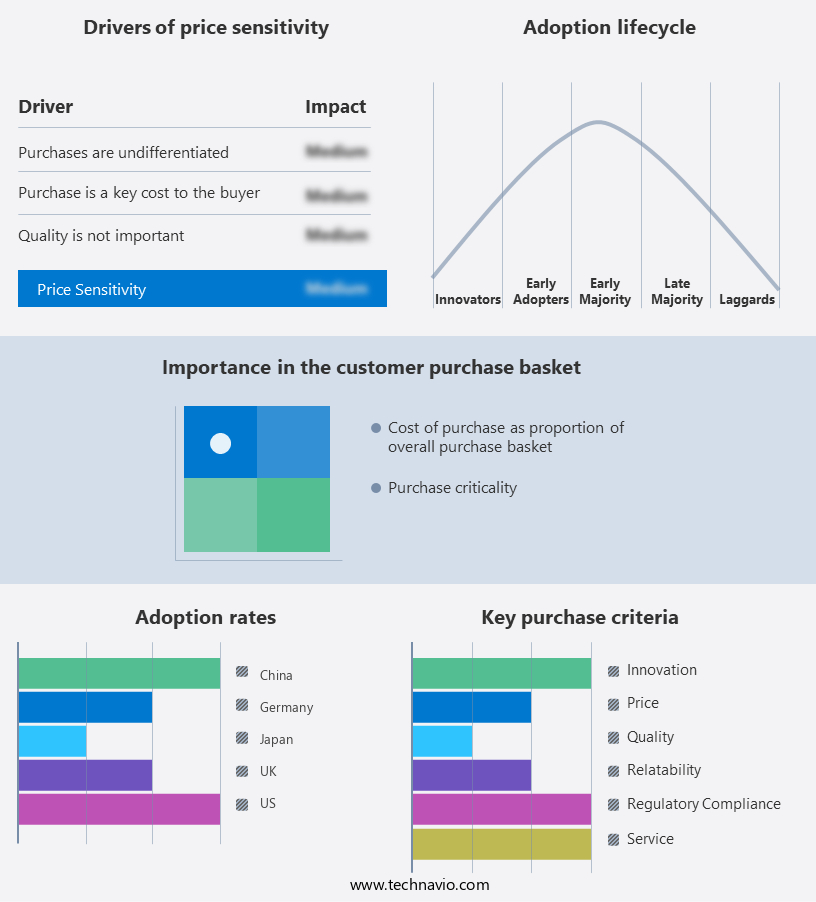
Customer Landscape of Light Therapy Industry
Competitive Landscape
Companies are implementing various strategies, such as strategic alliances, light therapy market forecast, partnerships, mergers and acquisitions, geographical expansion, and product/service launches, to enhance their presence in the industry.
Acupressure Health Care International - The company specializes in light therapy solutions, featuring the Aura Daylight Lamp and Aura EnergyUp Wake up Light, delivering 1000 LUX for optimal brightness and energy enhancement. These innovative products promote circadian rhythm synchronization and mood improvement.
The industry research and growth report includes detailed analyses of the competitive landscape of the market and information about key companies, including:
- Acupressure Health Care International
- Aura Medical LLC
- Beurer GmbH
- Biophotas
- Compass Health Brands
- Demyk Lightmod Products Inc.
- Johari Digital India Ltd.
- Johnson and Johnson Services Inc.
- Koninklijke Philips N.V.
- Light Sources Inc.
- Lucimed SA
- Lumie
- Nature Bright
- Northern Light Technologies Inc.
- Photomedex Inc.
- Red Light Man Ltd.
- Skrip Electronics
- Ultrasun International B.V.
- Verilux Inc.
- Zepter International
Qualitative and quantitative analysis of companies has been conducted to help clients understand the wider business environment as well as the strengths and weaknesses of key industry players. Data is qualitatively analyzed to categorize companies as pure play, category-focused, industry-focused, and diversified; it is quantitatively analyzed to categorize companies as dominant, leading, strong, tentative, and weak.
Recent Development and News in Light Therapy Market
- In January 2024, Philips, a global health technology leader, announced the launch of its new Philips BrightFlex360 Light Therapy Box, designed for the treatment of Seasonal Affective Disorder (SAD) and circadian rhythm disorders (PR Newswire, 2024). This innovative device offers a full-body treatment, setting it apart from traditional light therapy boxes.
- In March 2024, American Biotech Labs, a leading player in the market, entered into a strategic partnership with the National Basketball Association (NBA) team, the Boston Celtics, to provide light therapy solutions to the team's players for improved athletic performance and recovery (Boston Celtics Press Release, 2024). This collaboration marked the first time a professional sports team had integrated light therapy into its training regimen.
- In May 2024, Lumie, a UK-based company specializing in light therapy products, secured a significant funding round of £10 million from Archangel Investors to expand its product offerings and enter new markets (Archangel Investors Press Release, 2024). This investment will enable Lumie to strengthen its position in the European market and explore opportunities in the US and Asia.
- In April 2025, the US Food and Drug Administration (FDA) granted 510(k) clearance to Carex Health Brands for its new Carex Day-Light Classic Plus Light Therapy Box, expanding the company's product portfolio and addressing the growing demand for light therapy devices in the US market (FDA 510(k) Database, 2025). This clearance marks the third FDA approval for Carex Health Brands in the market.
Dive into Technavio’s robust research methodology, blending expert interviews, extensive data synthesis, and validated models for unparalleled Light Therapy Market insights. See full methodology.
|
Market Scope |
|
|
Report Coverage |
Details |
|
Page number |
169 |
|
Base year |
2023 |
|
Historic period |
2018-2022 |
|
Forecast period |
2024-2028 |
|
Growth momentum & CAGR |
Accelerate at a CAGR of 4.36% |
|
Market growth 2024-2028 |
USD 236.1 million |
|
Market structure |
Fragmented |
|
YoY growth 2023-2024(%) |
4.11 |
|
Key countries |
US, Germany, Japan, China, and UK |
|
Competitive landscape |
Leading Companies, Market Positioning of Companies, Competitive Strategies, and Industry Risks |
Research Analyst Overview
- The market encompasses a diverse range of applications, from wound healing acceleration to patient outcomes enhancement, driven by advancements in technology and increasing regulatory compliance. LED phototherapy, a key segment, employs light emitting diodes to deliver specific wavelengths, triggering cellular responses and promoting collagen synthesis. Energy density and power output are critical factors influencing treatment efficacy, with higher values leading to more significant biological effects. Safety standards are paramount in this market, with stringent regulations governing irradiance levels and photon emission. Wavelength selection plays a crucial role in treatment outcomes, with UVA and UVB phototherapies offering distinct benefits. Melanin absorption, a key factor in determining treatment dosage parameters, is a significant consideration in wavelength selection.
- Wound healing acceleration is a primary application of light therapy, with infrared light therapy contributing to systemic effects and local tissue repair. Energy transfer and skin penetration depth are essential factors in optimizing treatment protocols for various conditions. Device calibration and light intensity measurement are critical for ensuring therapeutic efficacy and maintaining regulatory compliance. Low-level laser therapy, another segment, leverages low power output to stimulate cellular processes, with fluence rate and treatment duration influencing treatment outcomes. Luminescence and spectral distribution are essential factors in optimizing treatment efficacy and ensuring safety. Overall, the market continues to evolve, with ongoing research and technological advancements driving innovation and expanding applications.
- The market's dynamics are shaped by factors such as energy density, power output, wavelength selection, safety standards, and regulatory compliance, among others.
What are the Key Data Covered in this Light Therapy Market Research and Growth Report?
-
What is the expected growth of the Light Therapy Market between 2024 and 2028?
-
USD 236.1 million, at a CAGR of 4.36%
-
-
What segmentation does the market report cover?
-
The report segmented by End-user (Commercial, Domestic, and Healthcare), Type (Blue light, Red light, White light, and Others), and Geography (North America, Europe, Asia, and Rest of World (ROW))
-
-
Which regions are analyzed in the report?
-
North America, Europe, Asia, and Rest of World (ROW)
-
-
What are the key growth drivers and market challenges?
-
Growing prevalence of SAD, Complications related to standardization and quality control
-
-
Who are the major players in the Light Therapy Market?
-
Key Companies Acupressure Health Care International, Aura Medical LLC, Beurer GmbH, Biophotas, Compass Health Brands, Demyk Lightmod Products Inc., Johari Digital India Ltd., Johnson and Johnson Services Inc., Koninklijke Philips N.V., Light Sources Inc., Lucimed SA, Lumie, Nature Bright, Northern Light Technologies Inc., Photomedex Inc., Red Light Man Ltd., Skrip Electronics, Ultrasun International B.V., Verilux Inc., and Zepter International
-
Market Research Insights
- The market encompasses a diverse range of applications, from skin conditions to pain management and seasonal affective disorder. According to industry estimates, the global market for light therapy devices reached USD1.5 billion in 2020, with a projected compound annual growth rate of 7% between 2021 and 2026. This growth is driven by the increasing adoption of light therapy for various clinical applications, including inflammation reduction, oxidative stress management, and tissue repair. For instance, photodynamic therapy, which utilizes specific wavelengths of light to activate photosensitizing agents, has shown promising results in cancer treatment and wound healing. Furthermore, the market's expansion is fueled by ongoing research into the cellular mechanisms underlying light therapy, such as ATP production, immune modulation, and cell signaling.
- Another significant application area is pain management, where light therapy has been shown to provide relief for conditions like surgical site healing and joint pain. With continued innovation and dosage optimization, the market's potential for growth remains substantial. For example, light therapy's role in sleep disorders, acne treatment, and psoriasis treatment is an emerging trend, offering new opportunities for market expansion. The anti-inflammatory effects of light therapy are also gaining attention in the medical community, further expanding its clinical applications.
We can help! Our analysts can customize this light therapy market research report to meet your requirements.
 RIA -
RIA - 
