



Push To Talk (PTT) Market Size 2024-2028
The push to talk (PTT) market size is forecast to increase by USD 15.86 billion, at a CAGR of 7.81% between 2023 and 2028.
- The market is witnessing significant growth, driven by the increasing number of product launches in this space. Companies are continually introducing innovative solutions to cater to the evolving communication needs of various industries, particularly in sectors where real-time, reliable, and efficient communication is essential. Simultaneously, mergers and acquisitions (M&A) are shaping the market landscape, with larger players acquiring smaller ones to expand their offerings and strengthen their market presence. Also, the increasing adoption of PTT solutions such as walkie talkies signifies a shift towards more efficient and accessible communication tools within different industry verticals. However, the PTT market is not without challenges. Interoperability and security concerns are major obstacles that need to be addressed. Ensuring seamless communication between different PTT systems and integrating them with other communication tools is a complex issue that requires significant investment in research and development.
- Furthermore, ensuring the security of PTT communications, particularly in industries dealing with sensitive information, is a critical concern. Addressing these challenges will be crucial for companies looking to capitalize on the growth opportunities in the PTT market and maintain a competitive edge. Companies must focus on developing interoperable and secure solutions to meet the demands of their customers and stay ahead of the competition.
What will be the Size of the Push To Talk (PTT) Market during the forecast period?
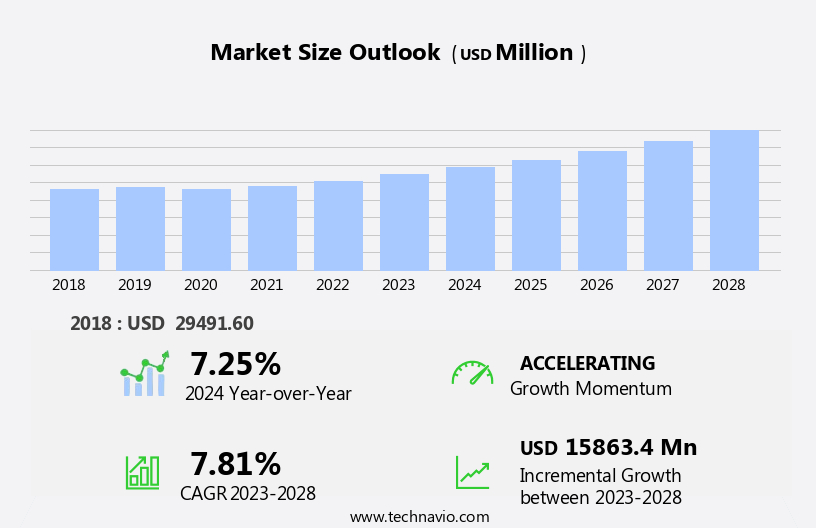
Explore in-depth regional segment analysis with market size data - historical 2018-2022 and forecasts 2024-2028 - in the full report.
Request Free Sample
The push-to-talk (PTT) market continues to evolve, driven by advancements in technology and diverse applications across various sectors. Radio dispatch solutions integrate seamlessly with repeater systems to expand coverage and enhance audio quality, ensuring clear voice communication. Access control mechanisms and emergency communication features bolster safety and efficiency in public safety, fire services, and oil and gas industries. Channel allocation and speaker microphones optimize user experience, while radio tracking and interference mitigation technologies ensure reliable connectivity. Two-way radio systems, including Tetra radios and digital radios, undergo continuous improvement, with antenna types and radio certification processes shaping their performance.
Fleet management and mobile radio systems leverage PTT technology for real-time communication, while base stations and network management software enable efficient system maintenance. User authentication and data transmission capabilities add an extra layer of security. The radio spectrum, RF technology, and radio licensing regulations shape the market landscape, with ongoing developments in PTT radio software and radio repair services further driving innovation. The dynamic nature of the market ensures a constant unfolding of market activities and evolving patterns.
How is this Push To Talk (PTT) Industry segmented?
The push to talk (PTT) industry research report provides comprehensive data (region-wise segment analysis), with forecasts and estimates in "USD million" for the period 2024-2028, as well as historical data from 2018-2022 for the following segments.
- Type
- LMR
- Cellular
- Business Segment
- Large enterprise
- SMEs
- Geography
- North America
- US
- Europe
- France
- Germany
- UK
- APAC
- China
- Rest of World (ROW)
- North America
.
By Type Insights
The LMR segment is estimated to witness significant growth during the forecast period.
Push-to-Talk (PTT) technology is a crucial component of Land Mobile Radio (LMR) communication systems, widely adopted by public safety agencies, industries, and enterprises for mission-critical voice communications. LMR networks, including trunked and conventional systems, have evolved significantly from analog to digital technologies such as P25 and TETRA radios. These advancements have driven market growth in the LMR segment of the PTT market. LMR systems, designed for PTT communications over private networks, offer advantages like high reliability, durability, ease of use, and direct mode capability. These systems cater to various sectors, including public safety, oil and gas, transportation, utilities, and logistics.
LMR networks employ repeater systems to extend radio coverage and enhance signal strength, ensuring clear voice communications. Access control and emergency communication features are essential for LMR systems, ensuring secure and reliable communication during critical situations. Channel allocation and radio monitoring enable efficient use of the radio spectrum and maintain order in the communication network. Speaker microphones and carrying cases are essential accessories for LMR users, ensuring hands-free operation and protection of the equipment. Digital radios, including P25 and DMR radios, offer enhanced features like data transmission, noise cancellation, and user authentication, making them increasingly popular in the market.
Network management and radio maintenance are crucial aspects of LMR systems, ensuring optimal performance and longevity. Two-way radio systems, including base stations and mobile radio systems, enable seamless communication between team members, enhancing operational efficiency and safety. Radio licensing and certification ensure regulatory compliance and secure radio frequency (RF) usage. In the public safety sector, LMR systems are essential for law enforcement, fire services, and emergency responders, enabling effective communication during critical situations. The oil and gas industry uses LMR systems for safety and operational efficiency, while fleet management applications ensure effective communication between drivers and dispatchers. PTT radios, including speaker microphones and carrying cases, are essential accessories for LMR users, ensuring clear voice communications and equipment protection.
Radio repair and maintenance are crucial for maintaining optimal performance and longevity of LMR systems. In conclusion, the PTT market is driven by the adoption of LMR systems, which offer high reliability, durability, ease of use, and direct mode capability. Technological advancements in LMR technology, including digital radios and network management systems, have further enhanced the capabilities and efficiency of these systems. The market continues to evolve, with a focus on enhancing voice clarity, improving signal strength, and ensuring regulatory compliance.
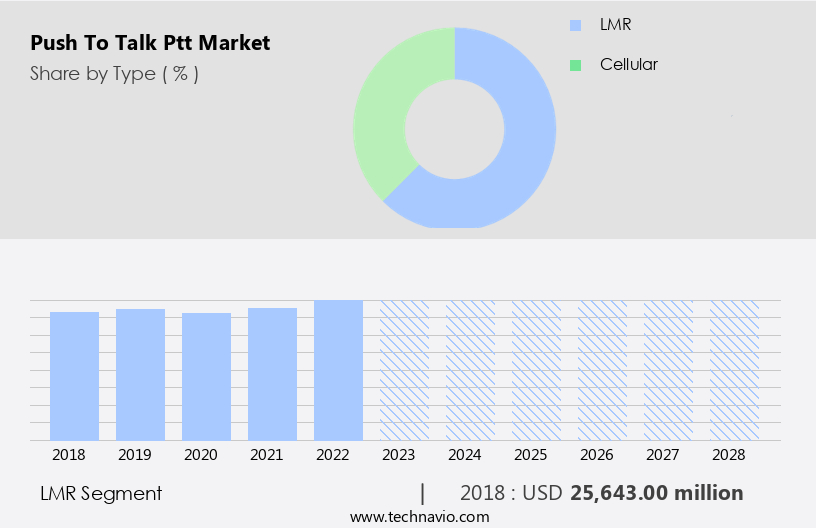
The LMR segment was valued at USD 25.64 billion in 2018 and showed a gradual increase during the forecast period.
Regional Analysis
North America is estimated to contribute 42% to the growth of the global market during the forecast period. Technavio's analysts have elaborately explained the regional trends and drivers that shape the market during the forecast period.
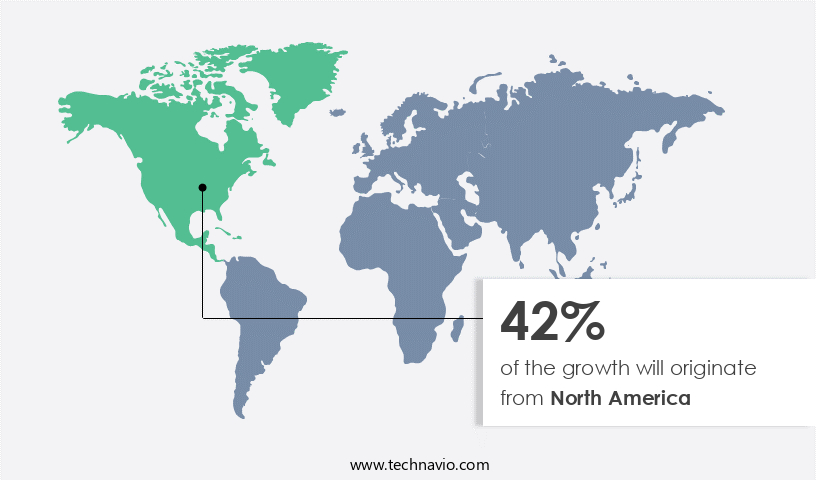
The PTT market encompasses various components including radio dispatch, repeater systems, audio quality, radio coverage, voice clarity, access control, emergency communication, channel allocation, speaker microphones, radio tracking, radio interference, fleet management, radio frequency (RF), tetra radios, antenna types, radio certification, radio spectrum, two-way radios, radio monitoring, oil and gas, public safety, fire services, signal strength, analog radios, radio accessories, p25 radios, dmr radios, radio training, base stations, radio maintenance, radio licensing, mobile radio systems, user authentication, network management, digital radios, radio software, law enforcement, radio infrastructure, and ptt radios. In North America, this market holds a significant share due to the presence of key companies, increasing investments in PTT technology, and the growing adoption of PTT solutions for public safety applications.
The US and Canada are the major contributors to the regional market. Effective communication during emergency situations is crucial for disaster management. PTT technology offers an efficient communication system for managing emergency situations, enabling seamless coordination among emergency responders. Digital radios, radio software, and radio infrastructure are integral to the PTT ecosystem, ensuring clear voice communication, reliable data transmission, and robust network management. Radio certification and licensing are essential for ensuring regulatory compliance and efficient spectrum utilization. Radio maintenance and repair services ensure the longevity and optimal performance of PTT systems. The oil and gas industry and public safety sectors, including fire services and law enforcement, are significant end-users of PTT technology.
PTT technology offers several advantages, such as improved voice clarity, access control, channel allocation, and emergency communication, making it an indispensable tool for these industries.
Market Dynamics
Our researchers analyzed the data with 2023 as the base year, along with the key drivers, trends, and challenges. A holistic analysis of drivers will help companies refine their marketing strategies to gain a competitive advantage.
What are the key market drivers leading to the rise in the adoption of Push To Talk (Ptt) Industry?
- The increasing number of new product launches from PTT is the primary catalyst fueling market growth.
- In the realm of network management, the market for Push-to-Talk (PTT) devices and software is witnessing significant growth. Companies are investing in advanced technology to create technologically superior PTT solutions. New product launches are a common occurrence as companies expand their offerings. These new PTT devices come equipped with features designed to enhance communication and workflow efficiency in diverse industries. Interoperable PTT solutions have gained traction among government agencies and public safety departments due to their ability to facilitate effective response during emergency situations. As a result, major players in the market are prioritizing the development of enhanced features to boost the adoption of PTT products and services among end-users.
- For instance, in 2024, T-Mobile introduced T-Mobile Mission Critical Push-to-Talk (MCPTT), a solution that offers noise cancellation, data transmission, and radio repair capabilities, among other advanced features. This focus on innovation is expected to drive market growth and meet the evolving communication needs of businesses.
What are the market trends shaping the Push To Talk (PTT) Industry?
- The market trend increasingly favors higher M and A deals.
- Push-to-Talk (PTT) market is witnessing significant growth as companies continue to expand their product offerings and collaborate with end-users to integrate PTT services into their platforms. In March 2020, Ericsson bolstered its MC-PTT solutions by acquiring Genaker. This strategic move enhanced Ericsson's MC-PTT offerings to cater to the evolving mission-critical communications and private network market. Similarly, SLA Corp. (ESChat) formed a partnership with EGC International Inc. In October 2020, resulting in the launch of TalkPlus, a PTT service powered by ESChat, in November 2020. The PTT market's growth can be attributed to the increasing demand for radio dispatch solutions, repeater systems, and access control in various industries.
- Audio quality, voice clarity, and channel allocation are essential factors driving the market's growth. Radio coverage and speaker microphones are crucial components of PTT systems, ensuring seamless communication in diverse environments. Moreover, radio tracking and interference management are critical aspects of PTT systems, ensuring efficient communication and minimizing disruptions. Emergency communication applications further emphasize the importance of PTT technology, making it an indispensable tool for various industries. Companies are focusing on enhancing PTT systems' functionality and reliability to meet the evolving demands of their customers.
What challenges does the Push To Talk (PTT) Industry face during its growth?
- The integration of interoperability and security in PTT (Push-to-Talk) applications is a significant challenge that necessitates careful consideration in order to ensure industry growth. Ensuring seamless communication between different systems and maintaining robust security measures are essential for the continued adoption and expansion of PTT technology.
- The Push-to-Talk (PTT) market faces interoperability challenges due to the inability of PTT devices to directly communicate with Land Mobile Radio (LMR) equipment without additional interoperability equipment. This issue hinders market growth as current offerings, such as AT and T's PTT/MCPTT voice solution, only work on their specific network and devices, limiting cross-carrier compatibility. Jurisdictions not subscribing to these networks must rely on third-party Over-The-Top (OTT) applications, which do not fully address interoperability concerns. Fleet management, public safety, fire services, oil and gas industries, and other sectors heavily relying on two-way radios and radio monitoring can benefit from PTT technology.
- However, the lack of seamless interoperability between different systems and networks remains a significant obstacle. Ensuring radio certification and managing the radio spectrum are crucial aspects of implementing PTT solutions, which can be addressed through industry collaborations and technological advancements. Interoperability remains a critical concern in the PTT market, requiring ongoing efforts to enable seamless communication across various radio systems and networks.
Exclusive Customer Landscape
The push to talk (PTT) market forecasting report includes the adoption lifecycle of the market, covering from the innovator's stage to the laggard's stage. It focuses on adoption rates in different regions based on penetration. Furthermore, the push to talk (PTT) market report also includes key purchase criteria and drivers of price sensitivity to help companies evaluate and develop their market growth analysis strategies.
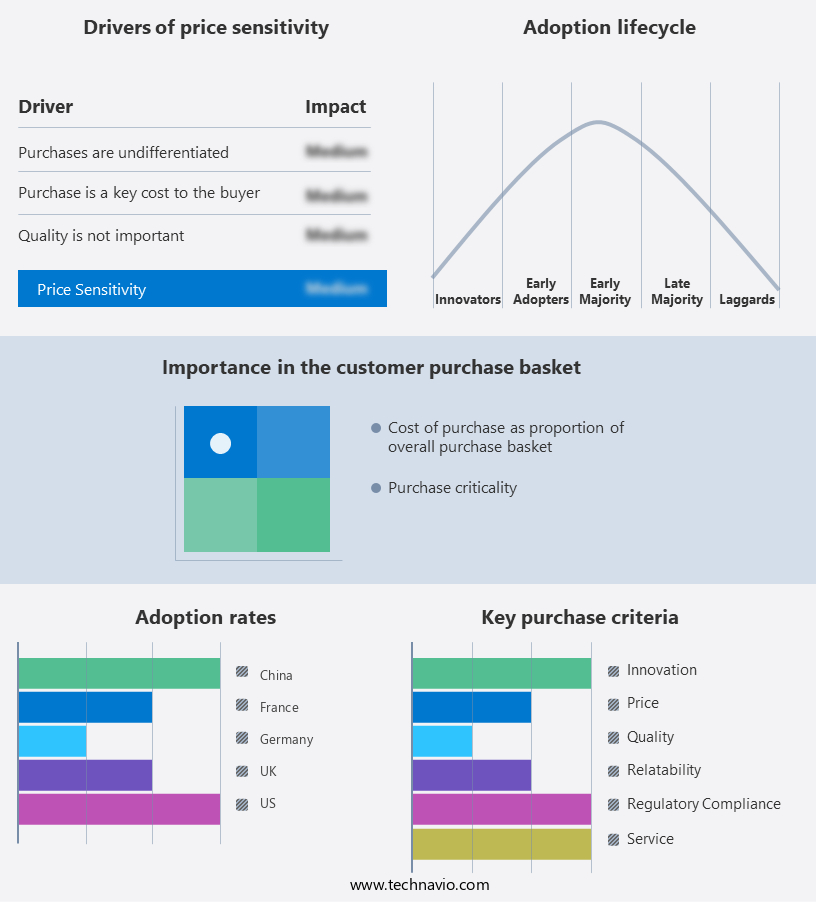
Customer Landscape
Key Companies & Market Insights
Companies are implementing various strategies, such as strategic alliances, push to talk (PTT) market forecast, partnerships, mergers and acquisitions, geographical expansion, and product/service launches, to enhance their presence in the industry.
AINA Wireless Finland Oy - This company provides IP-based push-to-talk (PTT) services, including AT&T Enhanced PTT.
The industry research and growth report includes detailed analyses of the competitive landscape of the market and information about key companies, including:
- AINA Wireless Finland Oy
- AT and T Inc.
- GroupTalk Sweden AB
- Hytera Communications Corp. Ltd.
- international Push to Talk Ltd.
- Iridium Communications Inc.
- Motorola Solutions Inc.
- Orion Labs Inc.
- PeakPTT
- Qualcomm Inc.
- SLA Corp.
- T Mobile US Inc.
- Tait Communications
- Telefonaktiebolaget LM Ericsson
- Telstra Corp. Ltd.
- Verizon Communications Inc.
- Voxer Inc.
- Yiip Inc.
- Zebra Technologies Corp.
- Zello Inc.
Qualitative and quantitative analysis of companies has been conducted to help clients understand the wider business environment as well as the strengths and weaknesses of key industry players. Data is qualitatively analyzed to categorize companies as pure play, category-focused, industry-focused, and diversified; it is quantitatively analyzed to categorize companies as dominant, leading, strong, tentative, and weak.
Recent Development and News in Push To Talk (PTT) Market
- In February 2024, Motorola Solutions announced the launch of their next-generation Push-to-Talk (PTT) service, Mototrbo Connect Plus, which integrates broadband data capabilities with traditional PTT communication, enabling users to send multimedia messages and access real-time data (Motorola Solutions Press Release, 2024).
- In May 2024, ZTE Corporation and NTT Docomo, Inc. formed a strategic partnership to develop and commercialize PTT solutions for enterprise customers in Japan, combining ZTE's communication technology expertise with Docomo's market presence (ZTE Corporation Press Release, 2024).
- In October 2024, Hytera Communications Corporation completed a significant funding round of over USD 150 million, boosting its research and development efforts in advanced PTT technologies and expanding its global market reach (Hytera Communications Corporation Securities Filing, 2024).
- In January 2025, the European Union Agency for Cybersecurity granted a European Certification Scheme for ICT Security (ECSS) certification to the PTT solutions of several leading companies, ensuring secure communication for public safety organizations and critical infrastructure sectors (European Union Agency for Cybersecurity Press Release, 2025).
Research Analyst Overview
- The push-to-talk (PTT) market is experiencing significant activity and trends, driven by the increasing demand for efficient team communication solutions. Radio competition is fierce, with hybrid PTT solutions gaining traction due to their ability to combine the benefits of both traditional two-way radios and cellular networks. Interoperability standards are crucial in this market, ensuring seamless communication between different radio systems. Text messaging and group communication are integral parts of modern team communication, leading to the integration of third-party messaging apps with radio dispatch software. Location tracking and GPS technology are also essential features, enabling real-time monitoring of team members and improving dispatch efficiency.
- Cloud-based PTT and Wi-Fi PTT solutions are on the rise, offering cost-effective alternatives to traditional radio systems while maintaining high levels of reliability and performance. Radio technology advancements, such as IP-based PTT and LTE PTT, are pushing the boundaries of radio range and usage patterns. Radio adoption is increasing across various industries, with team communication and dispatch software becoming essential tools for businesses seeking to enhance their operational efficiency. API integration and radio industry collaboration are key drivers of innovation, enabling new use cases and applications. Radio cost and deployment remain critical factors in the market, with radio durability and performance being key considerations for businesses.
- The future of the radio industry lies in continued innovation and the ability to meet the evolving communication needs of businesses in a rapidly changing technological landscape.
Dive into Technavio's robust research methodology, blending expert interviews, extensive data synthesis, and validated models for unparalleled Push To Talk (PTT) Market insights. See full methodology.
|
Market Scope |
|
|
Report Coverage |
Details |
|
Page number |
168 |
|
Base year |
2023 |
|
Historic period |
2018-2022 |
|
Forecast period |
2024-2028 |
|
Growth momentum & CAGR |
Accelerate at a CAGR of 7.81% |
|
Market growth 2024-2028 |
USD 15863.4 million |
|
Market structure |
Fragmented |
|
YoY growth 2023-2024(%) |
7.25 |
|
Key countries |
US, China, Germany, France, and UK |
|
Competitive landscape |
Leading Companies, Market Positioning of Companies, Competitive Strategies, and Industry Risks |
What are the Key Data Covered in this Push To Talk (Ptt) Market Research and Growth Report?
- CAGR of the Push To Talk (Ptt) industry during the forecast period
- Detailed information on factors that will drive the growth and forecasting between 2024 and 2028
- Precise estimation of the size of the market and its contribution of the industry in focus to the parent market
- Accurate predictions about upcoming growth and trends and changes in consumer behaviour
- Growth of the market across North America, Europe, APAC, South America, and Middle East and Africa
- Thorough analysis of the market's competitive landscape and detailed information about companies
- Comprehensive analysis of factors that will challenge the push to talk (ptt) market growth of industry companies
We can help! Our analysts can customize this push to talk (ptt) market research report to meet your requirements.
 RIA -
RIA - 
