



Smart Pole Market Size 2026-2030
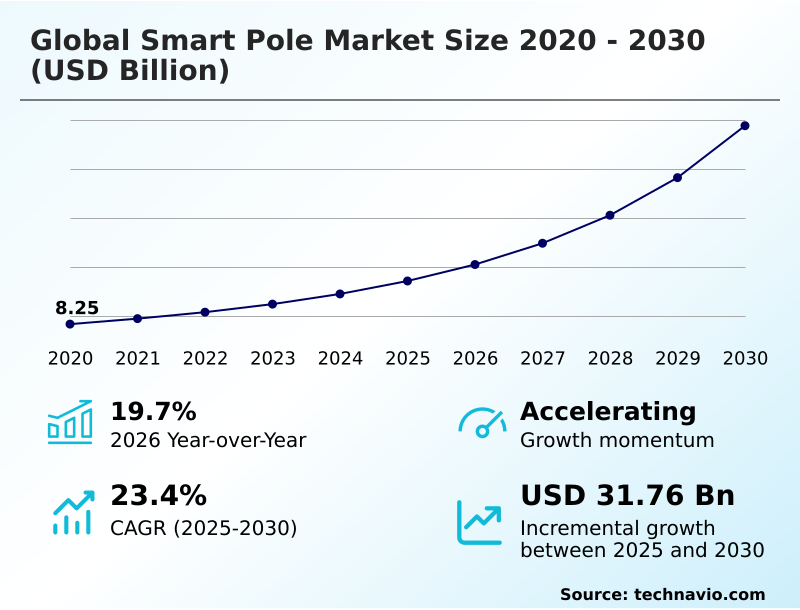
The smart pole market size is valued to increase by USD 31.76 billion, at a CAGR of 23.4% from 2025 to 2030. Acceleration of comprehensive smart city initiatives and urban digitalization will drive the smart pole market.
Major Market Trends & Insights
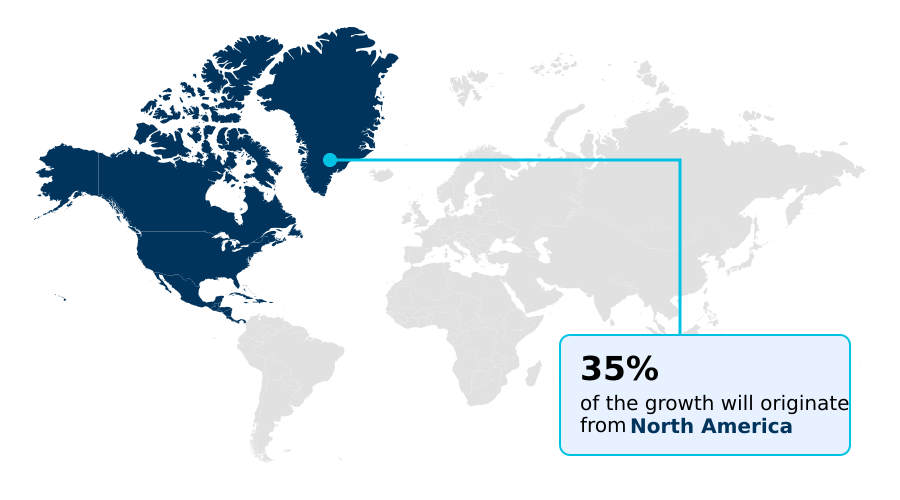
- North America dominated the market and accounted for a 35.1% growth during the forecast period.
- By Type - Retrofit installations segment was valued at USD 8.17 billion in 2024
- By Product - Component segment accounted for the largest market revenue share in 2024
Market Size & Forecast
- Market Opportunities: USD 40.58 billion
- Market Future Opportunities: USD 31.76 billion
- CAGR from 2025 to 2030 : 23.4%
Market Summary
- The Smart Pole Market is fundamentally reshaping urban landscapes by transforming traditional streetlights into intelligent, multifunctional assets. This transition is driven by the convergence of several key factors, including the urgent need for energy conservation, the expansion of 5G telecommunications, and the escalating demand for enhanced public safety.
- These advanced structures serve as critical nodes in a broader Internet of Things (IoT) network, integrating technologies such as high-efficiency light emitting diode fixtures, environmental sensors, public wireless internet provisioning, and high-definition surveillance cameras.
- A key trend is the shift toward modular hardware architectures, allowing municipalities to customize poles with components like EV charging modules or digital signage integration as needs evolve.
- For instance, a city can deploy a network of poles initially for adaptive lighting controls, achieving immediate energy savings, and later add acoustic monitoring systems for public safety without replacing the core infrastructure. However, the market faces challenges related to high initial investment costs and data privacy concerns, which require robust cybersecurity protocols and innovative public-private partnerships to overcome.
- The integration of edge computing nodes further enhances capabilities, enabling real-time data analysis for applications like intelligent traffic management.
What will be the Size of the Smart Pole Market during the forecast period?
Get Key Insights on Market Forecast (PDF) Get Free Sample
How is the Smart Pole Market Segmented?
The smart pole industry research report provides comprehensive data (region-wise segment analysis), with forecasts and estimates in "USD million" for the period 2026-2030, as well as historical data from 2020-2024 for the following segments.
- Type
- Retrofit installations
- New installations
- Product
- Component
- Software
- Services
- Application
- Highways and roadways
- Public places
- Railways and harbors
- Technology
- LED technology
- IoT technology
- Solar power technology
- Communication technology
- Geography
- North America
- US
- Canada
- Mexico
- Europe
- Germany
- UK
- France
- APAC
- China
- India
- Japan
- Middle East and Africa
- Saudi Arabia
- UAE
- South Africa
- South America
- Brazil
- Argentina
- Rest of World (ROW)
- North America
By Type Insights
The retrofit installations segment is estimated to witness significant growth during the forecast period.
The retrofit installations segment is a pragmatic strategy for urban digital transformation, enabling municipalities to deploy advanced smart city technologies without the high capital expenditure of full replacements.
This approach involves upgrading legacy streetlights with modular hardware architectures, including light emitting diode fixtures and environmental sensor arrays. This method facilitates a phased modernization, aligning with civic needs and public funding.
By reusing existing structures, cities reduce their carbon footprint, a key goal of sustainable urban development. This process minimizes disruption, as it avoids complex civil engineering tasks.
However, it requires structural integrity assessments to ensure legacy poles can support new hardware, and grid modernization is often needed to provide continuous power, a departure from traditional lighting which often achieves energy savings of more than 50%.
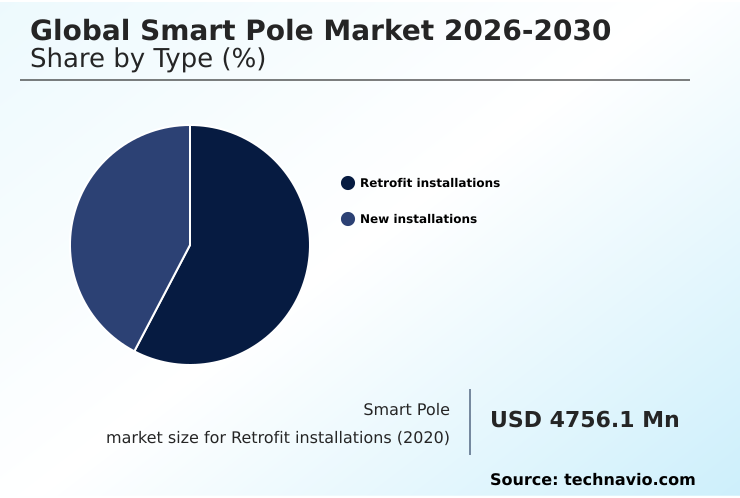
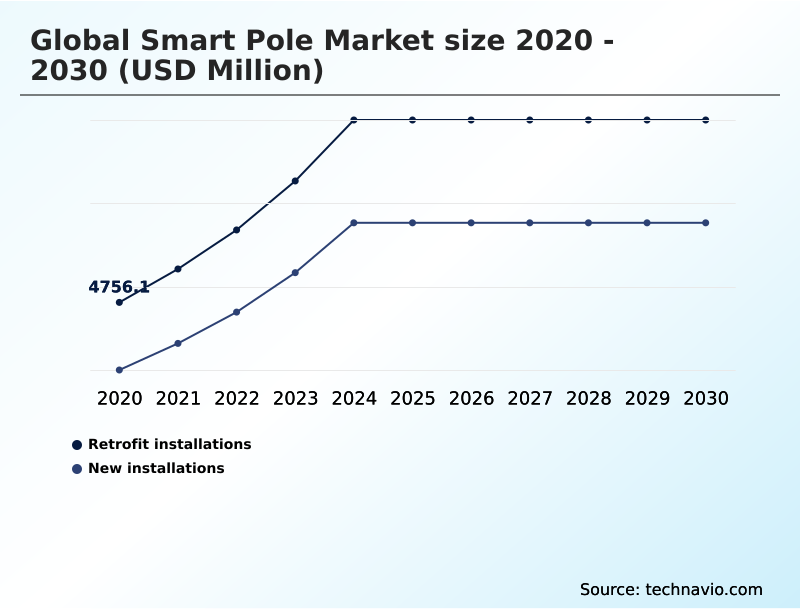
The Retrofit installations segment was valued at USD 8.17 billion in 2024 and showed a gradual increase during the forecast period.
Regional Analysis
North America is estimated to contribute 35.1% to the growth of the global market during the forecast period.Technavio’s analysts have elaborately explained the regional trends and drivers that shape the market during the forecast period.
See How Smart Pole Market Demand is Rising in North America Get Free Sample
The geographic landscape is diverse, with North America and Europe leading in mature deployments driven by smart city frameworks and sustainability goals.
North America represents over 35% of the incremental growth opportunity, leveraging its advanced telecommunications sector for 5G small cell integration. Meanwhile, APAC is the fastest-growing region, fueled by massive greenfield projects and state-led digitalization in countries like China and India.
The Middle East showcases futuristic applications, with nations like Saudi Arabia investing heavily in connected city infrastructure for new megacities.
In contrast, South America, which exhibits the market’s highest regional CAGR of 24.2%, and Africa focus on deploying off-grid renewable energy solutions and low-power wide-area networks to address fundamental needs for public safety monitoring and digital inclusion.
This regional differentiation shapes demand for specific features, from advanced edge analytics in developed markets to resilient infrastructure in emerging ones.
Market Dynamics
Our researchers analyzed the data with 2025 as the base year, along with the key drivers, trends, and challenges. A holistic analysis of drivers will help companies refine their marketing strategies to gain a competitive advantage.
- The strategic value of the Smart Pole Market is increasingly defined by specific, high-impact use cases. The role of a smart pole for 5G network densification is paramount, as these structures provide the ideal pre-certified locations for small cell hardware, drastically reducing deployment timelines and costs for telecom operators.
- This function is a core component of building out the infrastructure needed for autonomous vehicles and large-scale IoT applications. Concurrently, the benefits of modular smart pole design are reshaping procurement strategies.
- Municipalities can now future-proof their investments by selecting a base structure and adding capabilities like advanced sensors or public address systems over time, avoiding the high cost of complete replacements.
- This adaptable approach is central to understanding the ROI of smart pole retrofit projects, which can be completed in nearly half the time of new builds, delivering faster value through energy savings and enhanced services. As cities expand their smart city initiatives, the ability of these poles to serve as a unified platform for diverse technologies is crucial.
- For instance, integrating EV charging into smart poles addresses the critical shortage of public charging infrastructure in dense urban areas, supporting the global transition to electric mobility without adding to street clutter. This multifaceted functionality underscores why a smart pole role in smart city initiatives is no longer a niche concept but a foundational element of modern urban planning.
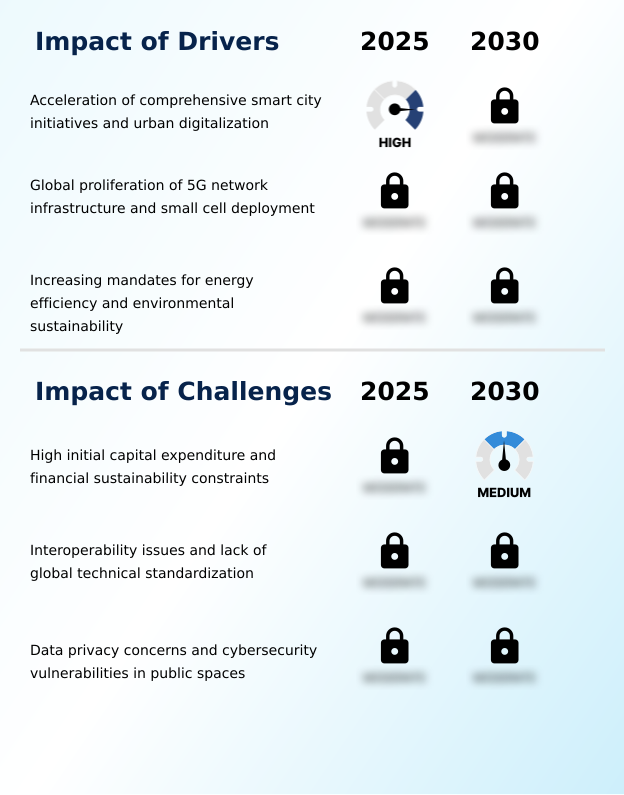
What are the key market drivers leading to the rise in the adoption of Smart Pole Industry?
- The acceleration of comprehensive smart city initiatives and widespread urban digitalization is the primary driver fueling market expansion.
- Market growth is propelled by three primary drivers that address pressing urban challenges.
- The acceleration of comprehensive smart city initiatives is a major catalyst, as municipalities transition to data-driven ecosystems where smart urban lighting poles act as foundational nodes for improving civic services.
- Secondly, the global proliferation of 5G network infrastructure is a critical technical driver.
- The technology's requirement for a high density of small cell installations is perfectly met by leveraging existing pole locations, with some cities reporting a 40% faster network rollout compared to building new towers.
- This synergy between telecommunications and lighting is crucial for enabling advanced applications.
- Finally, increasing mandates for energy efficiency and environmental sustainability are compelling the adoption of adaptive lighting controls and light emitting diode fixtures, which can reduce municipal energy consumption by over 50%.
- This focus on sustainability also supports the broader transition toward transportation electrification.
What are the market trends shaping the Smart Pole Industry?
- The market is shaped by a strategic evolution toward modular and multi-functional infrastructure design. This approach allows for the creation of customizable and future-proof urban assets.
- Key trends are reshaping the market toward intelligent, adaptable, and economically viable urban assets. The evolution toward modular and highly customizable hardware architectures is paramount, enabling future-proof urban investments. This allows for the integration of diverse components, such as high-resolution surveillance cameras and EV charging modules, without overhauling entire structures.
- Another transformative trend is the rise of innovative data monetization strategies through public-private partnerships, turning infrastructure into revenue streams via digital advertising and 5G small cell integration. Furthermore, the deep integration of artificial intelligence and edge analytics is creating decentralized intelligence.
- This allows for real-time data analysis at the street level, with AI-driven predictive maintenance reducing operational downtime by up to 30% and enhancing public safety monitoring without the network latency of cloud-based processing. The adoption of carbon neutral smart poles powered by off-grid renewable energy is also gaining traction, aligning with global sustainability goals.
What challenges does the Smart Pole Industry face during its growth?
- High initial capital expenditure and significant financial sustainability constraints present a key challenge to market growth.
- Despite strong drivers, the market faces significant challenges that can impede widespread adoption. The high initial capital expenditure remains a primary restraint, particularly for smaller municipalities, as the cost of a single smart pole can be up to ten times that of a traditional streetlight. This financial barrier is compounded by long-term ROI cycles that are not always immediately apparent.
- Secondly, a lack of global technical standardization and interoperability issues create a fragmented ecosystem. This forces cities into vendor lock-in and complicates the integration of hardware from different providers, increasing system management complexity by an estimated 20%. Finally, mounting data privacy concerns and cybersecurity vulnerabilities pose a major risk.
- The extensive data collection from public spaces requires stringent cybersecurity protocols and transparent governance, as a single network breach could compromise critical city services and erode public trust, potentially leading to restrictive legislation.
Exclusive Technavio Analysis on Customer Landscape
The smart pole market forecasting report includes the adoption lifecycle of the market, covering from the innovator’s stage to the laggard’s stage. It focuses on adoption rates in different regions based on penetration. Furthermore, the smart pole market report also includes key purchase criteria and drivers of price sensitivity to help companies evaluate and develop their market growth analysis strategies.
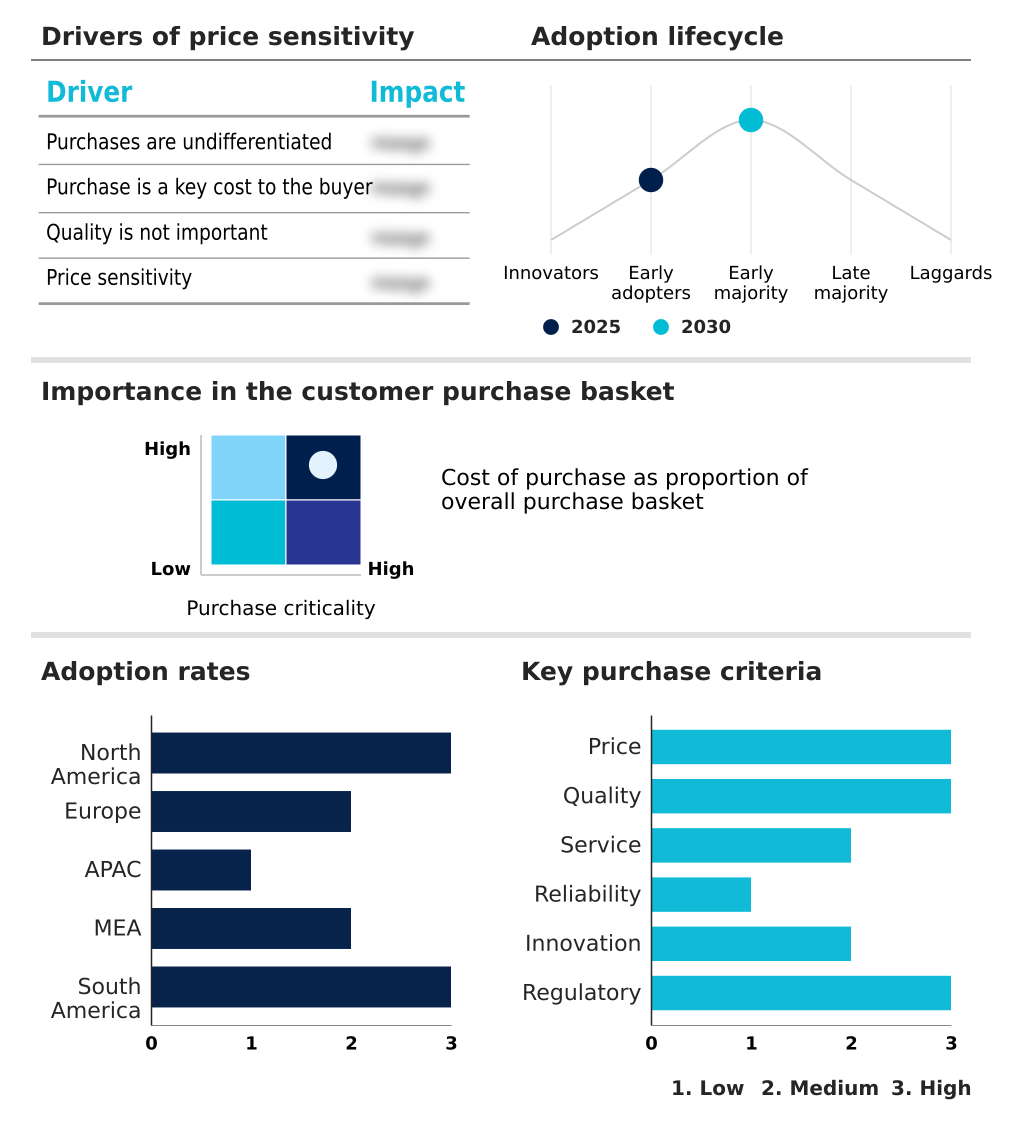
Customer Landscape of Smart Pole Industry
Competitive Landscape
Companies are implementing various strategies, such as strategic alliances, smart pole market forecast, partnerships, mergers and acquisitions, geographical expansion, and product/service launches, to enhance their presence in the industry.
Acuity Brands Inc. - Analysis reveals a market shift toward multifunctional urban infrastructure integrating intelligent lighting, 5G connectivity, and EV charging to enhance civic services and operational efficiency.
The industry research and growth report includes detailed analyses of the competitive landscape of the market and information about key companies, including:
- Acuity Brands Inc.
- Bosun Lighting Co. Ltd.
- Delta Electronics Inc.
- Eaton Corp. Plc
- Efftronics Systems Pvt. Ltd
- Hapco Inc.
- Hubbell Inc.
- IRAM Technologies Pvt. Ltd.
- Kesslec Smart Lighting
- Lanao Tek Pvt. Ltd.
- Lumca Inc.
- National LED Inc.
- Norsk Hydro ASA
- Omniflow S.A.
- Sansi Electronic Engineering Co.
- Schreder SA
- Signify NV
- Sunna Design SAS
- Valmont Industries Inc.
- Wipro Ltd.
Qualitative and quantitative analysis of companies has been conducted to help clients understand the wider business environment as well as the strengths and weaknesses of key industry players. Data is qualitatively analyzed to categorize companies as pure play, category-focused, industry-focused, and diversified; it is quantitatively analyzed to categorize companies as dominant, leading, strong, tentative, and weak.
Recent Development and News in Smart pole market
- In April 2025, Digicomm International acquired EasyStreet Systems to accelerate the deployment of next-generation smart city networks and broadband infrastructure.
- In May 2025, O2 Telefonica and 5G Synergiewerk partnered to launch a major rollout of 5G-integrated streetlights across 25 major cities in Germany.
- In December 2025, Omniflow S.A. won the Smart Cities Global Startup Challenge for its carbon-neutral smart poles powered by integrated wind and solar energy.
- In September 2025, Viper Networks and Apollo completed the pilot deployment of advanced smart city infrastructure, including intelligent lighting poles, in the Kingdom of Saudi Arabia.
Dive into Technavio’s robust research methodology, blending expert interviews, extensive data synthesis, and validated models for unparalleled Smart Pole Market insights. See full methodology.
| Market Scope | |
|---|---|
| Page number | 320 |
| Base year | 2025 |
| Historic period | 2020-2024 |
| Forecast period | 2026-2030 |
| Growth momentum & CAGR | Accelerate at a CAGR of 23.4% |
| Market growth 2026-2030 | USD 31759.1 million |
| Market structure | Fragmented |
| YoY growth 2025-2026(%) | 19.7% |
| Key countries | US, Canada, Mexico, Germany, UK, France, Italy, Spain, The Netherlands, China, India, Japan, South Korea, Australia, Indonesia, Saudi Arabia, UAE, South Africa, Egypt, Turkey, Brazil, Argentina and Chile |
| Competitive landscape | Leading Companies, Market Positioning of Companies, Competitive Strategies, and Industry Risks |
Research Analyst Overview
- The Smart Pole Market is defined by the convergence of urban modernization needs with advanced digital capabilities, creating a highly competitive and innovative landscape. The core of this market lies in transforming passive streetlights into active data and communication hubs.
- Key vendors are differentiating themselves by offering solutions that integrate light emitting diode fixtures, IoT technology, and communication technology into a single, cohesive unit. A primary trend is the adoption of modular hardware architectures, which allow for the seamless addition of components like EV charging modules or high-definition surveillance cameras over time.
- This trend directly influences boardroom decisions around capital expenditure, shifting the focus from one-time purchases to long-term, scalable infrastructure investments. For instance, the integration of AI-driven predictive maintenance can reduce operational costs by over 25% by anticipating hardware failures. As cities prioritize sustainability, the deployment of adaptive lighting controls becomes critical, with many projects achieving energy reductions of over 50%.
- However, this hyper-connectivity requires robust cybersecurity protocols and central management software to protect against vulnerabilities and ensure operational integrity, a key consideration for mitigating municipal risk.
What are the Key Data Covered in this Smart Pole Market Research and Growth Report?
-
What is the expected growth of the Smart Pole Market between 2026 and 2030?
-
USD 31.76 billion, at a CAGR of 23.4%
-
-
What segmentation does the market report cover?
-
The report is segmented by Type (Retrofit installations, and New installations), Product (Component, Software, and Services), Application (Highways and roadways, Public places, and Railways and harbors), Technology (LED technology, IoT technology, Solar power technology, and Communication technology) and Geography (North America, Europe, APAC, Middle East and Africa, South America)
-
-
Which regions are analyzed in the report?
-
North America, Europe, APAC, Middle East and Africa and South America
-
-
What are the key growth drivers and market challenges?
-
Acceleration of comprehensive smart city initiatives and urban digitalization, High initial capital expenditure and financial sustainability constraints
-
-
Who are the major players in the Smart Pole Market?
-
Acuity Brands Inc., Bosun Lighting Co. Ltd., Delta Electronics Inc., Eaton Corp. Plc, Efftronics Systems Pvt. Ltd, Hapco Inc., Hubbell Inc., IRAM Technologies Pvt. Ltd., Kesslec Smart Lighting, Lanao Tek Pvt. Ltd., Lumca Inc., National LED Inc., Norsk Hydro ASA, Omniflow S.A., Sansi Electronic Engineering Co., Schreder SA, Signify NV, Sunna Design SAS, Valmont Industries Inc. and Wipro Ltd.
-
Market Research Insights
- Market dynamics are defined by a push toward integrated functionality, where smart city frameworks drive adoption. The implementation of adaptive lighting systems can reduce municipal energy consumption by more than 50%, a compelling driver for widespread upgrades.
- Concurrently, the need for 5G network densification is met by leveraging smart poles, with some urban projects increasing small cell site availability by over 40%. This synergy supports advanced applications and creates opportunities for asset monetization through revenue-sharing agreements. However, this increased connectivity introduces complexities, as systems without robust interoperability standards can experience 15% higher maintenance costs.
- Public-private partnerships are proving essential for financing these large-scale projects, enabling urban digital transformation while managing budget constraints. These dynamics create a market where technological integration directly impacts financial and operational outcomes.
We can help! Our analysts can customize this smart pole market research report to meet your requirements.
 RIA -
RIA - 
