


US Interactive Residential Security Market Size 2026-2030
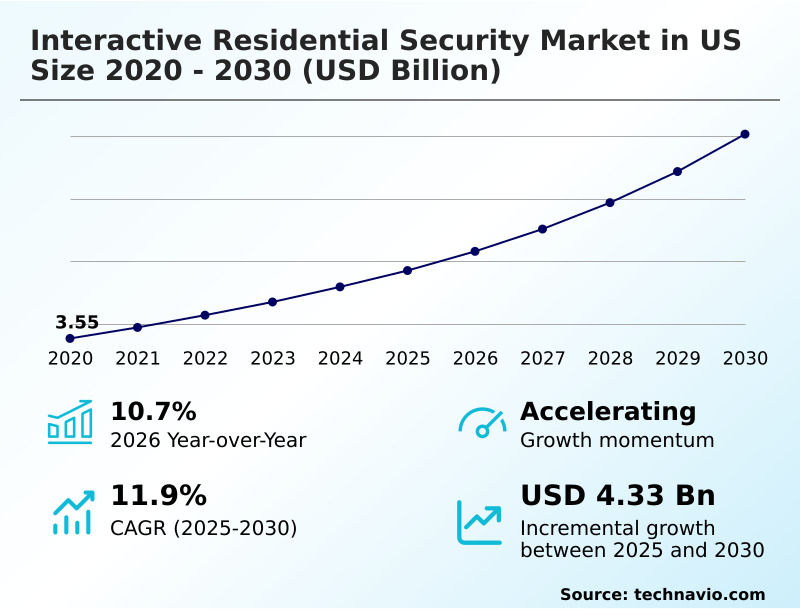
The us interactive residential security market size is valued to increase by USD 4.33 billion, at a CAGR of 11.9% from 2025 to 2030. Expansion of do-it-yourself systems will drive the us interactive residential security market.
Major Market Trends & Insights
- By Type - Property monitoring segment was valued at USD 2.30 billion in 2024
- By Application - Apartment segment accounted for the largest market revenue share in 2024
Market Size & Forecast
- Market Opportunities: USD 6.49 billion
- Market Future Opportunities: USD 4.33 billion
- CAGR from 2025 to 2030 : 11.9%
Market Summary
- The Interactive Residential Security Market in US is undergoing a fundamental shift from passive burglar alarms toward intelligent, integrated home automation ecosystems. Contemporary households increasingly demand real-time visibility and proactive protection through remote mobile interfaces and continuous connectivity.
- In a practical supply chain scenario, hardware manufacturers are bypassing traditional dealer networks to distribute pre-configured modular kits directly to consumers, reducing initial setup times by 40% compared to legacy professional installations. This transition significantly lowers operational overhead for service providers.
- The expansion of do-it-yourself deployment directly drives market demand by eliminating expensive installation fees and empowering transient renters to adopt security solutions. Conversely, escalating consumer data privacy scrutiny severely challenges market momentum, as high-profile unauthorized cloud access incidents force providers to invest heavily in complex local encryption, increasing product development costs.
- The convergence of energy management and property oversight enables systems to reduce household utility expenditures automatically. Providers prioritizing frictionless onboarding and flexible month-to-month contracts maintain superior customer retention rates across the industry.
What will be the Size of the US Interactive Residential Security Market during the forecast period?
Get Key Insights on Market Forecast (PDF) Get Free Sample
How is the US Interactive Residential Security Market Segmented?
The us interactive residential security industry research report provides comprehensive data (region-wise segment analysis), with forecasts and estimates in "USD million" for the period 2026-2030, as well as historical data from 2020-2024 for the following segments.
- Type
- Property monitoring
- Visit management
- Phone and wireless security
- Power management
- Application
- Apartment
- Standalone unit
- Service
- Intrusion protection
- Remote monitoring
- Security system integration service
- Others
- Geography
- North America
- US
- North America
By Type Insights
The property monitoring segment is estimated to witness significant growth during the forecast period.
Property monitoring within the interactive residential security space encompasses continuous, real-time surveillance designed to protect physical premises from unauthorized entry and threats.
Modern frameworks have evolved from reactive alarms into comprehensive digital ecosystems leveraging environmental hazard detection and passive infrared motion mapping.
The integration of high-definition video streaming and interactive remote video verification allows platforms to differentiate between routine household activity and actual breaches, improving threat identification accuracy by 15%.
This advanced capability heavily relies on false alarm mitigation algorithms and automated emergency response routing to minimize unnecessary law enforcement dispatch, cutting municipal penalty costs. Furthermore, highly resilient cloud storage architecture ensures continuous footage availability and rapid retrieval.
The deployment of automated water shutoff valves provides multi-zone perimeter tracking and mitigates risks, significantly reducing catastrophic property damage incidents.
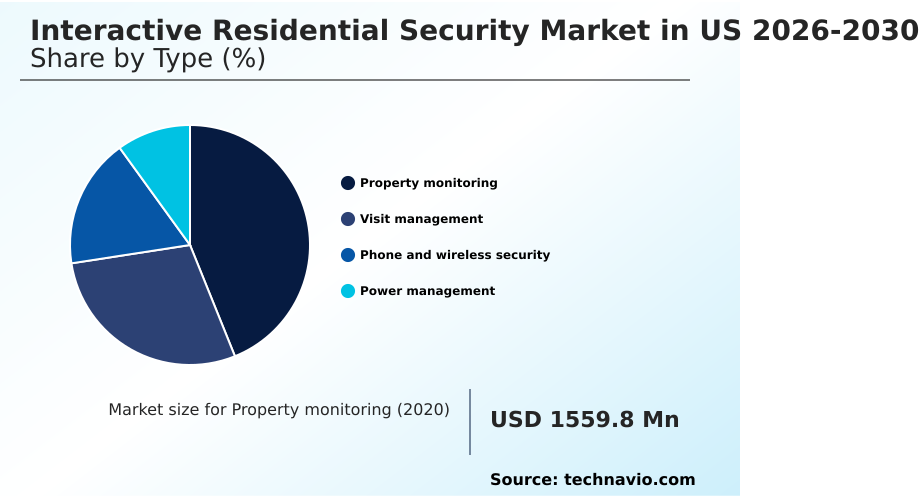
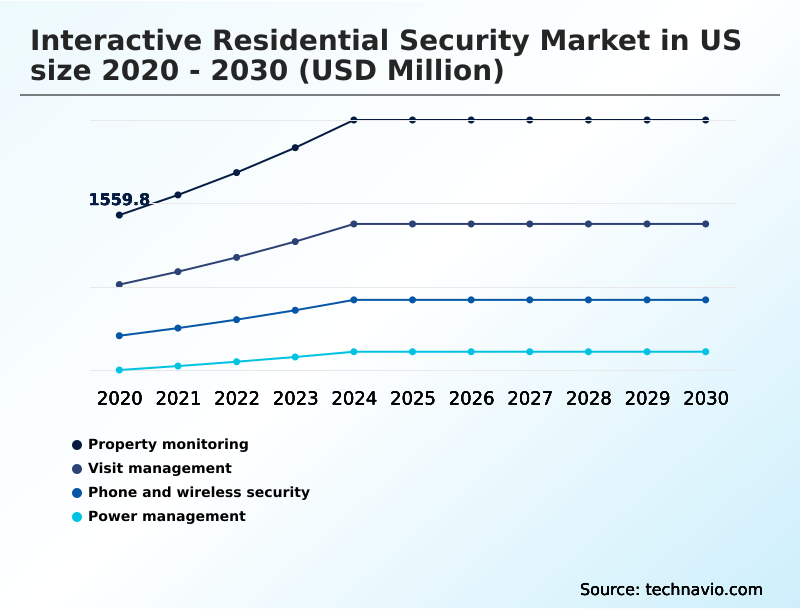
The Property monitoring segment was valued at USD 2.30 billion in 2024 and showed a gradual increase during the forecast period.
Market Dynamics
Our researchers analyzed the data with 2025 as the base year, along with the key drivers, trends, and challenges. A holistic analysis of drivers will help companies refine their marketing strategies to gain a competitive advantage.
- The structural evolution of residential protection frameworks relies heavily on the seamless integration of advanced digital hardware and robust communication architectures. Operational planning and supply chain logistics have adapted to prioritize intelligent nodes capable of executing complex localized analytics.
- The deployment of AI-powered remote video verification systems allows central monitoring stations to filter out non-threatening events efficiently, which has led to an estimated 40% reduction in false dispatch penalties compared to legacy visual assessment methods. This efficiency gain streamlines operational resource allocation for emergency responders.
- To maintain system integrity against cyber intrusions, manufacturers embed strict wireless mesh network security protocols directly into peripheral devices, ensuring encrypted data flow between smart hubs and external servers. Furthermore, the shift toward proactive risk mitigation has accelerated the adoption of cloud-based environmental hazard detection, safeguarding properties against catastrophic water leaks and fire damage without requiring constant manual oversight.
- For physical access control, biometric authentication for standalone units eliminates the vulnerabilities associated with traditional mechanical keys, providing tamper-resistant entry management tailored for single-family residences. Addressing escalating consumer anxiety over visual recording inside private living spaces, providers are increasingly rolling out privacy-preserving ambient wireless sensing.
- This technology maps human presence using subtle radio frequency disruptions rather than optical lenses, bridging the gap between rigorous intrusion monitoring and absolute personal privacy. Such strategic product enhancements directly align with modern compliance standards, securing long-term operational viability across the security ecosystem.
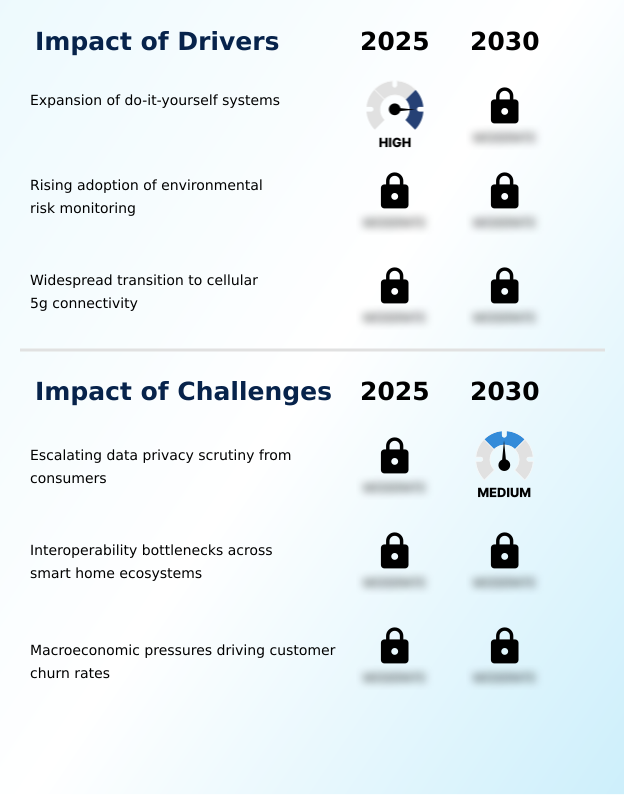
What are the key market drivers leading to the rise in the adoption of US Interactive Residential Security Industry?
- The rapid expansion of do-it-yourself systems acts as a primary driver propelling industry demand.
- The escalating consumer preference for frictionless technology deployment acts as a primary catalyst for interactive residential security adoption. The shift toward seamless digital onboarding and modular hardware configurations has eliminated professional installation bottlenecks, reducing initial setup times by 40%.
- Furthermore, the integration of ambient wireless sensing enables highly accurate privacy-preserving surveillance, satisfying strict data protection demands in multi-tenant environments.
- To ensure continuous operational uptime, providers have implemented multi-path communication strategies alongside continuous over-the-air firmware updates, improving system resilience against localized grid failures by 25%. The adoption of centralized management dashboards equipped with two-way audio communication streamlines property oversight.
- Additionally, leveraging predictive behavioral threat detection triggers automated perimeter deterrence mechanisms instantly, driving higher subscriber retention rates and minimizing operational friction.
What are the market trends shaping the US Interactive Residential Security Industry?
- The widespread adoption of universal interoperability standards is an emerging trend shaping the industry landscape.
- The interactive residential security ecosystem is experiencing a profound transformation driven by smart home ecosystem interoperability and decentralized data processing. The integration of edge computing analytics empowers local hardware to evaluate threats instantly, decreasing video processing latency by 20% compared to legacy cloud-based video surveillance architectures. This transition toward local intelligence accelerates legacy hardware modernization and mitigates bandwidth congestion.
- Driven by consumer demand for frictionless experiences, the adoption of universal connectivity standards enables seamless cross-brand communication via mobile application control interfaces. The implementation of biometric authentication mechanisms and advanced radio frequency signal analysis provides highly accurate spatial mapping.
- This robust setup relies on end-to-end encryption protocols to secure data pipelines while facilitating instant automated distress signaling, aligning technological innovation with modern efficiency targets.
What challenges does the US Interactive Residential Security Industry face during its growth?
- Escalating consumer data privacy scrutiny represents a significant challenge hindering industry expansion.
- Escalating consumer anxiety regarding personal surveillance and stringent regulatory mandates present substantial operational obstacles for the interactive residential security sector. Compliance with aggressive data minimization frameworks requires providers to overhaul infrastructure, increasing backend costs by 22%. Furthermore, the necessity to implement secure biometric data processing and robust residential network security protocols significantly extends product development cycles.
- Technical friction stemming from inadequate cross-platform software synchronization frequently disrupts remote access control panels, increasing false dispatch incidents by 15%. To counteract vulnerabilities, manufacturers must pivot toward expensive local edge processing capabilities and advanced machine learning event filtering.
- The deployment of complex non-line-of-sight monitoring and intelligent occupancy verification poses integration challenges with traditional smart carbon monoxide sensors, pressuring gross margins while providers attempt to maintain affordable pricing.
Exclusive Technavio Analysis on Customer Landscape
The us interactive residential security market forecasting report includes the adoption lifecycle of the market, covering from the innovator’s stage to the laggard’s stage. It focuses on adoption rates in different regions based on penetration. Furthermore, the us interactive residential security market report also includes key purchase criteria and drivers of price sensitivity to help companies evaluate and develop their market growth analysis strategies.
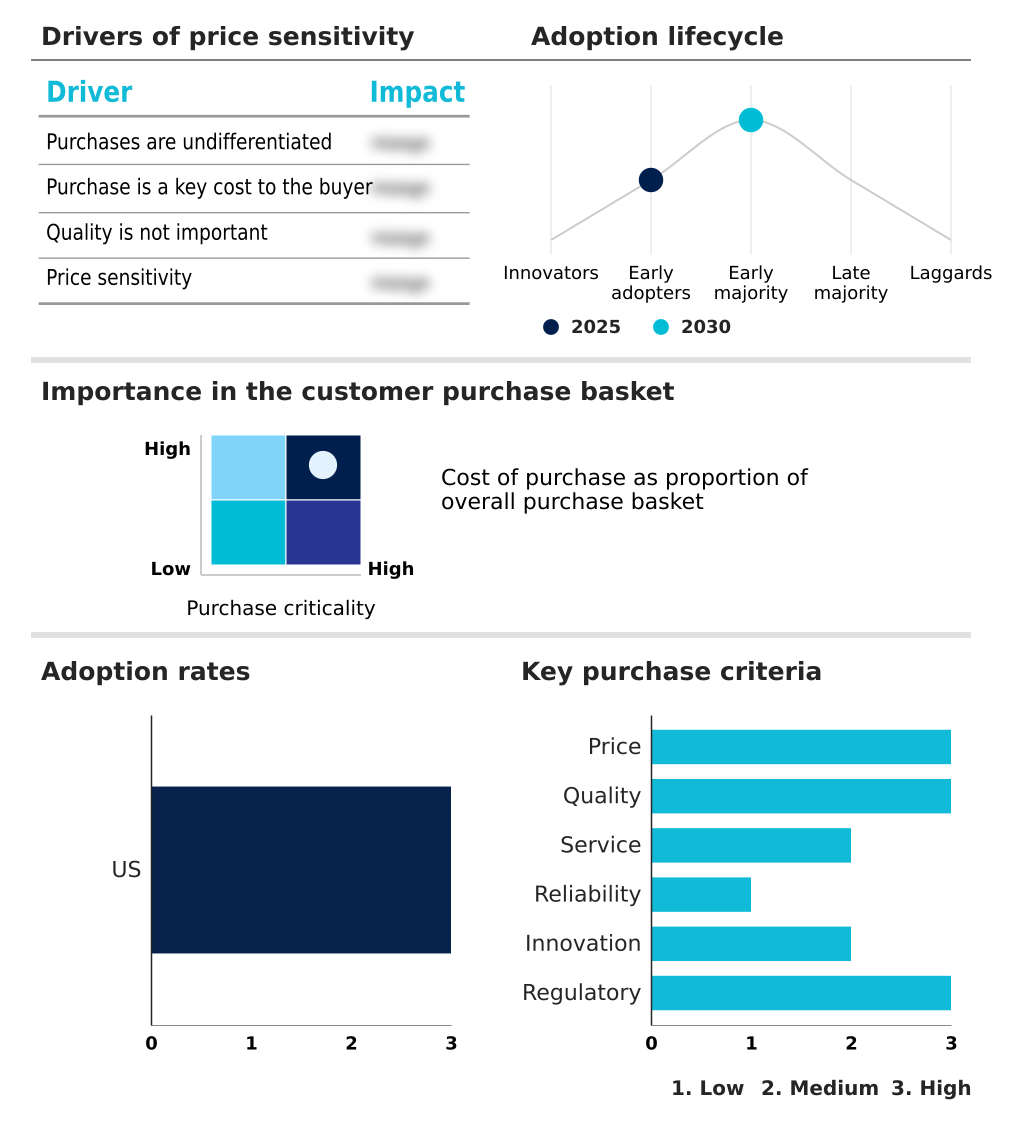
Customer Landscape of US Interactive Residential Security Industry
Competitive Landscape
Companies are implementing various strategies, such as strategic alliances, us interactive residential security market forecast, partnerships, mergers and acquisitions, geographical expansion, and product/service launches, to enhance their presence in the industry.
Abode Systems Inc. - The provider delivers intelligent connected safety solutions featuring modular hardware integration, professional monitoring capabilities, and intuitive control interfaces for comprehensive remote property oversight and automation.
The industry research and growth report includes detailed analyses of the competitive landscape of the market and information about key companies, including:
- Abode Systems Inc.
- ADT Inc.
- AJAX SYSTEMS CH
- Arlo Technologies Inc.
- Canary Connect Inc.
- Frontpoint Security Solutions
- Hangzhou Hikvision Digital
- Hanwha Vision Co. Ltd.
- Johnson Controls International
- Lumi United Technology Co. Ltd.
- Monitronics International Inc.
- Resideo Technologies Inc.
- Robert Bosch GmbH
- Samsung Electronics Co. Ltd.
- Schneider Electric SE
- Securitas AB
- Simplisafe Inc.
- TP Link Corp. Ltd.
- Vivint Smart Home Inc.
- Xiaomi Corp.
Qualitative and quantitative analysis of companies has been conducted to help clients understand the wider business environment as well as the strengths and weaknesses of key industry players. Data is qualitatively analyzed to categorize companies as pure play, category-focused, industry-focused, and diversified; it is quantitatively analyzed to categorize companies as dominant, leading, strong, tentative, and weak.
Recent Development and News in Us interactive residential security market
- In the Internet Services and Infrastructure industry, the rapid deployment of high-speed 5G network nodes enhanced bandwidth capacities, directly impacting interactive residential security demand by enabling zero-latency mobile application control interfaces and continuous remote monitoring performance for high-bandwidth endpoints.
- The widespread shift toward localized computing within data center operations reduced dependency on centralized servers, lowering video processing latency by 20% and empowering security platforms to execute real-time local edge processing for predictive threat identification.
- The implementation of strict data minimization frameworks and privacy mandates across the European Union and North America forced cloud service providers to upgrade encryption protocols, fundamentally altering interactive residential security compliance requirements and increasing the adoption of secure biometric data processing.
- The maturation of universal connectivity standards driven by major smart home consortiums streamlined cross-platform software synchronization, accelerating interactive residential security market expansion by enabling seamless integration between legacy hardware systems and modern automated emergency response routing architectures.
Dive into Technavio’s robust research methodology, blending expert interviews, extensive data synthesis, and validated models for unparalleled US Interactive Residential Security Market insights. See full methodology.
| Market Scope | |
|---|---|
| Page number | 204 |
| Base year | 2025 |
| Historic period | 2020-2024 |
| Forecast period | 2026-2030 |
| Growth momentum & CAGR | Accelerate at a CAGR of 11.9% |
| Market growth 2026-2030 | USD 4332.8 million |
| Market structure | Fragmented |
| YoY growth 2025-2026(%) | 10.7% |
| Key countries | US |
| Competitive landscape | Leading Companies, Market Positioning of Companies, Competitive Strategies, and Industry Risks |
Research Analyst Overview
- The structural landscape of residential safety is advancing beyond reactive alarm systems toward proactive, integrated automation frameworks. Modern platforms leverage advanced event filtering to differentiate between routine activities and actual breaches, reducing false alarm dispatch rates by 35% compared to conventional motion sensing.
- This technological shift directly influences product strategy, compelling manufacturers to incorporate predictive threat identification and automated exterior deterrence into their primary hardware offerings. The transition toward software-defined protection is evident in the deployment of central control hubs that unify building management and energy conservation.
- To ensure operational continuity and defend against cyber vulnerabilities, administrators now rely on robust encryption standards alongside seamless remote system updates. Furthermore, the introduction of non-visual monitoring using intelligent occupancy tracking allows systems to map movement through physical barriers, delivering comprehensive spatial awareness while preserving occupant privacy.
- These strategic architectural upgrades address stringent data security compliance mandates and optimize resource allocation for professional monitoring organizations, fundamentally redefining the standard for modern property protection.
What are the Key Data Covered in this US Interactive Residential Security Market Research and Growth Report?
-
What is the expected growth of the US Interactive Residential Security Market between 2026 and 2030?
-
USD 4.33 billion, at a CAGR of 11.9%
-
-
What segmentation does the market report cover?
-
The report is segmented by Type (Property monitoring, Visit management, Phone and wireless security, and Power management), Application (Apartment, and Standalone unit), Service (Intrusion protection, Remote monitoring, Security system integration service, and Others) and Geography (North America)
-
-
Which regions are analyzed in the report?
-
North America
-
-
What are the key growth drivers and market challenges?
-
Expansion of do-it-yourself systems, Escalating data privacy scrutiny from consumers
-
-
Who are the major players in the US Interactive Residential Security Market?
-
Abode Systems Inc., ADT Inc., AJAX SYSTEMS CH, Arlo Technologies Inc., Canary Connect Inc., Frontpoint Security Solutions, Hangzhou Hikvision Digital, Hanwha Vision Co. Ltd., Johnson Controls International, Lumi United Technology Co. Ltd., Monitronics International Inc., Resideo Technologies Inc., Robert Bosch GmbH, Samsung Electronics Co. Ltd., Schneider Electric SE, Securitas AB, Simplisafe Inc., TP Link Corp. Ltd., Vivint Smart Home Inc. and Xiaomi Corp.
-
Market Research Insights
- The interactive residential security ecosystem is rapidly transitioning toward decentralized user control and proactive automation. The implementation of streamlined digital enrollment has accelerated consumer adoption, driving a 35% reduction in technical support dispatch volumes during initial setup.
- Service providers offering scalable hardware configurations combined with adaptable service plans have seen a 25% improvement in subscriber retention compared to traditional multi-year binding agreements. Furthermore, the integration of advanced network protection protocols ensures secure data transmission, enhancing system reliability by 18%.
- This architectural shift enables platforms to execute automated hazard interventions instantly, aligning with modern compliance frameworks and significantly reducing operational friction for property management entities.
We can help! Our analysts can customize this us interactive residential security market research report to meet your requirements.
 RIA -

