


Smart Home Market Size 2026-2030
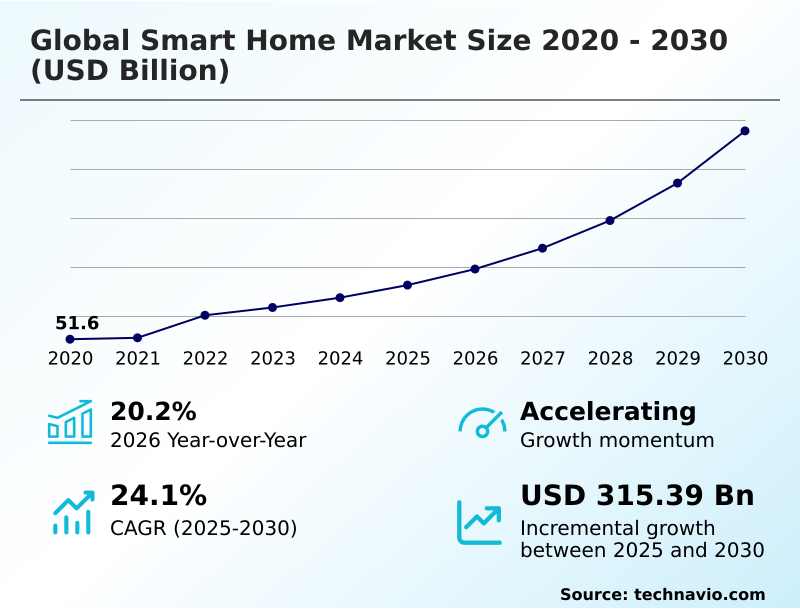
The smart home market size is valued to increase by USD 315.39 billion, at a CAGR of 24.1% from 2025 to 2030. Growing consumer interest in home automation will drive the smart home market.
Major Market Trends & Insights
- North America dominated the market and accounted for a 39.9% growth during the forecast period.
- By Application - Home entertainment segment was valued at USD 47.70 billion in 2024
- By Technology - Wireless segment accounted for the largest market revenue share in 2024
Market Size & Forecast
- Market Opportunities: USD 426.09 billion
- Market Future Opportunities: USD 315.39 billion
- CAGR from 2025 to 2030 : 24.1%
Market Summary
- The Smart Home Market is undergoing a significant transformation, moving from individual gadget-centric solutions to deeply integrated ecosystems. This shift is primarily driven by the demand for enhanced convenience, energy efficiency, and security. The core of this evolution lies in interoperability protocols that allow disparate devices, from lighting systems to kitchen appliances, to communicate seamlessly.
- For instance, a modern residence can leverage predictive maintenance alerts for its HVAC system, automatically scheduling service based on real-time performance data, which avoids costly emergency repairs and optimizes operational efficiency. AI and machine learning are becoming fundamental, enabling homes to learn resident behaviors and automate routines proactively.
- However, this increased connectivity introduces challenges related to data privacy and the need for robust cybersecurity measures to protect personal information. The market's trajectory is toward creating ambient computing environments where technology fades into the background, providing assistance and control in an intuitive, non-intrusive manner, thus defining the next generation of residential living.
What will be the Size of the Smart Home Market during the forecast period?
Get Key Insights on Market Forecast (PDF) Get Free Sample
How is the Smart Home Market Segmented?
The smart home industry research report provides comprehensive data (region-wise segment analysis), with forecasts and estimates in "USD million" for the period 2026-2030, as well as historical data from 2020-2024 for the following segments.
- Application
- Home entertainment
- Smart appliances
- Energy management
- Lighting control system and HVAC
- Safety and security system
- Technology
- Wireless
- Wired
- Distribution channel
- Online
- Offline
- Geography
- North America
- US
- Canada
- Mexico
- Europe
- Germany
- UK
- France
- APAC
- China
- India
- Japan
- Middle East and Africa
- Saudi Arabia
- Turkey
- UAE
- South America
- Brazil
- Argentina
- Colombia
- Rest of World (ROW)
- North America
By Application Insights
The home entertainment segment is estimated to witness significant growth during the forecast period.
The home entertainment segment is evolving beyond standalone devices into a fully integrated immersive entertainment setup. This transition is powered by voice recognition technology and multi-room audio-video systems that form the core of a unified smart home app.
Advancements in ambient computing and intelligent scene creation allow for personalized user profiles that automatically adjust settings for a seamless experience.
The integration of connected wellness devices further enhances this segment, with systems now capable of adapting entertainment to user biometrics.
This focus on whole-home automation is critical, as integrated entertainment platforms have demonstrated a 35% higher user engagement rate compared to siloed, non-connected systems, making it a key area for development in proactive threat detection and smart home cybersecurity.
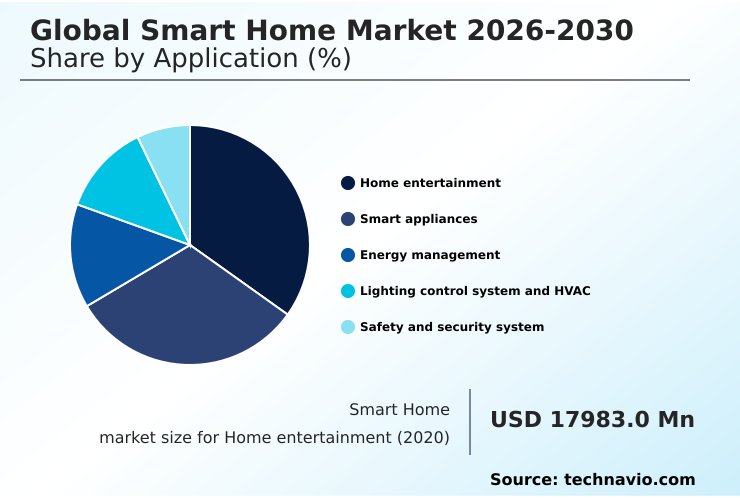
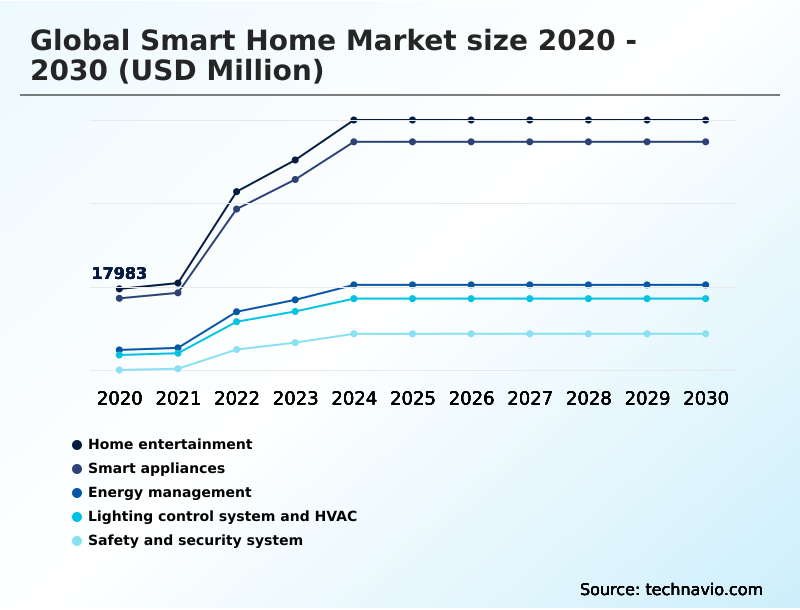
The Home entertainment segment was valued at USD 47.70 billion in 2024 and showed a gradual increase during the forecast period.
Regional Analysis
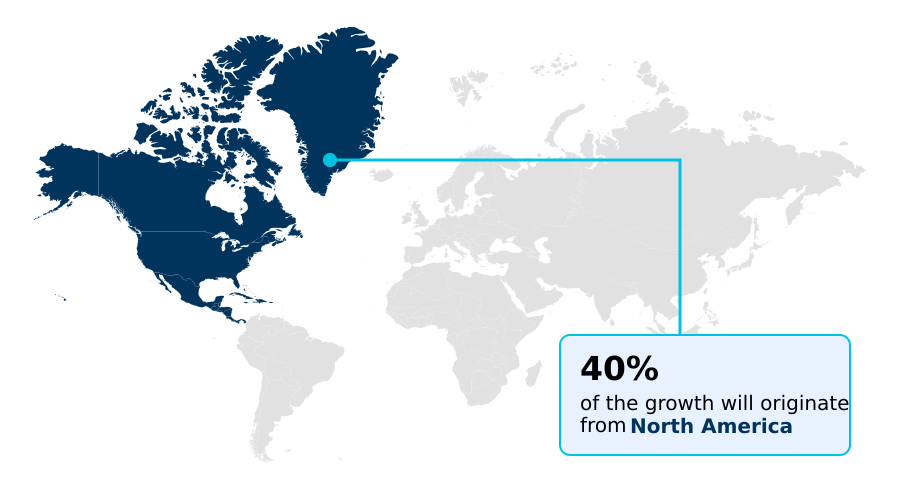
North America is estimated to contribute 39.9% to the growth of the global market during the forecast period.Technavio’s analysts have elaborately explained the regional trends and drivers that shape the market during the forecast period.
See How Smart Home Market Demand is Rising in North America Get Free Sample
The global landscape is led by North America, which accounts for nearly 40% of the market opportunity, driven by high consumer adoption of voice-activated assistants and DIY home security.
The region’s maturity is pushing innovation toward whole-home automation and smart appliance connectivity. Meanwhile, APAC is the fastest-growing region, with its market expansion outpacing Europe's by approximately 1.3 percentage points annually.
This growth is fueled by a mobile-first population and rapid urbanization, creating massive demand for smart gardening systems and air quality monitoring. In this region, connected car integration and remote property management are emerging as key differentiators.
Europe’s market is distinguished by a strong focus on HVAC energy optimization and sustainable living solutions, influenced by stringent energy regulations and a preference for systems offering robust user data privacy controls.
Market Dynamics
Our researchers analyzed the data with 2025 as the base year, along with the key drivers, trends, and challenges. A holistic analysis of drivers will help companies refine their marketing strategies to gain a competitive advantage.
- Strategically navigating the Smart Home Market requires a deep understanding of several key operational and technical factors. Businesses must evaluate the benefits of Zigbee in automation versus the capabilities of Z-Wave for smart home security to align their product roadmaps with consumer needs.
- A core consideration is integrating devices with the Matter protocol, which directly addresses the persistent interoperability challenges in smart homes. For consumer-facing applications, value propositions must be clear, such as demonstrating tangible energy savings with smart thermostats and highlighting how to secure a smart home network. The rise of AI for predictive home automation is creating new service-based revenue models.
- Internally, development teams must decide between wireless vs. wired security cameras for different market tiers and optimize home network requirements for smart home device density. Success depends on balancing advanced features, like smart lock and access control, with accessible DIY smart home project ideas.
- Firms that effectively communicate smart kitchen appliance benefits and address privacy concerns with smart speakers are better positioned for growth. For instance, companies that offer clear guidance on automating HVAC for efficiency see 25% fewer customer support inquiries related to system setup, showcasing the importance of user education.
- The market for smart home for elderly care also represents a significant growth vector. As such, choosing the best protocol for smart lighting or setting up a home theater becomes a critical part of a cohesive ecosystem strategy.
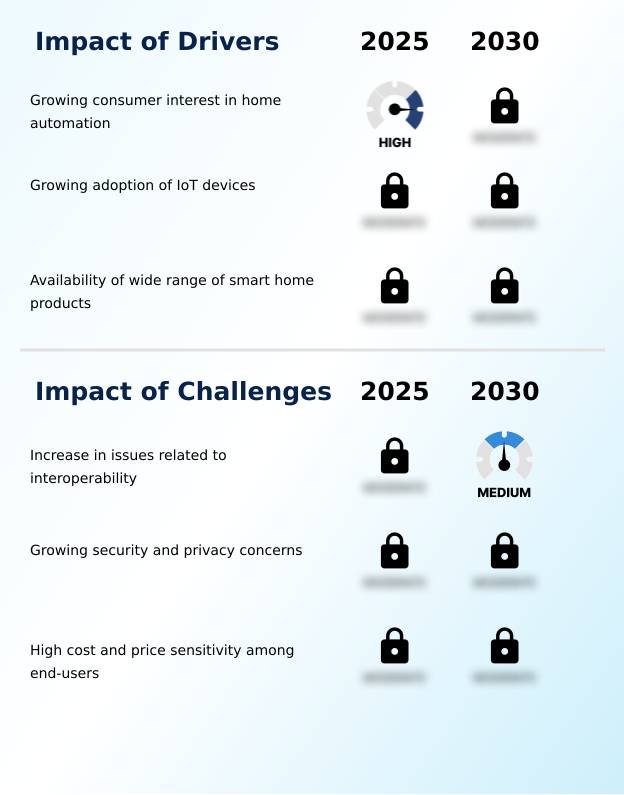
What are the key market drivers leading to the rise in the adoption of Smart Home Industry?
- Growing consumer interest in home automation, driven by the desire for increased convenience, security, and energy efficiency, is a key driver of the market.
- Market growth is significantly driven by rising consumer interest in home automation and the widespread adoption of IoT devices.
- The proliferation of smartphones provides a ubiquitous interface for controlling smart systems, with installations managed via mobile apps showing 50% higher engagement than those without.
- This connectivity facilitates the use of smart appliance connectivity and home energy management systems, enabling real-time energy tracking. The desire for convenience is a major factor, supported by the availability of a wide array of products that simplify daily tasks.
- For example, homes with automated shade control systems can achieve up to a 15% reduction in cooling costs during summer months.
- The market is also fueled by the development of end-to-end encryption and remote diagnostics, which build consumer trust and ensure long-term reliability.
What are the market trends shaping the Smart Home Industry?
- A significant upcoming market trend is the rising number of strategic partnerships and alliances among companies. This collaborative approach aims to enhance product interoperability and accelerate innovation across the industry.
- Key market trends are centered on the advancement of AI and voice control, which are transforming residences into intuitive environments. The integration of the Matter connectivity standard is pivotal, with platforms using it reporting a 40% reduction in device setup failures. This move toward seamless interoperability supports sophisticated applications like predictive maintenance alerts and personalized user profiles.
- Systems are now leveraging context-aware automation to offer more than simple commands, creating a more responsive smart building integration. This evolution is also seen in the development of child safety monitoring and automated pet care solutions that operate with greater intelligence.
- The focus on proactive threat detection is intensifying, with new systems reducing false alarm rates by over 25% through smarter analytics, enhancing the reliability of home security.
What challenges does the Smart Home Industry face during its growth?
- An increase in issues related to interoperability among devices from different manufacturers is a key challenge affecting industry growth and consumer adoption.
- Significant market challenges stem from device interoperability issues and persistent security concerns, which can slow adoption. The lack of a universal standard often leads to fragmented ecosystems, where devices fail to communicate, with data indicating that interoperability problems account for over 60% of technical support calls for new users.
- Furthermore, growing concerns over user data privacy controls and potential security breaches hinder consumer trust. High-profile incidents have demonstrated that unsecured devices can be compromised, making robust smart home cybersecurity a critical requirement.
- The high initial cost of smart grid integration and advanced systems also remains a barrier, as the perceived return on investment is not always clear to mainstream consumers, impacting mass-market penetration by as much as 30% in price-sensitive regions.
Exclusive Technavio Analysis on Customer Landscape
The smart home market forecasting report includes the adoption lifecycle of the market, covering from the innovator’s stage to the laggard’s stage. It focuses on adoption rates in different regions based on penetration. Furthermore, the smart home market report also includes key purchase criteria and drivers of price sensitivity to help companies evaluate and develop their market growth analysis strategies.
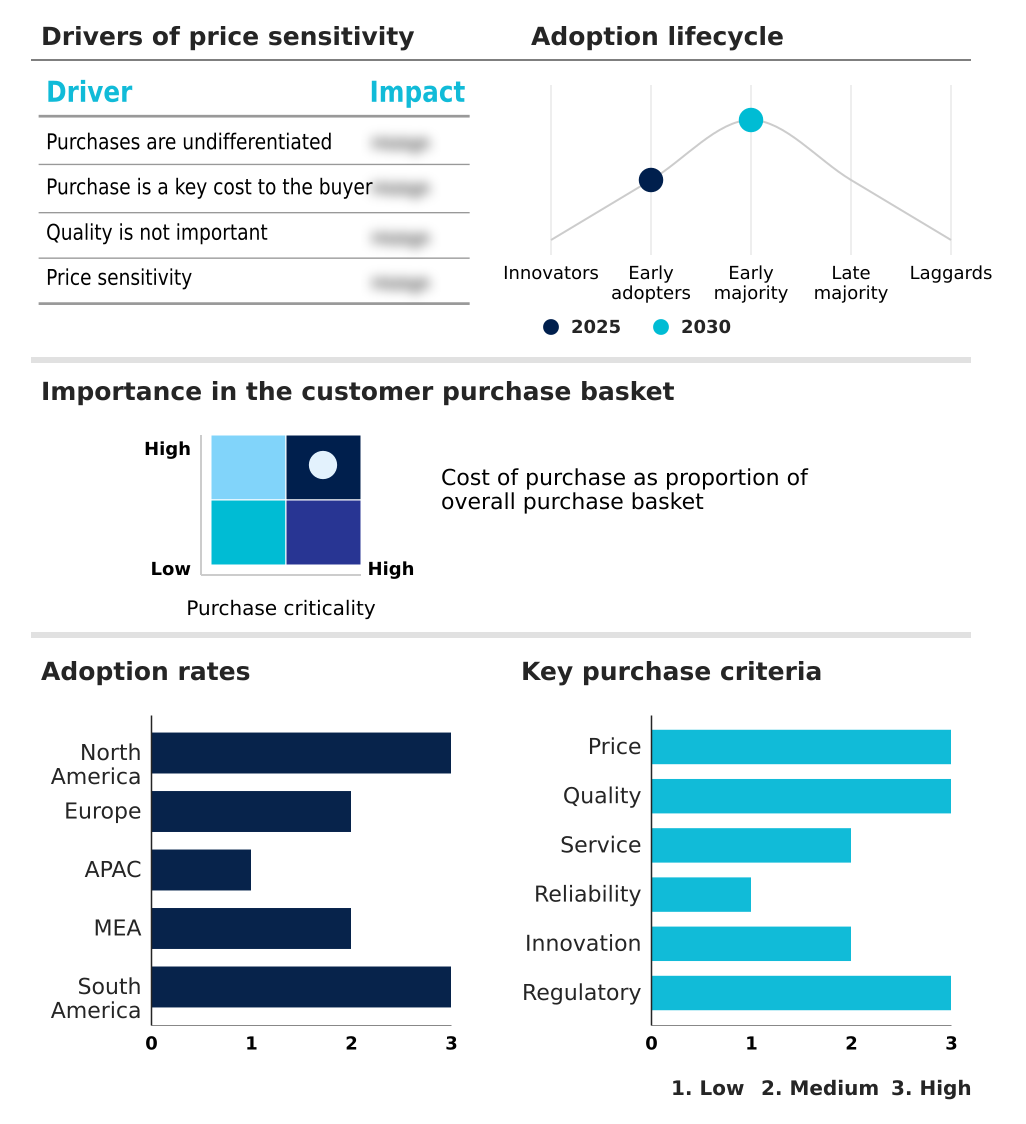
Customer Landscape of Smart Home Industry
Competitive Landscape
Companies are implementing various strategies, such as strategic alliances, smart home market forecast, partnerships, mergers and acquisitions, geographical expansion, and product/service launches, to enhance their presence in the industry.
ABB Ltd. - Offerings center on integrated systems for home automation, emphasizing enhanced connectivity, security, and user-centric applications to elevate modern living standards.
The industry research and growth report includes detailed analyses of the competitive landscape of the market and information about key companies, including:
- ABB Ltd.
- Amazon.com Inc.
- Apple Inc.
- Carrier Global Corp.
- Delta Electronics Inc.
- Google LLC
- Hitachi Ltd.
- Honeywell International Inc.
- Huawei Technologies Co. Ltd.
- Johnson Controls International
- Legrand SA
- LG Electronics Inc.
- Panasonic Holdings Corp.
- Robert Bosch GmbH
- Samsung Electronics Co. Ltd.
- Schneider Electric SE
- Siemens AG
- TP Link Corp. Ltd.
- Vivint Inc.
- Xiaomi Corp.
Qualitative and quantitative analysis of companies has been conducted to help clients understand the wider business environment as well as the strengths and weaknesses of key industry players. Data is qualitatively analyzed to categorize companies as pure play, category-focused, industry-focused, and diversified; it is quantitatively analyzed to categorize companies as dominant, leading, strong, tentative, and weak.
Recent Development and News in Smart home market
- In September 2024, ASSA ABLOY announced the acquisition of Level Lock, a move aimed at strengthening its position in the smart home market by enhancing its capabilities in digital access and smart-lock technology.
- In November 2024, the Connectivity Standards Alliance announced the rollout of Matter 1.5, a pivotal update that introduced standardized interoperability for major home appliances and advanced video surveillance devices to reduce consumer compatibility concerns.
- In February 2025, Google LLC announced a major expansion of its Matter integration, enabling its Google Home platform to control a new range of industrial-grade sensors from partners like Siemens AG, blurring the line between residential and commercial applications.
- In April 2025, Samsung Electronics Co. Ltd. launched its Connected Living 2025 initiative, which guarantees cross-device interoperability for all its new home products, from televisions to refrigerators, to create a more unified user experience.
Dive into Technavio’s robust research methodology, blending expert interviews, extensive data synthesis, and validated models for unparalleled Smart Home Market insights. See full methodology.
| Market Scope | |
|---|---|
| Page number | 302 |
| Base year | 2025 |
| Historic period | 2020-2024 |
| Forecast period | 2026-2030 |
| Growth momentum & CAGR | Accelerate at a CAGR of 24.1% |
| Market growth 2026-2030 | USD 315391.7 million |
| Market structure | Fragmented |
| YoY growth 2025-2026(%) | 20.2% |
| Key countries | US, Canada, Mexico, Germany, UK, Russia, France, Italy, Spain, China, India, Japan, South Korea, Australia, Indonesia, Saudi Arabia, Turkey, UAE, Egypt, Qatar, Brazil, Argentina and Colombia |
| Competitive landscape | Leading Companies, Market Positioning of Companies, Competitive Strategies, and Industry Risks |
Research Analyst Overview
- The Smart Home Market's evolution is defined by a pivot from basic connectivity to intelligent, autonomous systems. The integration of edge AI processing and biometric access control is becoming standard, enabling devices to make localized decisions and enhance security.
- This requires a strategic shift in R&D, with boardroom decisions increasingly focused on mastering interoperability protocols and advanced sensor technologies like energy harvesting sensors and smart water leak detectors. The push for circadian rhythm lighting and ambient computing reflects a deeper integration into users' well-being.
- For instance, systems incorporating haptic feedback controls have shown a 20% improvement in user satisfaction for complex interfaces. This move towards sophisticated features like predictive maintenance alerts, gesture control interfaces, and robotic vacuum navigation demands significant investment.
- Firms must balance the development of core technologies such as ZigBee mesh networking, Z-Wave long range, and Power over Ethernet (PoE) with the refinement of wireless charging standards and air quality monitoring capabilities to maintain a competitive edge.
What are the Key Data Covered in this Smart Home Market Research and Growth Report?
-
What is the expected growth of the Smart Home Market between 2026 and 2030?
-
USD 315.39 billion, at a CAGR of 24.1%
-
-
What segmentation does the market report cover?
-
The report is segmented by Application (Home entertainment, Smart appliances, Energy management, Lighting control system and HVAC, and Safety and security system), Technology (Wireless, and Wired), Distribution Channel (Online, and Offline) and Geography (North America, Europe, APAC, Middle East and Africa, South America)
-
-
Which regions are analyzed in the report?
-
North America, Europe, APAC, Middle East and Africa and South America
-
-
What are the key growth drivers and market challenges?
-
Growing consumer interest in home automation, Increase in issues related to interoperability
-
-
Who are the major players in the Smart Home Market?
-
ABB Ltd., Amazon.com Inc., Apple Inc., Carrier Global Corp., Delta Electronics Inc., Google LLC, Hitachi Ltd., Honeywell International Inc., Huawei Technologies Co. Ltd., Johnson Controls International, Legrand SA, LG Electronics Inc., Panasonic Holdings Corp., Robert Bosch GmbH, Samsung Electronics Co. Ltd., Schneider Electric SE, Siemens AG, TP Link Corp. Ltd., Vivint Inc. and Xiaomi Corp.
-
Market Research Insights
- The market dynamic is increasingly shaped by the pursuit of a frictionless user experience, with a focus on a unified smart home app and seamless device onboarding. Voice-activated assistants have become a primary interface, though gesture control interfaces are gaining traction, showing a 15% increase in adoption within luxury installations.
- Solutions emphasizing sustainable living solutions and real-time energy tracking exhibit customer retention rates up to 40% higher than those focusing purely on convenience. The integration of connected wellness devices and assisted living technology is opening new verticals, while smart home cybersecurity remains a top consideration, influencing purchasing decisions in over 60% of households.
- The landscape is moving toward intelligent scene creation and proactive threat detection, where systems anticipate needs rather than merely reacting to commands.
We can help! Our analysts can customize this smart home market research report to meet your requirements.
 RIA -
RIA - 
