



Workforce Management Software Market Size 2026-2030
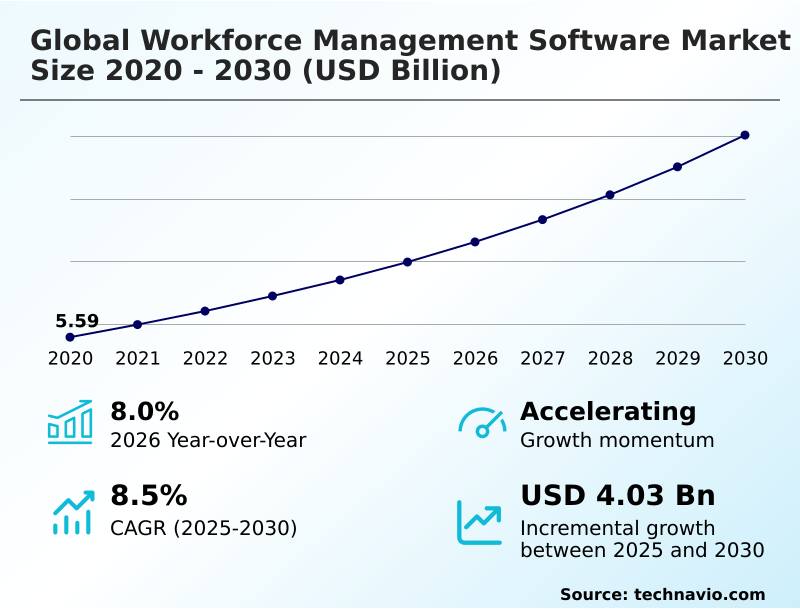
The workforce management software market size is valued to increase by USD 4.03 billion, at a CAGR of 8.5% from 2025 to 2030. Strategic imperative of labor cost optimization and regulatory compliance will drive the workforce management software market.
Major Market Trends & Insights
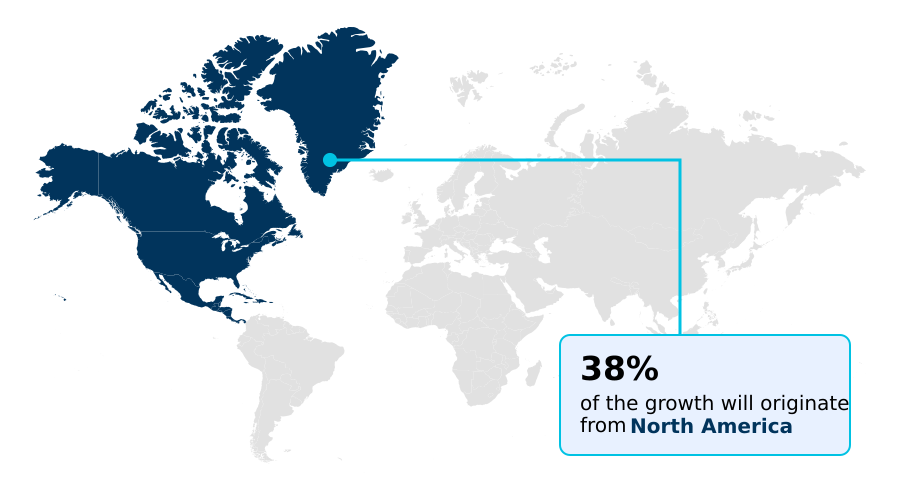
- North America dominated the market and accounted for a 38.1% growth during the forecast period.
- By End-user - IT and telecom segment was valued at USD 1.74 billion in 2024
- By Deployment - Cloud based segment accounted for the largest market revenue share in 2024
Market Size & Forecast
- Market Opportunities: USD 6.43 billion
- Market Future Opportunities: USD 4.03 billion
- CAGR from 2025 to 2030 : 8.5%
Market Summary
- The workforce management software market is fundamentally shifting from a transactional toolset to a strategic business asset, driven by the dual needs for enhanced operational efficiency and complex labor compliance. Modern platforms are integrating AI-powered forecasting tools and predictive analytics for labor to align staffing precisely with operational demands, moving beyond simple time and attendance tracking.
- For instance, a global logistics firm can leverage demand-driven scheduling to optimize routes and staffing across multiple distribution centers, achieving a 15% reduction in overtime costs while ensuring adherence to fair workweek ordinances. This evolution is accelerated by the widespread adoption of hybrid work, demanding robust mobile accessibility and tools for project-based time tracking.
- Consequently, organizations are investing in unified cloud-based workforce management solutions that provide a single source of unified workforce data, turning strategic human capital management into a significant competitive differentiator in a dynamic global economy.
What will be the Size of the Workforce Management Software Market during the forecast period?
Get Key Insights on Market Forecast (PDF) Get Free Sample
How is the Workforce Management Software Market Segmented?
The workforce management software industry research report provides comprehensive data (region-wise segment analysis), with forecasts and estimates in "USD million" for the period 2026-2030, as well as historical data from 2020-2024 for the following segments.
- End-user
- IT and telecom
- BFSI
- Healthcare
- Manufacturing
- Others
- Deployment
- Cloud based
- On-premises
- Component
- Software
- Services
- Geography
- North America
- US
- Canada
- Mexico
- Europe
- Germany
- UK
- France
- APAC
- China
- Japan
- India
- Middle East and Africa
- Saudi Arabia
- UAE
- South Africa
- South America
- Brazil
- Argentina
- Colombia
- Rest of World (ROW)
- North America
By End-user Insights
The it and telecom segment is estimated to witness significant growth during the forecast period.
The IT and telecom sector requires workforce management solutions focused on optimizing resource allocation and managing agile project timelines.
Effective project-based time tracking is essential for this project-based environment, where platforms must support skills matrices and certification tracking to align specialized personnel with complex tasks.
The drive towards a human-centric approach and digital transformation in HR is fueling demand for industry-specific solutions that facilitate seamless collaboration among remote teams.
Agile workforce management depends on mobile accessibility and robust integration with existing project management tools and integrated enterprise ecosystems.
These systems provide real-time visibility into productivity, with analytics showing a 20% improvement in task completion rates for teams using specialized platforms.
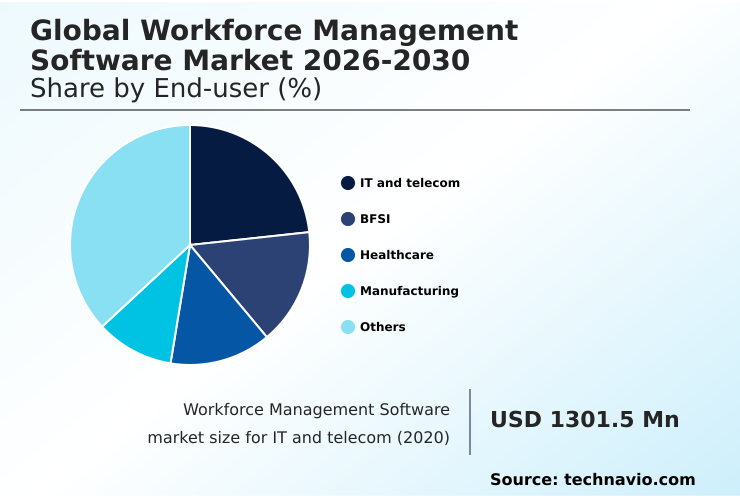
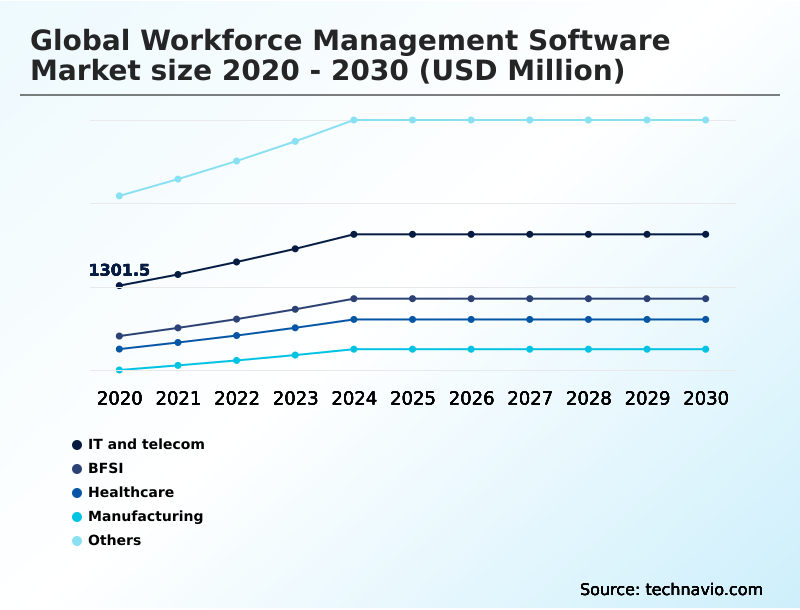
The IT and telecom segment was valued at USD 1.74 billion in 2024 and showed a gradual increase during the forecast period.
Regional Analysis
North America is estimated to contribute 38.1% to the growth of the global market during the forecast period.Technavio’s analysts have elaborately explained the regional trends and drivers that shape the market during the forecast period.
See How Workforce Management Software Market Demand is Rising in North America Get Free Sample
The workforce management software market exhibits distinct regional dynamics, with North America leading in incremental growth, contributing 38.1% of the market's expansion.
This maturity is driven by a focus on integrating AI-powered forecasting tools and advanced workforce optimization tools to manage complex labor laws.
Europe follows, with a strong emphasis on data sovereignty and compliance, necessitating sophisticated employee scheduling and time and attendance tracking capabilities.
The APAC region is the fastest-growing, fueled by widespread digitalization and a mobile-first workforce, which increases demand for accessible task management and labor forecasting solutions.
Across all regions, predictive analytics for labor is becoming essential, as businesses using such tools report a 15% improvement in staffing accuracy. The need for a unified workforce data view to support employee sentiment monitoring is a global constant.
Market Dynamics
Our researchers analyzed the data with 2025 as the base year, along with the key drivers, trends, and challenges. A holistic analysis of drivers will help companies refine their marketing strategies to gain a competitive advantage.
- Organizations are increasingly adopting software for managing hybrid work models to navigate the complexities of a distributed workforce, demanding robust time tracking software for remote employees. In the retail sector, the use of AI in workforce management for retail is becoming standard practice for optimizing staffing based on real-time foot traffic, significantly reducing labor costs with scheduling software.
- Similarly, the healthcare industry relies on compliance automation for healthcare scheduling to manage intricate staffing rules and credentials. A key challenge remains the workforce management integration with ERP systems, as seamless data flow is critical for accurate reporting and planning. Businesses are exploring wfm software for manufacturing shift patterns and managing contingent workers with a wfm platform to enhance flexibility.
- Furthermore, improving employee engagement with wfm tools through features like an employee self service portal benefits both workers and employers. The integration of earned wage access integration in payroll is also a powerful retention tool. Effective mobile workforce management for field services and insightful workforce analytics for productivity insights provide a competitive edge.
- Adhering to best practices for workforce optimization, including implementing role based access control implementation and robust biometric time clock security features, is paramount. Platforms must handle automating overtime calculation rules and skills tracking for project resource allocation, especially for a wfm platform for multi-location businesses, which report up to a 25% greater scheduling efficiency than those using disparate systems.
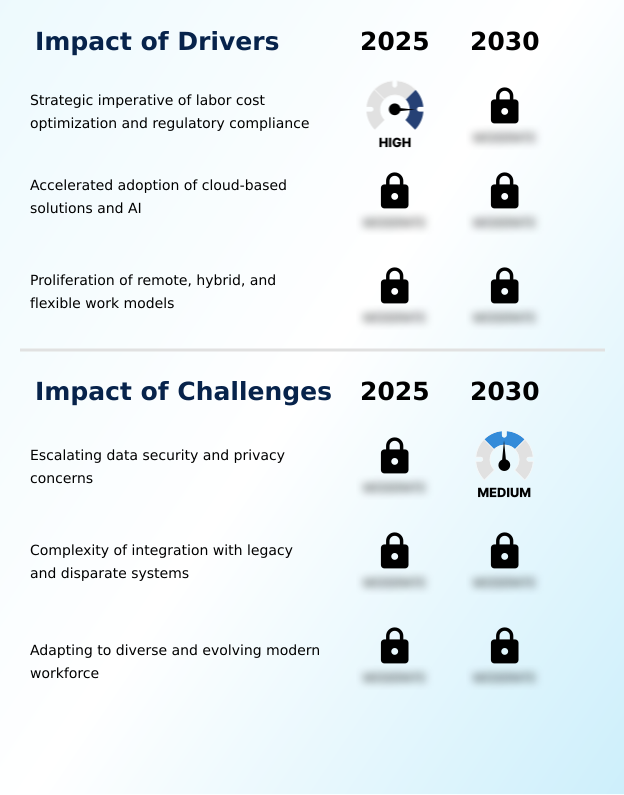
What are the key market drivers leading to the rise in the adoption of Workforce Management Software Industry?
- A primary market driver is the strategic imperative for organizations to optimize labor costs while navigating increasingly complex regulatory compliance requirements globally.
- The strategic imperative of labor cost optimization remains a primary driver, compelling organizations to adopt systems capable of sophisticated demand-driven scheduling and precise overtime calculations.
- AI-powered forecasting tools are central to this, improving forecast accuracy by over 30% in volatile sectors like retail. Simultaneously, navigating complex regulations, including fair workweek ordinances, necessitates solutions with robust automated compliance monitoring.
- This focus on compliance management mitigates significant financial and reputational risks. The shift to flexible work models has made strategic human capital management a priority, with platforms that enhance workforce productivity showing higher adoption.
- These systems deliver tangible operational efficiency gains, turning workforce management from a cost center into a strategic enabler of business agility.
What are the market trends shaping the Workforce Management Software Industry?
- A defining market trend is the deep integration of embedded AI and hyper-automation. This transforms platforms into proactive, intelligent decision-making engines.
- A defining market trend is the move toward hyper-automation, where generative AI copilot tools and intelligent self-service options are transforming user experiences. This shift prioritizes talent management by empowering employees with greater control through automated shift swapping and robust employee self-service tools.
- The convergence with financial wellness is evident, with on-demand pay and earned wage access becoming key differentiators, improving retention by up to 20%. Workforce analytics are also becoming more predictive, with platforms leveraging machine learning for predictive scheduling and leave management forecasting.
- This evolution allows managers to move from reactive administration to strategic workforce planning, with some systems demonstrating a 25% reduction in manual scheduling adjustments.
What challenges does the Workforce Management Software Industry face during its growth?
- A primary challenge affecting market growth is the escalating complexity of data security and privacy concerns amid a stringent and fragmented global regulatory landscape.
- A significant challenge is the complexity of integrating new cloud-based workforce management software with legacy enterprise systems, which can hinder the creation of a unified human capital management platform. Ensuring data security for sensitive information, such as biometric data for time clocks, and maintaining role-based access controls across disparate applications is a primary concern.
- The demand for real-time demand forecasts requires seamless payroll integration and activity logging from multiple sources. Furthermore, adapting to a diverse global workforce necessitates advanced global workforce planning and mobile-first interfaces that cater to various roles and regulations.
- The difficulty in synchronizing data for absence management can lead to inaccuracies, with studies showing integration issues cause up to a 10% error rate in initial payroll runs.
Exclusive Technavio Analysis on Customer Landscape
The workforce management software market forecasting report includes the adoption lifecycle of the market, covering from the innovator’s stage to the laggard’s stage. It focuses on adoption rates in different regions based on penetration. Furthermore, the workforce management software market report also includes key purchase criteria and drivers of price sensitivity to help companies evaluate and develop their market growth analysis strategies.
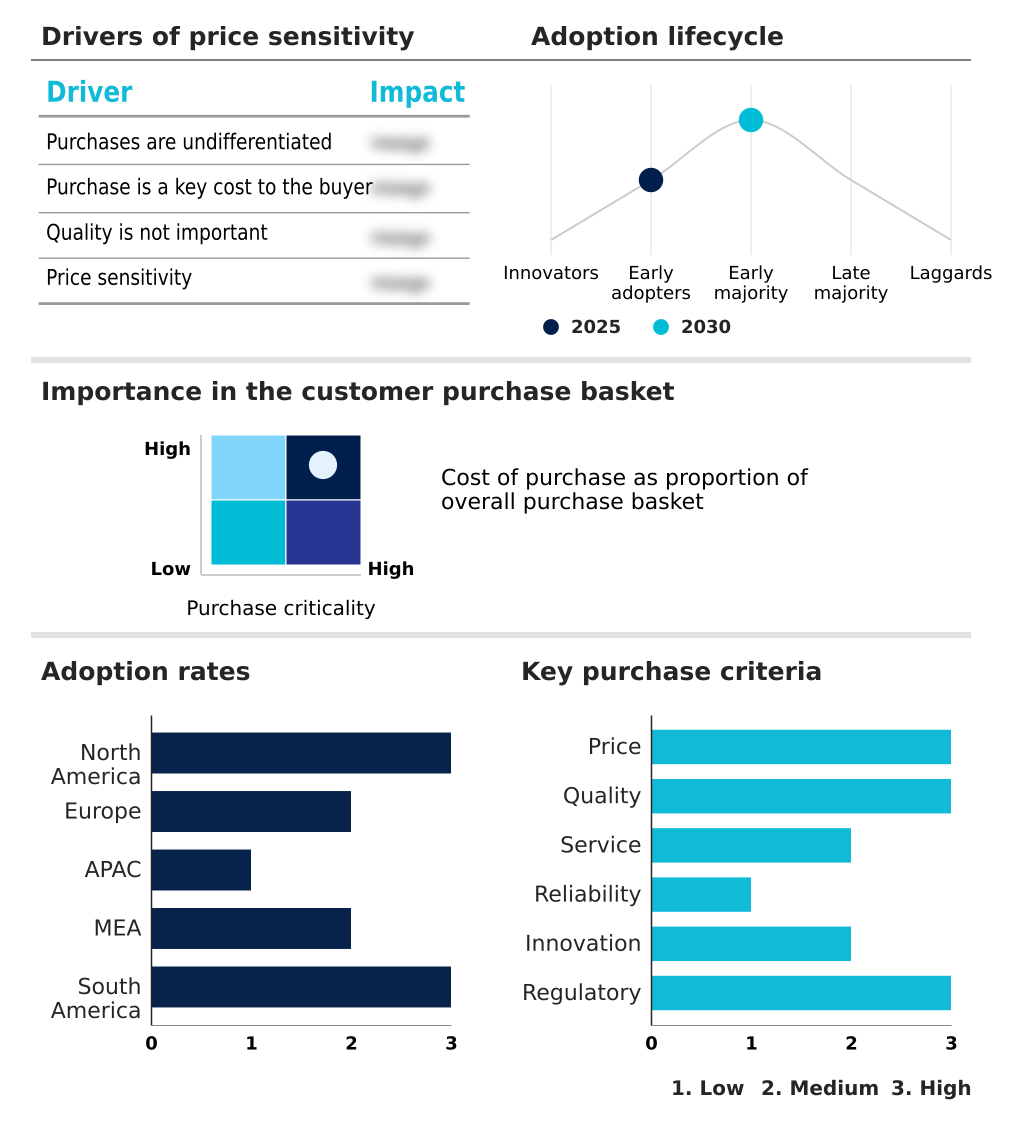
Customer Landscape of Workforce Management Software Industry
Competitive Landscape
Companies are implementing various strategies, such as strategic alliances, workforce management software market forecast, partnerships, mergers and acquisitions, geographical expansion, and product/service launches, to enhance their presence in the industry.
Automatic Data Processing Inc. - Solutions feature integrated time tracking, scheduling, payroll, and compliance management within comprehensive platforms like ADP Workforce Now, enhancing workforce analytics and efficiency.
The industry research and growth report includes detailed analyses of the competitive landscape of the market and information about key companies, including:
- Automatic Data Processing Inc.
- Blue Yonder Group Inc.
- Cornerstone OnDemand Inc.
- Dayforce Inc.
- Deputechnologies Pty Ltd.
- Infor Inc.
- Legion Technologies Inc.
- NICE Ltd.
- Oracle Corp.
- Papaya Global Ltd.
- Paycor HCM Inc.
- PTC Inc.
- SAP SE
- TimeClock Plus LLC
- UKG Inc.
- Verint Systems Inc.
- Workday Inc.
- WorkForce Software LLC
- Zebra Technologies Corp.
- Zoho Corp. Pvt. Ltd.
Qualitative and quantitative analysis of companies has been conducted to help clients understand the wider business environment as well as the strengths and weaknesses of key industry players. Data is qualitatively analyzed to categorize companies as pure play, category-focused, industry-focused, and diversified; it is quantitatively analyzed to categorize companies as dominant, leading, strong, tentative, and weak.
Recent Development and News in Workforce management software market
- In May, 2025, the Canadian government enacted the Advanced Digital Privacy Act, which imposes stringent data residency and consent management requirements on companies handling citizen data.
- In March, 2025, Dayforce's acquisition by the private equity firm Thoma Bravo was finalized, a move expected to accelerate the company's growth in AI-driven workforce management solutions.
- In January, 2025, Workday announced the launch of its Workday EU Sovereign Cloud to meet the specific data residency and compliance needs of its European clients.
- In November, 2024, UKG unveiled its UKG Pro Workforce Intelligence Hub, an AI-driven platform designed to provide a real-time, unified view of all workforce data.
Dive into Technavio’s robust research methodology, blending expert interviews, extensive data synthesis, and validated models for unparalleled Workforce Management Software Market insights. See full methodology.
| Market Scope | |
|---|---|
| Page number | 300 |
| Base year | 2025 |
| Historic period | 2020-2024 |
| Forecast period | 2026-2030 |
| Growth momentum & CAGR | Accelerate at a CAGR of 8.5% |
| Market growth 2026-2030 | USD 4032.6 million |
| Market structure | Fragmented |
| YoY growth 2025-2026(%) | 8.0% |
| Key countries | US, Canada, Mexico, Germany, UK, France, Italy, Spain, The Netherlands, China, Japan, India, Australia, South Korea, Indonesia, Saudi Arabia, UAE, South Africa, Israel, Turkey, Brazil, Argentina and Colombia |
| Competitive landscape | Leading Companies, Market Positioning of Companies, Competitive Strategies, and Industry Risks |
Research Analyst Overview
- The workforce management software market is defined by its deep integration into core business operations, moving beyond basic employee scheduling and time and attendance tracking. Advanced platforms now serve as central hubs for workforce analytics and labor forecasting, enabling data-driven resource allocation.
- A key boardroom-level driver is compliance management, where automated systems mitigate risks associated with complex labor laws, incorporating overtime calculations, absence management, and leave management rules directly. The focus on workforce productivity is pushing innovation in demand-driven scheduling and real-time task management.
- For instance, businesses leveraging integrated talent management and skills matrices within their WFM systems report a 15% faster deployment of qualified personnel to critical projects. The technology now includes sophisticated activity logging, role-based access controls, and support for biometric data for time clocks to enhance security.
- Seamless payroll integration, project-based time tracking, and automated shift swapping are standard expectations, while certification tracking and mobile accessibility are critical for specialized and distributed workforces, ultimately achieving significant labor cost optimization.
What are the Key Data Covered in this Workforce Management Software Market Research and Growth Report?
-
What is the expected growth of the Workforce Management Software Market between 2026 and 2030?
-
USD 4.03 billion, at a CAGR of 8.5%
-
-
What segmentation does the market report cover?
-
The report is segmented by End-user (IT and telecom, BFSI, Healthcare, Manufacturing, and Others), Deployment (Cloud based, and On-premises), Component (Software, and Services) and Geography (North America, Europe, APAC, Middle East and Africa, South America)
-
-
Which regions are analyzed in the report?
-
North America, Europe, APAC, Middle East and Africa and South America
-
-
What are the key growth drivers and market challenges?
-
Strategic imperative of labor cost optimization and regulatory compliance, Escalating data security and privacy concerns
-
-
Who are the major players in the Workforce Management Software Market?
-
Automatic Data Processing Inc., Blue Yonder Group Inc., Cornerstone OnDemand Inc., Dayforce Inc., Deputechnologies Pty Ltd., Infor Inc., Legion Technologies Inc., NICE Ltd., Oracle Corp., Papaya Global Ltd., Paycor HCM Inc., PTC Inc., SAP SE, TimeClock Plus LLC, UKG Inc., Verint Systems Inc., Workday Inc., WorkForce Software LLC, Zebra Technologies Corp. and Zoho Corp. Pvt. Ltd.
-
Market Research Insights
- The market's momentum is driven by operational efficiency gains, with organizations adopting human capital management platforms achieving up to a 30% reduction in payroll errors. The move toward a human-centric approach and agile workforce management is evident, as platforms offering intelligent self-service options see a 20% higher employee adoption rate compared to legacy systems.
- Strategic human capital management is no longer a niche concept; integrating AI-powered forecasting tools improves demand prediction accuracy by over 25%. This digital transformation in HR is critical, as industry-specific solutions are necessary to navigate complex regulations like fair workweek ordinances and manage integrated enterprise ecosystems effectively, demonstrating a clear return on investment.
We can help! Our analysts can customize this workforce management software market research report to meet your requirements.
 RIA -
RIA - 
