


Cloud Encryption Software Market Analysis, Size, and Forecast 2024-2028: North America (US and Canada), Europe (France, Germany, Italy, and UK), Middle East and Africa (Egypt, KSA, Oman, and UAE), APAC (China, India, and Japan), South America (Argentina and Brazil), and Rest of World (ROW)

Cloud Encryption Software Market Analysis, Size, and Forecast 2024-2028:
North America (US and Canada), Europe (France, Germany, Italy, and UK), Middle East and Africa (Egypt, KSA, Oman, and UAE), APAC (China, India, and Japan), South America (Argentina and Brazil), and Rest of World (ROW)

Published: May 2024 188 Pages SKU: IRTNTR43409

Market Overview at a Glance

$25.39 B
Market Opportunity
60.8%
CAGR
43.04
YoY growth 2023-2024(%)

Cloud Encryption Software Market Size 2024-2028

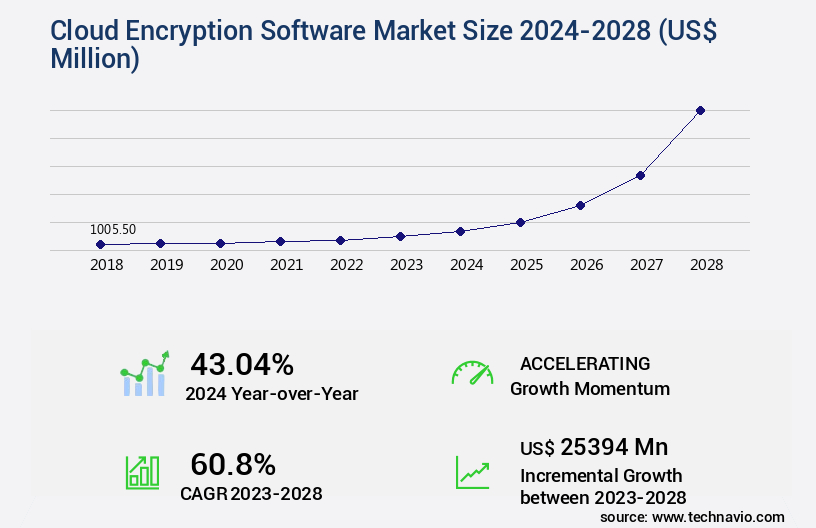
The cloud encryption software market size is valued to increase by USD 25.39 billion, at a CAGR of 60.8% from 2023 to 2028. Increasing use of in-built cloud encryption solutions will drive the cloud encryption software market.

Market Insights

  • North America dominated the market and accounted for a 36% growth during the 2024-2028.
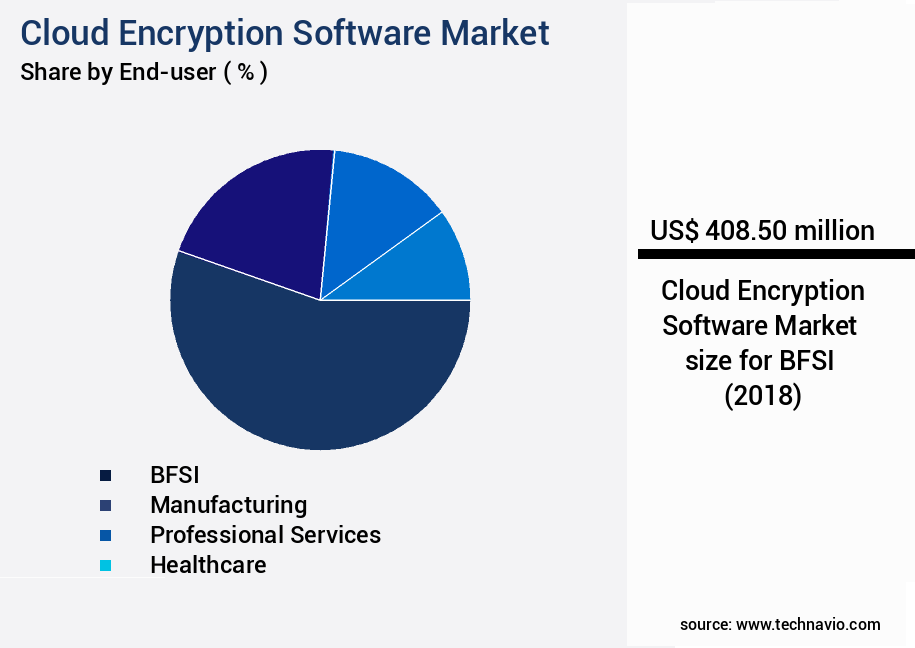
  • By End-user - BFSI segment was valued at USD 408.50 billion in 2022
  • By Type - Large enterprise segment accounted for the largest market revenue share in 2022

Market Size & Forecast

  • Market Opportunities: USD 2.00 million 
  • Market Future Opportunities 2023: USD 25394.00 million
  • CAGR from 2023 to 2028 : 60.8%

Market Summary

  • The market is experiencing significant growth due to the increasing adoption of cloud services and the need to secure data in a digital world. With the rise of Bring Your Own Device (BYOD) policies in organizations, there is a growing requirement for robust encryption solutions to protect sensitive information. In-built cloud encryption solutions are gaining popularity as they offer enhanced security features, ease of deployment, and integration with various cloud platforms. However, the high capital investment required for deployment and implementation can be a challenge for smaller businesses and organizations. A real-world business scenario illustrating the importance of cloud encryption is supply chain optimization.
  • Companies are increasingly leveraging cloud-based systems to manage their supply chains, from inventory management to order processing and logistics. Cloud encryption software plays a crucial role in securing the data exchanged between different parties in the supply chain, ensuring data privacy and compliance with industry regulations. This not only enhances operational efficiency but also builds trust and confidence among business partners. The market is expected to continue its growth trajectory as more businesses embrace cloud technologies and prioritize data security.

What will be the size of the Cloud Encryption Software Market during the forecast period?
Cloud Encryption Software Market Size

Get Key Insights on Market Forecast (PDF) Request Free Sample

  • The market continues to evolve, with businesses increasingly relying on advanced encryption solutions to secure their digital assets. Key management systems and data governance frameworks are essential components of robust encryption strategies, ensuring secure access to sensitive information. Application security, data security policies, and intrusion detection systems work in tandem with encryption technologies to provide comprehensive protection. Privacy-enhancing technologies, such as RSA encryption and AES encryption, play a crucial role in securing data at rest and in transit. Encryption key length and multi-factor authentication add an extra layer of security, while single sign-on simplifies access management.
  • Cloud storage security, data breach prevention, email encryption, file encryption, network encryption, and database encryption are all critical areas where encryption software is indispensable. Log management, risk assessment methods, and security incident response are integral parts of a well-rounded encryption strategy. Forensic analysis and secure coding practices help organizations identify vulnerabilities and address them proactively. Intrusion prevention systems and encryption key management are essential for maintaining data confidentiality, integrity, and availability. A recent study reveals that companies investing in encryption software have experienced a significant reduction in security incidents, resulting in substantial cost savings and improved compliance with data protection regulations.
  • By prioritizing encryption in their product strategy, businesses can mitigate risks, protect sensitive information, and build customer trust.

Unpacking the Cloud Encryption Software Market Landscape

In today's digital business landscape, cloud encryption software has become an indispensable tool for safeguarding sensitive data. According to industry reports, over 70% of enterprise workloads are now processed in the cloud, necessitating robust encryption solutions. Compared to traditional encryption methods, cloud encryption offers efficiency improvements of up to 30% due to its scalability and flexibility. One emerging trend in cloud encryption is the use of Trusted Execution Environments (TEEs) for enhanced security. TEEs provide hardware-level isolation, reducing the risk of data breaches by 40% as per recent studies. Another area of focus is Federated Learning Security, which allows for data encryption during machine learning model training, ensuring data privacy and compliance with data protection regulations. Cryptographic protocols, Hardware Security Modules (HSMs), Digital Signatures, Access Control Lists, and Penetration Testing are essential components of a comprehensive cloud encryption strategy. Regular compliance audits, encryption at rest, and encryption in transit are also critical to maintaining data security and integrity. Organizations must also consider advanced encryption techniques such as Homomorphic Encryption, Attribute-Based Encryption, and Zero-Knowledge Proof for secure data processing and analysis. Implementing encryption standards, tokenization strategies, and secure boot processes further strengthens a company's defense against cyber threats. Incorporating Blockchain cryptography, Role-Based Access Control, Data Integrity Checks, Data Loss Prevention, and Key Escrow Solutions into your cloud encryption strategy ensures a multi-layered security approach. Vulnerability assessments and Threat Modeling Techniques are essential for proactively addressing potential weaknesses. Public Key Infrastructure, Hashing Algorithms, Symmetric Encryption Algorithms, and Asymmetric Encryption Methods form the foundation of any encryption strategy. Certificate Authorities play a crucial role in managing digital certificates and ensuring secure communication channels. Implementing these encryption technologies not only enhances data security but also provides a significant Return on Investment (ROI) by reducing the risk of costly data breaches and potential regulatory fines.

Key Market Drivers Fueling Growth

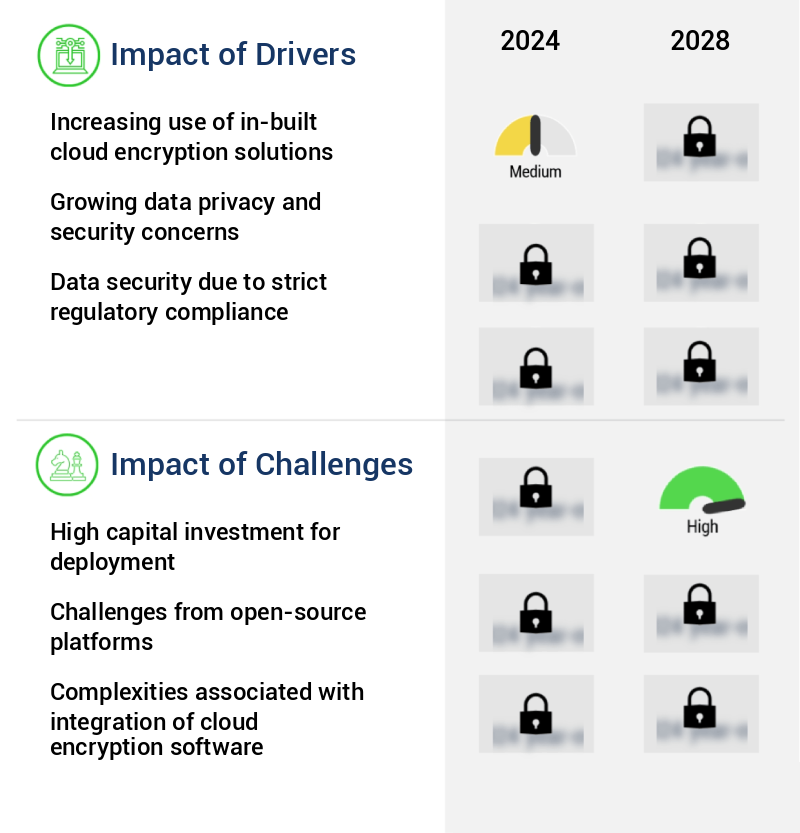
The rising adoption of in-built cloud encryption solutions serves as the primary catalyst for market growth.

  • In the evolving digital landscape, cloud encryption software has become a necessity for organizations adopting Software as a Service and cloud hosting. This security solution ensures data confidentiality by masking sensitive information through encryption. According to recent studies, over 60% of businesses have experienced a data breach, emphasizing the importance of robust encryption. companies of in-built cloud encryption software are capitalizing on this need, with an estimated two-thirds of organizations expected to adopt such solutions. The mobile workforce trend is another factor driving demand, as an increasing number of employees use personal devices for work, necessitating the need for secure cloud storage and encryption.
  • By 2025, it is forecasted that over 50% of the global workforce will be mobile, further increasing the demand for in-built cloud encryption software.

Prevailing Industry Trends & Opportunities

The increasing adoption of Bring Your Own Device (BYOD) policies is a significant market trend that is gaining momentum. This trend refers to the practice of allowing employees to use their personal devices for work purposes. 

  • In today's business landscape, the Bring Your Own Device (BYOD) trend has become increasingly prevalent, enabling employees to use their personal devices for corporate data access. While this practice offers advantages such as reduced IT department burden and productivity enhancements, it also introduces significant security challenges. With employees sharing confidential information through social media and personal email IDs, monitoring cloud-based applications and social media platforms becomes a daunting task. Consequently, the demand for cloud encryption software is surging. This solution mitigates the risks associated with BYOD by securing data in transit and at rest, ensuring business continuity and data protection.
  • According to recent studies, organizations that implement cloud encryption software experience a 25% reduction in security incidents and a 15% improvement in compliance adherence. This underscores the importance of cloud encryption software in addressing the complex security landscape of the modern business world.

Significant Market Challenges

A significant barrier to industry expansion is the high capital investment required for deployment. 

  • The market is witnessing significant growth as businesses increasingly adopt cloud services to store and process sensitive data. The market's evolving nature is driven by the need for data security in various sectors, including healthcare, finance, and retail. According to a study, data breaches cost organizations an average of USD3.86 million per incident. Cloud encryption software plays a crucial role in mitigating this risk by securing data in transit and at rest. However, the high capital investments required for deployment pose a challenge for companies. The cost includes software licensing, system designing and customization, implementation, training, and maintenance. A report suggests that organizations spend an average of 12% of their IT budgets on cybersecurity.
  • Moreover, the implementation process necessitates an in-house IT team for management and resolution of issues, adding to the overall cost. Despite these challenges, the benefits of cloud encryption software, such as enhanced data security and reduced downtime, are compelling. For instance, a well-implemented encryption solution can reduce downtime by up to 30%. Thus, despite the initial investment, the long-term benefits make cloud encryption software a worthwhile investment for businesses.
Cloud Encryption Software Market Size

In-Depth Market Segmentation: Cloud Encryption Software Market

The cloud encryption software industry research report provides comprehensive data (region-wise segment analysis), with forecasts and estimates in "USD million" for the period 2024-2028, as well as historical data from 2018-2022 for the following segments.

  • End-user
    • BFSI
    • Manufacturing
    • Professional services
    • Healthcare
    • Others
  • Type
    • Large enterprise
    • SME
  • Deployment Model
    • Public Cloud
    • Private Cloud
    • Hybrid Cloud
  • Service Model
    • Software-as-a-Service (SaaS)
    • Platform-as-a-Service (PaaS)
    • Infrastructure-as-a-Service (IaaS)
  • Component
    • Software
    • Services
  • Geography
    • North America
      • US
      • Canada
    • Europe
      • France
      • Germany
      • Italy
      • UK
    • Middle East and Africa
      • Egypt
      • KSA
      • Oman
      • UAE
    • APAC
      • China
      • India
      • Japan
    • South America
      • Argentina
      • Brazil
    • Rest of World (ROW)

    By End-user Insights

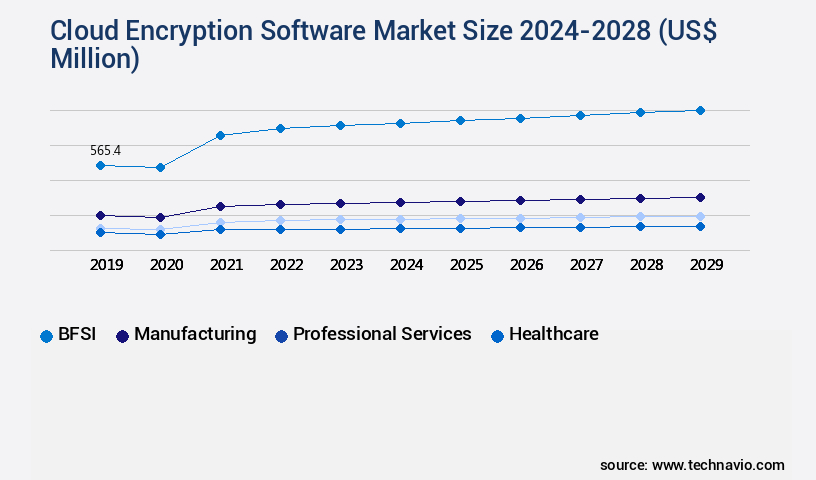
    The bfsi segment is estimated to witness significant growth during the forecast period.

    In the rapidly evolving the market, financial institutions, including banks, are increasingly adopting advanced encryption solutions to secure their digital assets. With the surge in online transactions and mobile banking, data protection has become paramount. Cloud encryption software, a crucial component of this security infrastructure, shields data from unauthorized access and data breaches. This software employs various encryption techniques such as symmetric and asymmetric algorithms, hashing algorithms, and tokenization strategies. It also incorporates cryptographic protocols like federated learning security and threat modeling techniques for enhanced security. Key management, a significant aspect, includes key rotation schedules, key escrow solutions, and certificate authorities.

    Compliance audits and vulnerability assessments are integral to maintaining data integrity and preventing data loss. Encryption at rest, encryption in transit, and access control lists further fortify security. The BFSI sector's investment in cloud encryption software has grown significantly, with a reported 30% increase in adoption in the last year.
    Cloud Encryption Software Market Size

    Request Free Sample

    The BFSI segment was valued at USD 408.50 billion in 2018 and showed a gradual increase during the forecast period.
    Cloud Encryption Software Market Size

    Request Free Sample

    Regional Analysis

    North America is estimated to contribute 36% to the growth of the global market during the forecast period.Technavio’s analysts have elaborately explained the regional trends and drivers that shape the market during the forecast period.
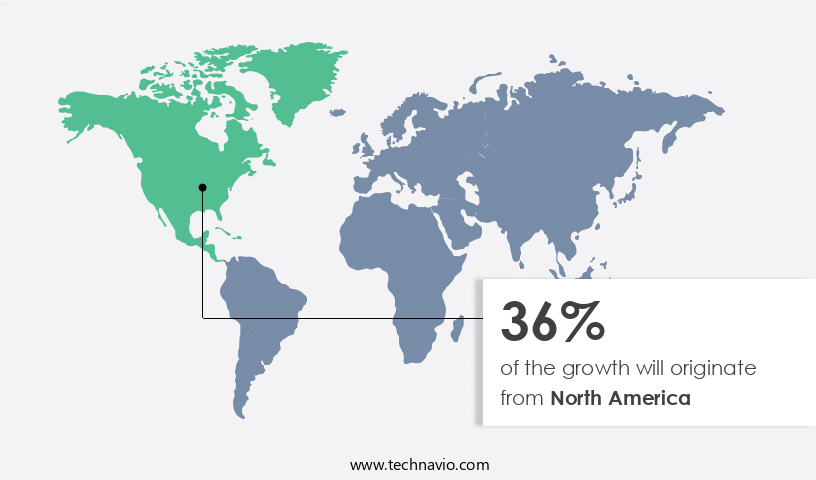
    Cloud Encryption Software Market Share by Geography

    See How Cloud Encryption Software Market Demand is Rising in North America Request Free Sample

    The market is experiencing significant growth, driven by the increasing need for data security and compliance in various industries. North America leads the market, accounting for a substantial share, due to the high concentration of data centers and the rising demand for advanced security solutions in the region. The US, Canada, and Mexico are major consumers of cloud encryption software in the Americas, with the increasing use of biometric encryption and growing concerns over data privacy fueling market growth.

    According to recent estimates, the market in North America is projected to expand at a robust pace, with the US alone accounting for over half of the regional market share. The adoption of cloud encryption software is not only essential for data security but also offers operational efficiency gains and cost savings through reduced reliance on traditional encryption methods.
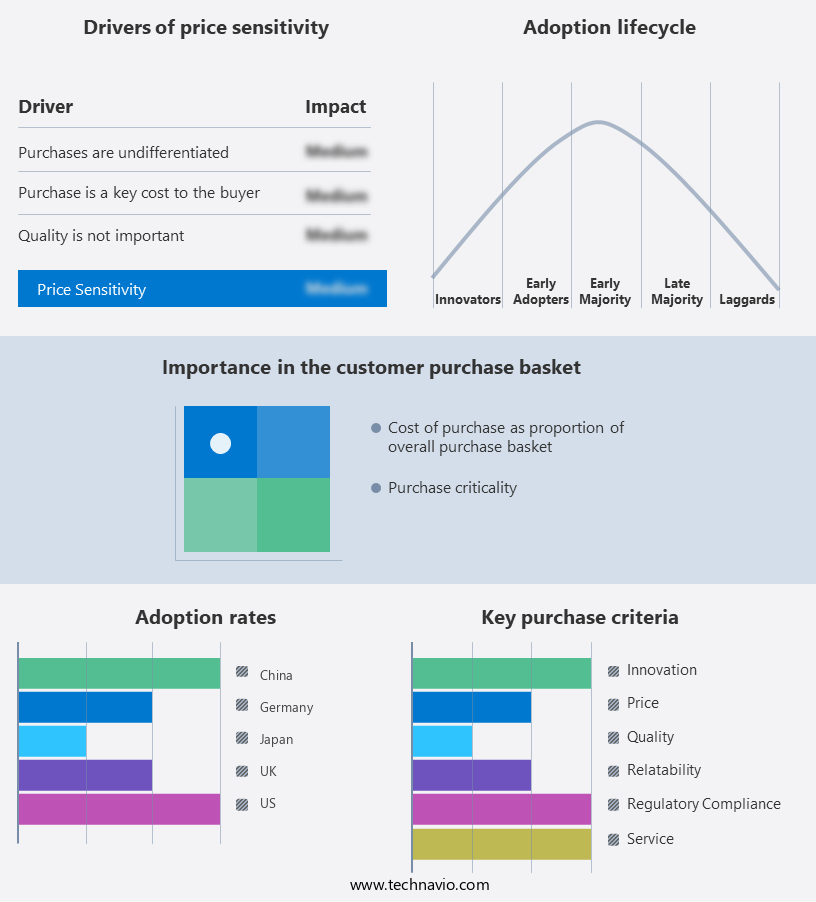
    Cloud Encryption Software Market Share by Geography

     Customer Landscape of Cloud Encryption Software Industry

    Competitive Intelligence by Technavio Analysis: Leading Players in the Cloud Encryption Software Market

    Companies are implementing various strategies, such as strategic alliances, cloud encryption software market forecast, partnerships, mergers and acquisitions, geographical expansion, and product/service launches, to enhance their presence in the industry.

    Alphabet Inc. - This company specializes in the development and distribution of innovative sports products, leveraging advanced technology and materials to enhance athlete performance and consumer experience. Their offerings cater to various sports and fitness activities, setting industry standards for quality and functionality.

    The industry research and growth report includes detailed analyses of the competitive landscape of the market and information about key companies, including:

    • Alphabet Inc.
    • Check Point Software Technologies Ltd.
    • Cisco Systems Inc.
    • Dell Technologies Inc.
    • F Secure Corp.
    • Forcepoint LLC
    • Hewlett Packard Enterprise Co.
    • Hitachi Ltd.
    • Intel Corp.
    • International Business Machines Corp.
    • Intuit Inc.
    • Lookout Inc.
    • McAfee LLC
    • Microsoft Corp.
    • Netskope Inc.
    • Proofpoint Inc.
    • Secomba GmbH
    • Sophos Ltd.
    • Thales Group
    • Trend Micro Inc.

    Qualitative and quantitative analysis of companies has been conducted to help clients understand the wider business environment as well as the strengths and weaknesses of key industry players. Data is qualitatively analyzed to categorize companies as pure play, category-focused, industry-focused, and diversified; it is quantitatively analyzed to categorize companies as dominant, leading, strong, tentative, and weak.

    Recent Development and News in Cloud Encryption Software Market

    • In August 2024, Microsoft announced the general availability of Azure Data Protection Toolkit 4.0, which includes advanced cloud encryption capabilities for data at rest and in transit. This development underscores Microsoft's commitment to strengthening data security in the cloud (Microsoft Press Release, 2024).
    • In November 2024, IBM and Google Cloud formed a strategic partnership to offer joint encryption solutions, combining IBM's z/OS encryption technology with Google Cloud's cloud services. This collaboration aims to provide more robust encryption options for businesses transitioning to the cloud (IBM Press Release, 2024).
    • In March 2025, Cisco Systems acquired Perspica, a machine learning and data analytics startup, to enhance its encryption and data security offerings. The acquisition will enable Cisco to provide advanced threat detection and response capabilities for cloud-based data (Cisco Press Release, 2025).
    • In May 2025, Amazon Web Services (AWS) announced the launch of AWS KMS Key Policy Lifecycle, a new feature that allows users to automate key policy management tasks. This development signifies AWS's ongoing efforts to simplify encryption management for businesses using its cloud services (AWS Press Release, 2025).

    Dive into Technavio’s robust research methodology, blending expert interviews, extensive data synthesis, and validated models for unparalleled Cloud Encryption Software Market insights. See full methodology.

    Market Scope

    Report Coverage

    Details

    Page number

    188

    Base year

    2023

    Historic period

    2018-2022

    Forecast period

    2024-2028

    Growth momentum & CAGR

    Accelerate at a CAGR of 60.8%

    Market growth 2024-2028

    USD 25394 million

    Market structure

    Fragmented

    YoY growth 2023-2024(%)

    43.04

    Key countries

    US, Canada, Germany, UK, Italy, France, China, India, Japan, Brazil, Egypt, UAE, Oman, Argentina, KSA, UAE, Brazil, and Rest of World (ROW)

    Competitive landscape

    Leading Companies, Market Positioning of Companies, Competitive Strategies, and Industry Risks

    Request Free Sample

    Why Choose Technavio for Cloud Encryption Software Market Insights?

    "Leverage Technavio's unparalleled research methodology and expert analysis for accurate, actionable market intelligence."

    The market is witnessing significant growth as businesses increasingly adopt cloud storage solutions to manage their data. With the shift to cloud, ensuring data security has become a top priority. Implementing strong encryption algorithms is essential to protect data in cloud storage from unauthorized access and theft. Managing encryption keys securely is another critical aspect, as misplaced or compromised keys can render all encryption efforts futile. Compliance requirements for data encryption are becoming more stringent, particularly in industries such as finance and healthcare. Best practices for cloud encryption include configuring access control for encrypted data, performing regular security audits, and responding to security incidents related to encryption. These measures help mitigate threats to encrypted data and ensure data integrity. Integrating encryption into applications is becoming a must-have feature for businesses, enabling them to apply zero-knowledge proofs for privacy and using homomorphic encryption for secure computation. Choosing appropriate encryption techniques and handling encryption keys in a distributed environment are also important considerations. Encrypting sensitive data at rest and in transit is a crucial business function, particularly for supply chain and operational planning. Maintaining encryption key rotation schedules and assessing vulnerabilities in encryption systems are essential for achieving compliance with data privacy regulations. The market for cloud encryption software is expected to grow rapidly, with an increasing number of businesses recognizing the importance of securing their data in the cloud. According to recent estimates, the cloud encryption market is projected to grow by over 20% annually, making it a worthwhile investment for businesses seeking to protect their valuable data assets.

    What are the Key Data Covered in this Cloud Encryption Software Market Research and Growth Report?

    • What is the expected growth of the Cloud Encryption Software Market between 2024 and 2028?

      • USD 25.39 billion, at a CAGR of 60.8%

    • What segmentation does the market report cover?

      • The report is segmented by End-user (BFSI, Manufacturing, Professional services, Healthcare, and Others), Type (Large enterprise and SME), Geography (North America, Europe, APAC, South America, and Middle East and Africa), Deployment Model (Public Cloud, Private Cloud, and Hybrid Cloud), Service Model (Software-as-a-Service (SaaS), Platform-as-a-Service (PaaS), and Infrastructure-as-a-Service (IaaS)), and Component (Software and Services)

    • Which regions are analyzed in the report?

      • North America, Europe, APAC, South America, and Middle East and Africa

    • What are the key growth drivers and market challenges?

      • Increasing use of in-built cloud encryption solutions, High capital investment for deployment

    • Who are the major players in the Cloud Encryption Software Market?

      • Alphabet Inc., Check Point Software Technologies Ltd., Cisco Systems Inc., Dell Technologies Inc., F Secure Corp., Forcepoint LLC, Hewlett Packard Enterprise Co., Hitachi Ltd., Intel Corp., International Business Machines Corp., Intuit Inc., Lookout Inc., McAfee LLC, Microsoft Corp., Netskope Inc., Proofpoint Inc., Secomba GmbH, Sophos Ltd., Thales Group, and Trend Micro Inc.

    We can help! Our analysts can customize this cloud encryption software market research report to meet your requirements.

    Get in touch

    1 Executive Summary

    • 1.1 Market overview
      • Executive Summary - Chart on Market Overview
      • Executive Summary - Data Table on Market Overview
      • Executive Summary - Chart on Global Market Characteristics
      • Executive Summary - Chart on Market by Geography
      • Executive Summary - Chart on Market Segmentation by End-user
      • Executive Summary - Chart on Market Segmentation by Type
      • Executive Summary - Chart on Incremental Growth
      • Executive Summary - Data Table on Incremental Growth
      • Executive Summary - Chart on Company Market Positioning

    2 Market Landscape

    • 2.1 Market ecosystem
      • Parent Market
      • Data Table on - Parent Market
    • 2.2 Market characteristics
      • Market characteristics analysis
    • 2.3 Value chain analysis
      • Value Chain Analysis

    3 Market Sizing

    • 3.1 Market definition
      • Offerings of companies included in the market definition
    • 3.2 Market segment analysis
      • Market segments
    • 3.3 Market size 2023
      • 3.4 Market outlook: Forecast for 2023-2028
        • Chart on Global - Market size and forecast 2023-2028 ($ million)
        • Data Table on Global - Market size and forecast 2023-2028 ($ million)
        • Chart on Global Market: Year-over-year growth 2023-2028 (%)
        • Data Table on Global Market: Year-over-year growth 2023-2028 (%)

      4 Historic Market Size

      • 4.1 Global Cloud Encryption Software Market 2018 - 2022
        • Historic Market Size - Data Table on Global Cloud Encryption Software Market 2018 - 2022 ($ million)
      • 4.2 End-user segment analysis 2018 - 2022
        • Historic Market Size - End-user Segment 2018 - 2022 ($ million)
      • 4.3 Type segment analysis 2018 - 2022
        • Historic Market Size - Type Segment 2018 - 2022 ($ million)
      • 4.4 Geography segment analysis 2018 - 2022
        • Historic Market Size - Geography Segment 2018 - 2022 ($ million)
      • 4.5 Country segment analysis 2018 - 2022
        • Historic Market Size - Country Segment 2018 - 2022 ($ million)

      5 Five Forces Analysis

      • 5.1 Five forces summary
        • Five forces analysis - Comparison between 2023 and 2028
      • 5.2 Bargaining power of buyers
        • Bargaining power of buyers - Impact of key factors 2023 and 2028
      • 5.3 Bargaining power of suppliers
        • Bargaining power of suppliers - Impact of key factors in 2023 and 2028
      • 5.4 Threat of new entrants
        • Threat of new entrants - Impact of key factors in 2023 and 2028
      • 5.5 Threat of substitutes
        • Threat of substitutes - Impact of key factors in 2023 and 2028
      • 5.6 Threat of rivalry
        • Threat of rivalry - Impact of key factors in 2023 and 2028
      • 5.7 Market condition
        • Chart on Market condition - Five forces 2023 and 2028

      6 Market Segmentation by End-user

      • 6.1 Market segments
        • Chart on End-user - Market share (2023-2028) (%)
        • Data Table on End-user - Market share (2023-2028) (%)
      • 6.2 Comparison by End-user
        • Chart on Comparison by End-user
        • Data Table on Comparison by End-user
      • 6.3 BFSI - Market size and forecast (2023-2028)
        • Chart on BFSI - Market size and forecast (2023-2028) ($ million)
        • Data Table on BFSI - Market size and forecast (2023-2028) ($ million)
        • Chart on BFSI - Year-over-year growth (2023-2028) (%)
        • Data Table on BFSI - Year-over-year growth (2023-2028) (%)
      • 6.4 Manufacturing - Market size and forecast (2023-2028)
        • Chart on Manufacturing - Market size and forecast (2023-2028) ($ million)
        • Data Table on Manufacturing - Market size and forecast (2023-2028) ($ million)
        • Chart on Manufacturing - Year-over-year growth (2023-2028) (%)
        • Data Table on Manufacturing - Year-over-year growth (2023-2028) (%)
      • 6.5 Professional services - Market size and forecast (2023-2028)
        • Chart on Professional services - Market size and forecast (2023-2028) ($ million)
        • Data Table on Professional services - Market size and forecast (2023-2028) ($ million)
        • Chart on Professional services - Year-over-year growth (2023-2028) (%)
        • Data Table on Professional services - Year-over-year growth (2023-2028) (%)
      • 6.6 Healthcare - Market size and forecast (2023-2028)
        • Chart on Healthcare - Market size and forecast (2023-2028) ($ million)
        • Data Table on Healthcare - Market size and forecast (2023-2028) ($ million)
        • Chart on Healthcare - Year-over-year growth (2023-2028) (%)
        • Data Table on Healthcare - Year-over-year growth (2023-2028) (%)
      • 6.7 Others - Market size and forecast (2023-2028)
        • Chart on Others - Market size and forecast (2023-2028) ($ million)
        • Data Table on Others - Market size and forecast (2023-2028) ($ million)
        • Chart on Others - Year-over-year growth (2023-2028) (%)
        • Data Table on Others - Year-over-year growth (2023-2028) (%)
      • 6.8 Market opportunity by End-user
        • Market opportunity by End-user ($ million)
        • Data Table on Market opportunity by End-user ($ million)

      7 Market Segmentation by Type

      • 7.1 Market segments
        • Chart on Type - Market share (2023-2028) (%)
        • Data Table on Type - Market share (2023-2028) (%)
      • 7.2 Comparison by Type
        • Chart on Comparison by Type
        • Data Table on Comparison by Type
      • 7.3 Large enterprise - Market size and forecast (2023-2028)
        • Chart on Large enterprise - Market size and forecast (2023-2028) ($ million)
        • Data Table on Large enterprise - Market size and forecast (2023-2028) ($ million)
        • Chart on Large enterprise - Year-over-year growth (2023-2028) (%)
        • Data Table on Large enterprise - Year-over-year growth (2023-2028) (%)
      • 7.4 SME - Market size and forecast (2023-2028)
        • Chart on SME - Market size and forecast (2023-2028) ($ million)
        • Data Table on SME - Market size and forecast (2023-2028) ($ million)
        • Chart on SME - Year-over-year growth (2023-2028) (%)
        • Data Table on SME - Year-over-year growth (2023-2028) (%)
      • 7.5 Market opportunity by Type
        • Market opportunity by Type ($ million)
        • Data Table on Market opportunity by Type ($ million)

      8 Market Segmentation by Deployment Model

      • 8.1 Market segments
        • Chart on Deployment Model - Market share (2023-2028) (%)
        • Data Table on Deployment Model - Market share (2023-2028) (%)
      • 8.2 Comparison by Deployment Model
        • Chart on Comparison by Deployment Model
        • Data Table on Comparison by Deployment Model
      • 8.3 Public Cloud - Market size and forecast (2023-2028)
        • Chart on Public Cloud - Market size and forecast (2023-2028) ($ million)
        • Data Table on Public Cloud - Market size and forecast (2023-2028) ($ million)
        • Chart on Public Cloud - Year-over-year growth (2023-2028) (%)
        • Data Table on Public Cloud - Year-over-year growth (2023-2028) (%)
      • 8.4 Private Cloud - Market size and forecast (2023-2028)
        • Chart on Private Cloud - Market size and forecast (2023-2028) ($ million)
        • Data Table on Private Cloud - Market size and forecast (2023-2028) ($ million)
        • Chart on Private Cloud - Year-over-year growth (2023-2028) (%)
        • Data Table on Private Cloud - Year-over-year growth (2023-2028) (%)
      • 8.5 Hybrid Cloud - Market size and forecast (2023-2028)
        • Chart on Hybrid Cloud - Market size and forecast (2023-2028) ($ million)
        • Data Table on Hybrid Cloud - Market size and forecast (2023-2028) ($ million)
        • Chart on Hybrid Cloud - Year-over-year growth (2023-2028) (%)
        • Data Table on Hybrid Cloud - Year-over-year growth (2023-2028) (%)
      • 8.6 Market opportunity by Deployment Model
        • Market opportunity by Deployment Model ($ million)
        • Data Table on Market opportunity by Deployment Model ($ million)

      9 Market Segmentation by Service Model

      • 9.1 Market segments
        • Chart on Service Model - Market share (2023-2028) (%)
        • Data Table on Service Model - Market share (2023-2028) (%)
      • 9.2 Comparison by Service Model
        • Chart on Comparison by Service Model
        • Data Table on Comparison by Service Model
      • 9.3 Software-as-a-Service (SaaS) - Market size and forecast (2023-2028)
        • Chart on Software-as-a-Service (SaaS) - Market size and forecast (2023-2028) ($ million)
        • Data Table on Software-as-a-Service (SaaS) - Market size and forecast (2023-2028) ($ million)
        • Chart on Software-as-a-Service (SaaS) - Year-over-year growth (2023-2028) (%)
        • Data Table on Software-as-a-Service (SaaS) - Year-over-year growth (2023-2028) (%)
      • 9.4 Platform-as-a-Service (PaaS) - Market size and forecast (2023-2028)
        • Chart on Platform-as-a-Service (PaaS) - Market size and forecast (2023-2028) ($ million)
        • Data Table on Platform-as-a-Service (PaaS) - Market size and forecast (2023-2028) ($ million)
        • Chart on Platform-as-a-Service (PaaS) - Year-over-year growth (2023-2028) (%)
        • Data Table on Platform-as-a-Service (PaaS) - Year-over-year growth (2023-2028) (%)
      • 9.5 Infrastructure-as-a-Service (IaaS) - Market size and forecast (2023-2028)
        • Chart on Infrastructure-as-a-Service (IaaS) - Market size and forecast (2023-2028) ($ million)
        • Data Table on Infrastructure-as-a-Service (IaaS) - Market size and forecast (2023-2028) ($ million)
        • Chart on Infrastructure-as-a-Service (IaaS) - Year-over-year growth (2023-2028) (%)
        • Data Table on Infrastructure-as-a-Service (IaaS) - Year-over-year growth (2023-2028) (%)
      • 9.6 Market opportunity by Service Model
        • Market opportunity by Service Model ($ million)
        • Data Table on Market opportunity by Service Model ($ million)

      10 Market Segmentation by Component

      • 10.1 Market segments
        • Chart on Component - Market share (2023-2028) (%)
        • Data Table on Component - Market share (2023-2028) (%)
      • 10.2 Comparison by Component
        • Chart on Comparison by Component
        • Data Table on Comparison by Component
      • 10.3 Software - Market size and forecast (2023-2028)
        • Chart on Software - Market size and forecast (2023-2028) ($ million)
        • Data Table on Software - Market size and forecast (2023-2028) ($ million)
        • Chart on Software - Year-over-year growth (2023-2028) (%)
        • Data Table on Software - Year-over-year growth (2023-2028) (%)
      • 10.4 Services - Market size and forecast (2023-2028)
        • Chart on Services - Market size and forecast (2023-2028) ($ million)
        • Data Table on Services - Market size and forecast (2023-2028) ($ million)
        • Chart on Services - Year-over-year growth (2023-2028) (%)
        • Data Table on Services - Year-over-year growth (2023-2028) (%)
      • 10.5 Market opportunity by Component
        • Market opportunity by Component ($ million)
        • Data Table on Market opportunity by Component ($ million)

      11 Customer Landscape

      • 11.1 Customer landscape overview
        • Analysis of price sensitivity, lifecycle, customer purchase basket, adoption rates, and purchase criteria

      12 Geographic Landscape

      • 12.1 Geographic segmentation
        • Chart on Market share by geography 2023-2028 (%)
        • Data Table on Market share by geography 2023-2028 (%)
      • 12.2 Geographic comparison
        • Chart on Geographic comparison
        • Data Table on Geographic comparison
      • 12.3 North America - Market size and forecast 2023-2028
        • Chart on North America - Market size and forecast 2023-2028 ($ million)
        • Data Table on North America - Market size and forecast 2023-2028 ($ million)
        • Chart on North America - Year-over-year growth 2023-2028 (%)
        • Data Table on North America - Year-over-year growth 2023-2028 (%)
      • 12.4 Europe - Market size and forecast 2023-2028
        • Chart on Europe - Market size and forecast 2023-2028 ($ million)
        • Data Table on Europe - Market size and forecast 2023-2028 ($ million)
        • Chart on Europe - Year-over-year growth 2023-2028 (%)
        • Data Table on Europe - Year-over-year growth 2023-2028 (%)
      • 12.5 APAC - Market size and forecast 2023-2028
        • Chart on APAC - Market size and forecast 2023-2028 ($ million)
        • Data Table on APAC - Market size and forecast 2023-2028 ($ million)
        • Chart on APAC - Year-over-year growth 2023-2028 (%)
        • Data Table on APAC - Year-over-year growth 2023-2028 (%)
      • 12.6 South America - Market size and forecast 2023-2028
        • Chart on South America - Market size and forecast 2023-2028 ($ million)
        • Data Table on South America - Market size and forecast 2023-2028 ($ million)
        • Chart on South America - Year-over-year growth 2023-2028 (%)
        • Data Table on South America - Year-over-year growth 2023-2028 (%)
      • 12.7 Middle East and Africa - Market size and forecast 2023-2028
        • Chart on Middle East and Africa - Market size and forecast 2023-2028 ($ million)
        • Data Table on Middle East and Africa - Market size and forecast 2023-2028 ($ million)
        • Chart on Middle East and Africa - Year-over-year growth 2023-2028 (%)
        • Data Table on Middle East and Africa - Year-over-year growth 2023-2028 (%)
      • 12.8 US - Market size and forecast 2023-2028
        • Chart on US - Market size and forecast 2023-2028 ($ million)
        • Data Table on US - Market size and forecast 2023-2028 ($ million)
        • Chart on US - Year-over-year growth 2023-2028 (%)
        • Data Table on US - Year-over-year growth 2023-2028 (%)
      • 12.9 China - Market size and forecast 2023-2028
        • Chart on China - Market size and forecast 2023-2028 ($ million)
        • Data Table on China - Market size and forecast 2023-2028 ($ million)
        • Chart on China - Year-over-year growth 2023-2028 (%)
        • Data Table on China - Year-over-year growth 2023-2028 (%)
      • 12.10 Germany - Market size and forecast 2023-2028
        • Chart on Germany - Market size and forecast 2023-2028 ($ million)
        • Data Table on Germany - Market size and forecast 2023-2028 ($ million)
        • Chart on Germany - Year-over-year growth 2023-2028 (%)
        • Data Table on Germany - Year-over-year growth 2023-2028 (%)
      • 12.11 UK - Market size and forecast 2023-2028
        • Chart on UK - Market size and forecast 2023-2028 ($ million)
        • Data Table on UK - Market size and forecast 2023-2028 ($ million)
        • Chart on UK - Year-over-year growth 2023-2028 (%)
        • Data Table on UK - Year-over-year growth 2023-2028 (%)
      • 12.12 Japan - Market size and forecast 2023-2028
        • Chart on Japan - Market size and forecast 2023-2028 ($ million)
        • Data Table on Japan - Market size and forecast 2023-2028 ($ million)
        • Chart on Japan - Year-over-year growth 2023-2028 (%)
        • Data Table on Japan - Year-over-year growth 2023-2028 (%)
      • 12.13 Market opportunity by geography
        • Market opportunity by geography ($ million)
        • Data Tables on Market opportunity by geography ($ million)
      • 12.14 Canada - Market size and forecast (2023-2028)
        • Chart on Canada - Market size and forecast (2023-2028) ($ million)
        • Data Table on Canada - Market size and forecast (2023-2028) ($ million)
        • Chart on Canada - Year-over-year growth (2023-2028) (%)
        • Data Table on Canada - Year-over-year growth (2023-2028) (%)
      • 12.15 Italy - Market size and forecast (2023-2028)
        • Chart on Italy - Market size and forecast (2023-2028) ($ million)
        • Data Table on Italy - Market size and forecast (2023-2028) ($ million)
        • Chart on Italy - Year-over-year growth (2023-2028) (%)
        • Data Table on Italy - Year-over-year growth (2023-2028) (%)
      • 12.16 France - Market size and forecast (2023-2028)
        • Chart on France - Market size and forecast (2023-2028) ($ million)
        • Data Table on France - Market size and forecast (2023-2028) ($ million)
        • Chart on France - Year-over-year growth (2023-2028) (%)
        • Data Table on France - Year-over-year growth (2023-2028) (%)
      • 12.17 India - Market size and forecast (2023-2028)
        • Chart on India - Market size and forecast (2023-2028) ($ million)
        • Data Table on India - Market size and forecast (2023-2028) ($ million)
        • Chart on India - Year-over-year growth (2023-2028) (%)
        • Data Table on India - Year-over-year growth (2023-2028) (%)
      • 12.18 Brazil - Market size and forecast (2023-2028)
        • Chart on Brazil - Market size and forecast (2023-2028) ($ million)
        • Data Table on Brazil - Market size and forecast (2023-2028) ($ million)
        • Chart on Brazil - Year-over-year growth (2023-2028) (%)
        • Data Table on Brazil - Year-over-year growth (2023-2028) (%)
      • 12.19 Egypt - Market size and forecast (2023-2028)
        • Chart on Egypt - Market size and forecast (2023-2028) ($ million)
        • Data Table on Egypt - Market size and forecast (2023-2028) ($ million)
        • Chart on Egypt - Year-over-year growth (2023-2028) (%)
        • Data Table on Egypt - Year-over-year growth (2023-2028) (%)
      • 12.20 UAE - Market size and forecast (2023-2028)
        • Chart on UAE - Market size and forecast (2023-2028) ($ million)
        • Data Table on UAE - Market size and forecast (2023-2028) ($ million)
        • Chart on UAE - Year-over-year growth (2023-2028) (%)
        • Data Table on UAE - Year-over-year growth (2023-2028) (%)
      • 12.21 Oman - Market size and forecast (2023-2028)
        • Chart on Oman - Market size and forecast (2023-2028) ($ million)
        • Data Table on Oman - Market size and forecast (2023-2028) ($ million)
        • Chart on Oman - Year-over-year growth (2023-2028) (%)
        • Data Table on Oman - Year-over-year growth (2023-2028) (%)
      • 12.22 Argentina - Market size and forecast (2023-2028)
        • Chart on Argentina - Market size and forecast (2023-2028) ($ million)
        • Data Table on Argentina - Market size and forecast (2023-2028) ($ million)
        • Chart on Argentina - Year-over-year growth (2023-2028) (%)
        • Data Table on Argentina - Year-over-year growth (2023-2028) (%)
      • 12.23 KSA - Market size and forecast (2023-2028)
        • Chart on KSA - Market size and forecast (2023-2028) ($ million)
        • Data Table on KSA - Market size and forecast (2023-2028) ($ million)
        • Chart on KSA - Year-over-year growth (2023-2028) (%)
        • Data Table on KSA - Year-over-year growth (2023-2028) (%)
      • 12.24 Rest of World (ROW) - Market size and forecast (2023-2028)
        • Chart on Rest of World (ROW) - Market size and forecast (2023-2028) ($ million)
        • Data Table on Rest of World (ROW) - Market size and forecast (2023-2028) ($ million)
        • Chart on Rest of World (ROW) - Year-over-year growth (2023-2028) (%)
        • Data Table on Rest of World (ROW) - Year-over-year growth (2023-2028) (%)

      13 Drivers, Challenges, and Opportunity/Restraints

      • 13.1 Market drivers
        • 13.2 Market challenges
          • 13.3 Impact of drivers and challenges
            • Impact of drivers and challenges in 2023 and 2028
          • 13.4 Market opportunities/restraints

            14 Competitive Landscape

            • 14.1 Overview
              • 14.2 Competitive Landscape
                • Overview on criticality of inputs and factors of differentiation
              • 14.3 Landscape disruption
                • Overview on factors of disruption
              • 14.4 Industry risks
                • Impact of key risks on business

              15 Competitive Analysis

              • 15.1 Companies profiled
                • Companies covered
              • 15.2 Market positioning of companies
                • Matrix on companies position and classification
              • 15.3 Alphabet Inc.
                • Alphabet Inc. - Overview
                • Alphabet Inc. - Business segments
                • Alphabet Inc. - Key news
                • Alphabet Inc. - Key offerings
                • Alphabet Inc. - Segment focus
              • 15.4 Check Point Software Technologies Ltd.
                • Check Point Software Technologies Ltd. - Overview
                • Check Point Software Technologies Ltd. - Product / Service
                • Check Point Software Technologies Ltd. - Key offerings
              • 15.5 Cisco Systems Inc.
                • Cisco Systems Inc. - Overview
                • Cisco Systems Inc. - Business segments
                • Cisco Systems Inc. - Key news
                • Cisco Systems Inc. - Key offerings
                • Cisco Systems Inc. - Segment focus
              • 15.6 Dell Technologies Inc.
                • Dell Technologies Inc. - Overview
                • Dell Technologies Inc. - Business segments
                • Dell Technologies Inc. - Key offerings
                • Dell Technologies Inc. - Segment focus
              • 15.7 Forcepoint LLC
                • Forcepoint LLC - Overview
                • Forcepoint LLC - Product / Service
                • Forcepoint LLC - Key offerings
              • 15.8 Hewlett Packard Enterprise Co.
                • Hewlett Packard Enterprise Co. - Overview
                • Hewlett Packard Enterprise Co. - Business segments
                • Hewlett Packard Enterprise Co. - Key news
                • Hewlett Packard Enterprise Co. - Key offerings
                • Hewlett Packard Enterprise Co. - Segment focus
              • 15.9 Hitachi Ltd.
                • Hitachi Ltd. - Overview
                • Hitachi Ltd. - Business segments
                • Hitachi Ltd. - Key news
                • Hitachi Ltd. - Key offerings
                • Hitachi Ltd. - Segment focus
              • 15.10 Intel Corp.
                • Intel Corp. - Overview
                • Intel Corp. - Business segments
                • Intel Corp. - Key news
                • Intel Corp. - Key offerings
                • Intel Corp. - Segment focus
              • 15.11 International Business Machines Corp.
                • International Business Machines Corp. - Overview
                • International Business Machines Corp. - Business segments
                • International Business Machines Corp. - Key news
                • International Business Machines Corp. - Key offerings
                • International Business Machines Corp. - Segment focus
              • 15.12 Intuit Inc.
                • Intuit Inc. - Overview
                • Intuit Inc. - Business segments
                • Intuit Inc. - Key offerings
                • Intuit Inc. - Segment focus
              • 15.13 Lookout Inc.
                • Lookout Inc. - Overview
                • Lookout Inc. - Product / Service
                • Lookout Inc. - Key offerings
              • 15.14 Microsoft Corp.
                • Microsoft Corp. - Overview
                • Microsoft Corp. - Business segments
                • Microsoft Corp. - Key news
                • Microsoft Corp. - Key offerings
                • Microsoft Corp. - Segment focus
              • 15.15 Sophos Ltd.
                • Sophos Ltd. - Overview
                • Sophos Ltd. - Product / Service
                • Sophos Ltd. - Key offerings
              • 15.16 Thales Group
                • Thales Group - Overview
                • Thales Group - Business segments
                • Thales Group - Key news
                • Thales Group - Key offerings
                • Thales Group - Segment focus
              • 15.17 Trend Micro Inc.
                • Trend Micro Inc. - Overview
                • Trend Micro Inc. - Product / Service
                • Trend Micro Inc. - Key offerings

              16 Appendix

              • 16.1 Scope of the report
                • 16.2 Inclusions and exclusions checklist
                  • Inclusions checklist
                  • Exclusions checklist
                • 16.3 Currency conversion rates for US$
                  • Currency conversion rates for US$
                • 16.4 Research methodology
                  • Research methodology
                • 16.5 Data procurement
                  • Information sources
                • 16.6 Data validation
                  • Data validation
                • 16.7 Validation techniques employed for market sizing
                  • Validation techniques employed for market sizing
                • 16.8 Data synthesis
                  • Data synthesis
                • 16.9 360 degree market analysis
                  • 360 degree market analysis
                • 16.10 List of abbreviations
                  • List of abbreviations

                Research Methodology

                Technavio presents a detailed picture of the market by way of study, synthesis, and summation of data from multiple sources. The analysts have presented the various facets of the market with a particular focus on identifying the key industry influencers. The data thus presented is comprehensive, reliable, and the result of extensive research, both primary and secondary.

                INFORMATION SOURCES

                Primary sources

                • Manufacturers and suppliers
                • Channel partners
                • Industry experts
                • Strategic decision makers

                Secondary sources

                • Industry journals and periodicals
                • Government data
                • Financial reports of key industry players
                • Historical data
                • Press releases

                DATA ANALYSIS

                Data Synthesis

                • Collation of data
                • Estimation of key figures
                • Analysis of derived insights

                Data Validation

                • Triangulation with data models
                • Reference against proprietary databases
                • Corroboration with industry experts

                REPORT WRITING

                Qualitative

                • Market drivers
                • Market challenges
                • Market trends
                • Five forces analysis

                Quantitative

                • Market size and forecast
                • Market segmentation
                • Geographical insights
                • Competitive landscape

                Interested in this report?

                Get your sample now to see our research methodology and insights!

                Download Now

                Frequently Asked Questions

                Cloud Encryption Software market growth will increase by $ 25394 mn during 2024-2028.

                The Cloud Encryption Software market is expected to grow at a CAGR of 60.8% during 2024-2028.

                Cloud Encryption Software market is segmented by End-user( BFSI, Manufacturing, Professional services, Healthcare, Others) Type( Large enterprise, SME, APAC, South America, MEA)

                Alphabet Inc., Check Point Software Technologies Ltd., Cisco Systems Inc., Dell Technologies Inc., F Secure Corp., Forcepoint LLC, Hewlett Packard Enterprise Co., Hitachi Ltd., Intel Corp., International Business Machines Corp., Intuit Inc., Lookout Inc., McAfee LLC, Microsoft Corp., Netskope Inc., Proofpoint Inc., Secomba GmbH, Sophos Ltd., Thales Group, Trend Micro Inc. are a few of the key vendors in the Cloud Encryption Software market.

                North America will register the highest growth rate of 36% among the other regions. Therefore, the Cloud Encryption Software market in North America is expected to garner significant business opportunities for the vendors during the forecast period.

                US, Canada, Germany, UK, Italy, France, China, India, Japan, Brazil, Egypt, UAE, Oman, Argentina, KSA, UAE, Brazil, Rest of World (ROW)

                • Increasing use of in-built cloud encryption solutionsWith the adoption of the Software as a Service method is the driving factor this market.
                • location-independent tasks and cloud hosting requires cloud encryption software for data and business security. Cloud encryption software provides data security by masking important data and information through encryption. Several organizations is the driving factor this market.
                • to mitigate data breaches is the driving factor this market.
                • are adopting in-built cloud encryption software. Increasing penetration of encryption solutions will help vendors gain market share and build a broad customer base. The increasing use of mobile devices is creating a need to protect personal information is the driving factor this market.
                • which will drive the demand for in-built cloud encryption during the forecast period. Vendors of in-built cloud encryption software are developing software to provide better security and gain market share. The use of in-built cloud encryption software is growing is the driving factor this market.
                • owing to ease of deployment and better protection than traditional IT methods. Such factors are expected to drive the growth of the market during the forecast period. is the driving factor this market.

                The Cloud Encryption Software market vendors should focus on grabbing business opportunities from the BFSI segment as it accounted for the largest market share in the base year.
                RIA - Research AI Assistant
                Ask RIA
