


Encryption Software Market Analysis, Size, and Forecast 2024-2028: North America (US), Europe (Germany and UK), APAC (China and India), and Rest of World (ROW)

Encryption Software Market Analysis, Size, and Forecast 2024-2028:
North America (US), Europe (Germany and UK), APAC (China and India), and Rest of World (ROW)

Published: Feb 2024 170 Pages SKU: IRTNTR77575

Market Overview at a Glance

$15.39 B
Market Opportunity
15.97%
CAGR
14.02
YoY growth 2023-2024(%)

Encryption Software Market Size 2024-2028

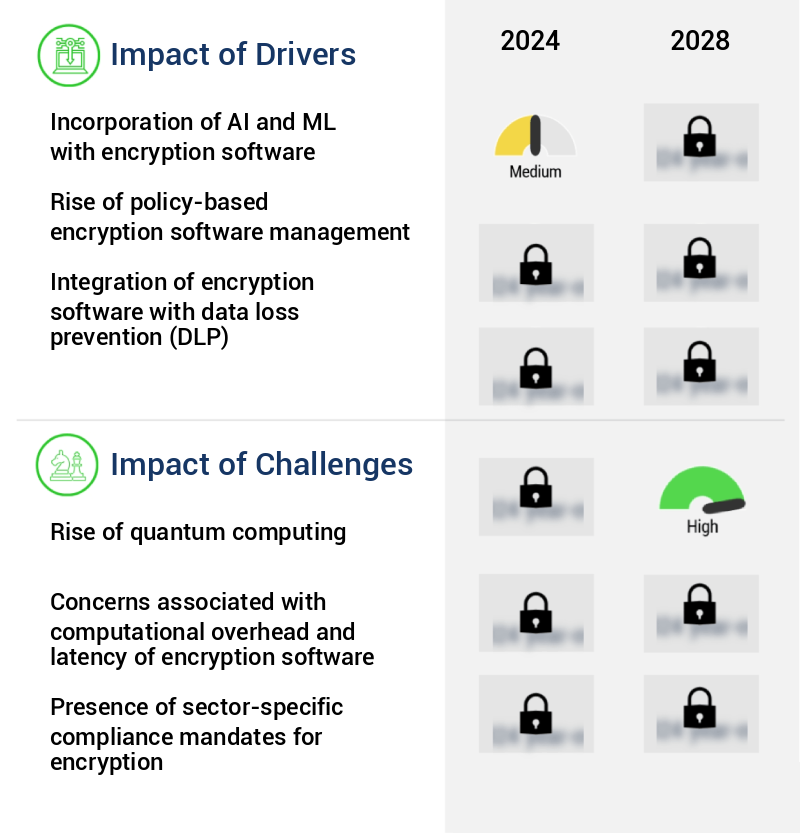
The encryption software market size is valued to increase USD 15.39 billion, at a CAGR of 15.97% from 2023 to 2028. Incorporation of AI and ML with encryption software will drive the encryption software market.

Major Market Trends & Insights

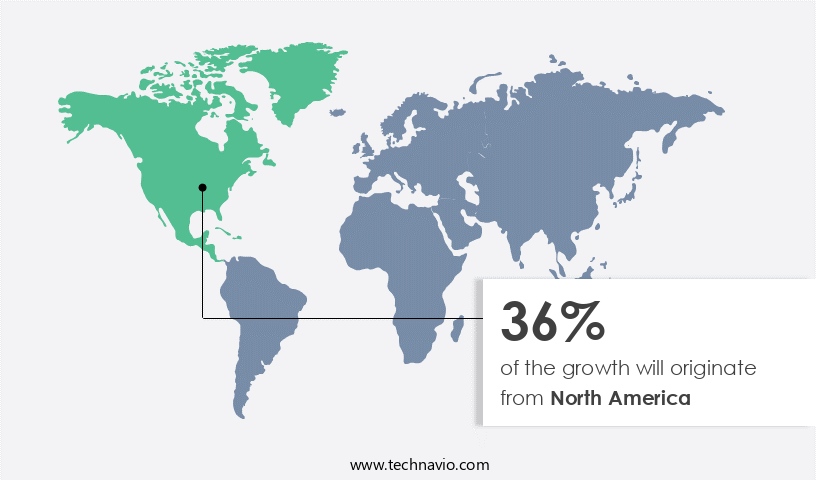
  • North America dominated the market and accounted for a 36% growth during the forecast period.
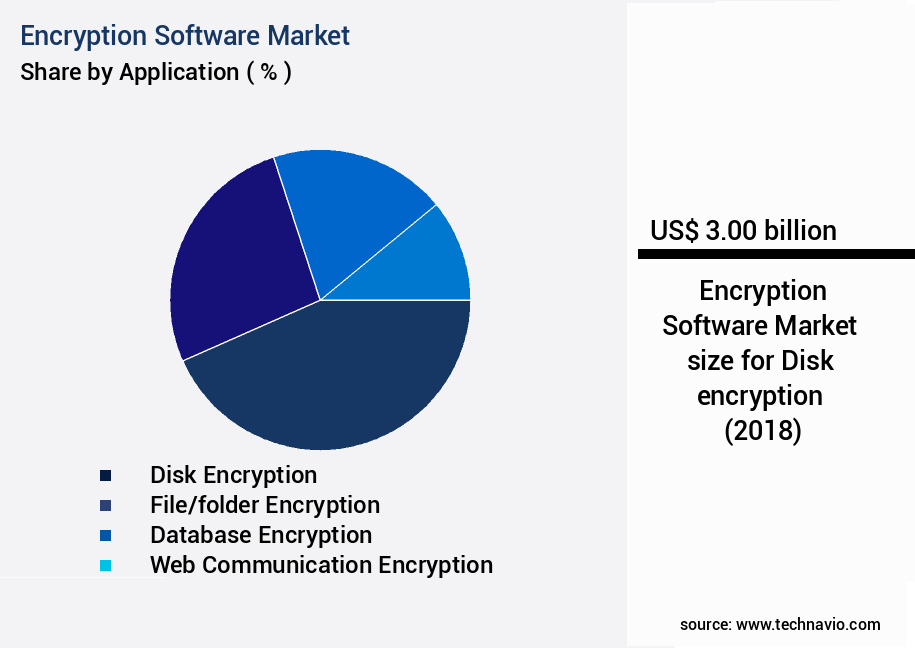
  • By Application - Disk encryption segment was valued at USD 3.00 billion in 2022
  • By Deployment - On-premises segment accounted for the largest market revenue share in 2022

Market Size & Forecast

  • Market Opportunities: USD 254.89 billion
  • Market Future Opportunities: USD 15.39 billion
  • CAGR : 15.97%
  • North America: Largest market in 2022

Market Summary

  • The market encompasses a dynamic and continuously evolving landscape, driven by the increasing adoption of advanced technologies and shifting regulatory requirements. Core technologies, such as symmetric and asymmetric encryption, are at the heart of this market, enabling secure data transmission and storage. Applications, including data-at-rest encryption and data-in-transit encryption, are seeing significant growth, particularly in sectors like healthcare and finance, where data security is paramount. Service types, such as cloud-based encryption and on-premises encryption, offer flexibility and scalability, catering to diverse business needs.
  • The rise of quantum computing poses a challenge, necessitating the development of post-quantum encryption algorithms. According to recent reports, the market is projected to account for over 30% of the overall information security market by 2025, underscoring its growing importance in the digital age.

What will be the Size of the Encryption Software Market during the forecast period?
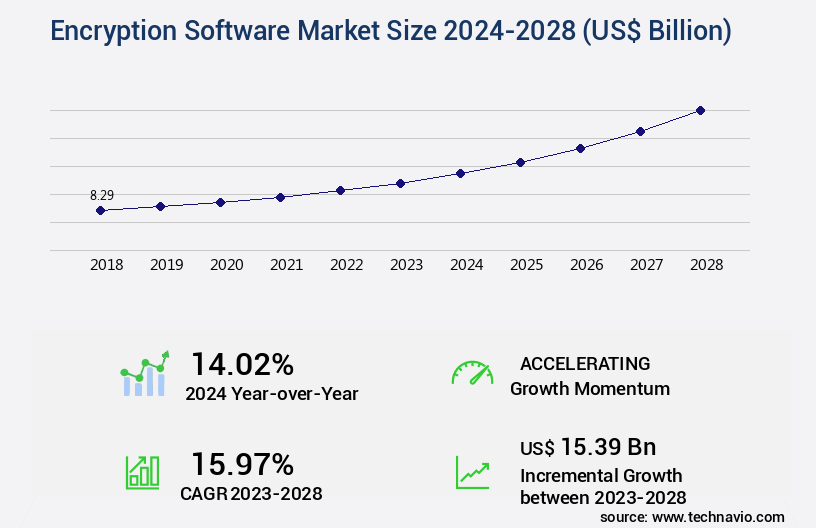
Encryption Software Market Size

Get Key Insights on Market Forecast (PDF) Request Free Sample

How is the Encryption Software Market Segmented and what are the key trends of market segmentation?

The encryption software industry research report provides comprehensive data (region-wise segment analysis), with forecasts and estimates in "USD billion" for the period 2024-2028, as well as historical data from 2018-2022 for the following segments.

  • Application
    • Disk encryption
    • File/folder encryption
    • Database encryption
    • Web communication encryption
    • Others
  • Deployment
    • On-premises
    • Cloud
  • Geography
    • North America
      • US
    • Europe
      • Germany
      • UK
    • APAC
      • China
      • India
    • Rest of World (ROW)

By Application Insights

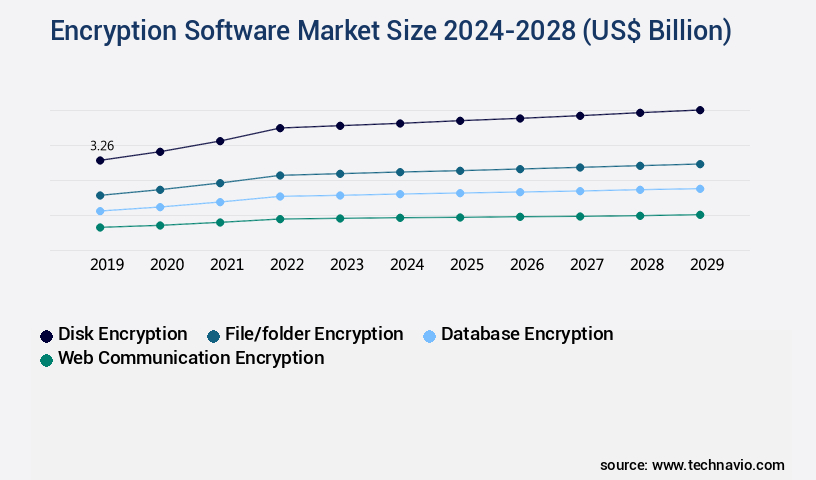
The disk encryption segment is estimated to witness significant growth during the forecast period.

In today's digital landscape, heightened awareness of cybersecurity threats, data breaches, and identity theft compels organizations and individuals to invest in encryption software to safeguard sensitive information. The demand for encryption solutions stems from the need for data privacy, confidentiality, and regulatory compliance. The risks of data breaches are escalating, with organizations facing financial losses, reputational damage, and legal liabilities. To mitigate these risks, encryption software plays a crucial role in securing data-at-rest by rendering it unreadable and unusable to unauthorized parties. For instance, Dekart Srl's NIST-certified AES 256-bit disc encryption software, Private Disk, offers a simple user interface for securing data.

Cryptographic protocols, such as zero-knowledge proofs, authentication, and key management, underpin the functionality of encryption software. Symmetric encryption algorithms, like AES, and asymmetric encryption, including RSA and ECC, ensure data confidentiality. Hashing algorithms and certificate authorities contribute to data integrity. Moreover, encryption libraries and standards, such as OpenSSL and SSL/TLS, facilitate secure communication. Homomorphic encryption and secure multi-party computation enable data processing without decryption, enhancing data security. The encryption market is experiencing significant growth, with an estimated 25% of businesses adopting encryption solutions in 2021. Future industry growth is expected to reach 30% as organizations continue to prioritize data security.

The ongoing evolution of encryption technologies and their applications across various sectors, including finance, healthcare, and government, underscores the market's dynamism. Encryption software is a vital investment for businesses and individuals seeking to protect their sensitive data and maintain regulatory compliance. The continuous unfolding of market activities and evolving patterns underscore the importance of staying informed and adopting the latest encryption technologies.
Encryption Software Market Size

Request Free Sample

The Disk encryption segment was valued at USD 3.00 billion in 2018 and showed a gradual increase during the forecast period.
Encryption Software Market Size

Request Free Sample

Regional Analysis

North America is estimated to contribute 36% to the growth of the global market during the forecast period.Technavio's analysts have elaborately explained the regional trends and drivers that shape the market during the forecast period.
Encryption Software Market Share by Geography

See How Encryption Software Market Demand is Rising in North America Request Free Sample

In North America, the escalating cyber threat landscape, marked by data breaches, ransomware attacks, and insider threats, fuels the demand for encryption software as a crucial security measure to safeguard sensitive data from unauthorized access and exploitation. The FBI's Internet Crime Complaint Center (IC3) reported 800,944 cybercrime complaints in 2022, representing a 5% decrease from 2021. Despite the decline in reported complaints, the potential total loss from these crimes exceeded USD10.2 billion in 2022, more than double the total losses reported in 2020. The increasing adoption of cloud computing and Software-as-a-Service (SaaS) applications in North America necessitates encryption solutions to secure data stored, processed, and transmitted in these environments.

In 2022, the market in North America was valued at USD5.7 billion, with a projected growth to USD8.6 billion by 2027, reflecting a compound annual growth rate (CAGR) of 8.5%. This growth is driven by the increasing awareness of cybersecurity threats, regulatory compliance requirements, and the growing adoption of advanced encryption technologies.

Market Dynamics

Our researchers analyzed the data with 2023 as the base year, along with the key drivers, trends, and challenges. A holistic analysis of drivers will help companies refine their marketing strategies to gain a competitive advantage.

The global data encryption market continues to evolve as organizations address rising concerns over cyber threats, data privacy, and regulatory compliance. Advanced encryption standard implementation and elliptic curve cryptography performance are widely adopted for strengthening information security across sectors, while public key infrastructure deployment and secure socket layer configuration remain fundamental to establishing trust in digital transactions. Increasing reliance on transport layer security protocols ensures data integrity, with data encryption key management best practices and data encryption key lifecycle management serving as critical safeguards for enterprises.

In terms of algorithm development, homomorphic encryption schemes comparison highlights significant trade-offs between computational overhead and usability, while symmetric key algorithm vulnerabilities and asymmetric key cryptography challenges underscore the importance of resilience. Recent studies show that post-quantum cryptography algorithm selection could reduce potential risks by over 40% compared to traditional systems, reflecting a major shift in industry adoption. Similarly, encryption algorithm comparison demonstrates growing efficiency gains as organizations balance speed, scalability, and security.

The ecosystem also integrates digital signature verification process, certificate authority trust model, and encryption key generation methods to protect against unauthorized access. Emerging approaches such as zero-knowledge proof system implementation and secure multi-party computation applications are paving new ways for confidential transactions. By advancing secure data storage solutions alongside stronger encryption models, businesses are positioned to protect critical assets while maintaining compliance and operational reliability.
Encryption Software Market Size

What are the key market drivers leading to the rise in the adoption of Encryption Software Industry?

  • Artificial Intelligence (AI) and Machine Learning (ML) algorithms have revolutionized the cybersecurity landscape by enhancing encryption software with advanced threat detection capabilities. These technologies analyze vast amounts of data to identify patterns, anomalies, and potential security threats in encrypted traffic. By integrating AI-driven threat detection with encryption software, organizations can protect against sophisticated cyber threats, such as malware, ransomware, and insider attacks, in real time. AI and ML algorithms analyze user behavior, device activity, and network traffic patterns to establish baseline behavior and detect deviations indicative of security incidents or unauthorized access attempts. This approach improves user authentication, access control, and anomaly detection capabilities, strengthening overall security posture.
  • Moreover, AI-powered encryption software can dynamically adjust encryption policies and security controls based on evolving threat landscapes, risk profiles, and compliance requirements. This adaptability ensures that organizations remain protected against the latest cyber threats and regulatory changes. In the ever-evolving cybersecurity landscape, AI and ML algorithms play a crucial role in detecting and preventing sophisticated threats in encrypted traffic. Their integration with encryption software enables organizations to enhance their security posture and protect against a wide range of cyber threats.

What are the market trends shaping the Encryption Software Industry?

  • The demand for data-at-rest encryption is escalating, representing an emerging market trend. Data-at-rest encryption is a critical security measure that safeguards sensitive information stored on various repositories, including databases, servers, and file systems. With the increasing frequency of data breaches and cyberattacks, organizations prioritize data-at-rest encryption to minimize the risk of data exposure and associated financial losses. This encryption technique protects proprietary information, trade secrets, intellectual property, and confidential business data from unauthorized access. Data-at-rest encryption plays a crucial role in mitigating insider threats, where employees, contractors, or third parties with access to internal systems may misuse or compromise sensitive data. By encrypting data at rest, organizations can prevent unauthorized access, reducing the impact of insider-related incidents.
  • The adoption of data-at-rest encryption is a significant trend in the data security landscape, with numerous organizations recognizing its importance in safeguarding their digital assets. Organizations in various sectors, from finance to healthcare, are increasingly implementing data-at-rest encryption to ensure data privacy and security. This encryption method is a vital component of a comprehensive data security strategy, providing an additional layer of protection for sensitive information.

What challenges does the Encryption Software Industry face during its growth?

  • The rising prevalence of quantum computing poses a significant challenge to the industry's growth trajectory. 
  • Quantum computing poses significant challenges to traditional encryption methods due to its potential to render existing algorithms obsolete. Elliptic Curve Cryptography (ECC), a commonly used encryption algorithm, faces vulnerabilities when confronted with quantum computing capabilities. Quantum computers can efficiently solve mathematical problems, such as integer factorization and discrete logarithms, which are the foundation of ECC. As quantum computing technology advances, the security of classical encryption becomes increasingly compromised. Organizations relying on conventional encryption algorithms risk heightened data breach, theft, and unauthorized access threats.
  • The evolving quantum computing landscape necessitates a shift towards quantum-resistant encryption methods to safeguard sensitive data assets. The ongoing unfolding of quantum computing capabilities and its implications for encryption algorithms underscores the importance of staying informed and proactively addressing potential vulnerabilities.

Exclusive Technavio Analysis on Customer Landscape

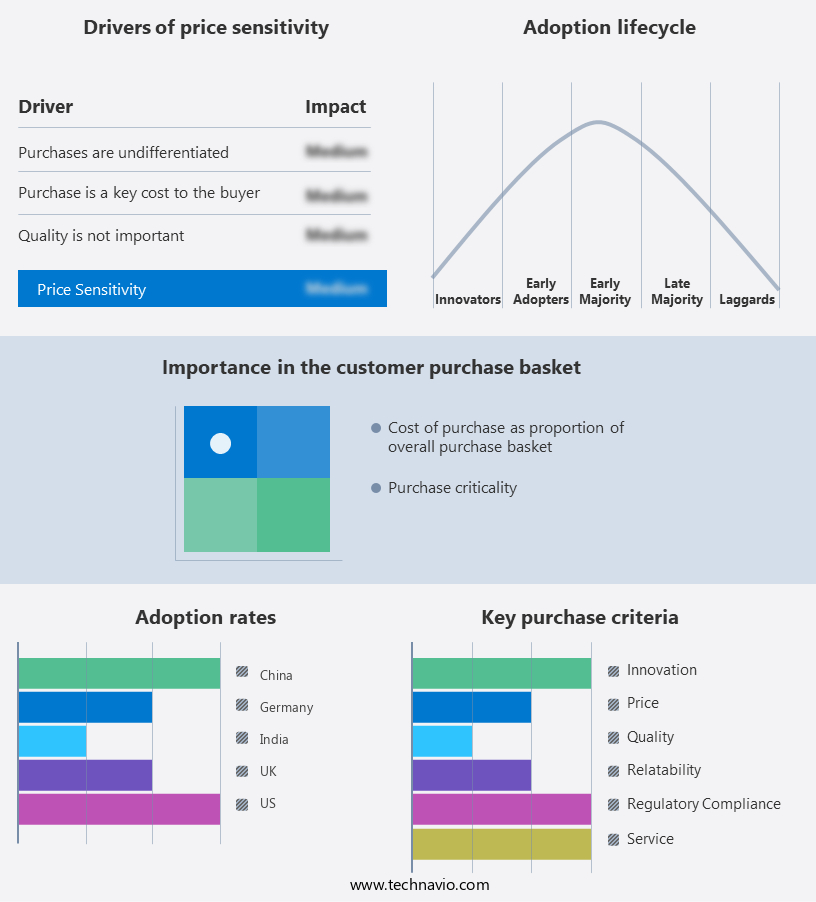
The encryption software market forecasting report includes the adoption lifecycle of the market, covering from the innovator's stage to the laggard's stage. It focuses on adoption rates in different regions based on penetration. Furthermore, the encryption software market report also includes key purchase criteria and drivers of price sensitivity to help companies evaluate and develop their market growth analysis strategies.
Encryption Software Market Share by Geography

 Customer Landscape of Encryption Software Industry

Competitive Landscape

Companies are implementing various strategies, such as strategic alliances, encryption software market forecast, partnerships, mergers and acquisitions, geographical expansion, and product/service launches, to enhance their presence in the industry.

Amazon.com Inc. - The company provides encryption solutions, including AWS Encryption SDK, enabling users to securely encrypt and decrypt data using industry-standard algorithms and best practices. This client-side encryption tool simplifies data protection for individuals and organizations.

The industry research and growth report includes detailed analyses of the competitive landscape of the market and information about key companies, including:

  • Amazon.com Inc.
  • AxCrypt AB
  • Bloombase
  • Broadcom Inc.
  • Check Point Software Technologies Ltd.
  • Cisco Systems Inc.
  • Dekart SRL
  • Dell Technologies Inc.
  • Dropbox Inc.
  • Forcepoint LLC
  • Hewlett Packard Enterprise Co.
  • Hitachi Ltd.
  • International Business Machines Corp.
  • Lookout Inc.
  • McAfee LLC
  • Microsoft Corp.
  • Oracle Corp.
  • Sophos Ltd.
  • Thales Group
  • Trend Micro Inc.
  • Vaultree
  • WinMagic
  • Intel Corp.

Qualitative and quantitative analysis of companies has been conducted to help clients understand the wider business environment as well as the strengths and weaknesses of key industry players. Data is qualitatively analyzed to categorize companies as pure play, category-focused, industry-focused, and diversified; it is quantitatively analyzed to categorize companies as dominant, leading, strong, tentative, and weak.

Recent Development and News in Encryption Software Market

  • In January 2024, CyberSecurity Inc. Launched its advanced encryption software, "SecureGuard 2.0," which offers multi-factor authentication and AI-powered threat detection (CyberSecurity Inc. Press release).
  • In March 2024, tech giants Microsoft and Google announced a strategic partnership to integrate their encryption technologies, enhancing data security for cloud services (Microsoft and Google press releases).
  • In April 2024, encryption software provider, CryptoTech, raised USD50 million in a Series C funding round, led by Sequoia Capital, to expand its market share and accelerate product development (CryptoTech press release).
  • In May 2025, the European Union passed the "Strong Encryption Act," mandating the use of strong encryption for all digital communications and data storage, effective from 2026 (European Parliament press release). This regulatory push is expected to fuel the growth of the market in Europe.

Dive into Technavio's robust research methodology, blending expert interviews, extensive data synthesis, and validated models for unparalleled Encryption Software Market insights. See full methodology.

Market Scope

Report Coverage

Details

Page number

170

Base year

2023

Historic period

2018-2022

Forecast period

2024-2028

Growth momentum & CAGR

Accelerate at a CAGR of 15.97%

Market growth 2024-2028

USD 15.39 billion

Market structure

Fragmented

YoY growth 2023-2024(%)

14.02

Key countries

US, China, India, Germany, and UK

Competitive landscape

Leading Companies, Market Positioning of Companies, Competitive Strategies, and Industry Risks

Request Free Sample

Research Analyst Overview

  • In the dynamic and ever-evolving the market, various encryption technologies continue to shape the digital landscape. Zero-knowledge proofs, a cryptographic technique ensuring data privacy without revealing sensitive information, gain traction. AES encryption, a widely adopted symmetric encryption algorithm, ensures data confidentiality. Cryptographic protocols, including authentication and key management, underpin secure communication. Homomorphic encryption, enabling computations on encrypted data, and post-quantum cryptography, quantum-resistant encryption, fortify data security. Access control, encryption libraries, and security protocols are essential components, ensuring data integrity and network security. Public-key cryptography, such as RSA and ECC encryption, facilitate secure data exchange. Security audits, penetration testing, and vulnerability assessment are crucial for identifying and mitigating potential threats.
  • Digital signatures, an essential aspect of authentication protocols, ensure data authenticity. Secure multi-party computation and cryptographic libraries offer advanced encryption solutions. Encryption algorithms, private-key and public-key, continue to evolve, driving market activity. Hashing algorithms and key exchange protocols further strengthen encryption standards. The market's continuous unfolding reflects the industry's commitment to addressing emerging threats and ensuring data security. As businesses increasingly rely on digital platforms, the demand for robust encryption solutions remains strong.

What are the Key Data Covered in this Encryption Software Market Research and Growth Report?

  • What is the expected growth of the Encryption Software Market between 2024 and 2028?

    • USD 15.39 billion, at a CAGR of 15.97%

  • What segmentation does the market report cover?

    • The report segmented by Application (Disk encryption, File/folder encryption, Database encryption, Web communication encryption, and Others), Deployment (On-premises and Cloud), and Geography (North America, Europe, APAC, South America, and Middle East and Africa)

  • Which regions are analyzed in the report?

    • North America, Europe, APAC, South America, and Middle East and Africa

  • What are the key growth drivers and market challenges?

    • Incorporation of AI and ML with encryption software, Rise of quantum computing

  • Who are the major players in the Encryption Software Market?

    • Key Companies Amazon.com Inc., AxCrypt AB, Bloombase, Broadcom Inc., Check Point Software Technologies Ltd., Cisco Systems Inc., Dekart SRL, Dell Technologies Inc., Dropbox Inc., Forcepoint LLC, Hewlett Packard Enterprise Co., Hitachi Ltd., International Business Machines Corp., Lookout Inc., McAfee LLC, Microsoft Corp., Oracle Corp., Sophos Ltd., Thales Group, Trend Micro Inc., Vaultree, WinMagic, and Intel Corp.

Market Research Insights

  • The market encompasses a range of solutions designed to secure data through various methods, including file encryption, disk encryption, database encryption, and data masking. Two significant areas of focus within this market are authentication factors and threat modeling. According to industry estimates, The market size was valued at USD15 billion in 2020 and is projected to reach USD30 billion by 2025, representing a compound annual growth rate of 12%. Key elements of encryption software include security architecture, compliance regulations, access control lists, intrusion detection, secure boot, trusted platform module, decryption process, hardware security modules, password management, cloud security, digital rights management, data governance, security standards, and identity management.
  • Encryption keys, cipher suites, data loss prevention, blockchain security, key length, and encryption strength are crucial factors in determining the effectiveness of encryption solutions. As cybersecurity threats continue to evolve, the importance of robust encryption software becomes increasingly apparent, with multi-factor authentication and key escrow emerging as essential components of comprehensive security strategies.

We can help! Our analysts can customize this encryption software market research report to meet your requirements.

Get in touch

1 Executive Summary

  • 1.1 Market overview
    • Exhibit 01: Executive Summary – Chart on Market Overview
    • Exhibit 02: Executive Summary – Data Table on Market Overview
    • Exhibit 03: Executive Summary – Chart on Global Market Characteristics
    • Exhibit 04: Executive Summary – Chart on Market by Geography
    • Exhibit 05: Executive Summary – Chart on Market Segmentation by Application
    • Exhibit 06: Executive Summary – Chart on Market Segmentation by Deployment
    • Exhibit 07: Executive Summary – Chart on Incremental Growth
    • Exhibit 08: Executive Summary – Data Table on Incremental Growth
    • Exhibit 09: Executive Summary – Chart on Vendor Market Positioning

2 Market Landscape

  • 2.1 Market ecosystem
    • Exhibit 10: Parent market
    • Exhibit 11: Market Characteristics

3 Market Sizing

  • 3.1 Market definition
    • Exhibit 12: Offerings of vendors included in the market definition
  • 3.2 Market segment analysis
    • Exhibit 13: Market segments
  • 3.3 Market size 2023
    • 3.4 Market outlook: Forecast for 2023-2028
      • Exhibit 14: Chart on Global - Market size and forecast 2023-2028 ($ billion)
      • Exhibit 15: Data Table on Global - Market size and forecast 2023-2028 ($ billion)
      • Exhibit 16: Chart on Global Market: Year-over-year growth 2023-2028 (%)
      • Exhibit 17: Data Table on Global Market: Year-over-year growth 2023-2028 (%)

    4 Historic Market Size

    • 4.1 Global encryption software market 2018 - 2022
      • Exhibit 18: Historic Market Size – Data Table on global encryption software market 2018 - 2022 ($ billion)
    • 4.2 Application Segment Analysis 2018 - 2022
      • Exhibit 19: Historic Market Size – Application Segment 2018 - 2022 ($ billion)
    • 4.3 Deployment Segment Analysis 2018 - 2022
      • Exhibit 20: Historic Market Size – Deployment Segment 2018 - 2022 ($ billion)
    • 4.4 Geography Segment Analysis 2018 - 2022
      • Exhibit 21: Historic Market Size – Geography Segment 2018 - 2022 ($ billion)
    • 4.5 Country Segment Analysis 2018 - 2022
      • Exhibit 22: Historic Market Size – Country Segment 2018 - 2022 ($ billion)

    5 Five Forces Analysis

    • 5.1 Five forces summary
      • Exhibit 23: Five forces analysis - Comparison between 2023 and 2028
    • 5.2 Bargaining power of buyers
      • Exhibit 24: Chart on Bargaining power of buyers – Impact of key factors 2023 and 2028
    • 5.3 Bargaining power of suppliers
      • Exhibit 25: Bargaining power of suppliers – Impact of key factors in 2023 and 2028
    • 5.4 Threat of new entrants
      • Exhibit 26: Threat of new entrants – Impact of key factors in 2023 and 2028
    • 5.5 Threat of substitutes
      • Exhibit 27: Threat of substitutes – Impact of key factors in 2023 and 2028
    • 5.6 Threat of rivalry
      • Exhibit 28: Threat of rivalry – Impact of key factors in 2023 and 2028
    • 5.7 Market condition
      • Exhibit 29: Chart on Market condition - Five forces 2023 and 2028

    6 Market Segmentation by Application

    • 6.1 Market segments
      • Exhibit 30: Chart on Application - Market share 2023-2028 (%)
      • Exhibit 31: Data Table on Application - Market share 2023-2028 (%)
    • 6.2 Comparison by Application
      • Exhibit 32: Chart on Comparison by Application
      • Exhibit 33: Data Table on Comparison by Application
    • 6.3 Disk encryption - Market size and forecast 2023-2028
      • Exhibit 34: Chart on Disk encryption - Market size and forecast 2023-2028 ($ billion)
      • Exhibit 35: Data Table on Disk encryption - Market size and forecast 2023-2028 ($ billion)
      • Exhibit 36: Chart on Disk encryption - Year-over-year growth 2023-2028 (%)
      • Exhibit 37: Data Table on Disk encryption - Year-over-year growth 2023-2028 (%)
    • 6.4 File/folder encryption - Market size and forecast 2023-2028
      • Exhibit 38: Chart on File/folder encryption - Market size and forecast 2023-2028 ($ billion)
      • Exhibit 39: Data Table on File/folder encryption - Market size and forecast 2023-2028 ($ billion)
      • Exhibit 40: Chart on File/folder encryption - Year-over-year growth 2023-2028 (%)
      • Exhibit 41: Data Table on File/folder encryption - Year-over-year growth 2023-2028 (%)
    • 6.5 Database encryption - Market size and forecast 2023-2028
      • Exhibit 42: Chart on Database encryption - Market size and forecast 2023-2028 ($ billion)
      • Exhibit 43: Data Table on Database encryption - Market size and forecast 2023-2028 ($ billion)
      • Exhibit 44: Chart on Database encryption - Year-over-year growth 2023-2028 (%)
      • Exhibit 45: Data Table on Database encryption - Year-over-year growth 2023-2028 (%)
    • 6.6 Web communication encryption - Market size and forecast 2023-2028
      • Exhibit 46: Chart on Web communication encryption - Market size and forecast 2023-2028 ($ billion)
      • Exhibit 47: Data Table on Web communication encryption - Market size and forecast 2023-2028 ($ billion)
      • Exhibit 48: Chart on Web communication encryption - Year-over-year growth 2023-2028 (%)
      • Exhibit 49: Data Table on Web communication encryption - Year-over-year growth 2023-2028 (%)
    • 6.7 Others - Market size and forecast 2023-2028
      • Exhibit 50: Chart on Others - Market size and forecast 2023-2028 ($ billion)
      • Exhibit 51: Data Table on Others - Market size and forecast 2023-2028 ($ billion)
      • Exhibit 52: Chart on Others - Year-over-year growth 2023-2028 (%)
      • Exhibit 53: Data Table on Others - Year-over-year growth 2023-2028 (%)
    • 6.8 Market opportunity by Application
      • Exhibit 54: Market opportunity by Application ($ billion)
      • Exhibit 55: Data Table on Market opportunity by Application ($ billion)

    7 Market Segmentation by Deployment

    • 7.1 Market segments
      • Exhibit 56: Chart on Deployment - Market share 2023-2028 (%)
      • Exhibit 57: Data Table on Deployment - Market share 2023-2028 (%)
    • 7.2 Comparison by Deployment
      • Exhibit 58: Chart on Comparison by Deployment
      • Exhibit 59: Data Table on Comparison by Deployment
    • 7.3 On-premises - Market size and forecast 2023-2028
      • Exhibit 60: Chart on On-premises - Market size and forecast 2023-2028 ($ billion)
      • Exhibit 61: Data Table on On-premises - Market size and forecast 2023-2028 ($ billion)
      • Exhibit 62: Chart on On-premises - Year-over-year growth 2023-2028 (%)
      • Exhibit 63: Data Table on On-premises - Year-over-year growth 2023-2028 (%)
    • 7.4 Cloud - Market size and forecast 2023-2028
      • Exhibit 64: Chart on Cloud - Market size and forecast 2023-2028 ($ billion)
      • Exhibit 65: Data Table on Cloud - Market size and forecast 2023-2028 ($ billion)
      • Exhibit 66: Chart on Cloud - Year-over-year growth 2023-2028 (%)
      • Exhibit 67: Data Table on Cloud - Year-over-year growth 2023-2028 (%)
    • 7.5 Market opportunity by Deployment
      • Exhibit 68: Market opportunity by Deployment ($ billion)
      • Exhibit 69: Data Table on Market opportunity by Deployment ($ billion)

    8 Customer Landscape

    • 8.1 Customer landscape overview
      • Exhibit 70: Analysis of price sensitivity, lifecycle, customer purchase basket, adoption rates, and purchase criteria

    9 Geographic Landscape

    • 9.1 Geographic segmentation
      • Exhibit 71: Chart on Market share by geography 2023-2028 (%)
      • Exhibit 72: Data Table on Market share by geography 2023-2028 (%)
    • 9.2 Geographic comparison
      • Exhibit 73: Chart on Geographic comparison
      • Exhibit 74: Data Table on Geographic comparison
    • 9.3 North America - Market size and forecast 2023-2028
      • Exhibit 75: Chart on North America - Market size and forecast 2023-2028 ($ billion)
      • Exhibit 76: Data Table on North America - Market size and forecast 2023-2028 ($ billion)
      • Exhibit 77: Chart on North America - Year-over-year growth 2023-2028 (%)
      • Exhibit 78: Data Table on North America - Year-over-year growth 2023-2028 (%)
    • 9.4 Europe - Market size and forecast 2023-2028
      • Exhibit 79: Chart on Europe - Market size and forecast 2023-2028 ($ billion)
      • Exhibit 80: Data Table on Europe - Market size and forecast 2023-2028 ($ billion)
      • Exhibit 81: Chart on Europe - Year-over-year growth 2023-2028 (%)
      • Exhibit 82: Data Table on Europe - Year-over-year growth 2023-2028 (%)
    • 9.5 APAC - Market size and forecast 2023-2028
      • Exhibit 83: Chart on APAC - Market size and forecast 2023-2028 ($ billion)
      • Exhibit 84: Data Table on APAC - Market size and forecast 2023-2028 ($ billion)
      • Exhibit 85: Chart on APAC - Year-over-year growth 2023-2028 (%)
      • Exhibit 86: Data Table on APAC - Year-over-year growth 2023-2028 (%)
    • 9.6 South America - Market size and forecast 2023-2028
      • Exhibit 87: Chart on South America - Market size and forecast 2023-2028 ($ billion)
      • Exhibit 88: Data Table on South America - Market size and forecast 2023-2028 ($ billion)
      • Exhibit 89: Chart on South America - Year-over-year growth 2023-2028 (%)
      • Exhibit 90: Data Table on South America - Year-over-year growth 2023-2028 (%)
    • 9.7 Middle East and Africa - Market size and forecast 2023-2028
      • Exhibit 91: Chart on Middle East and Africa - Market size and forecast 2023-2028 ($ billion)
      • Exhibit 92: Data Table on Middle East and Africa - Market size and forecast 2023-2028 ($ billion)
      • Exhibit 93: Chart on Middle East and Africa - Year-over-year growth 2023-2028 (%)
      • Exhibit 94: Data Table on Middle East and Africa - Year-over-year growth 2023-2028 (%)
    • 9.8 US - Market size and forecast 2023-2028
      • Exhibit 95: Chart on US - Market size and forecast 2023-2028 ($ billion)
      • Exhibit 96: Data Table on US - Market size and forecast 2023-2028 ($ billion)
      • Exhibit 97: Chart on US - Year-over-year growth 2023-2028 (%)
      • Exhibit 98: Data Table on US - Year-over-year growth 2023-2028 (%)
    • 9.9 China - Market size and forecast 2023-2028
      • Exhibit 99: Chart on China - Market size and forecast 2023-2028 ($ billion)
      • Exhibit 100: Data Table on China - Market size and forecast 2023-2028 ($ billion)
      • Exhibit 101: Chart on China - Year-over-year growth 2023-2028 (%)
      • Exhibit 102: Data Table on China - Year-over-year growth 2023-2028 (%)
    • 9.10 Germany - Market size and forecast 2023-2028
      • Exhibit 103: Chart on Germany - Market size and forecast 2023-2028 ($ billion)
      • Exhibit 104: Data Table on Germany - Market size and forecast 2023-2028 ($ billion)
      • Exhibit 105: Chart on Germany - Year-over-year growth 2023-2028 (%)
      • Exhibit 106: Data Table on Germany - Year-over-year growth 2023-2028 (%)
    • 9.11 UK - Market size and forecast 2023-2028
      • Exhibit 107: Chart on UK - Market size and forecast 2023-2028 ($ billion)
      • Exhibit 108: Data Table on UK - Market size and forecast 2023-2028 ($ billion)
      • Exhibit 109: Chart on UK - Year-over-year growth 2023-2028 (%)
      • Exhibit 110: Data Table on UK - Year-over-year growth 2023-2028 (%)
    • 9.12 India - Market size and forecast 2023-2028
      • Exhibit 111: Chart on India - Market size and forecast 2023-2028 ($ billion)
      • Exhibit 112: Data Table on India - Market size and forecast 2023-2028 ($ billion)
      • Exhibit 113: Chart on India - Year-over-year growth 2023-2028 (%)
      • Exhibit 114: Data Table on India - Year-over-year growth 2023-2028 (%)
    • 9.13 Market opportunity by geography
      • Exhibit 115: Market opportunity by geography ($ billion)
      • Exhibit 116: Data Tables on Market opportunity by geography ($ billion)

    10 Drivers, Challenges, and Trends

    • 10.1 Market drivers
      • 10.2 Market challenges
        • 10.3 Impact of drivers and challenges
          • Exhibit 117: Impact of drivers and challenges in 2023 and 2028
        • 10.4 Market trends

          11 Vendor Landscape

          • 11.1 Overview
            • 11.2 Vendor landscape
              • Exhibit 118: Overview on Criticality of inputs and Factors of differentiation
            • 11.3 Landscape disruption
              • Exhibit 119: Overview on factors of disruption
            • 11.4 Industry risks
              • Exhibit 120: Impact of key risks on business

            12 Vendor Analysis

            • 12.1 Vendors covered
              • Exhibit 121: Vendors covered
            • 12.2 Market positioning of vendors
              • Exhibit 122: Matrix on vendor position and classification
            • 12.3 Amazon.com Inc.
              • Exhibit 123: Amazon.com Inc. - Overview
              • Exhibit 124: Amazon.com Inc. - Business segments
              • Exhibit 125: Amazon.com Inc. - Key news
              • Exhibit 126: Amazon.com Inc. - Key offerings
              • Exhibit 127: Amazon.com Inc. - Segment focus
            • 12.4 Bloombase
              • Exhibit 128: Bloombase - Overview
              • Exhibit 129: Bloombase - Product / Service
              • Exhibit 130: Bloombase - Key offerings
            • 12.5 Broadcom Inc.
              • Exhibit 131: Broadcom Inc. - Overview
              • Exhibit 132: Broadcom Inc. - Business segments
              • Exhibit 133: Broadcom Inc. - Key news
              • Exhibit 134: Broadcom Inc. - Key offerings
              • Exhibit 135: Broadcom Inc. - Segment focus
            • 12.6 Check Point Software Technologies Ltd.
              • Exhibit 136: Check Point Software Technologies Ltd. - Overview
              • Exhibit 137: Check Point Software Technologies Ltd. - Product / Service
              • Exhibit 138: Check Point Software Technologies Ltd. - Key offerings
            • 12.7 Cisco Systems Inc.
              • Exhibit 139: Cisco Systems Inc. - Overview
              • Exhibit 140: Cisco Systems Inc. - Business segments
              • Exhibit 141: Cisco Systems Inc. - Key news
              • Exhibit 142: Cisco Systems Inc. - Key offerings
              • Exhibit 143: Cisco Systems Inc. - Segment focus
            • 12.8 Dell Technologies Inc.
              • Exhibit 144: Dell Technologies Inc. - Overview
              • Exhibit 145: Dell Technologies Inc. - Business segments
              • Exhibit 146: Dell Technologies Inc. - Key offerings
              • Exhibit 147: Dell Technologies Inc. - Segment focus
            • 12.9 International Business Machines Corp.
              • Exhibit 148: International Business Machines Corp. - Overview
              • Exhibit 149: International Business Machines Corp. - Business segments
              • Exhibit 150: International Business Machines Corp. - Key news
              • Exhibit 151: International Business Machines Corp. - Key offerings
              • Exhibit 152: International Business Machines Corp. - Segment focus
            • 12.10 McAfee LLC
              • Exhibit 153: McAfee LLC - Overview
              • Exhibit 154: McAfee LLC - Product / Service
              • Exhibit 155: McAfee LLC - Key news
              • Exhibit 156: McAfee LLC - Key offerings
            • 12.11 Microsoft Corp.
              • Exhibit 157: Microsoft Corp. - Overview
              • Exhibit 158: Microsoft Corp. - Business segments
              • Exhibit 159: Microsoft Corp. - Key news
              • Exhibit 160: Microsoft Corp. - Key offerings
              • Exhibit 161: Microsoft Corp. - Segment focus
            • 12.12 Oracle Corp.
              • Exhibit 162: Oracle Corp. - Overview
              • Exhibit 163: Oracle Corp. - Business segments
              • Exhibit 164: Oracle Corp. - Key news
              • Exhibit 165: Oracle Corp. - Key offerings
              • Exhibit 166: Oracle Corp. - Segment focus
            • 12.13 Sophos Ltd.
              • Exhibit 167: Sophos Ltd. - Overview
              • Exhibit 168: Sophos Ltd. - Product / Service
              • Exhibit 169: Sophos Ltd. - Key offerings
            • 12.14 Thales Group
              • Exhibit 170: Thales Group - Overview
              • Exhibit 171: Thales Group - Business segments
              • Exhibit 172: Thales Group - Key news
              • Exhibit 173: Thales Group - Key offerings
              • Exhibit 174: Thales Group - Segment focus
            • 12.15 Trend Micro Inc.
              • Exhibit 175: Trend Micro Inc. - Overview
              • Exhibit 176: Trend Micro Inc. - Product / Service
              • Exhibit 177: Trend Micro Inc. - Key offerings
            • 12.16 Vaultree
              • Exhibit 178: Vaultree - Overview
              • Exhibit 179: Vaultree - Product / Service
              • Exhibit 180: Vaultree - Key offerings
            • 12.17 WinMagic
              • Exhibit 181: WinMagic - Overview
              • Exhibit 182: WinMagic - Product / Service
              • Exhibit 183: WinMagic - Key offerings

            13 Appendix

            • 13.1 Scope of the report
              • 13.2 Inclusions and exclusions checklist
                • Exhibit 184: Inclusions checklist
                • Exhibit 185: Exclusions checklist
              • 13.3 Currency conversion rates for US$
                • Exhibit 186: Currency conversion rates for US$
              • 13.4 Research methodology
                • Exhibit 187: Research methodology
                • Exhibit 188: Validation techniques employed for market sizing
                • Exhibit 189: Information sources
              • 13.5 List of abbreviations
                • Exhibit 190: List of abbreviations

              Research Methodology

              Technavio presents a detailed picture of the market by way of study, synthesis, and summation of data from multiple sources. The analysts have presented the various facets of the market with a particular focus on identifying the key industry influencers. The data thus presented is comprehensive, reliable, and the result of extensive research, both primary and secondary.

              INFORMATION SOURCES

              Primary sources

              • Manufacturers and suppliers
              • Channel partners
              • Industry experts
              • Strategic decision makers

              Secondary sources

              • Industry journals and periodicals
              • Government data
              • Financial reports of key industry players
              • Historical data
              • Press releases

              DATA ANALYSIS

              Data Synthesis

              • Collation of data
              • Estimation of key figures
              • Analysis of derived insights

              Data Validation

              • Triangulation with data models
              • Reference against proprietary databases
              • Corroboration with industry experts

              REPORT WRITING

              Qualitative

              • Market drivers
              • Market challenges
              • Market trends
              • Five forces analysis

              Quantitative

              • Market size and forecast
              • Market segmentation
              • Geographical insights
              • Competitive landscape

              Interested in this report?

              Get your sample now to see our research methodology and insights!

              Download Now

              Frequently Asked Questions

              Encryption Software market growth will increase by $ 15.39 bn during 2024-2028 .

              The Encryption Software market is expected to grow at a CAGR of 15.97% during 2024-2028 .

              Encryption Software market is segmented by Application( Disk encryption, File/folder encryption, Database encryption, Web communication encryption, Others) Deployment( On-premises, Cloud)

              Amazon.com Inc., AxCrypt AB, Bloombase, Broadcom Inc., Check Point Software Technologies Ltd., Cisco Systems Inc., Dekart SRL, Dell Technologies Inc., Dropbox Inc., Forcepoint LLC, Hewlett Packard Enterprise Co., Hitachi Ltd., International Business Machines Corp., Lookout Inc., McAfee LLC, Microsoft Corp., Oracle Corp., Sophos Ltd., Thales Group, Trend Micro Inc., Vaultree, WinMagic, Intel Corp. are a few of the key vendors in the Encryption Software market.

              North America will register the highest growth rate of 36% among the other regions. Therefore, the Encryption Software market in North America is expected to garner significant business opportunities for the vendors during the forecast period.

              US, China, India, Germany, UK

              • Incorporation of AI and ML with encryption softwareAI and ML algorithms can analyze vast amounts of data to identify patterns is the driving factor this market.
              • anomalies is the driving factor this market.
              • and potential security threats in encrypted traffic. By integrating AI-driven threat detection capabilities with encryption software is the driving factor this market.
              • organizations can detect and prevent sophisticated cyber threats is the driving factor this market.
              • including malware is the driving factor this market.
              • ransomware is the driving factor this market.
              • and insider attacks is the driving factor this market.
              • in real time. AI and ML algorithms can analyze user behavior is the driving factor this market.
              • device activity is the driving factor this market.
              • and network traffic patterns to establish baseline behavior and detect deviations indicative of security incidents or unauthorized access attempts. By incorporating behavioral analytics into encryption software is the driving factor this market.
              • organizations can enhance user authentication is the driving factor this market.
              • access control is the driving factor this market.
              • and anomaly detection capabilities is the driving factor this market.
              • improving overall security posture. Additionally is the driving factor this market.
              • AI-powered encryption software can dynamically adjust encryption policies and security controls based on evolving threat landscapes is the driving factor this market.
              • risk profiles is the driving factor this market.
              • and compliance requirements. Machine learning algorithms can learn from past security incidents is the driving factor this market.
              • user behavior is the driving factor this market.
              • and system activity to optimize encryption configurations and adapt encryption strategies to changing environments. AI and ML technologies can streamline encryption key management processes by automating key generation is the driving factor this market.
              • rotation is the driving factor this market.
              • distribution is the driving factor this market.
              • and revocation tasks. By leveraging AI-driven key management solutions is the driving factor this market.
              • organizations can enhance the scalability is the driving factor this market.
              • efficiency is the driving factor this market.
              • and security of encryption operations is the driving factor this market.
              • reducing the burden on IT teams and improving overall cryptographic resilience. Furthermore is the driving factor this market.
              • AI and ML algorithms enable encryption software to continuously learn from new data is the driving factor this market.
              • security events is the driving factor this market.
              • and user interactions is the driving factor this market.
              • enhancing its predictive capabilities and adaptive behavior over time. By leveraging continuous learning and adaptation mechanisms is the driving factor this market.
              • AI-driven encryption software can evolve to address emerging threats is the driving factor this market.
              • mitigate evolving risks is the driving factor this market.
              • and adapt to changing encryption requirements in dynamic environments. Thus is the driving factor this market.
              • the integration of AI and ML with encryption software represents a transformative shift in cybersecurity is the driving factor this market.
              • empowering organizations to strengthen data protection is the driving factor this market.
              • enhance threat detection capabilities is the driving factor this market.
              • and improve overall security posture. Thus is the driving factor this market.
              • these factors are expected to strengthen the growth of the global encryption software market during the forecast period. is the driving factor this market.

              The Encryption Software market vendors should focus on grabbing business opportunities from the Disk encryption segment as it accounted for the largest market share in the base year.
