


Folding Electric Bicycle Market Size 2026-2030
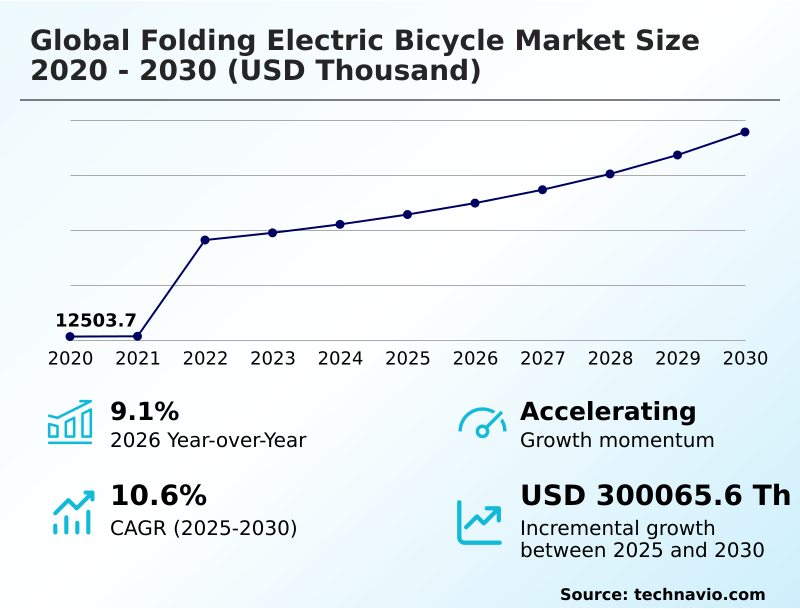
The folding electric bicycle market size is valued to increase by USD 300.07 million, at a CAGR of 10.6% from 2025 to 2030. Increasing urbanization and imperative for first and last mile mobility solutions will drive the folding electric bicycle market.
Major Market Trends & Insights
- Europe dominated the market and accounted for a 53.3% growth during the forecast period.
- By Age Group - Age 18 to 50 segment was valued at USD 202.89 million in 2024
- By Distribution Channel - Offline segment accounted for the largest market revenue share in 2024
Market Size & Forecast
- Market Opportunities:
- Market Future Opportunities: USD 300.07 million
- CAGR from 2025 to 2030 : 10.6%
Market Summary
- The folding electric bicycle market is defined by a convergence of urban mobility needs and technological innovation. Growing city density and traffic congestion create a strong demand for agile personal transport, a role these vehicles fill by enabling seamless multimodal journeys.
- A key business scenario involves logistics firms optimizing last-mile delivery fleets, where the compact and electric-assisted nature of these bikes reduces operational costs and improves delivery times in congested downtown cores. This shift is supported by consumer trends toward sustainability and wellness.
- However, the market faces constraints related to the high initial cost, driven by expensive components like the lithium-ion battery pack and mid-drive motor systems. The complexity of post-purchase service for proprietary electronics and the challenge of managing battery end-of-life logistics also temper growth, requiring manufacturers to balance performance with affordability and lifecycle sustainability.
What will be the Size of the Folding Electric Bicycle Market during the forecast period?
Get Key Insights on Market Forecast (PDF) Get Free Sample
How is the Folding Electric Bicycle Market Segmented?
The folding electric bicycle industry research report provides comprehensive data (region-wise segment analysis), with forecasts and estimates in "USD thousand" for the period 2026-2030, as well as historical data from 2020-2024 for the following segments.
- Age group
- Age 18 to 50
- Lesser than 18
- Age greater than 50
- Distribution channel
- Offline
- Online
- Capacity
- Up to 250W
- 250W to 500W
- Above 500W
- Geography
- Europe
- Germany
- UK
- France
- North America
- US
- Canada
- Mexico
- APAC
- China
- Japan
- India
- South America
- Brazil
- Argentina
- Middle East and Africa
- Saudi Arabia
- UAE
- South Africa
- Rest of World (ROW)
- Europe
By Age Group Insights
The age 18 to 50 segment is estimated to witness significant growth during the forecast period.
The 18-to-50 age demographic represents the core of the folding electric bicycle market, driven by practical urban commuting needs and a desire for a viable car replacement alternative.
This group prioritizes a sophisticated urban commuting solution, valuing models that blend a pedal-assist system (pas) with a lightweight aluminum alloy frame and integrated battery design for enhanced portability.
Demand is high for long-range commuter e-bike models equipped with high-density battery cells, improving commute efficiency by over 30% in congested areas.
Furthermore, this technologically adept segment seeks advanced smart connectivity features, making the adjustable-fit e-bike part of a connected, smart e-bike platform that aligns with modern lifestyles and environmental consciousness.
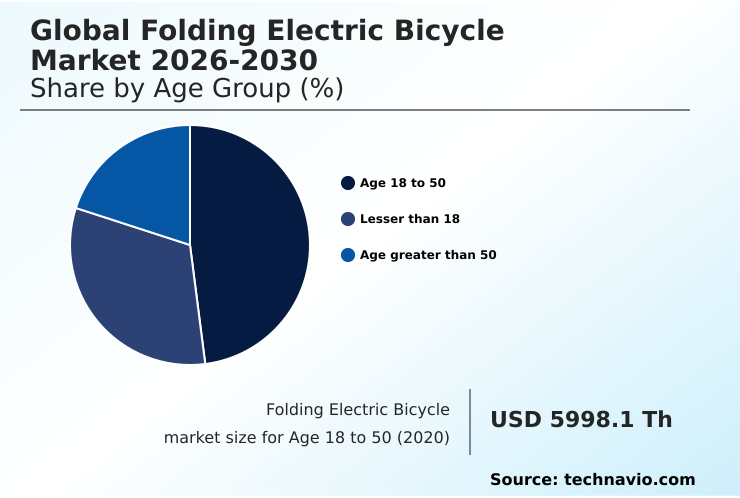
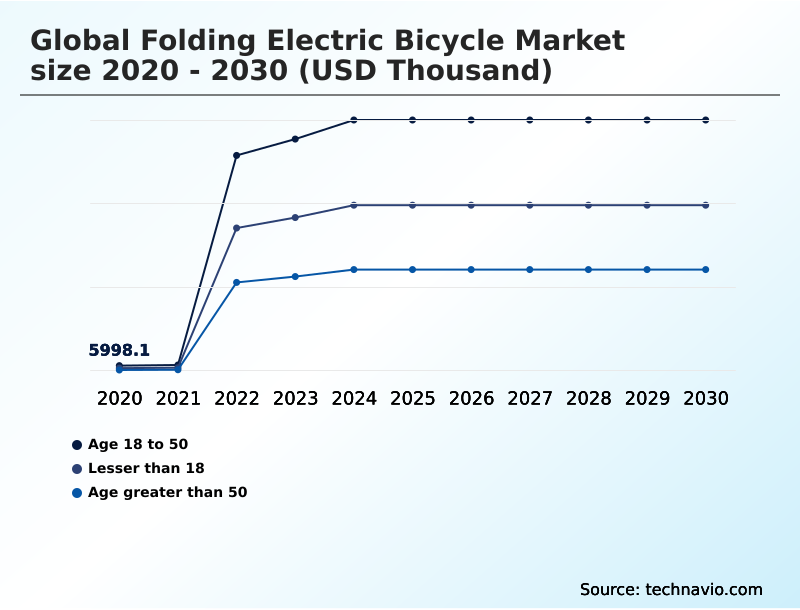
The Age 18 to 50 segment was valued at USD 202.89 million in 2024 and showed a gradual increase during the forecast period.
Regional Analysis
Europe is estimated to contribute 53.3% to the growth of the global market during the forecast period.Technavio’s analysts have elaborately explained the regional trends and drivers that shape the market during the forecast period.
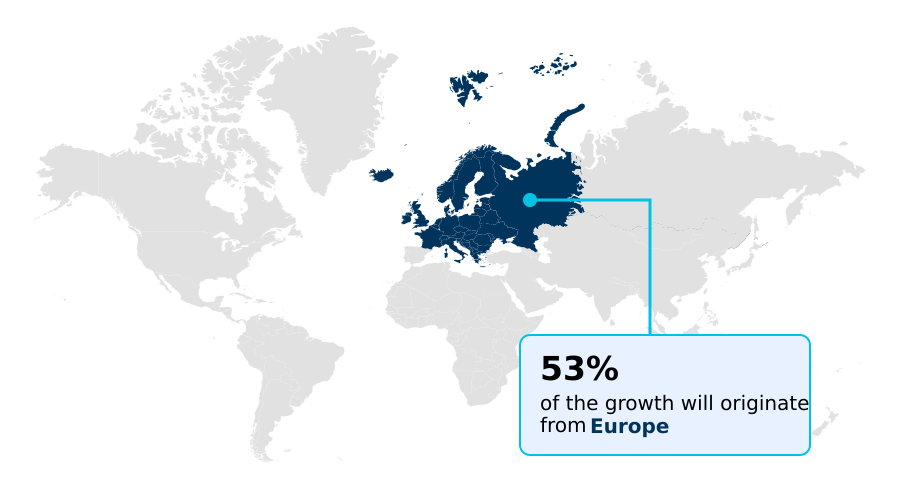
See How Folding Electric Bicycle Market Demand is Rising in Europe Get Free Sample
The geographic landscape is characterized by varied regional adoption rates, influenced by infrastructure and consumer priorities.
Europe leads, with its strong cycling culture and government incentives, where models with a suspension fork and puncture-resistant tires are preferred for navigating diverse urban terrains.
In North America, growth is driven by a focus on last-mile solutions in congested cities, favoring models with a throttle-on-demand for quick acceleration.
The APAC region, a major manufacturing hub, sees high demand for cost-effective models with a simple hub-drive motor. In these regions, a custom motor controller can optimize performance for specific environmental conditions.
Integration as a recreational vehicle accessory is a key driver in Australia, while use as a delivery service e-bike is expanding in dense Asian metropolises, improving last-mile logistics by over 35%.
The utility as a campus transportation vehicle also contributes to a 10% market share in specific university towns.
Market Dynamics
Our researchers analyzed the data with 2025 as the base year, along with the key drivers, trends, and challenges. A holistic analysis of drivers will help companies refine their marketing strategies to gain a competitive advantage.
- Strategic decisions in the folding electric bicycle market are increasingly informed by nuanced technical comparisons and use-case-specific requirements. The debate over hub-drive vs mid-drive folding e-bike efficiency is central to product development, as it directly influences performance on hilly terrain and overall vehicle balance.
- Simultaneously, consumer concern over the folding e-bike battery lifecycle and replacement cost is shaping service models and warranty offerings. The impact of frame material on folding e-bike weight remains a key differentiator, with premium models leveraging lighter composites.
- This is closely linked to the torque sensor vs cadence sensor riding experience, where more sophisticated sensors offer a more intuitive feel, commanding higher price points. Durability is another critical factor, particularly for folding e-bike for heavy riders durability, which requires reinforced frames and robust components.
- For urbanites, the focus is on the best folding e-bike for multimodal commuting, emphasizing quick folding and portability. In certain regions, folding e-bike maintenance for coastal environments becomes a crucial consideration due to saltwater corrosion. For high-power models, regulatory compliance for 500w folding e-bikes dictates market access.
- Functionality is further defined by folding e-bike integration with public transit systems and the robustness of security features for urban folding e-bikes. Ultimately, assessing the total cost of ownership for a folding e-bike and its potential resale value are key purchasing factors.
- The suitability of a folding e-bike for hilly terrain and its use in niche applications like folding e-bike for rv and camper travel or as options for short-stature riders showcase the market's growing specialization. This level of detail in product positioning can improve supply chain accuracy by over 15% by aligning inventory with regional demand.
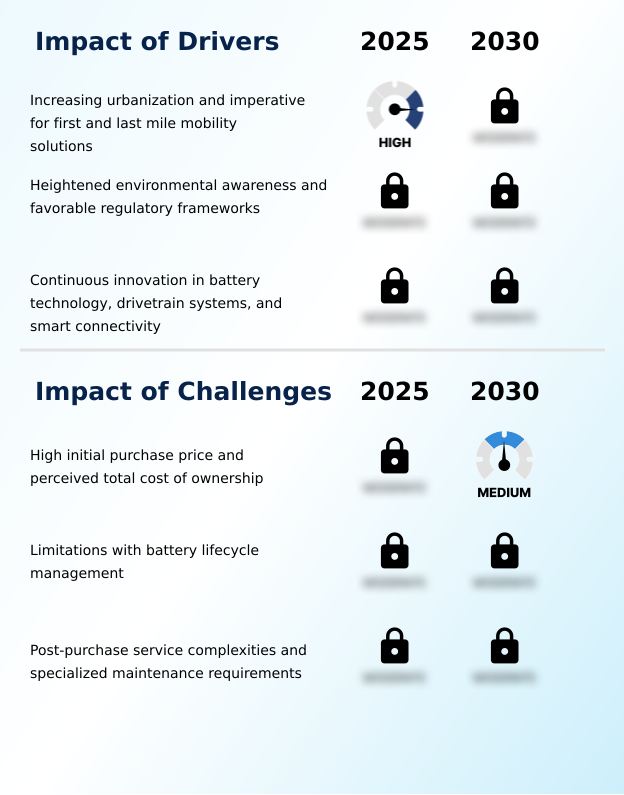
What are the key market drivers leading to the rise in the adoption of Folding Electric Bicycle Industry?
- Increasing urbanization and the imperative for efficient first and last-mile mobility solutions are primary drivers of market growth.
- The primary driver remains the folding electric bicycle's role as the quintessential last-mile mobility device, enabling seamless multimodal transport integration.
- The sophisticated folding frame mechanism allows commuters to easily transition between cycling and public transit, reducing urban travel times by an average of 30%. This space-saving bicycle design is critical for residents in compact urban housing.
- The adoption by corporate mobility fleet programs is also accelerating, with companies reporting a 20% improvement in employee punctuality for those using the bikes.
- Performance advancements, such as the preference for a mid-drive motor paired with a torque sensor system, offer a more natural and powerful ride.
- This, combined with a compact drivetrain and reliable hydraulic disc brakes, addresses both performance and safety demands, reinforcing the product's value as a form of eco-friendly personal transport.
What are the market trends shaping the Folding Electric Bicycle Industry?
- The proliferation of direct-to-consumer sales models is reshaping market dynamics. This is complemented by the rise of sophisticated digital retail ecosystems.
- A key trend is the development of the ultra-lightweight e-bike, often utilizing a carbon fiber frame to meet demands for portability. This high-performance folding bike category is increasingly integrated with smart security, where gps anti-theft tracking capabilities have reduced theft incidents by over 40% in urban trials.
- The portable electric vehicle concept is further enhanced by innovations like regenerative braking, which can extend battery life by up to 10% during city commutes. Accompanying these advancements, the battery management system (bms) and digital lcd display are becoming more sophisticated, providing riders with precise performance data.
- As the market matures, subscription-based e-bike service models are emerging, offering a lower-cost entry point for consumers and ensuring that every certified safe e-bike in the fleet is professionally maintained.
What challenges does the Folding Electric Bicycle Industry face during its growth?
- The high initial purchase price, coupled with a perceived high total cost of ownership, presents a key challenge to broader market adoption.
- A significant market challenge revolves around the lithium-ion battery pack, specifically its lifecycle management and the complexity of service. The need for remote diagnostics to address electronic issues is growing, yet a lack of standardized modular component design hampers widespread, low-cost repairs. This particularly affects niche markets like the boat and marine e-bike segment, where service access is limited.
- While the development of the low-maintenance e-bike with features like internal hub gearing is a response, the initial cost remains a barrier. This is especially true for the senior-friendly mobility aid market, where reliability is paramount.
- The promise of a quick-fold bicycle is a strong selling point for the core urban commuting solution, but post-purchase support complexities can detract from the ownership experience, with service resolution times being up to 50% longer than for traditional mechanical bicycles.
Exclusive Technavio Analysis on Customer Landscape
The folding electric bicycle market forecasting report includes the adoption lifecycle of the market, covering from the innovator’s stage to the laggard’s stage. It focuses on adoption rates in different regions based on penetration. Furthermore, the folding electric bicycle market report also includes key purchase criteria and drivers of price sensitivity to help companies evaluate and develop their market growth analysis strategies.
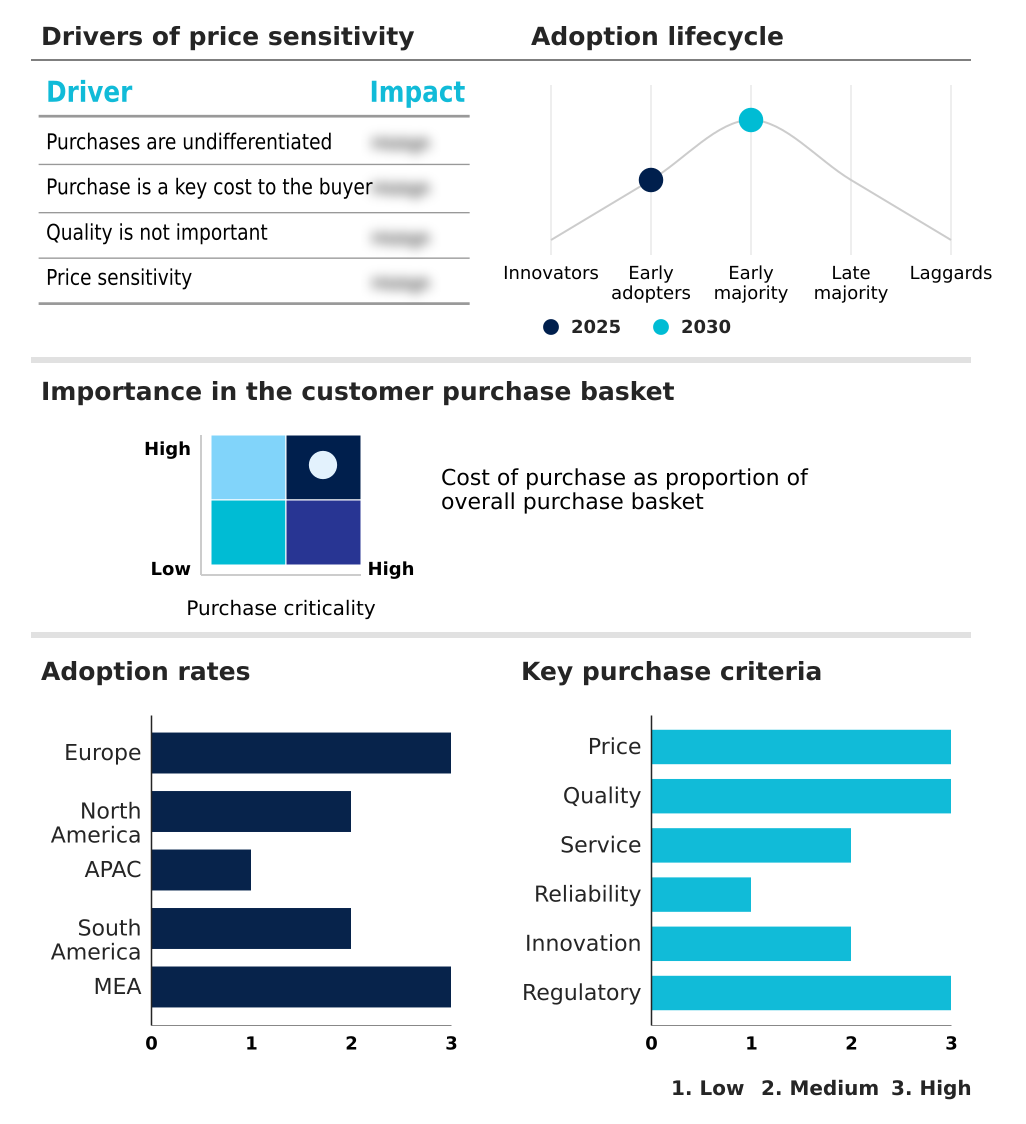
Customer Landscape of Folding Electric Bicycle Industry
Competitive Landscape
Companies are implementing various strategies, such as strategic alliances, folding electric bicycle market forecast, partnerships, mergers and acquisitions, geographical expansion, and product/service launches, to enhance their presence in the industry.
Addmotor Tech - Core offerings include a range of portable folding electric bicycles engineered for personal urban mobility, featuring compact designs and integrated electric drive systems for enhanced commuter convenience.
The industry research and growth report includes detailed analyses of the competitive landscape of the market and information about key companies, including:
- Addmotor Tech
- Benelli Biciclette
- Blix Electric Bikes
- Brompton Bicycle Retail Ltd.
- Charge Bikes
- DAHON North America Inc.
- e JOE Bike
- Jiangsu Xinri E Vehicle Co. Ltd
- Kalkhoff Werke GmbH
- Karbon Kinetics Ltd.
- Lectric eBikes
- Strodesters Inc.
- Svitch Bikes
- SWAGTRON
- Tern Bicycles
- VoltBike
- Woosh Bikes Ltd.
- X Treme Scooters
- Xiaomi Corp.
Qualitative and quantitative analysis of companies has been conducted to help clients understand the wider business environment as well as the strengths and weaknesses of key industry players. Data is qualitatively analyzed to categorize companies as pure play, category-focused, industry-focused, and diversified; it is quantitatively analyzed to categorize companies as dominant, leading, strong, tentative, and weak.
Recent Development and News in Folding electric bicycle market
- In January, 2025, the government in China launched a significant e-bike trade-in subsidy program, allocating substantial funds to encourage the replacement of older models and stimulating a surge in new e-bike sales.
- In January, 2025, Pedego Electric Bikes and Vvolt formed a strategic partnership, enabling Pedego's extensive US dealer network to offer Vvolt's innovative lightweight, belt-drive e-bike models.
- In March, 2025, Brompton Bicycle Retail Ltd. unveiled its new G Line of folding bicycles, which feature larger 20-inch wheels and a more robust frame to cater to a wider variety of terrains.
- In April, 2025, DAHON North America Inc. introduced a new line of electric folding bicycles specifically designed for urban commuters in the APAC region, featuring lightweight frames and integrated smart features.
Dive into Technavio’s robust research methodology, blending expert interviews, extensive data synthesis, and validated models for unparalleled Folding Electric Bicycle Market insights. See full methodology.
| Market Scope | |
|---|---|
| Page number | 292 |
| Base year | 2025 |
| Historic period | 2020-2024 |
| Forecast period | 2026-2030 |
| Growth momentum & CAGR | Accelerate at a CAGR of 10.6% |
| Market growth 2026-2030 | USD 300065.6 thousand |
| Market structure | Fragmented |
| YoY growth 2025-2026(%) | 9.1% |
| Key countries | Germany, UK, France, Italy, Spain, The Netherlands, US, Canada, Mexico, China, Japan, India, South Korea, Australia, Indonesia, Brazil, Argentina, Chile, Saudi Arabia, UAE, South Africa, Israel and Turkey |
| Competitive landscape | Leading Companies, Market Positioning of Companies, Competitive Strategies, and Industry Risks |
Research Analyst Overview
- The folding electric bicycle market's evolution is driven by sophisticated engineering and the integration of advanced technologies. The core of this progression lies in components like the lithium-ion battery pack, with advancements in high-density battery cells and the battery management system (bms) extending range and lifespan.
- Powertrain innovation is seen in the choice between a hub-drive motor and a more integrated mid-drive motor, often paired with a sophisticated torque sensor system for a responsive pedal-assist system (pas) or throttle-on-demand control. Frame design has advanced with the use of lightweight aluminum alloy and premium carbon fiber frame options, incorporating complex folding frame mechanism and integrated battery design.
- A key boardroom consideration is the shift towards a circular economy, influencing decisions on using modular component design for easier repairs and remote diagnostics capabilities. Features like a digital lcd display, smart connectivity features, and gps anti-theft tracking are now standard expectations.
- Performance components, including a suspension fork, hydraulic disc brakes, puncture-resistant tires, internal hub gearing, and a custom motor controller, create product differentiation, with a focus on a compact drivetrain for portability. Firms focusing on a fully integrated component strategy have reported a 25% reduction in warranty-related service costs.
What are the Key Data Covered in this Folding Electric Bicycle Market Research and Growth Report?
-
What is the expected growth of the Folding Electric Bicycle Market between 2026 and 2030?
-
USD 300.07 million, at a CAGR of 10.6%
-
-
What segmentation does the market report cover?
-
The report is segmented by Age Group (Age 18 to 50, Lesser than 18, and Age greater than 50), Distribution Channel (Offline, and Online), Capacity (Up to 250W, 250W to 500W, and Above 500W) and Geography (Europe, North America, APAC, South America, Middle East and Africa)
-
-
Which regions are analyzed in the report?
-
Europe, North America, APAC, South America and Middle East and Africa
-
-
What are the key growth drivers and market challenges?
-
Increasing urbanization and imperative for first and last mile mobility solutions, High initial purchase price and perceived total cost of ownership
-
-
Who are the major players in the Folding Electric Bicycle Market?
-
Addmotor Tech, Benelli Biciclette, Blix Electric Bikes, Brompton Bicycle Retail Ltd., Charge Bikes, DAHON North America Inc., e JOE Bike, Jiangsu Xinri E Vehicle Co. Ltd, Kalkhoff Werke GmbH, Karbon Kinetics Ltd., Lectric eBikes, Strodesters Inc., Svitch Bikes, SWAGTRON, Tern Bicycles, VoltBike, Woosh Bikes Ltd., X Treme Scooters and Xiaomi Corp.
-
Market Research Insights
- Market dynamics are increasingly shaped by the demand for versatile mobility. The adoption of the folding electric bicycle as a recreational vehicle accessory has increased by 15% in suburban households, demonstrating a shift beyond urban-centric use cases.
- The use of these devices as a campus transportation vehicle also shows significant uptake, reducing intra-campus transit times by up to 25% compared to walking. As a delivery service e-bike, operational efficiency gains are notable, with some services reporting a 20% increase in deliveries per hour in dense urban zones.
- This diversification into niche roles such as a weatherproof e-bike design for year-round couriers and a senior-friendly mobility aid for active older adults highlights the product's adaptability and expanding addressable market.
We can help! Our analysts can customize this folding electric bicycle market research report to meet your requirements.
 RIA -
RIA - 
