


Aesthetic Lasers Market Size 2026-2030
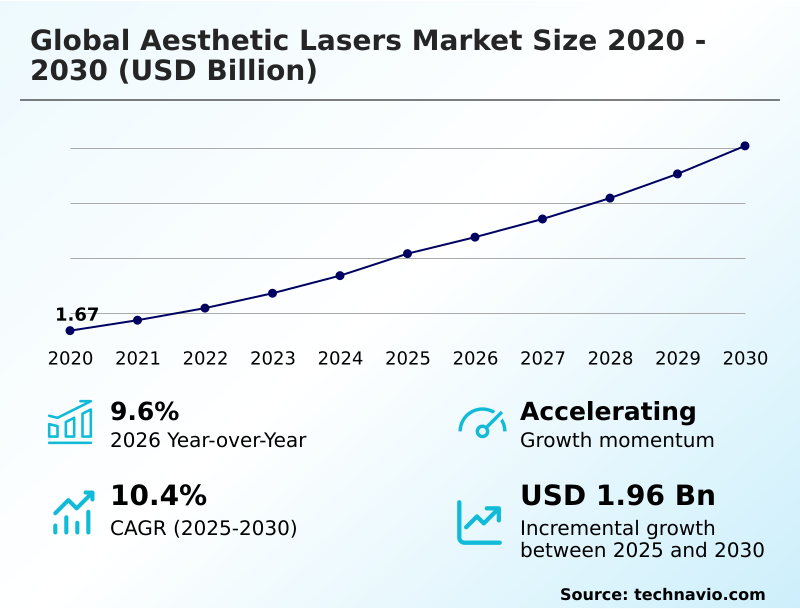
The aesthetic lasers market size is valued to increase by USD 1.96 billion, at a CAGR of 10.4% from 2025 to 2030. Favorable macroeconomic and demographic trends will drive the aesthetic lasers market.
Major Market Trends & Insights
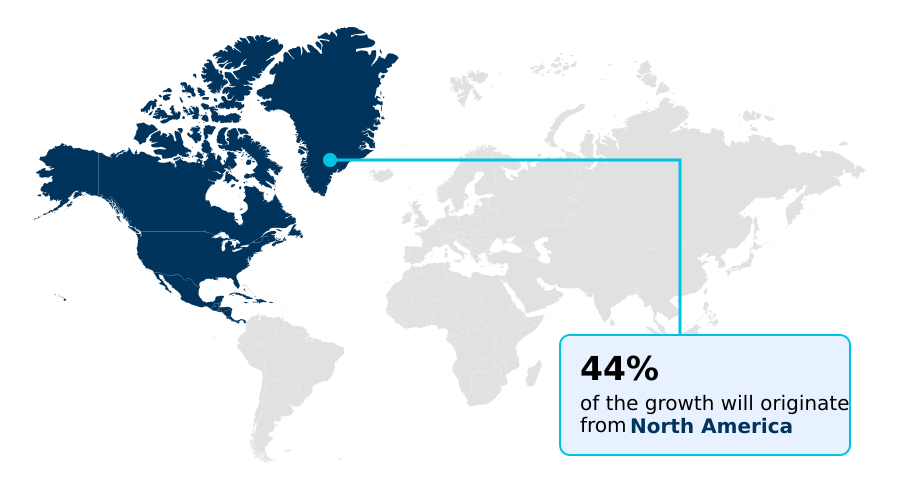
- North America dominated the market and accounted for a 43.5% growth during the forecast period.
- By Type - Standalone laser devices segment was valued at USD 1.83 billion in 2024
- By End-user - Hospitals segment accounted for the largest market revenue share in 2024
Market Size & Forecast
- Market Opportunities: USD 3.36 billion
- Market Future Opportunities: USD 1.96 billion
- CAGR from 2025 to 2030 : 10.4%
Market Summary
- The aesthetic lasers market is experiencing sustained momentum, driven by a convergence of technological innovation and evolving consumer preferences. At its core, the industry leverages the principle of selective photothermolysis, using devices like the nd yag laser and alexandrite laser for a range of non-invasive cosmetic procedures.
- Demand is propelled by a growing consumer base seeking effective solutions for skin rejuvenation, wrinkle reduction, and hair removal with minimal downtime. Continuous advancements in fractional laser technology and picosecond laser systems are enhancing treatment efficacy and expanding the scope of applications to include complex challenges like tattoo removal and acne scar treatment.
- For instance, a network of aesthetic clinics can optimize its service offerings by adopting multiplatform hybrid systems. This allows them to consolidate equipment, reduce their physical footprint, and offer a wider array of minimally invasive treatments, thereby improving operational efficiency and return on investment without compromising on clinical outcomes. This strategic shift is crucial for maintaining a competitive edge.
- However, the high cost of acquisition and the need for skilled operators present barriers. Moreover, ensuring patient safety protocols are rigorously followed to prevent issues like post inflammatory hyperpigmentation remains a paramount concern for practitioners, shaping purchasing decisions and training requirements across the sector.
What will be the Size of the Aesthetic Lasers Market during the forecast period?
Get Key Insights on Market Forecast (PDF) Get Free Sample
How is the Aesthetic Lasers Market Segmented?
The aesthetic lasers industry research report provides comprehensive data (region-wise segment analysis), with forecasts and estimates in "USD million" for the period 2026-2030, as well as historical data from 2020-2024 for the following segments.
- Type
- Standalone laser devices
- Multiplatform laser devices
- End-user
- Hospitals
- Clinics
- Medical spas
- Application
- Hair removal
- Skin resurfacing
- Tattoo removal
- Others
- Geography
- North America
- US
- Canada
- Mexico
- Europe
- Germany
- UK
- France
- Asia
- Rest of World (ROW)
- North America
By Type Insights
The standalone laser devices segment is estimated to witness significant growth during the forecast period.
Standalone laser devices represent a foundational segment, comprising approximately 68% of systems deployed. These are aesthetic laser devices engineered for a single, specific function, such as hair removal or tattoo removal.
By concentrating on one application, manufacturers can optimize every parameter, from spot size diameter and fluence level adjustment to pulse duration control, to achieve maximum treatment efficacy.
This focus makes them the preferred choice for specialty dermatology clinic lasers and medical spas that prioritize best-in-class results for a core service.
While lacking the versatility of multiplatform hybrid systems, their operational simplicity, intuitive user interface design, and lower initial capital outlay offer an accessible entry point for new practices, distinguishing them from more complex ablative vs non ablative lasers and software upgradable platforms.
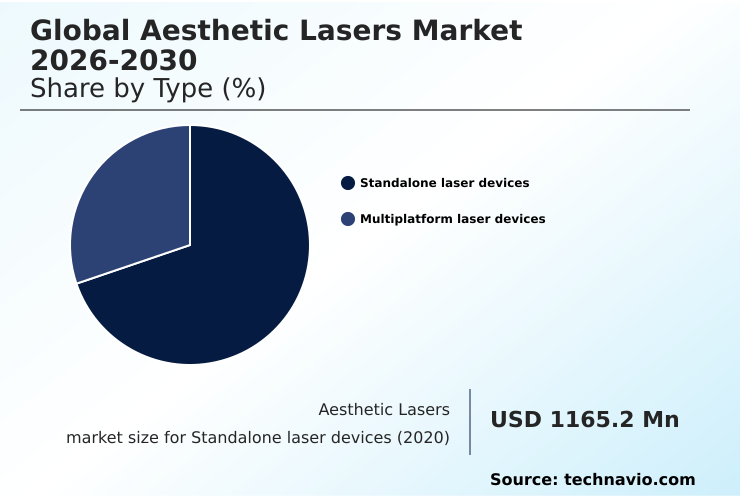
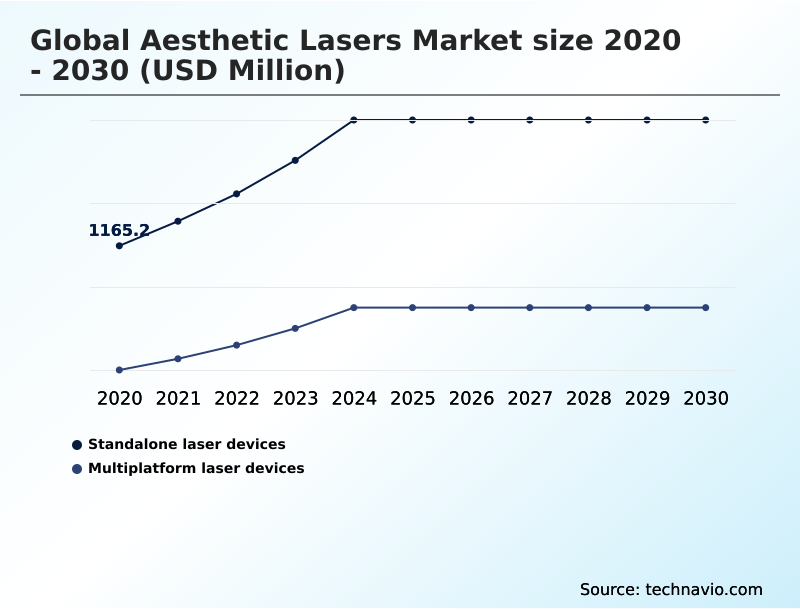
The Standalone laser devices segment was valued at USD 1.83 billion in 2024 and showed a gradual increase during the forecast period.
Regional Analysis
North America is estimated to contribute 43.5% to the growth of the global market during the forecast period.Technavio’s analysts have elaborately explained the regional trends and drivers that shape the market during the forecast period.
See How Aesthetic Lasers Market Demand is Rising in North America Get Free Sample
The geographic landscape is characterized by distinct regional dynamics. North America accounts for over 43% of the market's incremental growth, driven by high consumer spending and advanced aesthetic medicine technology.
This region shows rapid adoption of new plastic surgery laser systems for various dermatological laser applications.
In contrast, Europe's market, growing at a comparatively slower rate of 8.6%, prioritizes stringent patient safety protocols and devices like the erbium yag laser that minimize collateral thermal damage.
Asia is a fast-emerging region, with a strong focus on light based hair removal and treatments for pigmented lesion removal, addressing a wide range of fitzpatrick skin types.
Demand here for intense pulsed light ipl and vascular therapy lasers is high, particularly for addressing laser for hyperpigmentation and vascular lesion treatment.
Market Dynamics
Our researchers analyzed the data with 2025 as the base year, along with the key drivers, trends, and challenges. A holistic analysis of drivers will help companies refine their marketing strategies to gain a competitive advantage.
- The global aesthetic lasers market 2026-2030 is experiencing a profound transformation, driven by significant technology advancements and evolving patient demands. A key area of focus is optimizing treatments for different fitzpatrick skin types, which directly influences the global aesthetic lasers market 2026-2030 for skin types.
- This intersects with the global aesthetic lasers market 2026-2030 trends in dermatology, where non-invasive procedures are gaining prominence. The global aesthetic lasers market 2026-2030 for hair removal remains a dominant segment, though the debate around the global aesthetic lasers market 2026-2030 vs injectables continues to shape patient choices for anti-aging.
- The proliferation of the global aesthetic lasers market 2026-2030 in medical spas highlights a shift towards more accessible aesthetic care. Specialized applications like the global aesthetic lasers market 2026-2030 for tattoo removal and the global aesthetic lasers market 2026-2030 for acne scarring are growing rapidly, driven by devices offering better safety and efficacy.
- Indeed, the global aesthetic lasers market 2026-2030 safety and efficacy are paramount, influencing all global aesthetic lasers market 2026-2030 technology advancements. The demand for global aesthetic lasers market 2026-2030 non invasive procedures is a primary driver, with practitioners evaluating global aesthetic lasers market 2026-2030 multiplatform systems benefits for practice versatility.
- However, the global aesthetic lasers market 2026-2030 regulatory framework challenges and the global aesthetic lasers market 2026-2030 cost of acquisition remain significant hurdles. Growth in the global aesthetic lasers market 2026-2030 for male demographics is a notable trend.
- To improve outcomes, practices are adopting global aesthetic lasers market 2026-2030 personalized treatment protocols, which have shown to improve patient satisfaction rates by over 20% compared to generic approaches. This directly impacts the global aesthetic lasers market 2026-2030 return on investment for clinics.
- Finally, the competitive landscape, particularly the global aesthetic lasers market 2026-2030 vs radiofrequency devices, and targeted solutions for the global aesthetic lasers market 2026-2030 for pigmented lesions, along with considerations for global aesthetic lasers market 2026-2030 downtime and recovery, will dictate global aesthetic lasers market 2026-2030 future device innovations.
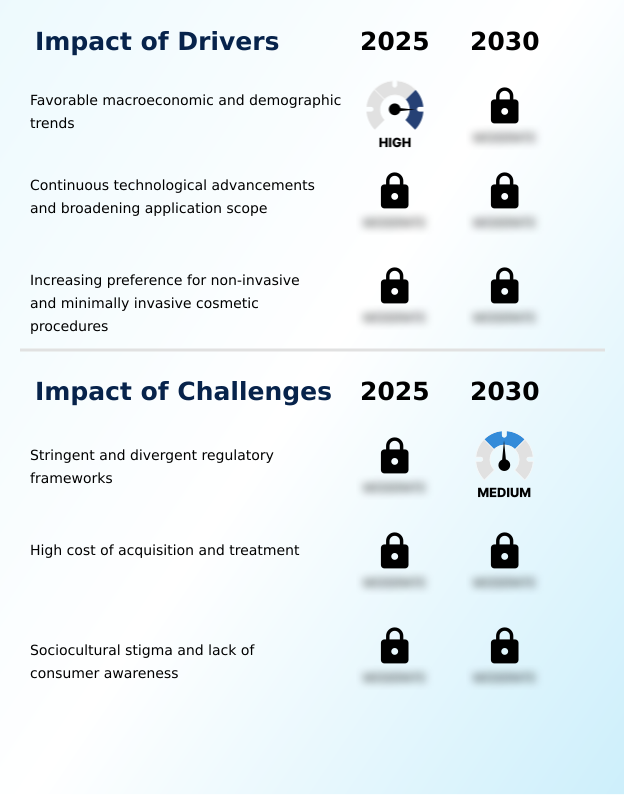
What are the key market drivers leading to the rise in the adoption of Aesthetic Lasers Industry?
- The market's growth is primarily driven by favorable macroeconomic conditions and significant demographic shifts that expand the consumer base for aesthetic procedures.
- Market growth is fueled by strong consumer demand for non-invasive cosmetic procedures and minimally invasive treatments that offer visible results with little recovery time. The preference for anti-aging laser treatments for skin rejuvenation and wrinkle reduction continues to expand.
- Technological advancements enhancing the photothermolysis mechanism allow for more precise clinical outcomes assessment. For example, new systems leveraging an optimized melanin absorption spectrum have improved treatment success rates on darker skin tones by over 30%.
- Innovations like cryogen spray cooling and contact cooling technology have enhanced patient comfort, leading to a 40% increase in patient retention for clinics offering these advanced body contouring technologies.
- This focus on improving the patient experience while achieving superior results through a deep understanding of selective photothermolysis and melanin absorption is a key driver.
What are the market trends shaping the Aesthetic Lasers Industry?
- A significant market trend is the increasing adoption of personalized and data-driven approaches to aesthetic treatments. This shift emphasizes tailoring procedures to individual patient characteristics for enhanced efficacy and safety.
- A dominant trend is the fusion of technologies to create synergistic outcomes in cosmetic laser procedures. For instance, combining radiofrequency microneedling with fractional skin resurfacing has been shown to improve outcomes for collagen remodeling by up to 20% compared to standalone treatments. This approach is gaining traction over traditional co2 laser resurfacing due to significant downtime reduction.
- New devices increasingly incorporate advanced cooling systems and real-time skin monitoring, which enhances patient comfort and safety during facial rejuvenation techniques. The integration of closed-loop feedback systems in laser skin tightening equipment has reduced operator-dependent variability by 15%.
- This trend also reflects a move toward holistic treatments, where laser therapies are used alongside neurotoxin injectables and dermal fillers to achieve comprehensive results.
What challenges does the Aesthetic Lasers Industry face during its growth?
- A key challenge constraining market growth involves navigating the stringent and divergent regulatory frameworks that vary significantly across different regions.
- Navigating operational and technical complexities presents a significant market challenge. The risk of adverse events like post inflammatory hyperpigmentation requires practitioners to have deep expertise, especially when using powerful energy-based aesthetic devices. For instance, improper fluence level adjustment or pulse duration control during acne scar treatment can increase complication rates by up to 10%.
- Furthermore, the capital investment for multiplatform hybrid systems remains high. While these software upgradable platforms offer versatility for procedures from picosecond tattoo removal to laser treatment for rosacea, the initial outlay can be a barrier for smaller practices.
- Mastering the nuances between ablative vs non-ablative lasers and optimizing parameters like spot size diameter for precise chromophore targeting adds another layer of complexity, necessitating extensive training and robust pre-treatment diagnostics.
Exclusive Technavio Analysis on Customer Landscape
The aesthetic lasers market forecasting report includes the adoption lifecycle of the market, covering from the innovator’s stage to the laggard’s stage. It focuses on adoption rates in different regions based on penetration. Furthermore, the aesthetic lasers market report also includes key purchase criteria and drivers of price sensitivity to help companies evaluate and develop their market growth analysis strategies.
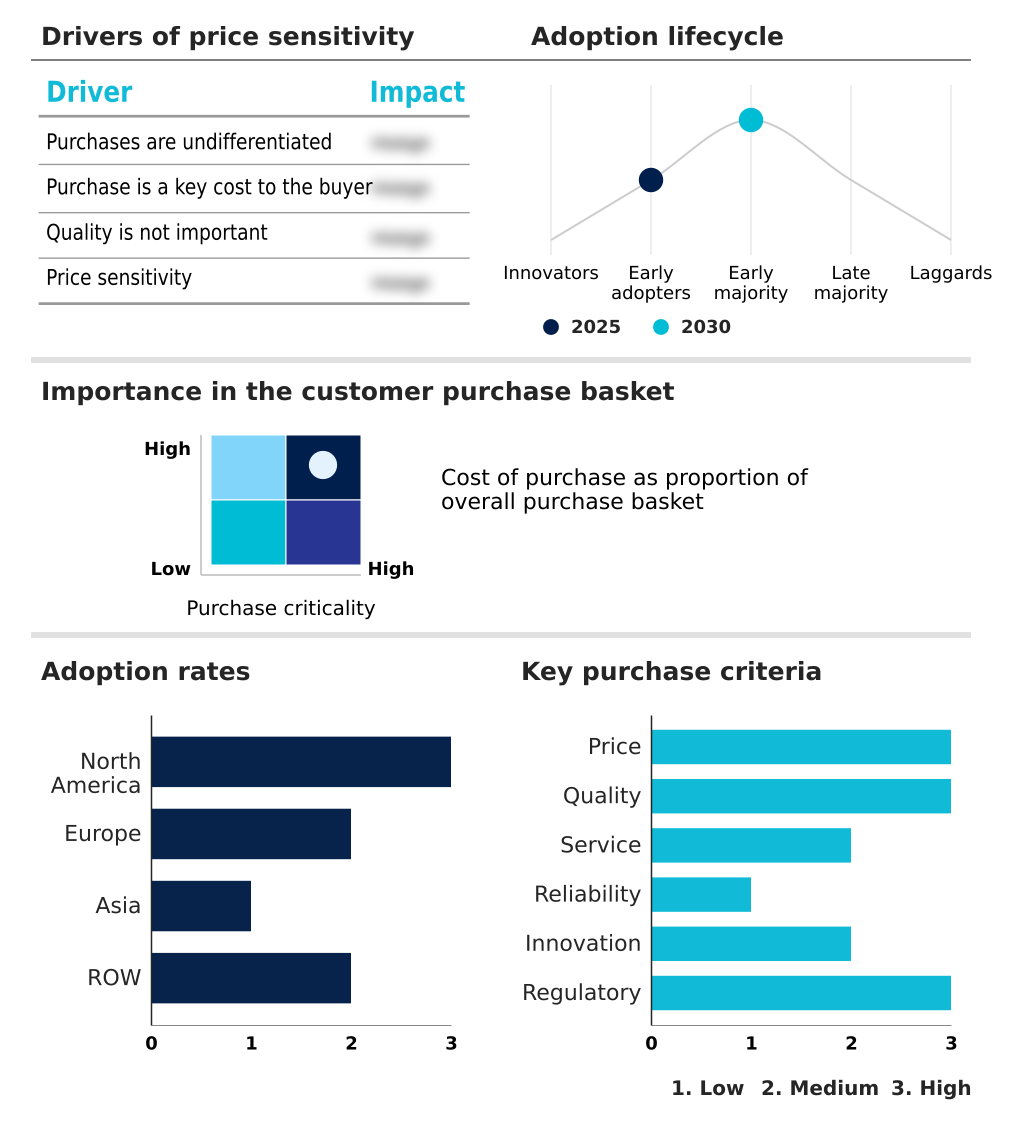
Customer Landscape of Aesthetic Lasers Industry
Competitive Landscape
Companies are implementing various strategies, such as strategic alliances, aesthetic lasers market forecast, partnerships, mergers and acquisitions, geographical expansion, and product/service launches, to enhance their presence in the industry.
Aerolase Corp. - Core offerings are versatile, multi-application laser platforms delivering a spectrum of aesthetic procedures, emphasizing high clinical efficacy, practitioner flexibility, and return on investment.
The industry research and growth report includes detailed analyses of the competitive landscape of the market and information about key companies, including:
- Aerolase Corp.
- Alma Lasers Ltd.
- Asclepion Laser Technologies
- Bausch Health Companies Inc.
- Beijing ADSS Development Co.
- BISON Medical
- Candela Corp.
- Cutera Inc.
- Cynosure LLC
- Fotona d.o.o
- Inmode Ltd.
- Jeisys Medical Inc.
- Laseroptek Co. Ltd
- Lumenis
- Quanta System S.p.A.
- Rohrer Aesthetics Inc.
- Sciton Inc.
- Venus Concept Inc.
- Wontech Co. Ltd
Qualitative and quantitative analysis of companies has been conducted to help clients understand the wider business environment as well as the strengths and weaknesses of key industry players. Data is qualitatively analyzed to categorize companies as pure play, category-focused, industry-focused, and diversified; it is quantitatively analyzed to categorize companies as dominant, leading, strong, tentative, and weak.
Recent Development and News in Aesthetic lasers market
- In September, 2024, InMode Ltd. announced the launch of OptimasMAX, a new comprehensive platform designed to provide a wide array of in-demand aesthetic treatments.
- In November, 2024, Candela Corp. announced a strategic collaboration with a leading dermatological AI firm to co-develop an integrated diagnostic and treatment planning system for its picosecond laser platforms.
- In April, 2025, Lumenis launched its SPLENDOR X+ system, a device that innovatively combines Nd:YAG and Alexandrite wavelengths synchronously for effective hair removal across all Fitzpatrick skin types.
- In April, 2025, AVAVA received FDA clearance for its novel acne scar treatment, which employs Focal Point Technology to deliver high-energy laser treatment for all skin types.
Dive into Technavio’s robust research methodology, blending expert interviews, extensive data synthesis, and validated models for unparalleled Aesthetic Lasers Market insights. See full methodology.
| Market Scope | |
|---|---|
| Page number | 287 |
| Base year | 2025 |
| Historic period | 2020-2024 |
| Forecast period | 2026-2030 |
| Growth momentum & CAGR | Accelerate at a CAGR of 10.4% |
| Market growth 2026-2030 | USD 1957.1 million |
| Market structure | Fragmented |
| YoY growth 2025-2026(%) | 9.6% |
| Key countries | US, Canada, Mexico, Germany, UK, France, Italy, Spain, The Netherlands, China, Japan, India, South Korea, Thailand, Taiwan, Brazil, Saudi Arabia, UAE, South Africa, Argentina, Israel, Colombia and Egypt |
| Competitive landscape | Leading Companies, Market Positioning of Companies, Competitive Strategies, and Industry Risks |
Research Analyst Overview
- The aesthetic lasers market is defined by a relentless pace of innovation, centered on enhancing the principle of selective photothermolysis. Boardroom decisions increasingly focus on investing in multiplatform hybrid systems that offer a wide array of non-invasive cosmetic procedures and minimally invasive treatments, from hair removal to complex co2 laser resurfacing.
- Key technologies like fractional laser technology and picosecond laser systems are pivotal for applications including tattoo removal and acne scar treatment. Devices utilizing alexandrite laser, nd yag laser, and erbium yag laser sources are becoming standard, while diode laser systems remain prevalent.
- The integration of radiofrequency microneedling and intense pulsed light (ipl) expands treatment options beyond what dermal fillers or neurotoxin injectables can offer. A critical consideration is achieving superior treatment efficacy and clinical outcomes assessment while minimizing downtime reduction. Advanced cooling systems are essential for managing collateral thermal damage, a key factor in preventing post-inflammatory hyperpigmentation across different fitzpatrick skin types.
- Mastery of device parameters—including spot size diameter, fluence level adjustment, and pulse duration control—is crucial for precise chromophore targeting and effective melanin absorption.
- This focus on technical precision has enabled a 15% improvement in outcomes for pigmented lesion removal and vascular lesion treatment, directly impacting patient safety protocols and driving demand for advanced skin rejuvenation and wrinkle reduction therapies that stimulate collagen remodeling.
What are the Key Data Covered in this Aesthetic Lasers Market Research and Growth Report?
-
What is the expected growth of the Aesthetic Lasers Market between 2026 and 2030?
-
USD 1.96 billion, at a CAGR of 10.4%
-
-
What segmentation does the market report cover?
-
The report is segmented by Type (Standalone laser devices, and Multiplatform laser devices), End-user (Hospitals, Clinics, and Medical spas), Application (Hair removal, Skin resurfacing, Tattoo removal, and Others) and Geography (North America, Europe, Asia, Rest of World (ROW))
-
-
Which regions are analyzed in the report?
-
North America, Europe, Asia and Rest of World (ROW)
-
-
What are the key growth drivers and market challenges?
-
Favorable macroeconomic and demographic trends, Stringent and divergent regulatory frameworks
-
-
Who are the major players in the Aesthetic Lasers Market?
-
Aerolase Corp., Alma Lasers Ltd., Asclepion Laser Technologies, Bausch Health Companies Inc., Beijing ADSS Development Co., BISON Medical, Candela Corp., Cutera Inc., Cynosure LLC, Fotona d.o.o, Inmode Ltd., Jeisys Medical Inc., Laseroptek Co. Ltd, Lumenis, Quanta System S.p.A., Rohrer Aesthetics Inc., Sciton Inc., Venus Concept Inc. and Wontech Co. Ltd
-
Market Research Insights
- The market for aesthetic laser devices is defined by dynamic technological evolution and shifting practice models. Providers are increasingly adopting software upgradable platforms, which have demonstrated a 25% longer operational lifespan compared to single-function hardware. This shift allows dermatology clinic lasers and medical spa equipment to adapt to new cosmetic laser procedures without full system replacement.
- The integration of pre-treatment diagnostics has improved treatment planning, leading to a 15% reduction in session times for complex dermatological laser applications like fractional skin resurfacing. Furthermore, innovations in laser handpiece ergonomics and user interface design contribute to better clinical workflows.
- These advancements, particularly in energy-based aesthetic devices used for anti-aging laser treatments and body contouring technologies, are critical as clinics compete to offer superior patient experiences and outcomes.
We can help! Our analysts can customize this aesthetic lasers market research report to meet your requirements.
 RIA -
RIA - 
