



Airport Transit Baggage Vehicle Market 2024-2028
The airport transit baggage vehicle market size is estimated to grow at a CAGR of 5.83% between 2023 and 2028. The market size is forecast to increase by USD 246.02 million. The growth of the market depends on several factors such as the growth in air passenger traffic, the growing preference for eco-friendly airport transit baggage vehicles and the expansion of airport terminals and construction of new airports.
The report includes a comprehensive outlook on the Airport Transit Baggage Vehicle Market, offering forecasts for the industry segmented by Technology, which comprises electric transit baggage vehicle, diesel transit baggage vehicle, and hybrid transit baggage vehicle. Additionally, it categorizes Application into commercial service airport, cargo service airport, and reliever airport, and covers Regions, including North America, Europe, APAC, South America, and Middle East and Africa. The report provides market size, historical data spanning from 2018 to 2022, and future projections, all presented in terms of value in USD million for each of the mentioned segments.
What will be the Size of the Airport Transit Baggage Vehicle Market During the Forecast Period?
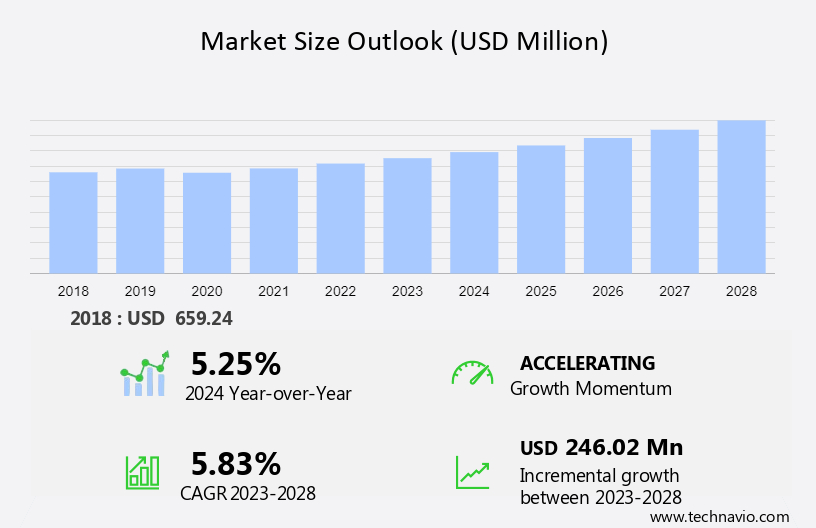
Airport Transit Baggage Vehicle Market Forecast 2024-2028
To learn more about this report, Request Free Sample
Airport Transit Baggage Vehicle Market Dynamics
Driver- Growing preference for eco-friendly airport transit baggage vehicles
Aviation produces millions of tons of CO2 every year and constitutes almost 2% of the global estimate. Among all transports, aviation accounts for about 1/10th of CO2 emissions. Aerospace companies and airlines are continuously trying to reduce the carbon footprint, particularly in airports, by adopting advanced systems, ground vehicles, and the commercialization of alternative fuels. The European airport sector started carbon-neutral airports in 2009 and is planning to increase the number to about 50 airports by the next decade.
Furthermore, efforts are made by airport ground vehicle manufacturers to develop advanced vehicles powered by electric or hybrid engines. In addition, global airports are increasingly inclined towards electric and low-emission baggage vehicles to reduce their carbon footprint. This shift aligns with the broader trend of sustainable aviation to drive the growth of the global airport transit baggage vehicle market during the forecast period as airports prioritize green and efficient baggage handling solutions.
Trends- Advanced vehicle tracking solutions
Several ground vehicles operate around the apron area and perform several functions necessary for aircraft ground handling. Transit baggage vehicles, aircraft tugs, catering vehicles, vehicles with an elevated platform, and vehicles with conveyor belts for loading bags. For efficient handling of these vehicles and to know their exact location in the apron area, Saab developed an airport vehicle tracking solution.
In addition, the new solution provides vehicle location data to airport operators. Knowing the exact location of airfield vehicles always and in all conditions is a vital part of maintaining an efficient and safe operation. It is anticipated that the wider adoption of such solutions in the coming years, which can enhance the management of airport vehicles, will drive the growth of the market during the forecast period.
Challenge- High initial and replacement cost of airport transit baggage vehicles
Globally, ground handling has been fuel, labor, and ground service equipment-intensive, both operationally and financially. Such operating costs fluctuate with the economy, primarily around fuel pricing. Consequently, several companies such as VOLK, Charlatte America, Bradshaw Electric Vehicles, and TOYOTA INDUSTRIES have shown interest in adopting electric and hybrid vehicles, which will eliminate all fuel-dependent vehicles in the coming years. Such developments can reduce the annual cost associated with fuel consumption and thus will increase the operating profitability.
However, the new infrastructure required to accommodate the entire fleet of electric vehicles will be expensive. Operating procedures will also require modifications. Although such alterations will result in environmental benefits, the transition cost will be high initially, and smaller airports will be reluctant to adopt the new technologies all at once. The reticence shown by airlines due to lack of funding or the late adoption of such advanced vehicles for baggage handling will impede the growth of the market during the forecast period.
Airport Transit Baggage Vehicle Market Segmentation by Technology, Application, and Geography
Technology Segment Analysis:
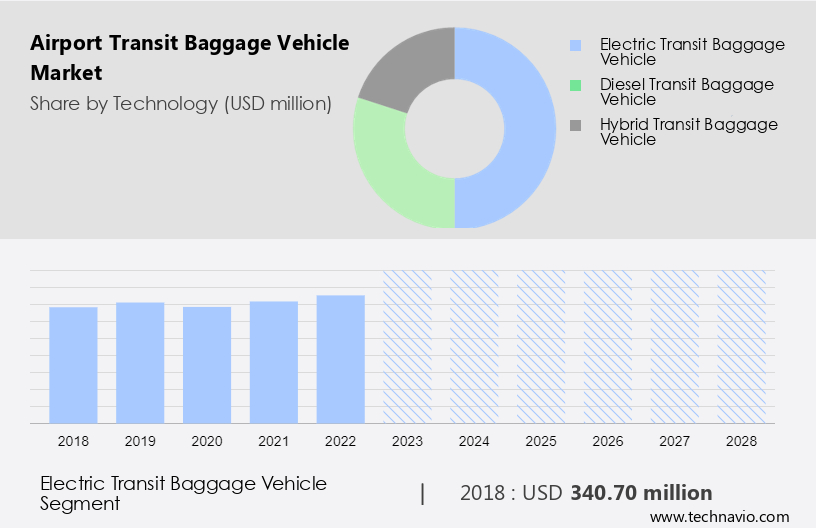
The electric transit baggage vehicle segment will account for a major share of the market's growth during the forecast period.?Baggage tractors, also known as tow tugs or tractors, are the most common category of ground support vehicles that require the use of an electric engine. Several airports are focusing on zero airport emissions and are replacing aging ground support vehicles that operate on diesel or gasoline with advanced electric vehicles. Although electric vehicles are costlier compared to diesel or gasoline vehicles, they support airports zero-emission initiatives and help airport authorities abide by environmental regulations set by government agencies.
Customised Report as per your requirements!
The electric transit baggage vehicle segment was valued at USD 340.70 million in 2018. Each airport vehicle has a unique operating pattern. The duty cycle of a vehicle can be studied based on the period of its operation and the duration of each operating cycle. Furthermore, the opening of new airports, expansion of airport terminals, modernization of airport ground handling vehicles, and growing preference for electrification of airport vehicles will drive the global airport transit baggage vehicle market in the electric transit baggage vehicle segment during the forecast period.
Application Segment Analysis
Based on application, the market has been segmented into commercial service airport, cargo service airport, and reliever airport. The commercial service airport?segment will account for the largest share of this segment.? Airports are increasingly prioritizing passenger experience, and a seamless baggage handling process contributes significantly to overall satisfaction. Advanced transit baggage vehicles ensure timely and accurate baggage delivery, smart baggage, reducing waiting times for passengers and enjoy the commercial lighting of airport. Moreover, the continuous evolution of technology, including automation, airports robots, radiofrequency identification (RFID) tracking, and AI-driven systems, plays a pivotal role in shaping the growth of the commercial service airport segment. As commercial service airports strive to accommodate the growing air travel demand and provide a seamless passenger experience, the adoption of advanced transit baggage vehicles becomes imperative, contributing to the sustained growth of the commercial service airport segment of the market during the forecast period.
Regional Analysis
For more insights on the market share of various regions Download Sample PDF now!
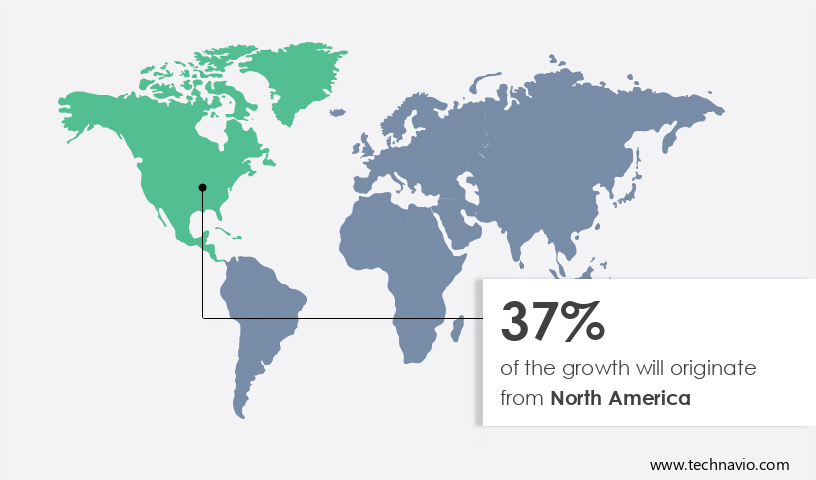
North America is estimated to contribute 37% to the growth by 2028. Technavio’s analysts have elaborately explained the regional trends, drivers, and challenges that are expected to shape the market during the forecast period. The significant growth in air travel aided by the modernization of the airport infrastructure is the major driver that supports passenger baggage handling operations, resulting in the growth of the airport transit baggage vehicles market in North America.
Furthermore, Harlan Global Manufacturing, FAYAT, and Tronair, are some of the major manufacturers of airport baggage tow tractors and are based in the US. These OEMs offer a wide range of products to various airports and ground-handling providers. With the increasing number of airport modernization programs and the need to abide by environmental laws, several airport operators are investing in replacing aging airport vehicles with advanced electric or hybrid vehicles. Hence, such factors are expected to drive market growth in this region during the forecast period.
Who are the Major Airport Transit Baggage Vehicle Market Companies?
Companies are implementing various strategies, such as strategic alliances, partnerships, mergers and acquisitions, geographical expansion, and product/service launches, to enhance their presence in the market.
- Alke s.r.l.: The company offers airport transit baggage vehicles such as ATX model 240EH, and ATX model 240EHL.
We also have detailed analyses of the market’s competitive landscape and offer information on 20 market companies, including:
Alvest SAS, Daifuku Co. Ltd, FAYAT SAS, FIVES SAS, GOLDHOFER, Harlan Global Manufacturing LLC, John Bradshaw Ltd., MULAG Fahrzeugwerk GmBH u Co. KG, Murata Machinery Ltd., Nandan GSE Pvt. Ltd., Polaris Inc., Siemens AG, Toyota Industries Corp., Tronair Inc., VOLK Fahrzeugbau GmbH, and Zallys S.R.L
Technavio report provides an in-depth analysis of the market and its players through combined qualitative and quantitative data. The analysis classifies companies into categories based on their business approaches, including pure-play, category-focused, industry-focused, and diversified. Companies are specially categorized into dominant, leading, strong, tentative, and weak, based on their quantitative data analysis.
Segment Overview
The airport transit baggage vehicle market report forecasts market growth by revenue at global, regional & country levels and provides an analysis of the latest trends and growth opportunities from 2018 to 2028.
- Technology Outlook
- Electric transit baggage vehicle
- Diesel transit baggage vehicle
- Hybrid transit baggage vehicle
- Application Outlook
- Commercial service airport
- Cargo service airport
- Reliever airport
- region Outlook
- North America
- The U.S.
- Canada
- Europe
- The U.K.
- Germany
- France
- Rest of Europe
- APAC
- China
- India
- South America
- Chile
- Brazil
- Argentina
- Middle East & Africa
- Saudi Arabia
- South Africa
- Rest of the Middle East & Africa
- North America
|
Airport Transit Baggage Vehicle Market Scope |
|
|
Report Coverage |
Details |
|
Page number |
166 |
|
Base year |
2023 |
|
Historic period |
2018-2022 |
|
Forecast period |
2024-2028 |
|
Growth momentum & CAGR |
Accelerate at a CAGR of 5.83% |
|
Market Growth 2024-2028 |
USD 246.02 million |
|
Market structure |
Fragmented |
|
YoY growth 2023-2024(%) |
5.25 |
|
Regional analysis |
North America, Europe, APAC, South America, and Middle East and Africa |
|
Performing market contribution |
North America at 37% |
|
Key countries |
US, China, Germany, France, and UK |
|
Competitive landscape |
Leading Companies, Market Positioning of Companies, Competitive Strategies, and Industry Risks |
|
Key companies profiled |
Alke s.r.l., Alvest SAS, Daifuku Co. Ltd, FAYAT SAS, FIVES SAS, GOLDHOFER, Harlan Global Manufacturing LLC, John Bradshaw Ltd., MULAG Fahrzeugwerk GmBH u Co. KG, Murata Machinery Ltd., Nandan GSE Pvt. Ltd., Polaris Inc., Siemens AG, Toyota Industries Corp., Tronair Inc., VOLK Fahrzeugbau GmbH, and Zallys S.R.L |
|
Market dynamics |
Parent market analysis, Market growth inducers and obstacles, Fast-growing and slow-growing segment analysis, COVID-19 impact and recovery analysis and future consumer dynamics, Market condition analysis for the forecast period. |
|
Customization purview |
If our report has not included the data that you are looking for, you can reach out to our analysts and get segments customized. |
What are the Key Data Covered in this Airport Transit Baggage Vehicle Market Research Report?
- CAGR of the market during the forecast period
- Detailed information on factors that will drive the growth of the airport transit baggage vehicle market between 2024 and 2028
- Precise estimation of the airport transit baggage vehicle market size and its contribution to the market in focus on the parent market
- Accurate predictions about upcoming trends and changes in consumer behavior
- Growth of the market across North America, Europe, APAC, South America, and Middle East and Africa
- A thorough analysis of the market’s competitive landscape and detailed information about companies
- Comprehensive analysis of factors that will challenge the growth of airport transit baggage vehicle market companies
We can help! Our analysts can customize this market research report to meet your requirements. Get in touch
 RIA -
RIA - 
