


Automotive Intelligent Tires Market Growth, Size, Trends, Analysis Report by Type, Application, Region and Segment Forecast 2021-2025

Automotive Intelligent Tires Market Growth, Size, Trends, Analysis Report by Type, Application, Region and Segment Forecast 2021-2025

Published: May 2021 120 Pages SKU: IRTNTR44420

Market Overview at a Glance

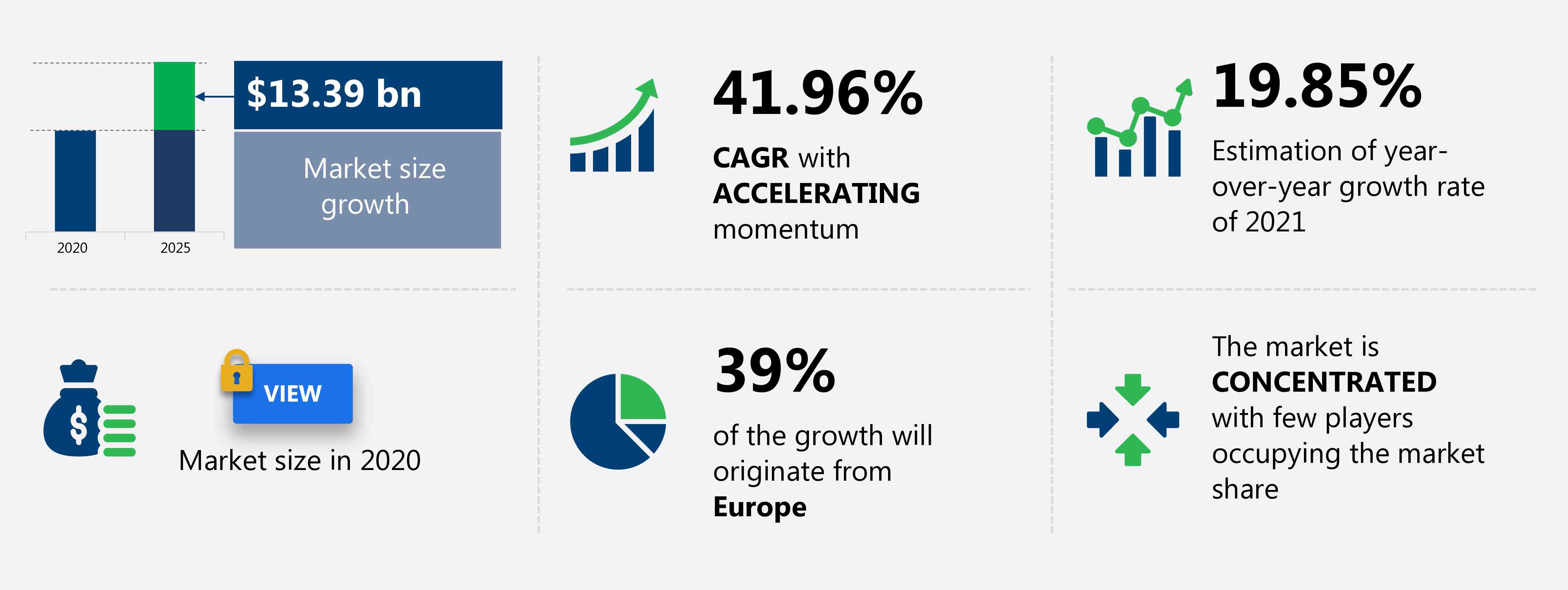
$13.39 B
Market Opportunity
41.96%
CAGR
YoY growth 2020-2021(%)

The automotive intelligent tires market share is expected to increase by USD 13.39 billion from 2020 to 2025, and the market’s growth momentum will accelerate at a CAGR of 41.96%.

This automotive intelligent tires market research report provides valuable insights on the post COVID-19 impact on the market, which will help companies evaluate their business approaches. Furthermore, this report extensively covers automotive intelligent tires market segmentations by application (commercial vehicles and passenger cars) and geography (Europe, North America, APAC, South America, and MEA). The automotive intelligent tires market report also offers information on several market vendors, including Bridgestone Corp., Continental AG, Hankook Tire & Technology Co. Ltd., Michelin Group, Nokian Tyres Plc, Pirelli Tyre Spa, Sumitomo Rubber Industries Ltd., The Goodyear Tire & Rubber Co., Toyo Tire Corp., and Yokohama Rubber Co. Ltd. among others.

What will the Automotive Intelligent Tires Market Size be During the Forecast Period?
Automotive Intelligent Tires Market Size

Download Report Sample to Unlock the Automotive Intelligent Tires Market Size for the Forecast Period and Other Important Statistics


Automotive Intelligent Tires Market: Key Drivers, Trends, and Challenges

The increasing need for safe tires is notably driving the automotive intelligent tires market growth, although factors such as the commercial viability of intelligent tires may impede the market growth. Our research analysts have studied the historical data and deduced the key market drivers and the COVID-19 pandemic impact on the automotive intelligent tires industry. The holistic analysis of the drivers will help in deducing end goals and refining marketing strategies to gain a competitive edge.

Key Automotive Intelligent Tires Market Driver

The increasing need for safe tires is one of the key factors driving the growth of the global automotive intelligent tires market. Tires form a critical point of contact between the vehicle and the road. The grip of a tire plays a crucial role in maintaining vehicle control during a sudden braking situation. The increasing number of on-road accidents is a major cause that is driving automakers to develop advanced driver-assisted safety technologies. A significant percentage of road accidents are caused due to under-inflated or worn-out tires. Intelligent tires provide advanced warning to the driver and the tire manufacturer regarding the stability of the tire and the impending need for a tire replacement. This enables tire manufacturers to make the necessary stock available at the nearest tire dealership. Most tire-related issues are caused due to the development of slow air leaks in the tire. Tire makers can leverage the big data generated by intelligent tires to detect the root cause of slow air leaks and work to eliminate this threat in their future tire models. Hence, with the increasing awareness among customers, the demand for TPMS will increase in the market, which, in turn, will push the adoption of intelligent tires during the forecast period.

Key Automotive Intelligent Tires Market Trend

The use of IMU sensors in intelligent tires will fuel the global automotive intelligent tires market growth. An inertial measurement unit (IMU) refers to a fusion sensor unit (a combo sensor), which is basically a box containing three accelerometers and three gyroscopes. The accelerometers are oriented in such a manner that their axes are orthogonal to each other. These serve to measure the amount of G-force that the IMU is being subjected to. The gyroscopes are also placed in a similar pattern. These measure the rotational position of the unit using either absolute or relative coordinate reference systems. The choice of the coordinate reference system depends on the end-use of the gyroscope in the vehicle. However, Intelligent TPMS typically uses an acceleration sensor module, which is known as a G sensor. These sensors are quite rugged, as they are placed inside tires where there is the incidence of both extreme heat and high torque. The sensors used here need to be capable of withstanding vehicle speeds of up to 300 kmph, as well as an acceleration of up to 1,000 G. It is expected that an integrated and fool-proof approach for the G sensor will be substituted by an IMU sensor.

Key Automotive Intelligent Tires Market Challenge

The commercial viability of intelligent tires is a major challenge for the global automotive intelligent tires market growth. Intelligent tires require advanced connectivity systems, hardware consisting of an array of sensors, supporting vehicle hardware and software, and subscription services to operate. Equipping a vehicle with intelligent tires will significantly increase production costs, driving up vehicle prices. Hence, initially, the practical application of intelligent tires will be limited to luxury or top-end vehicle models with inflated price tags. The high cost of installing and operating intelligent tires limits its commercial viability in entry-level and mid-segment passenger cars. The sensors used in intelligent tires cost close to $1,000 due to their complex-built. Geography and availability of local resources further affect the pricing of these sensors. The majority of the market for intelligent tires exists in the Americas and Europe. Hence, vehicle makers based in APAC need to import the required sensors for intelligent tires. The adoption of intelligent tires will be limited to luxury vehicles during the forecast period.

This automotive intelligent tires market analysis report also provides detailed information on other upcoming trends and challenges that will have a far-reaching effect on the market growth. The actionable insights on the trends and challenges will help companies evaluate and develop growth strategies for 2021-2025.

Parent Market Analysis

Technavio categorizes the global automotive intelligent tires market as a part of the global tires and rubber market within the global auto components market. Our research report has extensively covered external factors influencing the parent market growth potential in the coming years, which will determine the levels of growth of the automotive intelligent tires market during the forecast period.

Who are the Major Automotive Intelligent Tires Market Vendors?

The report analyzes the market’s competitive landscape and offers information on several market vendors, including:


  • Bridgestone Corp.
  • Continental AG
  • Hankook Tire & Technology Co. Ltd.
  • Michelin Group
  • Nokian Tyres Plc
  • Pirelli Tyre Spa
  • Sumitomo Rubber Industries Ltd.
  • The Goodyear Tire & Rubber Co.
  • Toyo Tire Corp.
  • Yokohama Rubber Co. Ltd.


This statistical study of the automotive intelligent tires market encompasses successful business strategies deployed by the key vendors. The automotive intelligent tires market is concentrated and the vendors are deploying organic and inorganic growth strategies to compete in the market.

Product Insights and News

  • Bridgestone Corp. - The company offers intelligent tires capable of estimating a wheel axle load and tire wear condition by using sensors attached inside tires that measure the change in strain that occurs when a tire makes contact with the road while in motion.

To make the most of the opportunities and recover from post COVID-19 impact, market vendors should focus more on the growth prospects in the fast-growing segments, while maintaining their positions in the slow-growing segments.

The automotive intelligent tires market forecast report offers in-depth insights into key vendor profiles. The profiles include information on the production, sustainability, and prospects of the leading companies.

Automotive Intelligent Tires Market Value Chain Analysis

Our report provides extensive information on the value chain analysis for the automotive intelligent tires market, which vendors can leverage to gain a competitive advantage during the forecast period. The end-to-end understanding of the value chain is essential in profit margin optimization and evaluation of business strategies. The data available in our value chain analysis segment can help vendors drive costs and enhance customer services during the forecast period.

The value chain of the global auto components market includes the following core components:

  • Inputs
  • Inbound logistics
  • Operations
  • Outbound logistics
  • Marketing and sales
  • Service
  • Support activities
  • Innovation

The report has further elucidated on other innovative approaches being followed by manufacturers to ensure a sustainable market presence.


Which are the Key Regions for Automotive Intelligent Tires Market?
Automotive Intelligent Tires Market Share by Geography

For more insights on the market share of various regions Request PDF Sample now!

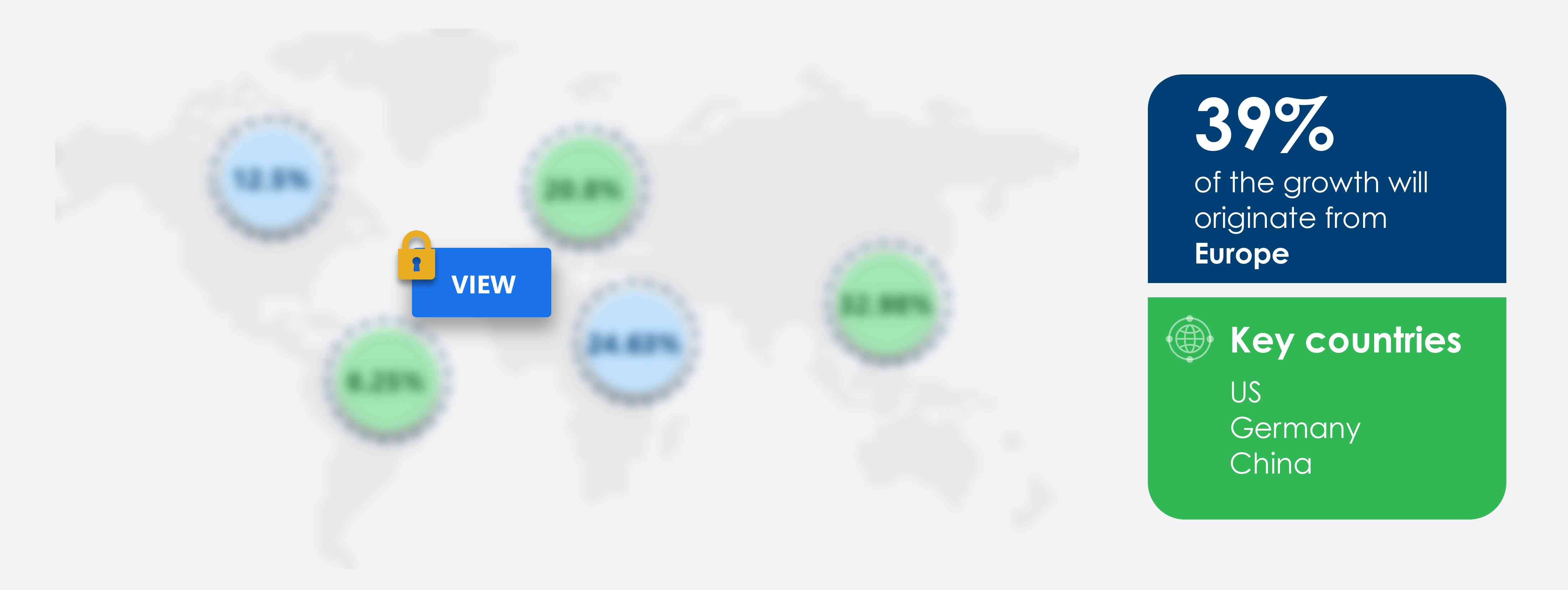
39% of the market’s growth will originate from Europe during the forecast period. Germany and France are the key markets for automotive intelligent tires market in Europe. Market growth in this region will be slower than the growth of the market in regions.

The increasing need for safe tires will facilitate the automotive intelligent tires market growth in Europe over the forecast period. This market research report entails detailed information on the competitive intelligence, marketing gaps, and regional opportunities in store for vendors, which will assist in creating efficient business plans.

COVID Impact and Recovery Analysis

The outbreak of COVID-19 led to lockdowns and travel bans across Europe and slowed down the growth of the automotive components market, which includes automotive intelligent tires, in 2020. Furthermore, the rising number of COVID-19 cases in major EU countries, such as the UK and Germany, in Q1 2021 has affected the growth of the automotive intelligent tires market in the region. However, the relaxation of lockdown measures and the partial reopening of the offline distribution channel in some countries in the region are likely to enhance the growth of the automotive intelligent tires market in Europe during the forecast period.

What are the Revenue-generating Application Segments in the Automotive Intelligent Tires Market?
Automotive Intelligent Tires Market Share

To gain further insights on the market contribution of various segments Request PDF Sample

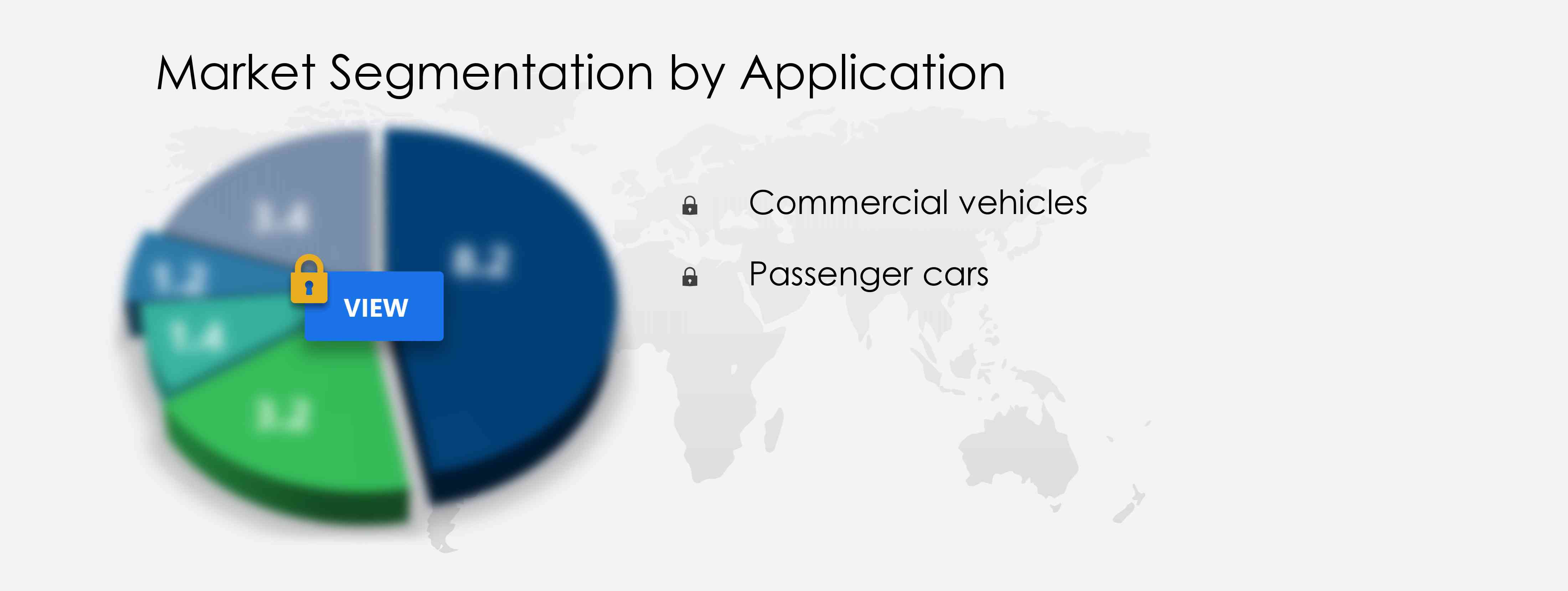
The automotive intelligent tires market share growth by the Commercial vehicles segment will be significant during the forecast period. CVs are witnessing high demand owing to an increase in demand for logistics and growth in industrial, mining, and construction activities. The global automotive industry is witnessing numerous innovations in terms of technology, along with growing concerns for efficient fuel combustion. These factors will positively drive the adoption of CVs by end-users globally

This report provides an accurate prediction of the contribution of all the segments to the growth of the automotive intelligent tires market size and actionable market insights on post COVID-19 impact on each segment.


Automotive Intelligent Tires Market Scope

Report Coverage

Details

Page number

120

Base year

2020

Forecast period

2021-2025

Growth momentum & CAGR

Accelerate at a CAGR of 41.96%

Market growth 2021-2025

$ 13.39 billion

Market structure

Concentrated

YoY growth (%)

19.85

Regional analysis

Europe, North America, APAC, South America, and MEA

Performing market contribution

Europe at 39%

Key consumer countries

US, Germany, China, Canada, and France

Competitive landscape

Leading companies, Competitive strategies, Consumer engagement scope

Key companies profiled

Bridgestone Corp., Continental AG, Hankook Tire & Technology Co. Ltd., Michelin Group, Nokian Tyres Plc, Pirelli Tyre Spa, Sumitomo Rubber Industries Ltd., The Goodyear Tire & Rubber Co., Toyo Tire Corp., and Yokohama Rubber Co. Ltd.

Market dynamics

Parent market analysis, Market growth inducers and obstacles, Fast-growing and slow-growing segment analysis, COVID 19 impact and recovery analysis and future consumer dynamics, Market condition analysis for forecast period

Customization purview

If our report has not included the data that you are looking for, you can reach out to our analysts and get segments customized.

Request PDF sample

What are the Key Data Covered in this Automotive Intelligent Tires Market Report?

  • CAGR of the market during the forecast period 2021-2025
  • Detailed information on factors that will drive automotive intelligent tires market growth during the next five years
  • Precise estimation of the automotive intelligent tires market size and its contribution to the parent market
  • Accurate predictions on upcoming trends and changes in consumer behavior
  • The growth of the automotive intelligent tires industry across Europe, North America, APAC, South America, and MEA
  • A thorough analysis of the market’s competitive landscape and detailed information on vendors
  • Comprehensive details of factors that will challenge the growth of automotive intelligent tires market vendors

We can help! Our analysts can customize this report to meet your requirements. Get in touch

1 Executive Summary

  • 1.1 Market Overview

    2 Market Landscape

    • 2.1 Market ecosystem
      • Exhibit 08: Parent market
      • Exhibit 09: Market characteristics
    • 2.2 Value chain analysis
      • Exhibit 10: Value chain analysis – Global tires and rubber market

    3 Market Sizing

    • 3.1 Market definition
      • Exhibit 11: Offerings of vendors included in the market definition
    • 3.2 Market segment analysis
      • Exhibit 12: Market segments
    • 3.3 Market size 2020
      • 3.4 Market outlook: Forecast for 2020 - 2025
        • Exhibit 13: Global - Market size and forecast 2020 - 2025 ($ million)
        • Exhibit 14: Global market: Year-over-year growth 2020 - 2025 (%)

      4 Five Forces Analysis

      • 4.1 Five forces summary
        • Exhibit 15: Five forces analysis 2020 & 2025
      • 4.2 Bargaining power of buyers
        • Exhibit 16: Bargaining power of buyers
      • 4.3 Bargaining power of suppliers
        • Exhibit 17: Bargaining power of suppliers
      • 4.4 Threat of new entrants
        • Exhibit 18: Threat of new entrants
      • 4.5 Threat of substitutes
        • Exhibit 19: Threat of substitutes
      • 4.6 Threat of rivalry
        • Exhibit 20: Threat of rivalry
      • 4.7 Market condition
        • Exhibit 21: Market condition - Five forces 2020

      5 Market Segmentation by Application

      • 5.1 Market segments
        • Exhibit 22: Application - Market share 2020-2025 (%)
      • 5.2 Comparison by Application
        • Exhibit 23: Comparison by Application
      • 5.3 Commercial vehicles - Market size and forecast 2020-2025
        • Exhibit 24: Commercial vehicles - Market size and forecast 2020-2025 ($ million)
        • Exhibit 25: Commercial vehicles - Year-over-year growth 2020-2025 (%)
      • 5.4 Passenger cars - Market size and forecast 2020-2025
        • Exhibit 26: Passenger cars - Market size and forecast 2020-2025 ($ million)
        • Exhibit 27: Passenger cars - Year-over-year growth 2020-2025 (%)
      • 5.5 Market opportunity by Application
        • Exhibit 28: Market opportunity by Application

      6 Customer landscape

      • 6.1 Overview
        • Exhibit 29: Customer landscape

      7 Geographic Landscape

      • 7.1 Geographic segmentation
        • Exhibit 30: Market share by geography 2020-2025 (%)
      • 7.2 Geographic comparison
        • Exhibit 31: Geographic comparison
      • 7.3 Europe - Market size and forecast 2020-2025
        • Exhibit 32: Europe - Market size and forecast 2020-2025 ($ million)
        • Exhibit 33: Europe - Year-over-year growth 2020-2025 (%)
      • 7.4 North America - Market size and forecast 2020-2025
        • Exhibit 34: North America - Market size and forecast 2020-2025 ($ million)
        • Exhibit 35: North America - Year-over-year growth 2020-2025 (%)
      • 7.5 APAC - Market size and forecast 2020-2025
        • Exhibit 36: APAC - Market size and forecast 2020-2025 ($ million)
        • Exhibit 37: APAC - Year-over-year growth 2020-2025 (%)
      • 7.6 South America - Market size and forecast 2020-2025
        • Exhibit 38: South America - Market size and forecast 2020-2025 ($ million)
        • Exhibit 39: South America - Year-over-year growth 2020-2025 (%)
      • 7.7 MEA - Market size and forecast 2020-2025
        • Exhibit 40: MEA - Market size and forecast 2020-2025 ($ million)
        • Exhibit 41: MEA - Year-over-year growth 2020-2025 (%)
      • 7.8 Key leading countries
        • Exhibit 42: Key leading countries
      • 7.9 Market opportunity by geography
        • Exhibit 43: Market opportunity by geography ($ million)

      8 Drivers, Challenges, and Trends

      • 8.1 Market drivers
        • 8.2 Market challenges
          • 8.3 Market trends

            9 Vendor Landscape

            • 9.1 Overview
              • Exhibit 45: Vendor landscape
            • 9.2 Landscape disruption
              • Exhibit 46: Landscape disruption
              • Exhibit 47: Industry risks

            10 Vendor Analysis

            • 10.1 Vendors covered
              • Exhibit 48: Vendors covered
            • 10.2 Market positioning of vendors
              • Exhibit 49: Market positioning of vendors
            • 10.3 Bridgestone Corp.
              • Exhibit 50: Bridgestone Corp. - Overview
              • Exhibit 51: Bridgestone Corp. - Business segments
              • Exhibit 52: Bridgestone Corp. – Key news
              • Exhibit 53: Bridgestone Corp. - Key offerings
              • Exhibit 54: Bridgestone Corp. - Segment focus
            • 10.4 Continental AG
              • Exhibit 55: Continental AG - Overview
              • Exhibit 56: Continental AG - Business segments
              • Exhibit 57: Continental AG – Key news
              • Exhibit 58: Continental AG - Key offerings
              • Exhibit 59: Continental AG - Segment focus
            • 10.5 Hankook Tire & Technology Co. Ltd.
              • Exhibit 60: Hankook Tire & Technology Co. Ltd. - Overview
              • Exhibit 61: Hankook Tire & Technology Co. Ltd. - Product and service
              • Exhibit 62: Hankook Tire & Technology Co. Ltd. – Key news
              • Exhibit 63: Hankook Tire & Technology Co. Ltd. - Key offerings
            • 10.6 Michelin Group
              • Exhibit 64: Michelin Group - Overview
              • Exhibit 65: Michelin Group - Business segments
              • Exhibit 66: Michelin Group – Key news
              • Exhibit 67: Michelin Group - Key offerings
              • Exhibit 68: Michelin Group - Segment focus
            • 10.7 Nokian Tyres Plc
              • Exhibit 69: Nokian Tyres Plc - Overview
              • Exhibit 70: Nokian Tyres Plc - Business segments
              • Exhibit 71: Nokian Tyres Plc – Key news
              • Exhibit 72: Nokian Tyres Plc - Key offerings
              • Exhibit 73: Nokian Tyres Plc - Segment focus
            • 10.8 Pirelli Tyre Spa
              • Exhibit 74: Pirelli Tyre Spa - Overview
              • Exhibit 75: Pirelli Tyre Spa - Business segments
              • Exhibit 76: Pirelli Tyre Spa – Key news
              • Exhibit 77: Pirelli Tyre Spa - Key offerings
            • 10.9 Sumitomo Rubber Industries Ltd.
              • Exhibit 78: Sumitomo Rubber Industries Ltd. - Overview
              • Exhibit 79: Sumitomo Rubber Industries Ltd. - Business segments
              • Exhibit 80: Sumitomo Rubber Industries Ltd. – Key news
              • Exhibit 81: Sumitomo Rubber Industries Ltd. - Key offerings
              • Exhibit 82: Sumitomo Rubber Industries Ltd. - Segment focus
            • 10.10 The Goodyear Tire & Rubber Co.
              • Exhibit 83: The Goodyear Tire & Rubber Co. - Overview
              • Exhibit 84: The Goodyear Tire & Rubber Co. - Business segments
              • Exhibit 85: The Goodyear Tire & Rubber Co. – Key news
              • Exhibit 86: The Goodyear Tire & Rubber Co. - Key offerings
              • Exhibit 87: The Goodyear Tire & Rubber Co. - Segment focus
            • 10.11 Toyo Tire Corp.
              • Exhibit 88: Toyo Tire Corp. - Overview
              • Exhibit 89: Toyo Tire Corp. - Product and service
              • Exhibit 90: Toyo Tire Corp. - Key offerings
            • 10.12 Yokohama Rubber Co. Ltd.
              • Exhibit 91: Yokohama Rubber Co. Ltd. - Overview
              • Exhibit 92: Yokohama Rubber Co. Ltd. - Business segments
              • Exhibit 93: Yokohama Rubber Co. Ltd. – Key news
              • Exhibit 94: Yokohama Rubber Co. Ltd. - Key offerings
              • Exhibit 95: Yokohama Rubber Co. Ltd. - Segment focus

            11 Appendix

            • 11.1 Scope of the report
              • 11.2 Currency conversion rates for US$
                • Exhibit 96: Currency conversion rates for US$
              • 11.3 Research methodology
                • Exhibit 97: Research Methodology
                • Exhibit 98: Validation techniques employed for market sizing
                • Exhibit 99: Information sources
              • 11.4 List of abbreviations
                • Exhibit 100: List of abbreviations

              Research Methodology

              Technavio presents a detailed picture of the market by way of study, synthesis, and summation of data from multiple sources. The analysts have presented the various facets of the market with a particular focus on identifying the key industry influencers. The data thus presented is comprehensive, reliable, and the result of extensive research, both primary and secondary.

              INFORMATION SOURCES

              Primary sources

              • Manufacturers and suppliers
              • Channel partners
              • Industry experts
              • Strategic decision makers

              Secondary sources

              • Industry journals and periodicals
              • Government data
              • Financial reports of key industry players
              • Historical data
              • Press releases

              DATA ANALYSIS

              Data Synthesis

              • Collation of data
              • Estimation of key figures
              • Analysis of derived insights

              Data Validation

              • Triangulation with data models
              • Reference against proprietary databases
              • Corroboration with industry experts

              REPORT WRITING

              Qualitative

              • Market drivers
              • Market challenges
              • Market trends
              • Five forces analysis

              Quantitative

              • Market size and forecast
              • Market segmentation
              • Geographical insights
              • Competitive landscape

              Interested in this report?

              Get your sample now to see our research methodology and insights!

              Download Now

              Frequently Asked Questions

              Automotive Intelligent Tires market growth will increase by $ 13.39 bn during 2021-2025.

              The Automotive Intelligent Tires market is expected to grow at a CAGR of 41.96% during 2021-2025.

              Automotive Intelligent Tires market is segmented by Application( commercial vehicles, passenger cars) Geographic( Europe, North America, APAC, South America, MEA)

              Bridgestone Corp., Continental AG, Hankook Tire & Technology Co. Ltd., Michelin Group, Nokian Tyres Plc, Pirelli Tyre Spa, Sumitomo Rubber Industries Ltd., The Goodyear Tire & Rubber Co., Toyo Tire Corp., Yokohama Rubber Co. Ltd. are a few of the key vendors in the Automotive Intelligent Tires market.

              Europe will register the highest growth rate of 39% among the other regions. Therefore, the Automotive Intelligent Tires market in Europe is expected to garner significant business opportunities for the vendors during the forecast period.

              US, Germany, China, Canada, France

              • Increasing need for safe tiresTires form a critical point of contact between the vehicle and the road. The grip of a tire plays a crucial role in maintaining vehicle control during a sudden braking situation. The increasing number of on-road accidents is a major cause that is driving automakers to develop advanced driver-assisted safety technologies. A significant percentage of road accidents are caused due to under-inflated or worn-out tires. Intelligent tires provide advanced warning to the driver and the tire manufacturer regarding the stability of the tire and the impending need for a tire replacement. This enables tire manufacturers to make the necessary stock available at the nearest tire dealership. Intelligent tires can detect tire-related issues and coordinate with advanced driver assistance systems (ADAS) and autonomous driving technologies with respect to the same. The driver can be helped with navigational assistance to the nearest tire dealership well before the condition of the tire deteriorates dangerously. Such a system largely reduces the possibility of an accident caused due to faulty tires. Intelligent tires also offer tire manufacturers real-time information regarding the performance of their tires. This helps manufacturers detect recurring anomalies is the driving factor this market.
              • and this information can be leveraged by the manufacturers to develop an enhanced and resilient version of the tire to stay ahead of the competition. Most tire-related issues are caused due to the development of slow air leaks in the tire. Tire makers can leverage the big data generated by intelligent tires to detect the root cause of slow air leaks and work to eliminate this threat in their future tire models. Hence is the driving factor this market.
              • with the increasing awareness among customers is the driving factor this market.
              • the demand for TPMS will increase in the market is the driving factor this market.
              • which is the driving factor this market.
              • in turn is the driving factor this market.
              • will push the adoption of intelligent tires during the forecast period.Introduction of stringent vehicular emission and fuel efficiency mandatesGovernments and automotive governing councils of several nations across the globe are encouraging the use of advanced systems and technologies that help in the reduction of vehicular emissions for a cleaner and healthier environment. In addition is the driving factor this market.
              • there have been various rules and initiatives that are aimed at the use of energy-efficient technologies. Looking at the consequences of greenhouse gases and deteriorating air quality due to increasing vehicular emissions across the world is the driving factor this market.
              • governments of several economies have implemented emission standards for automakers. On this front is the driving factor this market.
              • increasing emission norms and several vehicle safety initiatives are promoting the use of advanced systems such as intelligent tires in the automotive industry. The growing concerns about passenger safety have compelled automobile manufacturers to implement various driver assistance safety systems. Advanced safety systems such as electronic brake-force distribution (EBD) is the driving factor this market.
              • ABS is the driving factor this market.
              • and airbag deployment systems help minimize accidents is the driving factor this market.
              • reduce fatalities is the driving factor this market.
              • and improve overall vehicle safety. Furthermore is the driving factor this market.
              • the CAFE regulations on both sides of the Atlantic have ensured that the rolling resistance of tires remains at the forefront of any decision taken by members of the automotive value chain. Intelligent tires provide schematics regarding tire health and notify the driver as well as the tire dealership about the need for a replacement tire to reduce the waiting time for getting another intelligent tire. Additionally is the driving factor this market.
              • the TPMS system of the intelligent tire notifies the driver regarding significant changes in tire air pressure to avoid running on under-inflated tires and high fuel consumption. Hence is the driving factor this market.
              • the increased need for fuel efficiency and rising safety mandates for vehicles are expected to drive the adoption of intelligent tires during the forecast period. is the driving factor this market.

              The Automotive Intelligent Tires market vendors should focus on grabbing business opportunities from the commercial vehicles segment as it accounted for the largest market share in the base year.
              RIA - Research AI Assistant
              Ask RIA
