


Automotive Interior LED Lighting Market Size 2024-2028
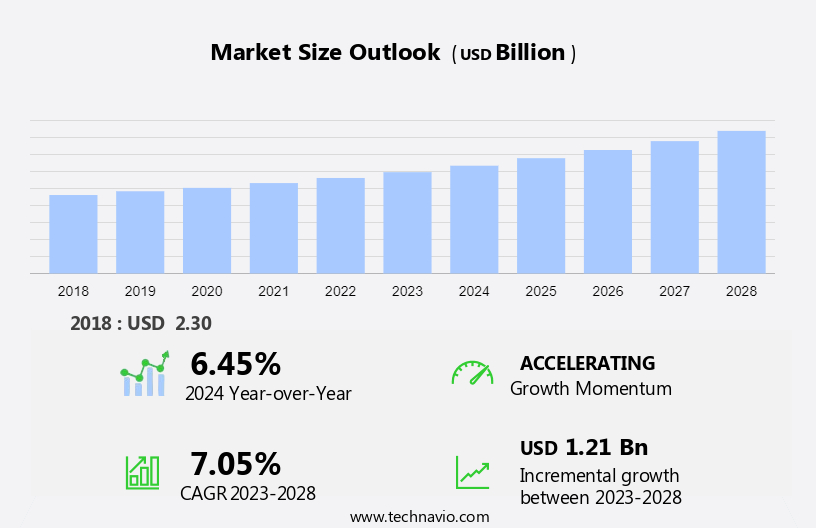
The automotive interior LED lighting market size is forecast to increase by USD 1.21 billion at a CAGR of 7.05% between 2023 and 2028. Market growth hinges on various factors, including the increasing popularity of ambient lighting in automobiles, the integration of energy-efficient solutions into vehicles, and the affordability of such systems. These elements collectively shape market dynamics, reflecting the evolving preferences and priorities of consumers in the automotive industry. With the rising demand, emphasis on energy efficiency, and cost-effective LED solutions, the market anticipates continued growth opportunities, catering to the evolving needs of automobile manufacturers and consumers alike. The report provides market size, historical data spanning from 2018-2022, and future projections, all presented in terms of value in USD billion for each of the mentioned segments.
What will be the Size of the Market During the Forecast Period?
For More Highlights About this Report, Download Free Sample in a Minute
Market Dynamics and Customer Landscape
The automotive industry is witnessing significant advancements in lighting technology, with innovations like center stack lights and head-up displays (HUDs) enhancing the styling and individualization of cars. Interior lighting, adaptive lighting systems, and headlights are also evolving, especially with the electrification of vehicles. As electric and hybrid vehicles expand, there's a focus on adaptive lighting to meet the needs of autonomous vehicles, reflecting major trends in the automotive market. Moreover, in this industry is undergoing significant changes with the advancements in autonomous vehicles and innovations in adaptive lighting. Sales of automobiles are also affected by the expansion of electric vehicles, which are becoming increasingly popular due to their environmental benefits and technological advancements.
Key Market Driver
The growing popularity of ambient lighting in automobiles is the key factor driving the market. Ambient lighting involves the use of light pipes, light rings, LED pin spotlights, and diffuser lenses that are integrated into the vehicle consoles, door panels, instrument panels, and seat frames. The adoption of ambient lights is increasing in modern vehicles to give them an aesthetic appeal. LEDs are extensively used for ambient lighting in cabins owing to their small size and lower energy consumption. Automotive OEMs are increasing the number of light sources in their vehicles to increase the feel of a premium vehicle.
However, bright lights in automotive cabins can distract drivers, and, therefore, the luminance value of cabin lighting is maintained below 0.1 cd/m2 (candela per square meter). Automotive OEMs, such as Audi and BMW, are continually researching ambient lighting to determine optimum colors and brightness levels. Further, ambient lighting improves comfort as it provides direction and illuminates the necessary functions in the dark. Thus, the increased adoption of ambient lighting will be a crucial driver for the growth of the market during the forecast period.
Significant Market Trends
The growing popularity of OLED lighting technology is the primary trend shaping the market. Since the era of incandescent lights in vehicles, automotive interior LED has seen numerous innovations, with OLED lighting emerging as a standout option. Offering efficient, lightweight, and visually pleasing illumination without harsh shadows or the need for reflectors, OLED technology initially found traction in luxury models from OEMs like Audi and BMW.
Furthermore, although initially limited by cost, advancements have made OLEDs more flexible, energy-efficient, and capable of emitting a wider range of colors than LEDs. Their thin profile allows for seamless integration into various vehicle components, ensuring uniform and glare-free illumination throughout the interior. As luxury brands continue to seek differentiation, collaboration with leading vendors is driving the adoption of OLED lighting in premium vehicles, further fueling its popularity and market growth.
Major Market Challenge
Rising prices of raw materials is a challenge that affects the market. In recent years, raw material prices vital for automotive interior LED lighting, such as aluminum, copper, PVC, and paper, have been steadily increasing, driven primarily by the rising cost of crude oil, affecting PVC costs. Additionally, materials like rolled steel, aluminum, electronic components, and resins are utilized in LED light manufacturing, subject to price fluctuations, posing challenges for manufacturers in maintaining stock and increasing operational costs.
Consequently, such factors contribute to higher LED light prices compared to other lighting types, hindering market growth. To address this, vendors focus on enhancing quality, efficiency, and cost-effectiveness, while industry-wide LED adoption aids in achieving economies of scale and reducing costs. However, ongoing innovations and design efficiencies remain crucial for overcoming these challenges in the market.
Market Customer Landscape
The market forecasting report includes the adoption lifecycle of the market, covering from the innovator’s stage to the laggard’s stage. It focuses on adoption rates in different regions based on penetration. Furthermore, the report also includes key purchase criteria and drivers of price sensitivity to help companies evaluate and develop their market growth analysis strategies.
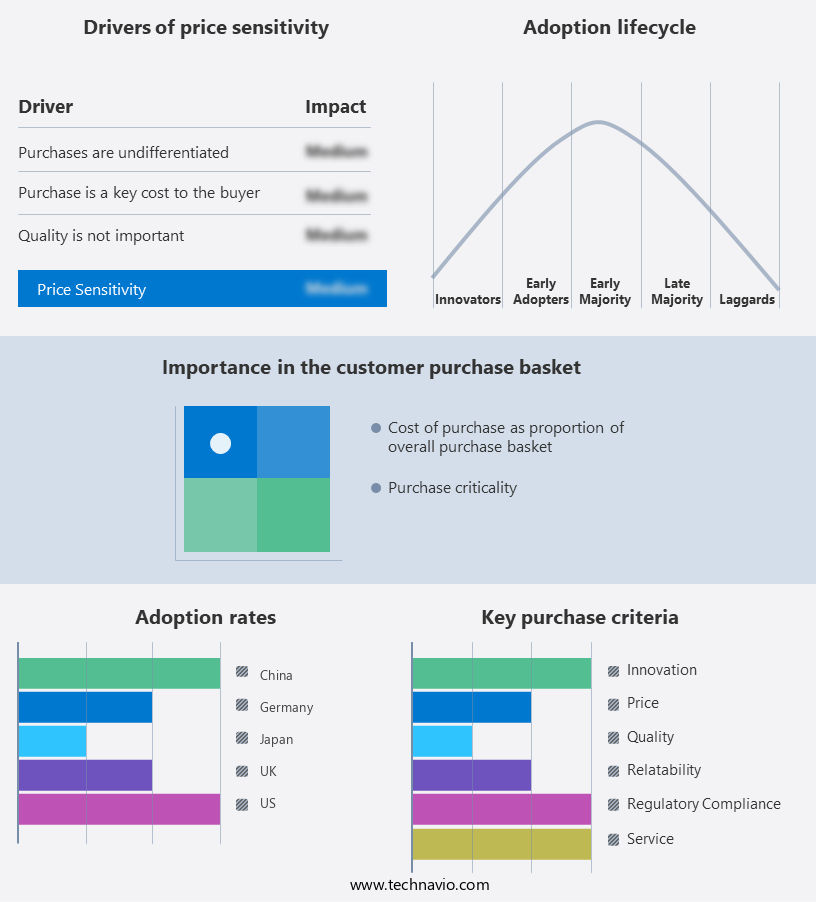
Customer Landscape
Who are the Major Market Companies?
Companies are implementing various strategies, such as strategic alliances, partnerships, mergers and acquisitions, geographical expansion, and product/service launches, to enhance their presence in the market.
- HELLA GmbH and Co. KGaA: The company offers automotive interior LED lighting, which includes retro tiny lights, reading lamps, ambient inside lighting systems that create moods and color schemes, roof modules, and light guiding technology for passenger cars.
The market research and growth report also includes detailed analyses of the competitive landscape of the market and information about 16 market companies, including:
- ams OSRAM AG
- Changzhou Xingyu Automotive Lighting System Co Ltd.
- Everlight Electronics Co. Ltd.
- Grupo Antolin Irausa SA
- Hyundai Motor Co.
- Innotec.
- Koito Manufacturing Co. Ltd.
- Koninklijke Philips N.V.
- LG Electronics Inc.
- Nichia Corp.
- NXP Semiconductors NV
- Robert Bosch GmbH
- Samsung Electronics Co. Ltd.
- Stanley Electric Co. Ltd.
- Valeo SA
Qualitative and quantitative analysis of companies has been conducted to help clients understand the wider business environment as well as the strengths and weaknesses of key market players. Data is qualitatively analyzed to categorize companies as pure play, category-focused, industry-focused, and diversified; it is quantitatively analyzed to categorize companies as dominant, leading, strong, tentative, and weak.
What is the Largest-Growing Segments in the Market?
The market caters to various vehicle types, including commercial vehicles, sedans, and hatchbacks. It offers alternatives to traditional lighting, such as halogen and xenon, providing dashboard lights, ambient lights, and reading lamps. With a focus on safety and visibility, interior LED lighting enhances automotive technology and meets consumer demand for styling and individualization. Amidst the rise of electric vehicles and connected cars, there's a growing need for energy-efficient solutions and innovations like OLED technology.
The OEM segment is estimated to witness significant growth during the market forecast period. LED lights offered by OEMs are extensively utilized in automotive interior applications due to their superior performance and durability, replacing halogen lights in various applications. LED lights provide multifunctionality, enabling features like ambient lighting with multiple color options in a single unit.
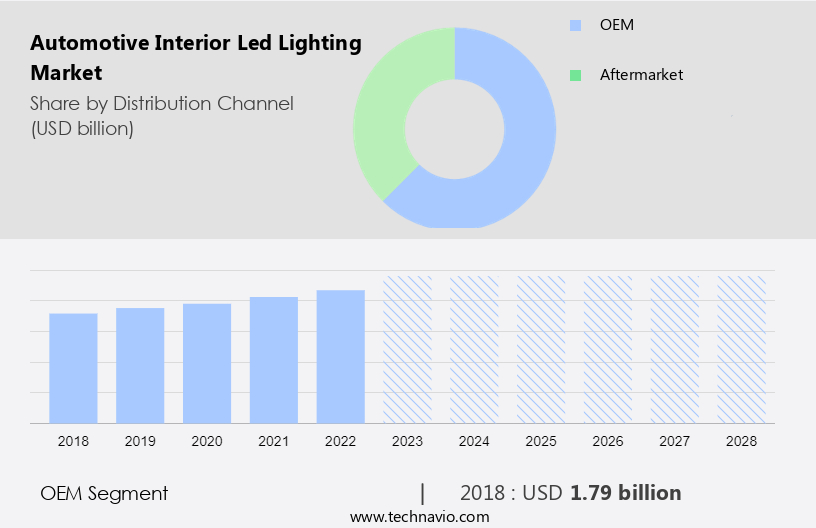
Get a glance at the market contribution of various segments Download the PDF Sample
The OEM segment was the largest segment and was valued at USD 1.79 billion in 2018. Further, OEMs offer advantages such as energy efficiency, reduced heat emission, and extended operational life compared to halogen lights, making them ideal for cabin lighting systems. Moreover, LED lights allow automakers to incorporate diverse color profiles, shapes, and sizes to suit different automotive interiors, driving market growth in the OEM segment.
Key Region
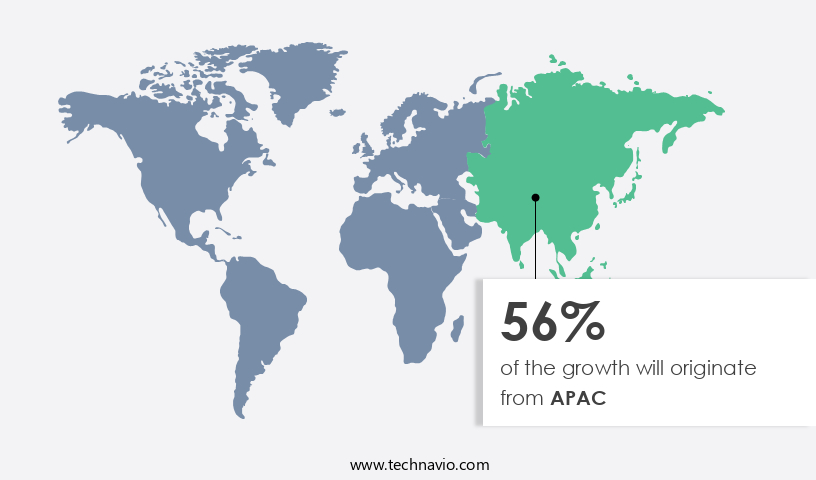
For more insights on the market share of various regions Download PDF Sample now!
APAC is estimated to contribute 56% to the growth of the global market during the forecast period. Technavio’s analysts have elaborately explained the regional trends and drivers that shape the market during the forecast period. APAC leads the global automotive production industry, driven by key countries like China, Japan, India, Indonesia, and South Korea. The region's demand surpasses that of developed regions due to increased safety and convenience demands from emerging markets like India, Thailand, and Indonesia. Economic growth, coupled with consumer preferences for advanced features, propels the adoption of LED lighting solutions, with significant investments in infrastructure further boosting market opportunities in the India LED lighting market and across APAC.
Segment Overview
The market report provides comprehensive data (region wise segment analysis), with forecasts and estimates in "USD Billion" for the period 2024 to 2028, as well as historical data from 2018 to 2022 for the following segments
- Distribution Channel Outlook
- OEM
- Aftermarket
- Application Outlook
- Passenger cars
- Commercial vehicles
- Region Outlook
- North America
- The U.S.
- Canada
- Europe
- The U.K.
- Germany
- France
- Rest of Europe
- APAC
- China
- India
- South America
- Chile
- Argentina
- Brazil
- South America
- Chile
- Argentina
- Brazil
- Middle East & Africa
- Saudi Arabia
- South Africa
- Rest of the Middle East & Africa
- North America
Market Analyst Overview
The market is witnessing rapid growth driven by styling and individualization trends, with OEMs and carmakers prioritizing personalization and sustainability efforts. Flexible OLEDs and LEDs are replacing incandescent bulbs, enhancing performance and cost-effectiveness, while regulatory bodies encourage environmental concerns. Augmented reality and artificial intelligence are shaping innovations, connectivity, and autonomous driving, with major players like Faurecia and Magneti Marelli leading the charge in design and safety features.
Further, the market is witnessing significant growth driven by digitalization and demand for connected cars. With styling and individualization becoming crucial, OEMs like Hyundai Mobis and Varroc Lighting Systems are innovating with front lighting/headlamps. Augmented reality and artificial intelligence are enhancing design innovations and enhanced safety features, addressing concerns such as the surge in global traffic accidents. This trend is particularly pronounced in regions like Western Europe and Eastern Europe, where companies like Mercedes-Benz and ZKW Group are pioneering advancements in automotive vehicles.
|
Market Scope |
|
|
Report Coverage |
Details |
|
Page number |
156 |
|
Base year |
2023 |
|
Historic period |
2018-2022 |
|
Forecast period |
2024-2028 |
|
Growth momentum & CAGR |
Accelerate at a CAGR of 7.05% |
|
Market Growth 2024-2028 |
USD 1.21 billion |
|
Market structure |
Fragmented |
|
YoY growth 2023-2024(%) |
6.45 |
|
Regional analysis |
APAC, Europe, North America, South America, and Middle East and Africa |
|
Performing market contribution |
APAC at 56% |
|
Key countries |
US, China, Japan, Germany, and UK |
|
Competitive landscape |
Leading Companies, Market Positioning of Companies, Competitive Strategies, and Industry Risks |
|
Key companies profiled |
ams OSRAM AG, Changzhou Xingyu Automotive Lighting System Co Ltd., Everlight Electronics Co. Ltd., Grupo Antolin Irausa SA, HELLA GmbH and Co. KGaA, Hyundai Motor Co., Innotec., Koito Manufacturing Co. Ltd., Koninklijke Philips N.V., LG Electronics Inc., Nichia Corp., NXP Semiconductors NV, Robert Bosch GmbH, Samsung Electronics Co. Ltd., Stanley Electric Co. Ltd., and Valeo SA |
|
Market dynamics |
Parent market analysis, Market growth inducers and obstacles, Fast-growing and slow-growing segment analysis, COVID-19 impact and recovery analysis and future consumer dynamics, and market condition analysis for the forecast period. |
|
Customization purview |
If our report has not included the data that you are looking for, you can reach out to our analysts and get segments customized. |
What are the Key Data Covered in this Market Research Report?
- CAGR of the market during the forecast period
- Detailed information on factors that will drive the market growth and forecasting between 2024 and 2028
- Precise estimation of the market size and its contribution to the market in focus on the parent market
- Accurate predictions about upcoming market growth and trends and changes in consumer behavior
- Growth of the market across APAC, Europe, North America, South America, and Middle East and Africa
- A thorough analysis of the market’s competitive landscape and detailed information about companies
- Comprehensive analysis of factors that will challenge the growth of market companies
We can help! Our analysts can customize this market research report to meet your requirements.
 RIA -
RIA - 
