


Bearings Market Size 2026-2030
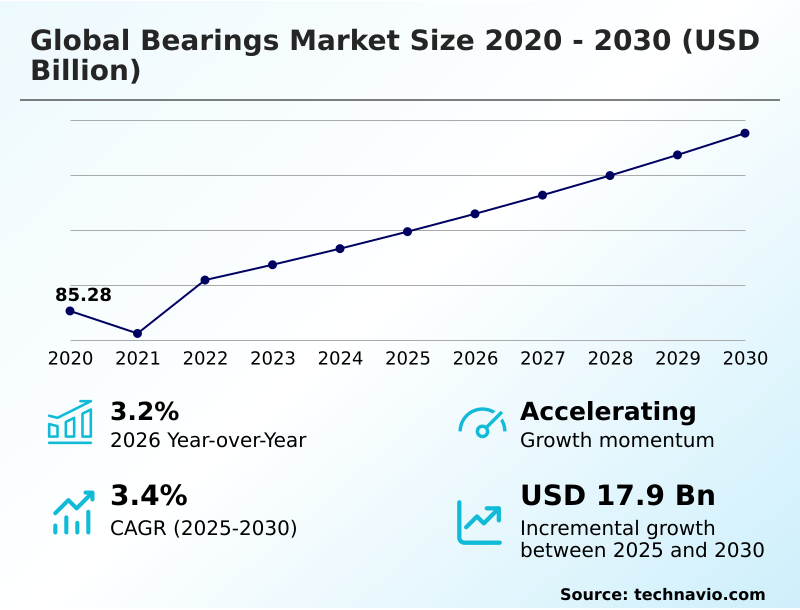
The bearings market size is valued to increase by USD 17.90 billion, at a CAGR of 3.4% from 2025 to 2030. Integration of industrial automation and predictive maintenance systems will drive the bearings market.
Major Market Trends & Insights
- APAC dominated the market and accounted for a 39.8% growth during the forecast period.
- By Product - Anti-friction bearings segment was valued at USD 57.94 billion in 2024
- By End-user - Automotive industry segment accounted for the largest market revenue share in 2024
Market Size & Forecast
- Market Opportunities: USD 32.32 billion
- Market Future Opportunities: USD 17.90 billion
- CAGR from 2025 to 2030 : 3.4%
Market Summary
- The bearings market is undergoing a significant transformation, driven by the convergence of advanced mechanical engineering and digital innovation. The global push towards sustainability and energy efficiency is compelling manufacturers to develop components with superior performance characteristics, including improved load carrying capacity and fatigue resistance.
- A key driver is the rapid expansion of electric vehicle platforms, which demand specialized components like hybrid ceramic bearings and low friction bearing designs to optimize range and performance. Simultaneously, the integration of industrial automation and smart factory technologies is creating a strong demand for sensor-equipped bearings that enable predictive maintenance frameworks.
- For example, a modern manufacturing facility can leverage real-time data from these mechatronic systems to anticipate equipment failures, scheduling MRO services proactively to avoid costly downtime. This shift toward intelligent motion technology is redefining the value of bearings from simple mechanical parts to critical data nodes in the industrial ecosystem.
- However, the industry faces challenges from geopolitical instability, which disrupts supply chains and contributes to raw material cost inflation. Despite these hurdles, the focus on circular economy models and remanufacturing programs presents new avenues for growth and sustainability.
What will be the Size of the Bearings Market during the forecast period?
Get Key Insights on Market Forecast (PDF) Get Free Sample
How is the Bearings Market Segmented?
The bearings industry research report provides comprehensive data (region-wise segment analysis), with forecasts and estimates in "USD million" for the period 2026-2030, as well as historical data from 2020-2024 for the following segments.
- Product
- Anti-friction bearings
- Magnetic bearings
- Others
- End-user
- Automotive industry
- Heavy industry
- ARS industry
- Others
- Type
- Mounted bearing
- Unmounted bearing
- Distribution channel
- OEM
- Aftermarket
- Measurement
- 30 to 40
- 41 to 50
- 51 to 60
- 61 to 70
- 70 and above
- Geography
- APAC
- China
- Japan
- India
- Europe
- Germany
- UK
- France
- North America
- US
- Canada
- Mexico
- South America
- Brazil
- Argentina
- Middle East and Africa
- South Africa
- UAE
- Saudi Arabia
- Rest of World (ROW)
- APAC
By Product Insights
The anti-friction bearings segment is estimated to witness significant growth during the forecast period.
The anti-friction bearings segment, including rolling element bearings, is fundamental to the industry, driven by global shifts toward electric vehicle platforms and industrial automation.
Demand is escalating for premium, high-capacity bearings that minimize parasitic losses to meet strict energy efficiency standards. This includes low friction bearing designs and those offering superior thermal management.
The integration of sensor-equipped anti-friction bearings into predictive maintenance frameworks is becoming standard, enabling real-time condition monitoring. These smart factory technologies improve operational efficiency and are pivotal in reducing total cost of ownership.
This evolution from simple components to data-gathering assets has extended the operational lifespan of heavy machinery by up to 15% in certain applications, showcasing a significant market transition.
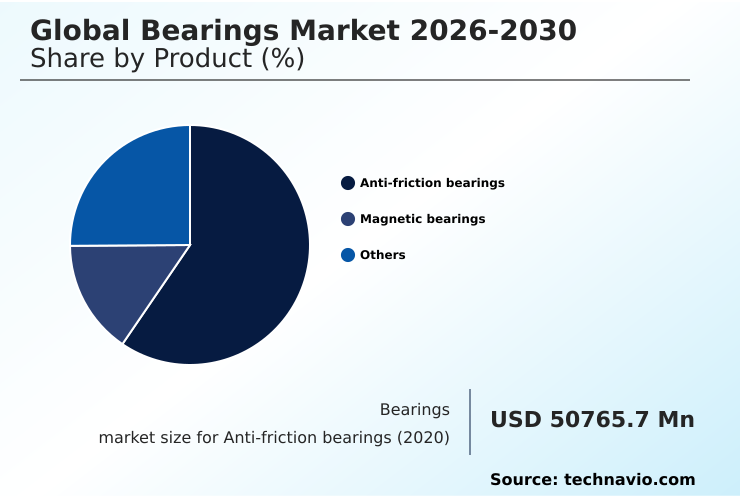
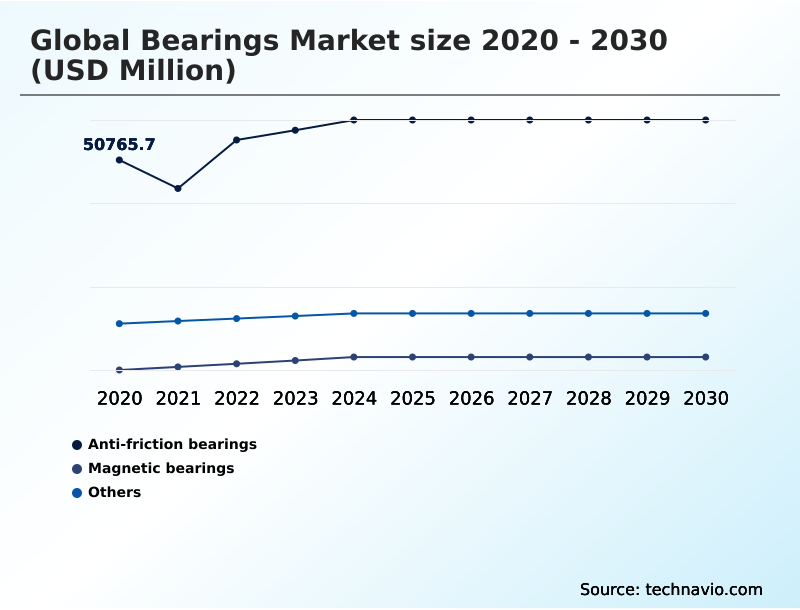
The Anti-friction bearings segment was valued at USD 57.94 billion in 2024 and showed a gradual increase during the forecast period.
Regional Analysis
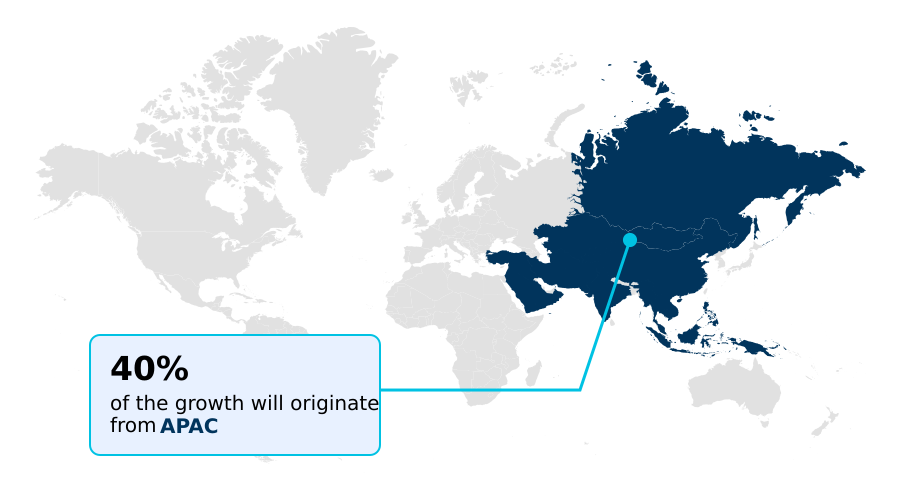
APAC is estimated to contribute 39.8% to the growth of the global market during the forecast period.Technavio’s analysts have elaborately explained the regional trends and drivers that shape the market during the forecast period.
See How Bearings Market Demand is Rising in APAC Get Free Sample
The geographic landscape of the bearings market is dominated by the APAC region, which accounts for approximately 40% of the market and is driven by its expansive manufacturing sector.
The region's growth is fueled by heavy industrial machinery and a booming automotive drivetrain market.
In contrast, Europe and North America are mature markets that lead in technological innovation, particularly in high-precision engineering and motion technology for aerospace manufacturing and electric vehicle platforms.
Europe's market is heavily influenced by stringent sustainability regulations, pushing the adoption of circular economy models and energy efficiency. North America is experiencing a resurgence in domestic manufacturing, spurred by investments in industrial automation and supply chain regionalization.
South America and the Middle East and Africa represent smaller but growing markets, primarily driven by mining, agriculture, and new infrastructure projects.
Market Dynamics
Our researchers analyzed the data with 2025 as the base year, along with the key drivers, trends, and challenges. A holistic analysis of drivers will help companies refine their marketing strategies to gain a competitive advantage.
- The strategic direction of the global bearings market is increasingly shaped by specialized, high-performance applications. The demand for low friction bearings for electric vehicles is accelerating, as automotive manufacturers prioritize range and efficiency. Similarly, the expansion of renewable energy sources drives the need for high capacity bearings for wind turbines, which must endure extreme operational stress.
- The integration of smart bearings with integrated IoT sensors is revolutionizing industrial operations, making predictive maintenance for industrial bearings a standard practice rather than a luxury. This digital shift helps mitigate operational risks, although it does not fully solve the persistent skilled labor gap in precision bearing production, which is a significant concern.
- In parallel, the development of lightweight bearing solutions for aerospace and corrosion resistant bearings for marine applications highlights the industry's focus on material science innovation. The adoption of self-lubricating bearings for heavy machinery addresses maintenance challenges in harsh environments. Strategically, businesses are also confronting the impact of raw material costs on bearings and broader supply chain challenges in bearing manufacturing.
- The push towards sustainability is materializing through the circular economy in bearing remanufacturing, where some companies report brand reputation scores improving at nearly double the rate of those not engaged in such programs. Finally, creating high precision bearings for robotic applications remains a key growth area, reflecting the broader trend toward automation.
What are the key market drivers leading to the rise in the adoption of Bearings Industry?
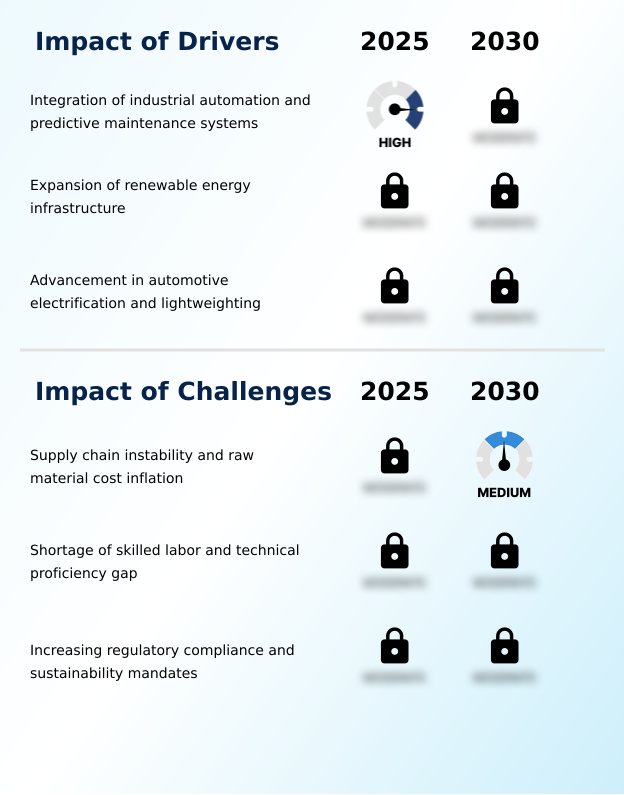
- The integration of industrial automation and predictive maintenance systems stands as a key driver for market growth.
- The market's growth is propelled by three primary drivers: the rapid integration of industrial automation, the global expansion of renewable energy infrastructure, and the electrification of the automotive sector.
- In industrial settings, the demand for precision engineering is rising to improve operational efficiency.
- The renewable energy sector, particularly wind power, relies on high capacity bearings for wind turbine main shafts, with advanced designs improving energy output by up to 5%.
- The automotive industry's transition to electric vehicle platforms is creating significant demand for specialized bearings that enhance automotive drivetrain performance and support high-speed rotational applications.
- These components are crucial for managing thermal stress and improving overall energy efficiency, extending vehicle range by as much as 8% in some models.
What are the market trends shaping the Bearings Industry?
- The digitalization and integration of smart bearing technologies represent a significant upcoming market trend, driven by the increasing demand for data-driven insights and predictive maintenance capabilities.
- Key trends reshaping the bearings market center on digitalization and sustainability. The deployment of smart bearings equipped with IoT sensors has become a critical element of modern asset management, enabling real-time condition monitoring that has been shown to reduce catastrophic equipment failures by up to 30%. This shift supports the broader adoption of predictive maintenance frameworks.
- Concurrently, a strong focus on sustainability is driving the implementation of circular economy models, including comprehensive remanufacturing programs. These initiatives, along with advances in self-lubricating bearing technology, not only reduce environmental impact but also lower the total cost of ownership. The trend of supply chain regionalization continues to gain momentum as a strategy to mitigate risks associated with geopolitical instability.
What challenges does the Bearings Industry face during its growth?
- Supply chain instability and raw material cost inflation pose a key challenge to industry growth.
- The bearings market confronts significant headwinds from persistent supply chain disruptions and the skilled labor shortage. Volatility in global logistics has increased lead times for critical raw materials by over 40% in some cases, directly contributing to raw material cost inflation and making cost management a primary concern for manufacturers. This issue is compounded by a widening technical proficiency gap.
- The increasing complexity of smart factory technologies and precision manufacturing requires a highly skilled workforce, yet the industry faces a talent shortage that has led to a 15% increase in production errors in certain specialized areas.
- Additionally, navigating fragmented international regulations and increasing sustainability mandates adds a considerable layer of operational complexity and financial burden, challenging the industry's ability to standardize processes and maintain profitability.
Exclusive Technavio Analysis on Customer Landscape
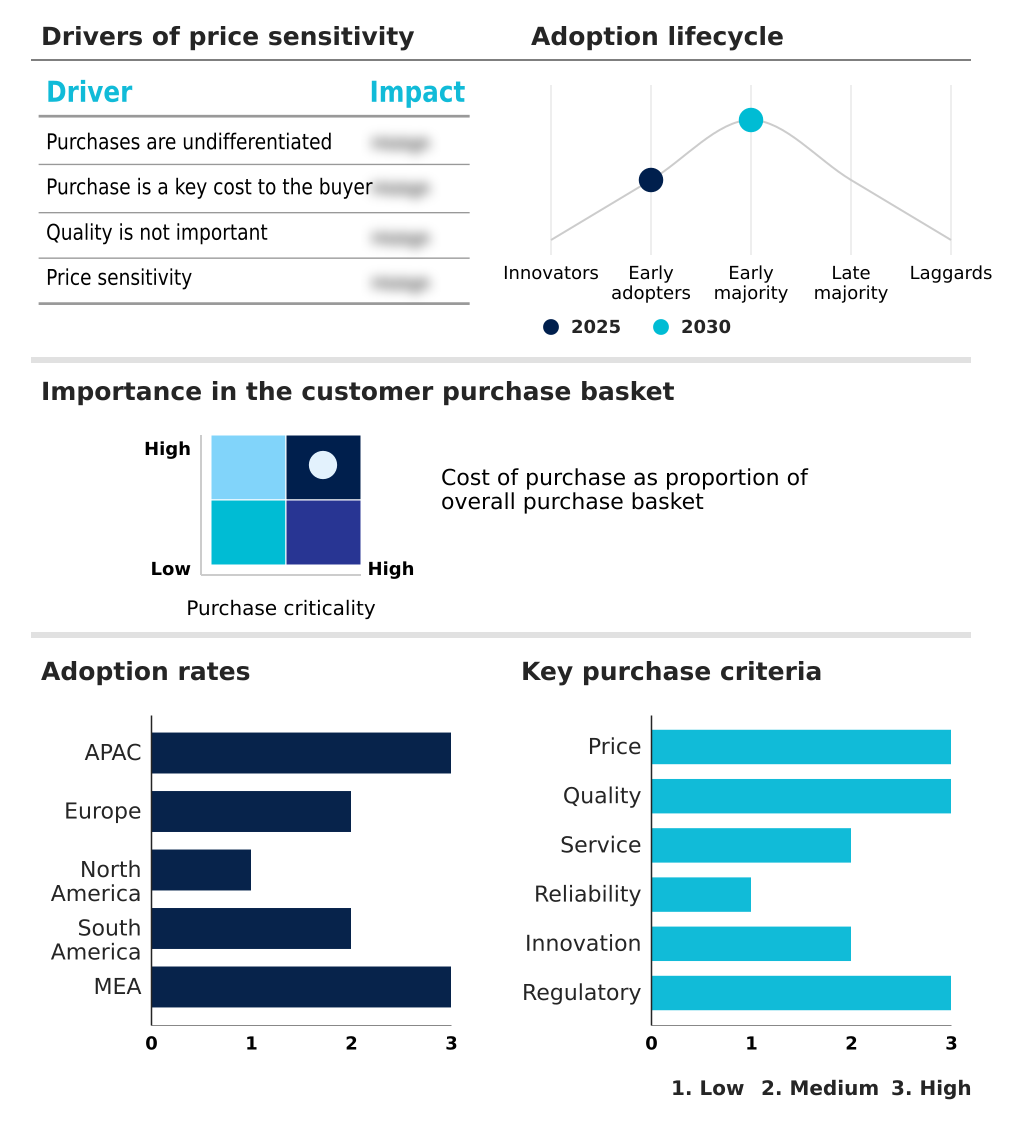
The bearings market forecasting report includes the adoption lifecycle of the market, covering from the innovator’s stage to the laggard’s stage. It focuses on adoption rates in different regions based on penetration. Furthermore, the bearings market report also includes key purchase criteria and drivers of price sensitivity to help companies evaluate and develop their market growth analysis strategies.
Customer Landscape of Bearings Industry
Competitive Landscape
Companies are implementing various strategies, such as strategic alliances, bearings market forecast, partnerships, mergers and acquisitions, geographical expansion, and product/service launches, to enhance their presence in the industry.
C and U Americas - The company offers a range of engine and industrial bearings, focusing on applications within the automotive and non-automotive sectors, including marine and industrial machinery.
The industry research and growth report includes detailed analyses of the competitive landscape of the market and information about key companies, including:
- C and U Americas
- Daido Metal Co Ltd
- Fersa Bearings SA
- GGB Bearing Technology
- GMN Paul GmbH and Co. KG
- GRW Bearing GmbH
- JTEKT Corp.
- Kaydon Bearings
- LYC Bearing Corp.
- MinebeaMitsumi Inc.
- Nachi Fujikoshi Corp.
- NKE Austria GmbH
- NSK Ltd.
- NTN Corp.
- RBC Bearings Inc.
- Regal Rexnord Corp.
- Schaeffler AG
- SKF AB
- The Timken Co.
- THK Co. Ltd.
Qualitative and quantitative analysis of companies has been conducted to help clients understand the wider business environment as well as the strengths and weaknesses of key industry players. Data is qualitatively analyzed to categorize companies as pure play, category-focused, industry-focused, and diversified; it is quantitatively analyzed to categorize companies as dominant, leading, strong, tentative, and weak.
Recent Development and News in Bearings market
- In November 2024, NSK finalized the acquisition of its steering and control subsidiary, a strategic move to vertically integrate operations and streamline the manufacturing value chain in alignment with its mid-term growth plan.
- In January 2025, Schaeffler AG presented its latest motion technology solutions at the International Automotive Technology Symposium, emphasizing innovations in vehicle electrification and energy efficiency.
- In February 2025, SKF reorganized its corporate structure, formally separating its industrial and automotive business segments to enhance strategic focus and operational agility ahead of the automotive division's demerger.
- In March 2025, The Timken Co. announced a strategic expansion of its engineered bearings portfolio, specifically targeting renewable energy applications to improve reliability and reduce maintenance in wind and solar power systems.
Dive into Technavio’s robust research methodology, blending expert interviews, extensive data synthesis, and validated models for unparalleled Bearings Market insights. See full methodology.
| Market Scope | |
|---|---|
| Page number | 341 |
| Base year | 2025 |
| Historic period | 2020-2024 |
| Forecast period | 2026-2030 |
| Growth momentum & CAGR | Accelerate at a CAGR of 3.4% |
| Market growth 2026-2030 | USD 17898.1 million |
| Market structure | Fragmented |
| YoY growth 2025-2026(%) | 3.2% |
| Key countries | China, Japan, India, South Korea, Australia, Indonesia, Germany, UK, France, Italy, Spain, The Netherlands, US, Canada, Mexico, Brazil, Argentina, Chile, South Africa, UAE, Saudi Arabia, Turkey and Egypt |
| Competitive landscape | Leading Companies, Market Positioning of Companies, Competitive Strategies, and Industry Risks |
Research Analyst Overview
- The global bearings market is defined by a relentless pursuit of mechanical and digital excellence. Core components such as the spherical roller bearing, tapered roller bearing, and deep groove ball bearing continue to evolve with advanced materials and manufacturing techniques. The integration of rolling element bearings into complex mechatronic systems is now standard, enabling unprecedented levels of control and monitoring.
- Innovations in motion technology are focused on enhancing load carrying capacity and fatigue resistance to meet the demands of modern applications. A primary boardroom-level focus is on thermal management and vibration damping, as these factors directly impact equipment lifespan and operational costs.
- Strategic investments are being directed towards lightweighting initiatives and developing products with superior corrosion resistance and rotational accuracy, particularly in high-value sectors. The adoption of smart technologies has led to the proliferation of predictive maintenance frameworks, with some facilities achieving a 30% reduction in unplanned downtime.
- The market also sees growth in specialized products, including the cylindrical roller bearing, needle roller bearing, slewing ring bearing, and high-performance plain bearings, magnetic bearings, and hybrid ceramic bearings to address niche requirements.
What are the Key Data Covered in this Bearings Market Research and Growth Report?
-
What is the expected growth of the Bearings Market between 2026 and 2030?
-
USD 17.90 billion, at a CAGR of 3.4%
-
-
What segmentation does the market report cover?
-
The report is segmented by Product (Anti-friction bearings, Magnetic bearings, and Others), End-user (Automotive industry, Heavy industry, ARS industry, and Others), Type (Mounted bearing, and Unmounted bearing), Distribution Channel (OEM, and Aftermarket), Measurement (30 to 40, 41 to 50, 51 to 60, 61 to 70, and 70 and above) and Geography (APAC, Europe, North America, South America, Middle East and Africa)
-
-
Which regions are analyzed in the report?
-
APAC, Europe, North America, South America and Middle East and Africa
-
-
What are the key growth drivers and market challenges?
-
Integration of industrial automation and predictive maintenance systems, Supply chain instability and raw material cost inflation
-
-
Who are the major players in the Bearings Market?
-
C and U Americas, Daido Metal Co Ltd, Fersa Bearings SA, GGB Bearing Technology, GMN Paul GmbH and Co. KG, GRW Bearing GmbH, JTEKT Corp., Kaydon Bearings, LYC Bearing Corp., MinebeaMitsumi Inc., Nachi Fujikoshi Corp., NKE Austria GmbH, NSK Ltd., NTN Corp., RBC Bearings Inc., Regal Rexnord Corp., Schaeffler AG, SKF AB, The Timken Co. and THK Co. Ltd.
-
Market Research Insights
- The bearings market dynamics are shaped by a strategic pivot towards high-value applications in renewable energy infrastructure and advanced aerospace manufacturing. This transition emphasizes operational efficiency, with firms adopting comprehensive asset management strategies reporting an 18% improvement in total cost of ownership.
- The push for greater energy efficiency is universal; for instance, the adoption of specialized bearings in industrial automation has reduced energy consumption in certain processes by up to 12%. Concurrently, supply chain regionalization is being prioritized to mitigate risks from geopolitical instability, strengthening local MRO services and production capabilities.
- This shift has already improved component availability by over 20% in critical sectors. The market's evolution is clearly tied to delivering measurable performance gains, with a strong focus on precision engineering and smart technologies.
We can help! Our analysts can customize this bearings market research report to meet your requirements.
 RIA -
RIA - 
