


Biosurfactants Market Size 2026-2030
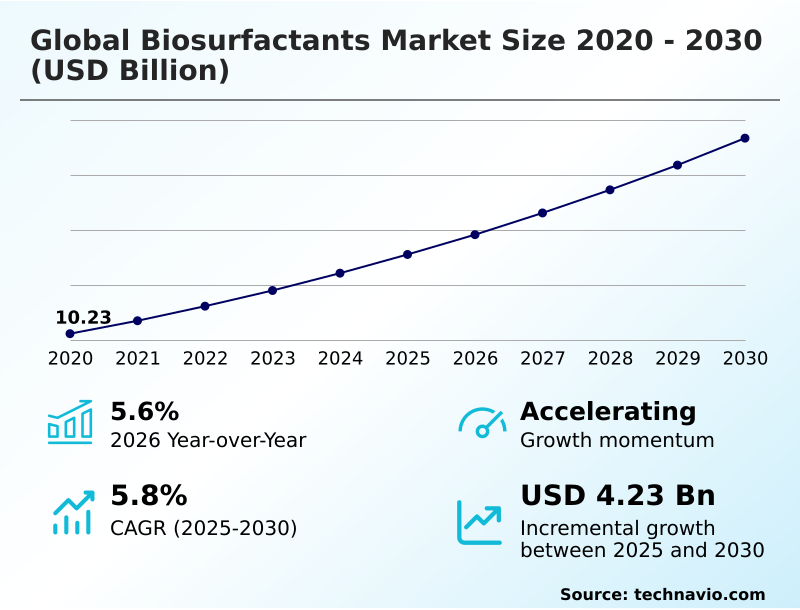
The biosurfactants market size is valued to increase by USD 4.23 billion, at a CAGR of 5.8% from 2025 to 2030. Heightened regulatory pressure and environmental mandates will drive the biosurfactants market.
Major Market Trends & Insights
- Europe dominated the market and accounted for a 51.5% growth during the forecast period.
- By Application - Detergents segment was valued at USD 6.40 billion in 2024
- By Type - Glycolipids segment accounted for the largest market revenue share in 2024
Market Size & Forecast
- Market Opportunities: USD 7.11 billion
- Market Future Opportunities: USD 4.23 billion
- CAGR from 2025 to 2030 : 5.8%
Market Summary
- The biosurfactants market is advancing as industries prioritize sustainability and green chemistry principles. These microbially-produced compounds offer a compelling alternative to synthetic surfactants, characterized by high biodegradability, low toxicity, and production from renewable sources, including circular economy feedstocks. Demand is driven by stringent environmental regulations and a consumer shift toward natural ingredients, particularly in personal care and household cleaning.
- A key business scenario involves detergent manufacturers reformulating products to meet eco-label standards, replacing petroleum-derived chemicals with biosurfactants to enhance product safety and appeal to environmentally conscious consumers. While high production costs remain a challenge, ongoing advancements in biotechnology are improving yields and reducing expenses.
- The market's evolution is marked by a transition from niche applications to mainstream adoption, supported by the development of cost-effective manufacturing and a stable supply chain for these versatile, high-performance biological agents.
What will be the Size of the Biosurfactants Market during the forecast period?
Get Key Insights on Market Forecast (PDF) Get Free Sample
How is the Biosurfactants Market Segmented?
The biosurfactants industry research report provides comprehensive data (region-wise segment analysis), with forecasts and estimates in "USD million" for the period 2026-2030, as well as historical data from 2020-2024 for the following segments.
- Application
- Detergents
- Cosmetics
- Industrial cleaners
- Food processing
- Others
- Type
- Glycolipids
- Lipopeptides and lipoproteins
- Surfactin
- Others
- Source
- Bacterial
- Fungal
- Others
- Geography
- Europe
- Germany
- UK
- France
- North America
- US
- Canada
- Mexico
- APAC
- China
- Japan
- India
- Middle East and Africa
- Saudi Arabia
- UAE
- South Africa
- South America
- Brazil
- Argentina
- Rest of World (ROW)
- Europe
By Application Insights
The detergents segment is estimated to witness significant growth during the forecast period.
The detergents segment is a primary application area, driven by consumer and regulatory demand for eco-friendly cleaning agents and effective petroleum-based surfactant alternatives.
Formulations are evolving to prioritize sustainable detergent formulation, leveraging advanced biosurfactants to achieve superior surface tension reduction without compromising performance.
Innovations in aqueous phase behavior and interfacial tension dynamics are key to developing products with enhanced water solubility enhancement and controlled foaming capacity control.
These low-toxicity surfactants are integral to green cleaning products, with detergents accounting for over 55% of market consumption, demonstrating a significant shift away from traditional chemical agents in the household and industrial cleaning sectors.
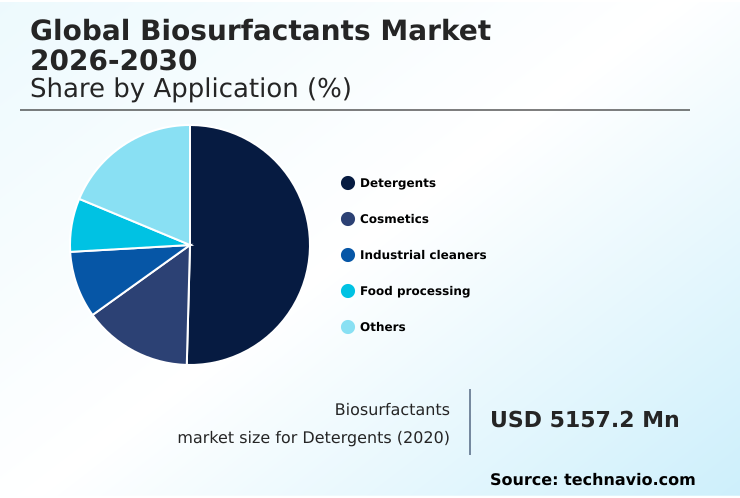
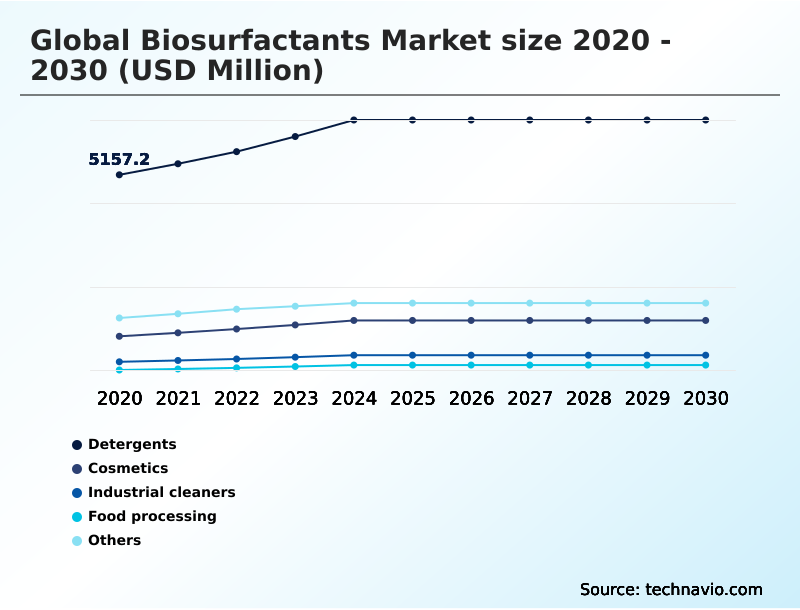
The Detergents segment was valued at USD 6.40 billion in 2024 and showed a gradual increase during the forecast period.
Regional Analysis
Europe is estimated to contribute 51.5% to the growth of the global market during the forecast period.Technavio’s analysts have elaborately explained the regional trends and drivers that shape the market during the forecast period.
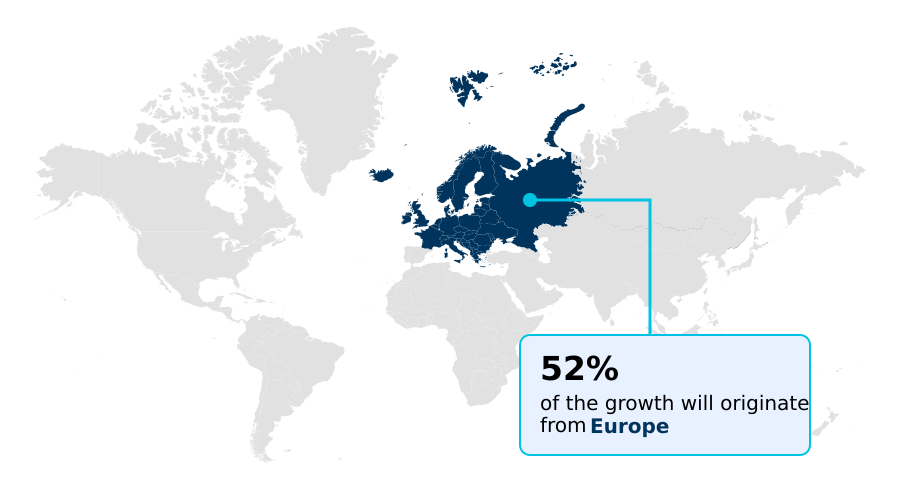
See How Biosurfactants Market Demand is Rising in Europe Get Free Sample
The geographic landscape is shifting, with APAC poised for the highest expansion at 6.8%, surpassing North America at 6.2% and Europe's 5.6% growth rate. This is driven by large-scale investments in rhamnolipid biosynthesis and sophorolipid fermentation infrastructure.
In North America, microbial enhanced oil recovery presents a significant opportunity for surface active biologics. Meanwhile, Europe's mature market continues to lead in the adoption of bio-based ingredients for cosmetics, leveraging advanced yeast derived biosurfactants and bacterial biosurfactant production techniques.
The rising use of bio-based emulsifiers and anti-biofilm agent applications in industrial processes further diversifies regional demand, highlighting a global move towards more sustainable chemical solutions.
Market Dynamics
Our researchers analyzed the data with 2025 as the base year, along with the key drivers, trends, and challenges. A holistic analysis of drivers will help companies refine their marketing strategies to gain a competitive advantage.
- The expanding role of biosurfactants in personal care formulations is driving innovation, as brands seek safer, nature-derived ingredients to meet consumer demand. Concurrently, the use of rhamnolipids for agricultural soil remediation is gaining traction, demonstrating how biosurfactants can improve crop yield with biosurfactants by enhancing nutrient availability.
- In the energy sector, microbial enhanced oil recovery applications are becoming more viable, showcasing the effectiveness of these compounds in harsh environments. The industry-wide challenge is developing cost-effective sophorolipid production methods to compete with synthetics. Glycolipid-based food emulsifier use is growing in the food industry, alongside efforts focused on stabilizing emulsions with lipopeptide activity.
- The role of biosurfactants in pharmaceuticals is also expanding, with research into novel drug delivery systems. The performance of biosurfactants in detergents is a key focus, particularly their effectiveness in hard water, leading to the creation of high-foaming biosurfactant products.
- The environmental impact of biosurfactant production is being mitigated by using waste streams for biosurfactant production and scaling up biosurfactant fermentation processes, which is now 40% more efficient than legacy methods. As biosurfactant stability in industrial applications improves, their use in sectors like the biosurfactant applications in the textile industry is increasing.
- A significant hurdle remains the regulatory approval for cosmetic biosurfactants, which is critical for market access when comparing biosurfactants and synthetic surfactants. Finally, research into biosurfactants for bioremediation of pollutants continues to open new avenues for environmental cleanup.
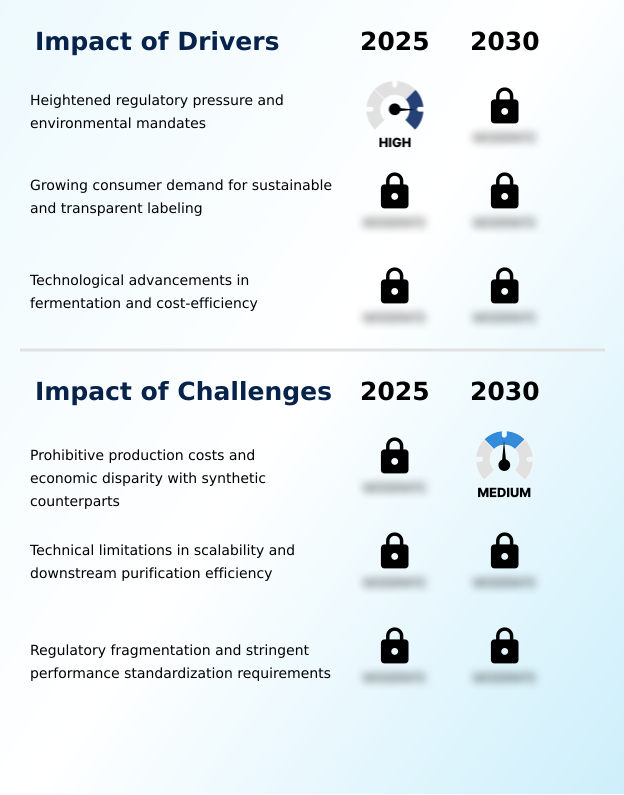
What are the key market drivers leading to the rise in the adoption of Biosurfactants Industry?
- Heightened regulatory pressure and increasing environmental mandates are key drivers for market growth.
- Market growth is significantly driven by the adoption of green chemistry principles and the increasing use of circular economy feedstocks.
- Stringent regulatory compliance for bio-chemicals is compelling manufacturers to prioritize sustainable supply chain management and conduct thorough life cycle assessment of surfactants.
- This shift leads to quantifiable benefits, such as carbon footprint reduction strategies that lower emissions by up to 50% compared to petrochemical processes. The functional versatility of microbial metabolites as agricultural adjuvants also creates new revenue streams.
- As a result, companies are investing in technologies that not only meet environmental mandates but also provide a competitive advantage through enhanced sustainability profiles.
What are the market trends shaping the Biosurfactants Industry?
- A key market trend is the expansion of industrial-scale fermentation processes. This involves developing specialized production facilities to meet escalating demand.
- Key trends are centered on technological maturation, particularly in fermentation process optimization and advanced downstream processing techniques. Innovations in strain optimization are enabling higher yields and greater purity, with some processes now achieving batch-to-batch consistency improvements of over 98%. The exploration of cell-free biosurfactant synthesis and enzymatic surfactant modification is opening pathways for creating highly specialized molecules.
- These advancements improve biodegradable surfactant properties and facilitate better fermentation substrate utilization, including waste streams. The focus on scalability of bioreactor production is crucial for generating cost-effective bio-surfactants, directly addressing historical market barriers and making these green chemicals viable for mass-market applications.
What challenges does the Biosurfactants Industry face during its growth?
- Prohibitive production costs and the economic disparity with synthetic counterparts present a key challenge to industry growth.
- The primary challenge remains achieving competitive functional performance of surfactants while managing costs associated with complex purification methods for biosurfactants. The intricate glycolipid structure and specific lipopeptide activity that make each amphiphilic molecule effective also complicate production. For instance, controlling the critical micelle concentration of mannosylerythritol lipids requires precise process control, contributing to costs.
- The goal of surfactant yield improvement is often hindered by the efficiency of downstream separation, which can constitute up to 60% of total expenses. While researchers explore various plant-derived surfactant sources, scaling production to compete with established synthetics on price and volume remains a significant hurdle for the industry.
Exclusive Technavio Analysis on Customer Landscape
The biosurfactants market forecasting report includes the adoption lifecycle of the market, covering from the innovator’s stage to the laggard’s stage. It focuses on adoption rates in different regions based on penetration. Furthermore, the biosurfactants market report also includes key purchase criteria and drivers of price sensitivity to help companies evaluate and develop their market growth analysis strategies.
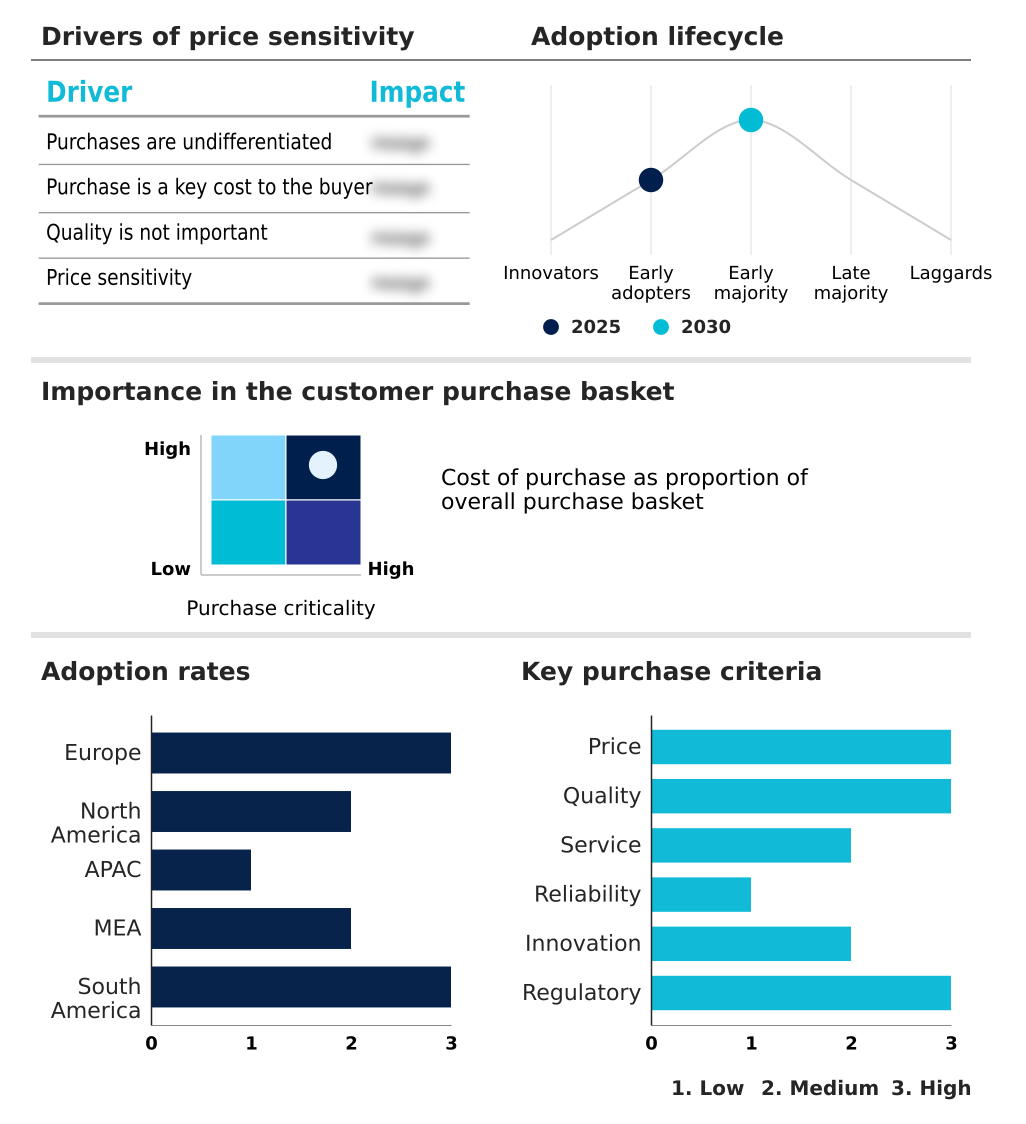
Customer Landscape of Biosurfactants Industry
Competitive Landscape
Companies are implementing various strategies, such as strategic alliances, biosurfactants market forecast, partnerships, mergers and acquisitions, geographical expansion, and product/service launches, to enhance their presence in the industry.
AGAE Technologies LLC - Delivering a portfolio of bio-based surfactants, including high-purity glycolipids and lipopeptides, for diverse industrial and consumer applications.
The industry research and growth report includes detailed analyses of the competitive landscape of the market and information about key companies, including:
- AGAE Technologies LLC
- BASF SE
- Biotensidon GmbH
- Clariant International Ltd.
- Croda International Plc
- Evonik Industries AG
- Givaudan SA
- Holiferm
- Innospec Inc.
- Jeneil Biotech Inc.
- Kaneka Corp.
- Kemin Industries Inc.
- Lion Corp.
- Nouryon Chemicals Holding B.V.
- Saraya Co. Ltd.
- Solvay SA
- Stepan Co.
- TeeGene Biotech Ltd.
- TensioGreen Technology Corp.
- Thermo Fisher Scientific Inc.
Qualitative and quantitative analysis of companies has been conducted to help clients understand the wider business environment as well as the strengths and weaknesses of key industry players. Data is qualitatively analyzed to categorize companies as pure play, category-focused, industry-focused, and diversified; it is quantitatively analyzed to categorize companies as dominant, leading, strong, tentative, and weak.
Recent Development and News in Biosurfactants market
- In May 2025, Evonik Industries AG outlined plans to boost core profit by $1.2 billion by 2027, with a strategic emphasis on expanding its biosurfactant portfolio, including rhamnolipids and sophorolipids, to meet growing demand.
- In April 2025, BASF launched new natural-based ingredients for personal care, including Dehyton PK45 GA/RA, a biodegradable betaine surfactant derived from certified coconut oil, enhancing its eco-friendly product line.
- In February 2025, AGAE Technologies LLC inaugurated a 41,000-square-foot manufacturing plant in Asia with an annual capacity exceeding 1,000 metric tons of rhamnolipid biosurfactants to address surging global demand.
- In December 2024, Holiferm and Indorama Ventures announced a strategic partnership to market and distribute Holiferm's biosurfactants, including rhamnolipids and sophorolipids, in South America.
Dive into Technavio’s robust research methodology, blending expert interviews, extensive data synthesis, and validated models for unparalleled Biosurfactants Market insights. See full methodology.
| Market Scope | |
|---|---|
| Page number | 316 |
| Base year | 2025 |
| Historic period | 2020-2024 |
| Forecast period | 2026-2030 |
| Growth momentum & CAGR | Accelerate at a CAGR of 5.8% |
| Market growth 2026-2030 | USD 4230.4 million |
| Market structure | Fragmented |
| YoY growth 2025-2026(%) | 5.6% |
| Key countries | Germany, UK, France, Italy, Spain, The Netherlands, US, Canada, Mexico, China, Japan, India, South Korea, Australia, Indonesia, Saudi Arabia, UAE, South Africa, Israel, Turkey, Brazil, Argentina and Chile |
| Competitive landscape | Leading Companies, Market Positioning of Companies, Competitive Strategies, and Industry Risks |
Research Analyst Overview
- The market's trajectory is defined by advancements in metabolic engineering and fermentation process optimization, which are crucial for enhancing the commercial viability of microbial metabolites. A key boardroom consideration is the investment in downstream processing techniques to improve the purity and yield of sophorolipid fermentation and rhamnolipid biosynthesis.
- The unique glycolipid structure and lipopeptide activity of these compounds enable superior surface tension reduction and interfacial tension dynamics, making them ideal for microbial enhanced oil recovery and as agricultural adjuvants. The development of mannosylerythritol lipids and other surface active biologics addresses the demand for low-toxicity surfactants.
- Understanding the aqueous phase behavior and critical micelle concentration of each amphiphilic molecule is vital for effective sustainable detergent formulation. Innovations in strain optimization, cell-free biosurfactant synthesis, and enzymatic surfactant modification are driven by green chemistry principles.
- These bio-based emulsifiers, often derived from circular economy feedstocks, are achieving performance metrics once exclusive to synthetics, with some showing a 25% improvement in emulsion stability.
What are the Key Data Covered in this Biosurfactants Market Research and Growth Report?
-
What is the expected growth of the Biosurfactants Market between 2026 and 2030?
-
USD 4.23 billion, at a CAGR of 5.8%
-
-
What segmentation does the market report cover?
-
The report is segmented by Application (Detergents, Cosmetics, Industrial cleaners, Food processing, and Others), Type (Glycolipids, Lipopeptides and lipoproteins, Surfactin, and Others), Source (Bacterial, Fungal, and Others) and Geography (Europe, North America, APAC, Middle East and Africa, South America)
-
-
Which regions are analyzed in the report?
-
Europe, North America, APAC, Middle East and Africa and South America
-
-
What are the key growth drivers and market challenges?
-
Heightened regulatory pressure and environmental mandates, Prohibitive production costs and economic disparity with synthetic counterparts
-
-
Who are the major players in the Biosurfactants Market?
-
AGAE Technologies LLC, BASF SE, Biotensidon GmbH, Clariant International Ltd., Croda International Plc, Evonik Industries AG, Givaudan SA, Holiferm, Innospec Inc., Jeneil Biotech Inc., Kaneka Corp., Kemin Industries Inc., Lion Corp., Nouryon Chemicals Holding B.V., Saraya Co. Ltd., Solvay SA, Stepan Co., TeeGene Biotech Ltd., TensioGreen Technology Corp. and Thermo Fisher Scientific Inc.
-
Market Research Insights
- Market dynamics are increasingly shaped by the adoption of sustainable supply chain management and a focus on carbon footprint reduction strategies. Companies are leveraging biodegradable surfactant properties to meet stringent regulatory compliance for bio-chemicals, with successful implementations showing a 95% reduction in aquatic ecotoxicity compared to conventional alternatives.
- The push for cost-effective bio-surfactants is driving innovation in fermentation substrate utilization, where optimizing inputs can increase yields by over 30%. Furthermore, the life cycle assessment of surfactants is becoming a standard practice, guiding research and development toward solutions that offer superior environmental and performance benefits throughout their entire value chain.
We can help! Our analysts can customize this biosurfactants market research report to meet your requirements.
 RIA -
RIA - 
