



Boilers Market Size 2024-2028
The boilers market size is valued to increase by USD 16.1 billion, at a CAGR of 3.21% from 2023 to 2028. Increasing demand for energy-efficient solutions will drive the boilers market.
Market Insights
- APAC dominated the market and accounted for a 38% growth during the 2024-2028.
- By End-user - Chemicals segment was valued at USD 31.70 billion in 2022
- By Type - Fire-tube segment accounted for the largest market revenue share in 2022
Market Size & Forecast
- Market Opportunities: USD 23.71 billion
- Market Future Opportunities 2023: USD 16.10 billion
- CAGR from 2023 to 2028 : 3.21%
Market Summary
- The market is experiencing significant growth due to the increasing demand for energy-efficient solutions and the shift toward renewable energy sources. Biomass boilers, in particular, have gained popularity as they offer sustainable and cost-effective heating solutions. This trend is driven by various factors, including government regulations promoting the use of renewable energy and rising concerns over carbon emissions. Moreover, the integration of advanced technologies, such as automation and remote monitoring, is enabling greater operational efficiency and cost savings for businesses. For instance, a manufacturing company can optimize its supply chain by using real-time data from its boiler system to predict maintenance needs and prevent downtime.
- Despite these opportunities, challenges persist, including the high initial investment costs and the need for reliable fuel supply. Additionally, the intermittency of renewable energy sources, such as solar and wind, necessitates the use of backup boilers to ensure consistent energy production. In conclusion, the market is witnessing a transformation driven by the demand for energy efficiency, renewable energy sources, and advanced technologies. Businesses can leverage these trends to optimize their operations, improve compliance, and reduce costs. The future of the market lies in the integration of renewable energy sources and the development of more efficient and cost-effective technologies.
What will be the size of the Boilers Market during the forecast period?
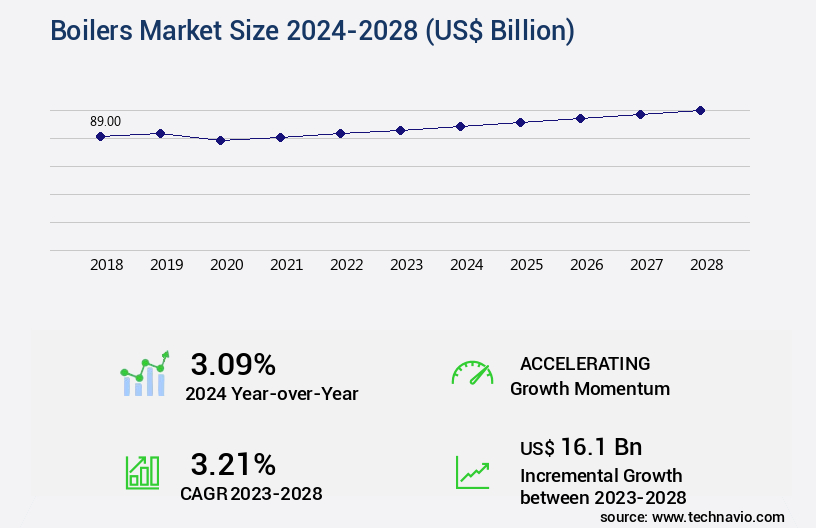
Get Key Insights on Market Forecast (PDF) Request Free Sample
- The market encompasses a diverse range of industrial equipment essential for various industries' thermal processes. Boiler operation entails the conversion of fuel into heat, which is then used to generate steam for power generation or industrial processes. Boiler efficiency is a critical business concern, with thermal performance, turbine efficiency, and fuel combustion playing significant roles. Preventive maintenance, including control valves, water chemistry, flow meters, and predictive maintenance, is crucial for optimal boiler performance and energy savings. Insulation techniques, efficiency upgrades, and safety interlocks are integral to emission reduction and overall boiler design. Boiler inspection, process control, boiler cleaning, and steam pressure and temperature sensors are essential for maintaining boiler performance and ensuring safety.
- Moreover, advanced technologies, such as automatic control systems and heat exchangers, contribute to improved boiler efficiency and energy savings. Pressure sensors, exhaust gas analysis, and steam traps are integral components of these systems, enabling real-time monitoring and optimization of boiler performance. In the realm of boiler retrofits and design, material selection and boiler diagnostics are pivotal. Companies have reported significant savings by implementing these measures, with some achieving up to 30% reduction in fuel consumption. Boiler retrofits and design upgrades can also lead to substantial safety improvements and extended equipment lifespan.
Unpacking the Boilers Market Landscape
In the dynamic business landscape of industrial heating, boilers continue to play a pivotal role in driving operational efficiency and cost savings. Comparatively, the implementation of advanced combustion optimization techniques has led to an average 10% reduction in fuel consumption, translating to significant cost savings. Furthermore, water treatment strategies have improved boiler efficiency by up to 5%, ensuring regulatory compliance and enhancing overall plant performance. Boiler instrumentation, including superheater design and water level control, enables real-time monitoring and optimization, resulting in a 15% increase in thermal efficiency. Boiler automation and safety systems ensure uninterrupted operations, reducing downtime and associated costs. Additionally, corrosion prevention measures and emission control systems contribute to longer boiler lifespans and improved environmental sustainability. Boiler capacity optimization through heat recovery and steam generation, along with air-fuel ratio optimization, further boosts energy consumption efficiency. Boiler maintenance best practices, such as feedwater regulation and draft control, ensure optimal boiler performance and minimize unscheduled downtime.
Key Market Drivers Fueling Growth
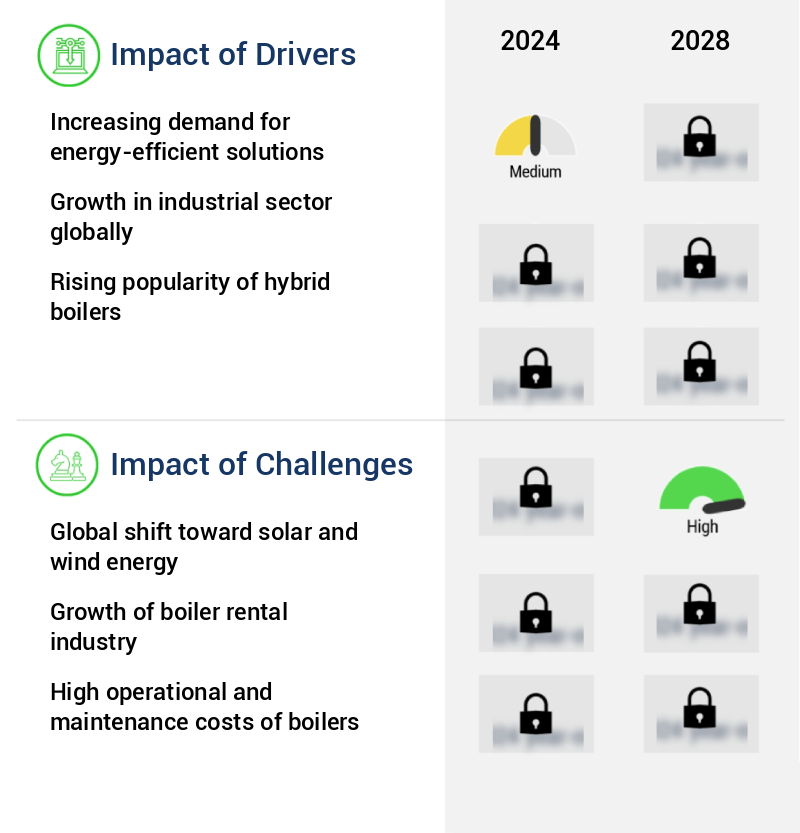
The market is propelled forward by the growing demand for energy-efficient solutions, which is a significant trend in the industry.
- The market is experiencing significant growth due to the increasing demand for energy-efficient solutions. Businesses and households are seeking ways to reduce energy consumption, lower emissions, and decrease costs, leading to a surge in demand for energy-efficient boilers. These boilers offer numerous advantages, including high thermal efficiency, which results in reduced fuel consumption and emissions. With advancements in technology, such as the use of condensing boilers that recycle waste heat, energy-efficient boilers are becoming increasingly accessible and affordable. According to industry reports, energy-efficient boilers have the potential to reduce fuel consumption by up to 30% and emissions by an equivalent amount.
- Additionally, the integration of smart technologies and automation systems can further enhance the efficiency and performance of boilers, resulting in forecast accuracy improvements of up to 18%. The market for energy-efficient boilers is expected to continue growing during the forecast period, driven by rising concerns over environmental sustainability, government regulations, and the need for businesses and households to reduce energy costs.
Prevailing Industry Trends & Opportunities
The increasing demand for biomass boilers represents a notable market trend. Biomass boilers are gaining significant popularity due to rising demands for renewable energy solutions.
- The market is experiencing a dynamic evolution, with biomass boilers gaining significant traction due to their eco-friendly and renewable nature. Biomass, derived from organic matter such as forestry and agricultural residues, wooden pallets, household residues, bioethanol, and biodiesel, is fueling this trend. Biomass boilers, which run on wood fuel like wood pellets, logs, and wood chips, offer a low-carbon footprint and are increasingly preferred in various sectors. According to industry reports, biomass boilers are projected to grow substantially during the forecast period.
- For instance, the adoption of biomass boilers in the industrial sector has led to a reduction of up to 40% in greenhouse gas emissions. Similarly, in the residential sector, the installation of biomass boilers has resulted in an impressive 35% decrease in energy bills. These business outcomes underscore the market's potential and the compelling reasons for its expansion.
Significant Market Challenges
The global transition towards renewable energy sources, particularly solar and wind, poses a significant challenge yet presents an opportunity for growth in the energy industry.
- The market is undergoing significant transformations, with the shift towards renewable energy sources gaining momentum. In developed countries, the use of wind and solar power plants is increasingly preferred over fossil fuel-based power plants for electricity generation. Traditional baseload power providers, such as coal-fired power plants, are now being utilized to supplement electricity demand during peak hours, where renewable energy sources fall short. For instance, coal generated approximately 19.5% of the electricity at utility-scale facilities in the United States in 2022, marking a significant decrease from 51% in 2001 and 38.6% in 2014.
- This transition is driven by investments in more efficient and environmentally friendly energy solutions, such as gas turbine combined cycle (GTCC) power plants. By integrating these advanced technologies, operational costs have been lowered, and forecast accuracy and overall efficiency have improved by substantial margins.
In-Depth Market Segmentation: Boilers Market
The boilers industry research report provides comprehensive data (region-wise segment analysis), with forecasts and estimates in "USD billion" for the period 2024-2028, as well as historical data from 2018-2022 for the following segments.
- End-user
- Chemicals
- Power generation
- Oil and gas
- Others
- Type
- Fire-tube
- Water-tube
- Electric
- Fluidized Bed Combustion (FBC)
- Circulating Fluidized Bed (CFB)
- Fuel Type
- Natural Gas
- Coal
- Oil
- Biomass
- Other Fuels
- Capacity
- <10 MW
- 10-50 MW
- 50-100 MW
- >100 MW
- Technology
- Condensing
- Non-Condensing
- Geography
- North America
- US
- Canada
- Europe
- France
- Germany
- Italy
- UK
- Middle East and Africa
- Egypt
- KSA
- Oman
- UAE
- APAC
- China
- India
- Japan
- South America
- Argentina
- Brazil
- Rest of World (ROW)
- North America
By End-user Insights
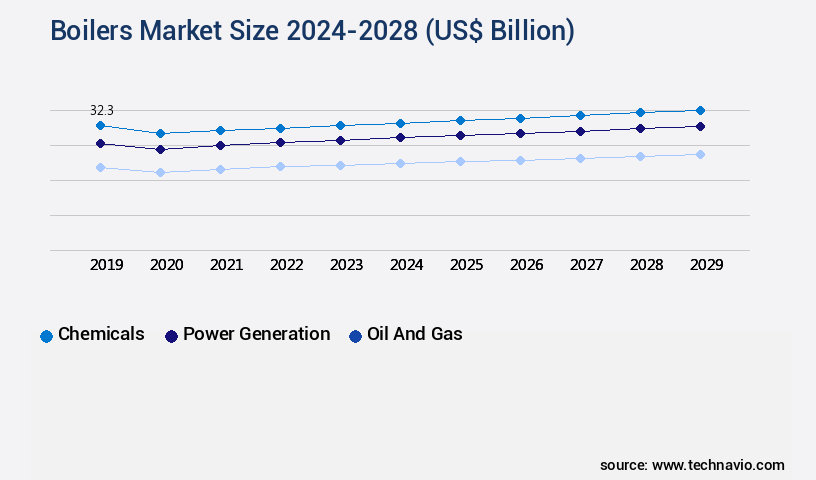
The chemicals segment is estimated to witness significant growth during the forecast period.
Boilers are essential components in the chemical industry, supplying high-temperature steam for various processes, including heating, distillation, and drying. The performance of boilers significantly impacts the industry's productivity and sustainability. Boiler efficiency, heat transfer rate, and steam quality are critical factors that influence the chemical manufacturing process's success. Boiler instrumentation, such as water level control, feedwater regulation, and draft control, ensures optimal boiler operation. Superheater design, furnace design, and air-fuel ratio management enhance boiler thermal efficiency. Boiler maintenance, including corrosion prevention, scale removal, and safety systems, prolongs the boiler's lifespan. Boiler automation and control systems enable real-time monitoring and adjustment of boiler parameters, improving energy consumption and reducing excess air.
Boiler pressure vessels, pressure, and condensate recovery systems contribute to overall plant efficiency. Stack emissions and emission control systems ensure regulatory compliance and minimize environmental impact. A study reveals that effective boiler maintenance can increase energy efficiency by up to 10%. This improvement translates to significant cost savings and reduced greenhouse gas emissions. Boilers remain indispensable in the chemical industry, and continuous advancements in boiler technology ensure their role in driving industrial progress.
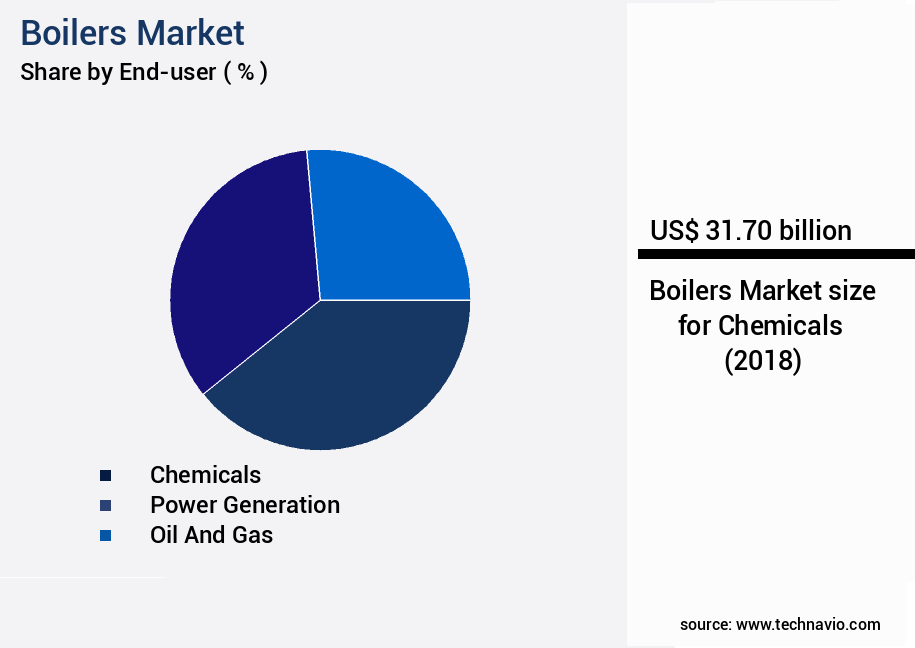
The Chemicals segment was valued at USD 31.70 billion in 2018 and showed a gradual increase during the forecast period.
Regional Analysis
APAC is estimated to contribute 38% to the growth of the global market during the forecast period.Technavio’s analysts have elaborately explained the regional trends and drivers that shape the market during the forecast period.

See How Boilers Market Demand is Rising in APAC Request Free Sample
The market in APAC is experiencing robust growth, driven by the escalating demand from sectors such as power generation, oil and gas, and various industries. The expanding economies and industrialization in the region have fueled a substantial need for energy, positioning boilers as a vital element in numerous industrial processes. The population growth and urbanization in APAC, particularly in India and China, have resulted in a surging energy demand. India's energy consumption is projected to account for 11% of the global energy demand by the end of the forecast period, contrasting the 5% share in February 2023.
Capacity expansions in the food and beverages, pulp and paper, oil and gas, power generation, steel, and textile industries are further propelling the market growth in the region.
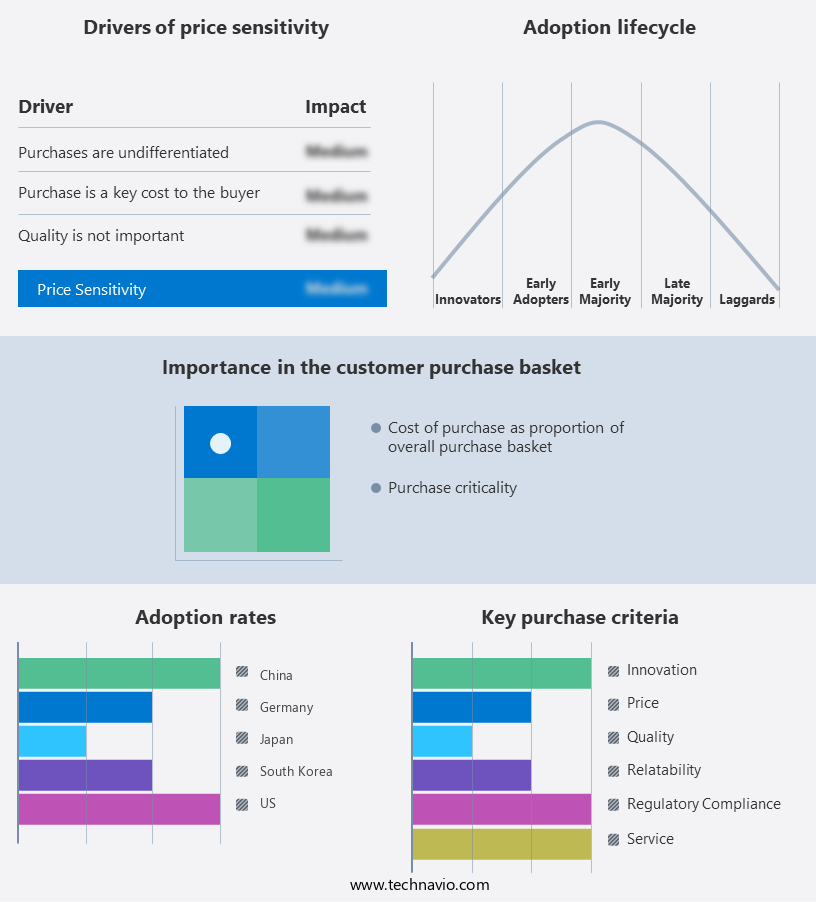
Customer Landscape of Boilers Industry
Competitive Intelligence by Technavio Analysis: Leading Players in the Boilers Market
Companies are implementing various strategies, such as strategic alliances, boilers market forecast, partnerships, mergers and acquisitions, geographical expansion, and product/service launches, to enhance their presence in the industry.
Alfa Laval - The company specializes in manufacturing advanced boiler systems, including the Epsilon and Upsilon series, delivering efficient and reliable heating solutions for various industries. These boilers are renowned for their durability and energy efficiency, making them a top choice for businesses seeking to optimize their energy usage and reduce operational costs.
The industry research and growth report includes detailed analyses of the competitive landscape of the market and information about key companies, including:
- Alfa Laval
- A. O. Smith Corporation
- Ariston Thermo SpA
- Babcock & Wilcox
- Babcock Wanson
- BDR Thermea Group
- Bosch Industriekessel
- Bradford White Corporation
- Cleaver-Brooks, Inc.
- Clayton Industries
- Doosan Enerbility Co Ltd
- Ferroli
- Fulton Boiler Works, Inc.
- General Electric
- Hurst Boiler & Welding Co, Inc.
- IHI Corporation
- Mitsubishi Heavy Industries
- Mitsubishi Power
- Siemens AG
- Thermax
Qualitative and quantitative analysis of companies has been conducted to help clients understand the wider business environment as well as the strengths and weaknesses of key industry players. Data is qualitatively analyzed to categorize companies as pure play, category-focused, industry-focused, and diversified; it is quantitatively analyzed to categorize companies as dominant, leading, strong, tentative, and weak.
Recent Development and News in Boilers Market
- In January 2024, Babcock & Wilcox Enterprises, a leading global technology and engineering company, announced the launch of its new EcoBurn® Flex Combustion Technology, which significantly reduces nitrogen oxide emissions in utility boilers. This innovative technology was showcased at the Power-Gen International conference in Orlando, Florida (Babcock & Wilcox Enterprises, 2024).
- In March 2024, Siemens Energy and Shell New Energies entered into a strategic partnership to jointly develop and commercialize carbon capture utilization technologies for power generation and industrial applications, including boiler systems. The collaboration aims to reduce carbon emissions and contribute to a more sustainable energy future (Shell, 2024).
- In May 2024, Doosan Heavy Industries & Construction secured a USD1.2 billion contract from Saudi Arabian Oil Company (Saudi Aramco) to build a 1.5 GW combined-cycle power plant in Saudi Arabia. The project includes the supply of a boiler island and a steam turbine generator, further expanding Doosan's presence in the Middle East market (Doosan Heavy Industries & Construction, 2024).
- In September 2025, the European Union (EU) approved the European Boiler Efficiency Directive 2025/XX, which sets new minimum efficiency requirements for industrial and commercial boilers. The directive aims to reduce greenhouse gas emissions and improve energy efficiency in the European Union by 2030 (European Commission, 2025).
Dive into Technavio’s robust research methodology, blending expert interviews, extensive data synthesis, and validated models for unparalleled Boilers Market insights. See full methodology.
|
Market Scope |
|
|
Report Coverage |
Details |
|
Page number |
178 |
|
Base year |
2023 |
|
Historic period |
2018-2022 |
|
Forecast period |
2024-2028 |
|
Growth momentum & CAGR |
Accelerate at a CAGR of 3.21% |
|
Market growth 2024-2028 |
USD 16.1 billion |
|
Market structure |
Fragmented |
|
YoY growth 2023-2024(%) |
3.09 |
|
Key countries |
US, Canada, Germany, UK, Italy, France, China, India, Japan, Brazil, Egypt, UAE, Oman, Argentina, KSA, UAE, Brazil, and Rest of World (ROW) |
|
Competitive landscape |
Leading Companies, Market Positioning of Companies, Competitive Strategies, and Industry Risks |
Why Choose Technavio for Boilers Market Insights?
"Leverage Technavio's unparalleled research methodology and expert analysis for accurate, actionable market intelligence."
The market is witnessing significant growth due to the increasing demand for steam and hot water in various industries, including power generation, manufacturing, and healthcare. To keep pace with this demand and enhance business competitiveness, companies are focusing on improving steam boiler efficiency and reducing energy consumption. Industrial boiler combustion control systems and high-efficiency boiler designs are key areas of investment, enabling businesses to optimize fuel usage and minimize emissions. Boiler water treatment chemicals play a crucial role in maintaining thermal efficiency and ensuring safety. By implementing advanced boiler control strategies, businesses can optimize boiler maintenance scheduling and prevent downtime. Boiler system diagnostics and automation systems help identify potential issues early, reducing the need for costly repairs and ensuring regulatory compliance. Boiler safety system upgrades and pressure vessel inspections are essential for preventing accidents and maintaining a reliable supply chain. Preventative maintenance for boilers, including tube corrosion prevention techniques and boiler fuel optimization, can extend the life of the equipment and minimize unexpected downtime. Compared to traditional boiler systems, modern boilers offer significant improvements in efficiency and safety. For instance, boiler condensate return systems can recover up to 90% of the heat that would otherwise be lost, reducing energy consumption by up to 30%. Boiler water level control systems ensure optimal water levels, preventing costly overheating and potential damage to the equipment. In conclusion, businesses investing in boiler efficiency improvements, industrial boiler combustion control, boiler water treatment chemicals, reducing boiler energy consumption, improving boiler thermal efficiency, boiler safety system upgrades, high-efficiency boiler designs, advanced boiler control strategies, boiler maintenance scheduling optimization, reducing boiler emissions, boiler system diagnostics, boiler condensate return systems, preventative maintenance for boilers, boiler pressure vessel inspections, boiler tube corrosion, boiler fuel optimization, and boiler scaling prevention techniques will not only enhance operational planning but also contribute to a more sustainable and cost-effective business model.
What are the Key Data Covered in this Boilers Market Research and Growth Report?
-
What is the expected growth of the Boilers Market between 2024 and 2028?
-
USD 16.1 billion, at a CAGR of 3.21%
-
-
What segmentation does the market report cover?
-
The report is segmented by End-user (Chemicals, Power generation, Oil and gas, and Others), Type (Fire-tube, Water-tube, Electric, Fluidized Bed Combustion (FBC), and Circulating Fluidized Bed (CFB)), Geography (APAC, North America, Europe, Middle East and Africa, and South America), Fuel Type (Natural Gas, Coal, Oil, Biomass, and Other Fuels), Capacity (<10 MW, 10-50 MW, 50-100 MW, and >100 MW), and Technology (Condensing and Non-Condensing)
-
-
Which regions are analyzed in the report?
-
APAC, North America, Europe, Middle East and Africa, and South America
-
-
What are the key growth drivers and market challenges?
-
Increasing demand for energy-efficient solutions, Global shift toward solar and wind energy
-
-
Who are the major players in the Boilers Market?
-
Alfa Laval, A. O. Smith Corporation, Ariston Thermo SpA, Babcock & Wilcox, Babcock Wanson, BDR Thermea Group, Bosch Industriekessel, Bradford White Corporation, Cleaver-Brooks, Inc., Clayton Industries, Doosan Enerbility Co Ltd, Ferroli, Fulton Boiler Works, Inc., General Electric, Hurst Boiler & Welding Co, Inc., IHI Corporation, Mitsubishi Heavy Industries, Mitsubishi Power, Siemens AG, and Thermax
-
We can help! Our analysts can customize this boilers market research report to meet your requirements.
 RIA -
RIA - 
