



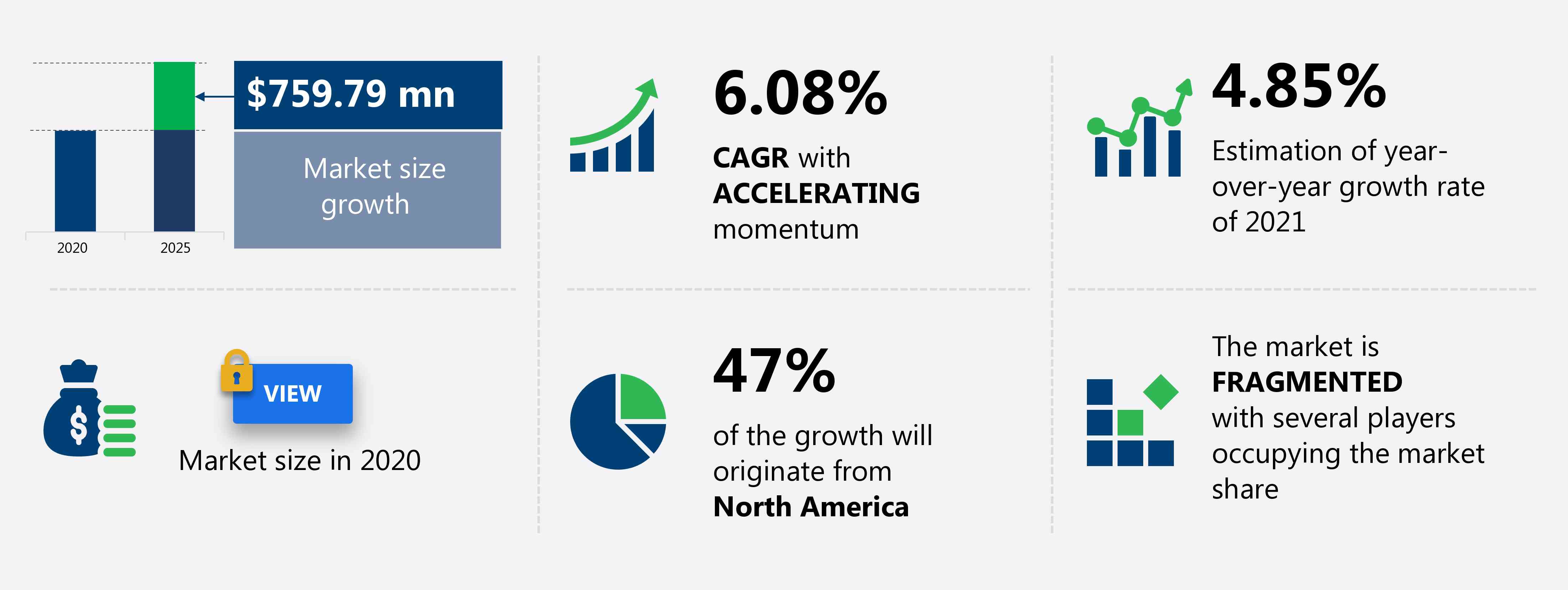
The chemotherapy-induced nausea and vomiting drugs market share is expected to increase by USD 759.79 million from 2020 to 2025, and the market’s growth momentum will accelerate at a CAGR of 6.08%.
This chemotherapy-induced nausea and vomiting drugs market research report provides valuable insights on the post COVID-19 impact on the market, which will help companies evaluate their business approaches. Furthermore, this report extensively covers chemotherapy-induced nausea and vomiting drugs market segmentations by theraphy (serotonin receptor antagonists, NK1 receptor antagonists, and others) and geography (North America, Europe, Asia, and ROW). The chemotherapy-induced nausea and vomiting drugs market report also offers information on several market vendors, including Aurobindo Pharma Ltd., Cipla Inc., Dr. Reddys Laboratories Ltd., GlaxoSmithKline Plc, Glenmark Pharmaceuticals Ltd., Heron Therapeutics Inc., Merck and Co. Inc., Mylan NV, Novartis AG, and Teva Pharmaceutical Industries Ltd. among others.
What will the Chemotherapy-induced Nausea and Vomiting Drugs Market Size be During the Forecast Period?
Download the Free Report Sample to Unlock the Chemotherapy-induced Nausea and Vomiting Drugs Market Size for the Forecast Period and Other Important Statistics
Chemotherapy-induced Nausea and Vomiting Drugs Market: Key Drivers, Trends, and Challenges
Based on our research output, there has been a neutral impact on the market growth during and post COVID-19 era. The growing cancer population driving the market growth is notably driving the chemotherapy-induced nausea and vomiting drugs market growth, although factors such as growing popularity of alternate therapies for the treatment of cancer in developed countries may impede market growth. Chemotherapy-induced nausea and vomiting drugs are essential for managing the side effects associated with chemotherapy treatments, such as those caused by doxorubicin, a widely used chemotherapy agent. Our research analysts have studied the historical data and deduced the key market drivers and the COVID-19 pandemic impact on the chemotherapy-induced nausea and vomiting drugs market industry. The holistic analysis of the drivers will help in deducing end goals and refining marketing strategies to gain a competitive edge.
Key Chemotherapy-induced Nausea and Vomiting Drugs Market Driver
One of the key factors driving the chemotherapy-induced nausea and vomiting drugs market is the growing cancer population driving the market growth. Cancer is a disease that begins when genetic changes make one or more cells grow and multiple. This may cause a growth known as a tumor. Furthermore, cancer is the second leading cause of death and the most prevalent disease in the world. The major types of cancer are carcinoma, melanoma, leukemia, sarcoma, and lymphoma. As per NIH, in 2017, 15,270 children and adolescents aged between 0 years and 19 years were diagnosed with cancer. In 2018, 1,735,350 new cases of cancer were diagnosed in the US, and around 609,640 patients died from the disease. In 2018, it was estimated that 2.09 million new cases of lung cancer were reported across the globe. Cancer is one of the leading causes of death worldwide. Lung, liver, stomach, colorectal, breast, and esophageal cancers are prevalent among the population worldwide. People with cancer undergo various treatment therapies, such as the use of chemotherapeutic agents. These therapies are known to cause major side effects such as chemotherapy-induced nausea and vomiting. The growing incidence of cancer will help the chemotherapy-induced nausea and vomiting drugs market grow further. Therefore, the increasing cancer population is expected to drive market growth.
Key Chemotherapy-induced Nausea and Vomiting Drugs Market Trend
Robust R&D activities fueling the pipeline is another factor supporting the chemotherapy-induced nausea and vomiting drugs market growth in the forecast period. The high unmet medical need in the market has driven the R&D activities of existing as well as new vendors. In 2019, Heron Therapeutics Inc. had invested about USD 95.25 million and USD 4.63 on R&D of HTX-011 and chemotherapy-induced nausea and vomiting drugs. Furthermore, Helsinn is one of the leading companies and has a strong pipeline of chemotherapy-induced nausea and vomiting drugs with two drug candidates in Phase III and Phase I stages. Helsinn Healthcare SA along with George Clinical Pty Ltd. and The Physicians' Services Inc. Foundation is conducting a clinical trial to evaluate the safety and efficacy of a combination of fosnetupitant/palonosetron, netupitant/palonosetron, and dexamethasone for the prevention of chemotherapy-induced nausea and vomiting. Moreover, Helsinn has collaborated with Taiho Pharmaceutical for the development and commercialization of netupitant IV in Japan. Heron Therapeutics is developing HTX-019, which is currently in the Phase I stage, for the prevention and treatment of chemotherapy-induced nausea and vomiting. In addition, new vendors are aggressively advancing their pipeline to launch new drugs during the forecast period. These pipeline drugs are expected to gain approval during the forecast period and will likely fuel the market growth.
Key Chemotherapy-induced Nausea and Vomiting Drugs Market Challenge
Growing popularity of alternate therapies for the treatment of cancer in developed countries will be a major challenge for the chemotherapy-induced nausea and vomiting drugs market during the forecast period. As there is an increased need to target specific molecules that are responsible for the growth of cancer, the vendors are focusing on the development of biologic therapies, which are more highly specific than traditional chemotherapy drugs. Therefore, the increasing preference for alternate therapies instead of chemotherapy drugs will hinder the growth prospects in the market. In addition, as chemotherapy drugs are associated with higher side effects, the researchers are extensively conducting R&D activities to understand the disease etiology better and develop novel treatments. Some of the alternative therapies for cancer have already gained traction in the market, which is expected to hamper the growth prospects of the market. For instance, Avastin (monoclonal antibody), a drug for several cancers such as breast and lung, reported YoY growth of 14% and 4% in 2015 in Japan and Europe, respectively. Zykadia, a lung cancer drug that was launched in 2015, reported YoY growth of 155% in 2015. Such market dynamics may hamper market growth.
This chemotherapy-induced nausea and vomiting drugs market analysis report also provides detailed information on other upcoming trends and challenges that will have a far-reaching effect on the market growth. The actionable insights on the trends and challenges will help companies evaluate and develop growth strategies for 2021-2025.
Parent Market Analysis
The global chemotherapy-induced nausea and vomiting drugs market as a part of the global pharmaceuticals market. Our research report has extensively covered external factors influencing the parent market growth potential in the coming years, which will determine the levels of growth of the chemotherapy-induced nausea and vomiting drugs market during the forecast period.
Who are the Major Chemotherapy-induced Nausea and Vomiting Drugs Market Vendors?
The report analyzes the market’s competitive landscape and offers information on several market vendors, including:
- Aurobindo Pharma Ltd.
- Cipla Inc.
- Dr. Reddys Laboratories Ltd.
- GlaxoSmithKline Plc
- Glenmark Pharmaceuticals Ltd.
- Heron Therapeutics Inc.
- Merck and Co. Inc.
- Mylan NV
- Novartis AG
- Teva Pharmaceutical Industries Ltd.
This statistical study of the chemotherapy-induced nausea and vomiting drugs market encompasses successful business strategies deployed by the key vendors. The chemotherapy-induced nausea and vomiting drugs market is fragmented and the vendors are deploying organic and inorganic growth strategies to compete in the market.
Product Insights and News
- Aurobindo Pharma Ltd. - The company offers ondansetron hydrochloride, which is a serotonin receptor antagonists which is used for treatment of chemotherapy-induced nausea and vomiting.
- Dr. Reddys Laboratories Ltd. - The company offers Palonosetron Hydrochloride Injection, which is a single-dose vial injection which is used for chemotherapy-induced nausea and vomiting.
To make the most of the opportunities and recover from post COVID-19 impact, market vendors should focus more on the growth prospects in the fast-growing segments, while maintaining their positions in the slow-growing segments.
The chemotherapy-induced nausea and vomiting drugs market forecast report offers in-depth insights into key vendor profiles. The profiles include information on the production, sustainability, and prospects of the leading companies.
Chemotherapy-induced Nausea and Vomiting Drugs Market Value Chain Analysis
Our report provides extensive information on the value chain analysis for the chemotherapy-induced nausea and vomiting drugs market, which vendors can leverage to gain a competitive advantage during the forecast period. The end-to-end understanding of the value chain is essential in profit margin optimization and evaluation of business strategies. The data available in our value chain analysis segment can help vendors drive costs and enhance customer services during the forecast period.
The value chain of global pharmaceuticals market includes the following core components:
- Inputs
- Inbound logistics
- Operations
- Outbound logistics
- Marketing and sales
- Service
- Support activities
- Innovation
The report has further elucidated on other innovative approaches being followed by manufacturers providers to ensure a sustainable market presence.
Which are the Key Regions for Chemotherapy-induced Nausea and Vomiting Drugs Market?
For more insights on the market share of various regions Request for a FREE sample now!
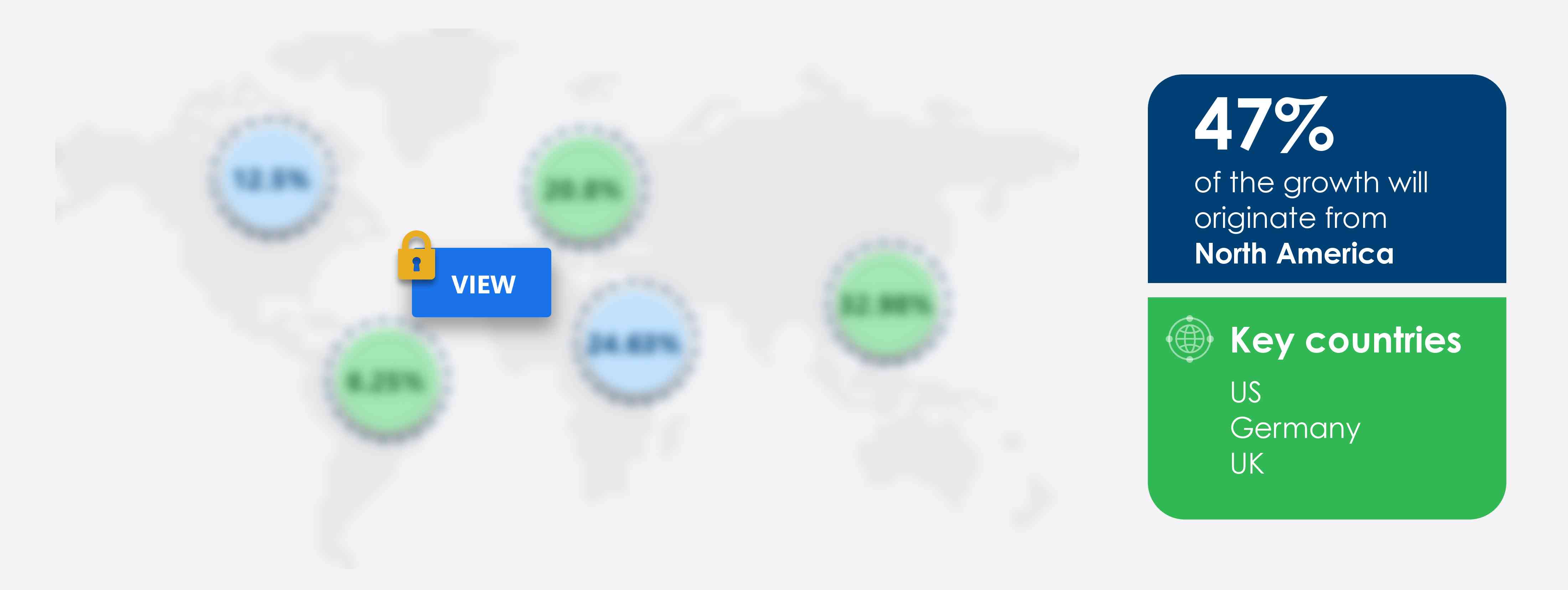
47% of the market’s growth will originate from North America during the forecast period. US and Canada are the key markets for chemotherapy-induced nausea and vomiting drugs market in North America. Market growth in this region will be faster than the growth of the market in other regions.
Growing preference for chemotherapy drugs in developing countries will facilitate the chemotherapy-induced nausea and vomiting drugs market growth in North America over the forecast period. This market research report entails detailed information on the competitive intelligence, marketing gaps, and regional opportunities in store for vendors, which will assist in creating efficient business plans.
COVID Impact and Recovery Analysis
The COVID-19 pandemic is expected to temporarily impact the growth of the regional market in 2020-2021. However, the initiation of vaccination drives from December 2020 and the subsequent lifting of lockdown restrictions have led to the gradual resumption of operations at manufacturing and logistics units, which will be helpful in the easing of research and development (R&D)-related constraints. The aspects of cancer care in order to mitigate the negative effects of the COVID-19 pandemic on the management of cancer drugs is essential for improving the quality of CINV patients. The situation is improving, and pragmatic action is required to deal with the challenges faced by cancer patients regarding the continuous availability of the drug. Thus, the gradually improving situation in North America will increase the demand for chemotherapy-induced nausea and vomiting drugs during the forecast period.
What are the Revenue-generating Therapy Segments in the Chemotherapy-induced Nausea and Vomiting Drugs Market?
To gain further insights on the market contribution of various segments Request for a FREE sample
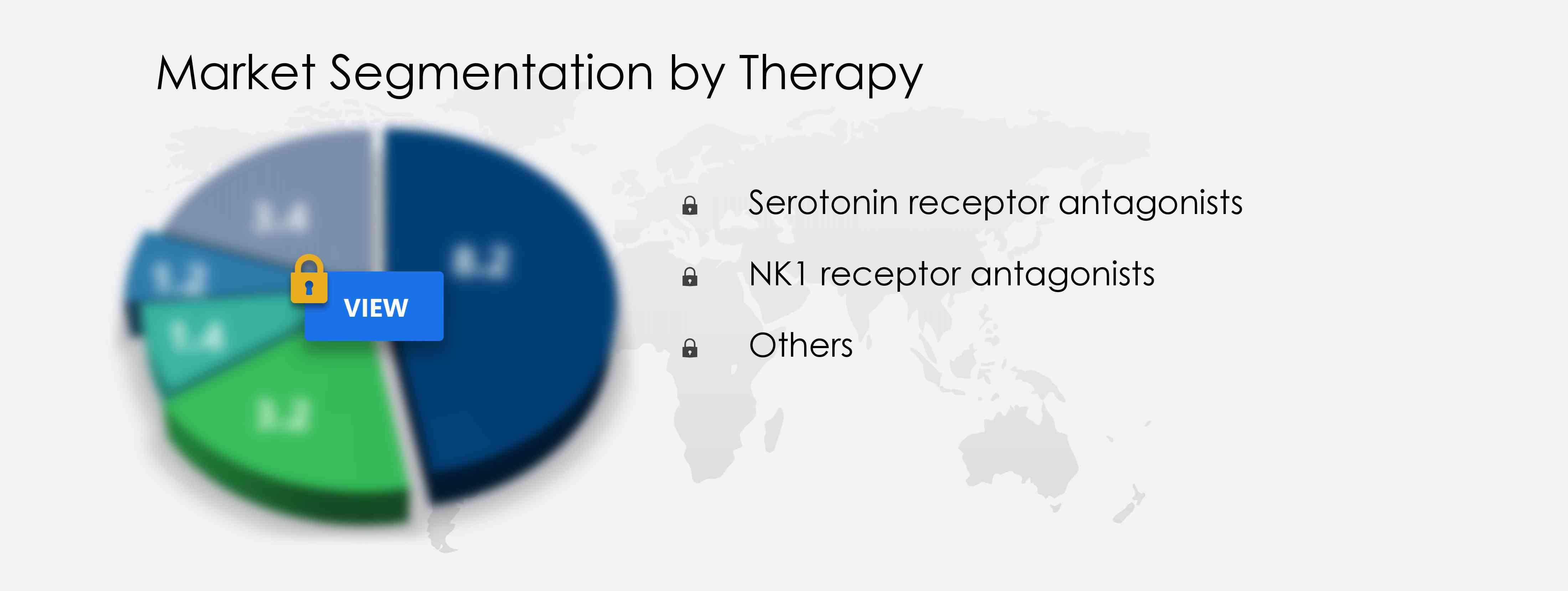
The chemotherapy-induced nausea and vomiting drugs market share growth by the theraphy segments. Serotonin receptor antagonists segment will be significant during the forecast period. 5-HT3 receptor blockers are considered to be the gold standard for the prevention of acute chemotherapy-induced nausea and vomiting. These drugs block the binding of serotonin to its receptor. This will stop the transmission of vomit-stimulating signals to the center in the brain that triggers vomiting.
This report provides an accurate prediction of the contribution of all the segments to the growth of the chemotherapy-induced nausea and vomiting drugs market size and actionable market insights on post COVID-19 impact on each segment.
|
Chemotherapy-induced Nausea And Vomiting Drugs Market Scope |
|
|
Report Coverage |
Details |
|
Page number |
120 |
|
Base year |
2020 |
|
Forecast period |
2021-2025 |
|
Growth momentum & CAGR |
Accelerate at a CAGR of 6.08% |
|
Market growth 2021-2025 |
USD 759.79 million |
|
Market structure |
Fragmented |
|
YoY growth (%) |
4.85 |
|
Regional analysis |
North America, Europe, Asia, and ROW |
|
Performing market contribution |
North America at 47% |
|
Key consumer countries |
US, Germany, UK, Canada, and Japan |
|
Competitive landscape |
Leading companies, Competitive strategies, Consumer engagement scope |
|
Key companies profiled |
Aurobindo Pharma Ltd., Cipla Inc., Dr. Reddys Laboratories Ltd., GlaxoSmithKline Plc, Glenmark Pharmaceuticals Ltd., Heron Therapeutics Inc., Merck and Co. Inc., Mylan NV, Novartis AG, and Teva Pharmaceutical Industries Ltd. |
|
Market dynamics |
Parent market analysis, Market growth inducers and obstacles, Fast-growing and slow-growing segment analysis, COVID 19 impact and recovery analysis and future consumer dynamics, Market condition analysis for forecast period |
|
Customization purview |
If our report has not included the data that you are looking for, you can reach out to our analysts and get segments customized. |
What are the Key Data Covered in this Chemotherapy-induced Nausea And Vomiting Drugs Market Report?
- CAGR of the market during the forecast period 2021-2025
- Detailed information on factors that will drive chemotherapy-induced nausea and vomiting drugs market growth during the next five years
- Precise estimation of the chemotherapy-induced nausea and vomiting drugs market size and its contribution to the parent market
- Accurate predictions on upcoming trends and changes in consumer behavior
- The growth of the chemotherapy-induced nausea and vomiting drugs industry across North America, Europe, Asia, and ROW
- A thorough analysis of the market’s competitive landscape and detailed information on vendors
- Comprehensive details of factors that will challenge the growth of chemotherapy-induced nausea and vomiting drugs market vendors
We can help! Our analysts can customize this report to meet your requirements. Get in touch
 RIA -
RIA - 
