


The eco fiber market share is expected to increase by 10.59 million MT from 2020 to 2025, and the market’s growth momentum will accelerate at a CAGR of 10.42%.
This eco fiber market research report provides valuable insights on the post-COVID-19 impact on the market, which will help companies evaluate their business approaches. Furthermore, this report extensively covers eco fiber market segmentation by application (textile, household and furnishing, industrial, medical, and others) and geography (APAC, North America, Europe, South America, and MEA). The eco fiber market report also offers information on several market vendors, including Aditya Birla Management Corp. Pvt. Ltd., David C. Poole Co. Inc., Foss Performance Materials LLC, Lenzing AG, Mega Plast Industrial Exporting S.A, Pilipinas Eco fiber Corp., Polyfibre Industries Pvt. Ltd., Sustana Fiber, Teijin Ltd., and Wellman Advanced Materials LLC among others.
What will the Eco Fiber Market Size be During the Forecast Period?
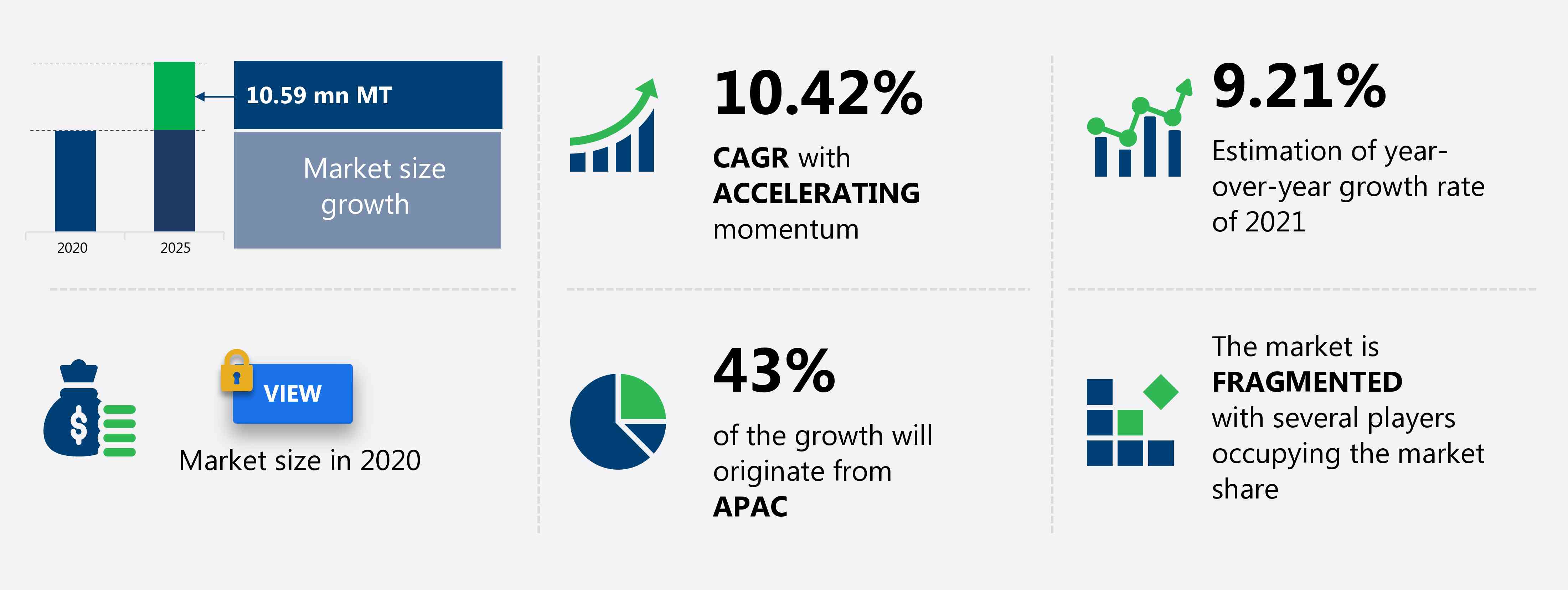
Download the Free Report Sample to Unlock the Eco Fiber Market Size for the Forecast Period and Other Important Statistics
Eco Fiber Market: Key Drivers, Trends, and Challenges
Based on our research output, there has been a neutral impact on the market growth during and after post-COVID-19 era. The environmental damage caused by conventional fibers is notably driving the eco fiber market growth, although factors such as challenges associated with the cultivation of organic cotton may impede the market growth. Our research analysts have studied the historical data and deduced the key market drivers and the COVID-19 pandemic impact on the eco fiber industry. The holistic analysis of the drivers will help in deducing end goals and refining marketing strategies to gain a competitive edge.
Key Eco Fiber Market Driver
The environmental damage caused by conventional fibers is one of the key factors driving the growth of the global eco fiber market. The production of fibers, both natural and synthetic, has a significant impact on the environment. Non-organic cotton, the natural fiber with the highest production rate, is grown by conventional methods. The cultivation process requires large amounts of water and pesticides. The production of a cotton shirt requires more than 2,500 liters of water. Farming of cotton requires extensive application of pesticides, herbicides, insecticides, and fertilizers. The nitrate fertilizers used in cotton farms convert into nitrous oxide, a greenhouse gas that primarily contributes to global warming. Further down the value chain, the preparation of dye cotton fabric also requires large quantities of chemicals, energy, and water. Conventional rayon, which is made from cellulose, is a natural fiber that requires large amounts of chemicals in the fiber spinning phase. Synthetic fibers such as polyester and other petroleum-based fibers depend on non-renewable oil resources. However, the environmental damage caused by conventional fibers is expected to fuel the demand for eco fibers.
Key Eco Fiber Market Trend
The increasing adoption of bamboo will fuel the global eco fiber market growth. Bamboo is one of the fastest-growing plants in the world, and bamboo fibers are increasing in popularity. The cultivation of bamboo does not require chemical fertilizers or pesticides. It is highly biodegradable and requires around four times less water than cotton. Other advantages of bamboo are there such as it absorbs more carbon dioxide. Similarly, fabrics made of bamboo are easy to wash and are wrinkle-free, and also the fabrics made of bamboo are soft and comfortable. However, bamboo is a sustainable fiber that is used as a feedstock in the production of rayon. It does not require extensive replanting as it reproduces easily from the roots. Bamboo fibers can absorb 3-4 times more moisture than other fibers and are thus preferred for sports and casual wear. The increasing popularity of bamboo offers tremendous growth opportunities for the global eco fiber market.
Key Eco Fiber Market Challenge
The cultivation of organic cotton issues is a major challenge for the global eco fiber market growth. Organic cotton is one of the most preferred eco fibers and is gaining popularity across the globe as it does not use chemicals and is hypoallergenic. Clothes made of organic cotton are soft and comfortable. Though it is widely used, there are several challenges associated with its cultivation. However, in comparison to conventional cotton, the productivity of organic cotton is low due to the absence of growth fertilizers. High investments are required for shifting from conventional cotton farming to the organic method. Unlike non-organic cotton, the cultivation of organic cotton is complex, as weeds must be removed before sowing the seeds. These challenges associated with organic cotton cultivation increase the preference for conventional cotton, thereby posing a challenge to the global eco fiber market. The above factors will hinder the market growth during the forecast period.
This eco fiber market analysis report also provides detailed information on other upcoming trends and challenges that will have a far-reaching effect on the market growth. The actionable insights on the trends and challenges will help companies evaluate and develop growth strategies for 2021-2025.
Parent Market Analysis
Technavio categorizes the global eco fiber market as a part of the global specialty chemicals market. Our research report has extensively covered external factors influencing the parent market growth potential in the coming years, which will determine the levels of growth of the eco fiber market during the forecast period.
Who are the Major Eco Fiber Market Vendors?
The report analyzes the market’s competitive landscape and offers information on several market vendors, including:
- Aditya Birla Management Corp. Pvt. Ltd.
- David C. Poole Co. Inc.
- Foss Performance Materials LLC
- Lenzing AG
- Mega Plast Industrial Exporting S.A
- Pilipinas Ecofiber Corp.
- Polyfibre Industries Pvt. Ltd.
- Sustana Fiber
- Teijin Ltd.
- Wellman Advanced Materials LLC
This statistical study of the eco fiber market encompasses successful business strategies deployed by the key vendors. The eco fiber market is fragmented and the vendors are deploying organic and inorganic growth strategies to compete in the market.
Product Insights and News
- Aditya Birla Management Corp. Pvt. Ltd. - The company, under its subsidiary Birla Cellulose offers solutions for 100 percent sustainable and bio-degradable wearables with the brand name Livaeco.
To make the most of the opportunities and recover from the post-COVID-19 impact, market vendors should focus more on the growth prospects in the fast-growing segments, while maintaining their positions in the slow-growing segments.
The eco fiber market forecast report offers in-depth insights into key vendor profiles. The profiles include information on the production, sustainability, and prospects of the leading companies.
Eco Fiber Market Value Chain Analysis
Our report provides extensive information on the value chain analysis for the eco fiber market, which vendors can leverage to gain a competitive advantage during the forecast period. The end-to-end understanding of the value chain is essential in profit margin optimization and evaluation of business strategies. The data available in our value chain analysis segment can help vendors drive costs and enhance customer services during the forecast period.
The value chain of the global specialty chemicals market includes the following core components:
- Inputs
- Inbound logistics
- Operations
- Outbound logistics
- Marketing and sales
- Service
- Support activities
- Innovation
The report has further elucidated other innovative approaches being followed by manufacturers to ensure a sustainable market presence.
Which are the Key Regions for Eco Fiber Market?
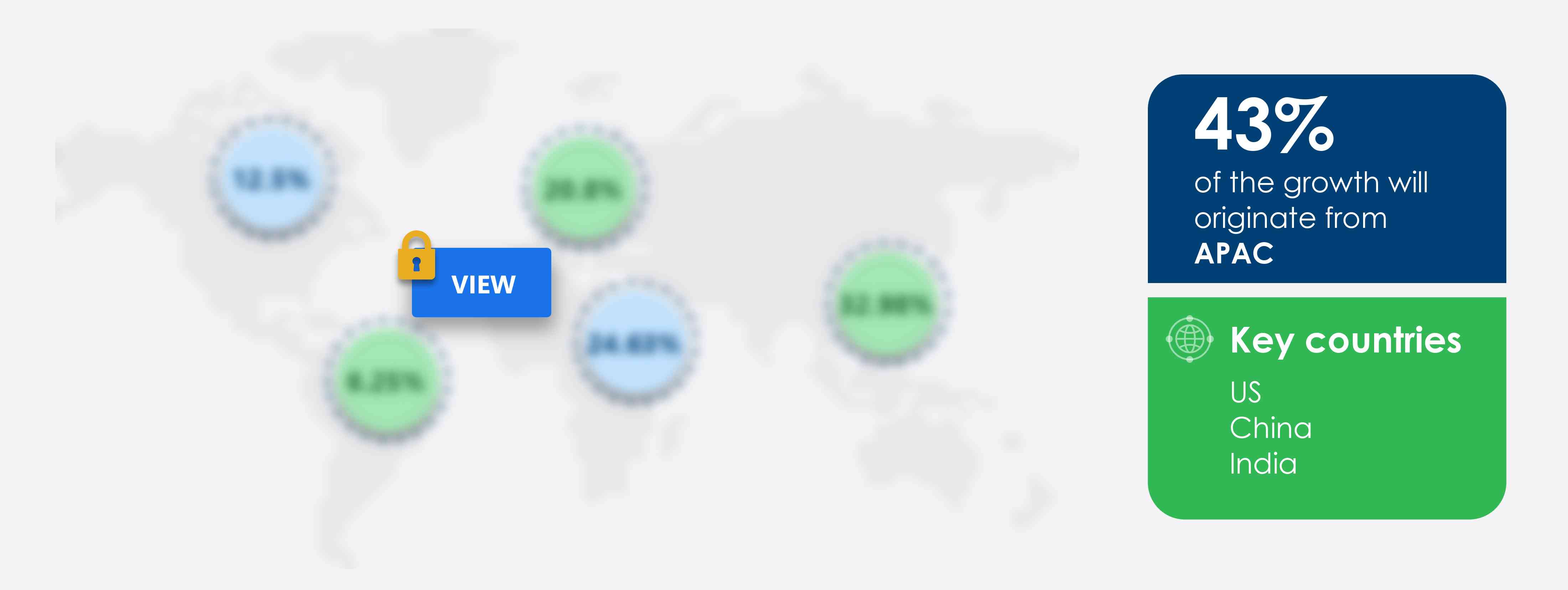
For more insights on the market share of various regions Request for a FREE sample now!
43% of the market’s growth will originate from APAC during the forecast period. China, India, and Japan are the key markets for eco fiber market in APAC. Market growth in this region will be faster than the growth of the market in regions.
The environmental damage caused by conventional fibers will facilitate the eco fiber market growth in APAC over the forecast period. This market research report entails detailed information on the competitive intelligence, marketing gaps, and regional opportunities in store for vendors, which will assist in creating efficient business plans.
COVID Impact and Recovery Analysis
The eco fiber market in the region witnessed certain challenges due to the COVID-19 pandemic in 2020. The COVID-19 pandemic affected end-user sectors, such as construction, furniture, and automotive. Temporary factory closures and layoffs began to hit low-wage workers across the region, as quarantines and travel restrictions due to the pandemic disrupted the supply chains to other countries. For instance, in April 2020, Supreme Industries Ltd., a plastic processing company in India, announced its plan to suspend operations at all of its manufacturing facilities until further notice. Such factors not only affected the regional demand for eco fibers in 2020 but will also affect the growth of the market during the forecast period.
What are the Revenue-generating Application Segments in the Eco Fiber Market?
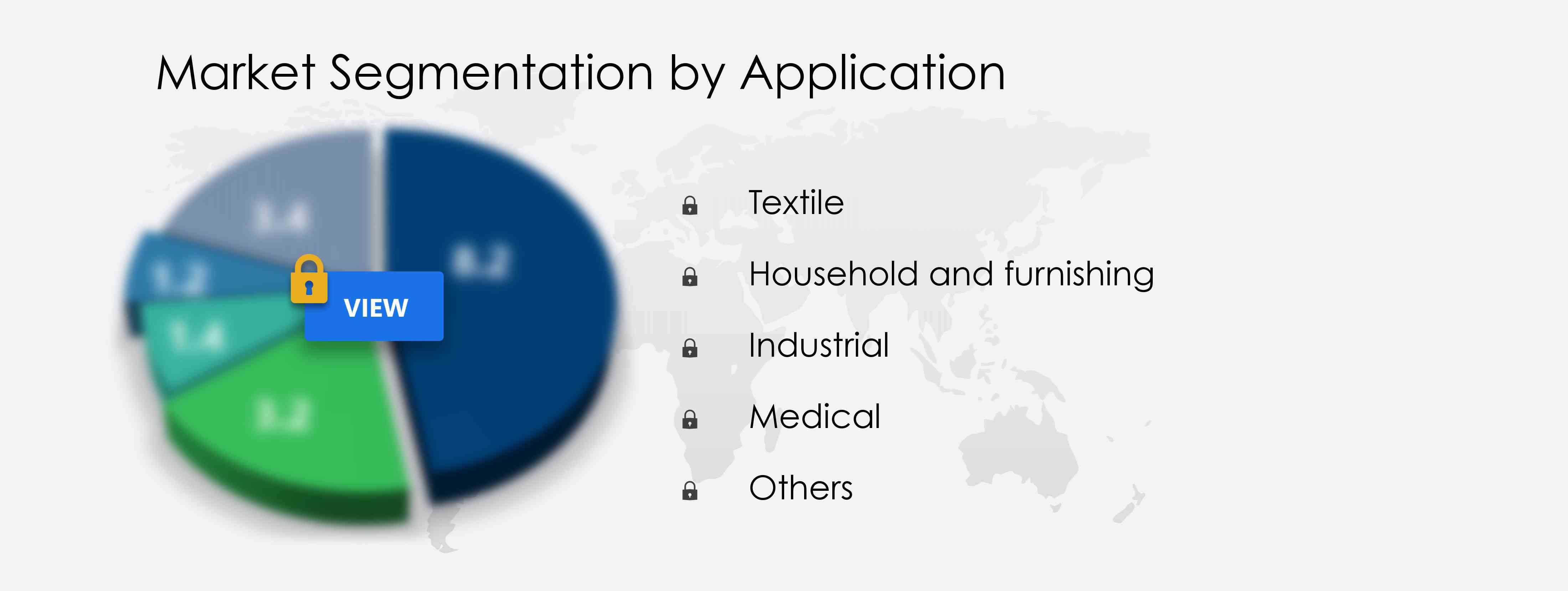
To gain further insights on the market contribution of various segments Request for a FREE sample
The eco fiber market share growth by the Textile segment will be significant during the forecast period. Eco fibers are widely used in the textiles and apparel industry as they exhibit properties similar to that of non-organic fibers. Various types of eco fibers are used in textile applications, and the major ones include organic cotton, recycled fibers such as polyester, and regenerated or man-made fibers such as viscose and lyocell.
This report provides an accurate prediction of the contribution of all the segments to the growth of the eco fiber market size and actionable market insights on post COVID-19 impact on each segment.
|
Eco Fiber Market Scope |
|
|
Report Coverage |
Details |
|
Page number |
120 |
|
Base year |
2020 |
|
Forecast period |
2021-2025 |
|
Growth momentum & CAGR |
Accelerate at a CAGR of 10.42% |
|
Market growth 2021-2025 |
10.59 mn MT |
|
Market structure |
Fragmented |
|
YoY growth (%) |
9.21 |
|
Regional analysis |
APAC, North America, Europe, South America, and MEA |
|
Performing market contribution |
APAC at 43% |
|
Key consumer countries |
US, China, India, UK, and Japan |
|
Competitive landscape |
Leading companies, Competitive strategies, Consumer engagement scope |
|
Key companies profiled |
Aditya Birla Management Corp. Pvt. Ltd., David C. Poole Co. Inc., Foss Performance Materials LLC, Lenzing AG, Mega Plast Industrial Exporting S.A, Pilipinas Ecofiber Corp., Polyfibre Industries Pvt. Ltd., Sustana Fiber, Teijin Ltd., and Wellman Advanced Materials LLC |
|
Market dynamics |
Parent market analysis, Market growth inducers and obstacles, Fast-growing and slow-growing segment analysis, COVID 19 impact and recovery analysis and future consumer dynamics, Market condition analysis for forecast period |
|
Customization purview |
If our report has not included the data that you are looking for, you can reach out to our analysts and get segments customized. |
What are the Key Data Covered in this Eco Fiber Market Report?
- CAGR of the market during the forecast period 2021-2025
- Detailed information on factors that will drive eco fiber market growth during the next five years
- Precise estimation of the eco fiber market size and its contribution to the parent market
- Accurate predictions on upcoming trends and changes in consumer behavior
- The growth of the eco fiber industry across APAC, North America, Europe, South America, and MEA
- A thorough analysis of the market’s competitive landscape and detailed information on vendors
- Comprehensive details of factors that will challenge the growth of eco fiber market vendors
We can help! Our analysts can customize this report to meet your requirements. Get in touch
 RIA -
RIA - 
