
Elastomer Coated Fabric Market Analysis North America, Europe, APAC, Middle East and Africa, South America - US, Germany, UK, China, India - Size and Forecast 2024-2028

Elastomer Coated Fabric Market Analysis North America, Europe, APAC, Middle East and Africa, South America - US, Germany, UK, China, India - Size and Forecast 2024-2028

Published: Sep 2024 138 Pages SKU: IRTNTR72382

Market Overview at a Glance

$2.54 B
Market Opportunity
4.5%
CAGR
4.2
YoY growth 2023-2024(%)

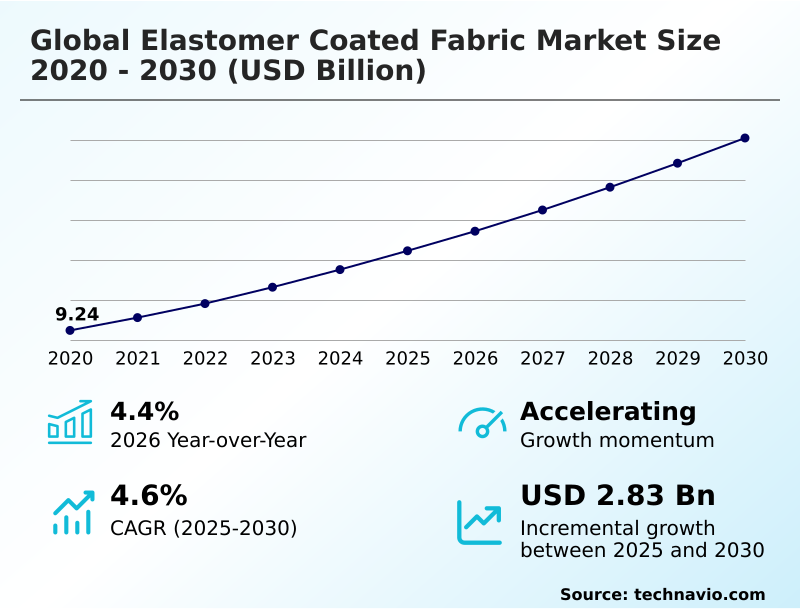
Elastomer Coated Fabric Market Size 2024-2028

The elastomer coated fabric market size is forecast to increase by USD 2.54 billion at a CAGR of 4.5% between 2023 and 2028.

  • The market is witnessing significant growth due to several key trends. One of the primary drivers is the increasing demand for comfort in various industries, including healthcare services, fashion, and automotive. This has led to a surge In the production and usage of elastomer coated fabrics. 
  • However, the market is also facing challenges, such as the high cost associated with research and development. Furthermore, there are increasing government regulations on elastomer coated fabrics due to concerns over their environmental impact and safety. These factors are influencing the market dynamics and shaping its future growth trajectory. Elastomer coated fabrics offer superior elasticity, durability, and resistance to chemicals and UV rays, making them a preferred choice for numerous applications.The market's potential for innovation and the growing demand for performance fabrics are expected to provide opportunities for growth In the coming years.

What will be the Size of the Elastomer Coated Fabric Market During the Forecast Period?

Elastomer Coated Fabric Market Size

 Request Free Sample

  • Elastomer coated fabrics, including rubber and silicone-coated varieties, continue to gain traction in various industries due to their unique properties. These fabrics offer enhanced durability, abrasion resistance, and flexibility, making them suitable for a range of applications. In the transportation sector, elastomer coated fabrics are widely used in automotive production for seat covers, airbags, drive belts, and body moldings. Similarly, In the aviation industry, they are employed In the manufacturing of commercial aircraft interiors, instrument panels, and transparent components due to their lightweight and resilient nature. Raw materials such as thermoplastic polyurethane and acryl are commonly used In the production of elastomer coated fabrics.
  • The use of these fabrics in the transportation industry is driven by the need for improved safety, durability, and comfort. Silicone fabrics, a type of elastomer coated fabric, are also gaining popularity due to their transparency and resistance to extreme temperatures. Other applications include camouflage color and metallic finishes in military and defense sectors, and lacquering systems in various industries for added protection. Overall, the market is expected to grow steadily due to increasing demand for high-performance materials in various industries.

How is this Elastomer Coated Fabric Industry segmented and which is the largest segment?

The elastomer coated fabric industry research report provides comprehensive data (region-wise segment analysis), with forecasts and estimates in "USD billion" for the period 2024-2028, as well as historical data from 2018-2022 for the following segments.

  • Application
    • Transportation
    • Protective clothing
    • Industrial
    • Others
  • Geography
    • North America
      • US
    • Europe
      • Germany
      • UK
    • APAC
      • China
      • India
    • Middle East and Africa
    • South America

By Application Insights

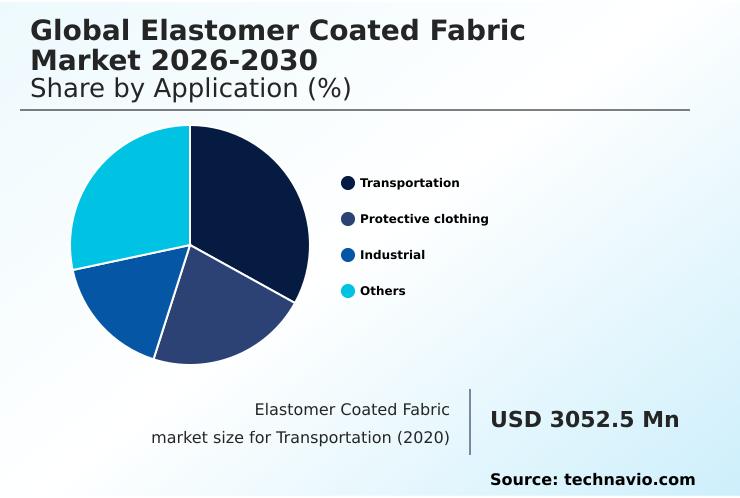
  • The transportation segment is estimated to witness significant growth during the forecast period.

The transportation sector holds a significant market share. The increasing adoption of silicone and thermoplastic polyurethane (TPU) fabrics in automotive manufacturing for producing body side mouldings, interiors, instrument panels, seat covers, and drive belts is a primary factor driving the demand for elastomer coated fabrics. The transportation industry's expansion, particularly in automotive, marine, aircraft, and railway sectors, is another significant growth driver. In the automotive industry, elastomer-coated fabrics are extensively used for car interiors, exteriors, seat bags, airbags, boat covers, truck tarpaulins, and various other applications. The demand for these fabrics is increasing due to their flexibility, abrasion resistance, and resistance to environmental conditions.

Elastomer Coated Fabric Market Size

Get a glance at the  Elastomer Coated Fabric Industry report of share of various segments Request Free Sample

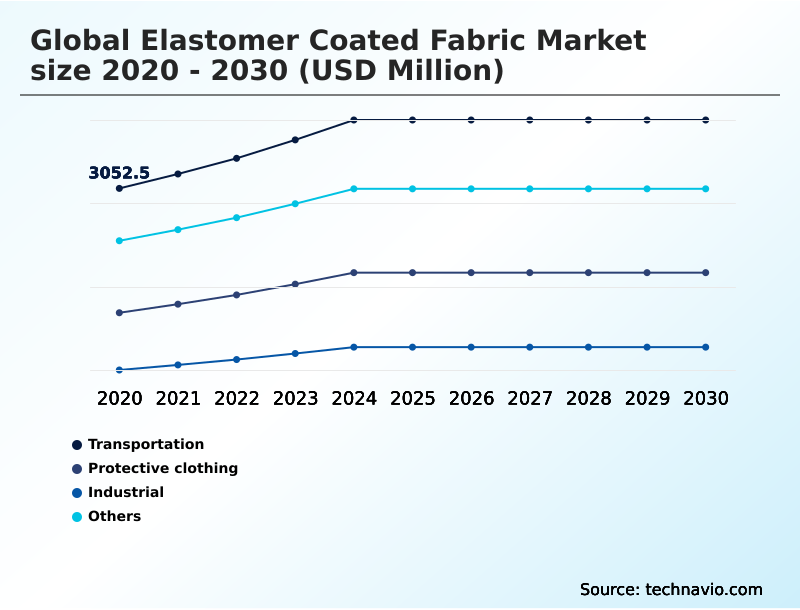
The Transportation segment was valued at USD 3.05 billion in 2018 and showed a gradual increase during the forecast period.
Regional Analysis

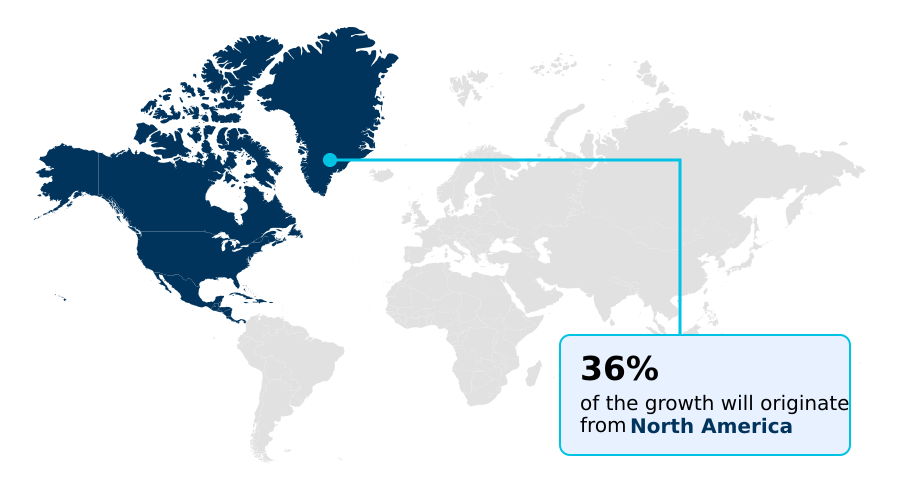
  • North America is estimated to contribute 34% to the growth of the global market during the forecast period.

Technavio's analysts have elaborately explained the regional trends and drivers that shape the market during the forecast period.
Elastomer Coated Fabric Market Share by Geography

For more insights on the market share of various regions, Request Free Sample

In 2023, the US dominates the market in North America, driven by transportation and construction sectors. Notable projects, such as the California High-Speed Railway, Hudsons Development in Detroit, One Vanderbilt in New York, and Alaskan Way Viaduct Replacement in Seattle, are anticipated to fuel market growth due to the high demand for construction elastomer fabrics. Additionally, the increasing number of residential construction projects in North America will further boost demand. The healthcare sector is experiencing a surge in demand for disposable fabrics like coveralls and gowns due to COVID-19, benefiting the market. Key applications include transportation, residential roofing, furniture, and industrial uses, with materials such as thermoplastic polyurethane (TPU) and silicone fabrics in high demand for their abrasion resistance and flexibility.

Market Dynamics

Our  researchers analyzed the data with 2023 as the base year, along with the key drivers, trends, and challenges. A holistic analysis of drivers will help companies refine their marketing strategies to gain a competitive advantage.

What are the key market drivers leading to the rise In the adoption of Elastomer Coated Fabric Industry?

Increasing government regulations on elastomer coated fabrics is the key driver of the market.

  • Elastomer coated fabrics, including Rubber Coated Fabrics and Silicone Coated Fabrics, have gained significant traction in various industries due to their superior surface properties and protective capabilities. These fabrics are coated with elastomeric materials such as Thermoplastic Polyurethane (TPU) and Silicone, which enhance their abrasion resistance, flexibility, and resistance to chemicals and extreme temperatures. The transportation industry is a major consumer of elastomer coated fabrics, with applications ranging from automotive production to commercial aircraft manufacturing. In automotive applications, these fabrics are used for body moldings, interiors, instrument panels, seat covers, and drive belts. In commercial aircraft manufacturing, elastomer coated fabrics are used for roofing, awnings, canopies, furniture, and seating.
  • The need for protective clothing in hazardous environments has fueled the demand for elastomer coated fabrics. OSHA and other regulatory bodies have set safety standards requiring employers to provide appropriate protective gear for employees exposed to harmful chemicals, gases, vapors, and biohazards. Elastomer coated fabrics offer excellent protection against these hazards, making them a preferred choice for safety managers. The development of testing standards for protective clothing has enabled more accurate comparisons of fabric performance, allowing safety managers to make informed decisions when selecting protective fabrics. Elastomer coated fabrics are also used in various nonwoven, composite, and transparent forms, including TPU coated fabrics and TPO coated fabrics, for applications in textile architecture, geotextiles, apparel, technical apparel, disposable protective clothing, and marine industries.
  • The coating process for elastomer coated fabrics includes methods such as direct roll coating, pad-dry-cure, calendar coating, foam finishing, mixing and formulation, spread coating, and dip coating. These methods ensure consistent and even coating, resulting in high-quality fabrics with desirable surface properties such as high gloss, embossed, silk mat, and silk gloss finishes. In summary, the elastomer coated fabrics market is driven by the need for protective clothing in hazardous environments and the increasing demand for high-performance fabrics in various industries. The market is expected to continue growing due to the ongoing development of new coating technologies and the increasing awareness of the importance of safety in various applications.

What are the market trends shaping the Elastomer Coated Fabric Industry?

Rise in demand for comfort is the upcoming market trend.

  • Elastomer coated fabrics, including Rubber Coated Fabrics and Silicone Coated Fabrics, are gaining popularity in various industries due to their exceptional surface properties. These fabrics are manufactured using advanced synthetic fibers such as Thermoplastic Polyurethane (TPU) and Thermoplastic Olefin (TPO), resulting in high abrasion resistance and flexibility. Elastomer coated fabrics are widely used In the transportation industry, particularly in automotive production for body moldings, interiors, instrument panels, seat covers, and drive belts. In commercial aircraft manufacturing, these fabrics are utilized for roofing, awnings, canopies, and furniture seating. In the sports and leisure sector, elastomer coated fabrics are preferred for their durability, flexibility, and ease of cleaning.
  • They are ideal for use in tents, pool covers, boats, and industrial applications. The use of elastomer coated fabrics extends to technical apparel, protective clothing, and textile architecture, providing sun protection and enhancing the overall performance of the textile. Moreover, elastomer coated fabrics offer superior stain resistance due to their non-porous surface. They are resistant to the spread of bacteria and are particularly mold and mildew resistant. The coating process involves various techniques such as Direct Roll Coating, Pad Dry Cure, Calendar Coating, Foam Finishing, Mixing and Formulation, Spread Coating, and Dip Coating. The choice of coating process depends on the specific application and desired surface finish, ranging from mat to high gloss, embossed, silk mat, or silk gloss.
  • In summary, elastomer coated fabrics offer numerous benefits, including durability, flexibility, stain resistance, and antimicrobial properties. They are widely used in various industries, including transportation, sports and leisure, and industrial applications. The advanced coating processes enable the creation of high-performance textiles with unique surface properties, making them a preferred choice for a wide range of applications.

What challenges does the Elastomer Coated Fabric Industry face during its growth?

High cost in research and development of elastomer coated fabrics is a key challenge affecting the industry growth.

  • Elastomer coated fabrics, including Rubber Coated Fabrics and Silicone Coated Fabrics, have been a significant part of the textile industry's advancements. Manufacturers invest substantially in research and development to create new products, leading to innovations such as TPU coated fabrics and TPO coated fabrics. However, the high capital investment in research and development can pose a market risk due to increased costs. Research and development divisions do not generate immediate revenue, limiting their ability to drive market growth directly. Despite this constraint, the elastomer coated fabrics market continues to expand, serving various industries, including Automotive and Transportation, Marine, Military, Sports and Leisure, Industrial, and Textile Architecture.
  • Applications include body moldings, interiors, instrument panels, seat covers, drive belts, roofing, awnings, canopies, furniture, seating, and more. The market caters to diverse sectors, including Commercial Aircraft Manufacturing, Transportation, and Print. Surface properties like abrasion resistance, flexibility, high gloss, embossed, silk mat, and silk gloss are essential features of these fabrics.

Exclusive Customer Landscape

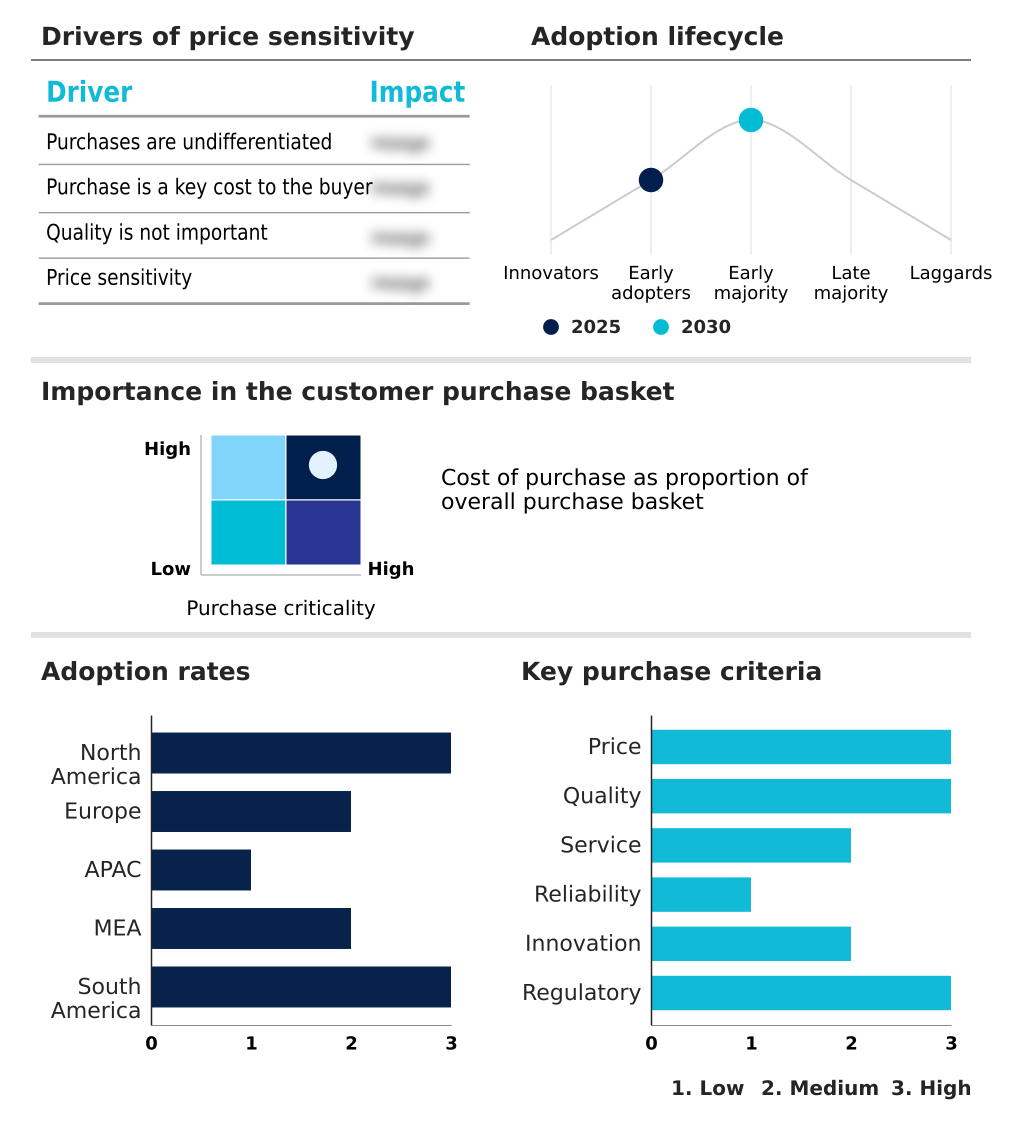
The elastomer coated fabric market forecasting report includes the adoption lifecycle of the market, covering from the innovator's stage to the laggard's stage. It focuses on adoption rates in different regions based on penetration. Furthermore, the elastomer coated fabric market report also includes key purchase criteria and drivers of price sensitivity to help companies evaluate and develop their market growth analysis strategies.
Elastomer Coated Fabric Market Share by Geography

 Customer Landscape

Key Companies & Market Insights

Companies are implementing various strategies, such as strategic alliances, elastomer coated fabric market forecast, partnerships, mergers and acquisitions, geographical expansion, and product/service launches, to enhance their presence In the industry.

Auburn Manufacturing Inc. - Elastomer coated fabrics serve diverse sectors, including food processing, electronics, environmental protection, and industrial applications. These fabrics, which the company provides, exhibit versatility and durability, making them indispensable in various consumer and industrial contexts.

The industry research and growth report includes detailed analyses of the competitive landscape of the market and information about key companies, including:

  • Auburn Manufacturing Inc.
  • Chemprene Inc.
  • COLMANT COATED FABRICS
  • Compagnie de Saint-Gobain S.A.
  • Continental AG
  • Fabri Cote
  • Freudenberg Sealing Technologies Ltd.
  • Fuzhou Haoyuan New Material Technology Co. Ltd.
  • Jiangsu Zobon Conveyor Belt Co. Ltd.
  • Kiran Rubber Industries
  • Low and Bonar
  • Mid Mountain Materials Inc.
  • OMNOVA Solutions Inc.
  • Seaman Corp.
  • Serge Ferrari SAS
  • Sioen Industries NV
  • Spradling Holdings Inc.
  • SRF Ltd.
  • Trelleborg AB
  • Zenith Industrial Rubber Products Pvt. Ltd.

Qualitative and quantitative analysis of companies has been conducted to help clients understand the wider business environment as well as the strengths and weaknesses of key industry players. Data is qualitatively analyzed to categorize companies as pure play, category-focused, industry-focused, and diversified; it is quantitatively analyzed to categorize companies as dominant, leading, strong, tentative, and weak.

Research Analyst Overview

Elastomer coated fabrics, a type of textile material, undergo a coating process that involves the application of elastomeric substances, such as thermoplastic polyurethane (TPU) or thermoplastic olefin (TPO), to the fabric surface. This process enhances the fabric's properties, making it more resilient, flexible, and durable. The resulting fabric offers various benefits, including improved abrasion resistance, enhanced surface properties, and increased versatility. The fabric industry has seen a significant growth In the production and application of elastomer coated fabrics. These fabrics are used in a wide range of industries and applications, including transportation, industrial, marine, military, sports and leisure, textile architecture, and geotextiles.

In the transportation industry, elastomer coated fabrics are used extensively in automotive and commercial aircraft production. They are used for body moldings, interiors, instrument panels, seat covers, and drive belts. In commercial aircraft manufacturing, these fabrics are used for roofing, awnings, canopies, and seating. The use of elastomer coated fabrics In these applications is driven by the need for lightweight, durable, and flexible materials that can withstand extreme temperatures and conditions. The marine industry also benefits from elastomer coated fabrics. These fabrics are used for boat covers, tarps, and tarpaulins. The coating provides protection against UV radiation, water, and abrasion, making the fabrics ideal for use in marine applications.

In the sports and leisure industry, elastomer coated fabrics are used for various applications, including pool covers, tents, and protective clothing. The flexibility and durability of these fabrics make them ideal for use In these applications, where the fabric needs to be able to withstand heavy use and extreme conditions. In the textile architecture industry, elastomer coated fabrics are used for creating transparent, camouflage colored, metallic, and high gloss fabrics. These fabrics are used for creating structures such as canopies, awnings, and tents. The coating process used to create these fabrics includes techniques such as direct roll coating, calendar coating, foam finishing, and dip coating.

The production of elastomer coated fabrics involves the mixing and formulation of the elastomeric substance and the application process. The coating process can be carried out using various techniques, including spread coating and lacquering systems. The choice of technique depends on the specific application and the desired properties of the fabric. In conclusion, elastomer coated fabrics offer numerous benefits and are used extensively in various industries and applications. The use of these fabrics is driven by their enhanced properties, including improved abrasion resistance, flexibility, and durability. The coating process used to create these fabrics involves the application of elastomeric substances, such as TPU or TPO, to the fabric surface. The resulting fabrics are used in transportation, industrial, marine, military, sports and leisure, textile architecture, and geotextiles applications.

Market Scope

Report Coverage

Details

Page number

138

Base year

2023

Historic period

2018-2022

Forecast period

2024-2028

Growth momentum & CAGR

Accelerate at a CAGR of 4.5%

Market growth 2024-2028

USD 2.54 billion

Market structure

Fragmented

YoY growth 2023-2024(%)

4.2

Key countries

US, Germany, UK, China, and India

Competitive landscape

Leading Companies, Market Positioning of Companies, Competitive Strategies, and Industry Risks

Request Free Sample

What are the Key Data Covered in this Elastomer Coated Fabric Market Research and Growth Report?

  • CAGR of the Elastomer Coated Fabric industry during the forecast period
  • Detailed information on factors that will drive the growth and forecasting between 2024 and 2028
  • Precise estimation of the size of the market and its contribution of the industry in focus to the parent market
  • Accurate predictions about upcoming growth and trends and changes in consumer behaviour
  • Growth of the market across North America, Europe, APAC, Middle East and Africa, and South America
  • Thorough analysis of the market's competitive landscape and detailed information about companies
  • Comprehensive analysis of factors that will challenge the elastomer coated fabric market growth of industry companies

We can help! Our analysts can customize this elastomer coated fabric market research report to meet your requirements.

Get in touch

1 Executive Summary

  • 1.1 Market overview
    • Executive Summary - Chart on Market Overview
    • Executive Summary - Data Table on Market Overview
    • Executive Summary - Chart on Global Market Characteristics
    • Executive Summary - Chart on Market by Geography
    • Executive Summary - Chart on Market Segmentation by Application
    • Executive Summary - Chart on Incremental Growth
    • Executive Summary - Data Table on Incremental Growth
    • Executive Summary - Chart on Company Market Positioning

2 Market Landscape

  • 2.1 Market ecosystem
    • Parent Market
    • Data Table on - Parent Market
  • 2.2 Market characteristics
    • Market characteristics analysis
  • 2.3 Value chain analysis
    • Value Chain Analysis

3 Market Sizing

  • 3.1 Market definition
    • Offerings of companies included in the market definition
  • 3.2 Market segment analysis
    • Market segments
  • 3.3 Market size 2023
    • 3.4 Market outlook: Forecast for 2023-2028
      • Chart on Global - Market size and forecast 2023-2028 ($ million)
      • Data Table on Global - Market size and forecast 2023-2028 ($ million)
      • Chart on Global Market: Year-over-year growth 2023-2028 (%)
      • Data Table on Global Market: Year-over-year growth 2023-2028 (%)

    4 Historic Market Size

    • 4.1 Global Elastomer Coated Fabric Market 2018 - 2022
      • Historic Market Size - Data Table on Global Elastomer Coated Fabric Market 2018 - 2022 ($ million)
    • 4.2 Application segment analysis 2018 - 2022
      • Historic Market Size - Application Segment 2018 - 2022 ($ million)
    • 4.3 Geography segment analysis 2018 - 2022
      • Historic Market Size - Geography Segment 2018 - 2022 ($ million)
    • 4.4 Country segment analysis 2018 - 2022
      • Historic Market Size - Country Segment 2018 - 2022 ($ million)

    5 Five Forces Analysis

    • 5.1 Five forces summary
      • Five forces analysis - Comparison between 2023 and 2028
    • 5.2 Bargaining power of buyers
      • Bargaining power of buyers - Impact of key factors 2023 and 2028
    • 5.3 Bargaining power of suppliers
      • Bargaining power of suppliers - Impact of key factors in 2023 and 2028
    • 5.4 Threat of new entrants
      • Threat of new entrants - Impact of key factors in 2023 and 2028
    • 5.5 Threat of substitutes
      • Threat of substitutes - Impact of key factors in 2023 and 2028
    • 5.6 Threat of rivalry
      • Threat of rivalry - Impact of key factors in 2023 and 2028
    • 5.7 Market condition
      • Chart on Market condition - Five forces 2023 and 2028

    6 Market Segmentation by Application

    • 6.1 Market segments
      • Chart on Application - Market share 2023-2028 (%)
      • Data Table on Application - Market share 2023-2028 (%)
    • 6.2 Comparison by Application
      • Chart on Comparison by Application
      • Data Table on Comparison by Application
    • 6.3 Transportation - Market size and forecast 2023-2028
      • Chart on Transportation - Market size and forecast 2023-2028 ($ million)
      • Data Table on Transportation - Market size and forecast 2023-2028 ($ million)
      • Chart on Transportation - Year-over-year growth 2023-2028 (%)
      • Data Table on Transportation - Year-over-year growth 2023-2028 (%)
    • 6.4 Protective clothing - Market size and forecast 2023-2028
      • Chart on Protective clothing - Market size and forecast 2023-2028 ($ million)
      • Data Table on Protective clothing - Market size and forecast 2023-2028 ($ million)
      • Chart on Protective clothing - Year-over-year growth 2023-2028 (%)
      • Data Table on Protective clothing - Year-over-year growth 2023-2028 (%)
    • 6.5 Industrial - Market size and forecast 2023-2028
      • Chart on Industrial - Market size and forecast 2023-2028 ($ million)
      • Data Table on Industrial - Market size and forecast 2023-2028 ($ million)
      • Chart on Industrial - Year-over-year growth 2023-2028 (%)
      • Data Table on Industrial - Year-over-year growth 2023-2028 (%)
    • 6.6 Others - Market size and forecast 2023-2028
      • Chart on Others - Market size and forecast 2023-2028 ($ million)
      • Data Table on Others - Market size and forecast 2023-2028 ($ million)
      • Chart on Others - Year-over-year growth 2023-2028 (%)
      • Data Table on Others - Year-over-year growth 2023-2028 (%)
    • 6.7 Market opportunity by Application
      • Market opportunity by Application ($ million)
      • Data Table on Market opportunity by Application ($ million)

    7 Customer Landscape

    • 7.1 Customer landscape overview
      • Analysis of price sensitivity, lifecycle, customer purchase basket, adoption rates, and purchase criteria

    8 Geographic Landscape

    • 8.1 Geographic segmentation
      • Chart on Market share by geography 2023-2028 (%)
      • Data Table on Market share by geography 2023-2028 (%)
    • 8.2 Geographic comparison
      • Chart on Geographic comparison
      • Data Table on Geographic comparison
    • 8.3 North America - Market size and forecast 2023-2028
      • Chart on North America - Market size and forecast 2023-2028 ($ million)
      • Data Table on North America - Market size and forecast 2023-2028 ($ million)
      • Chart on North America - Year-over-year growth 2023-2028 (%)
      • Data Table on North America - Year-over-year growth 2023-2028 (%)
    • 8.4 Europe - Market size and forecast 2023-2028
      • Chart on Europe - Market size and forecast 2023-2028 ($ million)
      • Data Table on Europe - Market size and forecast 2023-2028 ($ million)
      • Chart on Europe - Year-over-year growth 2023-2028 (%)
      • Data Table on Europe - Year-over-year growth 2023-2028 (%)
    • 8.5 APAC - Market size and forecast 2023-2028
      • Chart on APAC - Market size and forecast 2023-2028 ($ million)
      • Data Table on APAC - Market size and forecast 2023-2028 ($ million)
      • Chart on APAC - Year-over-year growth 2023-2028 (%)
      • Data Table on APAC - Year-over-year growth 2023-2028 (%)
    • 8.6 Middle East and Africa - Market size and forecast 2023-2028
      • Chart on Middle East and Africa - Market size and forecast 2023-2028 ($ million)
      • Data Table on Middle East and Africa - Market size and forecast 2023-2028 ($ million)
      • Chart on Middle East and Africa - Year-over-year growth 2023-2028 (%)
      • Data Table on Middle East and Africa - Year-over-year growth 2023-2028 (%)
    • 8.7 South America - Market size and forecast 2023-2028
      • Chart on South America - Market size and forecast 2023-2028 ($ million)
      • Data Table on South America - Market size and forecast 2023-2028 ($ million)
      • Chart on South America - Year-over-year growth 2023-2028 (%)
      • Data Table on South America - Year-over-year growth 2023-2028 (%)
    • 8.8 US - Market size and forecast 2023-2028
      • Chart on US - Market size and forecast 2023-2028 ($ million)
      • Data Table on US - Market size and forecast 2023-2028 ($ million)
      • Chart on US - Year-over-year growth 2023-2028 (%)
      • Data Table on US - Year-over-year growth 2023-2028 (%)
    • 8.9 Germany - Market size and forecast 2023-2028
      • Chart on Germany - Market size and forecast 2023-2028 ($ million)
      • Data Table on Germany - Market size and forecast 2023-2028 ($ million)
      • Chart on Germany - Year-over-year growth 2023-2028 (%)
      • Data Table on Germany - Year-over-year growth 2023-2028 (%)
    • 8.10 UK - Market size and forecast 2023-2028
      • Chart on UK - Market size and forecast 2023-2028 ($ million)
      • Data Table on UK - Market size and forecast 2023-2028 ($ million)
      • Chart on UK - Year-over-year growth 2023-2028 (%)
      • Data Table on UK - Year-over-year growth 2023-2028 (%)
    • 8.11 China - Market size and forecast 2023-2028
      • Chart on China - Market size and forecast 2023-2028 ($ million)
      • Data Table on China - Market size and forecast 2023-2028 ($ million)
      • Chart on China - Year-over-year growth 2023-2028 (%)
      • Data Table on China - Year-over-year growth 2023-2028 (%)
    • 8.12 India - Market size and forecast 2023-2028
      • Chart on India - Market size and forecast 2023-2028 ($ million)
      • Data Table on India - Market size and forecast 2023-2028 ($ million)
      • Chart on India - Year-over-year growth 2023-2028 (%)
      • Data Table on India - Year-over-year growth 2023-2028 (%)
    • 8.13 Market opportunity by geography
      • Market opportunity by geography ($ million)
      • Data Tables on Market opportunity by geography ($ million)

    9 Drivers, Challenges, and Opportunity/Restraints

    • 9.1 Market drivers
      • 9.2 Market challenges
        • 9.3 Impact of drivers and challenges
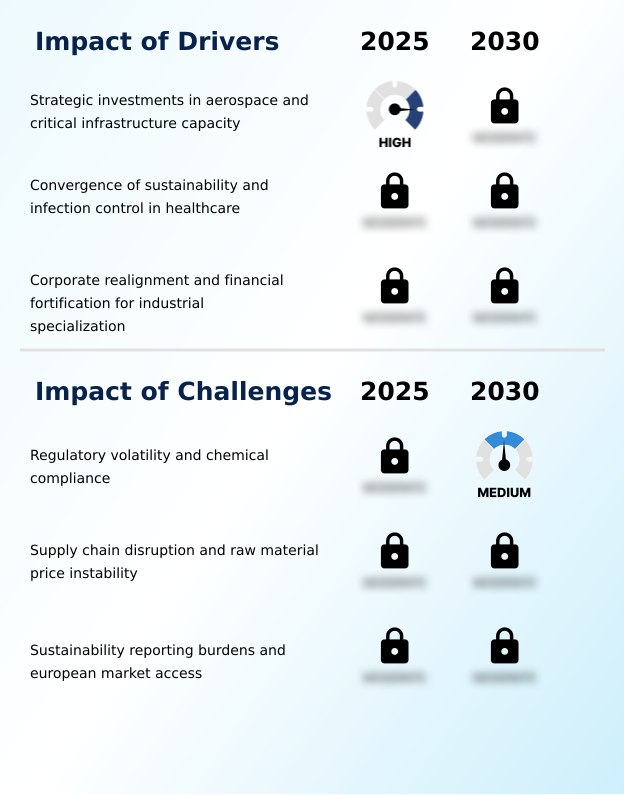
          • Impact of drivers and challenges in 2023 and 2028
        • 9.4 Market opportunities/restraints

          10 Competitive Landscape

          • 10.1 Overview
            • 10.2 Competitive Landscape
              • Overview on criticality of inputs and factors of differentiation
            • 10.3 Landscape disruption
              • Overview on factors of disruption
            • 10.4 Industry risks
              • Impact of key risks on business

            11 Competitive Analysis

            • 11.1 Companies profiled
              • Companies covered
            • 11.2 Market positioning of companies
              • Matrix on companies position and classification
            • 11.3 Compagnie de Saint-Gobain S.A.
              • Compagnie de Saint-Gobain S.A. - Overview
              • Compagnie de Saint-Gobain S.A. - Business segments
              • Compagnie de Saint-Gobain S.A. - Key news
              • Compagnie de Saint-Gobain S.A. - Key offerings
              • Compagnie de Saint-Gobain S.A. - Segment focus
            • 11.4 Continental AG
              • Continental AG - Overview
              • Continental AG - Business segments
              • Continental AG - Key news
              • Continental AG - Key offerings
              • Continental AG - Segment focus
            • 11.5 Low and Bonar
              • Low and Bonar - Overview
              • Low and Bonar - Product / Service
              • Low and Bonar - Key offerings
            • 11.6 OMNOVA Solutions Inc.
              • OMNOVA Solutions Inc. - Overview
              • OMNOVA Solutions Inc. - Product / Service
              • OMNOVA Solutions Inc. - Key offerings
            • 11.7 Seaman Corp.
              • Seaman Corp. - Overview
              • Seaman Corp. - Product / Service
              • Seaman Corp. - Key offerings
            • 11.8 Serge Ferrari SAS
              • Serge Ferrari SAS - Overview
              • Serge Ferrari SAS - Product / Service
              • Serge Ferrari SAS - Key offerings
            • 11.9 Sioen Industries NV
              • Sioen Industries NV - Overview
              • Sioen Industries NV - Product / Service
              • Sioen Industries NV - Key offerings
            • 11.10 Spradling Holdings Inc.
              • Spradling Holdings Inc. - Overview
              • Spradling Holdings Inc. - Product / Service
              • Spradling Holdings Inc. - Key offerings
            • 11.11 SRF Ltd.
              • SRF Ltd. - Overview
              • SRF Ltd. - Business segments
              • SRF Ltd. - Key offerings
              • SRF Ltd. - Segment focus
            • 11.12 Trelleborg AB
              • Trelleborg AB - Overview
              • Trelleborg AB - Business segments
              • Trelleborg AB - Key news
              • Trelleborg AB - Key offerings
              • Trelleborg AB - Segment focus

            12 Appendix

            • 12.1 Scope of the report
              • 12.2 Inclusions and exclusions checklist
                • Inclusions checklist
                • Exclusions checklist
              • 12.3 Currency conversion rates for US$
                • Currency conversion rates for US$
              • 12.4 Research methodology
                • Research methodology
              • 12.5 Data procurement
                • Information sources
              • 12.6 Data validation
                • Data validation
              • 12.7 Validation techniques employed for market sizing
                • Validation techniques employed for market sizing
              • 12.8 Data synthesis
                • Data synthesis
              • 12.9 360 degree market analysis
                • 360 degree market analysis
              • 12.10 List of abbreviations
                • List of abbreviations

              Research Methodology

              Technavio presents a detailed picture of the market by way of study, synthesis, and summation of data from multiple sources. The analysts have presented the various facets of the market with a particular focus on identifying the key industry influencers. The data thus presented is comprehensive, reliable, and the result of extensive research, both primary and secondary.

              INFORMATION SOURCES

              Primary sources

              • Manufacturers and suppliers
              • Channel partners
              • Industry experts
              • Strategic decision makers

              Secondary sources

              • Industry journals and periodicals
              • Government data
              • Financial reports of key industry players
              • Historical data
              • Press releases

              DATA ANALYSIS

              Data Synthesis

              • Collation of data
              • Estimation of key figures
              • Analysis of derived insights

              Data Validation

              • Triangulation with data models
              • Reference against proprietary databases
              • Corroboration with industry experts

              REPORT WRITING

              Qualitative

              • Market drivers
              • Market challenges
              • Market trends
              • Five forces analysis

              Quantitative

              • Market size and forecast
              • Market segmentation
              • Geographical insights
              • Competitive landscape

              Interested in this report?

              Get your sample now to see our research methodology and insights!

              Download Now

              Frequently Asked Questions

              Elastomer Coated Fabric market growth will increase by $ 2538.9 mn during 2024-2028 .

              The Elastomer Coated Fabric market is expected to grow at a CAGR of 4.5% during 2024-2028 .

              Elastomer Coated Fabric market is segmented by Application( Transportation, Protective clothing, Industrial, Others)

              Auburn Manufacturing Inc., Chemprene Inc., COLMANT COATED FABRICS, Compagnie de Saint-Gobain S.A., Continental AG, Fabri Cote, Freudenberg Sealing Technologies Ltd., Fuzhou Haoyuan New Material Technology Co. Ltd., Jiangsu Zobon Conveyor Belt Co. Ltd., Kiran Rubber Industries, Low and Bonar, Mid Mountain Materials Inc., OMNOVA Solutions Inc., Seaman Corp., Serge Ferrari SAS, Sioen Industries NV, Spradling Holdings Inc., SRF Ltd., Trelleborg AB, Zenith Industrial Rubber Products Pvt. Ltd. are a few of the key vendors in the Elastomer Coated Fabric market.

              North America will register the highest growth rate of 34% among the other regions. Therefore, the Elastomer Coated Fabric market in North America is expected to garner significant business opportunities for the vendors during the forecast period.

              US, Germany, UK, China, India

              • Increasing government regulations on elastomer coated fabricsOwing to the rising incidences of impact-related injuries is the driving factor this market.
              • several government agencies are implementing standards mandating protective clothing in hazardous environments. The need to comply with these standards drives the demand for elastomer coated fabric. For instance is the driving factor this market.
              • OSHA sets safety work standards for various industries. According to one such standard is the driving factor this market.
              • employers must select and mandate employees to use appropriate protective gear when exposed to harmful chemicals is the driving factor this market.
              • gas is the driving factor this market.
              • vapor or air is the driving factor this market.
              • and biohazards. Employers must also select appropriate protection gear based on the tasks to be performed is the driving factor this market.
              • duration of use is the driving factor this market.
              • conditions present is the driving factor this market.
              • and the hazards and potential hazards identified.The development of standards to compare the performance of protective clothing has significantly improved the ability of safety managers to select appropriate performance fabrics. These standards encourage manufacturers to produce elastomer coated fabrics in compliance with the standards and help employers comply with the established standards while choosing the required product.The International Safety Equipment Association is an American National Standards Institute (ANSI)-an accredited standard developing organization that develops elastomer coated fabrics and technologies for people working in hazardous environments. For instance is the driving factor this market.
              • the association works closely with manufacturers is the driving factor this market.
              • test labs is the driving factor this market.
              • subject-matter experts is the driving factor this market.
              • end-users is the driving factor this market.
              • and government agencies. For instance is the driving factor this market.
              • ANSI/ISEA 101-2014 is the American National Standard for Limited-Use and Disposable Coveralls - Size and Labeling Requirements. The update to this standard includes expanding the sizing chart to accommodate a working population that wears these garments daily in the various workplace uses is the driving factor this market.
              • including grain and milling operations is the driving factor this market.
              • automotive repair is the driving factor this market.
              • painting and dry chemical applications is the driving factor this market.
              • food processing abrasive blasting is the driving factor this market.
              • and construction work. Such standards can assist manufacturers in producing appropriate elastomer coated fabric in compliance with the given standard. Employers complying with these standards can select the material according to the need and minimize the risk of workplace hazards. Thus is the driving factor this market.
              • such factors are expected to drive the growth of the global elastomer coated fabric market during the forecast period. is the driving factor this market.

              The Elastomer Coated Fabric market vendors should focus on grabbing business opportunities from the Transportation segment as it accounted for the largest market share in the base year.