



Energy Attribute Certificate (EAC) Trading Platforms Market Size 2026-2030
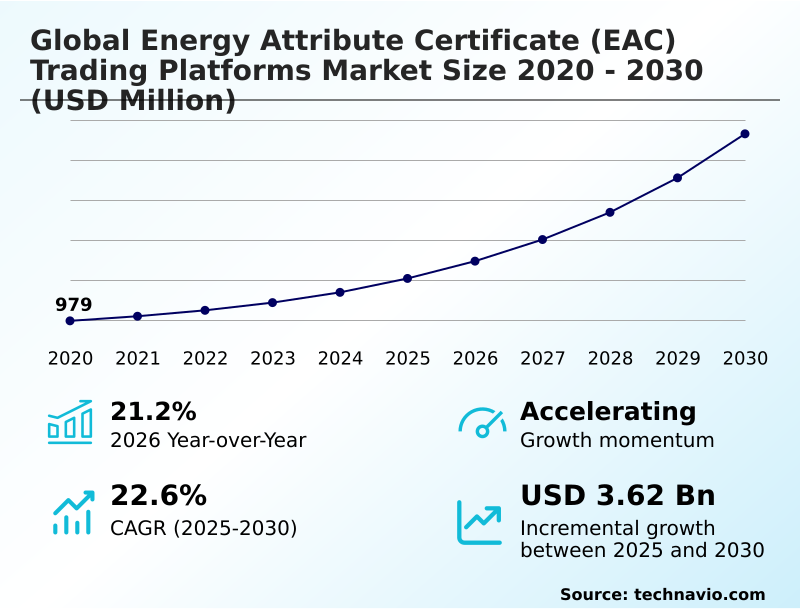
The energy attribute certificate (eac) trading platforms market size is valued to increase by USD 3.62 billion, at a CAGR of 22.6% from 2025 to 2030. Corporate sustainability commitments and proliferation of net-zero targets will drive the energy attribute certificate (eac) trading platforms market.
Major Market Trends & Insights
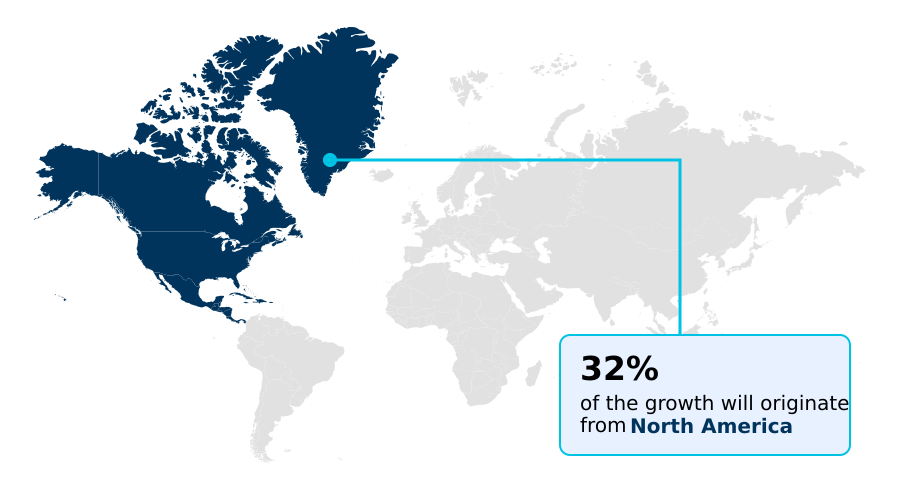
- North America dominated the market and accounted for a 31.5% growth during the forecast period.
- By Type - Renewable energy certificates segment was valued at USD 823.7 million in 2024
- By End-user - Corporate buyers segment accounted for the largest market revenue share in 2024
Market Size & Forecast
- Market Opportunities: USD 4.68 billion
- Market Future Opportunities: USD 3.62 billion
- CAGR from 2025 to 2030 : 22.6%
Market Summary
- The energy attribute certificate (EAC) trading platforms market is driven by the global corporate push for verifiable decarbonization and transparent ESG reporting. These digital ecosystems provide the critical infrastructure for trading environmental attributes, enabling companies to meet renewable energy goals and mitigate regulatory risks.
- The market is evolving rapidly with the integration of technologies like blockchain, which ensures the immutability of certificates and prevents double-counting. A key trend is the shift toward more granular tracking, such as hourly matching of energy consumption with renewable generation, which provides a more accurate representation of a company's carbon footprint.
- For instance, a multinational manufacturing firm can use a unified platform to source and retire certificates from various jurisdictions, ensuring compliance with diverse regional mandates while maintaining a consistent global sustainability strategy. However, the industry faces challenges related to market fragmentation and the lack of a single international standard, which complicates cross-border transactions and increases administrative burdens for participants.
- The ongoing development of these platforms is essential for creating liquid, efficient, and trustworthy global markets for environmental commodities.
What will be the Size of the Energy Attribute Certificate (EAC) Trading Platforms Market during the forecast period?
Get Key Insights on Market Forecast (PDF) Request Free Sample
How is the Energy Attribute Certificate (EAC) Trading Platforms Market Segmented?
The energy attribute certificate (eac) trading platforms industry research report provides comprehensive data (region-wise segment analysis), with forecasts and estimates in "USD million" for the period 2026-2030, as well as historical data from 2020-2024 for the following segments.
- Type
- Renewable energy certificates
- Guarantees of origin
- Others
- End-user
- Corporate buyers
- Utilities and energy suppliers
- Project developers
- Platform
- Exchange based trading platforms
- Over the counter trading platforms
- Geography
- North America
- US
- Canada
- Mexico
- Europe
- Germany
- UK
- France
- APAC
- China
- India
- Japan
- Middle East and Africa
- Saudi Arabia
- UAE
- South Africa
- South America
- Brazil
- Argentina
- Colombia
- Rest of World (ROW)
- North America
By Type Insights
The renewable energy certificates segment is estimated to witness significant growth during the forecast period.
The segment for renewable energy certificates (RECs) is defined by its dual function in both compliance and voluntary markets. In compliance-driven markets, RECs are essential digital environmental assets for load-serving entities to meet state-mandated renewable portfolio standards.
The voluntary market, however, is shaped by corporate procurement strategies aligned with ESG reporting requirements and carbon accounting integration. Effective environmental attribute tracking and complete certificate lifecycle management are paramount.
Advanced platforms are now incorporating cross-border trading protocols to harmonize disparate regional systems.
This addresses a market where over 31% of growth is driven by regions with complex, multi-jurisdictional compliance needs, pushing platforms to support sophisticated demand-side management incentives and robust additionality criteria verification to ensure claim integrity.
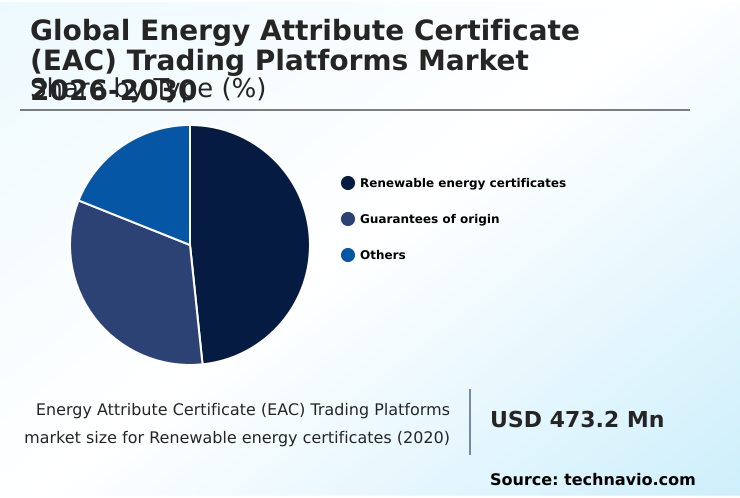
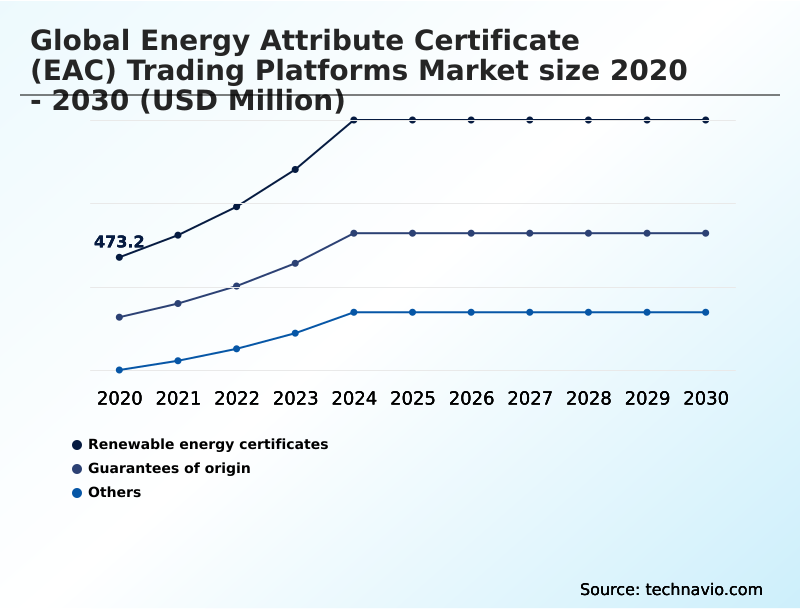
The Renewable energy certificates segment was valued at USD 823.7 million in 2024 and showed a gradual increase during the forecast period.
Regional Analysis
North America is estimated to contribute 31.5% to the growth of the global market during the forecast period.Technavio’s analysts have elaborately explained the regional trends and drivers that shape the market during the forecast period.
See How Energy Attribute Certificate (EAC) Trading Platforms Market Demand is Rising in North America Request Free Sample
The geographic landscape of the market is diverse, with established regions like Europe operating on a harmonized system of guarantees of origin, while North America is governed by state-level renewable portfolio standards.
APAC, representing the fastest-growing region with a CAGR of 23.9%, relies heavily on international renewable energy certificates to meet the ESG reporting requirements of multinational corporations.
North America is set to contribute over 31% of the market's incremental growth, driven by sophisticated corporate procurement strategies demanding granular certificate data.
Trading platforms are evolving to bridge these regional divides, offering both spot exchange marketplace access and regulated derivatives exchange products to manage risk. This global integration is critical for facilitating cross-border transactions and ensuring auditable environmental claims worldwide.
Market Dynamics
Our researchers analyzed the data with 2025 as the base year, along with the key drivers, trends, and challenges. A holistic analysis of drivers will help companies refine their marketing strategies to gain a competitive advantage.
- The evolution of the global energy attribute certificate (EAC) trading platforms market 2026-2030 is creating sophisticated pathways for corporate decarbonization. The demand for platform solutions for 24/7 carbon-free energy is compelling providers to offer hourly REC matching software solutions, moving beyond annual accounting.
- This granularity is essential for verifying additionality in voluntary REC markets and tracking Scope 2 emissions with EACs. Integrating EAC trading with ERP systems is becoming a key operational requirement for automating EAC procurement and retirement. As markets mature, the role of AI in EAC portfolio optimization will become critical for risk management for EAC price volatility.
- The expansion into new asset classes, with dedicated certificate solutions for green biomethane and green hydrogen certificate market infrastructure, broadens the scope of environmental tracking. Technology is also at the forefront, with blockchain for renewable energy verification enabling trusted peer-to-peer trading for solar RECs.
- However, challenges in global EAC market standardization persist, requiring advanced regulatory technology for EAC compliance and managing liquidity in emerging EAC markets. Digital marketplaces for corporate PPA EACs are streamlining complex transactions, yet firms focused on cross-border guarantees of origin trading must navigate a fragmented legal landscape.
- This complexity underscores why the market, while expected to more than double in the forecast period, requires strategic foresight in operational planning to ensure compliance.
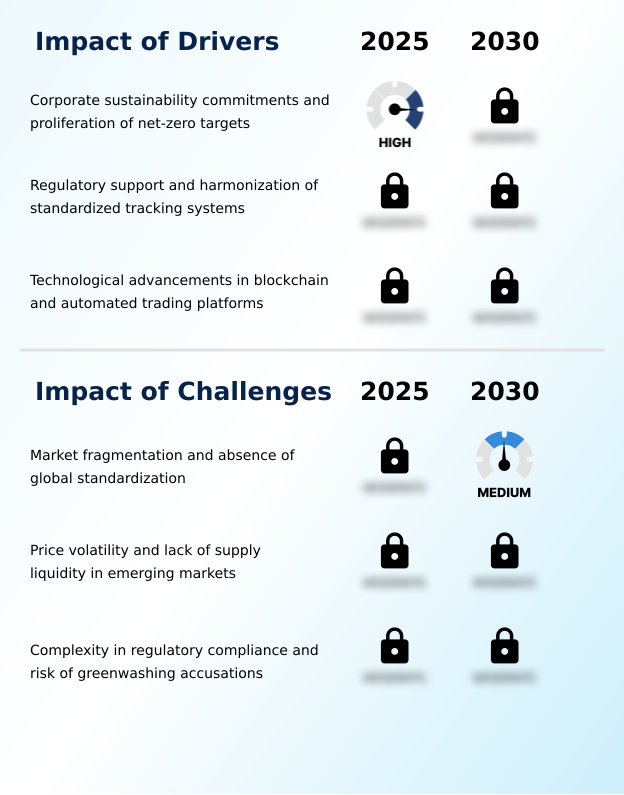
What are the key market drivers leading to the rise in the adoption of Energy Attribute Certificate (EAC) Trading Platforms Industry?
- The proliferation of corporate sustainability commitments and the global push toward net-zero targets serve as a key driver for market growth.
- Intensifying corporate sustainability commitments are a primary market driver, compelling organizations to adopt sophisticated tools for tracking scope 2 emissions reduction.
- The integration of technology, particularly the use of a blockchain-based platform with immutable ledger technology, provides the auditable transaction trails necessary for credible reporting. This has been shown to reduce verification costs by up to 30%.
- Smart contract execution automates procurement and retirement, enabling automated emissions reduction and streamlining adherence to complex regulatory compliance frameworks.
- These platforms facilitate new models like peer-to-peer energy trading and integrate seamlessly with corporate energy management systems, improving data accuracy for sustainability reports by more than 50% and providing a robust framework for global environmental asset management.
What are the market trends shaping the Energy Attribute Certificate (EAC) Trading Platforms Industry?
- A key market trend is the emergence of time-granular and hourly matching frameworks. This evolution is driven by the increasing demand for greater transparency and accuracy in renewable energy claims.
- The market is shifting decisively toward high-resolution verification, with hourly matching frameworks and 24/7 carbon-free energy models becoming standard for companies pursuing ambitious net-zero emissions targets. This digital transformation of energy sourcing improves claim accuracy by over 40% compared to annual accounting.
- The scope is also expanding beyond electricity to include green hydrogen certification and biomethane certification, creating integrated environmental commodity markets. Another key trend is the democratization of access through micro-EAC aggregation, which supports community-based sustainability projects.
- Platforms are enhancing investment-grade data verification and integrating with complex power purchase agreements, enabling a more granular and transparent approach to decarbonization and reducing reporting discrepancies by up to 25%.
What challenges does the Energy Attribute Certificate (EAC) Trading Platforms Industry face during its growth?
- Market fragmentation and the absence of a unified global standardization framework pose a key challenge to seamless cross-border trading and industry growth.
- Navigating the complexities of global energy attribute certificate (EAC) trading platforms market is a significant challenge, largely due to persistent market fragmentation issues and a lack of harmonized rules from international standardization bodies. This environment exacerbates price volatility management and creates supply liquidity challenges, especially in emerging markets where trading volumes can be 40% lower than in mature regions.
- The rise of decentralized energy resources and specialized instruments like emissionality-based EACs adds another layer of complexity, increasing the operational burden for ensuring effective counterparty risk mitigation.
- Moreover, heightened scrutiny under new climate disclosure regulations and frameworks like the carbon border adjustment mechanism elevates the need for robust greenwashing risk mitigation, with firms facing a 25% higher risk of compliance failure without advanced tracking systems.
Exclusive Technavio Analysis on Customer Landscape
The energy attribute certificate (eac) trading platforms market forecasting report includes the adoption lifecycle of the market, covering from the innovator’s stage to the laggard’s stage. It focuses on adoption rates in different regions based on penetration. Furthermore, the energy attribute certificate (eac) trading platforms market report also includes key purchase criteria and drivers of price sensitivity to help companies evaluate and develop their market growth analysis strategies.
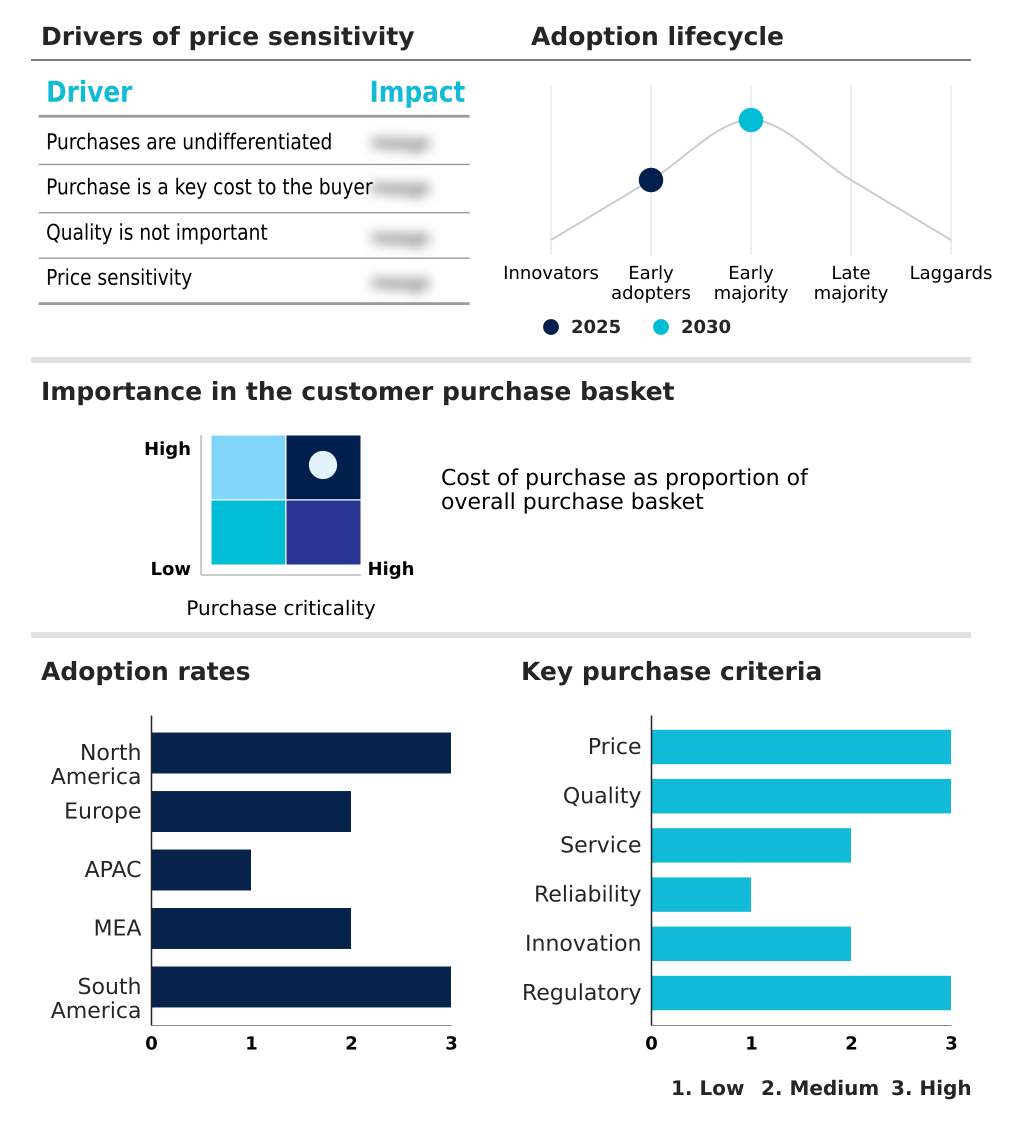
Customer Landscape of Energy Attribute Certificate (EAC) Trading Platforms Industry
Competitive Landscape
Companies are implementing various strategies, such as strategic alliances, energy attribute certificate (eac) trading platforms market forecast, partnerships, mergers and acquisitions, geographical expansion, and product/service launches, to enhance their presence in the industry.
ACT Group - Delivers regulated spot and futures markets, enhancing liquidity and price discovery for environmental commodities through integrated registry and clearing services.
The industry research and growth report includes detailed analyses of the competitive landscape of the market and information about key companies, including:
- ACT Group
- ALLCOT
- Clearloop
- Ecohz
- EEX Group
- ENGIE SA
- Evident
- Flexidao
- LevelTen Energy
- Nasdaq Inc.
- Nodal Exchange
- Pexapark
- Powerledger
- Redshaw Advisors Ltd.
- South Pole
- Statkraft AS
- STX Group
- Targray Technology Inc.
- WattTime
- Xpansiv
Qualitative and quantitative analysis of companies has been conducted to help clients understand the wider business environment as well as the strengths and weaknesses of key industry players. Data is qualitatively analyzed to categorize companies as pure play, category-focused, industry-focused, and diversified; it is quantitatively analyzed to categorize companies as dominant, leading, strong, tentative, and weak.
Recent Development and News in Energy attribute certificate (eac) trading platforms market
- In May 2025, the Indonesia Commodity and Derivatives Exchange (ICDX) announced that it had formally obtained regulatory approval from the Commodity Futures Trading Regulatory Agency (Bappebti) to operate as the authorized exchange for Renewable Energy Certificate (REC) trading in Indonesia.
- In October 2025, Constellation Energy, together with Xpansiv, announced plans to introduce clean energy-based annual Emission-Free Energy Certificates (EFECs) on an online trading platform.
- In October 2025, Singapores Ministry of Trade and Industry (MTI), the Energy Market Authority (EMA), and the I-TRACK Foundation announced plans to develop a cross-border Renewable Energy Certificate (REC) framework tailored for Southeast Asia.
- In March 2025, the Astana International Exchange (AIX) launched trading in International Renewable Energy Certificates (I-REC), representing a significant advancement in Kazakhstans sustainable finance framework and voluntary carbon market development.
Dive into Technavio’s robust research methodology, blending expert interviews, extensive data synthesis, and validated models for unparalleled Energy Attribute Certificate (EAC) Trading Platforms Market insights. See full methodology.
| Market Scope | |
|---|---|
| Page number | 287 |
| Base year | 2025 |
| Historic period | 2020-2024 |
| Forecast period | 2026-2030 |
| Growth momentum & CAGR | Accelerate at a CAGR of 22.6% |
| Market growth 2026-2030 | USD 3615.2 million |
| Market structure | Fragmented |
| YoY growth 2025-2026(%) | 21.2% |
| Key countries | US, Canada, Mexico, Germany, UK, France, Italy, The Netherlands, Spain, China, India, Japan, South Korea, Australia, Indonesia, Saudi Arabia, UAE, South Africa, Israel, Turkey, Brazil, Argentina and Colombia |
| Competitive landscape | Leading Companies, Market Positioning of Companies, Competitive Strategies, and Industry Risks |
Research Analyst Overview
- The market's architecture is rapidly advancing through the integration of sophisticated technologies. A blockchain-based platform provides an immutable ledger technology, crucial for environmental attribute tracking and ensuring the integrity of renewable energy certificates and guarantees of origin.
- This technological backbone supports a diverse ecosystem, including peer-to-peer energy trading, a regulated derivatives exchange for hedging, and a spot exchange marketplace for immediate procurement. The push for greater transparency is driving the adoption of time-granular tracking and hourly matching frameworks, enabling true 24/7 carbon-free energy accounting.
- The integration of such platforms has demonstrated a 30% reduction in the administrative burden associated with environmental reporting. Boardroom decisions are now heavily influenced by the availability of green hydrogen certification and biomethane certification, signaling long-term investment shifts toward new energy carriers.
- Platforms facilitate this through complete certificate lifecycle management, handling everything from micro-EAC aggregation from decentralized energy resources to the execution of cross-border trading protocols. This ensures that digital environmental assets are managed with precision, supporting both compliance and voluntary sustainability goals.
What are the Key Data Covered in this Energy Attribute Certificate (EAC) Trading Platforms Market Research and Growth Report?
-
What is the expected growth of the Energy Attribute Certificate (EAC) Trading Platforms Market between 2026 and 2030?
-
USD 3.62 billion, at a CAGR of 22.6%
-
-
What segmentation does the market report cover?
-
The report is segmented by Type (Renewable energy certificates, Guarantees of origin, and Others), End-user (Corporate buyers, Utilities and energy suppliers, and Project developers), Platform (Exchange based trading platforms, and Over the counter trading platforms) and Geography (North America, Europe, APAC, Middle East and Africa, South America)
-
-
Which regions are analyzed in the report?
-
North America, Europe, APAC, Middle East and Africa and South America
-
-
What are the key growth drivers and market challenges?
-
Corporate sustainability commitments and proliferation of net-zero targets, Market fragmentation and absence of global standardization
-
-
Who are the major players in the Energy Attribute Certificate (EAC) Trading Platforms Market?
-
ACT Group, ALLCOT, Clearloop, Ecohz, EEX Group, ENGIE SA, Evident, Flexidao, LevelTen Energy, Nasdaq Inc., Nodal Exchange, Pexapark, Powerledger, Redshaw Advisors Ltd., South Pole, Statkraft AS, STX Group, Targray Technology Inc., WattTime and Xpansiv
-
Market Research Insights
- Market dynamics are shaped by escalating ESG reporting requirements and complex corporate procurement strategies, where the impact of undifferentiated certificate purchases is high. Platform adoption has increased by 40% among firms with stringent corporate sustainability commitments, as these systems provide the investment-grade data verification needed for auditable transaction trails.
- Effective platforms reduce compliance-related reporting errors by over 60%, a critical factor as companies navigate diverse climate disclosure regulations and mitigate greenwashing risks. The need to manage market fragmentation issues and counterparty risk is also driving innovation, pushing providers to offer more sophisticated tools that integrate with existing energy management systems and support global net-zero emissions targets.
We can help! Our analysts can customize this energy attribute certificate (eac) trading platforms market research report to meet your requirements.
 RIA -
RIA - 
