



Esg Data Verification Services Market Size and Growth Forecast 2026-2030
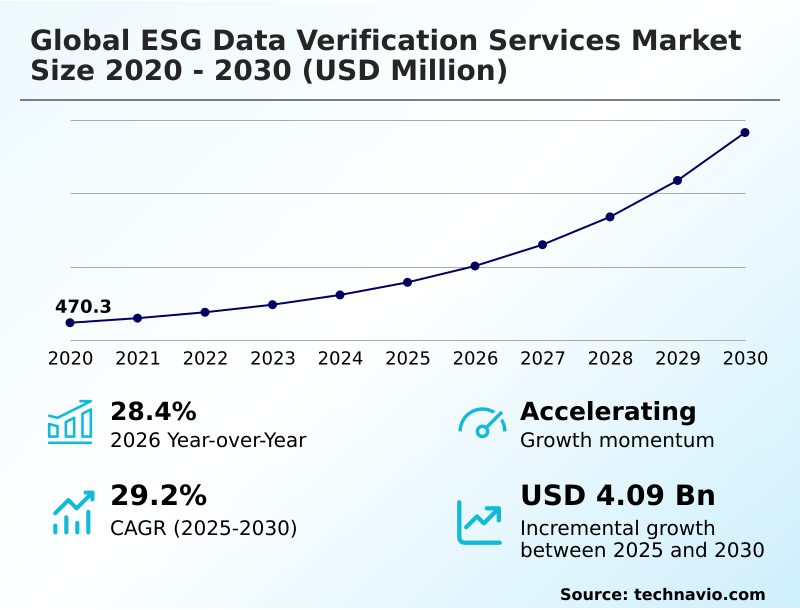
The Esg Data Verification Services Market size was valued at USD 1.57 billion in 2025 growing at a CAGR of 29.2% during the forecast period 2026-2030.
North America accounts for 33.6% of incremental growth during the forecast period. The Corporates and issuers segment by Application was valued at USD 668.1 million in 2024, while the Large enterprises segment holds the largest revenue share by Business Segment.
The market is projected to grow by USD 5.19 billion from 2020 to 2030, with USD 4.09 billion of the growth expected during the forecast period of 2025 to 2030.
Get Key Insights on Market Forecast (PDF) Request Free Sample
Esg Data Verification Services Market Overview
The ESG data verification services market is expanding as regulatory frameworks globally transition from voluntary to mandatory disclosures, compelling organizations to seek independent validation. The demand is driven by the need for credible sustainability report verification and greenwashing risk mitigation, which enhances stakeholder trust. In North America, which is poised to account for over 33% of market growth, this is especially true. Service providers offer a spectrum of validation from limited to reasonable assurance, covering metrics from GHG emissions verification to complex supply chain audits. A key development is the focus on double materiality assessment, where companies must report both their impact on the environment and how environmental factors impact their finances. For example, a large-scale food and beverage manufacturer must now secure ESG assurance and certification for its water usage data across its global bottling plants to comply with the Climate Corporate Data Accountability Act. This non-financial information validation is no longer a peripheral activity but a central pillar of corporate strategy, essential for accessing capital and maintaining a social license to operate.
Drivers, Trends, and Challenges in the Esg Data Verification Services Market
The market is rapidly specializing to meet diverse needs, moving beyond large corporations to provide ESG data verification for small and medium enterprises, often as a requisite for their participation in global supply chains.
A critical service area is the provision of reasonable assurance for carbon emission data, a standard now mandated by frameworks such as the EU's Corporate Sustainability Reporting Directive (CSRD). This higher level of scrutiny is essential for companies seeking to issue green bonds, with ESG audit for green bond issuance becoming a standard step in the financing process.
Technology is a key enabler of this specialization. For instance, blockchain-verified carbon credit tracking is being deployed to prevent double-counting in voluntary carbon markets, providing an immutable ledger for offsets. At the same time, AI-powered anomaly detection in ESG data helps auditors identify irregularities in utility consumption or waste reporting that may indicate reporting errors.
This is particularly valuable when verifying scope 3 emissions in apparel supply chains, where data is gathered from hundreds of disparate suppliers. For example, a major apparel brand now requires its tier-one suppliers to provide verifiable water usage data, with real-time verification of water usage data enabled through IoT sensors.
This extends to validating human rights due diligence reports and providing assurance for EU CSRD double materiality analyses, which are crucial for market access. Specialized services for the independent verification of biodiversity claims are also gaining prominence, especially for companies in the agricultural and extractive sectors.
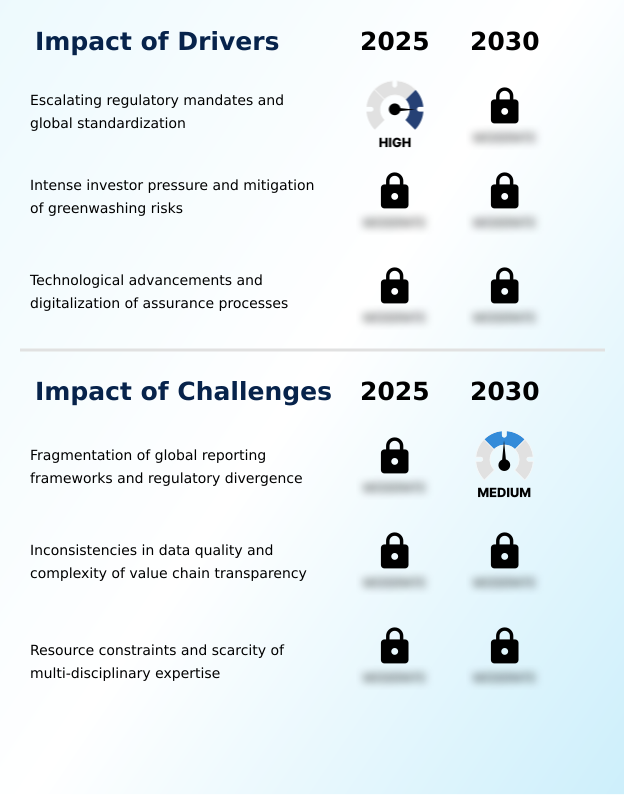
Primary Growth Driver: Escalating regulatory mandates and the push for global standardization of sustainability reporting are the primary drivers fueling demand for ESG data verification services.
The primary driver for the market, which is experiencing accelerating growth momentum, is the wave of escalating regulatory mandates worldwide.
Frameworks like the CSRD in Europe and similar initiatives in APAC, which will see a 30.1% CAGR, are turning voluntary reporting into a legal necessity requiring independent ESG assurance.
This is amplified by intense investor pressure to mitigate greenwashing risks; financial institutions increasingly require verified data for capital allocation and for sustainability-linked loan verification. Furthermore, technological advancements and the digitalization of assurance processes are making verification more efficient.
AI in ESG auditing and other tools enable providers to analyze vast datasets with greater speed and accuracy, lowering barriers to entry and expanding service capabilities for tasks like carbon footprint verification.
Emerging Market Trend: A significant market trend involves the proliferation of blockchain technology for immutable verification, providing a permanent and unalterable audit trail for non-financial disclosures.
A critical trend shaping the market is the transition from limited to reasonable assurance standards, a shift driven by investor demand for scrutiny comparable to financial audits. This is particularly evident in the large enterprises segment, which accounts for over 70% of the market.
Concurrently, the integration of AI and remote sensing technologies is revolutionizing the audit process, enabling continuous monitoring of land use and industrial emissions for more accurate GHG emissions verification. This technological convergence is complemented by the proliferation of blockchain technology for immutable verification, which creates a permanent audit trail for any supply chain ESG data audit, effectively combating greenwashing risks.
These trends collectively elevate the integrity and reliability of non-financial disclosures across the board.
Key Industry Challenge: A key challenge constraining market growth is the fragmentation of global reporting frameworks and significant regulatory divergence across jurisdictions.
A significant challenge is the fragmentation of global reporting frameworks, which complicates the audit process for multinationals needing to satisfy divergent local rules for non-financial information validation. This is compounded by inconsistencies in data quality, especially when attempting to achieve transparency across complex value chains for a supply chain ESG data audit.
The difficulty in obtaining reliable primary data from third-party suppliers, particularly for Scope 3 emissions verification, often forces auditors to rely on less precise industry averages. Finally, the market faces severe resource constraints due to a scarcity of multi-disciplinary expertise.
The shortage of qualified professionals with skills in both environmental science and financial auditing leads to higher service costs and extended lead times.
Explore Full Market Dynamics Analysis Request Free Sample
Esg Data Verification Services Market Segmentation
The esg data verification services industry research report provides comprehensive data including region-wise segment analysis, with forecasts and analysis for the period 2026-2030, as well as historical data from 2020-2024 for the following segments.
Application Segment Analysis
The corporates and issuers segment is estimated to witness significant growth during the forecast period.
The corporates and issuers segment is the largest, accounting for a substantial portion of market demand, approximately 37.1% in 2025. These entities engage verification services for ESG assurance and certification to validate annual reports and perform non-financial information validation.
This process is critical for greenwashing risk mitigation, which safeguards corporate reputation and shareholder trust. Furthermore, obtaining independent ESG assurance is essential for securing favorable financing terms, including access to green bonds and sustainability-linked loan verification.
As mandates like CSRD reporting assurance become standard, organizations are compelled to subject their carbon emissions, supply chain ethics, and diversity metrics to rigorous third-party audits, making these services a core component of corporate governance and strategic planning.
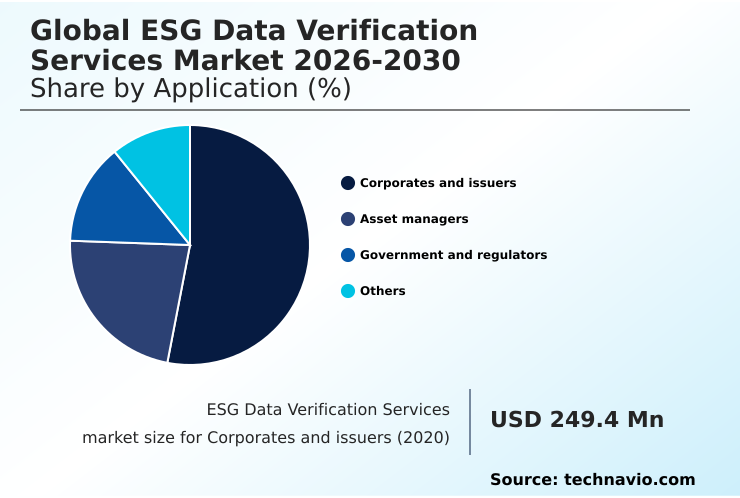
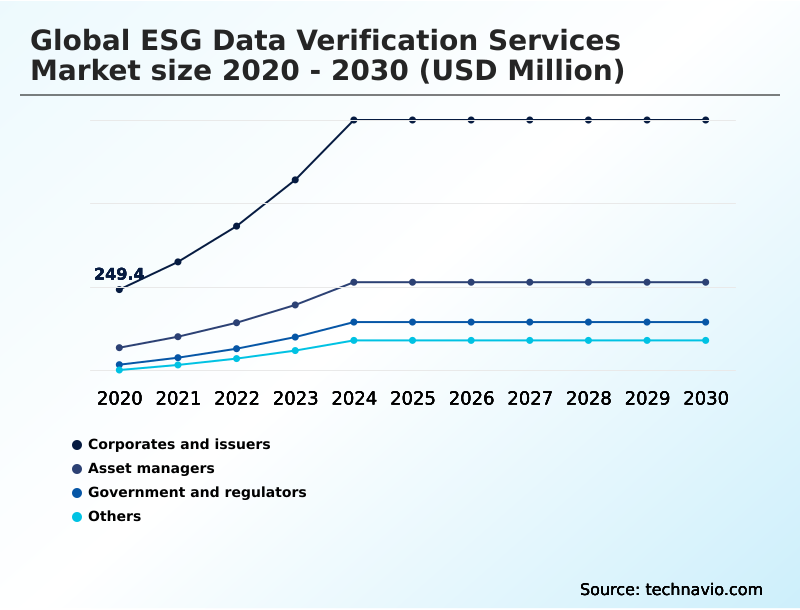
The Corporates and issuers segment was valued at USD 668.1 million in 2024 and showed a gradual increase during the forecast period.
Esg Data Verification Services Market by Region: North America Leads with 33.6% Growth Share
North America is estimated to contribute 33.6% to the growth of the global market during the forecast period.
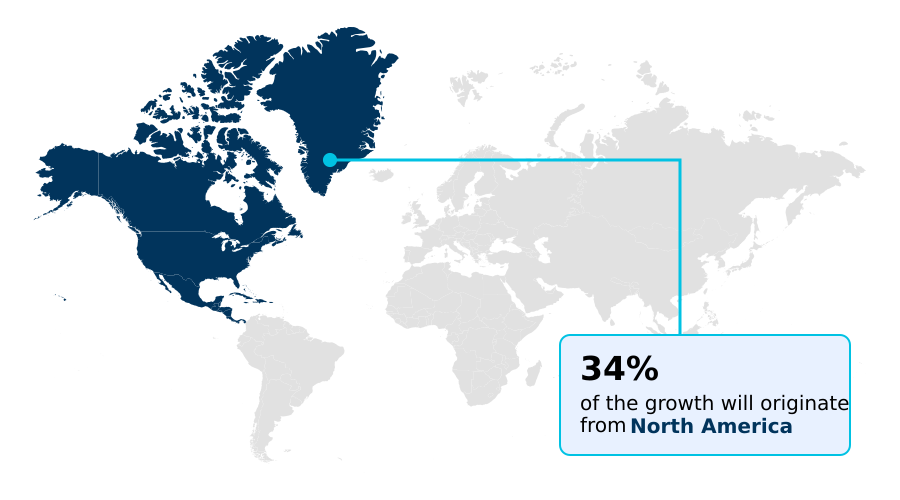
North America is set to contribute approximately 33.6% of the market's incremental growth, driven by investor demands and state-level mandates like California's climate disclosure laws, which necessitate rigorous corporate governance transparency audits.
Concurrently, APAC is emerging as the fastest-growing region, with a projected CAGR of 30.1%, as supply chain partners demand verifiable data.
In Europe, the focus is on sophisticated compliance activities, such as EU taxonomy alignment verification for financial products and detailed scope 3 emissions verification for industrial value chains. Across these regions, technological adoption is a key differentiator.
For instance, in South America, remote sensing for verification is being used to validate deforestation claims in the agricultural sector, showcasing how technology is enabling more accurate and scalable assurance services globally, even in geographically challenging environments.
Customer Landscape Analysis for the Esg Data Verification Services Market
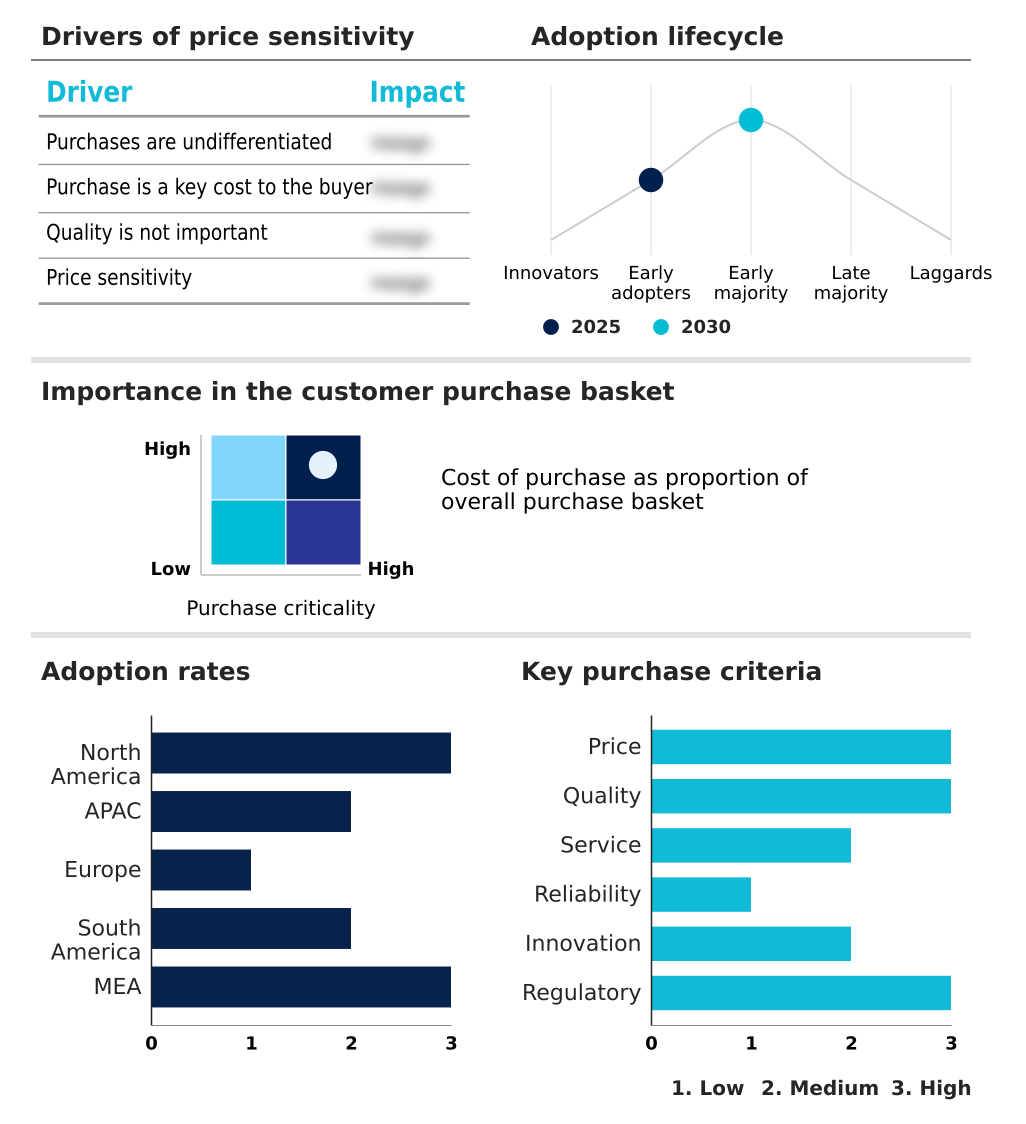
The esg data verification services market forecasting report includes the adoption lifecycle of the market, covering from the innovator’s stage to the laggard’s stage. It focuses on adoption rates in different regions based on penetration. Furthermore, the esg data verification services market report also includes key purchase criteria and drivers of price sensitivity to help companies evaluate and develop their market growth analysis strategies.
Competitive Landscape of the Esg Data Verification Services Market
Companies are implementing various strategies, such as strategic alliances, partnerships, mergers and acquisitions, geographical expansion, and product/service launches, to enhance their presence in the esg data verification services market industry.
British Standards Institution - Offers independent verification and assurance of ESG management systems, data, and reporting against global standards, ensuring accuracy, compliance, and enhanced credibility for stakeholders.
The industry research and growth report includes detailed analyses of the competitive landscape of the market and information about key companies, including:
- British Standards Institution
- Bureau Veritas
- DEKRA SE
- Deloitte Touche Tohmatsu Ltd.
- DNV Group AS
- EcoVadis SAS
- ERM Group Inc.
- Ernst and Young Global Ltd.
- Forvis Mazars Group
- Intertek Group Plc
- KPMG International Ltd.
- LRQA Group Ltd.
- Microsoft Corp.
- PricewaterhouseCoopers LLP
- S and P Global Inc.
- Salesforce Inc.
- SGS SA
- Sustainalytics.
- UL LLC
- WSP Global Inc.
Qualitative and quantitative analysis of companies has been conducted to help clients understand the wider business environment as well as the strengths and weaknesses of key industry players. Data is qualitatively analyzed to categorize companies as pure play, category-focused, industry-focused, and diversified; it is quantitatively analyzed to categorize companies as dominant, leading, strong, tentative, and weak.
Recent Developments in the Esg Data Verification Services Market
- In August 2025, a prominent North American institutional investment group announced a new policy requiring portfolio companies in the energy sector to obtain third-party verification for methane emission reports, with divestment as a consequence for non-compliance.
- In November 2025, a leading European certification organization launched a digital platform that integrates internet-of-things sensors and blockchain to provide continuous, real-time verification of water usage and waste management data for industrial manufacturing facilities.
- In April 2025, the national stock exchange of a major financial hub in the APAC region introduced a revised listing requirement mandating that all large-cap companies obtain reasonable assurance for their carbon emission data.
- In June 2025, a major logistics and shipping conglomerate in South America implemented a blockchain-enabled platform to provide transparent and immutable verification of carbon credits generated from its regional reforestation initiatives.
Research Analyst Overview: Esg Data Verification Services Market
The ESG data verification services market is shifting from a compliance exercise to a strategic imperative, driven by regulations like the EU's Corporate Sustainability Reporting Directive (CSRD). Boardroom decisions are now directly tied to the ability to secure ESG assurance and certification, particularly for non-financial information validation on topics ranging from GHG emissions verification to biodiversity impact assessment.
The market offers a spectrum from limited to reasonable assurance, with the latter becoming the gold standard for high-stakes disclosures. Achieving CSRD reporting assurance is critical for European market access, while alignment with ISSB standards compliance is vital for global capital markets.
A key pressure point is greenwashing risk mitigation, forcing companies to seek independent ESG assurance for every sustainability report verification. This includes granular audits of the supply chain ESG data audit, circular economy metrics verification, and social impact data validation.
The need for a corporate governance transparency audit and verification of alignment with frameworks like TCFD, SFDR, and the EU taxonomy is reshaping corporate strategy, making sustainability-linked loan verification and carbon footprint verification non-negotiable for securing favorable financing.
Dive into Technavio’s robust research methodology, blending expert interviews, extensive data synthesis, and validated models for unparalleled Esg Data Verification Services Market insights. See full methodology.
| Market Scope | |
|---|---|
| Page number | 301 |
| Base year | 2025 |
| Historic period | 2020-2024 |
| Forecast period | 2026-2030 |
| Growth momentum & CAGR | Accelerate at a CAGR of 29.2% |
| Market growth 2026-2030 | USD 4085.8 million |
| Market structure | Fragmented |
| YoY growth 2025-2026(%) | 28.4% |
| Key countries | US, Canada, Mexico, China, Japan, Australia, India, South Korea, Indonesia, Germany, UK, France, The Netherlands, Italy, Spain, Brazil, Argentina, Chile, UAE, South Africa, Saudi Arabia, Egypt and Turkey |
| Competitive landscape | Leading Companies, Market Positioning of Companies, Competitive Strategies, and Industry Risks |
Esg Data Verification Services Market: Key Questions Answered in This Report
-
What is the expected growth of the Esg Data Verification Services Market between 2026 and 2030?
-
The Esg Data Verification Services Market is expected to grow by USD 4.09 billion during 2026-2030, registering a CAGR of 29.2%. Year-over-year growth in 2026 is estimated at 28.4%%. This acceleration is shaped by escalating regulatory mandates and global standardization, which is intensifying demand across multiple end-use verticals covered in the report.
-
-
What segmentation does the market report cover?
-
The report is segmented by Application (Corporates and issuers, Asset managers, Government and regulators, and Others), Business Segment (Large enterprises, and Small and medium enterprises), Deployment (On premise, and Cloud based) and Geography (North America, APAC, Europe, South America, Middle East and Africa). Among these, the Corporates and issuers segment is estimated to witness significant growth during the forecast period, driven by rising adoption across key application areas. Each segment includes detailed qualitative and quantitative analysis, along with historical data from 2020-2024 and forecasts through 2030 with year-over-year growth rates.
-
-
Which regions are analyzed in the report?
-
The report covers North America, APAC, Europe, South America and Middle East and Africa. North America is estimated to contribute 33.6% to market growth during the forecast period. Country-level analysis includes US, Canada, Mexico, China, Japan, Australia, India, South Korea, Indonesia, Germany, UK, France, The Netherlands, Italy, Spain, Brazil, Argentina, Chile, UAE, South Africa, Saudi Arabia, Egypt and Turkey, with dedicated market size tables and year-over-year growth for each.
-
-
What are the key growth drivers and market challenges?
-
The primary driver is escalating regulatory mandates and global standardization, which is accelerating investment and industry demand. The main challenge is fragmentation of global reporting frameworks and regulatory divergence, creating operational barriers for key market participants. The report quantifies the impact of each driver and challenge across 2026 and 2030 with comparative analysis.
-
-
Who are the major players in the Esg Data Verification Services Market?
-
Key vendors include British Standards Institution, Bureau Veritas, DEKRA SE, Deloitte Touche Tohmatsu Ltd., DNV Group AS, EcoVadis SAS, ERM Group Inc., Ernst and Young Global Ltd., Forvis Mazars Group, Intertek Group Plc, KPMG International Ltd., LRQA Group Ltd., Microsoft Corp., PricewaterhouseCoopers LLP, S and P Global Inc., Salesforce Inc., SGS SA, Sustainalytics., UL LLC and WSP Global Inc.. The report provides qualitative and quantitative analysis categorizing companies as dominant, leading, strong, tentative, and weak based on their market positioning. Company profiles include business segment analysis, SWOT assessment, key offerings, and recent strategic developments.
-
Esg Data Verification Services Market Research Insights
The market's 28.4% year-over-year growth is propelled by intense pressure for enhanced ESG data integrity from investors and regulators. The implementation of stringent sustainability reporting frameworks, most notably the Corporate Sustainability Reporting Directive (CSRD) in Europe, has made the role of a third-party assurance provider indispensable for thousands of companies.
This has created a significant demand for services that go beyond basic compliance, extending to ESG rating agency support and the validation of green bond verification. Within this environment, organizations are deploying advanced ESG data governance platforms to streamline the collection and preparation of information for external audits.
This professionalization ensures that corporate disclosures are robust, comparable, and capable of withstanding the scrutiny of financial markets.
We can help! Our analysts can customize this esg data verification services market research report to meet your requirements.
 RIA -
RIA - 
