



Facial Palsy Market Size 2025-2029
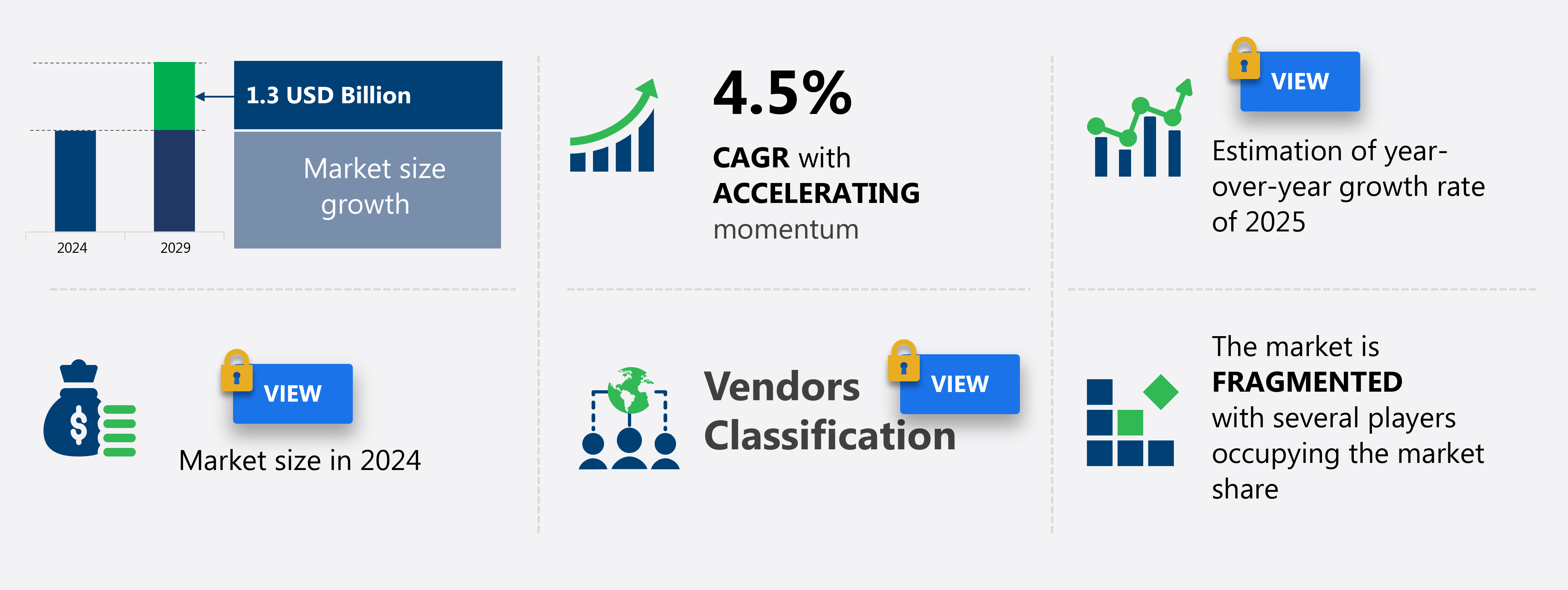
The facial palsy market is forecasted to grow by USD 1.4 billion at a CAGR of 4.5% during the forecast period. Exact values for this market can be accessed upon purchasing the report.
The global facial palsy market is driven by the increasing prevalence of facial paralysis, rising awareness for early screening and diagnosis, and growing demand for facial reanimation surgeries. The availability of advanced therapeutical treatment options such as electrotherapy is also contributing to market expansion. These factors contribute to the growing need for effective management and treatment solutions for facial palsy patients worldwide. The market is witnessing a trend towards technological advancements in diagnostic imaging and surgical techniques, resulting in more precise diagnosis and treatment planning. State-of-the-art electromyography systems with high resolution are increasingly being adopted for brain monitoring, offering increased sensitivity and spatial precision in facial palsy diagnosis.
To access the full market forecast and comprehensive analysis, Buy Now
How is this market segmented?
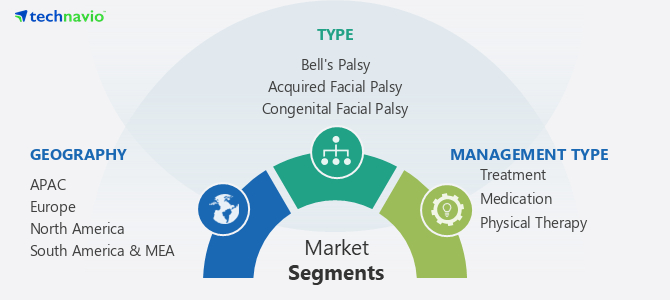
The market research report provides comprehensive data (region-wise segment analysis), with forecasts and estimates in USD USD Billion for the period 2025-2029, as well as historical data from 2019-2024 for the following segments:
- Type
- Bell's Palsy
- Acquired Facial Palsy
- Congenital Facial Palsy
- Management Type
- Treatment
- Medication
- Physical Therapy
- Surgical Intervention
- Diagnosis
- Electromyography Device
- Magnetic Resonance Imaging (MRI)
- Computed Tomography Scan
- End User
- Hospitals
- Ambulatory Surgical Centers
- Specialty Clinics
- Diagnostic Centers
- APAC
- China
- India
- Japan
- Australia
- Others
- Germany
- Spain
- Italy
- UK
- Others
- US
- Canada
- Brazil
- UAE
- South Africa
- Others
- Type
- Bell's Palsy: This segment dominates the market due to the high incidence rate of Bell's palsy.
- Acquired Facial Palsy: Growth in this segment is driven by facial nerve injuries caused by trauma and neurological disorders.
- Congenital Facial Palsy: This segment addresses facial paralysis present at birth, requiring specialized management.
- End User
- Hospitals: Hospitals offer a multidisciplinary approach with neurologists, otolaryngologists, and plastic surgeons.
- Specialty Clinics: Focus on diagnosis, treatment, and rehabilitation of facial palsy patients.
- Diagnostic Centers: Offer advanced imaging and diagnostic services.
- Ambulatory Surgical Centers: Provide specialized surgical procedures for facial reanimation.
- Management Type
- Diagnosis: Critical for identifying underlying causes and evaluating severity.
- Treatment: Driven by therapeutic research, adoption of physiotherapy treatments, and demand for facial reanimation surgery.
- Medication: Pharmaceutical interventions for managing symptoms and underlying causes.
- Physical Therapy: Includes electrotherapy and other techniques for muscle rehabilitation.
- Surgical Intervention: Facial reanimation surgeries to restore facial symmetry and function.
- Electromyography Device: Used to assess muscle activity and nerve function.
- Computed Tomography Scan: Used to visualize bone structures and identify potential causes of facial palsy.
- Magnetic Resonance Imaging (MRI): Provides detailed imaging of facial nerves and surrounding structures.
Regional Analysis
- APAC: The Asia Pacific region is anticipated to witness lucrative growth driven by rapidly growing healthcare infrastructure, particularly in urban areas, including the establishment of hospitals and specialized clinics. This is promoting the adoption of facial palsy diagnosis and treatment in countries like China and India. Additionally, cost-effective manufacturing capabilities are fostering local production, making products more affordable.
- Europe: Europe is driven by high incidence of facial paralysis, growing focus towards value-based care, and presence of robust healthcare infrastructure. The UK and Germany are key contributors, with increasing awareness and better healthcare access driving market growth.
- North America: North America is characterized by significant awareness for early diagnosis and treatment, along with the availability of advanced healthcare infrastructure. The US and Canada are leading the market due to established vendors and continuous advancements in treatment options.
- South America & MEA: South America and MEA are presenting emerging opportunities, particularly in countries like Brazil and the UAE. Increasing healthcare investments and awareness are driving the adoption of advanced diagnostic and treatment methods in these regions.
Market Dynamics
Our facial palsy market researchers analyzed the data with 2024 as the base year, along with the key drivers, trends, and challenges. A holistic analysis of drivers will help companies refine their marketing strategies to gain a competitive advantage.
What are the key market drivers leading to the rise in adoption of facial palsy market?
Increasing Prevalence of Facial Paralysis is the key driver of the market. The rising incidence of facial paralysis conditions, including Bell's palsy and facial nerve injuries caused by trauma, as well as neurological disorders, is driving the demand for facial palsy diagnosis and treatments globally. The high incidence rate creates a substantial global demand for both treatment and diagnosis, thus driving facial palsy market growth.
What are the market trends shaping the facial palsy market?
Technological Advancements in Diagnostic Imaging and Surgical Techniques is the upcoming market trend. Technological advancements in diagnostic imaging and surgical techniques are propelling innovation in the management of facial palsy. Enhanced imaging technologies, such as advanced electromyography, are facilitating more precise diagnosis. State-of-the-art electromyography systems with high resolution provide increased sensitivity and spatial precision in facial palsy, enabling the accurate identification and localization of muscle activity.
What challenges does the facial palsy market face?
High Treatment Costs is a key challenge affecting the industry growth. The high costs associated with facial palsy treatments, including surgeries and specialized therapies, can limit access to care, especially in developing regions. The economic burden of treatment can hinder market growth by preventing some patients from seeking necessary medical interventions. Furthermore, the potential complications and risks associated with surgical treatments can deter patients from pursuing these options, affecting overall market growth.
Key Companies & Market Insights
Leading companies are implementing strategies such as product innovations, acquisitions, and geographic expansions to enhance their market position. Key players in the facial palsy market include:
- Brainlab AG (Dr. Langer Medical GmbH)
- GE Healthcare
- GlaxoSmithKline plc
- iTENS Australia
- Johnson & Johnson Services, Inc.
- MED-EL Medical Electronics
- Medtronic plc
- Natus Medical
- Nihon Kohden Corporation
- Novartis AG
- Pfizer Inc.
- Sanofi
- Siemens Healthineers AG
- TensCare Ltd.
- Teva Pharmaceutical Industries Ltd.
These companies are strategically focused on product development, market expansion, and partnerships to maintain their competitive edge in the growing facial palsy market.
|
Market Scope |
|
|
Report Coverage |
Details |
| Base year | 2024 |
| Page number | 195 |
| Key countries | US, UK, China, Germany, India, Japan |
| Forecast period | 2025-2029 |
| Historic period | 2019-2023 |
| Report coverage | Market size, forecasts, segmentation |
| Regional Analysis | APAC
|
| Growth momentum and CAGR | 4.5% |
| Performing market contribution | Europe, APAC, North America |
 RIA -
RIA - 
