


Fuel Cell Commercial Vehicle Market Growth, Size, Trends, Analysis Report by Type, Application, Region and Segment Forecast 2021-2025

Fuel Cell Commercial Vehicle Market Growth, Size, Trends, Analysis Report by Type, Application, Region and Segment Forecast 2021-2025

Published: Aug 2021 120 Pages SKU: IRTNTR44815

Market Overview at a Glance

$43045 units
Market Opportunity
76.49%
CAGR
YoY growth 2020-2021(%)

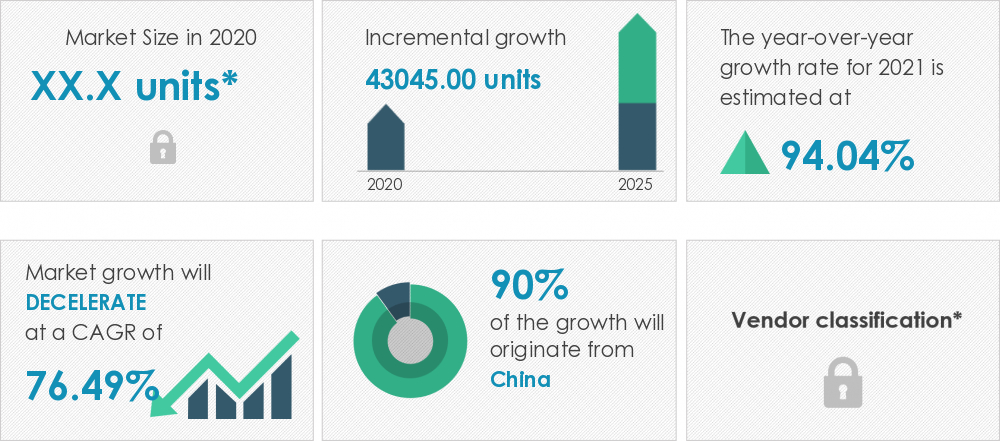
The fuel cell commercial vehicle market has the potential to grow by 43045.00 units during 2021-2025, and the market’s growth momentum will decelerate at a CAGR of 76.49%.

This fuel cell commercial vehicle market research report provides valuable insights on the post COVID-19 impact on the market, which will help companies evaluate their business approaches. Furthermore, this report extensively covers market segmentation by type (MCVs and HCVs and LCVs) and geography (China and ROW). The fuel cell commercial vehicle market report also offers information on several market vendors, including AB Volvo, CNH Industrial NV, Daimler AG, Hinduja Group Ltd., Hyundai Motor Group, Nikola Corp., PACCAR Inc., Porsche Automobil Holding SE, Tata Motors Ltd., and Toyota Motor Corp. among others.

What will the Fuel Cell Commercial Vehicle Market Size be in 2021?
Fuel Cell Commercial Vehicle Market Size

Browse TOC and LoE with selected illustrations and example pages of Fuel Cell Commercial Vehicle Market

 Get Your FREE Sample Now!

Fuel Cell Commercial Vehicle Market: Key Drivers and Trends

Based on our research output, there has been a negative impact on the market growth during and post COVID-19 era. The decreasing fuel cell cost is notably driving the fuel cell commercial vehicle market growth, although factors such as the shortage of hydrogen fuel stations may impede market growth. To unlock information on the key market drivers and the COVID-19 pandemic impact on the fuel cell commercial vehicle market industry get your FREE report sample now.

This fuel cell commercial vehicle market analysis report also provides detailed information on other upcoming trends and challenges that will have a far-reaching effect on the market growth. Get detailed insights on the trends and challenges, which will help companies evaluate and develop growth strategies.

Who are the Major Fuel Cell Commercial Vehicle Market Vendors?

The report analyzes the market’s competitive landscape and offers information on several market vendors, including:


  • AB Volvo
  • CNH Industrial NV
  • Daimler AG
  • Hinduja Group Ltd.
  • Hyundai Motor Group
  • Nikola Corp.
  • PACCAR Inc.
  • Porsche Automobil Holding SE
  • Tata Motors Ltd.
  • Toyota Motor Corp.


The fuel cell commercial vehicle market is fragmented and the vendors are deploying organic and inorganic growth strategies to compete in the market. Click here to uncover other successful business strategies deployed by the vendors. 

To make the most of the opportunities and recover from post COVID-19 impact, market vendors should focus more on the growth prospects in the fast-growing segments, while maintaining their positions in the slow-growing segments.

Download a free sample of the fuel cell commercial vehicle market forecast report for insights on complete key vendor profiles. The profiles include information on the production, sustainability, and prospects of the leading companies. 

What are the Revenue-generating Type Segments in the Fuel Cell Commercial Vehicle Market?

Fuel-Cell-Commercial-Vehicle-Market-Market-Share-by-Type-2020-2025

To gain further insights on the market contribution of various segments Request for a FREE sample

The fuel cell commercial vehicle market share growth by the MCVs and HCVs segment will be significant during the forecast period. Fetch actionable market insights on post COVID-19 impact on each segment. This report provides an accurate prediction of the contribution of all the segments to the growth of the fuel cell commercial vehicle market size.

 

Event-Tickets-Market-Report

Request for a FREE sample

What are the Key Factors Covered in this Fuel Cell Commercial Vehicle Market Report?

  • CAGR of the market during the forecast period 2021-2025
  • Detailed information on factors that will drive fuel cell commercial vehicle market growth during the next five years
  • Precise estimation of the fuel cell commercial vehicle market size and its contribution to the parent market
  • Accurate predictions on upcoming trends and changes in consumer behavior
  • The growth of the fuel cell commercial vehicle market industry across China and ROW
  • A thorough analysis of the market’s competitive landscape and detailed information on vendors
  • Comprehensive details of factors that will challenge the growth of fuel cell commercial vehicle market vendors

We can help! Our analysts can customize this report to meet your requirements. Get in touch

Executive Summary

Market Landscape

  • Market ecosystem
  • Value chain analysis

Market Sizing

  • Market definition
  • Market segment analysis
  • Market size 2020
  • Market outlook: Forecast for 2020 - 2025

Five Forces Analysis

  • Bargaining power of buyers
  • Bargaining power of suppliers
  • Threat of new entrants
  • Threat of substitutes
  • Threat of rivalry
  • Market condition

Market Segmentation by Type

  • Market segments
  • Comparison by Type
  • MCVs and HCVs - Market size and forecast 2020-2025
  • LCVs - Market size and forecast 2020-2025
  • Market opportunity by Type

Customer landscape

Geographic Landscape

  • Geographic segmentation
  • Geographic comparison
  • China - Market size and forecast 2020-2025
  • ROW - Market size and forecast 2020-2025
  • Market opportunity by geography
  • Market drivers
  • Market challenges
  • Market trends

Vendor Landscape

  • Vendor landscape
  • Landscape disruption

Vendor Analysis

  • Vendors covered
  • Market positioning of vendors
  • AB Volvo
  • CNH Industrial NV
  • Daimler AG
  • Hinduja Group Ltd.
  • Hyundai Motor Group
  • Nikola Corp.
  • PACCAR Inc.
  • Porsche Automobil Holding SE
  • Tata Motors Ltd.
  • Toyota Motor Corp.

Appendix

  • Scope of the report
  • Currency conversion rates for US$
  • Research methodology
  • List of abbreviations

Research Methodology

Technavio presents a detailed picture of the market by way of study, synthesis, and summation of data from multiple sources. The analysts have presented the various facets of the market with a particular focus on identifying the key industry influencers. The data thus presented is comprehensive, reliable, and the result of extensive research, both primary and secondary.

INFORMATION SOURCES

Primary sources

  • Manufacturers and suppliers
  • Channel partners
  • Industry experts
  • Strategic decision makers

Secondary sources

  • Industry journals and periodicals
  • Government data
  • Financial reports of key industry players
  • Historical data
  • Press releases

DATA ANALYSIS

Data Synthesis

  • Collation of data
  • Estimation of key figures
  • Analysis of derived insights

Data Validation

  • Triangulation with data models
  • Reference against proprietary databases
  • Corroboration with industry experts

REPORT WRITING

Qualitative

  • Market drivers
  • Market challenges
  • Market trends
  • Five forces analysis

Quantitative

  • Market size and forecast
  • Market segmentation
  • Geographical insights
  • Competitive landscape

Interested in this report?

Get your sample now to see our research methodology and insights!

Download Now

Frequently Asked Questions

Fuel Cell Commercial Vehicle market growth will increase by 43045 units during 2021-2025 .

The Fuel Cell Commercial Vehicle market is expected to grow at a CAGR of 76.49% during 2021-2025 .

Fuel Cell Commercial Vehicle market is segmented by Type( MCVs and HCVs, LCVs) Geographic( APAC, North America, Europe, MEA, South America) Geographic( China, ROW)

AB Volvo, CNH Industrial NV, Daimler AG, Hinduja Group Ltd., Hyundai Motor Group, Nikola Corp., PACCAR Inc., Porsche Automobil Holding SE, Tata Motors Ltd., Toyota Motor Corp. are a few of the key vendors in the Fuel Cell Commercial Vehicle market.

China will register the highest growth rate of 90.06% among the other regions. Therefore, the Fuel Cell Commercial Vehicle market in China is expected to garner significant business opportunities for the vendors during the forecast period.

China, South Korea (Republic of Korea)

  • Decreasing fuel cell costThe adoption of newer technologies is highly dependent on the cost factor is the driving factor this market.
  • and this is applicable to fuel cell technology as well. The adoption of fuel cell technology in the CVs segment is still at its nascent stage compared to the passenger car segment. Reducing fuel cell costs are seen as a crucial market driver as this will help OEMs to develop vehicles based on fuel cell technology at lower costs compared to recent years when fuel cell costs were high. The reduction in fuel cell costs can be attributed to consistent R&D on different catalysts is the driving factor this market.
  • durable membrane electrode assemblies is the driving factor this market.
  • and better electrode performance. For instance is the driving factor this market.
  • since 2006 is the driving factor this market.
  • the cost of transporting fuel cell has decreased by more than 60% to reach less than $50 per kW in 2019 is the driving factor this market.
  • while the durability of the fuel cell has gone up four-fold. Furthermore is the driving factor this market.
  • prominent OEMs are making efforts to reduce fuel cell costs by implementing economies of scale. For instance is the driving factor this market.
  • Toyota Motor is increasingly adopting fuel cell technology across wider vehicular segments is the driving factor this market.
  • including passenger cars is the driving factor this market.
  • buses is the driving factor this market.
  • and trucks is the driving factor this market.
  • to build low-cost fuel cell vehicles. By consistently working toward reducing fuel cell costs is the driving factor this market.
  • Toyota Motor is aiming to cut costs of fuel cell technologies by more than 50% by 2020 and by as much as 75% by 2025. The company also has plans to sell at least 1 million zero-emission electric and fuel cell vehicles by 2030. Therefore is the driving factor this market.
  • enhancements in electrode performance and higher production of fuel cell vehicles will be vital in further reducing fuel cell costs is the driving factor this market.
  • which will likely touch $40 per kW by 2020. Such moves by key players will benefit the global FCCV market significantly during the forecast period. is the driving factor this market.

The Fuel Cell Commercial Vehicle market vendors should focus on grabbing business opportunities from the MCVs and HCVs segment as it accounted for the largest market share in the base year.
