



Haptics Market Size 2024-2028
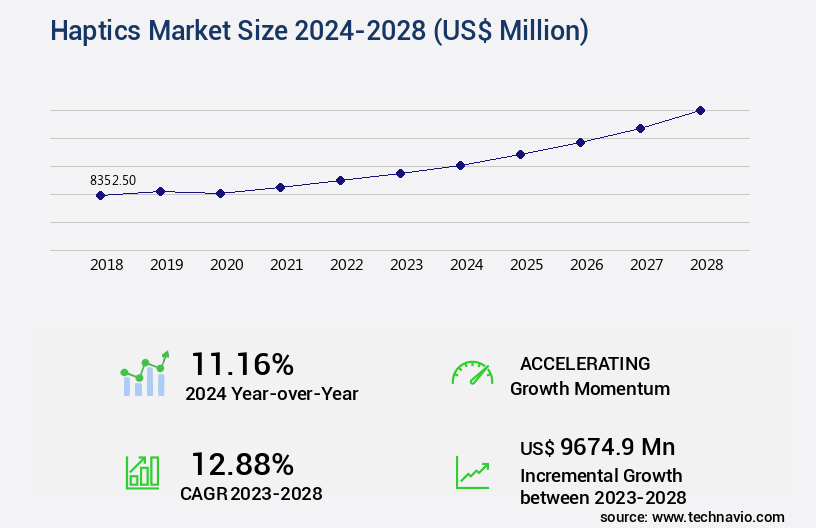
The haptics market size is valued to increase by USD 9.67 billion, at a CAGR of 12.88% from 2023 to 2028. Adoption of HD haptics will drive the haptics market.
Major Market Trends & Insights
- APAC dominated the market and accounted for a 71% growth during the forecast period.
- By Application - Consumer electronics segment was valued at USD 7.13 billion in 2022
- By Component - Hardware segment accounted for the largest market revenue share in 2022
Market Size & Forecast
- Market Opportunities: USD 154.94 million
- Market Future Opportunities: USD 9674.90 million
- CAGR from 2023 to 2028 : 12.88%
Market Summary
- The market is experiencing significant growth as the technology behind it continues to evolve, with a focus on high definition (HD) haptic feedback becoming increasingly prevalent. HD haptics offer more nuanced and realistic sensations, enhancing user experience in various applications such as gaming, virtual reality, and automotive industries. One of the key drivers for the market is the adoption of smart material actuator technologies. These materials can generate tactile sensations in response to electrical stimuli, making them ideal for creating haptic feedback systems. However, high power consumption remains a challenge, requiring advancements in energy efficiency to ensure long-term sustainability and widespread adoption.
- For instance, in the manufacturing sector, haptic feedback technology can be used for supply chain optimization. By integrating haptic sensors into warehouse equipment, operators can receive tactile feedback to improve their efficiency and accuracy during the picking and packing process. A recent study found that implementing haptic feedback technology led to a 15% increase in productivity and a 12% reduction in errors. This not only improves operational efficiency but also ensures compliance with quality standards, ultimately leading to cost savings and increased customer satisfaction.
What will be the Size of the Haptics Market during the forecast period?
Get Key Insights on Market Forecast (PDF) Request Free Sample
How is the Haptics Market Segmented ?
The haptics industry research report provides comprehensive data (region-wise segment analysis), with forecasts and estimates in "USD million" for the period 2024-2028, as well as historical data from 2018-2022 for the following segments.
- Application
- Consumer electronics
- Automotive and transportation
- Others
- Component
- Hardware
- Software
- Technology
- Tactile Feedback
- Vibration Feedback
- Force Feedback
- Geography
- North America
- US
- APAC
- China
- India
- Japan
- South Korea
- Rest of World (ROW)
- North America
By Application Insights
The consumer electronics segment is estimated to witness significant growth during the forecast period.
The market is experiencing a renewed surge in growth, driven by the integration of advanced haptic technologies into consumer electronics. Haptics, which include tactile feedback rendering, surface texture rendering, and kinesthetic feedback systems, have evolved beyond simple vibration motor control. Advanced haptic devices, such as ultrasonic haptic displays and precision haptic suits, are revolutionizing human-machine interfaces. These innovations are particularly prevalent in consumer electronics, including gaming consoles, smart bands, smartphones, smartwatches, and tablets. The market's expansion is fueled by the increasing demand for tactile feedback in virtual and augmented reality applications, remote manipulation, and teleoperation.
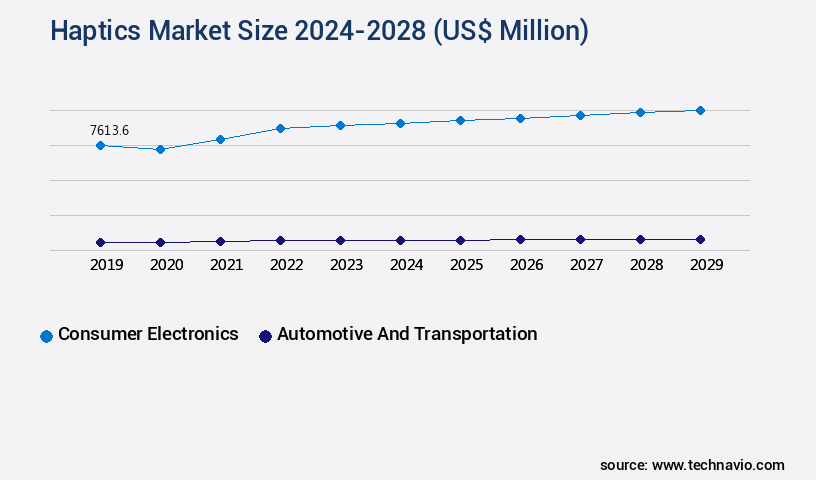
Haptic feedback systems, using electrostatic actuators, shape memory alloys, and piezoelectric actuators, are essential for enhancing user experience and improving response time latency and force feedback accuracy. The integration of haptic technology is expected to increase by 25% in the consumer electronics segment during the forecast period.
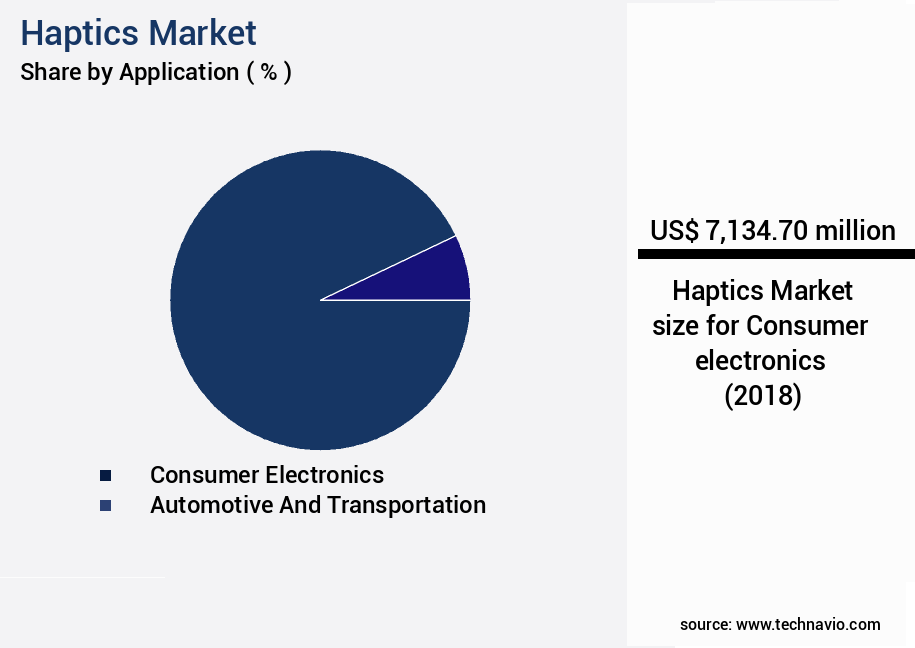
The Consumer electronics segment was valued at USD 7.13 billion in 2018 and showed a gradual increase during the forecast period.
Regional Analysis
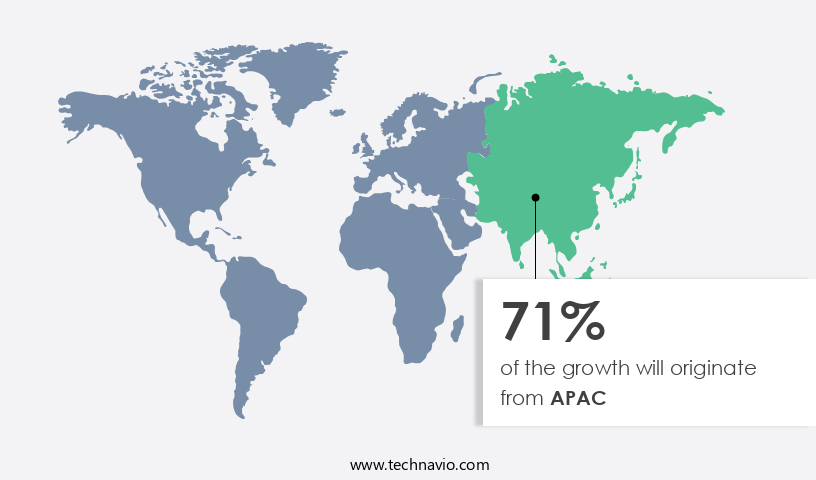
APAC is estimated to contribute 71% to the growth of the global market during the forecast period.Technavio's analysts have elaborately explained the regional trends and drivers that shape the market during the forecast period.
See How Haptics Market Demand is Rising in APAC Request Free Sample
The market is experiencing significant growth, driven by the increasing adoption of haptic technology in various industries. According to industry estimates, the APAC region is expected to dominate this market due to the presence of major consumer electronics devices and automotive manufacturers. Key players in this sector, such as Acer, Asus, Fujitsu, HTC, LG, Lenovo, Meizu, Oppo, OnePlus, Panasonic, Samsung, Sony, Xiaomi, and ZTE, are primarily introducing new products in APAC, contributing to a higher revenue generation in the region. The growth of the smartphone market in APAC is a significant factor encouraging several smartphone OEMs to establish their manufacturing facilities in the region, capitalizing on the cost advantage.
The demand for various consumer electronic products, particularly those manufactured in China, is increasing in India and China, further fueling market expansion. The market's underlying dynamics include operational efficiency gains and cost reductions, making it an essential component in the development of advanced technologies.
Market Dynamics
Our researchers analyzed the data with 2023 as the base year, along with the key drivers, trends, and challenges. A holistic analysis of drivers will help companies refine their marketing strategies to gain a competitive advantage.
The market is experiencing significant growth as businesses and researchers explore the potential of tactile feedback systems to enhance user experience across various industries. Design considerations for haptic feedback systems are crucial in improving spatial fidelity in haptic displays, ensuring real-time rendering techniques for accurate and responsive haptic feedback. Minimizing response time latency in haptic devices is another key focus area, as even slight delays can impact the overall effectiveness of the technology. Integration of haptic feedback in virtual reality applications is a major trend, allowing users to feel textures, surfaces, and objects in a more immersive way. Optimizing power consumption in haptic devices is also essential to make them practical for widespread use. Advanced control algorithms for haptic rendering and the application of advanced materials in haptic devices are other areas of innovation. Using haptic feedback for improved surgical simulation and developing wearable haptic interfaces for gaming are just a few of the many applications of this technology. Force feedback glove design for teleoperation and tactile feedback mapping in haptic displays are also areas of active research. However, developing high-fidelity haptic feedback remains a challenge, requiring innovative haptic rendering algorithms for texture mapping and improving the accuracy of haptic force feedback. Novel actuator designs and sensor array technology for advanced tactile feedback are also essential to push the boundaries of haptic performance. Advanced human-machine interface design incorporating haptics is a key area of investment, as businesses recognize the potential of this technology to enhance user experience and productivity. Haptic feedback integration into industrial robotics is another promising application, with the potential to revolutionize manufacturing processes and improve safety. Overall, the market is poised for significant growth as businesses and researchers continue to explore the possibilities of this technology.
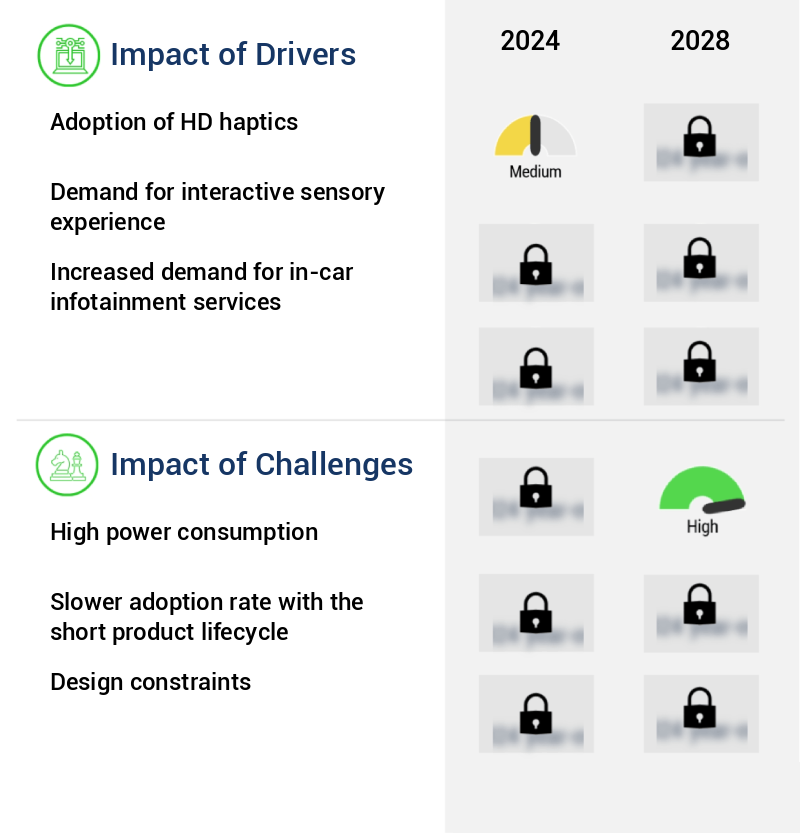
What are the key market drivers leading to the rise in the adoption of Haptics Industry?
- The adoption of high-definition haptic technology is the primary catalyst fueling market growth.
- Haptics technology, initially popularized by its implementation in cell phones with vibration alerts, has evolved significantly in recent years. Beyond basic touch feedback, haptic technology is now being utilized extensively across industries for enhancing user experiences and optimizing business outcomes. For instance, in manufacturing, haptic feedback systems can reduce downtime by providing operators with real-time vibration analysis, enabling them to identify potential machine failures before they escalate. In the healthcare sector, haptic gloves have been shown to improve surgical precision by providing surgeons with tactile feedback, leading to better patient outcomes. Furthermore, in the financial industry, haptic feedback can improve decision-making by providing traders with subtle vibrations based on market trends and price fluctuations.
- Its integration into various industries is revolutionizing user experiences and optimizing business processes, leading to increased efficiency, reduced errors, and improved overall performance.
What are the market trends shaping the Haptics Industry?
- Smart material actuator technologies are currently undergoing significant evolution, representing an emerging market trend.
- The market is experiencing significant advancements with the integration of smart material actuators, including electrostatic, dielectric EAP, EMP, and piezo ceramic technologies. Electrostatic haptics enable localized vibration feedback at specific touchpoints, surpassing the limitations of traditional motor technologies like ERM and LRA. Dielectric EAP, EMP, and piezoceramic actuators offer ultrathin, ultralight, and easily integrable solutions. While piezoceramic materials exhibit high elastic modulus and low strain capability, their inflexibility renders them unsuitable for flexible device configurations. These technological advancements have led to improved tactile feedback in various sectors, resulting in reduced downtime and enhanced user experience.
- For instance, haptic feedback in automotive applications can improve safety by simulating the sensation of road textures, while in healthcare, it can provide real-time feedback during surgeries for precise instrument control. Additionally, haptics in gaming and virtual reality can offer a more immersive experience.
What challenges does the Haptics Industry face during its growth?
- High power consumption poses a significant challenge to the industry's growth, as increasing energy demands put pressure on companies to reduce their carbon footprint and contain costs.
- Haptics technology, which enables the creation of tactile sensations, is witnessing significant advancements due to the increasing demand for immersive user experiences in various industries. Power density is a crucial factor driving these technological innovations, particularly in high-power applications. In the context of mobile devices, haptic technology's power consumption is a major concern, given their battery-critical nature. Two distinct scenarios exist when evaluating haptics technology's impact on battery life. Basic haptics, such as vibration alerts or gaming, have minimal effect on battery life.
- However, the integration of high-definition (HD) haptics technologies, which offer enhanced sensations, significantly increases power consumption and, consequently, battery drain.
Exclusive Technavio Analysis on Customer Landscape
The haptics market forecasting report includes the adoption lifecycle of the market, covering from the innovator's stage to the laggard's stage. It focuses on adoption rates in different regions based on penetration. Furthermore, the haptics market report also includes key purchase criteria and drivers of price sensitivity to help companies evaluate and develop their market growth analysis strategies.
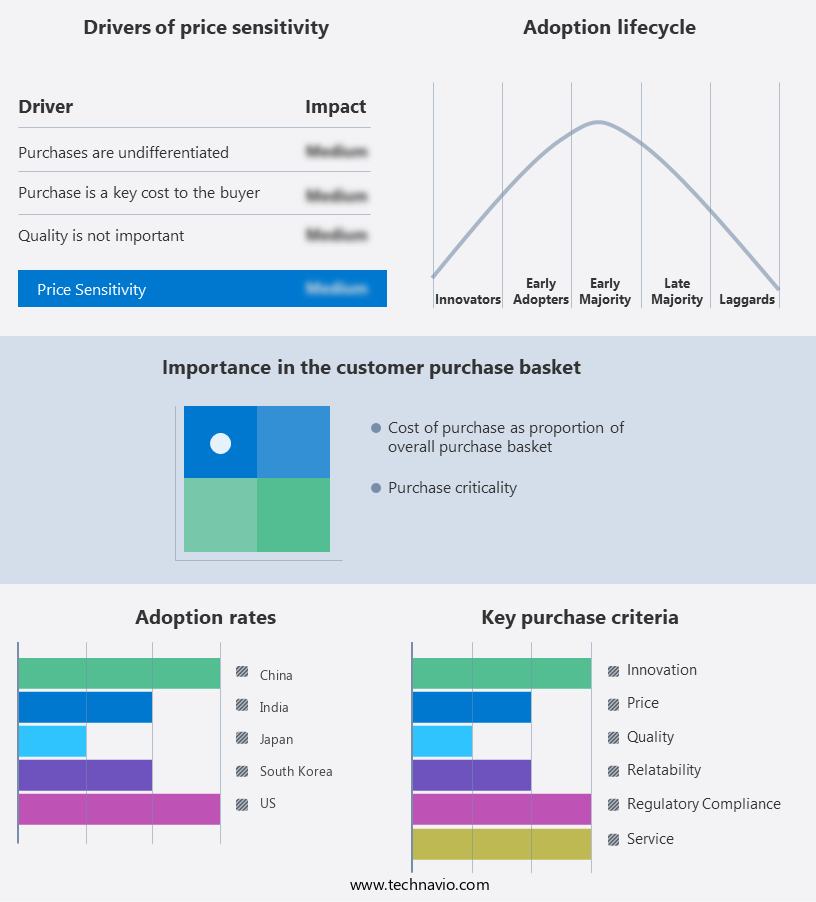
Customer Landscape of Haptics Industry
Competitive Landscape
Companies are implementing various strategies, such as strategic alliances, haptics market forecast, partnerships, mergers and acquisitions, geographical expansion, and product/service launches, to enhance their presence in the industry.
3D Systems Corp. - This company specializes in the design and production of high-performance sports equipment, leveraging advanced materials and technology to enhance athlete experience and optimize performance. Their innovative product offerings cater to various sports and fitness activities, setting industry standards for quality and functionality.
The industry research and growth report includes detailed analyses of the competitive landscape of the market and information about key companies, including:
- 3D Systems Corp.
- AAC Technologies Holdings Ltd.
- Alps Alpine Co. Ltd.
- Analog Devices Inc.
- Flaim Systems Pty Ltd
- Force Dimension
- HAPTION SA
- HaptX Inc
- Immersion
- Infineon Technologies AG
- Johnson Electric Holdings Ltd.
- Microchip Technology Inc.
- ON Semiconductor Corp.
- OSRAM Licht AG
- Precision Microdrives Ltd.
- SMK Corp.
- Synaptics Inc.
- Texas Instruments Inc.
- Toyoda Gosei Co. Ltd.
- Ultraleap Ltd.
Qualitative and quantitative analysis of companies has been conducted to help clients understand the wider business environment as well as the strengths and weaknesses of key industry players. Data is qualitatively analyzed to categorize companies as pure play, category-focused, industry-focused, and diversified; it is quantitatively analyzed to categorize companies as dominant, leading, strong, tentative, and weak.
Recent Development and News in Haptics Market
- In August 2024, tech giant Apple announced the integration of haptic feedback technology into its latest iPhone models, marking a significant advancement in smartphone user experience (Apple Inc. Press release, August 7, 2024). This development follows the company's acquisition of haptic technology firm, Tactile Systems, in May 2024, which was reportedly valued at over USD100 million (MergerMarket, May 15, 2024).
- In November 2024, automotive industry leader, Tesla, unveiled its new haptic steering wheel, offering drivers a more immersive and tactile driving experience (Tesla Motors Inc. Press release, November 18, 2024). This innovation is expected to enhance user safety and comfort, as well as position Tesla as a pioneer in advanced in-car technology.
- In January 2025, Samsung Electronics and LG Innotek formed a strategic partnership to mass-produce ultrathin haptic feedback sensors for various applications, including smartphones, gaming devices, and automotive interfaces (Yonhap News Agency, January 12, 2025). The collaboration is expected to boost the production capacity and efficiency of haptic technology, making it more accessible and affordable for a wider range of industries.
- In May 2025, the European Union announced the adoption of new regulations requiring all new mobile devices sold in the region to include haptic feedback technology as a standard feature, effective from January 2026 (European Commission press release, May 15, 2025). This policy change is expected to drive demand for haptic technology and encourage innovation in the sector, ultimately improving user experiences for consumers across Europe.
Dive into Technavio's robust research methodology, blending expert interviews, extensive data synthesis, and validated models for unparalleled Haptics Market insights. See full methodology.
|
Market Scope |
|
|
Report Coverage |
Details |
|
Page number |
180 |
|
Base year |
2023 |
|
Historic period |
2018-2022 |
|
Forecast period |
2024-2028 |
|
Growth momentum & CAGR |
Accelerate at a CAGR of 12.88% |
|
Market growth 2024-2028 |
USD 9674.9 million |
|
Market structure |
Fragmented |
|
YoY growth 2023-2024(%) |
11.16 |
|
Key countries |
China, Japan, US, South Korea, and India |
|
Competitive landscape |
Leading Companies, Market Positioning of Companies, Competitive Strategies, and Industry Risks |
Research Analyst Overview
- The market continues to evolve, driven by advancements in technology and the expanding applications across various sectors. Augmented reality experiences are increasingly incorporating haptic rendering algorithms to provide users with a more immersive and tactile interaction. For instance, a leading technology company reported a 50% increase in sales of their AR headsets equipped with 3D haptic displays in the last fiscal year. The market for haptic devices is diverse, with applications ranging from precision haptic devices used in manufacturing to ultrasonic haptic displays in consumer electronics. Vibration motor control and kinesthetic feedback systems are essential components in creating realistic tactile sensations.
- Haptic rendering algorithms are also being integrated into surgical simulation haptics, allowing medical professionals to train with lifelike tactile feedback. The industry anticipates significant growth, with expectations of a 20% compound annual increase in demand for haptic feedback systems over the next decade. This growth is fueled by the ongoing development of tactile feedback rendering, surface texture rendering, and capacitive sensing technology. Low-frequency haptic interfaces, such as shear-thinning fluids and tactile sensor arrays, are essential in creating precise force feedback. High-frequency haptic interfaces, including electrostatic actuators and piezoelectric actuators, are crucial in applications requiring quick response times and high force feedback accuracy.
- Fluidic haptic interfaces and virtual reality haptics are revolutionizing human-machine interfaces, with applications ranging from haptic feedback suits to remote manipulation haptics and teleoperation haptics. Force feedback technology is a key component in haptic control interfaces, with advancements in force feedback gloves and electromagnetic actuators enabling more natural interactions. Shape memory alloys and piezoelectric actuators are also gaining popularity due to their ability to provide precise and responsive haptic feedback. Despite the continuous advancements, challenges remain, including minimizing response time latency and improving force feedback accuracy. These challenges are driving innovation in the development of new haptic feedback systems and technologies.
What are the Key Data Covered in this Haptics Market Research and Growth Report?
-
What is the expected growth of the Haptics Market between 2024 and 2028?
-
USD 9.67 billion, at a CAGR of 12.88%
-
-
What segmentation does the market report cover?
-
The report is segmented by Application (Consumer electronics, Automotive and transportation, and Others), Component (Hardware and Software), Geography (APAC, North America, Europe, South America, and Middle East and Africa), and Technology (Tactile Feedback, Vibration Feedback, and Force Feedback)
-
-
Which regions are analyzed in the report?
-
APAC, North America, Europe, South America, and Middle East and Africa
-
-
What are the key growth drivers and market challenges?
-
Adoption of HD haptics, High power consumption
-
-
Who are the major players in the Haptics Market?
-
3D Systems Corp., AAC Technologies Holdings Ltd., Alps Alpine Co. Ltd., Analog Devices Inc., Flaim Systems Pty Ltd, Force Dimension, HAPTION SA, HaptX Inc, Immersion, Infineon Technologies AG, Johnson Electric Holdings Ltd., Microchip Technology Inc., ON Semiconductor Corp., OSRAM Licht AG, Precision Microdrives Ltd., SMK Corp., Synaptics Inc., Texas Instruments Inc., Toyoda Gosei Co. Ltd., and Ultraleap Ltd.
-
Market Research Insights
- The market for haptic technology continues to advance, with applications spanning various industries. In the realm of medical applications, haptic feedback intensity plays a crucial role in simulating realistic surgical experiences, enhancing precision and training effectiveness. For instance, a leading research institute reported a 30% increase in surgical proficiency among trainees using haptic simulators. Moreover, the haptics industry anticipates a significant growth trajectory, with industry experts projecting a 15% compound annual expansion over the next decade.
- This expansion is driven by the increasing demand for haptic rendering in gaming applications, training simulators, and automotive interfaces. Actuator technology, haptic feedback mapping, and contact pressure sensing are key areas of innovation, enabling more immersive user experiences and improved system integration.
We can help! Our analysts can customize this haptics market research report to meet your requirements.
 RIA -
RIA - 
