



The heat transfer fluid market share is expected to increase by USD 824.5 million from 2020 to 2025, and the market’s growth momentum will accelerate at a CAGR of 6.11%.
This heat transfer fluid market research report provides valuable insights on the post COVID-19 impact on the market, which will help companies evaluate their business approaches. Furthermore, this report extensively covers heat transfer fluid market segmentation by end-user (oil and gas, chemicals, csp, food, and beverage, and others), type (silicones and aromatics, mineral oils, glycol-based fluids, and others), and geography (North America, Europe, APAC, South America, and MEA). The heat transfer fluid market report also offers information on several market vendors, including BASF SE, BP Plc, Chevron Corp., Clariant International Ltd., Dow Inc., Dynalene Inc., Eastman Chemical Co., Exxon Mobil Corp., LANXESS AG, and Royal Dutch Shell Plc among others.
What will the Heat Transfer Fluid Market Size be During the Forecast Period?
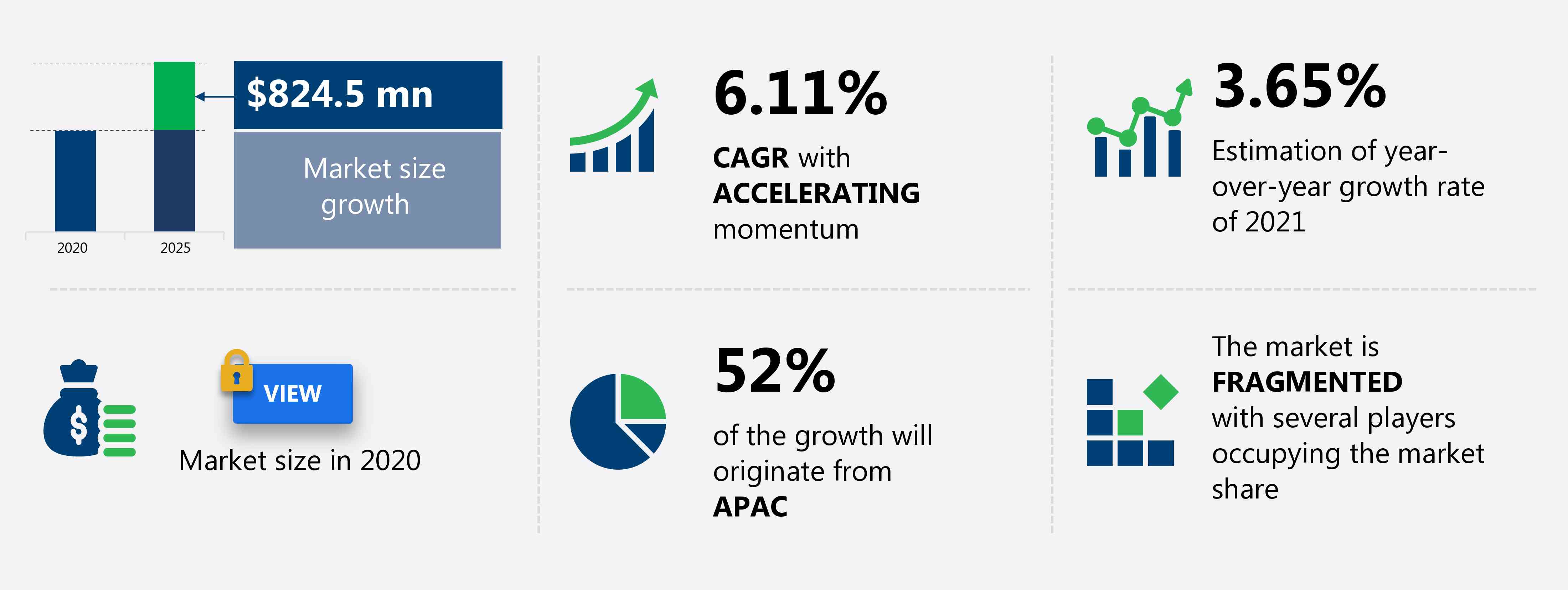
Download Report Sample to Unlock the Heat Transfer Fluid Market Size for the Forecast Period and Other Important Statistics
Heat Transfer Fluid Market: Key Drivers, Trends, and Challenges
Based on our research output, there has been a neutral impact on the market growth during and post COVID-19 era. The developing chemical industry in china and india is notably driving the heat transfer fluid market growth, although factors such as fluctuating crude oil prices may impede market growth. Our research analysts have studied the historical data and deduced the key market drivers and the COVID-19 pandemic impact on the heat transfer fluid industry. The holistic analysis of the drivers will help in deducing end goals and refining marketing strategies to gain a competitive edge.
Key Heat Transfer Fluid Market Driver
Developing the chemical industry in China and India is one of the key factors driving the growth of the global heat transfer fluid market. The chemical industry contributes significantly to the industrial and economic growth of a nation. As this industry has several forward and backward links, it is called the backbone of the manufacturing and agricultural development of the country and provides building blocks to many downstream industries. This industry is crucial for other manufacturing sectors such as paper, textiles, leather, and paints. High domestic consumption is a key driver of the chemical industry in India. Though China’s economic growth has decelerated, the country continues to be a key market for all the leading global chemical suppliers. By 2025, the country is anticipated to be a key importer of commodity chemicals. However, global companies in the country will produce products that will be crucial for the economic growth of the country. The growth of the chemical industry in India and China is anticipated to drive the demand for heat transfer fluids during the forecast period.
Key Heat Transfer Fluid Market Trend
Technological advances in heat transfer fluids product portfolio will fuel the global heat transfer fluid market growth. Commercial concentrated solar power (CSP) plants are still largely based on mineral oil parabolic trough technology (developed approximately 30 years ago) and molten salt and direct steam generation towers. The inability to store energy negates the benefits of solar thermal power. New developments in heat transfer media (HTM) that help attain high temperatures and enable easy storage are essential to unleash the true potential of CSP systems. Attaining high temperatures is crucial for cost reductions as they can increase power conversion efficiencies and enhance storage densities. These factors decrease the cost of storage units and the overall cost of the collector field. Enhancement in heat transfer fluids (HTFs) and storage solutions reduce the Levelized cost of electricity (LCOE) by 2.4% in the central receiver and 5.7% in parabolic troughs CSP plants. Moreover, advances in receivers that enhance the efficiency of solar power plants require significant investments. The development of new molten salts that have low melting temperatures and resist high temperatures are likely to considerably improve the performance of the existing receivers.
Key Heat Transfer Fluid Market Challenge
Fluctuating crude oil prices are major challenges for the global heat transfer fluid market growth. Fluctuations in the prices of crude oil and natural gas have a corresponding effect on the profit margins of oil and gas producing companies. Hence, these companies adopt various cost-cutting measures. Moreover, the prices of diversified chemicals are directly dependent on their manufacturing costs. Fluctuations in the prices of crude oil and natural gas have a corresponding effect on the manufacturing cost of crude products, which significantly affects the prices of chemicals and compels market suppliers to adopt various cost-cutting measures. Thus, the price volatility of petroleum-based raw materials is hindering the growth of the global diversified chemicals industry. Such strong fluctuations in crude oil and natural gas prices are caused by a systematic demand-supply imbalance in the global crude oil and natural gas market. Moreover, fluctuating oil prices have made advanced drilling activities, such as offshore exploration and unconventional resources development, economically challenging in regions such as Europe and North America. Several offshore drilling companies minimize cost by reducing the number of operations during a dip in crude oil prices, which adversely affects the vendors of heat transfer fluids.
This heat transfer fluid market analysis report also provides detailed information on other upcoming trends and challenges that will have a far-reaching effect on the market growth. The actionable insights on the trends and challenges will help companies evaluate and develop growth strategies for 2021-2025.
Parent Market Analysis
Technavio categorizes the global heat transfer fluid market as a part of the global specialty chemicals market. Our research report has extensively covered external factors influencing the parent market growth potential in the coming years, which will determine the levels of growth of the heat transfer fluid market during the forecast period.
Who are the Major Heat Transfer Fluid Market Vendors?
The report analyzes the market’s competitive landscape and offers information on several market vendors, including:
- BASF SE
- BP Plc
- Chevron Corp.
- Clariant International Ltd.
- Dow Inc.
- Dynalene Inc.
- Eastman Chemical Co.
- Exxon Mobil Corp.
- LANXESS AG
- Royal Dutch Shell Plc
This statistical study of the heat transfer fluid market encompasses successful business strategies deployed by the key vendors. The heat transfer fluid market is fragmented and the vendors are deploying organic and inorganic growth strategies to compete in the market.
Product Insights and News
- BASF SE - The company offers a range of polyalkylene glycols under brands like Breox, Plurasafe, and Pluracol.
To make the most of the opportunities and recover from post COVID-19 impact, market vendors should focus more on the growth prospects in the fast-growing segments, while maintaining their positions in the slow-growing segments.
The heat transfer fluid market forecast report offers in-depth insights into key vendor profiles. The profiles include information on the production, sustainability, and prospects of the leading companies.
Heat Transfer Fluid Market Value Chain Analysis
Our report provides extensive information on the value chain analysis for the heat transfer fluid market, which vendors can leverage to gain a competitive advantage during the forecast period. The end-to-end understanding of the value chain is essential in profit margin optimization and evaluation of business strategies. The data available in our value chain analysis segment can help vendors drive costs and enhance customer services during the forecast period.
The value chain of the global specialty chemicals market includes the following core components:
- Inputs
- Inbound logistics
- Operations
- Outbound logistics
- Marketing and sales
- Service
- Support activities
- Innovation
The report has further elucidated on other innovative approaches being followed by service providers to ensure a sustainable market presence.
Which are the Key Regions for Heat Transfer Fluid Market?
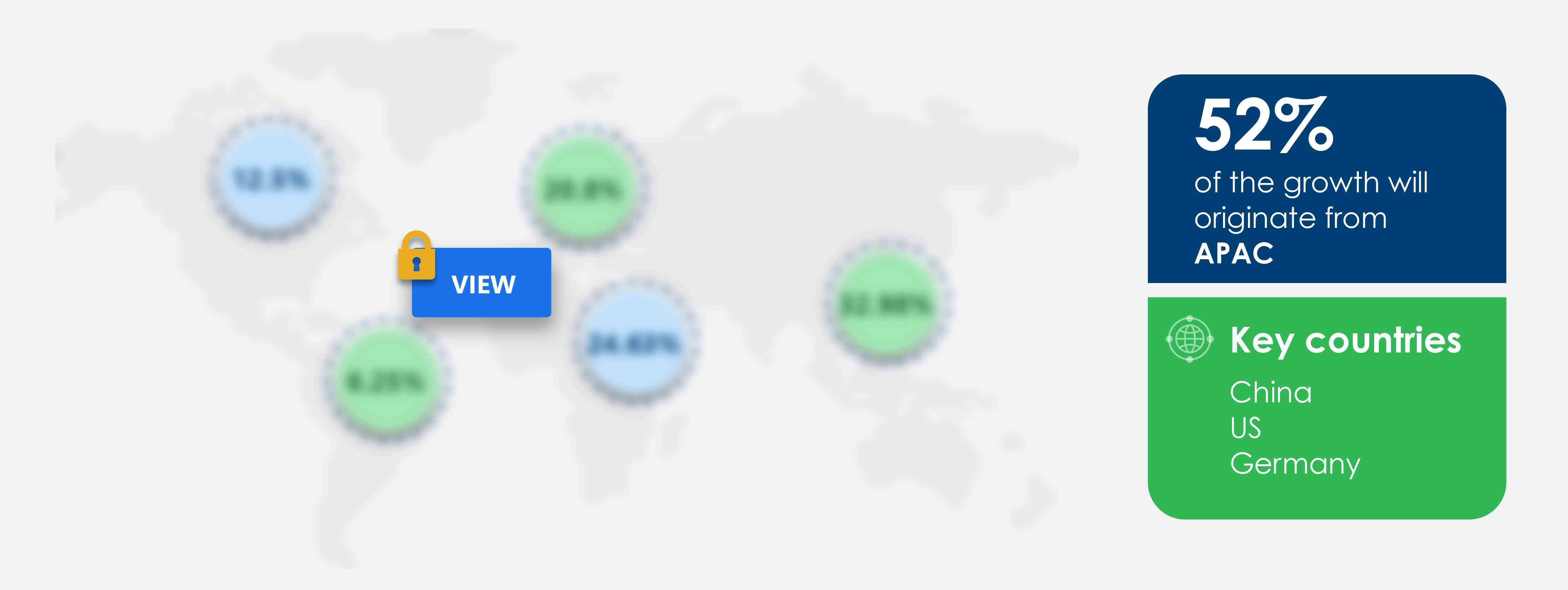
For more insights on the market share of various regions Request PDF Sample now!
52% of the market’s growth will originate from APAC during the forecast period. China and Japan are the key markets for heat transfer fluid market in APAC. Market growth in this region will be faster than the growth of the market in regions.
Developing the chemical industry in China and India will facilitate the heat transfer fluid market growth in APAC over the forecast period. This market research report entails detailed information on the competitive intelligence, marketing gaps, and regional opportunities in store for vendors, which will assist in creating efficient business plans.
COVID Impact and Recovery Analysis
The outbreak of the COVID-19 pandemic in 2020 had a severe impact on the regional heat transfer fluid market. China, India, and Japan were severely hit by the pandemic. Due to this pandemic, several countries across APAC, including India, China, Japan, and Australia, implemented a lockdown to limit the spread of COVID-19. International as well as domestic transportation and industrial production activities were halted, which disrupted the supply chain for various industries, including chemical, automotive, food and beverage, and plastics. These factors, therefore, led to a decrease in the demand for heat transfer fluids in 2020. However, a gradual rise in economic activities and lifting of lockdowns, and an increase in the investment in R&D by the vendors are expected to drive the regional market growth during the forecast period.
What are the Revenue-generating End-user Segments in the Heat Transfer Fluid Market?
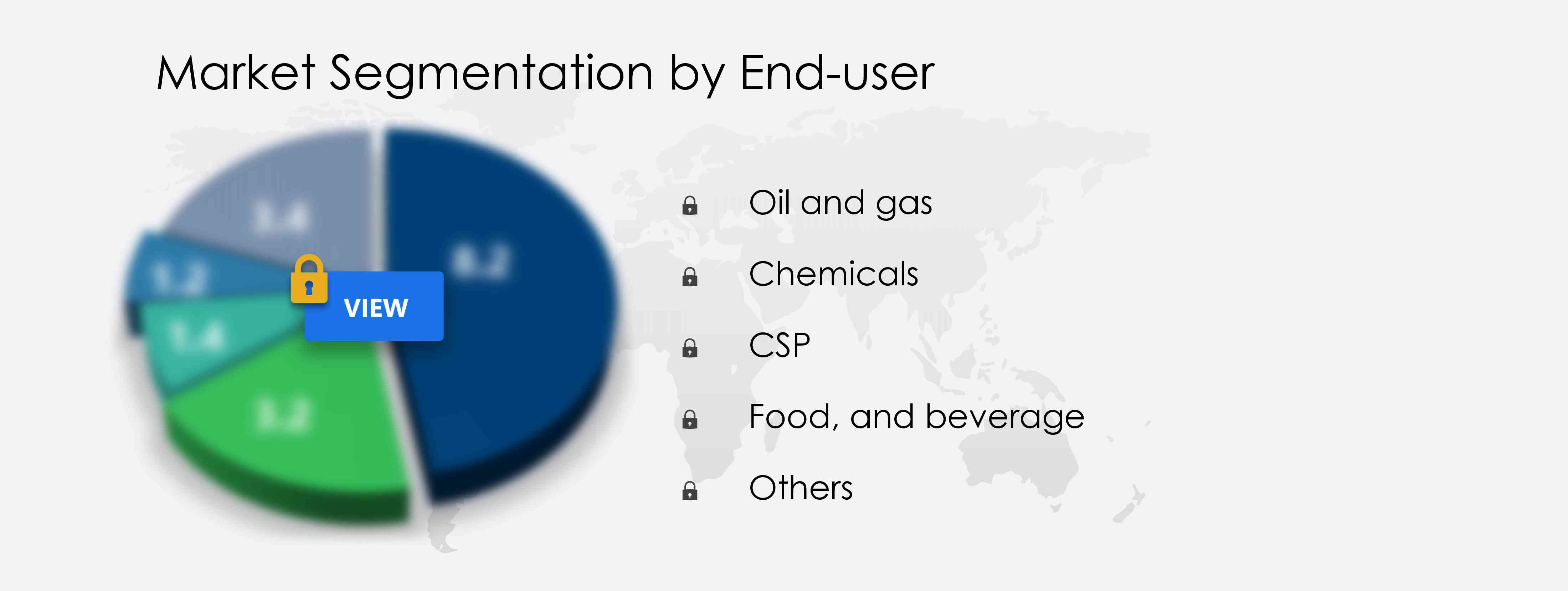
To gain further insights on the market contribution of various segments Request PDF Sample
The heat transfer fluid market share growth in the Oil and gas segment will be significant during the forecast period. The development of natural gas has enhanced the potential of gas processing plants and has increased the demand for pipelines in regions that have abundant reserves of natural gas.
This report provides an accurate prediction of the contribution of all the segments to the growth of the heat transfer fluid market size and actionable market insights on post COVID-19 impact on each segment.
|
Heat Transfer Fluid Market Scope |
|
|
Report Coverage |
Details |
|
Page number |
120 |
|
Base year |
2020 |
|
Forecast period |
2021-2025 |
|
Growth momentum & CAGR |
Accelerate at a CAGR of 6.11% |
|
Market growth 2021-2025 |
$ 824.5 million |
|
Market structure |
Fragmented |
|
YoY growth (%) |
3.65 |
|
Regional analysis |
North America, Europe, APAC, South America, and MEA |
|
Performing market contribution |
APAC at 52% |
|
Key consumer countries |
China, US, Germany, Japan, and UK |
|
Competitive landscape |
Leading companies, Competitive strategies, Consumer engagement scope |
|
Key companies profiled |
BASF SE, BP Plc, Chevron Corp., Clariant International Ltd., Dow Inc., Dynalene Inc., Eastman Chemical Co., Exxon Mobil Corp., LANXESS AG, and Royal Dutch Shell Plc |
|
Market dynamics |
Parent market analysis, Market growth inducers and obstacles, Fast-growing and slow-growing segment analysis, COVID 19 impact and recovery analysis and future consumer dynamics, Market condition analysis for forecast period |
|
Customization purview |
If our report has not included the data that you are looking for, you can reach out to our analysts and get segments customized. |
What are the Key Data Covered in this Heat Transfer Fluid Market Report?
- CAGR of the market during the forecast period 2021-2025
- Detailed information on factors that will drive heat transfer fluid market growth during the next five years
- Precise estimation of the heat transfer fluid market size and its contribution to the parent market
- Accurate predictions on upcoming trends and changes in consumer behavior
- The growth of the heat transfer fluid industry across North America, Europe, APAC, South America, and MEA
- A thorough analysis of the market’s competitive landscape and detailed information on vendors
- Comprehensive details of factors that will challenge the growth of heat transfer fluid market vendors
We can help! Our analysts can customize this report to meet your requirements. Get in touch
 RIA -
RIA - 
