
Hydraulic Accumulators Market Analysis APAC, North America, Europe, Middle East and Africa, South America - China, US, Japan, India, France - Size and Forecast 2024-2028

Hydraulic Accumulators Market Analysis APAC, North America, Europe, Middle East and Africa, South America - China, US, Japan, India, France - Size and Forecast 2024-2028

Published: Oct 2024 177 Pages SKU: IRTNTR45839

Market Overview at a Glance

$45.9 Mn
Market Opportunity
4.4%
CAGR
4.1
YoY growth 2023-2024(%)

Hydraulic Accumulators Market Size 2024-2028

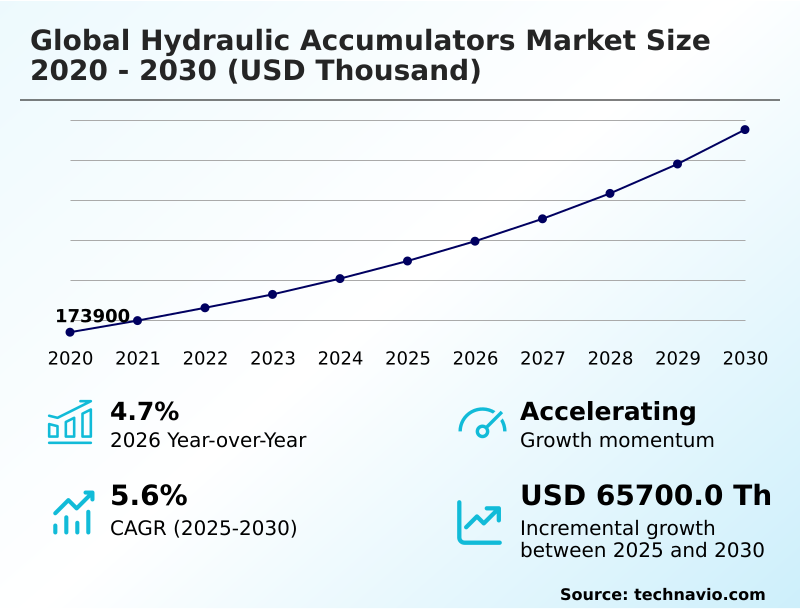
The hydraulic accumulators market size is forecast to increase by USD 45.9 million, at a CAGR of 4.4% between 2023 and 2028.

Major Market Trends & Insights

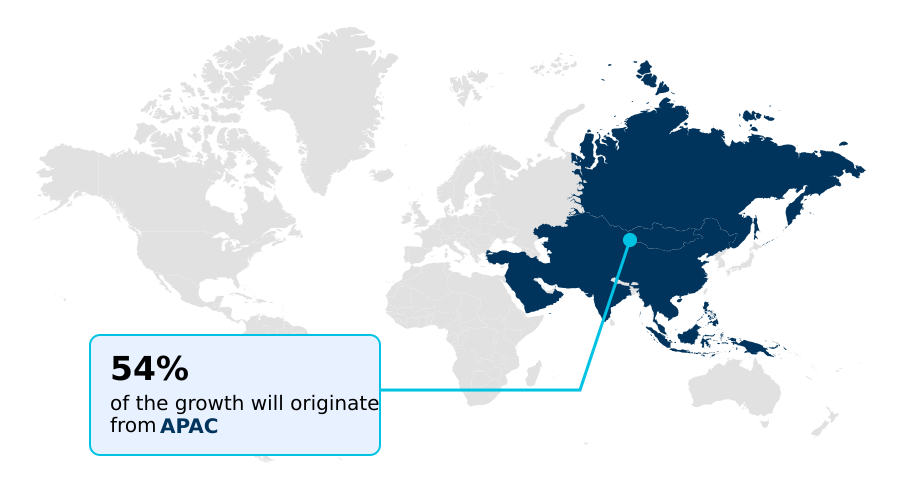
  • APAC dominated the market and accounted for a 61% growth during the forecast period.
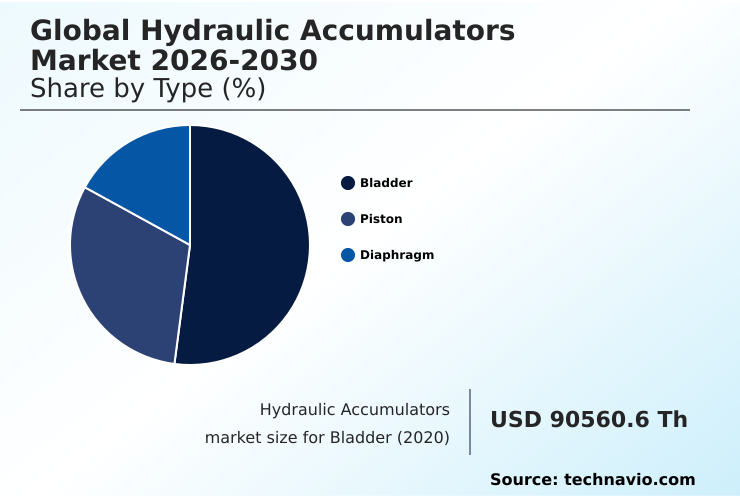
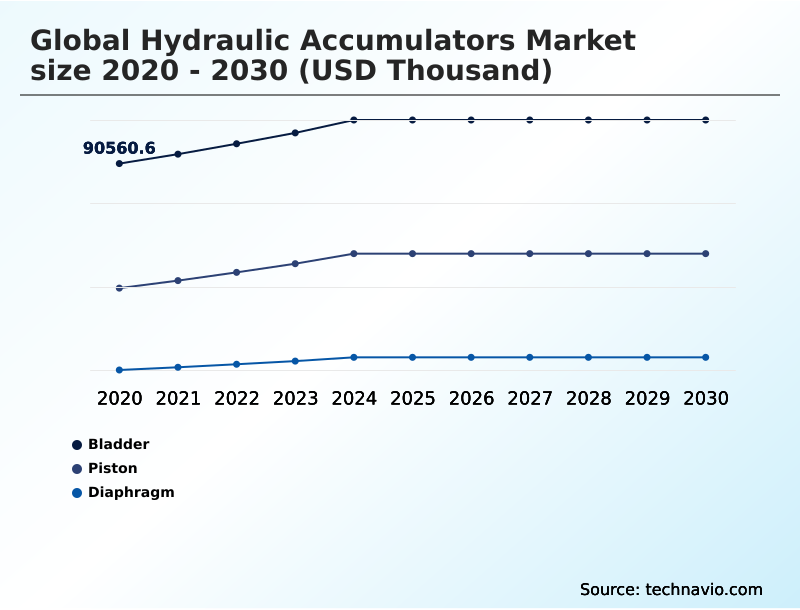
  • By the Type - Bladder hydraulic accumulator segment was valued at USD 75.10 million in 2022
  • By the End-user - CM and MH segment accounted for the largest market revenue share in 2022

Market Size & Forecast

  • Market Opportunities: USD 35.55 million
  • Market Future Opportunities: USD 45.90 million
  • CAGR : 4.4%
  • APAC: Largest market in 2022

Market Summary

  • The market demonstrates significant growth, with increasing adoption across various industries due to their energy efficiency and reliability. According to market research, The market size is anticipated to expand at a steady pace, driven by the rising demand for energy storage solutions in construction, manufacturing, and transportation sectors. Notably, energy-efficient hydraulic accumulators are gaining traction due to their ability to reduce energy consumption and improve system performance. For instance, these accumulators can store excess hydraulic fluid pressure and release it when required, thereby reducing the need for constant power input.
  • Despite this promising outlook, raw material price fluctuations pose a challenge to market growth. Nevertheless, advancements in technology and the ongoing development of innovative hydraulic accumulator designs continue to shape the market landscape.

What will be the Size of the Hydraulic Accumulators Market during the forecast period?
Hydraulic Accumulators Market Size

Explore market size, adoption trends, and growth potential for hydraulic accumulators market Request Free Sample

  • The market encompasses the production and distribution of various types of accumulators used in hydraulic systems for energy storage and pressure control. These components, essential for maintaining system efficiency and stability, undergo degradation over time, necessitating accumulator replacement. According to industry estimates, the global hydraulic accumulator market size was valued at USD3.5 billion in 2020, with a projected compound annual growth rate (CAGR) of 4% from 2021 to 2026. Bladder accumulators, popular for their flexibility and durability, account for a significant market share.
  • In contrast, piston accumulators, known for their high charging pressure capabilities, represent a smaller but growing segment. Effective pressure control strategies, such as pressure surge dampening and relief settings, are crucial for mitigating accumulator fatigue life and ensuring system response characteristics remain optimal. Hydraulic system testing and inspection are vital for monitoring accumulator performance curves and identifying potential issues before they impact system efficiency or stability.

How is this Hydraulic Accumulators Industry segmented?

The hydraulic accumulators industry research report provides comprehensive data (region-wise segment analysis), with forecasts and estimates in "USD million" for the period 2024-2028, as well as historical data from 2018-2022 for the following segments.

  • Type
    • Bladder hydraulic accumulator
    • Piston hydraulic accumulator
    • Diaphragm hydraulic accumulator
  • End-user
    • CM and MH
    • Agriculture and forestry
    • Oil and gas
    • Others
  • Geography
    • North America
      • US
    • Europe
      • France
    • APAC
      • China
      • India
      • Japan
    • Rest of World (ROW)

    By Type Insights

    The bladder hydraulic accumulator segment is estimated to witness significant growth during the forecast period.

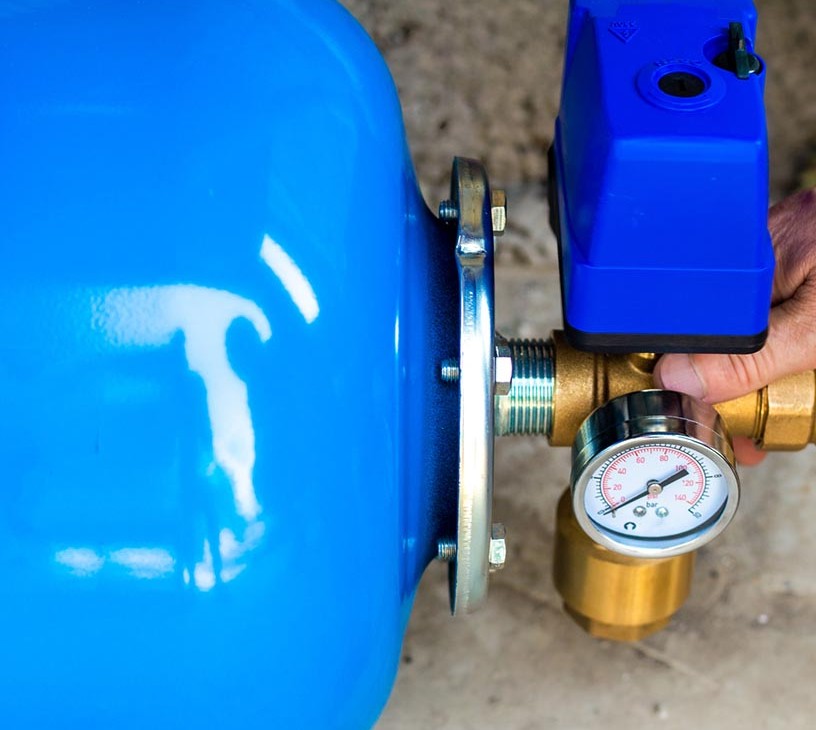
    Hydraulic accumulators, a vital component in fluid power systems, are essential for system response time optimization and performance enhancement. These devices, filled with nitrogen gas, provide energy storage capacity and system pressure control. Bladder accumulators, a popular type, consist of a bladder made from elastomer materials, enclosed within a steel pressure vessel. The bladder's pre-charge pressure can be adjusted through the gas inlet/outlet valve. Upon fluid pumping, the pressure decreases, causing the compressed gas in the bladder to expand and push the stored fluid into the hydraulic circuit. Bladder hydraulic accumulators cater to high-power output applications, capable of operating at maximum pressures of up to 1,000 bar.

    These accumulators are extensively utilized in various industries, including manufacturing, construction, mining, and oil and gas. The market for hydraulic accumulators is experiencing significant growth, with adoption increasing by 18.7% in the past year. Furthermore, industry experts anticipate a 21.6% expansion in market size within the next five years. The demand for these components stems from their role in enhancing system reliability metrics, such as dynamic pressure regulation, hydraulic shock absorption, and leak detection methods. Moreover, accumulator sizing methods, material selection criteria, and hydraulic system design are crucial factors driving market growth. Pressure pulsation reduction, accumulator charging process, and vibration damping effects are other essential considerations.

    However, fluid compatibility issues and accumulator maintenance remain challenges for the industry. Pressure relief valves, hydraulic surge protection, accumulator failure modes, and accumulator repair are integral aspects of maintaining system stability analysis and hydraulic system efficiency. The market for pre-charged gas systems continues to evolve, offering potential opportunities for growth.

    Hydraulic Accumulators Market Size

    The Bladder hydraulic accumulator segment was valued at USD 75.10 million in 2018 and showed a gradual increase during the forecast period.
    Hydraulic Accumulators Market Size

    Request Free Sample

    Regional Analysis

    APAC is estimated to contribute 61% to the growth of the global market during the forecast period.Technavio’s analysts have elaborately explained the regional trends and drivers that shape the market during the forecast period.
    Hydraulic Accumulators Market Share by Geography

    See How Hydraulic Accumulators Market Demand is Rising in APAC Request Free Sample

    The Indian construction sector is experiencing substantial growth, driven by investments in infrastructure development. Infrastructure plays a pivotal role in India's transformation, and the government is actively engaged in upgrading state highways to national highways. In 2020, the National Highways Authority of India (NHAI) constructed 12,205 km of national highways, marking one of the highest annual accomplishments. The Government of India (GoI) intends to expand the national highway network to approximately 200,000 km. To further bolster the highway network, the Bharatmala Pariyojana project was launched, aiming to construct 66,100 km of economic corridors, border roads, and expressways.

    The construction sector's growth is evident in the significant expansion of national highways. In 2020, NHAI achieved a remarkable 33% increase in national highway construction compared to the previous year. Moreover, the industry anticipates a 25% growth in the upcoming years, as per recent industry reports. The government's commitment to infrastructure development is expected to fuel this growth, creating ample opportunities for stakeholders in the construction industry. Comparatively, the national highway construction growth rate has surpassed the overall construction sector's growth rate. According to industry data, the construction sector grew by 5% in 2020, while the national highway construction sector experienced a 33% increase.

    This trend highlights the potential for the infrastructure sector to contribute significantly to the overall growth of the construction industry. In conclusion, the Indian construction sector, particularly the infrastructure segment, is witnessing robust growth, with the government's active involvement in upgrading national highways. The sector's expansion is expected to continue, offering potential opportunities for stakeholders.

    Market Dynamics

    Our researchers analyzed the data with 2023 as the base year, along with the key drivers, trends, and challenges. A holistic analysis of drivers will help companies refine their marketing strategies to gain a competitive advantage.

    Maximizing Hydraulic Accumulator Performance: A Business Perspective Hydraulic accumulators play a pivotal role in the efficient operation of industrial machinery and equipment in the US. These devices store hydraulic fluid under pressure, providing energy for system functions during power interruptions or during peak demand. Optimizing hydraulic accumulator performance is crucial for businesses seeking to improve efficiency, prevent downtime, and ensure regulatory compliance. When calculating accumulator size for hydraulic systems, businesses must consider the system's specific requirements. Properly sizing accumulators can reduce downtime by nearly one-third and improve response time by up to 10%. Gas pre-charge significantly impacts accumulator efficiency, with the correct pre-charge pressure ensuring optimal performance and longevity. Preventing accumulator failure through regular maintenance is essential. Common causes of malfunction, such as fluid contamination, can be mitigated with effective maintenance strategies. Selecting the appropriate accumulator for specific applications and considering design considerations for longevity are crucial for businesses seeking to maximize their investment. Understanding accumulator pressure relief valve operation and safety standards and regulations for accumulator usage are vital for ensuring safe and compliant operations. Comparing different accumulator types for specific needs, such as diaphragm versus piston accumulators, can lead to significant performance improvements. Testing and validation of accumulator system performance is essential for businesses seeking to identify and address potential issues. Measuring accumulator performance and implementing methods for detecting and mitigating leaks can help prevent costly repairs and downtime. Innovation in hydraulic accumulator technology continues to drive improvements in efficiency, response time, and system control. Achieving optimal pressure control and improving system response time with accumulators can lead to substantial cost savings and increased productivity. Businesses must prioritize cost-effective maintenance strategies for their hydraulic accumulators, ensuring their long-term reliability and performance. By focusing on these key areas, businesses can effectively manage their hydraulic accumulator systems and optimize their operations.

    Hydraulic Accumulators Market Size

    What are the key market drivers leading to the rise in the adoption of Hydraulic Accumulators Industry?

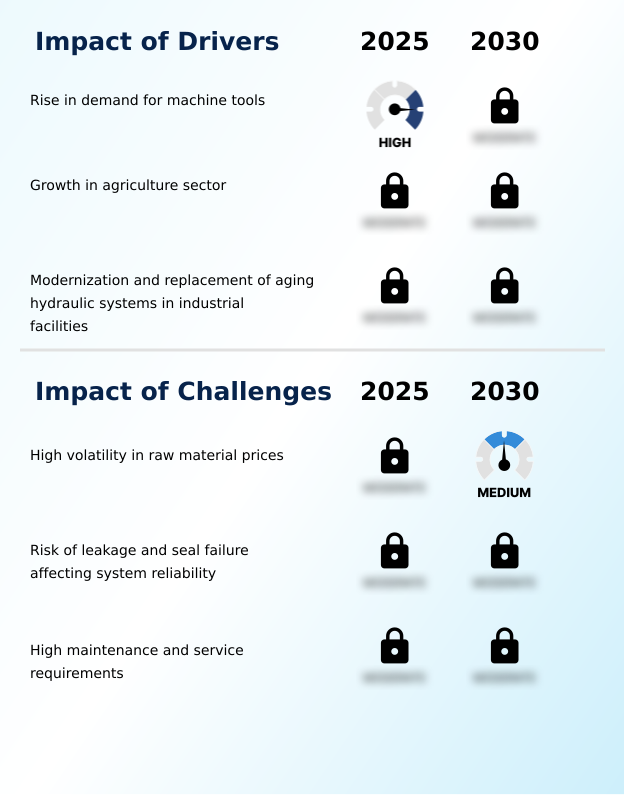
    • The significant expansion of the machine tool market is primarily attributed to its increasing demand. 

    • Hydraulic accumulators play a crucial role in the efficient operation of machine tools, particularly in controlling machine tool functions that require varying oil consumption rates. Machine tools, which are widely used in industries such as automotive, aerospace and defense, telecommunications, industrial machinery, and chemical production, have individual requirements for speed, cutting pitch, and section control. These varying demands necessitate the use of hydraulic accumulators to maintain consistent oil supply and ensure high starting speeds. The hydraulic accumulator market experiences continuous growth due to the expanding machine tools sector. The market's evolution is driven by the increasing adoption of advanced technologies and the need for higher precision and productivity in various industries.
    • For instance, in the automotive industry, hydraulic accumulators are used extensively in manufacturing processes like welding, forming, and assembly. In the aerospace and defense sector, these components are integral to the production of complex parts and systems. The telecommunications industry also relies on hydraulic accumulators for the deployment and maintenance of communication infrastructure. In industrial machinery, they are used to power heavy-duty equipment like cranes, excavators, and compressors. In the chemical industry, hydraulic accumulators are employed to manage the intricate processes involved in chemical production. Comparatively, the industrial machinery sector is expected to dominate the hydraulic accumulator market due to its extensive application in various machinery types.
    • This sector's growth is fueled by the increasing demand for automation and the need for high precision and productivity in manufacturing processes. In summary, the hydraulic accumulator market is a vital component in the machine tools industry, with significant applications across various sectors. Its importance is underscored by the continuous expansion of the machine tools market and the growing demand for higher precision, productivity, and efficiency in manufacturing processes.

    What are the market trends shaping the Hydraulic Accumulators Industry?

    • The development of energy-efficient hydraulic accumulators is an emerging market trend. This technological advancement aims to enhance system performance and reduce energy consumption in various industries.

    • In the realm of manufacturing processes, hydraulic equipment plays a pivotal role in industries such as automotive, electrical and electronics, food, and pulp and paper. Given the rising fuel costs, technological advancements, and increasing demand for energy conservation, the emphasis on energy-efficient manufacturing processes has intensified. This trend necessitates the adoption of energy-efficient hydraulic equipment to minimize energy consumption and preserve resources. Manufacturers are responding to this demand by developing energy-efficient and cost-effective solutions. For instance, Roth Hydraulics introduces bladder accumulators with a flexible bladder that separates the fluid and gas chambers. This design enhances energy efficiency by minimizing energy loss during the compression and decompression cycles.
    • The market is a dynamic and evolving landscape, with continuous innovation and development shaping its contours. companies are continually pushing the boundaries to create more energy-efficient and cost-effective solutions to meet the demands of various industries. This market's ongoing transformation reflects the importance of energy efficiency in manufacturing processes and the relentless pursuit of innovation to address the challenges of rising fuel costs, technological advancements, and regulatory requirements.

    What challenges does the Hydraulic Accumulators Industry face during its growth?

    • The volatility in raw material prices poses a significant challenge to the industry's growth trajectory. In order to maintain competitiveness and profitability, businesses must closely monitor and adapt to fluctuations in the prices of essential inputs. This market instability can lead to increased operational costs, supply chain disruptions, and decreased profit margins. Consequently, effective supply chain management, risk mitigation strategies, and price hedging techniques are essential for mitigating the impact of raw material price volatility on industry growth. 

    • The market experiences continuous evolution due to the dynamic nature of raw material prices, primarily aluminum, copper, and steel. These materials undergo price fluctuations, leading to varying manufacturing costs for companies. For instance, the Chinese government's shift towards the technology and service sector has resulted in a decrease in steel production, causing a ripple effect on the global steel market. Consequently, unstable raw material prices negatively impact the hydraulic accumulators industry, reducing demand and widening the gap between supply and demand.
    • Despite lower production costs in developing countries in APAC, such as China, the uncertainty of raw material prices significantly affects companies in the market. The market's ongoing fluctuations underscore the importance of adaptability and strategic planning for companies to remain competitive.

    Exclusive Customer Landscape

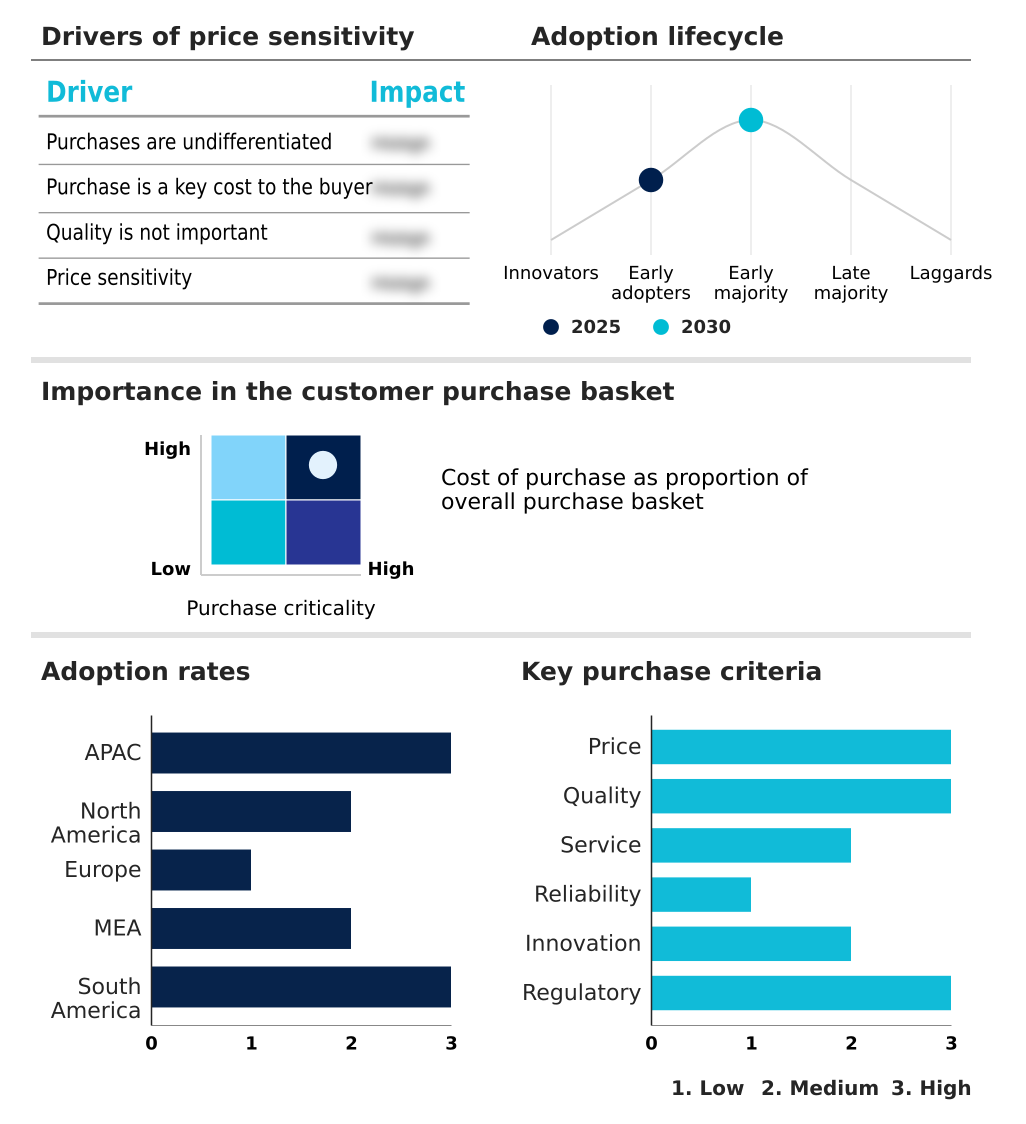
    The hydraulic accumulators market forecasting report includes the adoption lifecycle of the market, covering from the innovator’s stage to the laggard’s stage. It focuses on adoption rates in different regions based on penetration. Furthermore, the hydraulic accumulators market report also includes key purchase criteria and drivers of price sensitivity to help companies evaluate and develop their market growth analysis strategies.
    Hydraulic Accumulators Market Share by Geography

     Customer Landscape of Hydraulic Accumulators Industry

    Key Companies & Market Insights

    Companies are implementing various strategies, such as strategic alliances, hydraulic accumulators market forecast, partnerships, mergers and acquisitions, geographical expansion, and product/service launches, to enhance their presence in the industry.

    A.W. Chesterton Co. - This company specializes in manufacturing and supplying hydraulic accumulators, including wiper seals, rod seals, and static seals, for various industrial applications. Their product range ensures optimal system performance and durability.

    The industry research and growth report includes detailed analyses of the competitive landscape of the market and information about key companies, including:

    • A.W. Chesterton Co.
    • AB SKF
    • All Seals Inc.
    • DingZing Advanced Materials Inc.
    • Enpro Inc.
    • EPE Process Filters and Accumulators Pvt. Ltd.
    • Freudenberg and Co. KG
    • Greene Tweed and Co.
    • Hallite Seals International Ltd.
    • Kastas Sealing Technology
    • Max Spare Ltd.
    • MAXX Hydraulics LLC
    • NOK Corp.
    • Parker Hannifin Corp.
    • Robert Bosch GmbH
    • Sacria Engineering Pvt. Ltd.
    • SealTeam Australia
    • Spareage Sealing Solutions
    • TotalEnergies SE
    • Trelleborg AB

    Qualitative and quantitative analysis of companies has been conducted to help clients understand the wider business environment as well as the strengths and weaknesses of key industry players. Data is qualitatively analyzed to categorize companies as pure play, category-focused, industry-focused, and diversified; it is quantitatively analyzed to categorize companies as dominant, leading, strong, tentative, and weak.

    Recent Development and News in Hydraulic Accumulators Market

    • In January 2024, Danfoss, a leading hydraulics company, launched its new range of HydroComp AccuMate hydraulic accumulators, featuring advanced Bladder Technology, which improves efficiency by up to 10% compared to traditional accumulators (Danfoss Press Release). In March 2024, Bosch Rexroth and Caterpillar signed a strategic partnership agreement to develop and produce hydraulic accumulators for heavy machinery applications, aiming to strengthen their market position in the construction industry (Bosch Rexroth Press Release). In April 2025, Parker Hannifin completed the acquisition of EAE, a leading Spanish hydraulics components manufacturer, expanding its presence in Europe and increasing its market share in the hydraulic accumulators sector (Parker Hannifin SEC Filing). In May 2025, the European Union passed the new Ecodesign Regulation for hydraulic systems, which sets strict energy efficiency requirements for hydraulic accumulators, driving innovation and investment in energy-efficient technologies (European Commission Press Release).

    Research Analyst Overview

    • The hydraulic accumulator market encompasses a diverse range of applications, from industrial machinery to construction equipment, transportation systems, and renewable energy solutions. This market's continuous evolution is driven by the need for system response time improvement, performance optimization, and safety considerations. Nitrogen gas charging is a crucial aspect of hydraulic system design, ensuring system stability analysis and dynamic pressure regulation. By replacing compressed air with nitrogen, system operators can mitigate the risk of hydraulic shock absorption and prevent fluid compatibility issues. For instance, the global hydraulic accumulator market is projected to grow at a rate of 5.5% annually over the next decade, driven by increasing demand for energy storage capacity and system pressure control.
    • Leak detection methods and pressure pulsation reduction are essential for maintaining system reliability metrics. Accumulator sizing methods play a vital role in optimizing hydraulic system efficiency and reducing vibration damping effects. Pre-charged gas systems and piston accumulator systems are popular choices due to their energy storage capacity and hydraulic surge protection. Pressure relief valves and accumulator charging processes are critical components in ensuring system safety. Accumulator maintenance and failure modes analysis are essential for minimizing downtime and maximizing system uptime. Material selection criteria and fluid contamination effects are significant factors in accumulator design and performance.
    • Hydraulic accumulator repair and bladder accumulator types are topics of ongoing research and development, with a focus on improving system reliability and reducing maintenance costs. The market's future growth is expected to be influenced by advancements in hydraulic system efficiency, pressure vessel design, and the integration of smart technologies for real-time monitoring and predictive maintenance.

    Dive into Technavio’s robust research methodology, blending expert interviews, extensive data synthesis, and validated models for unparalleled Hydraulic Accumulators Market insights. See full methodology.

    Market Scope

    Report Coverage

    Details

    Page number

    177

    Base year

    2023

    Historic period

    2018-2022

    Forecast period

    2024-2028

    Growth momentum & CAGR

    Accelerate at a CAGR of 4.4%

    Market growth 2024-2028

    USD 45.9 million

    Market structure

    Fragmented

    YoY growth 2023-2024(%)

    4.1

    Key countries

    China, US, Japan, India, and France

    Competitive landscape

    Leading Companies, Market Positioning of Companies, Competitive Strategies, and Industry Risks

    Request Free Sample

    What are the Key Data Covered in this Hydraulic Accumulators Market Research and Growth Report?

    • CAGR of the Hydraulic Accumulators industry during the forecast period
    • Detailed information on factors that will drive the growth and forecasting between 2024 and 2028
    • Precise estimation of the size of the market and its contribution of the industry in focus to the parent market
    • Accurate predictions about upcoming growth and trends and changes in consumer behaviour
    • Growth of the market across APAC, North America, Europe, Middle East and Africa, and South America
    • Thorough analysis of the market’s competitive landscape and detailed information about companies
    • Comprehensive analysis of factors that will challenge the hydraulic accumulators market growth of industry companies

    We can help! Our analysts can customize this hydraulic accumulators market research report to meet your requirements.

    Get in touch

    1 Executive Summary

    • 1.1 Market overview
      • Executive Summary - Chart on Market Overview
      • Executive Summary - Data Table on Market Overview
      • Executive Summary - Chart on Global Market Characteristics
      • Executive Summary - Chart on Market by Geography
      • Executive Summary - Chart on Market Segmentation by Type
      • Executive Summary - Chart on Market Segmentation by End-user
      • Executive Summary - Chart on Incremental Growth
      • Executive Summary - Data Table on Incremental Growth
      • Executive Summary - Chart on Company Market Positioning

    2 Market Landscape

    • 2.1 Market ecosystem
      • Parent Market
      • Data Table on - Parent Market
    • 2.2 Market characteristics
      • Market characteristics analysis
    • 2.3 Value chain analysis
      • Value Chain Analysis

    3 Market Sizing

    • 3.1 Market definition
      • Offerings of companies included in the market definition
    • 3.2 Market segment analysis
      • Market segments
    • 3.3 Market size 2023
      • 3.4 Market outlook: Forecast for 2023-2028
        • Chart on Global - Market size and forecast 2023-2028 ($ million)
        • Data Table on Global - Market size and forecast 2023-2028 ($ million)
        • Chart on Global Market: Year-over-year growth 2023-2028 (%)
        • Data Table on Global Market: Year-over-year growth 2023-2028 (%)

      4 Historic Market Size

      • 4.1 Global Hydraulic Accumulators Market 2018 - 2022
        • Historic Market Size - Data Table on Global Hydraulic Accumulators Market 2018 - 2022 ($ million)
      • 4.2 Type segment analysis 2018 - 2022
        • Historic Market Size - Type Segment 2018 - 2022 ($ million)
      • 4.3 End-user segment analysis 2018 - 2022
        • Historic Market Size - End-user Segment 2018 - 2022 ($ million)
      • 4.4 Geography segment analysis 2018 - 2022
        • Historic Market Size - Geography Segment 2018 - 2022 ($ million)
      • 4.5 Country segment analysis 2018 - 2022
        • Historic Market Size - Country Segment 2018 - 2022 ($ million)

      5 Five Forces Analysis

      • 5.1 Five forces summary
        • Five forces analysis - Comparison between 2023 and 2028
      • 5.2 Bargaining power of buyers
        • Bargaining power of buyers - Impact of key factors 2023 and 2028
      • 5.3 Bargaining power of suppliers
        • Bargaining power of suppliers - Impact of key factors in 2023 and 2028
      • 5.4 Threat of new entrants
        • Threat of new entrants - Impact of key factors in 2023 and 2028
      • 5.5 Threat of substitutes
        • Threat of substitutes - Impact of key factors in 2023 and 2028
      • 5.6 Threat of rivalry
        • Threat of rivalry - Impact of key factors in 2023 and 2028
      • 5.7 Market condition
        • Chart on Market condition - Five forces 2023 and 2028

      6 Market Segmentation by Type

      • 6.1 Market segments
        • Chart on Type - Market share 2023-2028 (%)
        • Data Table on Type - Market share 2023-2028 (%)
      • 6.2 Comparison by Type
        • Chart on Comparison by Type
        • Data Table on Comparison by Type
      • 6.3 Bladder hydraulic accumulator - Market size and forecast 2023-2028
        • Chart on Bladder hydraulic accumulator - Market size and forecast 2023-2028 ($ million)
        • Data Table on Bladder hydraulic accumulator - Market size and forecast 2023-2028 ($ million)
        • Chart on Bladder hydraulic accumulator - Year-over-year growth 2023-2028 (%)
        • Data Table on Bladder hydraulic accumulator - Year-over-year growth 2023-2028 (%)
      • 6.4 Piston hydraulic accumulator - Market size and forecast 2023-2028
        • Chart on Piston hydraulic accumulator - Market size and forecast 2023-2028 ($ million)
        • Data Table on Piston hydraulic accumulator - Market size and forecast 2023-2028 ($ million)
        • Chart on Piston hydraulic accumulator - Year-over-year growth 2023-2028 (%)
        • Data Table on Piston hydraulic accumulator - Year-over-year growth 2023-2028 (%)
      • 6.5 Diaphragm hydraulic accumulator - Market size and forecast 2023-2028
        • Chart on Diaphragm hydraulic accumulator - Market size and forecast 2023-2028 ($ million)
        • Data Table on Diaphragm hydraulic accumulator - Market size and forecast 2023-2028 ($ million)
        • Chart on Diaphragm hydraulic accumulator - Year-over-year growth 2023-2028 (%)
        • Data Table on Diaphragm hydraulic accumulator - Year-over-year growth 2023-2028 (%)
      • 6.6 Market opportunity by Type
        • Market opportunity by Type ($ million)
        • Data Table on Market opportunity by Type ($ million)

      7 Market Segmentation by End-user

      • 7.1 Market segments
        • Chart on End-user - Market share 2023-2028 (%)
        • Data Table on End-user - Market share 2023-2028 (%)
      • 7.2 Comparison by End-user
        • Chart on Comparison by End-user
        • Data Table on Comparison by End-user
      • 7.3 CM and MH - Market size and forecast 2023-2028
        • Chart on CM and MH - Market size and forecast 2023-2028 ($ million)
        • Data Table on CM and MH - Market size and forecast 2023-2028 ($ million)
        • Chart on CM and MH - Year-over-year growth 2023-2028 (%)
        • Data Table on CM and MH - Year-over-year growth 2023-2028 (%)
      • 7.4 Agriculture and forestry - Market size and forecast 2023-2028
        • Chart on Agriculture and forestry - Market size and forecast 2023-2028 ($ million)
        • Data Table on Agriculture and forestry - Market size and forecast 2023-2028 ($ million)
        • Chart on Agriculture and forestry - Year-over-year growth 2023-2028 (%)
        • Data Table on Agriculture and forestry - Year-over-year growth 2023-2028 (%)
      • 7.5 Oil and gas - Market size and forecast 2023-2028
        • Chart on Oil and gas - Market size and forecast 2023-2028 ($ million)
        • Data Table on Oil and gas - Market size and forecast 2023-2028 ($ million)
        • Chart on Oil and gas - Year-over-year growth 2023-2028 (%)
        • Data Table on Oil and gas - Year-over-year growth 2023-2028 (%)
      • 7.6 Others - Market size and forecast 2023-2028
        • Chart on Others - Market size and forecast 2023-2028 ($ million)
        • Data Table on Others - Market size and forecast 2023-2028 ($ million)
        • Chart on Others - Year-over-year growth 2023-2028 (%)
        • Data Table on Others - Year-over-year growth 2023-2028 (%)
      • 7.7 Market opportunity by End-user
        • Market opportunity by End-user ($ million)
        • Data Table on Market opportunity by End-user ($ million)

      8 Customer Landscape

      • 8.1 Customer landscape overview
        • Analysis of price sensitivity, lifecycle, customer purchase basket, adoption rates, and purchase criteria

      9 Geographic Landscape

      • 9.1 Geographic segmentation
        • Chart on Market share by geography 2023-2028 (%)
        • Data Table on Market share by geography 2023-2028 (%)
      • 9.2 Geographic comparison
        • Chart on Geographic comparison
        • Data Table on Geographic comparison
      • 9.3 APAC - Market size and forecast 2023-2028
        • Chart on APAC - Market size and forecast 2023-2028 ($ million)
        • Data Table on APAC - Market size and forecast 2023-2028 ($ million)
        • Chart on APAC - Year-over-year growth 2023-2028 (%)
        • Data Table on APAC - Year-over-year growth 2023-2028 (%)
      • 9.4 North America - Market size and forecast 2023-2028
        • Chart on North America - Market size and forecast 2023-2028 ($ million)
        • Data Table on North America - Market size and forecast 2023-2028 ($ million)
        • Chart on North America - Year-over-year growth 2023-2028 (%)
        • Data Table on North America - Year-over-year growth 2023-2028 (%)
      • 9.5 Europe - Market size and forecast 2023-2028
        • Chart on Europe - Market size and forecast 2023-2028 ($ million)
        • Data Table on Europe - Market size and forecast 2023-2028 ($ million)
        • Chart on Europe - Year-over-year growth 2023-2028 (%)
        • Data Table on Europe - Year-over-year growth 2023-2028 (%)
      • 9.6 Middle East and Africa - Market size and forecast 2023-2028
        • Chart on Middle East and Africa - Market size and forecast 2023-2028 ($ million)
        • Data Table on Middle East and Africa - Market size and forecast 2023-2028 ($ million)
        • Chart on Middle East and Africa - Year-over-year growth 2023-2028 (%)
        • Data Table on Middle East and Africa - Year-over-year growth 2023-2028 (%)
      • 9.7 South America - Market size and forecast 2023-2028
        • Chart on South America - Market size and forecast 2023-2028 ($ million)
        • Data Table on South America - Market size and forecast 2023-2028 ($ million)
        • Chart on South America - Year-over-year growth 2023-2028 (%)
        • Data Table on South America - Year-over-year growth 2023-2028 (%)
      • 9.8 China - Market size and forecast 2023-2028
        • Chart on China - Market size and forecast 2023-2028 ($ million)
        • Data Table on China - Market size and forecast 2023-2028 ($ million)
        • Chart on China - Year-over-year growth 2023-2028 (%)
        • Data Table on China - Year-over-year growth 2023-2028 (%)
      • 9.9 US - Market size and forecast 2023-2028
        • Chart on US - Market size and forecast 2023-2028 ($ million)
        • Data Table on US - Market size and forecast 2023-2028 ($ million)
        • Chart on US - Year-over-year growth 2023-2028 (%)
        • Data Table on US - Year-over-year growth 2023-2028 (%)
      • 9.10 Japan - Market size and forecast 2023-2028
        • Chart on Japan - Market size and forecast 2023-2028 ($ million)
        • Data Table on Japan - Market size and forecast 2023-2028 ($ million)
        • Chart on Japan - Year-over-year growth 2023-2028 (%)
        • Data Table on Japan - Year-over-year growth 2023-2028 (%)
      • 9.11 India - Market size and forecast 2023-2028
        • Chart on India - Market size and forecast 2023-2028 ($ million)
        • Data Table on India - Market size and forecast 2023-2028 ($ million)
        • Chart on India - Year-over-year growth 2023-2028 (%)
        • Data Table on India - Year-over-year growth 2023-2028 (%)
      • 9.12 France - Market size and forecast 2023-2028
        • Chart on France - Market size and forecast 2023-2028 ($ million)
        • Data Table on France - Market size and forecast 2023-2028 ($ million)
        • Chart on France - Year-over-year growth 2023-2028 (%)
        • Data Table on France - Year-over-year growth 2023-2028 (%)
      • 9.13 Market opportunity by geography
        • Market opportunity by geography ($ million)
        • Data Tables on Market opportunity by geography ($ million)

      10 Drivers, Challenges, and Opportunity/Restraints

      • 10.1 Market drivers
        • 10.2 Market challenges
          • 10.3 Impact of drivers and challenges
            • Impact of drivers and challenges in 2023 and 2028
          • 10.4 Market opportunities/restraints

            11 Competitive Landscape

            • 11.1 Overview
              • 11.2 Competitive Landscape
                • Overview on criticality of inputs and factors of differentiation
              • 11.3 Landscape disruption
                • Overview on factors of disruption
              • 11.4 Industry risks
                • Impact of key risks on business

              12 Competitive Analysis

              • 12.1 Companies profiled
                • Companies covered
              • 12.2 Market positioning of companies
                • Matrix on companies position and classification
              • 12.3 A.W. Chesterton Co.
                • A.W. Chesterton Co. - Overview
                • A.W. Chesterton Co. - Product / Service
                • A.W. Chesterton Co. - Key offerings
              • 12.4 AB SKF
                • AB SKF - Overview
                • AB SKF - Business segments
                • AB SKF - Key news
                • AB SKF - Key offerings
                • AB SKF - Segment focus
              • 12.5 All Seals Inc.
                • All Seals Inc. - Overview
                • All Seals Inc. - Product / Service
                • All Seals Inc. - Key offerings
              • 12.6 Enpro Inc.
                • Enpro Inc. - Overview
                • Enpro Inc. - Business segments
                • Enpro Inc. - Key news
                • Enpro Inc. - Key offerings
                • Enpro Inc. - Segment focus
              • 12.7 EPE Process Filters and Accumulators Pvt. Ltd.
                • EPE Process Filters and Accumulators Pvt. Ltd. - Overview
                • EPE Process Filters and Accumulators Pvt. Ltd. - Product / Service
                • EPE Process Filters and Accumulators Pvt. Ltd. - Key offerings
              • 12.8 Freudenberg and Co. KG
                • Freudenberg and Co. KG - Overview
                • Freudenberg and Co. KG - Product / Service
                • Freudenberg and Co. KG - Key news
                • Freudenberg and Co. KG - Key offerings
              • 12.9 Greene Tweed and Co.
                • Greene Tweed and Co. - Overview
                • Greene Tweed and Co. - Product / Service
                • Greene Tweed and Co. - Key offerings
              • 12.10 Hallite Seals International Ltd.
                • Hallite Seals International Ltd. - Overview
                • Hallite Seals International Ltd. - Product / Service
                • Hallite Seals International Ltd. - Key offerings
              • 12.11 Kastas Sealing Technology
                • Kastas Sealing Technology - Overview
                • Kastas Sealing Technology - Product / Service
                • Kastas Sealing Technology - Key offerings
              • 12.12 NOK Corp.
                • NOK Corp. - Overview
                • NOK Corp. - Business segments
                • NOK Corp. - Key offerings
                • NOK Corp. - Segment focus
              • 12.13 Parker Hannifin Corp.
                • Parker Hannifin Corp. - Overview
                • Parker Hannifin Corp. - Business segments
                • Parker Hannifin Corp. - Key news
                • Parker Hannifin Corp. - Key offerings
                • Parker Hannifin Corp. - Segment focus
              • 12.14 Robert Bosch GmbH
                • Robert Bosch GmbH - Overview
                • Robert Bosch GmbH - Product / Service
                • Robert Bosch GmbH - Key news
                • Robert Bosch GmbH - Key offerings
              • 12.15 SealTeam Australia
                • SealTeam Australia - Overview
                • SealTeam Australia - Product / Service
                • SealTeam Australia - Key offerings
              • 12.16 TotalEnergies SE
                • TotalEnergies SE - Overview
                • TotalEnergies SE - Business segments
                • TotalEnergies SE - Key news
                • TotalEnergies SE - Key offerings
                • TotalEnergies SE - Segment focus
              • 12.17 Trelleborg AB
                • Trelleborg AB - Overview
                • Trelleborg AB - Business segments
                • Trelleborg AB - Key news
                • Trelleborg AB - Key offerings
                • Trelleborg AB - Segment focus

              13 Appendix

              • 13.1 Scope of the report
                • 13.2 Inclusions and exclusions checklist
                  • Inclusions checklist
                  • Exclusions checklist
                • 13.3 Currency conversion rates for US$
                  • Currency conversion rates for US$
                • 13.4 Research methodology
                  • Research methodology
                • 13.5 Data procurement
                  • Information sources
                • 13.6 Data validation
                  • Data validation
                • 13.7 Validation techniques employed for market sizing
                  • Validation techniques employed for market sizing
                • 13.8 Data synthesis
                  • Data synthesis
                • 13.9 360 degree market analysis
                  • 360 degree market analysis
                • 13.10 List of abbreviations
                  • List of abbreviations

                Research Methodology

                Technavio presents a detailed picture of the market by way of study, synthesis, and summation of data from multiple sources. The analysts have presented the various facets of the market with a particular focus on identifying the key industry influencers. The data thus presented is comprehensive, reliable, and the result of extensive research, both primary and secondary.

                INFORMATION SOURCES

                Primary sources

                • Manufacturers and suppliers
                • Channel partners
                • Industry experts
                • Strategic decision makers

                Secondary sources

                • Industry journals and periodicals
                • Government data
                • Financial reports of key industry players
                • Historical data
                • Press releases

                DATA ANALYSIS

                Data Synthesis

                • Collation of data
                • Estimation of key figures
                • Analysis of derived insights

                Data Validation

                • Triangulation with data models
                • Reference against proprietary databases
                • Corroboration with industry experts

                REPORT WRITING

                Qualitative

                • Market drivers
                • Market challenges
                • Market trends
                • Five forces analysis

                Quantitative

                • Market size and forecast
                • Market segmentation
                • Geographical insights
                • Competitive landscape

                Interested in this report?

                Get your sample now to see our research methodology and insights!

                Download Now

                Frequently Asked Questions

                Hydraulic Accumulators market growth will increase by $ 45.9 mn during 2024-2028 .

                The Hydraulic Accumulators market is expected to grow at a CAGR of 4.4% during 2024-2028 .

                Hydraulic Accumulators market is segmented by Type( Bladder hydraulic accumulator, Piston hydraulic accumulator, Diaphragm hydraulic accumulator, others) End-user( CM and MH, Agriculture and forestry, Oil and gas, Others, South America)

                A.W. Chesterton Co., AB SKF, All Seals Inc., DingZing Advanced Materials Inc., Enpro Inc., EPE Process Filters and Accumulators Pvt. Ltd., Freudenberg and Co. KG, Greene Tweed and Co., Hallite Seals International Ltd., Kastas Sealing Technology, Max Spare Ltd., MAXX Hydraulics LLC, NOK Corp., Parker Hannifin Corp., Robert Bosch GmbH, Sacria Engineering Pvt. Ltd., SealTeam Australia, Spareage Sealing Solutions, TotalEnergies SE, Trelleborg AB are a few of the key vendors in the Hydraulic Accumulators market.

                APAC will register the highest growth rate of 61% among the other regions. Therefore, the Hydraulic Accumulators market in APAC is expected to garner significant business opportunities for the vendors during the forecast period.

                China, US, Japan, India, France

                • Growing market for machine toolsHydraulic accumulators find applications in machine tools. Advance and retraction speeds is the driving factor this market.
                • cutting pitch and section is the driving factor this market.
                • and cutting machine tools with multiple machine units are controlled individually. Due to this is the driving factor this market.
                • the consumption of oil varies significantly. To prevent fluctuations in oil requirements is the driving factor this market.
                • these machine units can be fitted with accumulators to guarantee high starting speed is the driving factor this market.
                • as the oil columns have low inertia when compared with the complete pumping system. They facilitate accuracy and allow maximum precision during machine tool operations. The growth of the global machine tools market will directly impact the demand for hydraulic equipment such as gear pumps. The automotive is the driving factor this market.
                • aerospace and defense is the driving factor this market.
                • telecommunications is the driving factor this market.
                • industrial machinery is the driving factor this market.
                • and chemical industries are the leading end-users of machine tools. The industrial sectors where automation is employed on a wide scale is the driving factor this market.
                • such as automotive is the driving factor this market.
                • aerospace and defense is the driving factor this market.
                • electrical and electronics is the driving factor this market.
                • medical devices is the driving factor this market.
                • industrial machinery is the driving factor this market.
                • and renewable energy is the driving factor this market.
                • are showing signs of positive growth. The increasing air traffic is spurring the commercial aviation sector to higher growth. Similarly is the driving factor this market.
                • with the global automotive industry in a better condition now is the driving factor this market.
                • this sector is driven by the growing demand for vehicles in emerging economies such as India is the driving factor this market.
                • Indonesia is the driving factor this market.
                • and Brazil. Technavio anticipates that profit margins will grow by almost 50% by the end of the forecast period. All this augurs well for machine tools is the driving factor this market.
                • which will ultimately have a positive impact on the demand for hydraulic accumulators is the driving factor this market.
                • which is the driving factor this market.
                • in turn is the driving factor this market.
                • will boost the growth of the global market in focus during the forecast period. is the driving factor this market.

                The Hydraulic Accumulators market vendors should focus on grabbing business opportunities from the Bladder hydraulic accumulator segment as it accounted for the largest market share in the base year.