



Immersive Technology in Healthcare Market Size 2025-2029
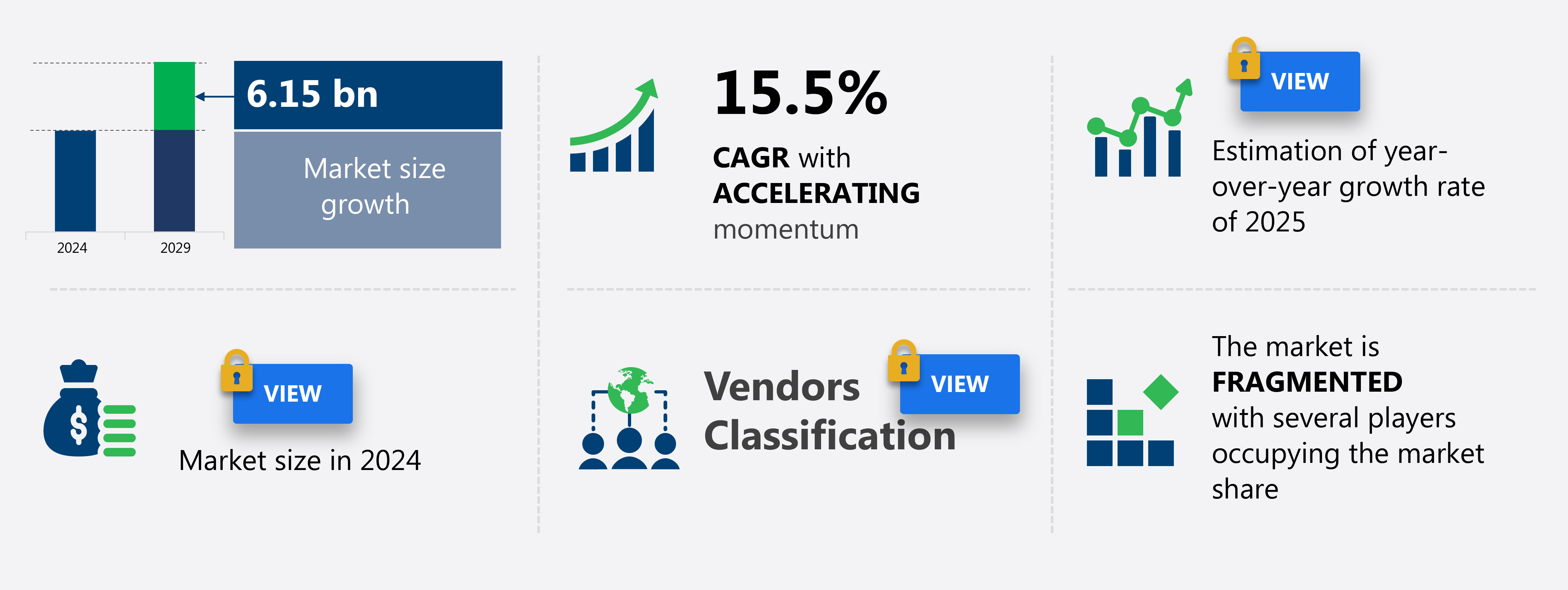
The immersive technology in healthcare market is projected to grow by USD 6.15 billion, registering a CAGR of approximately 15.5% during the forecast period. Exact values for this market can be accessed upon purchasing the report.
The global immersive technology in the healthcare market is experiencing growth fueled by the increasing need for enhanced patient engagement and improved medical training. Immersive technologies, including virtual reality (VR), augmented reality (AR), and mixed reality (MR), are transforming medical education, surgical planning, and patient care. These technologies offer realistic and interactive simulations, enabling healthcare professionals to enhance their skills and knowledge. Immersive tech also improves patient education by visualizing difficult medical information, leading to improved understanding and adherence to treatment plans.
To access the full market forecast and comprehensive analysis, Buy Now
How is this market segmented?
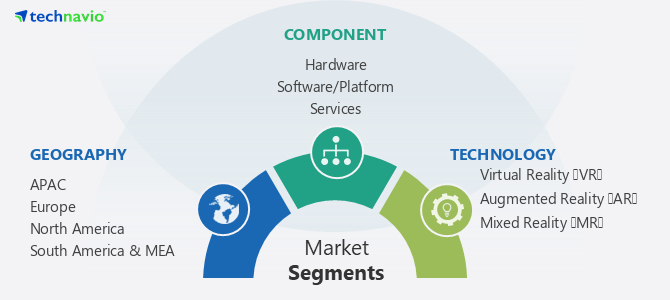
The market research report provides comprehensive data (region-wise segment analysis), with forecasts and estimates in USD bn for the period 2025-2029, as well as historical data from 2019-2024 for the following segments:
- Component
- Hardware
- Software/Platform
- Services
- Technology
- Virtual Reality (VR)
- Augmented Reality (AR)
- Mixed Reality (MR)
- Application
- Training & Learning
- Emergency Services
- Product Development
- Sales & Marketing
- APAC
- China
- India
- Japan
- Australia
- Rest of APAC
- Germany
- Spain
- Italy
- UK
- Rest of Europe
- US
- Canada
- Brazil
- UAE
- South Africa
- Others
- Component
- Hardware: The hardware segment, including head-mounted displays (HMDs) and gesture tracking devices (GTD), dominates the market due to increasing affordability and technological advancements.
- Services: The services segment, including professional and managed services, supports the implementation and maintenance of immersive technology solutions in healthcare settings.
- Software/Platform: The software/platform segment is expected to grow rapidly as demand increases for customized healthcare applications and integrated solutions.
- Technology
- Mixed Reality (MR): The mixed reality segment is emerging with applications in surgical planning, remote collaboration, and interactive medical training.
- Virtual Reality (VR): The virtual reality segment holds the largest market share due to its widespread use in training simulations, pain management, and rehabilitation programs.
- Augmented Reality (AR): The augmented reality segment is expected to grow significantly as AR applications enhance medical diagnostics, patient education, and remote assistance.
- Application
- Sales & Marketing: This segment improves product demonstrations and customer engagement through virtual showrooms and interactive presentations.
- Emergency Services: This segment is expected to grow steadily as immersive technology improves emergency response training and disaster management simulations.
- Product Development: This segment enhances medical device design and testing through virtual prototyping and simulation.
- Training & Learning: This segment dominates the market share due to the widespread use of immersive technology in medical education and professional development.
Regional Analysis
- APAC: The APAC region is expected to experience rapid growth in the immersive technology In the healthcare market due to increasing healthcare expenditure, rising awareness of advanced medical technologies, and growing demand for improved patient care. China and India are key markets in this region, driven by their large populations and increasing adoption of digital health solutions.
- Europe: Europe is a significant market for immersive technology in healthcare, with Germany and the UK leading the way. The region benefits from well-established healthcare infrastructure, strong government support for digital health initiatives, and a high adoption rate of advanced medical technologies.
- North America: North America dominates the immersive technology In the healthcare market due to the presence of leading technology companies, high healthcare expenditure, and a strong focus on innovation. The US and Canada are at the forefront of adopting VR, AR, and MR solutions in various healthcare applications.
- South America & MEA: South America and MEA offer emerging opportunities for the immersive technology in healthcare market. Brazil is witnessing increasing investments in healthcare infrastructure and digital health initiatives, driving the adoption of VR and AR solutions. The UAE is also emerging as a hub for advanced medical technologies, creating growth prospects for immersive technology in healthcare.
Market Dynamics
Our immersive technology in healthcare market researchers analyzed the data with 2024 as the base year, along with the key drivers, trends, and challenges. A holistic analysis of drivers will help companies refine their marketing strategies to gain a competitive advantage.
What are the key market drivers leading to the rise in adoption of immersive technology in healthcare market?
Improved patient engagement is the key driver of the market. Immersive technologies such as VR and AR significantly improve patient engagement by providing interactive and personalized healthcare experiences. Patients can visualize medical information, participate in virtual consultations, and experience therapeutic simulations, leading to better understanding and adherence to treatment plans. This enhanced engagement drives the adoption of immersive technology in various healthcare settings.
What are the market trends shaping the immersive technology in healthcare market?
Technological advancements are the upcoming market trend. Ongoing technological advancements in VR, AR, and MR are shaping the immersive technology in the healthcare market. Developments in display technology, motion tracking, and computing power are enhancing the realism, interactivity, and usability of immersive solutions. The integration of artificial intelligence (AI) and machine learning (ML) is also enabling more personalized and adaptive healthcare applications.
What challenges does the immersive technology in healthcare market face?
High implementation costs are a key challenge affecting the industry growth. The high initial investment and ongoing maintenance costs associated with immersive technology solutions can pose a challenge to market growth. The cost of hardware (VR headsets, AR glasses), software development, and infrastructure setup can be significant, particularly for smaller healthcare facilities and organizations with limited budgets. Addressing these cost barriers is crucial for widespread adoption.
Key Companies & Market Insights
Leading companies are implementing strategies such as product innovations, acquisitions, and geographic expansions to enhance their market position. Key players In the immersive technology in healthcare market include:
- Acer Inc.
- Atheer, Inc.
- AVEVA Group PLC
- Barco NV
- Blippar Ltd.
- Carl Zeiss AG
- CM Labs Simulations Inc.
- EON Reality, Inc.
- FAAC Incorporated
- Google, LLC
- HCL Technologies Limited
- Honeywell International, Inc.
- HTC Corporation
- Immersive Media Company
- Immersive Technologies Pty Limited
- Lockheed Martin Corporation
- Magic Leap, Inc.
- NCTech Limited
- Oculus (Facebook Technologies, LLC.)
- Samsung Group
- Sony Corporation
- Unity Software Inc.
- Varjo Technologies Oy
- VI-grade GmbH
- Zeality Inc.
These companies are strategically focused on product development, market expansion, and partnerships to maintain their competitive edge in the growing immersive technology in healthcare market.
|
Market Scope |
|
|
Report Coverage |
Details |
| Base year | 2024 |
| Page number | 198 |
| Key countries | US, Canada, Germany, UK, China, Japan, India, Australia, South Korea, Brazil |
| Forecast period | 2025-2029 |
| Historic period | 2019-2023 |
| Report coverage | Market size, forecasts, segmentation |
| Regional Analysis | APAC
|
| Growth momentum and CAGR | 15.5% |
| Performing market contribution | Europe, APAC, North America |
 RIA -
RIA - 
